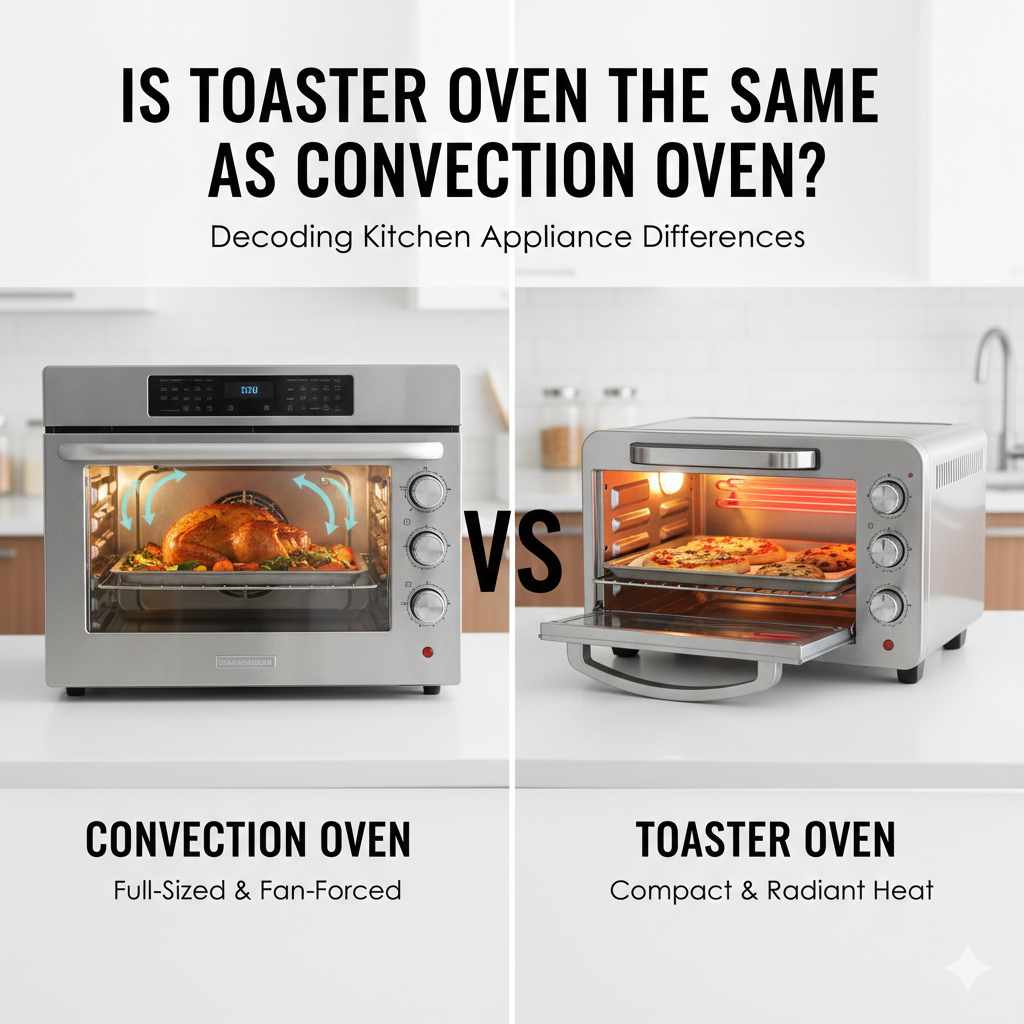
No, a toaster oven is not the same as a conventional oven. While some toaster ovens include convection settings, they are fundamentally different in size, heating elements, and cooking capacity. Understanding these differences helps you choose the right tool for your kitchen needs, ensuring great results whether you’re reheating pizza or baking a small roast.
Have you ever stood in front of the appliance aisle, baffled by all the names? Oven, toaster oven, countertop oven, convection—it gets confusing fast! Many new cooks wonder, “is toaster oven the same as convectional oven?” It’s a common question, and getting the answer right saves you time, energy, and stops food from burning!
Don’t worry; we’ll break down these kitchen workhorses simply. Think of me, Dustin, as your guide here. Just like knowing the difference between a lug wrench and a socket set helps you fix your car correctly, knowing your appliances ensures perfect cookies or crispy toast every time. Let’s clear up this kitchen confusion right now and see exactly what tools you have hiding on your counter.
The Basics: What Are We Comparing?
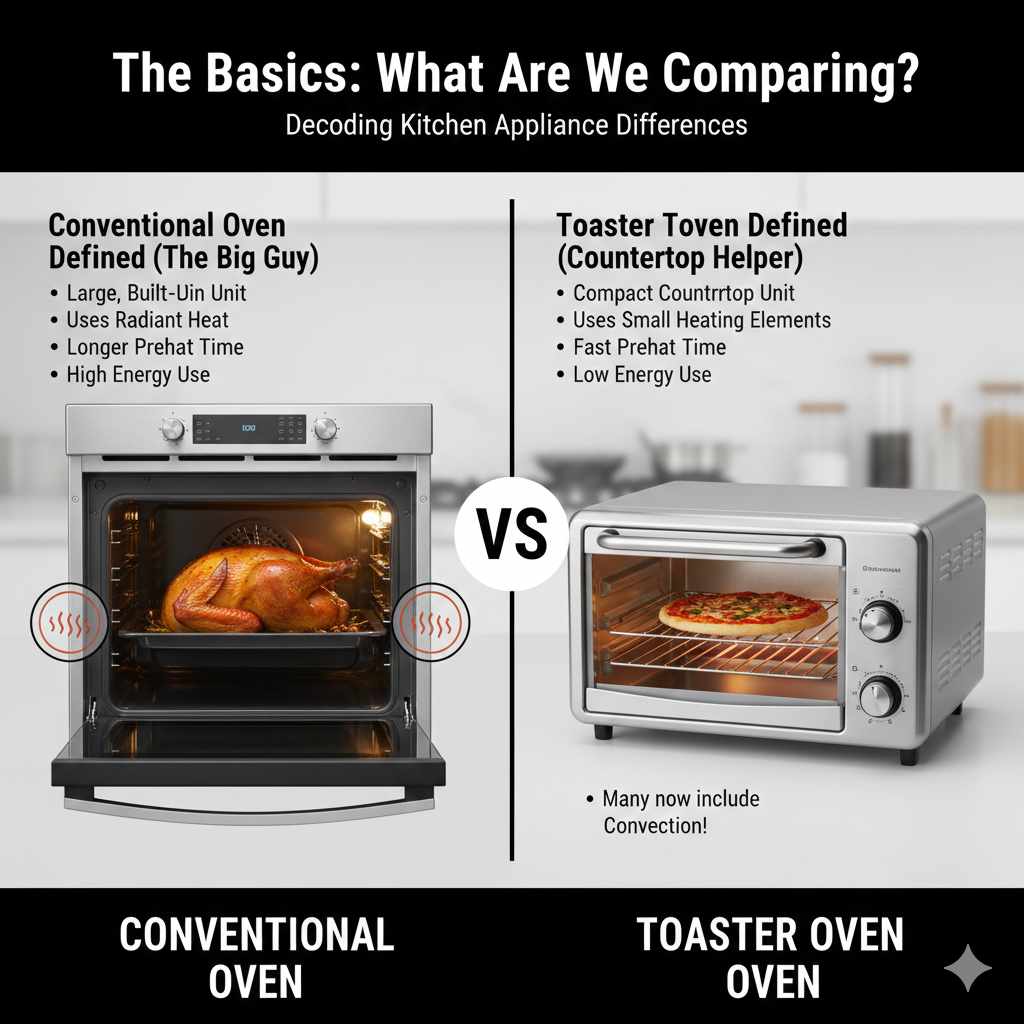
To really understand if these two appliances are the same, we need clear definitions. We’re comparing a standard full-sized oven (the one built into your stove or wall) with a smaller appliance that sits on your counter—the toaster oven. The confusion often starts because modern toaster ovens have adopted features found in bigger ovens, like convection settings.
Conventional Oven Defined (The Big Guy)
A conventional oven, often just called a standard oven, is the workhorse of your kitchen. It’s large. It uses radiant heat—meaning heating elements at the top (broil) and bottom get hot and cook your food from the outside in.
Think of it like sitting near a campfire. The heat radiates out and cooks what’s closest. This works wonderfully for large roasts, multiple trays of cookies, or big batches of lasagna. Because of its size, it takes longer to preheat and uses more energy.
Toaster Oven Defined (The Countertop Helper)
A toaster oven is essentially a miniature oven. It sits on your counter. It uses small heating elements, usually metal coils at the top and bottom, just like a classic pop-up toaster, but bigger. It excels at small-batch cooking, reheating leftovers (making pizza crispy again!), toasting bread, and baking small items quickly.
The main difference usually comes down to space and technology. While the basic version just uses radiant heat like a conventional oven, many popular models now include a convection fan. This is where things get tricky!
The Key Difference: Heat Distribution
The biggest factor separating true conventional ovens from toaster ovens isn’t just size; it’s how the heat moves around inside.
Conventional Oven Heating Methods
Your standard home oven primarily uses two methods:
- Bake Setting: Heat comes primarily from the lower element, rising slowly to cook the food evenly from the bottom up.
- Broil Setting: Maximum heat comes only from the top element, used for browning the surface quickly.
In a large conventional oven, the air inside sits relatively still unless you turn on a convection feature (if it has one). This stillness can sometimes lead to hot spots or uneven cooking on different racks.
Understanding Convection Technology
This is the secret sauce that blurs the line between appliances. A true convection oven—whether it’s a full-sized wall unit or a countertop toaster oven—uses a fan to circulate the hot air.
Imagine you are working on an engine bay, like tuning up your car’s cooling system. A regular oven is like letting the heat sit there. A convection oven is like running the cooling fan, pushing that hot air everywhere evenly. This constant movement has two huge benefits:
- Faster Cooking: The moving air transfers heat more efficiently to the food’s surface.
- Even Cooking: No more rotation needed! Cookies on the top rack cook at the same speed as those on the bottom.
Is My Toaster Oven a Convection Oven?
This is the heart of the matter. The answer is: Sometimes, but not always.
Many modern, high-quality toaster ovens are marketed as “Convection Toaster Ovens” or “Smart Ovens.” These models feature a small fan inside, just like their full-sized convection counterparts. They function essentially as small convection ovens!
However, cheaper or very basic toaster ovens often only have the standard bake and broil settings. If your toaster oven only has knobs for Toast, Bake, and Broil, it is likely not a convection oven, even though it toasts like one.
How to Check If Your Toaster Oven Has Convection
It’s usually simple to confirm. Look right on the control panel. You are looking for one of these indictors:
- A dedicated “Convection Bake” or “Convection Roast” setting.
- A button or symbol showing a small fan icon.
- If you are unsure, check the user manual or look up the model number online. A quick search using the manufacturer’s website, like checking available features on a major retailer like Best Buy, can confirm if that specific model includes a fan.
If it has the fan, then yes, for baking and roasting purposes, you are using a convection method, even if the sheer size difference means the heating performance won’t perfectly match a huge built-in convection master.
Table Comparison: Toaster Oven vs Conventional Oven
To make things crystal clear, let’s lay out the main differences side-by-side. This comparison focuses on standard models, acknowledging that most modern toaster ovens borrow convection features.
| Feature | Conventional Full-Sized Oven | Toaster Oven (Standard) |
|---|---|---|
| Size / Capacity | Large (Accommodates multiple large racks, full turkey) | Small (Countertop size, usually one small rack) |
| Heating Elements | Large elements, usually hidden or very large exposed coils | Small exposed metal coils (top and bottom) |
| Preheat Time | Longer (10–20 minutes typical) | Fast (3–8 minutes typical) |
| Energy Use | Higher, uses more power overall | Lower, uses less power for smaller tasks |
| Browning & Toasting | Inefficient for small items; uneven unless using broiler | Excellent for small items, quick toasting |
| Convection Feature | Common in modern units; powerful fan circulation | Optional; small fan, less powerful circulation |
When to Choose Which Appliance
Knowing the differences tells you how to use them effectively. Making the right choice saves electricity and prevents kitchen disasters. If you’re trying to bake a huge batch for a party, cramming it into a toaster oven will not work well!
Use Your Conventional Oven When:
- You are cooking for four or more people.
- You need to bake multiple sheets of cookies or trays of rolls simultaneously.
- Cooking large items like a whole turkey, large ham, or a deep casserole dish.
- You need precise, sustained, high-temperature baking for things like sourdough bread consistency.
Use Your Toaster Oven When:
- You are only cooking for one or two people.
- You need to reheat food and want to keep it crispy (better than a microwave!).
- You want to toast bread or bagels perfectly.
- You are baking small, direct batches (like 4 muffins or a personal pizza). Saving preheat time and energy is a massive plus here.
As a general rule, if the item requires a rack position higher than the middle, or if it takes longer than 30 minutes to cook in a standard big oven, give serious thought to using the conventional oven for better results.
Do We Need Both? Pros and Cons Breakdown
For most homes, having both the standard oven and a good toaster oven provides maximum flexibility. Think of it like owning both a reliable truck (the conventional oven) for big jobs and a zippy compact car (the toaster oven) for daily errands. They serve different, equally important functions.
Pros and Cons of the Conventional Oven
The big oven is reliable, but it comes with operational costs.
Advantages:
- Capacity: Handles large meals easily.
- Stability: Maintains temperature steadier over long baking times.
- Broiling Power: Usually has much stronger broil elements for fast searing.
Disadvantages:
- Preheat Time: Takes a long time to heat a large cavity.
- Energy Waste: Heating up that massive space just to cook two chicken breasts wastes power.
- Kitchen Heat: Adds significant ambient heat to the kitchen during summer months.
Pros and Cons of the Toaster Oven
The toaster oven excels in speed and efficiency for small volumes.
Advantages:
- Speed: Heats up incredibly fast.
- Efficiency: Uses very little electricity for quick tasks.
- Versatility: Can often handle air frying, broiling, baking, and toasting in one small box. (Note: Air frying uses a very powerful convection fan, making it a subset of convection cooking.)
Disadvantages:
- Capacity Limits: Cannot handle full sheets or large pots.
- Uneven Heat (Non-Convection Models): Basic models can easily burn the tops while leaving the bottoms raw.
- Heating Element Proximity: Food placed too close to the top coils will burn quickly.
If you are looking into the science behind heat transfer in appliances, you can find some excellent general physics resources related to thermal dynamics at educational sites like those associated with major universities, like explanations found via government or academic energy efficiency portals related to home appliance standards.
Maintenance & Safety Comparisons
Whether we are talking about your big stove or your little toaster oven, good maintenance keeps them running safely and efficiently. For cars, safety means checking tire pressure; for ovens, it means keeping them clean!
Cleaning and Care for a Conventional Oven
Cleaning the main oven can feel like a major chore. You often rely on the self-clean cycle, which uses extremely high heat to burn off spills.
- Self-Clean Cycles: These are effective but produce strong fumes and use a lot of energy. Always ventilate your kitchen well when running this.
- Racks and Bottom: Baked-on grease on the bottom needs scraping or specialized oven cleaner.
- Monitoring: Keep the door seal clean to ensure heat isn’t leaking out, which affects energy efficiency.
Cleaning and Care for a Toaster Oven
Since toaster ovens are smaller, cleaning is often more frequent but simpler.
- Crumb Tray: Almost every toaster oven has a removable crumb tray at the bottom. Empty this after every few to all uses. Dead crumbs are a fire hazard!
- Interior Walls: Wipe down the inside with mild soap and water or a degreaser spray. Avoid harsh chemicals that might ruin the non-stick coating or damage the fan housing (if it’s a convection model).
- Heating Elements: Never scrub the coils! If something drips on them, simply run the oven on high heat for 10 minutes after the oven is cool; often, this will burn off the residue.
Ignoring crumbs in a toaster oven is particularly risky because the heating elements are so close to the bottom surface. For safety tips regarding appliance maintenance, always defer to the manufacturer’s cleaning guidelines. Keeping your appliances clean is like keeping your car’s oil changed—it prevents premature failure!
The Role of Convection in Smaller Appliances
Let’s circle back to convection, as it is the primary feature making some toaster ovens seem like direct rivals to full ovens.
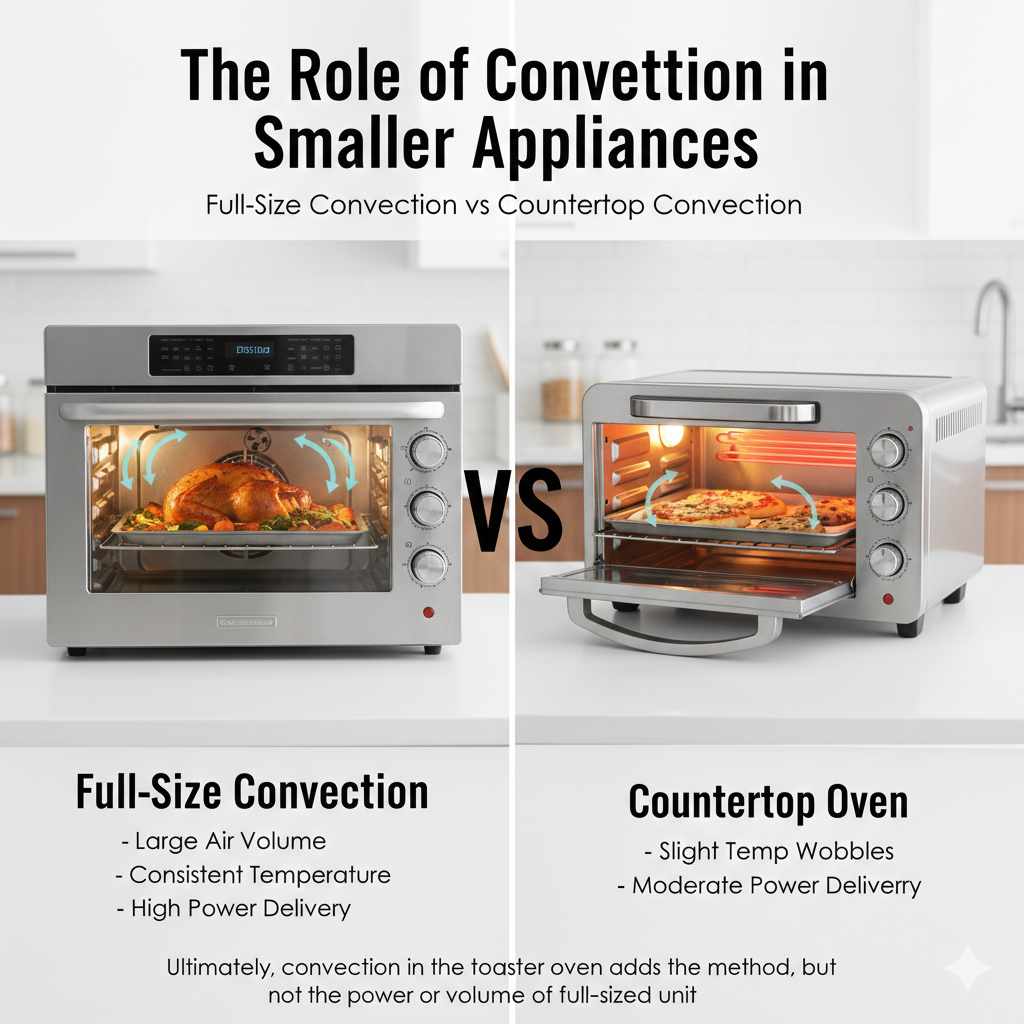
Full-Size Convection vs Countertop Convection
While both use a fan, the impact is different due to size:
- Air Volume: A huge oven moves a massive volume of air to circulate around a large turkey. A toaster oven moves a smaller volume of air around a small baking sheet.
- Temperature Consistency: The larger oven cavity is better at maintaining a consistent temperature despite the circulating air being slightly cooler than the fixed temperature setpoint. The small toaster oven cavity can sometimes experience slight wobbles in temperature during the circulation process, though it’s much better than standard baking.
Ultimately, if you buy a toaster oven that has convection, you are gaining the method of cooking (circulating air) but not the power or volume delivery of a full-sized unit.
Frequently Asked Questions (FAQ)
Q1: Can I bake cookies in a toaster oven exactly like a conventional oven?
A: You can, but you must watch them closely! Use convection setting if available, reduce the temperature by about 25°F (15°C) from the recipe, and use only one thin layer of cookies. Due to the small space, they often bake faster.
Q2: If my toaster oven has a convection setting, do I still need to lower the temperature?
A: Generally, yes, it’s a good idea. While professional convection ovens are calibrated for specific temperature reductions, most toaster ovens run slightly hotter due to the proximity of the elements. Reducing by about 15–25°F is a safe starting point for most recipes.
Q3: Is it safer to use a small toaster oven or a large conventional oven?
A: Both are safe when used according to instructions. However, toaster ovens require more vigilance regarding surfaces underneath and around them, as their exterior gets very hot and they sit on countertops which are less insulated than the structure around a built-in oven.
Q4: Why does my conventional oven have a convection setting if it’s not the same as the toaster oven version?
A: Full-sized convection is superior because the fan is more powerful and the cooking area is much larger, allowing for consistent heat movement across multiple large racks without excessive temperature drop. It uses the same principle but scaled up for full-meal cooking.
Q5: Can I use metal bakeware in my toaster oven?
A: Yes, you can use metal bakeware, but it must fit! Avoid using dark or heavy glass, as these absorb more radiant heat and can cause the edges of your food to burn before the center cooks, especially in a small space.
Q6: Which appliance uses less electricity overall?
A: The toaster oven uses significantly less electricity because it has a much smaller space to heat up. Firing up a large conventional oven just to heat a small frozen dinner is a major energy waste compared to using the small countertop unit.
Conclusion: They Are Related, But Not the Same
So, to answer our guiding question one last time: Is toaster oven the same as convectional oven? No. They are different classes of appliances.
A conventional oven is designed for primary, high-volume, high-stability cooking operations. A toaster oven is designed for speed, small-batch efficiency, and supplemental use.
If your toaster oven has a fan, it uses the convection technique, making it functionally a miniature convection oven. But its size, power draw, and ultimate capacity remain distinctly different from the built-in unit.
By understanding these distinctions—size, power, and heating method—you can use both tools perfectly. You’ll save energy by not firing up the big oven for a quick snack, and you’ll ensure that big holiday roast cooks evenly in your reliable primary oven. Keep learning these basics, and you’ll feel as confident in your kitchen as you do under the hood!