Bolded Quick Summary (Top of Article)
To make great fondue, focus on quality cheese (like Gruyère), use the right starch binder (cornstarch or flour), and heat slowly while stirring constantly. This simple process prevents clumps, ensuring a smooth, delicious dip every time you tackle how to make fondue.
Fondue nights are the best! Dipping bread into warm, melty cheese sounds like a perfect evening. However, sometimes fondue turns out stringy, oily, or lumpy. That’s frustrating when you’re looking for that smooth, silky dip. Many folks think making restaurant-quality fondue is hard, but it is not! It just needs a few simple secrets—the kind a seasoned home cook knows.
Think of me as your guide, like teaching you the simple steps to check your oil level. We will break down exactly how to make fondue succeed every time. You will learn the must-have ingredients and the genius little tricks that keep the cheese perfectly blended. Ready to ditch the lumps and serve up creamy perfection? Let’s get started!
Making fondue at home is easier than you think, provided you follow a few key rules. We aren’t just melting cheese; we are creating an emulsion—a smooth mix of fat (cheese) and liquid (wine/liquid). When emulsions break, you get oil slicking or clumps. Our goal is stabilization!
The Foundation: Essential Ingredients for Perfect Cheese Fondue
Before we turn on the heat, knowing your ingredients is half the battle. Good fondue starts with quality components. Don’t just grab the first block of cheese you see!
Choosing the Right Cheese
The best fondue relies on a mix of cheeses for flavor and melt quality. You generally want a mix:
- The Melter: This cheese provides the smooth texture. Gruyère is the king here. Emmentaler and Appenzeller also work excellently.
- The Flavor Accent: This adds complexity. A small amount of Swiss cheese (if it’s not the only cheese) or a sharp white cheddar (used sparingly) can boost the taste.
- The Key Ratio: Most classic recipes suggest using about 1 pound (450g) of cheese total for 4 people. Aim for about 75% Melter cheese and 25% Flavor Accent cheese.
The Starch Binder: Your Anti-Clump Secret Weapon
This is the genius tip that keeps your fondue smooth! Cheese naturally wants to seize up when heated. A starch—like cornstarch or flour—coats the fat molecules and prevents them from separating. This is crucial for long-term stability.
How to Use the Starch: Toss your shredded cheese lightly with 1 teaspoon of cornstarch or flour per pound of cheese before it hits the pot. This simple step is a game-changer.
The Liquid Element (The Acid)
You need liquid to melt the cheese, but you can’t use plain water. You need acid. Why acid? Acid helps break down the protein structure in the cheese gently, allowing it to melt smoothly rather than turning rubbery. This is similar to how professional bakers use acid in recipes to manage gluten structure.
The universal liquid for classic Swiss fondue is dry white wine. Traditional suggestions often point to wines like Sauvignon Blanc or an unoaked Chardonnay. The alcohol evaporates during heating, leaving the bright acidity behind.
If you avoid alcohol, use lemon juice mixed with water or broth, but start slow. Use about ¾ cup of liquid for every pound of cheese.

Step-by-Step Guide: How to Make Fondue Like a Pro
Follow this process closely. Precision in steps prevents panic later on. Remember, low and slow is the mantra for melting cheese successfully.
Preparation Checklist (Tools and Ingredients)
Before you even turn on the stove, get everything ready. Cooking fondue moves fast once it starts heating!
| Item Category | Specific Item | Why It Matters |
|---|---|---|
| Cheese Prep | 1 lb Mixed Cheese (Gruyère/Emmentaler) | Must be freshly grated, not pre-shredded (which often contains anti-caking agents). |
| Binder | 1 Tbsp Cornstarch or Flour | Coats the cheese to prevent separation and clumping. |
| Liquid | 3/4 cup Dry White Wine (or substitute) | Provides necessary acid to ensure a silky melt. |
| Flavor Boosters | 1 tsp Lemon Juice, Pinch of Nutmeg/Pepper | Enhances the cheese flavor profile beautifully. |
| Equipment | Heavy-bottomed pot (like Dutch oven) | Distributes heat evenly, reducing the chance of scorching the bottom layer. |
The Melting Process: Seven Easy Stages
- Prep the Cheese: Grate all your cheese. Place it in a bowl and sprinkle the cornstarch or flour over the top. Toss gently with your hands until every piece of cheese is lightly dusted. Set aside.
- Heat the Liquid: Pour the wine (or liquid substitute) into your heavy pot. Add the optional lemon juice, nutmeg, and pepper. Place the pot over medium-low heat. Heat until small bubbles just start to form around the edges—do not let it boil aggressively!
- Introduce the Cheese (Slowly!): This is the critical moment. Reduce the heat to the absolute lowest setting or even turn it off momentarily. Begin adding the cheese mixture, one small handful at a time.
- Stir Constantly: As you add each small amount of cheese, stir continuously in a figure-eight or slow circular motion. This gentle stirring helps the cheese melt evenly into the liquid without overheating.
- Wait for Incorporation: Wait until the added handful is almost completely melted and smooth before adding the next handful. Patience here prevents the dreaded “cheese pulling apart.”
- Test Consistency: Once all the cheese is added, continue stirring slowly over very low heat for about two minutes. The fondue should coat the back of a spoon evenly and smoothly. If it is too thick, add a tablespoon of warm wine or lemon water; if it is too thin, you can try stirring in a tiny bit more cornstarch slurry (cornstarch mixed with cold water).
- Transfer and Serve: Immediately transfer the fondue to your fondue pot (caquelon) set over a low flame, or keep it simmering very gently on the lowest burner setting.
Genius Tips to Avoid Fondue Failure
These aren’t just suggestions; they are the fail-safes that separate good fondue from amazing fondue. Master these three areas, and you master fondue.
Tip 1: Never Use Pre-Shredded Cheese
Why is this important? Cheese manufacturers coat pre-shredded cheese with cellulose or potato starch to keep the shreds from sticking together in the bag. When you try to melt that cheese, those coatings interfere with the smooth process we are trying to achieve. They can cause lumpiness and prevent a proper emulsion. Always buy blocks of cheese suitable for grating.
Tip 2: Control Your Heat Religiously
Cheese protein tightens up when it gets too hot, squeezing out the fat—this is why you get an oily layer on top with stringy bits underneath. You are looking for a temperature just hot enough to melt, not boil. Use a thick-bottomed pot for maximum heat distribution and keep the flame on your burner set to low or medium-low throughout the entire process. Never leave the simmering fondue unattended!
Tip 3: The Importance of Acid and Alcohol
As discussed, the acid in wine is key. It helps keep the proteins relaxed. If you skip the acid entirely (using only milk or water), the fondue will likely become rubbery and thick very quickly. If you are worried about alcohol, remember that most of the ethanol cooks off, leaving only the beneficial acidity. For authoritative information on food chemistry regarding protein denaturation, resources like those from culinary science programs often detail how acidity affects dairy structure.
Troubleshooting Your Fondue Disaster
Don’t panic if your fondue looks a little off. Most problems can be fixed with one of these quick adjustments. Remember, you’ve got this!
Problem 1: My Fondue is Oily or Greasy
Cause: The heat got too high, or you added too much cheese too fast. The fat separated from the solids.
Fix: Remove the pot from the heat. In a separate small bowl, whisk one teaspoon of cornstarch into one tablespoon of cold wine or water until smooth (a slurry). While constantly stirring the oily fondue vigorously, slowly drizzle in the slurry. Return to very low heat and stir until the mixture comes back together and thickens slightly.
Problem 2: My Fondue is Stringy or Clumpy
Cause: The cheese was added too quickly, or the liquid wasn’t warm enough initially.
Fix: Add a splash (about one tablespoon) of room-temperature lemon juice or wine to the pot. Stir constantly over very low heat. The extra acidity should help soften the tightened protein strands. Be patient; it can take several minutes of slow stirring to smooth out.
Problem 3: My Fondue is Too Thick
Cause: Too much starch or not enough liquid, or it cooled down too much toward the end.
Fix: Gently warm up an extra half cup of dry white wine or lemon water. Add this warm liquid one tablespoon at a time while stirring gently until you reach the desired dipping consistency. Adding only warm liquid prevents shocking the emulsion.
Beyond Classic Swiss: Exploring Other Fondue Types
While cheese is the most common preparation, realizing how to make fondue extends to other fantastic dips. Once you master the cheese base, you can branch out!
Oil-Based Fondue (Fondue Bourguignonne)
This method doesn’t involve melting cheese. Instead, you heat neutral oil (like canola or peanut oil) in the fondue pot to about 350°F (175°C) and cook smaller pieces of raw meat (like beef tenderloin) right at the table. This is faster, cleaner than soup fondue, and gives everyone full control over how cooked their meat is.
Broth-Based Fondue (Fondue Chinoise)
Similar to oil fondue but far lighter and healthier, this uses seasoned hot broth as the cooking liquid. You cook thinly sliced meats, seafood, and vegetables directly in the flavorful stock. It’s an all-in-one meal!
Chocolate Fondue (The Dessert Dip)
This is the easiest fondue to master, as there is no emulsion to worry about! The key here is using high-quality chocolate (at least 60% cacao) and a thinning agent like heavy cream or evaporated milk.
Simple Chocolate Technique:
- Gently melt one cup of chopped chocolate with one-half cup of heavy cream over a double boiler (or very low heat).
- Stir until completely smooth.
- Add one teaspoon of vanilla extract or liqueurs like Grand Marnier for flavor.
- Keep warm over a very low flame.

What to Dip: The Perfect Cheese Fondue Accompaniments
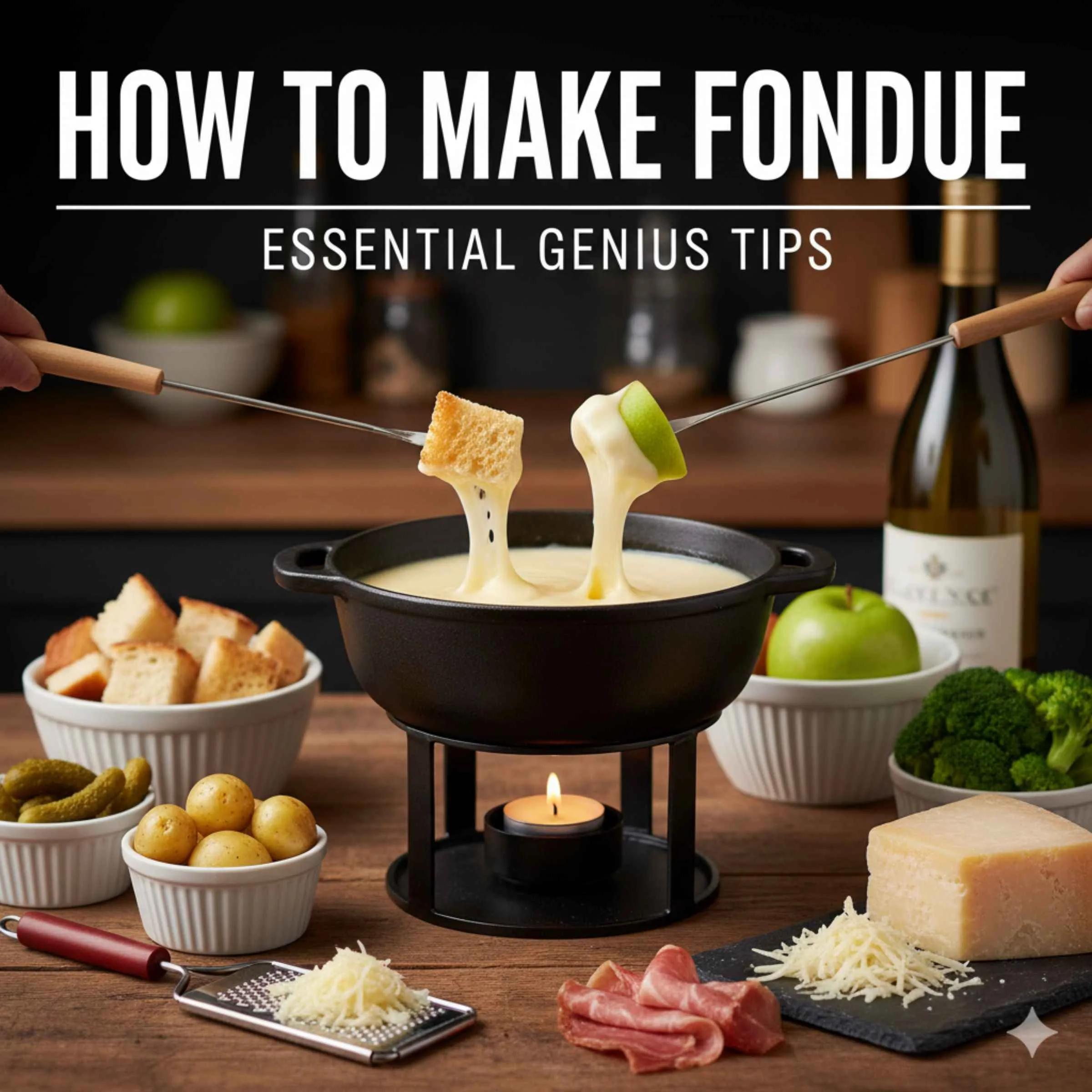
Your fondue is perfect—now what do you serve with it? The best accompaniments complement the strong, nutty flavor of the cheese without overpowering it.
When selecting dippers, remember texture matters. You need things sturdy enough to hold up to the thick cheese.
| Category | Best Choices | Preparation Tip |
|---|---|---|
| Bread (The Essential) | Day-old French bread, sourdough cubes | Cut the bread the day before so it is slightly dry; it absorbs the cheese better and is less likely to fall apart. |
| Vegetables (Blanched) | Broccoli florets, small boiled potatoes, small carrots | Blanching (briefly boiling then shocking in ice water) ensures they are tender but still firm. |
| Fruit/Slightly Sweet | Granny Smith apple slices, firm pear slices | The slight tartness cuts through the richness of the cheese beautifully. |
| Meats/Salty Items | Small cocktail sausages, cured ham cubes | These add a nice salty bite. |
A Quick Note on Stability: If your fondue sits too long, it can start to settle or firm up. Before serving more dippers, give the pot a good, vigorous stir. This forces the heat back through the mixture and reinvigorates the smooth texture.
Frequently Asked Questions (FAQ) About Making Fondue
Q1: Can I use shredded cheese from a bag for fondue?
A: It’s best not to. Bagged cheese has anti-caking agents that prevent a smooth melt, leading to lumps. Always grate your cheese fresh from the block for the best results when learning how to make fondue.
Q2: What is the best non-alcoholic substitute for wine in cheese fondue?
A: The best substitute is a combination of warm water mixed with a tablespoon of fresh lemon juice. This replicates the necessary acid needed to keep the cheese proteins relaxed and creamy.
Q3: How do I prevent my fondue from leaving an oily layer on top?
A: Ensure you toss your cheese with cornstarch or flour before melting. Also, maintain a very low, gentle heat throughout the stirring and melting process. High heat causes the fat to separate.
Q4: What temperature should the wine be before adding the cheese?
A: The wine should be warm, almost steaming, but absolutely not boiling. If the wine is too cold, it will shock the cheese; if boiling, it will cause the cheese to seize up immediately.
Q5: Can I reheat leftover fondue?
A: Yes, you can. Place the chilled fondue in a non-stick pot over very low heat. Add a splash of fresh wine or lemon juice. Stir constantly as it slowly comes back up to temperature. Take it off the heat just before it starts to bubble.
Q6: What if I don’t have a traditional fondue pot setup?
A: Once the fondue is smooth, you can safely keep it warm using a slow cooker or a small, low-wattage warming plate, provided you stir it every 10–15 minutes to prevent a skin from forming on the bottom.
Conclusion: Confidence in Your Fondue Pot
Making truly excellent fondue might seem like it requires specialized skills, but as we’ve walked through, it relies on applying basic food chemistry principles: controlling heat, using an acid, and binding the fat with starch. You now have the essential genius tips right at your fingertips. You know to grate your own cheese, toss it in cornstarch first, and stir patiently over low heat.
Don’t be afraid to experiment with different cheese blends once you master the technique. Whether you are hosting a cozy night in or just treating yourself to a comforting meal, you can now prepare a pot of smooth, luscious fondue confidently. Grab your bread cubes, fire up that burner, and enjoy the wonderfully communal experience of dipping into your perfectly made cheese!