How to Install Wall Sconces Without Wiring
You can install a wall sconce without wiring in three common ways: plug-in, battery-powered, or a hardwired-style sconce with a cord cover; plug-in is usually the easier choice when an outlet is nearby, and battery-powered can work when no outlet is within reach. Done badly, the cord can look messy, the light can be awkward to use, and a poor mounting choice can leave gaps or a dangling shade. This guide compares the three options and helps you choose the safest reversible setup based on shade style, outlet access, and how visible the bulb will be.
Can you install wall sconces without wiring?


Yes, but the method changes the result. Battery puck lights work best inside closed shades, plug-in sconces need a nearby outlet and cord control, and true hardwiring is a separate electrical job. If you want the most reversible option, start with a puck light or a plug-in fixture before cutting into a wall.
Battery puck lights for closed shades
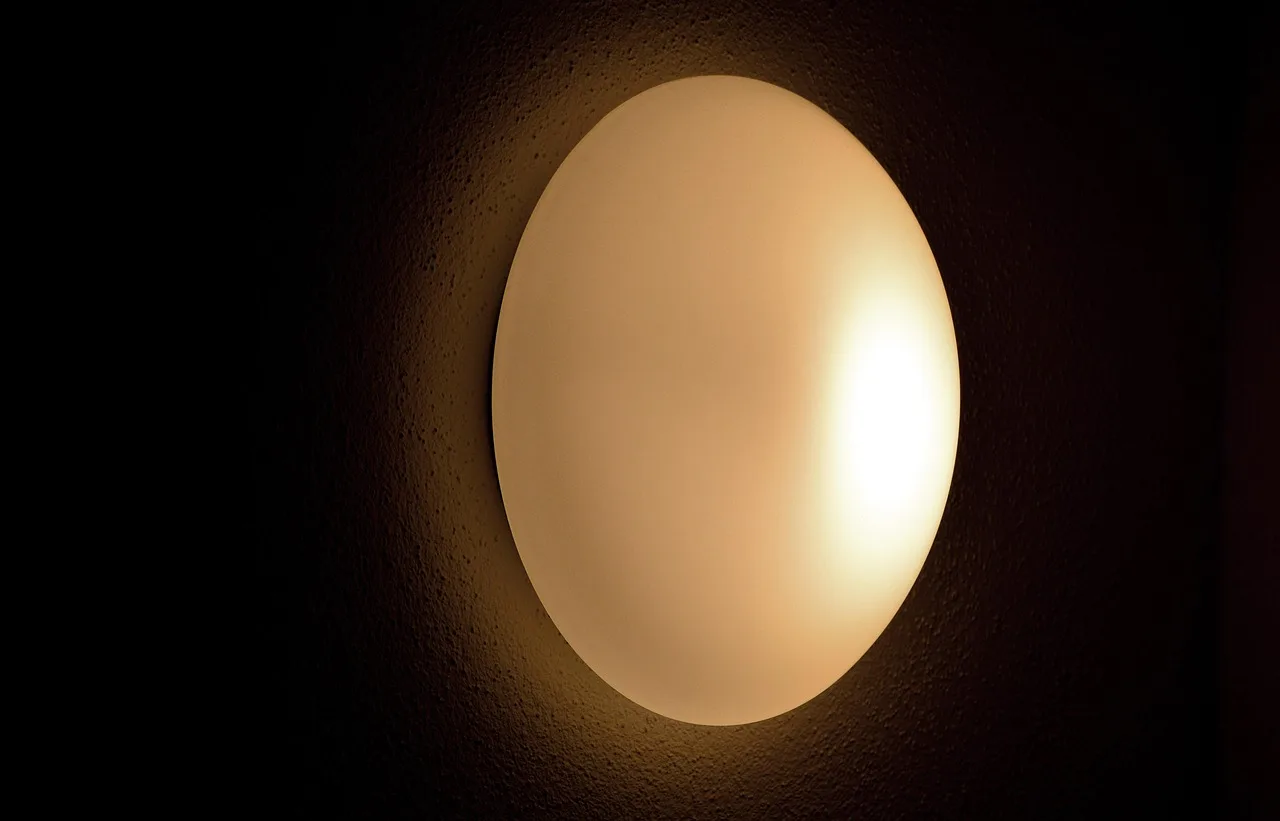
Battery-operated puck lights are LED accent lights with adhesive backing. Brightness in lumens varies by brand, and some models are remote-controlled or dimmable. They are the best fit for closed-shade sconces because the shade hides the light source, which keeps the fixture looking intentional instead of improvised.
Plug-in sconces with visible cord management
Plug-in sconces are the middle ground. Do It Center notes that wall sconces can be installed as corded or permanently wired, and raceways can cover the cord when hardwiring is not possible. A cord cover or raceway is paintable and may come in wood, plastic, or metal.
When hardwiring is still the better fit
Hardwiring is still the cleaner option when you want a permanent installation, a wall without visible cords, or a fixture that needs a built-in electrical box. That work is more involved. If the run is unclear, or you are unsure where the cable should land, stop and call an electrician.
Hiding the hardware starts with the wall, not the light. Mount the fixture to the right support, keep the light source hidden inside the shade when possible, and plan the cord path before drilling. For bedside sconces, 6 to 12 inches above the nightstand is a practical starting point.
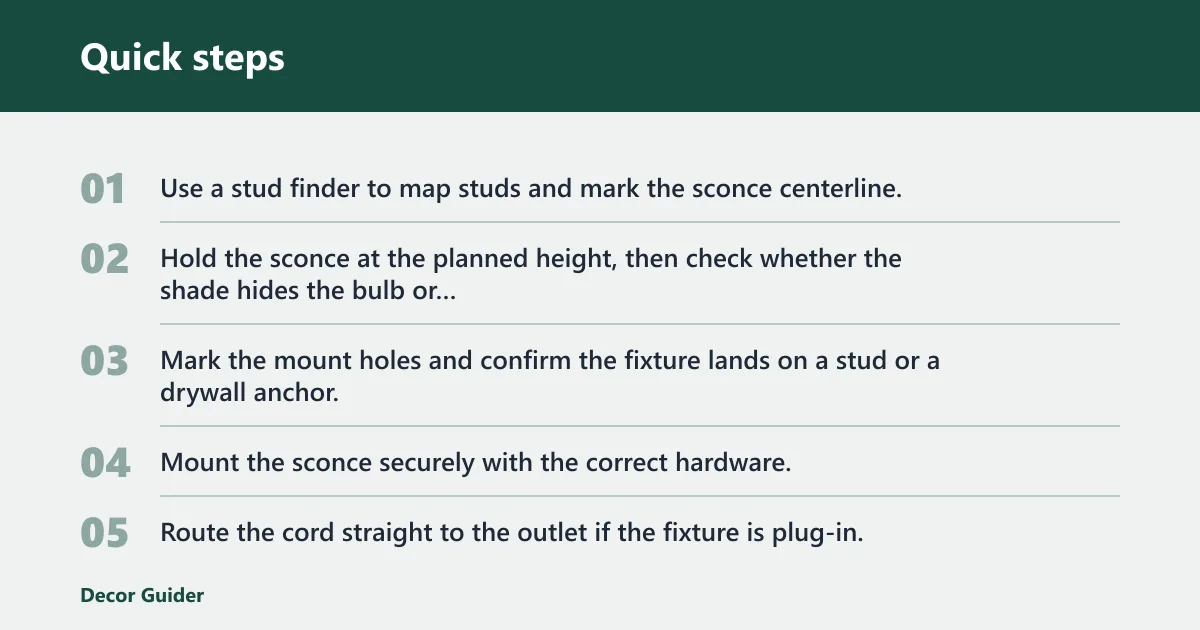
- Use a stud finder to map studs and mark the sconce centerline.
- Hold the sconce at the planned height, then check whether the shade hides the bulb or puck.
- Mark the mount holes and confirm the fixture lands on a stud or a drywall anchor.
- Mount the sconce securely with the correct hardware.
- Route the cord straight to the outlet if the fixture is plug-in.
- Add a raceway where the cord would otherwise stay visible.
- Paint the raceway if needed, then recheck the line from seated eye level.
Say your sconce has a 10-inch closed shade and the outlet sits 18 inches away on the same wall. A plug-in fixture with a short raceway may be enough. Suppose the same sconce has an open frame and the bulb shows from across the room. In that case, a puck light or a different shade style is the safer visual choice.
Install battery puck lights
Measure the sconce interior first, because the puck has to fit without pushing the shade out of line. Maria Louise Design used a 3/4-inch male PVC adapter for the puck-light method, and the puck lights in that tutorial came with 3M adhesive disks. The author chose puck lights that were 60 lumens, and that project cost $60 total and took under 2 hours.
- Measure the inner opening, shade depth, and mounting surface.
- Choose a puck light that fits the cavity without blocking the shade.
- Attach the adapter or adhesive disk to the interior mount point.
- Press the puck light into place and test it before final placement.
- Shift the light until the beam is centered and the source is hidden.
- Replace batteries or recharge as needed, then verify the light output again.
Install plug-in sconces
Plug-in sconces are usually the best balance between appearance and reversibility when an outlet is nearby. The same source says corded sconces can still be installed with raceways to cover wiring. This keeps the cord from hanging loose and helps the fixture look planned instead of temporary.
- Find the outlet and plan the cord path before mounting.
- Use a stud finder and mark the mounting points.
- Mount the sconce with screws or drywall anchors as required.
- Run the cord down to the outlet in the straightest possible line.
- Install the raceway over the exposed section of cord.
- Test the fixture, then paint the raceway if you want it to blend in.
What you’ll need
Gather the tools and parts before you start so you can plan around shade shape, power source, and wall support. For any mounting plan, check support with a stud finder first. For electrical work, use a non-contact voltage tester before touching existing wiring.
- Wall sconce or sconce shell
- Battery puck light or plug-in light source
- Stud finder
- Non-contact voltage tester
- Drywall saw
- Drill and drill bits
- Screws and drywall anchors
- Old work electrical box for retrofit work between studs
- Shallow metal electrical box for a fixture that lands on a stud
- Level
- Measuring tape
- Pencil
- Adhesive disks or mounting pads
- Cord cover or raceway
- Paint, if you want the raceway to blend in
How do you choose the right method?
Choose the method by starting with the shade, then the outlet, then how much wall damage you can accept. Closed shades hide battery puck lights well. Open shades expose the bulb and often make the puck-light method look unfinished. If you rent, the most reversible option is usually the one that leaves the fewest holes and no altered wiring.
Match the shade style to the light source
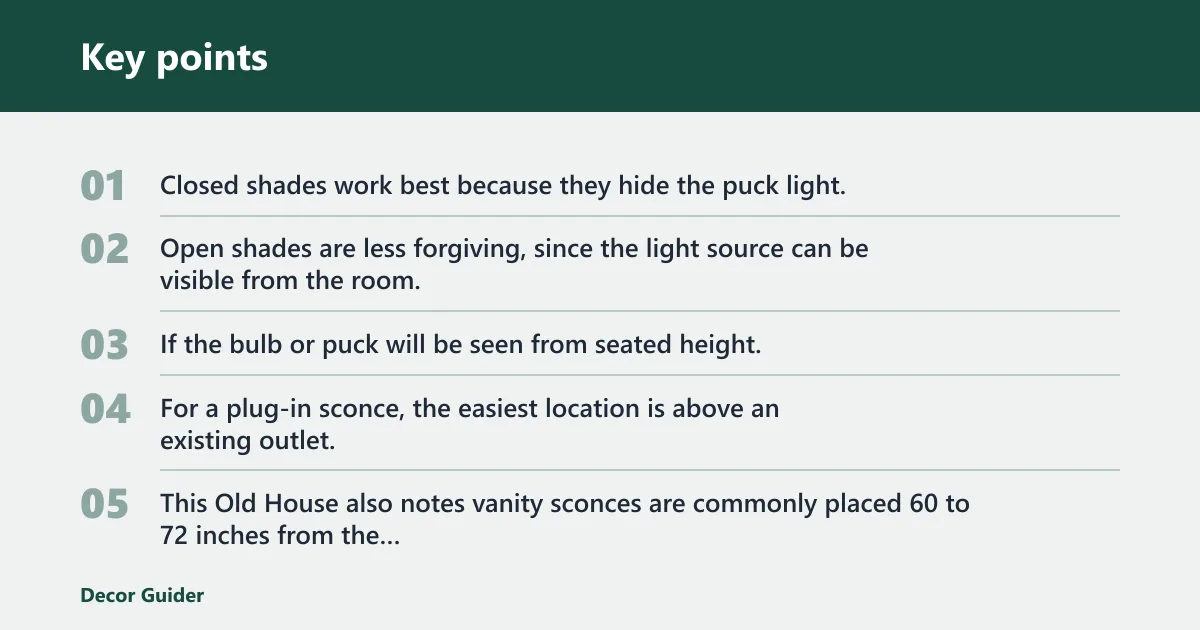
Closed shades work best because they hide the puck light. Open shades are less forgiving, since the light source can be visible from the room. If the bulb or puck will be seen from seated height, choose a plug-in sconce or hardwired fixture instead of trying to hide a battery light that does not belong there.
Check outlet access and cord path
For a plug-in sconce, the easiest location is above an existing outlet. This Old House also notes vanity sconces are commonly placed 60 to 72 inches from the floor. If the outlet is off to one side, plan the cord route before you drill so the cord does not cross traffic or hang loose.
Choose the most reversible option for a rental
If you need to avoid wall damage, battery puck lights or a plug-in sconce with a raceway are common starting points. That keeps the work reversible and avoids opening the wall. For a rental, this usually matters more than maximum brightness or perfect symmetry, especially in bedrooms, hallways, and temporary reading corners.
When should you hardwire a wall sconce?
Hardwiring makes sense when you want a permanent fixture, cleaner cord-free walls, or a location that does not work with plug-in power. It is still a true electrical task, not a decorative shortcut. If you are adding a retrofit box, the wall structure and wire path matter more than the fixture style.
Use an old work electrical box between studs
An old work electrical box is used when the fixture lands between studs. It fits into a drywall cutout and is common for retrofit installs. Cut the opening with a drywall saw, then seat the box before mounting the fixture. That is not a cosmetic job; it is electrical work that should be done carefully.
Use a shallow metal electrical box on a stud
A shallow metal electrical box is used when the fixture lands on a stud. It is about 1/2-inch deep and typically anchors to the stud with screws. This is the better choice when the sconce needs support in the stud bay and you want the box secured to solid framing.
Stop and call an electrician when the run is unclear
If the cable path is uncertain, if the wall has hidden obstacles, or if you cannot confirm the circuit state, stop. Use a non-contact voltage tester before touching any existing wiring. If the box location, circuit, or support is not obvious, a licensed electrician is the safer call.
Wall sconce decision table
This comparison puts the three non-hardwired paths side by side, plus the true hardwired option. Use it to match the shade, the wall, and the amount of visual cord you can tolerate.
| Field | Battery puck lights | Plug-in sconces | Hardwired sconces |
|---|---|---|---|
| Installation difficulty | Low to moderate | Moderate | High |
| Reversibility | High | High | Low |
| Visible cord risk | None | Moderate unless a raceway is used | Low |
| Light output | Usually lower; varies by brand and lumen rating | Depends on bulb choice | Depends on bulb choice |
| Renter-friendliness | Very high | High with a raceway | Low |
| Cost range | About $15 to $60+ for lights and mounts | About $40 to $150+ for fixture and cord cover | About $120 to $300+ before labor |
| Best room use | Bedrooms, hallways, accent spots | Bedrooms, living rooms, reading areas | Bathrooms, entries, permanent installations |
| Common failure points | Weak adhesive, low output, visible light source | Visible socket or cord, poor cord path, wobbly mount | Wrong box type, unclear wiring, support problems |
Common mistakes
The biggest mistakes are visible, and they usually come from picking the wrong light source for the shade. An open shade can expose a puck light, weak adhesive can make the light shift, and an exposed cord can pull the whole setup out of place. Support and placement matter as much as the fixture itself.
- Choosing an open shade for a battery puck light instead of a closed shade.
- Skipping the stud finder and mounting into drywall without support planning.
- Using adhesive that is too weak for the fixture weight or wall texture.
- Leaving a plug-in cord exposed when a raceway would hide it.
- Placing the sconce where the bulb is visible from the main seating angle.
- Using a low-output puck light and expecting it to fill a whole room.
A common first-timer mistake is assuming a puck light will work in any sconce. If the shade is open on the sides, the light source may show and the fixture can look unfinished. In that case, switch to a closed shade or move to a plug-in setup with cord control.
Frequently asked questions
Do wall sconces need wiring?
Not always. Decorative sconces can work without wall wiring if they use a battery light or a plug-in cord. A true hardwired sconce does need wiring, an approved box, and safe circuit handling. The right choice depends on the room, the wall, and how permanent you want the fixture to be.
What are the best battery lights for sconces?
The best battery lights are slim LED puck lights with adhesive backing, a lumen rating that matches the shade size, and remote or dimmable controls if you need convenience. Closed shades are the best fit. Open shades are the common weak spot, because the light source can show and the effect can look unfinished.
Products related to this article
Sponsored / affiliate links. As an Amazon Associate I earn from qualifying purchases. I may earn additional commission from eligible campaigns.