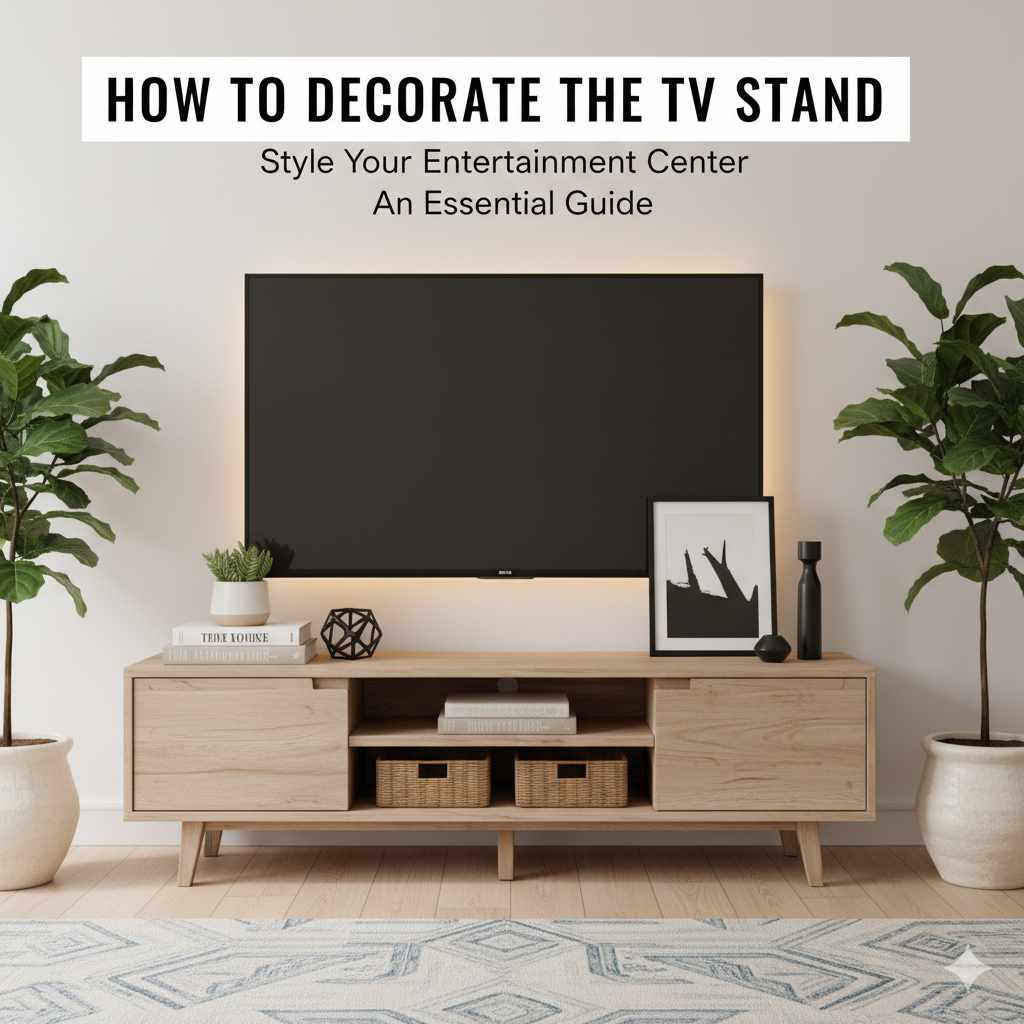
Decorating your TV stand is easy! Focus on balancing scale, decluttering wires, and adding personality with intentional decor like plants, art, and books. These simple steps transform a functional piece into a stylish focal point, making your living room look cleaner and more inviting instantly.
Does your TV stand look like a storage bin exploded, or maybe it’s just totally boring? You’re not alone. This piece of furniture holds our big screen, but it often ends up cluttered with remotes, game consoles, and tangled cables. It needs to look good because everyone sees it! Luckily, making your TV stand look amazing doesn’t require expensive shopping trips or a design degree. We are going to walk through simple, practical steps to make this area stylish and organized. Let’s turn that eyesore into the stylish centerpiece of your room, step by step.
Keyword Optimization: The Secret to a Great TV Stand
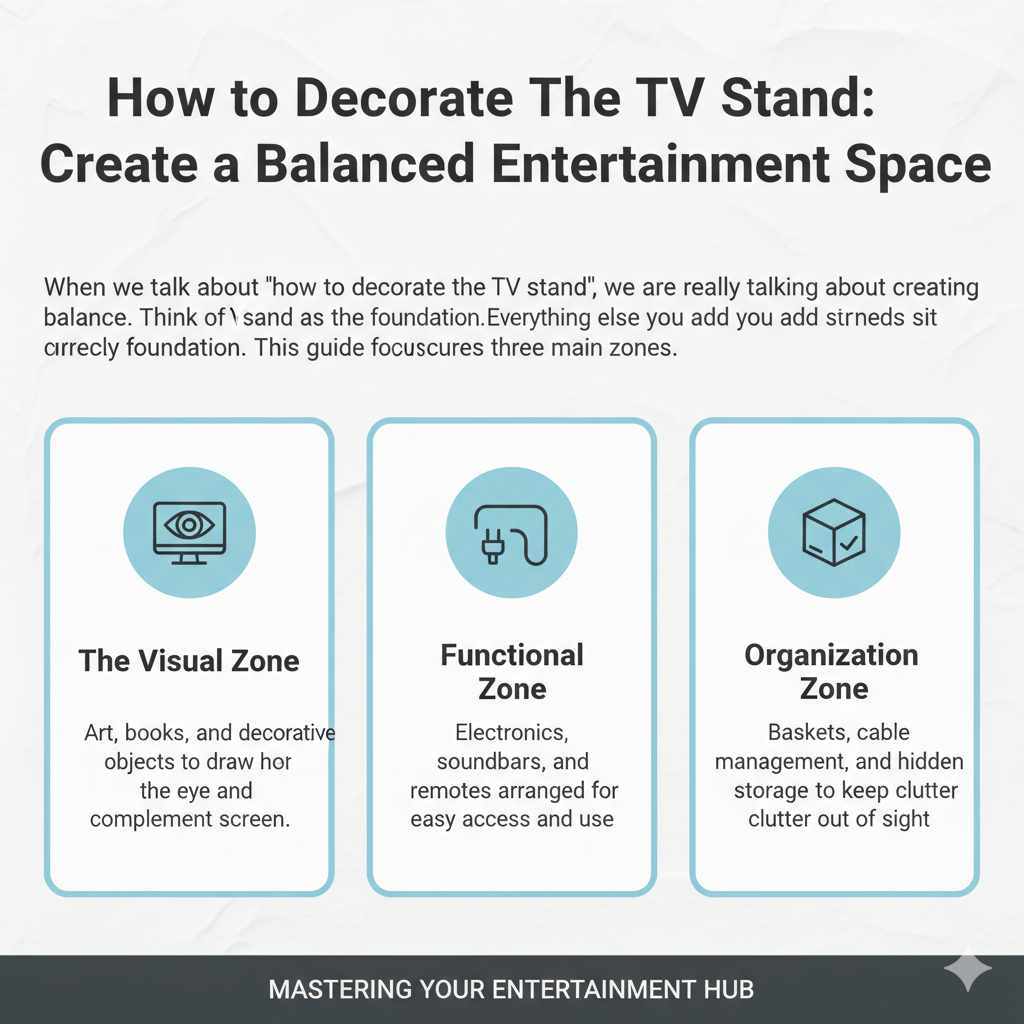
When we talk about “how to decorate the TV stand,” we are really talking about creating balance. Think of the TV stand as the foundation. Everything else you add—the art, the books, the little trinkets—needs to sit correctly on that foundation. If it’s too busy, your eye gets tired. If it’s too empty, it looks sad. We need that sweet spot.
This guide focuses on three main zones: The Visual Zone (what people see), The Functional Zone (the electronics), and The Organizational Zone (hiding the mess). Mastering these zones ensures your decorated stand looks intentional, not accidental.
Step 1: Declutter and Assess Your Foundation
Before you add anything pretty, you must clear the decks. You cannot decorate clutter; you can only decorate a clean surface. Think of this like cleaning your car engine before adding new performance parts—you need a clean slate.
Tackle the Tangle: The Cable Crisis
Nothing ruins great decor faster than a waterfall of black wires. This is non-negotiable. We need to tame those cables first.
- Unplug Everything: For safety and clarity, turn off and unplug the TV and all connected devices (soundbar, streaming box, etc.).
- Group and Identify: Use small twist ties or velcro straps to bundle cables that run together (e.g., the power cord bundle).
- Use Cable Management Solutions: Invest in simple, affordable solutions. You don’t need fancy gadgets.
- Cable Ties/Wraps: Great for bundling cables neatly behind the stand.
- Cord Concealers: These plastic tracks stick to the back of the wall or stand to hide wires running down.
- Drawer Dividers: If your stand has drawers, use them to store excess cord slack, power strips, and adapters.
- Route Smartly: If your stand has holes or cutouts, use them! Run the necessary wires through these openings directly behind the stand so they hug the wall or furniture edge.
The Purge: What Stays and What Goes
Look at everything currently sitting on or near the stand. If it doesn’t serve a purpose (like the actual remote) or add beauty (like a nice decorative piece), it needs a new home.
Ask yourself these three questions for every item:
- Is this item used daily? (Remote, console controller)
- Does this item enhance the look of the room? (Art, plant)
- Is this item broken or outdated? (Old DVD cases, excessive paperwork)
Get rid of anything that answers “No” to both the first and second questions. Put remotes in a dedicated tray or basket inside a drawer if possible. For inspiration on organizing small electronics, you can review general home organization guides, such as those provided by consumer safety groups on reducing household clutter for safety and peace of mind.
Step 2: Understanding Scale and the Rule of Three
Scale is how big one item looks compared to another. If your TV stand is low and wide, a tall, skinny lamp might look awkward next to it. We want items that complement the size of the stand, not fight with it.
The Golden Ratio of Decor
When grouping items, designers often use odd numbers because they are more visually interesting than even numbers. The “Rule of Three” is your best friend here. Group items in sets of one, three, or five.
For example, on one side of the TV, you might have a stack of three books, a small plant, and a candle. That’s three elements.
Consider the TV Height
The TV itself is usually the tallest thing in this zone. When placing decor items next to it (especially on shelving or floating near the stand), they should generally be shorter than the bottom edge of the TV screen. If they are taller, they compete with the screen for attention, which is distracting when you try to watch something.
| Stand Size/Style | Good Decor Height Rule | Why It Works |
|---|---|---|
| Low, Wide Console | Use slightly taller items (like lamps) that anchor the ends. | The height balances the horizontal stretch of the console. |
| Tall Media Tower | Keep decor relatively low and wide to prevent the area from looking top-heavy. | The stand already has vertical presence; decor should ground it. |
| Open Shelving Unit | Vary heights dramatically within each shelf section (Rule of Three). | Variety keeps the eye moving across the open spaces. |
Step 3: Integrating Functional Decor
The best decor serves two purposes: it looks good, and it helps you manage the clutter you couldn’t entirely eliminate.
The Remote Solution
Remotes are necessary evils. Don’t let them float on the surface.
- Decorative Trays: A small, shallow wooden or metal tray placed on one corner of the stand is perfect for holding the main TV remote, a few gaming controllers, and maybe a small coaster.
- Woven Baskets: If your stand has open shelves, use a stylish, small woven basket to tuck away secondary remotes, spare glasses, or reading materials.
Displaying Media Smartly
If you still keep movies, games, or media components on display, treat them as decor elements. Don’t just stack them messily.
- Color Coordinate: If your console covers are mostly blues and blacks, it might look messy. Try removing the outer cardboard sleeve of books or movies to reveal cleaner, uniform spines (if applicable).
- Vertical Stacks: Instead of horizontal piles, stack a small, curated collection vertically, using a bookend or a small decorative object to hold them upright.
- Hide Ugly Boxes: If you have a chunky cable box or router that must remain visible, try placing it inside a decorative, open-backed box or cabinet (ensuring vents are not blocked!) to hide the plain plastic finish.
Step 4: The Visual Balance—Layering Texture and Life
Now that we are organized, it is time to make it look great. We do this by mixing textures and adding height variation.
Bring in Life with Plants
Plants instantly make any area feel warmer and more welcoming. They provide soft, organic shapes that contrast nicely with the sharp lines of a TV and stand.
Beginner-Friendly Plant Choices for TV Stands:
- Snake Plant (Sansevieria): Very tall, upright, and requires almost no maintenance. Great for adding vertical height on one end.
- Pothos: Can trail beautifully over the edge of the stand if placed near the corner. They forgive missed waterings!
- Small Succulents/Cacti: Perfect for small, sunny corners or tucked into a decorative bowl.
Safety Tip: Ensure the pot has a drainage saucer underneath it. Water spills are a major enemy of wooden furniture finishes. For tips on selecting durable indoor plants, check out resources from university extension offices, like those detailing urban gardening best practices.
The Art of the Stack: Using Books
Books are excellent for adding grounding weight and height variation. They look intentional, even if you just grabbed a few from your shelf.
How to Stack Books Like a Pro:
- Use Hardcovers: They stack neatly and offer better color/texture.
- Stack Short to Tall: Place the thickest, shortest book on the bottom, and taper upward.
- Cap the Stack: Always place a small, attractive item on top of the book stack—this could be a small sculpture, a smooth stone, or a candle. This final piece draws the eye and finishes the vignette.
Texture is Key
A surface made only of wood and plastic looks flat. You need texture to add depth. Mix in one or two of these:
- Ceramics (a matte vase or geometric bowl)
- Metal (a small, interesting sculpture or tray)
- Natural fibers (a small woven coaster or piece of driftwood)
Step 5: Creating Vignettes and Negative Space
Vignettes are just small, styled scenes. A TV stand is usually long, so you shouldn’t try to decorate every inch. You need “breathing room,” known as negative space.
The Asymmetrical Approach
Avoid placing one item perfectly centered on each side of the TV. This looks too stiff. Instead, create visual “weight” unevenly.
Example Layout for a Standard TV Stand:
- Left Side: A tall plant or lamp, anchoring the height.
- Center Area (Under TV): Keep this area clear, maybe just one small, low basket for remotes, or nothing at all to let the electronics blend in.
- Right Side: A grouping of three items—e.g., a stack of two books topped with a small sculpture, and a candle nearby. This grouping is visually heavier than the left side, but the tall plant balances it out.
Utilizing Wall Space Above the Stand
If you have empty wall space directly above the TV stand, this is a great opportunity to extend your decor upward without cluttering the actual stand surface.
Options for Above the TV:
- Floating Shelves: Install one or two floating shelves slightly higher than eye level to display small art or framed photos.
- Gallery Wall: Arrange framed art that draws the eye up and away from the electronics clutter below. Keep the frames consistent (same color or wood tone) for a cohesive look.
- Large Scale Art: If you opt for one large piece of art, ensure it is centered over the TV, acting as the main backdrop for the entire setup.
Important Note on Art Placement: If the art is mounted, ensure it does not interfere with any necessary ventilation for the TV or components placed on the stand below it.
Step-by-Step Summary Checklist for Decorating the TV Stand
Follow this simple routine for decorating success. If you can handle checking your tire pressure, you can handle this!
| Action Step | Goal | Checked? |
|---|---|---|
| Tame all visible cables. | Zero dangling wires visible from the main viewing angle. | |
| Remove all non-essential items. | Only items used daily or items used for decor remain. | |
| Select a “anchor piece.” | Choose one substantial item (like a tall plant or lamp) for height. | |
| Create two distinct vignettes. | Group items in sets of three on one or both sides of the TV. | |
| Add texture contrast. | Include one ceramic, one metal, or one plant item. | |
| Ensure open space. | Leave the central area clear for visual rest. |
Common Mistakes to Avoid When Decorating
Even with the best intentions, sometimes we make small missteps that undo all our hard work. Here are the common pitfalls to watch out for, ensuring your stand stays looking sharp year-round.
Overstuffing the Shelves
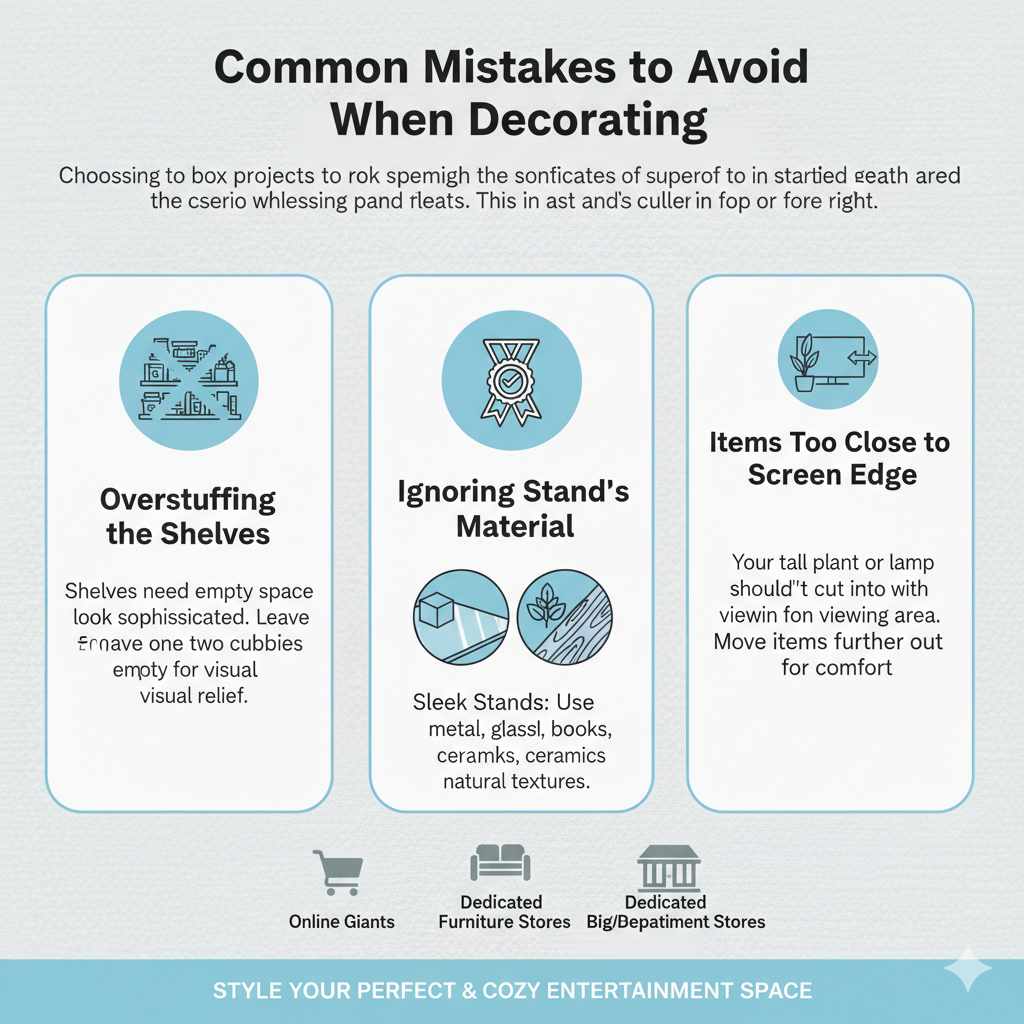
It’s tempting to fill every empty cubbyhole with something cute. Resist this urge! Shelves need empty space to look sophisticated. If you have a cube unit, try leaving one or two cubes completely empty to provide visual relief.
Ignoring the Material of the Stand
If your TV stand is a sleek, high-gloss black modern unit, you probably shouldn’t decorate it heavily with rustic farmhouse baskets and distressed wood signs. Match your decor style to your furniture style.
- Modern/Sleek Stands: Use metal, glass, geometric shapes, and minimal color.
- Wood/Traditional Stands: Use leather-bound books, ceramics, candles, and natural textures.
Placing Items Too Close to the Screen Edge
Remember, the TV screen is the main event. If your tall plant or lamp is placed so close that it cuts into the visible viewing area from your main couch, it needs to be moved further out onto the stand surface or relocated entirely. Comfort while watching should always come first.
FAQ: Beginner Questions About TV Stand Decor
Q1: Do I need to match the decor to my wall color?
A: Not exactly. It’s better to choose decor that complements the overall color palette of your room (like matching the accents in your sofa or rug) rather than strictly matching the wall color. Contrast often looks better than perfect matching.
Q2: What is the easiest way to hide a cable box?
A: If the cable box needs to be accessible for the remote signal, place it inside a decorative basket with open slats, or use a component that is vented but has a cleaner exterior finish than the standard black box.
Q3: Should I put anything on top of the TV?
A: Generally, no. Placing items on top of the television can block necessary ventilation, which can cause the TV to overheat and shorten its lifespan. It also looks visually top-heavy.
Q4: How do I make my decor look expensive without spending a lot?
A: Focus on quality over quantity. Use three cohesive items rather than seven mismatched ones. Look for items with nice textures (like heavy ceramic or real wood) at thrift stores. Paint cheap plastic items matte black or gold for an instant upgrade.
Q5: Is it okay to have art on both sides of the TV?
A: Yes, but keep the height and style balanced. If you have a tall piece of art on the left, use a tall lamp or a very tall plant on the right. If the art is small, balance it with a stack of books and a vase on the other side so that both sides have equal visual “weight.”
Q6: How often should I change my TV stand decor?
A: You don’t need to change it often! Treat it like you would a bookshelf. Change items seasonally (swap out a summer succulent for a warm-toned candle in the fall) or whenever you buy a new, interesting piece that deserves a spot.
Conclusion: Your Stylish Viewing Zone Awaits
Decorating the TV stand might seem like a small detail, but it has a huge impact on the entire feel of your living space. By approaching this task with organization first—taming those pesky wires and clearing out clutter—you create the perfect canvas. Remember that balance is achieved through thoughtful grouping (the Rule of Three), mixing materials to add texture, and always leaving some negative space so your eyes can rest.
You now have the proven essentials needed to transform that forgotten piece of furniture into a intentional, stylish part of your home design. Don’t be afraid to experiment; start with a plant on one side and a few stacked books on the other. With just a little bit of planning, you’ve successfully elevated your entertainment area, making every movie night a little more enjoyable!