You’ve seen the videos. A ball of dough hits a hot Blackstone, bubbles up, and turns into a puffy, leopard-spotted crust in minutes. Your own attempt? The bottom burned while the cheese barely melted, or the dough stuck and tore when you tried to flip it. Most griddle pizza guides say “cook on medium heat” and leave you to figure out the rest. That vagueness is why so many people give up after one bad batch.
This guide fixes that. You’ll learn the exact temperatures for different crust styles, how to manage moisture so the center doesn’t turn soggy, and a simple trick to melt cheese without a lid. You’ll also get three tested recipes and a troubleshooting section for the most common failures. By the end, you’ll be able to crank out a pizza that beats your home oven’s best effort.
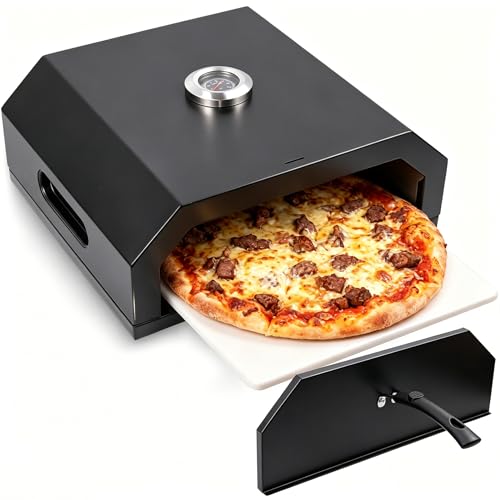
guogiyala
guogiyala Pizza oven for grill: blackstone pizza…
- High-Quality Stone: Grill top Pizza Oven Equipped with a 12"×12" cordierite baking stone for excellent heat retention and crisp, r…
- Built-in Thermometer for Accurate Temperature Control: Blackstone pizza oven Monitor internal heat at a glance to avoid burnt crus…
- Hassle-Free Cleaning: Features a good steel interior and removable pizza stone. simply wipe or brush off residue once cooled—no he…
As an Amazon Associate I earn from qualifying purchases.
One tool that makes this significantly easier is a dedicated pizza oven attachment for your grill. The guogiyala model has a built-in thermometer and a cordierite stone that holds heat far better than bare steel, which solves the two biggest griddle pizza problems: temperature guesswork and heat loss when you open the lid.
Why the Blackstone Griddle Makes Better Pizza Than Your Oven
A home oven tops out around 500°F, and even then, it cycles on and off. A Blackstone griddle surface can hit 600°F or more and hold that heat directly under the dough. That intense, direct contact heat is what creates a blistered, chewy crust in three minutes instead of twelve.
The griddle also gives you something an oven never will: distinct heat zones. You can have a screaming-hot zone for charring the bottom, a medium zone for finishing toppings, and a cooler zone to hold a finished pie while you cook the next one. That control is the real secret.
There’s one catch. The griddle is open on top. All the heat escapes upward, which means the top of your pizza cooks slower than the bottom. You have to manage that imbalance, and we’ll get to exactly how in a moment.
Essential Tools and Ingredients (What You Actually Need)
You don’t need a pizza oven attachment or a fancy peel. Here’s the honest list:
- Blackstone griddle — any size works, but a 36-inch model gives you room to cook two pizzas at once.
- Pizza dough — store-bought, homemade, or frozen. Each behaves differently; details below.
- Pizza sauce — keep it thick. A watery sauce is your enemy.
- Low-moisture mozzarella — the stuff in the bag, not fresh balls. Fresh mozzarella releases water and makes a mess on a griddle.
- Toppings — pre-cooked meats, low-moisture vegetables. Raw sausage won’t cook through in the short time the pizza is on the griddle.
- Olive oil — for the dough and the griddle surface.
- A metal spatula or pizza cutter — for lifting and checking the bottom.
- A spray bottle with water — this is the steam trick that changes everything.
The Perfect Griddle Pizza Dough (Store-Bought vs. Homemade)
Store-bought dough from the grocery store works fine. It’s usually a bit slack and sticky, so let it sit at room temperature for 30 minutes before you try to stretch it. Cold dough snaps back and tears.
Homemade dough is better if you want a crisper, more flavorful crust. A simple recipe with bread flour, water, yeast, salt, and a little olive oil will outperform anything from a tube. The key is hydration. Keep it around 60-65% for griddle cooking. That’s 600-650 grams of water per 1000 grams of flour. Higher hydration doughs are harder to handle and more likely to stick to the griddle surface.
Frozen dough is a legitimate option. Thaw it in the fridge overnight, then let it warm up on the counter for an hour. It won’t have the same oven spring as fresh dough, but it’s fine for a weeknight pizza.
Preheating and Temperature Control (The 400°F Rule)
Here’s the number most guides get wrong: they tell you to crank the griddle to high and leave it there. That burns the bottom before the top finishes. The sweet spot is a surface temperature around 400°F for most pizzas.
Set your burners to medium-low and let the griddle preheat for 10-15 minutes with the lid closed. Use an infrared thermometer to check the surface. You want 400°F in the center, with the outer edges running about 50°F cooler. That temperature gradient is your friend — it gives you a buffer zone.
Wind is a factor you won’t see in most recipes. A 10 mph breeze can drop your griddle surface temperature by 50-75°F, especially on the windward side. If it’s windy, turn up the burners slightly and position the griddle so the wind hits the back rather than the cooking surface. In cold weather (below 50°F), add 5 minutes to your preheat time.
Step-by-Step: How to Cook Pizza on a Blackstone Griddle
This is the method I use every time. It’s not complicated, but each step matters.
Stretching the Dough Without a Rolling Pin
A rolling pin presses out all the air bubbles that make crust light. Do this instead. Put the dough ball on a lightly floured surface. Press it flat with your fingertips, leaving the outer inch untouched. Pick it up and drape it over your knuckles, letting gravity stretch it. Rotate the dough like a steering wheel, letting it stretch under its own weight. If it resists, let it rest for 5 minutes and try again. You want a roughly 12-inch circle, slightly thicker at the edges.
Don’t worry about making it perfectly round. An oval pizza cooks just as well, and the uneven edges give you crispy bits to snack on.
Oil the Griddle, Not the Dough
Use a paper towel to spread a thin layer of olive oil on the griddle surface where the pizza will go. Too much oil makes the dough fry and turn greasy. Too little and it sticks. You want just enough to see a faint sheen.
Lay the stretched dough onto the oiled surface. Let it cook for 90 seconds, then check the bottom with your spatula. It should be golden brown with dark spots. If it’s pale, give it another 30 seconds. If it’s black, your griddle is too hot.
Flip and Top Quickly
Once the bottom is set, flip the dough over with your spatula. Now work fast. Spread a thin layer of sauce — about 1/4 cup for a 12-inch pizza. Too much sauce makes the center soggy. Add a handful of mozzarella and your toppings. Don’t overload it. Three or four toppings max, cut into small pieces.
The “Lid Trick” for Melting Cheese Faster
Here’s the problem: the bottom of the pizza is already cooked, but the cheese is barely warm. If you leave it on the griddle, the bottom burns. The solution is steam. Fill a spray bottle with water and spritz the griddle surface around the pizza — not on the pizza itself. Then immediately cover the pizza with a metal bowl or a large pot lid. The water turns to steam, which transfers heat to the top of the pizza and melts the cheese in about 60 seconds.

You can also add a few drops of water directly under the pizza if you’re using a lid. The steam will help the cheese melt and keep the bottom from burning. It’s not a perfect oven, but it works.
3 Must-Try Blackstone Pizza Recipes
These are the recipes I keep coming back to. Each one is designed to work with the griddle’s unique heat profile.
Classic Pepperoni with Crispy Edges
This is the benchmark. Use a 12-inch dough ball. Stretch it thin, about 1/4 inch thick. Oil the griddle and cook the dough for 90 seconds per side. Sauce with a thin layer of crushed San Marzano tomatoes seasoned with salt and oregano. Top with low-moisture mozzarella and a full layer of pepperoni. The pepperoni cups will crisp up and turn into little bowls of grease — that’s the point.
Cook for 4-5 minutes total, using the steam trick for the last minute. The edges should be charred in spots and the cheese bubbly.
BBQ Chicken with Caramelized Onions
This one is all about the sauce. Use a thick BBQ sauce — something with molasses, not a thin vinegar-based one. Cook the chicken breast first on the griddle, then slice it thin. Caramelize the onions in a separate zone of the griddle while the pizza cooks.
Skip the tomato sauce entirely. Spread the BBQ sauce directly on the dough, then add chicken, onions, and a mix of mozzarella and cheddar. The sweetness of the sauce will caramelize on the griddle and create a sticky, delicious edge.
Breakfast Pizza with Eggs and Bacon
This is a weekend favorite. Cook the bacon first, then crumble it. Whip two eggs with a splash of milk. Stretch the dough and cook it for 90 seconds per side. Spread a thin layer of white gravy or hollandaise over the dough, then add the eggs, bacon, and cheese.
The trick is to cook the eggs slightly before adding them to the pizza. Raw eggs won’t set in the short cooking time. Scramble them on the griddle first, then top the pizza. Cook for 3-4 minutes with the steam trick, and finish with a sprinkle of chives.
Troubleshooting: Soggy Crust, Burnt Bottom, and Uneven Cooking
These are the three failures I see most often, and they all have simple fixes.
Soggy center: This is almost always a moisture problem. Your sauce is too watery, or your toppings are releasing liquid as they cook. Fix it by using a thicker sauce, pre-cooking wet vegetables like mushrooms and zucchini, and using less cheese. A soggy center can also happen if you flip the dough too early — the moisture from the raw dough hasn’t had time to evaporate.
Burnt bottom: Your griddle is too hot, or you left the pizza on too long. Check your surface temperature with an infrared thermometer. If it’s above 450°F, turn the burners down. Also, remember that the bottom continues to cook from residual heat even after you take the pizza off the griddle. Let it rest on a cooling rack for a minute before slicing.
Uneven cooking: This is normal on a griddle. The center is always hotter than the edges. Use this to your advantage. Start the pizza in the center, then move it to the edge for the last minute of cooking. This lets the top finish without burning the bottom.
How to Clean Your Blackstone After a Pizza Night
Pizza leaves a mess. Burnt cheese and sauce can be stubborn, but you don’t need to scrub your seasoning off. Here’s the process.
Let the griddle cool until it’s warm, not hot. Use a grill scraper to remove the big chunks of burnt food. Then pour a small amount of water onto the surface — it will sizzle and steam, loosening the stuck-on cheese. Use a paper towel to wipe it clean. For stubborn spots, add a little more water and let it sit for a minute before scraping again.
Don’t use soap. It will strip your seasoning. After cleaning, apply a thin layer of oil to the surface to protect it. If you have a Blackstone griddle cleaning guide you follow, this fits right in. A dedicated pizza oven attachment with a removable stone is easier to clean — you just brush the stone off once it’s cool.
Frequently Asked Questions
Can I use frozen dough on a Blackstone griddle?
Yes, but thaw it completely first. Put it in the fridge overnight, then let it sit at room temperature for 30 minutes before stretching. Frozen dough tends to be a bit less airy than fresh, so don’t expect the same rise. It still makes a decent crust.
Do I need a pizza stone for a Blackstone?
No, the steel griddle surface works fine. But a stone, like the one in the guogiyala pizza oven attachment, retains heat better and gives a more even bottom crust. It’s a nice upgrade if you make pizza often, but not a requirement.
What temperature should I cook pizza on a Blackstone?
For most pizzas, aim for 400°F on the surface. Thin crusts can handle 425°F. Thick crusts do better at 375°F. Use an infrared thermometer to check the surface, not the dial.
Why is my pizza sticking to the griddle?
Either your griddle isn’t seasoned well, or you didn’t use enough oil. Make sure the surface is well-seasoned before you start. Use a thin layer of olive oil right before placing the dough. If it still sticks, the dough might be too wet — add a little more flour when stretching.
How do I get the cheese to melt without burning the crust?
Use the steam trick. Spritz water around the pizza and cover it with a metal bowl or lid. The trapped steam melts the cheese in about a minute. You can also add a second, cooler heat zone on the griddle to finish the top.
More Blackstone Griddle Recipes You’ll Love
Once you master pizza, the griddle opens up a world of other meals. You can cook steak with a perfect crust, make smash burgers, or do a full breakfast spread. The same heat-zone management applies to all of them. If you’re new to the griddle, check out how to light your Blackstone 36 to get started safely.
What Actually Works: My Final Advice
- Preheat the griddle for a full 10-15 minutes with the lid closed. A cold griddle is the number one cause of sticking.
- Use an infrared thermometer to hit 400°F on the surface. Trust the tool, not the dial.
- Stretch the dough by hand, not with a rolling pin. It takes two tries to get the hang of it.
- Keep the sauce thin and the toppings dry. Moisture is your enemy.
- Use the steam trick with a spray bottle and a metal lid to melt cheese without burning the bottom.
- Clean the griddle while it’s warm, and re-oil it after every pizza night.
- Don’t be afraid to use a dedicated pizza oven attachment if you want more consistent results — the built-in thermometer alone is worth it.