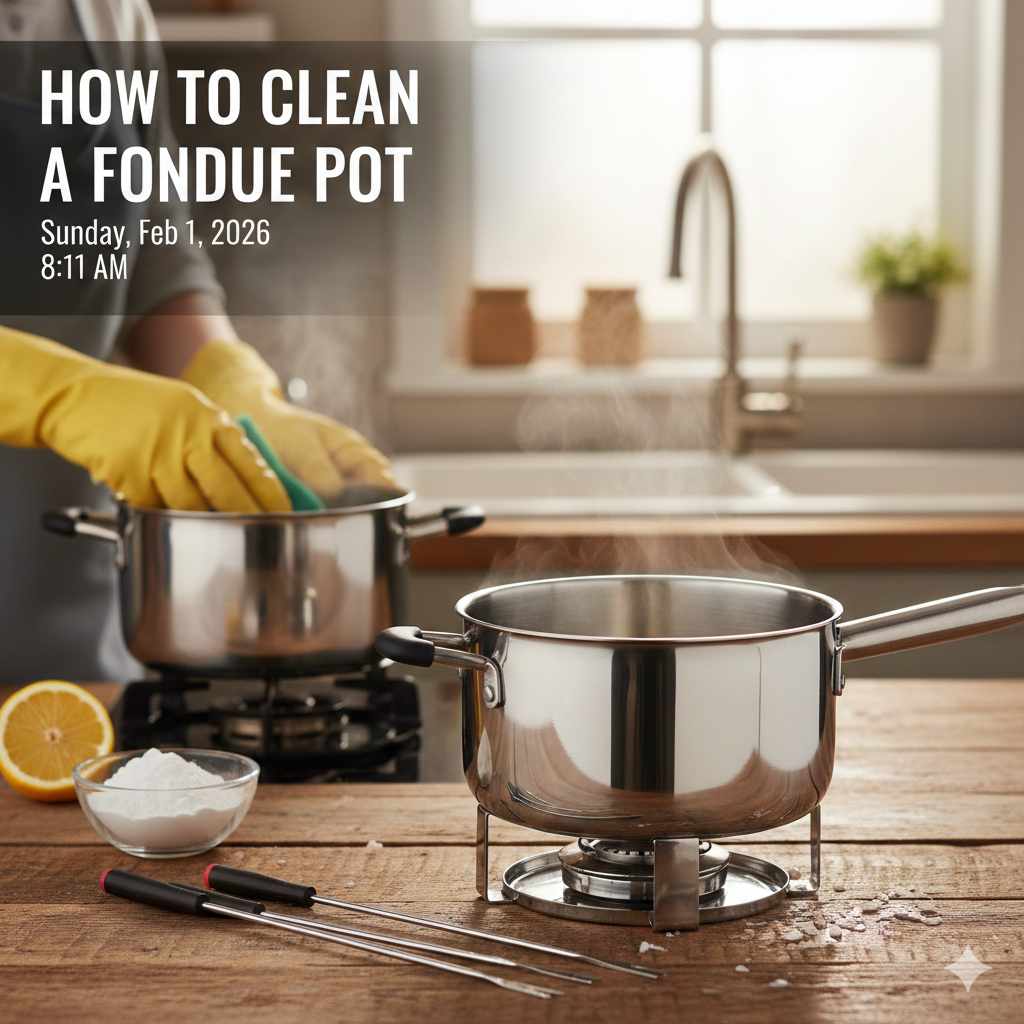
To clean a fondue pot safely, let it cool completely, gently scrape out large residues, soak in warm, soapy water, and use non-abrasive cleaners for stuck-on messes. Always check your specific pot’s material (ceramic, stainless steel, cast iron) for the best, safest cleaning method to keep it ready for your next dip.
That gooey cheese or rich chocolate fondue is amazing, but cleaning up afterward can feel like a chore. That sticky, hardened residue left in the bottom of your fondue pot can be frustrating to scrub off. You want your pot clean and ready for the next party, without damaging the finish. Don’t worry! Cleaning your fondue pot is much easier than you think, even if it looks messy right now. We are going to walk through safe, simple steps for every common pot type. You will learn exactly what tools you need and the secrets to lifting that stubborn gunk effortlessly. Let’s get that pot sparkling!
Why Cleaning Fondue Pots Requires a Special Touch
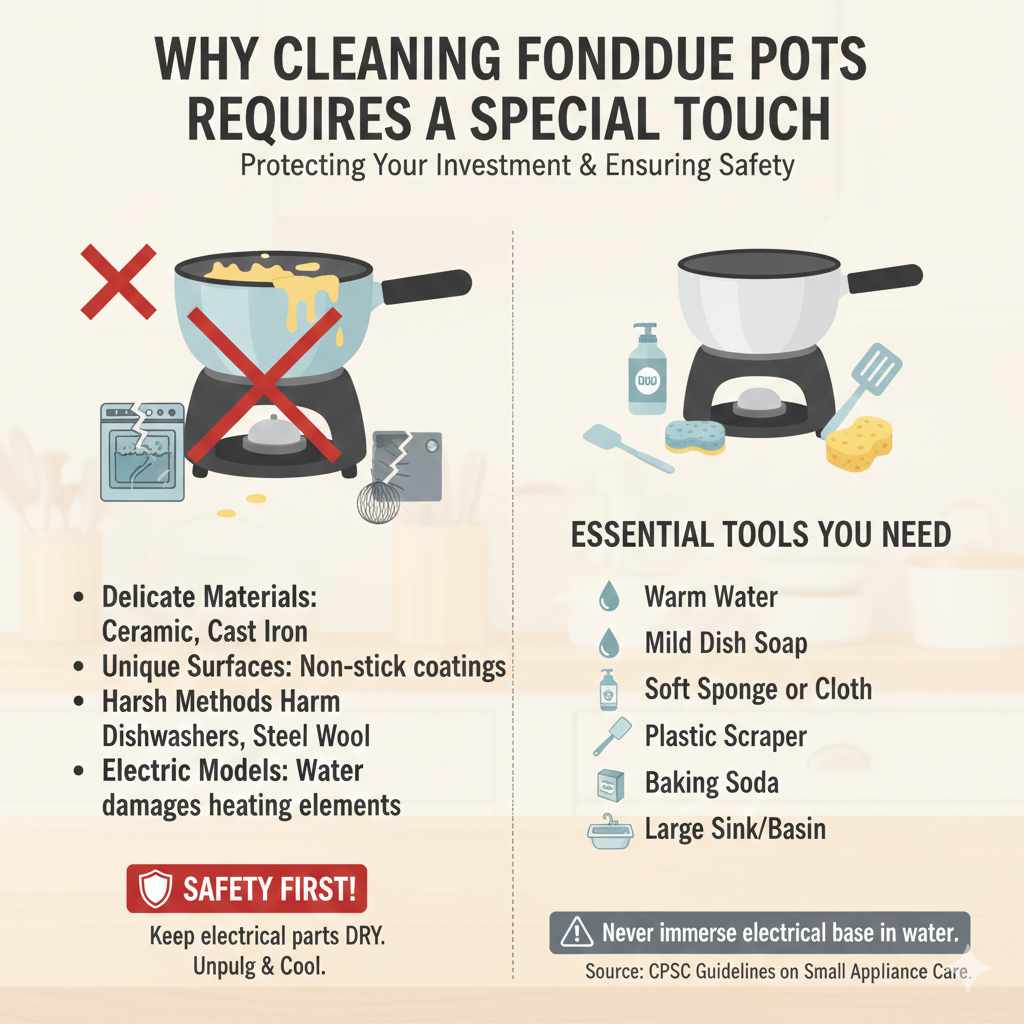
Fondue pots aren’t like regular saucepans. They are often made of delicate materials, like ceramic or cast iron, and they usually have a unique, sometimes non-stick, internal surface. Throwing one straight into a harsh dishwasher cycle or attacking it with steel wool can ruin the finish quickly. This is especially true for electric models where water can damage the heating element or plugs. Taking a moment to apply the right technique ensures your fondue pot stays functional and safe for food preparation for years to come. Safety first, especially when dealing with electrical appliances or delicate cookware!
Essential Tools You Need Before You Start
Before tackling the grime, gather your cleaning arsenal. Having the right tools prevents damaging your pot while making the job faster. Think simple, gentle tools.
- Warm Water
- Mild Dish Soap (non-abrasive)
- Soft Sponge or Dish Cloth
- Plastic or Silicone Scraper (like a spatula edge)
- Baking Soda (for tough spots)
- A Large Sink or Basin
Safety Note: Never immerse the base or heating element of an electric fondue pot in water. Always ensure the pot is unplugged and completely cool before starting any cleaning process. According to general guidance on kitchen appliance safety, electrical components should always remain dry for safety ([source: Consumer Product Safety Commission guidelines on small appliance care, generally understood best practices]).
Step-by-Step Guide: The Universal First Steps
No matter if you used oil, cheese, or chocolate, these initial steps are crucial for any fondue pot cleanup.
Step 1: Cool Down Completely
This is the most important step. Never try to clean a hot fondue pot! The rapid temperature change can cause cracks, especially in ceramic or glass pots (a process called thermal shock). Wait until the pot is completely cool to the touch—usually an hour or more after use.
Step 2: Remove the Bulk Debris
Use a plastic spatula or a wooden spoon to gently scrape out any large chunks of food that are stuck or dried onto the bottom or sides. Be very gentle, especially with non-stick coatings. You are just trying to remove the easy stuff.
Step 3: The Hot Water Soak (The Magic Step)
Fill the pot about halfway with warm water and add a few drops of mild dish soap. Let this mixture sit and soak for at least 30 minutes, or even a few hours for really stubborn cheese remnants. The hot water and soap help to rehydrate and loosen the hardened food particles. This soaking step drastically reduces your scrubbing time!
Cleaning Based on Fondue Type: Tailoring the Method
The type of fondue you enjoyed dictates the best way to remove the residue. Cheese and chocolate leave very different messes.
Cleaning After Cheese Fondue
Cheese is notoriously sticky and often leaves behind a baked-on layer. You need a method that tackles grease and stickiness.
- After the initial soak (Step 3 above), drain the murky water.
- Fill the pot again with fresh hot water and add about 2 tablespoons of baking soda. Baking soda is a fantastic, mild abrasive that cuts grease without scratching most surfaces.
- Gently rub the inside using your soft sponge or cloth. For tougher spots, let this baking soda solution sit for another 15 minutes.
- If residue remains, use a plastic scraper carefully, applying pressure only where needed.
Cleaning After Chocolate Fondue
Chocolate usually dissolves better than cheese but can leave a hard, nearly plastic-like film once it cools and sets.
- Use the initial hot, soapy soak (Step 3). Chocolate is fat-based, so hot water and soap work well to emulsify it.
- If necessary, use very hot (but not boiling) water refills to keep the dissolving process going.
- For the final wipe, a clean paper towel can often grab the last remaining greasy smears before you move to a final wash with a sponge.
Cleaning After Oil (Meat) Fondue (Fondue Bourguignonne)
Oil fondue leaves behind greasy residue, which is much easier to manage than baked cheese, provided you address it quickly.
- Once the pot is cool, carefully pour the used oil into an old jar or container. Do NOT pour hot oil down your sink drain; it will clog your plumbing!
- Wipe out the excess oil residue with a few paper towels. Dispose of the paper towels in the trash.
- Proceed with Step 3 (hot, soapy soak). Since oil is involved, using a degreasing dish soap is recommended here.
Material-Specific Cleaning Secrets
The material construction of your fondue pot dictates how aggressive you can be with cleaning. Always check the manufacturer’s guide if you have it, but generally, follow these guidelines:
Cleaning Ceramic or Stoneware Fondue Pots
These are often beautiful but can scratch easily. Scrubbing too hard can remove the glaze.
- Emphasize the soaking time to let the stuck food soften naturally.
- Only use the soft sponge side. Avoid scouring pads completely.
- If absolutely necessary, a paste of hydrogen peroxide and baking soda can sometimes help lift stains, but test this in a small, hidden area first.
Cleaning Stainless Steel Fondue Pots
Stainless steel is the most durable. It resists most scratching but can sometimes get water spots or a dull finish from burnt food.
- You can use slightly more elbow grease here.
- For mineral deposits or shiny residue, a solution of white vinegar and water (50/50) left to sit for 10 minutes can often restore the shine. Rinse thoroughly afterward.
- Ensure you scrub with the grain of the metal if you see fine scratches forming.
Cleaning Cast Iron Fondue Pots
Cast iron is tough but requires care to maintain its seasoning (if applicable) and prevent rust.
- Wipe out as much residue as possible with a paper towel first.
- Use hot water and mild soap, scrubbing minimally.
- Do not let cast iron soak for long periods, as this can lead to rust.
- After washing, dry the pot immediately and thoroughly with a dish towel. Rub a very thin layer of cooking oil onto the interior to maintain the seasoning.
Handling Electric Fondue Pots (Base and Heating Element)
Cleaning electric components requires extreme caution. The pot insert is usually removable, making the job simpler.
| Component | Cleaning Procedure | Warning |
|---|---|---|
| Pot Insert (Removable) | Treat based on its material (stainless, ceramic). Follow the steps above. | Ensure it is dry before placing it back on the base. |
| Heating Base/Stand | Unplug! Wipe the exterior surfaces with a slightly damp cloth. Use a dry cloth immediately after. | Never submerge the base in water or let water drip into electrical ports. |
Tackling Tough Spots: The Baking Soda Paste Method
For those frustrating spots that just won’t budge—maybe burned cheese clinging to the bottom—it’s time for a gentle boost of abrasion. Baking soda is your best friend here. It cleans without the harshness of commercial scouring powders.
How to Make and Use the Paste
- Ensure the pot is rinsed out post-soak.
- In a small bowl, mix baking soda with just enough warm water to form a thick paste (like toothpaste consistency).
- Apply this paste directly to the stuck-on areas.
- Let it rest for 15 to 30 minutes. This allows the particles in the baking soda to start working on the residue slowly.
- Use your soft sponge or cloth to gently scrub the area in small circles. You should feel the residue releasing more easily.
- Rinse the pot thoroughly with clean water until all baking soda residue is gone.
The Final Wash and Drying Process
Once the major caked-on food is gone, give the pot a final, gentle hand wash.
Hand Washing Best Practices
- Use warm water and a small amount of regular dish soap.
- Use a clean, soft sponge or cloth—nothing metal or abrasive.
- Rinse thoroughly under running water. Any soap left behind can affect the taste of your next fondue.
The Essential Dry
Drying is almost as important as washing, especially for cast iron and non-stick surfaces. Moisture encourages rust on bare metals and can sometimes leave water spots on stainless steel.
- Immediately after rinsing, dry the inside and outside of the pot completely with a clean, lint-free dish towel.
- For maximum safety, especially with electric units, let the pot air dry completely upside down on a drying rack for a few hours before storing. Ensure there is no lingering moisture inside the basin before putting the lid on or storing it away.
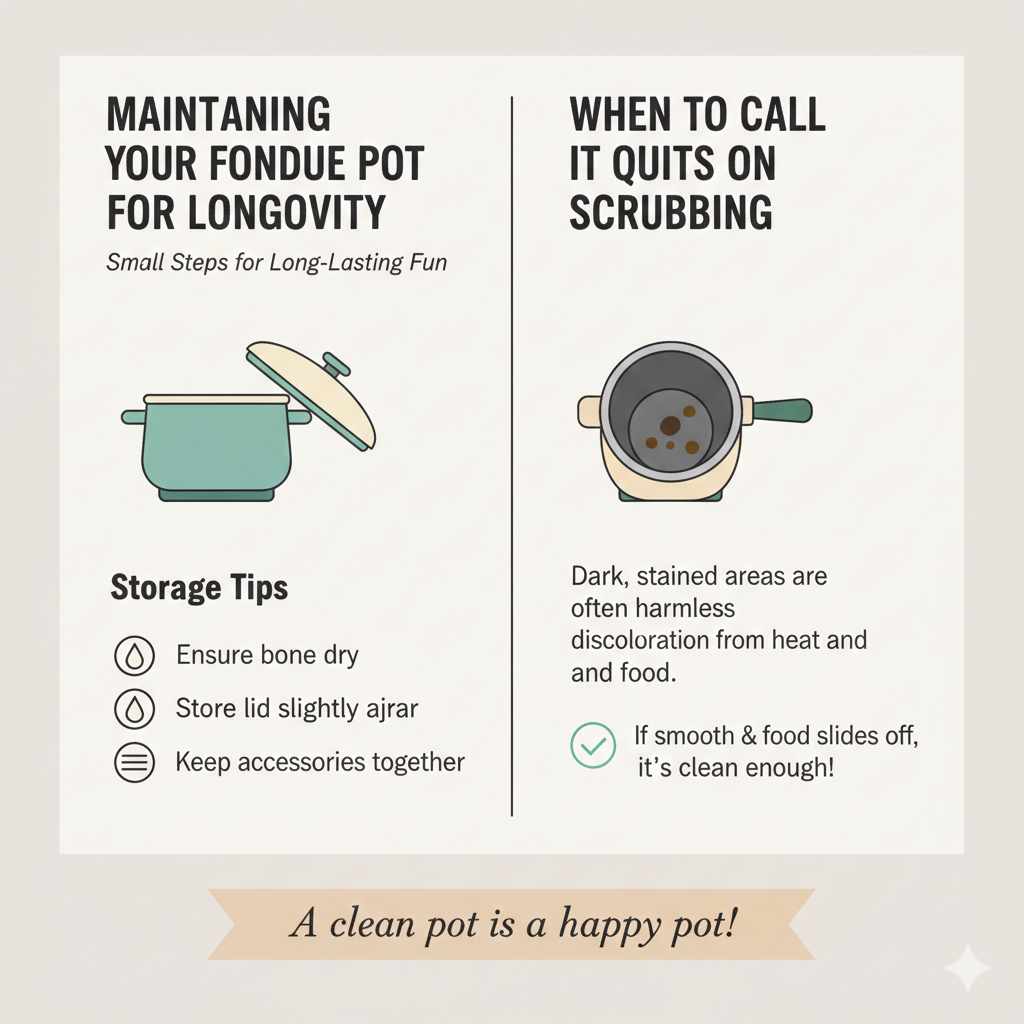
Maintaining Your Fondue Pot for Longevity
A clean pot is a happy pot! Taking small steps after each use ensures it lasts for many years of gooey fun. Consider this routine maintenance part of your hosting duties.
Storage Tips
- Ensure the pot is bone dry before storing.
- If your pot has a heavy lid, store it slightly ajar or separately to allow air circulation, preventing any trapped moisture from causing odors.
- Keep all accessories, like the temperature control unit or forks, stored neatly with the pot itself.
When to Call It Quits on Scrubbing
If you have scrubbed, soaked, and used baking soda, and there is still a dark, slightly stained area, resist the urge to use harsh chemicals or metal tools. These stains are often harmless discoloration that resulted from high heat and food contact, similar to the patina on a well-used pan. If the surface is smooth and food slides off easily, it’s clean enough!
Frequently Asked Questions (FAQ) About Fondue Pot Cleaning
Q1: Can I ever put my fondue pot in the dishwasher?
A: It depends entirely on the material. Most electric fondue pot bases should never go in the dishwasher. Ceramic or stainless steel inserts might be dishwasher safe, but hand washing is always the safest bet to protect glazes and finishes.
Q2: How do I remove rust spots from my cast iron fondue pot?
A: After cleaning, gently scrub the rust spot with a fine-grade steel wool only on the affected cast iron area. Wash, dry immediately, and then re-season the area by rubbing it with a thin layer of vegetable oil and heating the empty pot gently on the stove for about 15 minutes.
Q3: My electric pot base has burnt-on food or spills on the outside heating element. What do I do?
A: Make sure it is unplugged and cool. Use a slightly damp sponge with just a tiny drop of soap. Wipe the area gently. For baked-on spills near the element, sometimes a soft, damp cloth wrapped around a popsicle stick can help reach tight spots without touching the electrical components directly.
Q4: Why is my fondue pot cooking unevenly after I cleaned it?
A: If the pot is heating unevenly, it usually means the heating element itself is damaged, or there is a poor connection. If it’s an older unit, the element may be failing. If you suspect damage from water, stop using it immediately and consult the manufacturer, as electrical issues are serious.
Q5: What is the best way to clean sticky, hardened brown sugar from a dessert fondue?
A: Sticky sugar acts like glue. Maximize the initial soak time using very hot water (after the pot cools slightly). If standard soaking fails, try adding a tablespoon of white vinegar to the hot, soapy soaking water; the mild acid helps dissolve sugar crystallization faster.
Q6: Should I use abrasive sponges or steel wool on my new non-stick fondue pot?
A: Absolutely not. For any pot marketed as non-stick, only use soft sponges, dishcloths, or silicone scrubbers. Abrasives will severely damage the coating, causing food to stick permanently next time.
Conclusion: Ready for the Next Gathering
Cleaning up after a delightful fondue session doesn’t have to involve frustration or damage to your favorite cookware. By respecting the cool-down period, soaking diligently, and tailoring your scrubbing method to the pot’s material—whether it’s delicate ceramic or sturdy cast iron—you ensure your fondue pot stays in top shape. Remember that gentleness is key, and simple household items like baking soda and vinegar are often all you need for the toughest jobs. Now that you know the essentials of how to clean a fondue pot effectively and safely, you can host your next dipping party with total confidence, knowing the cleanup won’t be a headache. Keep it clean, keep it dry, and happy fondue making!