
A box spring is crucial for supporting your mattress, preventing sagging, and extending its life. While modern beds sometimes use platform foundations, a traditional box spring remains either essential or highly recommended for most innerspring and hybrid mattresses to ensure proper support and warranty coverage.
If you’ve ever shopped for a new mattress, you’ve probably wondered about that big, fabric-covered box that seems to live under the mattress. Is it just decoration? Do you actually need one?
It is easy to feel confused when mattress shopping. There are so many new terms like “platform bed” and “foundations.” These components look big, heavy, and maybe unnecessary, especially when you are trying to save space or money.
Don’t worry! We are going to break down exactly what a box spring does and when you can skip it. Think of me as your friendly guide who makes complicated bedroom setups easy to understand. By the end of this guide, you will confidently know if you need that box for your specific setup.
What Exactly Is a Box Spring? Separating Fact from Fiction
Before we talk about how important it is, let’s make sure we know what we are talking about. A box spring isn’t just an empty box. It’s a sturdy, typically wooden frame covered in fabric. Inside, it usually contains metal coils or a solid wooden grid.
The name itself can be a little misleading today. While older versions were literally filled with metal springs (hence the name), modern box springs often use a solid structure or torsion bars for support.
Box Spring vs Foundation vs Platform
These terms often get mixed up, and it causes major confusion for buyers. Let’s clarify them so you know what you are purchasing for your bed frame:
- Box Spring: This is a cushioned or sprung support system designed specifically to work with traditional innerspring or hybrid mattresses. It absorbs shock and provides consistent give.
- Foundation: This term is often used interchangeably with a box spring, but typically refers to a simple, solid wooden or metal grid structure that offers firm, flat support without any give or bounce. Foam mattresses often require a foundation.
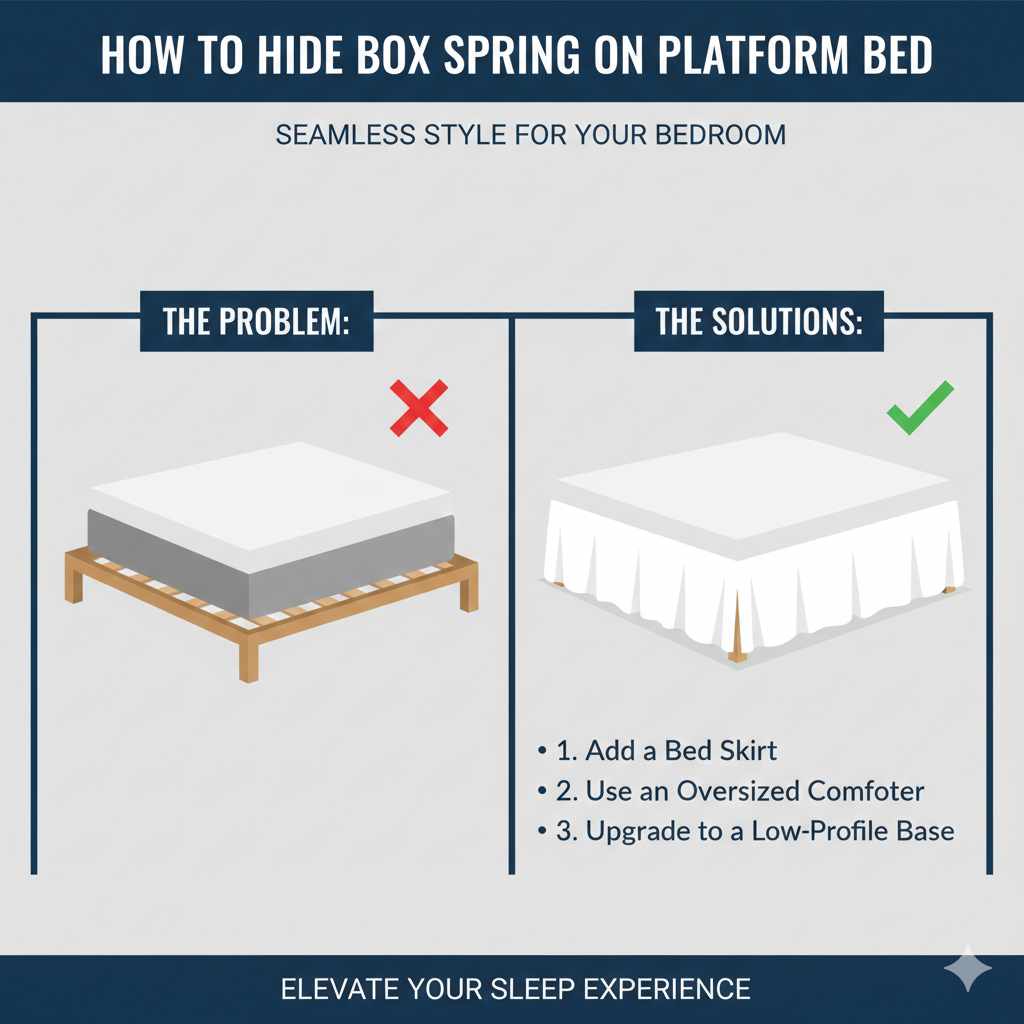
- Platform Bed: This is a complete bed frame that has built-in slats or a solid surface, meaning you do not need a separate box spring or foundation underneath the mattress.

How Important Is a Box Spring? The Core Functions
So, how important is this piece of furniture when protecting your sleep investment? In many cases, it’s extremely important, mainly for three critical reasons: support, shock absorption, and warranty compliance.
1. Crucial Support for Innerspring Mattresses
Traditional innerspring mattresses rely heavily on the box spring beneath them. Think of it like this: Your car’s suspension needs shocks and springs to handle bumps smoothly. The box spring acts as the suspension for your innerspring mattress.
- Prevents Sagging: Over time, the metal coils in a traditional mattress can start to push down. A sturdy box spring maintains an even, non-yielding base, stopping the center of your mattress from dipping.
- Ensures Uniform Density: When coils sit directly on solid wood or thin slats (like those found on some platform beds), the pressure points might not be evenly distributed. The box spring spreads that weight out evenly across the entire surface area.
2. Shock Absorption and Protecting the Coils
Every time you sit down or lay on the bed, you create impact stress. If that stress goes directly into the mattress coils without anything to cushion it first, the coils wear out much faster.
The box spring absorbs the initial impact. This dramatically reduces wear and tear on the mattress itself. This protection is key for longevity.
3. Maintaining Mattress Warranty
This is a crucial, often overlooked point. Most mattress manufacturers specify exactly what kind of base their mattress is designed to sit on. If you use the wrong type of base—like putting a new memory foam mattress on an old, sagging box spring, or putting an innerspring mattress directly on a platform bed without checking—you risk voiding your warranty.
Always check the manufacturer’s manual. Many warranties require a foundation that provides continuous, firm support or a specific height/coil count in the box spring. If they don’t mandate a box spring, they will mandate a foundation with slats spaced no more than three inches apart, based on guidance from organizations like the Federal Trade Commission (FTC) regarding consumer products.
When Can You Skip the Box Spring? Modern Mattress Types
The mattress industry has changed a lot! Not every mattress needs a traditional box spring anymore. The need depends entirely on what your mattress is made of.
Memory Foam and All-Foam Mattresses
Memory foam, latex foam, and standard foam mattresses generally do not use traditional, spring-filled box springs. Why?
- Their Structure: Foam mattresses are designed to use the pressure-relieving properties of the foam layers. A traditional box spring adds too much bounce or inconsistency for the foam to contour correctly.
- Support Requirement: These need a solid, flat surface or closely spaced slats. If the gaps between slats are too wide (over 3 inches), the foam will sink between them, creating body impressions.
What to use instead: A solid foundation, a slatted platform bed (with slats close together), or even bunkie boards placed on top of existing slats are excellent substitutes for foam mattresses.
Hybrid Mattresses
Hybrids combine the best of both worlds: supportive coils underneath and comfort foam layers on top. Because they have coils already, some manufacturers say you can place them on a flat foundation or platform.
However, many hybrid manufacturers still recommend a specific type of support base:
- If the manufacturer allows: You can use a true platform bed or a low-profile foundation (one without springs).
- If unsure: Using a box spring designed for hybrids (often called a “semi-flex” foundation) or one recommended by the retailer is the safest bet to maintain the warranty.
Comparing Support Systems: A Quick Breakdown
To help you decide what you need, here is a simple comparison of the most common base options available for your mattress type:
| Support System | Best For | Pros | Cons |
|---|---|---|---|
| Traditional Box Spring (Coiled) | Old Innerspring Mattresses | Adds height, classic bounce, excellent shock absorption. | Too bouncy for foam, can be bulky. |
| Solid Foundation (Modern) | Memory Foam, Latex, Most Hybrids | Firm, consistent support, prevents sinking, lower profile. | No added bounce, potentially voids warranty on older innerspring units. |
| Platform Bed (Built-in Slats) | Foam, Latex, many Hybrids | No extra piece needed, modern look, saves space. | Slats must be close together (less than 3 inches) or a Bunkie board is required. |
The Step-by-Step Guide to Choosing the Right Support
Choosing the right base doesn’t have to be complicated. Follow these simple steps to ensure you pick the perfect foundation for your mattress.
Step 1: Identify Your Mattress Type
This is the most important step. Is your mattress:
- Innerspring (mostly coils)?
- Memory Foam or Latex (all foam)?
- Hybrid (coils + foam layers)?
Step 2: Check Your Mattress Manufacturer’s Requirements
Do not skip this documentation review! Look for the warranty booklet or the “setup guide.”
Look for specific instructions like:
- “Must be used on a solid surface.”
- “Slats must not exceed 2.75 inches apart.”
- “A traditional box spring is required.”
If you cannot find the paperwork, call the retailer or manufacturer’s customer service line—it’s worth the call to protect your purchase.
Step 3: Assess Your Current Setup (If Applicable)
If you are keeping your existing bed frame, check the slats:
Tool Needed: A ruler or tape measure.
- Turn off the lights and carefully remove the mattress.
- Measure the gap between the wooden slats running across the frame.
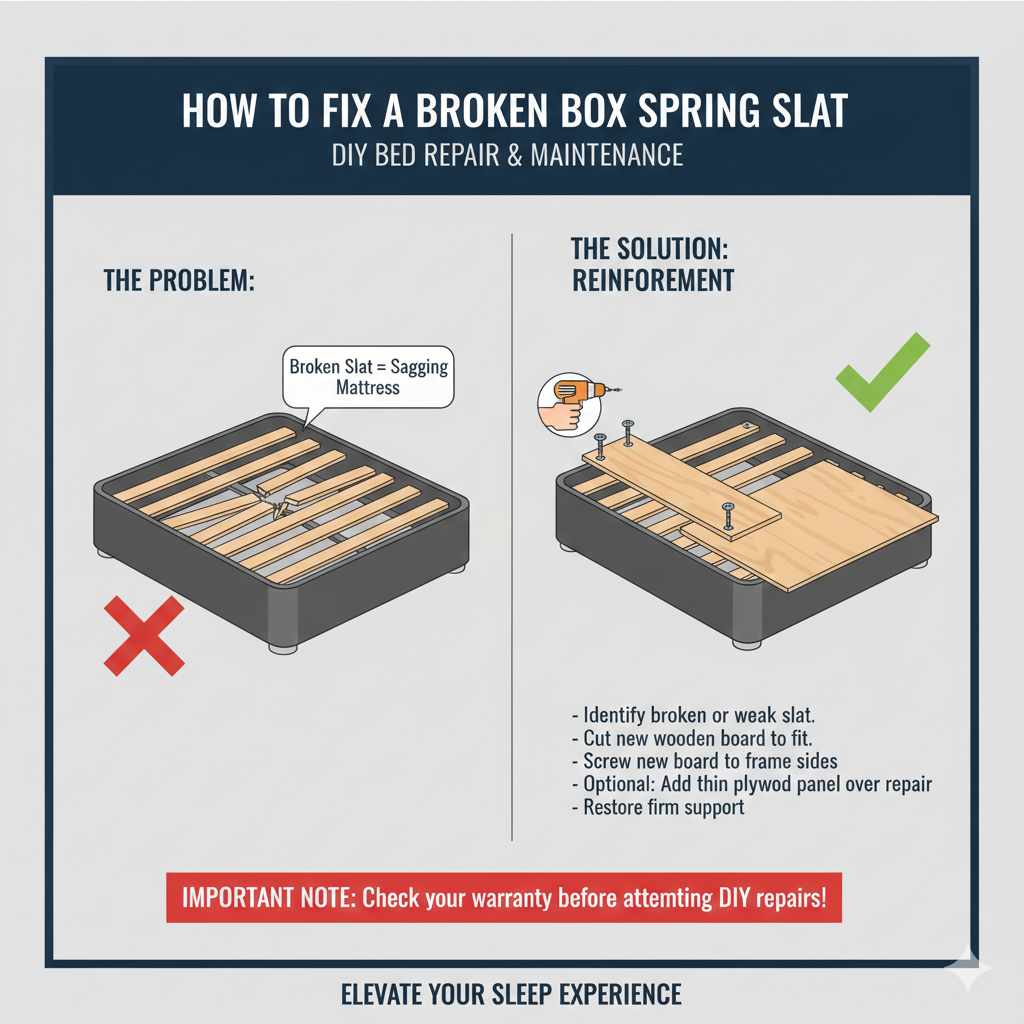
- If the gap is wider than three inches, you need to add support, usually via a Bunkie Board (a thin, solid board layer) placed over the slats before the mattress goes back on.
Step 4: Consider Height and Aesthetics
A traditional box spring (often 8 to 14 inches high) adds significant height to your bed. This is great if you prefer a high bed, but it looks awkward and can be hard to climb into with low-profile foam mattresses.
If you want a lower profile, choose a modern foundation or a platform bed frame instead of a traditional box spring.
Benefits Beyond Bedding: Practical Advantages
While support is primary, the box spring offers a few other practical benefits that make it worthwhile for many setups.
1. Adding Height and Ease of Use
For many people, especially those with mobility issues or older adults, a bed that is too low to the ground can be difficult to get in and out of. A standard box spring adds 8 to 10 inches of crucial height.
This height ensures the mattress sits comfortably at hip level, which is generally recommended for ease of use.
2. Budget-Friendliness (Sometimes)
In some scenarios, purchasing a dedicated box spring or foundation can be cheaper than buying a whole new platform bed frame that includes built-in slats.
For example, if you love your current metal frame but need firmer support for a new foam mattress, adding an inexpensive steel frame foundation might be the most cost-effective route compared to replacing the entire bed structure.
3. Improved Airflow (Depending on Type)
While not as good as a slatted frame, a traditional box spring often elevates the mattress slightly off the main bed frame surface, allowing air to circulate beneath it to a limited degree. More modern, specialized foundations are often designed specifically with cross-ventilation channels to wick away moisture, which is very important for foam mattresses that can sometimes retain heat.
The Role of a Bunkie Board: The Best of Both Worlds?
If you have a platform bed where you are unsure about the slat spacing, or if you want to reduce the height of a new mattress without losing support, the Bunkie board is your secret weapon. A Bunkie board is essentially a thin, flexible foundation, usually only 1 to 3 inches thick.
When to Use a Bunkie Board:
- When your platform slats are too far apart (gaps over 3 inches).
- When you switch from a high box spring to a low-profile platform and still want some cushioning between the mattress and the hard frame.
- When using a hybrid mattress on a flat, non-flexible base.
It provides the flat, solid surface that foam requires while filling the gaps that would otherwise cause indentations. It helps bridge the gap between needing a true box spring and needing a platform.
Safety and Stability Concerns: What to Watch Out For
Using the wrong base can lead to serious issues beyond just losing your warranty coverage. Stability and safety are paramount.
The Danger of “DIY” Support
It might be tempting to just prop your mattress up on some old wooden boards or uneven furniture to save money, but this is a fast track to mattress damage and uneven sleeping surfaces.
An uneven base transfers stress unevenly to your mattress coils or foam cells. This leads to premature sagging, lumps appearing, and potential back pain for you. You want the support structure to be flat and solid, just like a sturdy workbench supports your tools.
For reference on proper structural support for furniture and bedding materials, researching standards set by organizations like the National Institute of Standards and Technology (NIST) on material durability can give you context on quality expectations.
The Risk of Noise
If you have an older box spring, or if you place a heavy mattress (like a thick hybrid) on a flimsy metal frame without proper center support, noise becomes an issue.
That squeak or creak often comes from the box spring flexing too much or the frame rails rubbing together. A newer, high-quality foundation or a platform bed with a strong center support beam usually eliminates this noise.
Maintenance Tips to Maximize Base Lifespan
Once you’ve invested in the right foundation or box spring, taking care of it ensures it supports your mattress for years to come.
1. Ensure Proper Center Support
This is critical for Queen, King, and California King sizes. These larger mattresses require a center support beam running down the middle of the frame, often connecting to legs that touch the floor. Without this, the weight pushes down on the middle beam of the box spring, causing it to buckle.
2. Keep It Dry
Moisture is the enemy of most mattress support systems, whether wood or metal coils. Storing a box spring in a damp basement or allowing spills to soak in can lead to mold growth, rust, or wood rot, quickly compromising the structure’s integrity.
3. Rotate (Don’t Flip)
Most modern box springs and foundations are not meant to be flipped over. High-quality ones may have different sides, but generally, you should rotate them 180 degrees every six months when you rotate your mattress. This helps distribute any minor wear evenly across the support structure.

Frequently Asked Questions (FAQ) About Box Springs
Q1: Can I put my new mattress directly on the floor?
While technically possible for a short time, putting any new mattress directly on the floor is generally not recommended. The floor traps moisture underneath, which can lead to mold and mildew growth inside your mattress. It also offers zero ventilation and zero support consistency.
Q2: How tall should my bed be altogether?
Ideally, the top of your mattress should sit roughly at the height of your hip when you are standing next to it. A standard box spring adds about 8 to 10 inches, and the mattress adds another 10 to 14 inches. If you are short, use a low-profile foundation (about 5 inches) instead of a standard box spring.
Q3: Is a “flexi-slat” system the same as a box spring?
No, they are different. A flexi-slat system involves slightly curved wooden slats that offer a bit of natural springiness. While they provide better support than flat, cheap slats, they usually do not offer the same level of structured support or warranty compliance validation as a dedicated box spring or foundation.
Q4: My mattress is an innerspring. Do I need to replace my old box spring too?
If your old box spring is more than 5–7 years old, or if you notice any visible sagging, dips, or hear severe creaking sounds from it, you absolutely should replace it when you get a new mattress. A failing base will destroy a new mattress prematurely.
Q5: Are platform beds a good replacement for a box spring?
Yes, platform beds are excellent replacements if they have closely spaced, supportive slats (usually 2 to 3 inches apart) or a solid top deck. They are designed to offer the required flat support without needing an extra layer.
Q6: Does the box spring add extra pressure relief?
For modern foam or latex mattresses, no. In fact, it can interfere with the intended pressure relief. For older innerspring mattresses, the box spring adds relief by absorbing impact, but the primary pressure relief comes from the top comfort layers of the mattress itself.
Q7: What is the budget option if I absolutely cannot afford a box spring right now?
The least expensive, safest temporary fix is purchasing a Bunkie board cut to the size of your mattress. If you have strong, closely spaced slats, even adding a few pieces of sturdy plywood across the slats temporarily can offer flat, solid support until you can purchase the official foundation.
Conclusion: Making the Informed Choice for Your Sleep Home
Deciding how important a box spring is comes down to one simple equation: What kind of mattress do you have? If you own an older, traditional innerspring mattress, the box spring is not optional—it is a vital piece of the sleep system that ensures proper function and longevity.
If you are driving a newer foam or hybrid mattress, the box spring may be obsolete, replaced by a solid foundation or built-in platform slats. In these cases, adding a traditional box spring can actually reduce stability, affect comfort, or even void the warranty.
The key takeaway is this: a mattress and its foundation are not separate purchases—they are a complete system. The wrong base can shorten the life of your mattress, create uneven wear, or change the way it feels. The right base protects your investment and helps you experience the comfort level the manufacturer intended.