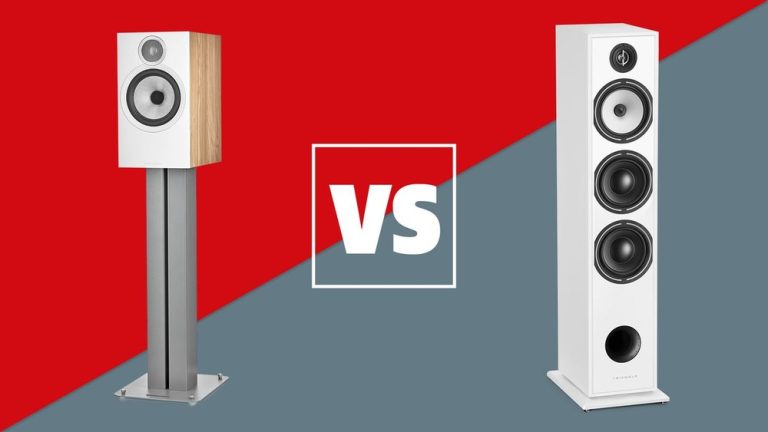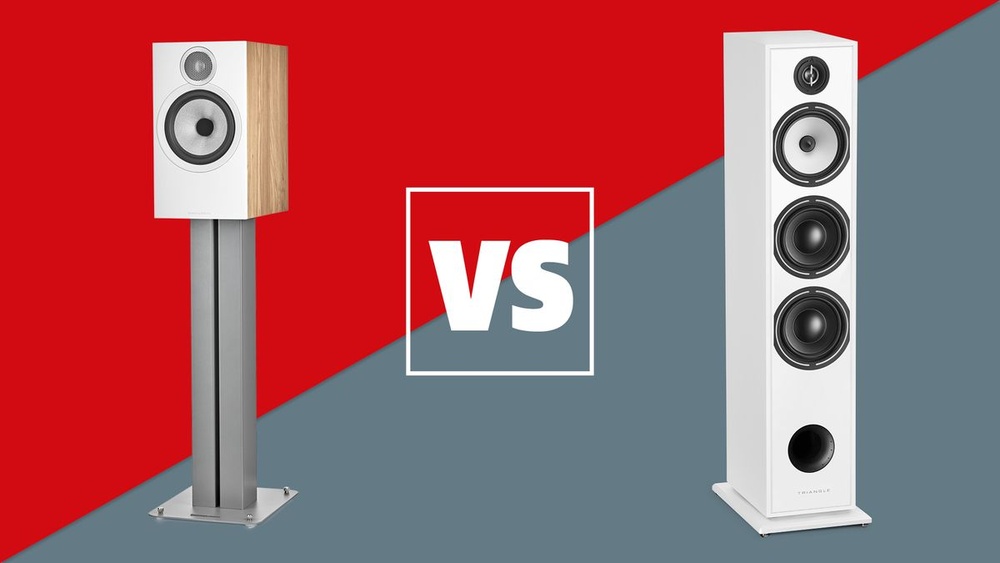
Floor Standing Speakers Vs Bookshelf
Whether you’re a passionate audiophile or a casual music lover, choosing the right speakers for your space can dramatically impact your listening experience. Among the most debated decisions is the choice between floor standing speakers and bookshelf speakers. With a vast range of options, price points, and features, this decision is more nuanced than it may first appear. Understanding the strengths and weaknesses of each type, and how they fit into your room, lifestyle, and audio preferences, can help you make an informed investment in your sound system.
Both speaker types have evolved over decades, now offering impressive technology at nearly every budget. Floor standing models promise power and scale, while bookshelf speakers excel in compactness and versatility. Yet, the best choice hinges on factors like your room size, musical tastes, and even your furniture.
This comprehensive guide breaks down the differences, compares real-world performance, and helps you decide which style best suits your needs.
Key Takeaways
- Floor standing speakers deliver fuller bass, higher output, and are ideal for large rooms, while bookshelf speakers shine in small-to-medium spaces and offer flexible placement.
- Room size, acoustics, and your preferred genres are critical in determining the right speaker type.
- Floor standing speakers often cost more, but bookshelf speakers can provide excellent value and sound quality for the price.
- Both styles can be part of high-quality stereo or home theater setups, but integration and accessories may differ.
- Consider future upgrades, aesthetics, and space constraints before making your final decision.

Credit: tagaharmony.com.au
Floor Standing Speakers: Features, Advantages, And Limitations
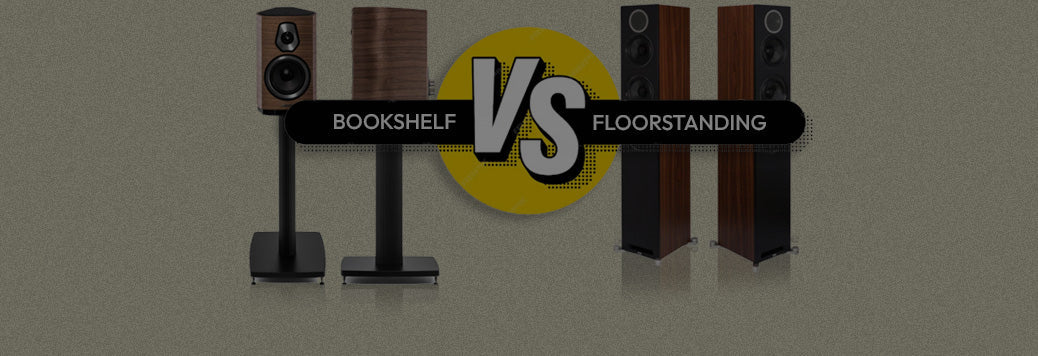
Floor standing speakers, also known as tower speakers, are tall, free-standing units designed to rest directly on the floor. Typically ranging from 35 to 55 inches in height, these speakers are built to deliver powerful, room-filling sound.
What Defines A Floor Standing Speaker?
A standard floor standing speaker features multiple drivers, usually including woofers, midrange units, and tweeters. This multi-driver design allows for a wide frequency response, from deep bass to sparkling highs. They often include large, dedicated enclosures that enable the drivers to produce robust sound without distortion.
Core Advantages
- Fuller Bass Response: Thanks to their size, floor standing speakers can house larger woofers (sometimes 8 inches or more), which move more air and generate deeper bass. This makes them especially attractive for listeners who love genres like hip-hop, EDM, or orchestral music.
- Higher Output and Dynamics: The greater driver area and larger cabinets allow these speakers to play louder and handle dynamic shifts effortlessly, even in spacious rooms.
- Wide Soundstage: Floor standing models are often engineered for broad dispersion, creating a more immersive, three-dimensional soundscape. This can enhance both stereo and surround sound experiences.
- All-in-One Design: Many models are designed to perform without needing a subwoofer, simplifying setup for users who want full-range sound from just two speakers.
Potential Drawbacks
- Size and Weight: Floor standing speakers are large and heavy, requiring significant floor space. They may not suit small apartments or rooms with limited layout flexibility.
- Cost: Quality floor standing speakers tend to be more expensive, both due to their materials and engineering.
- Visual Impact: Their size and profile can dominate a room, so they may not blend easily with all décor styles.
Example: Klipsch Reference Premiere Rp-8000f
The Klipsch RP-8000F is a popular example, standing at 43 inches tall with dual 8-inch woofers and a horn-loaded tweeter. It’s praised for delivering dynamic, cinema-quality sound in living rooms and dedicated home theaters.
Credit: www.ooberpad.com
Bookshelf Speakers: Features, Advantages, And Limitations
Bookshelf speakers are compact, versatile loudspeakers intended to sit on shelves, stands, or furniture. Despite their size, modern bookshelf models can deliver impressive clarity and detail.
What Defines A Bookshelf Speaker?
Measuring typically between 10 and 16 inches in height, bookshelf speakers contain one or two drivers, a woofer and a tweeter. Their compact cabinets are designed to minimize resonance and fit easily into smaller spaces.
Core Advantages
- Space Efficiency: The small footprint allows placement on shelves, desks, or stands, making them ideal for bedrooms, offices, or apartments.
- Flexible Placement: Their size and weight make it easy to experiment with positioning to optimize sound for your listening area.
- Affordability: Generally, bookshelf speakers cost less than their floor standing counterparts, allowing for quality audio on a budget.
- Aesthetic Versatility: They can blend more seamlessly into a room, especially when paired with matching stands or furniture.
Potential Drawbacks
- Limited Bass Output: Due to smaller woofers and enclosures, bookshelf speakers often struggle to reproduce the lowest frequencies. Many users pair them with a subwoofer.
- Lower Max Volume: They may not fill large rooms or handle high volumes as effortlessly as floor standing models.
- Less Immersive Soundstage: The sound can seem less enveloping, especially in big spaces.
Example: Elac Debut 2.0 B6.2
The ELAC Debut 2. 0 B6. 2 is a standout in the bookshelf category, offering detailed highs and a surprising amount of bass for its size. Its versatility makes it a favorite for small living rooms and desktop setups.
Key Differences: Floor Standing Vs Bookshelf Speakers
Understanding the technical and practical differences between these two types is crucial for making the right choice. Below is a detailed comparison in several key areas.
Performance Comparison Table
| Feature | Floor Standing Speakers | Bookshelf Speakers |
|---|---|---|
| Size | Large (35, 55 in height) | Compact (10, 16 in height) |
| Bass Output | Deep, powerful bass | Limited, may need subwoofer |
| Max Volume | High (suitable for large rooms) | Moderate (best in small/medium rooms) |
| Placement | Requires floor space | Flexible: shelves, stands, desks |
| Price Range | $$, $$$$ | $, $$$ |
| Best Use Case | Home theater, music rooms | Bedrooms, offices, small living rooms |
Sound Quality
Floor standing speakers generally offer a fuller, richer sound, especially at high volumes. Their ability to produce deep bass without distortion sets them apart. Bookshelf speakers, while capable of excellent midrange and treble reproduction, often fall short in bass unless paired with a subwoofer.
Room Integration
Bookshelf speakers excel in environments with limited space or where subtlety is desired. Their smaller size allows for creative placement, and stands can help optimize their performance. Floor standing speakers, while demanding more space, can serve as statement pieces in larger rooms and often require less support gear.
Budget Considerations
Bookshelf models provide significant value for those starting out or working with limited funds. However, the need for additional components (like subwoofers and stands) can offset initial savings. Floor standing speakers are more expensive upfront but often serve as comprehensive solutions.
Expansion And Upgrades
Both speaker types can be integrated into larger systems. Bookshelf speakers are easy to expand with subwoofers or additional satellites, while floor standing speakers can anchor a high-end stereo or home theater setup.
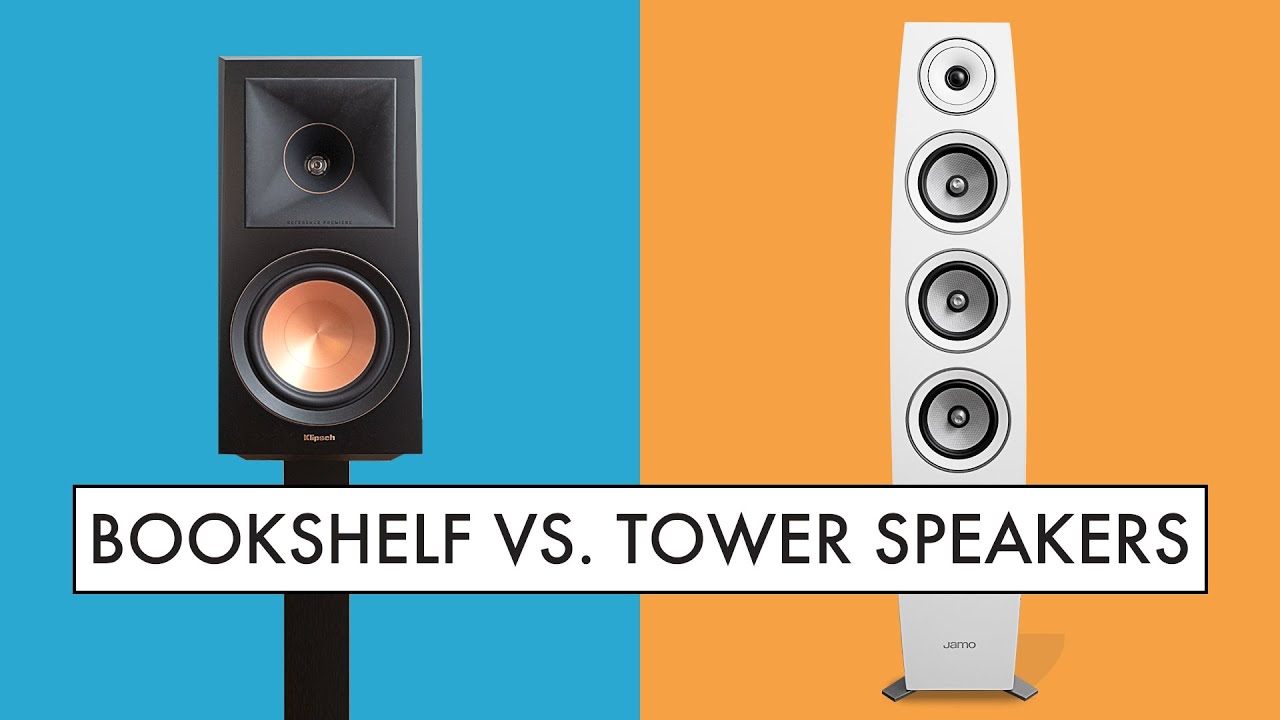
Credit: www.youtube.com
Matching Speakers To Room Size And Acoustics
Choosing the right speakers involves more than just personal preference, it’s also about matching your gear to your room’s characteristics.
Small Rooms (under 200 Sq. Ft.)
Bookshelf speakers are typically the best choice for small spaces. Their limited bass output prevents overwhelming the room with boomy sound. Place them on stands or shelves at ear height, positioned at least a foot from the wall to avoid muddying the bass.
Medium Rooms (200, 400 Sq. Ft.)
Both bookshelf and floor standing speakers can work well in medium rooms. If you prioritize bass and volume, consider compact floor standing models. Otherwise, high-quality bookshelf speakers paired with a subwoofer can offer balanced sound.
Large Rooms (over 400 Sq. Ft.)
Floor standing speakers excel in large rooms, filling the space with dynamic, powerful sound. Their ability to project across distance and handle higher volumes makes them the clear favorite for home theaters and big living areas.
Acoustics And Placement Tips
- Speaker Placement: For stereo imaging, place speakers so they form an equilateral triangle with the main listening position.
- Avoid Corners: Placing speakers in corners can exaggerate bass, leading to less accurate sound.
- Furniture and Surfaces: Soft furnishings can absorb excessive reflections, improving clarity.
Pro Tip: Experiment with placement. Even small adjustments can significantly improve imaging and bass response.
Real-world Examples And Case Studies
To illustrate the decision-making process, here are three real-world scenarios showing how users have chosen between floor standing and bookshelf speakers.
Example 1: Apartment Living Room
Sarah lives in a 300 sq. ft. apartment and wants speakers for music and TV. She chooses bookshelf speakers (KEF Q350) on stands. The compact size fits her décor, and with a small subwoofer, she enjoys rich sound without disturbing neighbors. She reports that careful placement made a big difference, angling the speakers slightly inward improved clarity.
Example 2: Dedicated Home Theater
Michael has a 600 sq. ft. basement converted into a home theater. He opts for floor standing speakers (Polk Audio Signature S60) as his front left and right channels, paired with a center speaker and surround satellites. The towers deliver cinematic bass and handle loud action scenes effortlessly. In his experience, the immersive soundstage justified the larger footprint.
Example 3: Flexible Office Setup
Rachel needs speakers for her home office, used for both work and occasional music. She selects bookshelf speakers (Audioengine A5+) placed on her desk. She appreciates the clarity at low volumes and the ability to move them easily. For occasional parties, she adds a compact subwoofer.
Integrating Speakers Into Your Audio System
The way you incorporate speakers into your system can influence your setup’s performance and flexibility.
Stereo Setups
Both floor standing and bookshelf speakers can serve as left and right channels in a stereo system. For critical listening, positioning the speakers and the listener in a triangle maximizes stereo imaging.
Home Theater Applications
- Floor Standing Speakers: Often serve as front left/right channels, providing the main anchor for movie soundtracks and effects.
- Bookshelf Speakers: Commonly used as surrounds or rear channels, but can serve as mains in smaller theaters.
Pairing With Subwoofers
Bookshelf speakers almost always benefit from a subwoofer to handle deep bass. Floor standing speakers may not need one, but a sub can still enhance the lowest frequencies for movie soundtracks or pipe organ music.
Amplification And Power
Floor standing speakers generally require more power due to their size and multiple drivers. Bookshelf models can often be driven by modest amplifiers or AV receivers, making them suitable for entry-level systems.
Example: When I tested a pair of mid-range floor standing speakers with a 50-watt amplifier, they sounded thin and underpowered. Upgrading to a 120-watt amp unlocked their full potential and bass depth.
Aesthetics, Placement, And Lifestyle Factors
Beyond technical performance, practical considerations play a significant role in speaker selection.
Visual Design And Room Integration
- Floor Standing Speakers: These can serve as design statements but may clash with minimalist or traditional décor. Some models offer wood veneers or custom finishes to blend with furniture.
- Bookshelf Speakers: Compact size allows for discreet placement. Wall-mounting or integrating with shelving helps maintain a clean look.
Placement Flexibility
Bookshelf speakers provide more options for creative placement, on shelves, stands, or even wall mounts. Floor standing models demand a fixed footprint and are less forgiving if you frequently rearrange your space.
Moving And Portability
If you expect to move homes or rearrange rooms, bookshelf speakers offer more portability. Floor standing speakers are heavy and awkward to transport.
Child And Pet Safety
Tall, narrow floor standing speakers can be knocked over by children or pets. Anchoring them or choosing robust, low-profile bookshelf speakers can mitigate these risks.
Cost, Value, And Long-term Investment
Budget is a key consideration, but so is the long-term value of your investment.
Price Comparison Table
| Speaker Type | Entry-Level Price | Mid-Range Price | High-End Price |
|---|---|---|---|
| Floor Standing | $300, $600/pair | $800, $2,000/pair | $3,000+/pair |
| Bookshelf | $100, $300/pair | $400, $1,000/pair | $1,500+/pair |
Value Considerations
- Bookshelf Speakers: Deliver strong performance per dollar. However, adding stands and a subwoofer can increase total cost.
- Floor Standing Speakers: Higher initial investment, but may eliminate the need for extra components. Their longevity and upgrade potential can justify the price.
Future-proofing
Investing in speakers with quality components and neutral sound signatures can ensure satisfaction for years. Speaker technology evolves slowly; a good pair can last decades.
Pro Tip: Prioritize speakers over electronics, amplifiers and sources can be upgraded later, but great speakers form the foundation of your system.
How To Choose: A Decision-making Framework
Making the right choice involves evaluating your needs, space, and preferences. Here’s a step-by-step approach to guide you.
1. Assess Your Room
- Measure the space and note potential speaker locations.
- Consider acoustics: Are there lots of hard surfaces? Is the room open or closed?
- Think about how loud you want to listen and how much bass you desire.
2. Define Your Primary Use
- Music, movies, or both?
- Do you prefer subtle background listening or immersive sound at high volumes?
3. Set Your Budget
- Include potential accessories (stands, subwoofers, cables) in your calculations.
4. Consider Future Expansion
- Will you upgrade to surround sound? Do you plan to move or change room layouts?
5. Evaluate Aesthetics And Practicality
- Which type fits your décor? Do you need the flexibility to rearrange or move?
6. Listen Before You Buy
- Visit a local store or audition speakers if possible.
- Bring your favorite music and test at realistic volume levels.
7. Research And Compare
- Read reviews from reputable sources like What Hi-Fi? and user forums.
- Check measurements and specifications, but trust your ears.
Example: A user deciding between KEF Q550 floor standing speakers and Q350 bookshelf speakers listened to both in-store. The Q550’s bass impressed him, but the Q350s with a subwoofer were more practical for his small room.
Frequently Asked Questions
What Are The Main Differences Between Passive And Powered Speakers?
Passive speakers, including most floor standing and bookshelf models, require an external amplifier or AV receiver to operate. Powered (or active) speakers have built-in amplification and only need a source. Powered bookshelf speakers are popular for desktops and simple setups, while passive models offer more flexibility for upgrades and integration into larger systems.
Can I Use Bookshelf Speakers As Main Speakers In A Home Theater Setup?
Yes, quality bookshelf speakers can serve as main (left/right) speakers in a home theater, especially in small-to-medium rooms. Pairing them with a subwoofer compensates for limited bass. For larger rooms or higher output, floor standing speakers may be preferable.
How Important Is Speaker Placement, And Does It Differ Between Types?
Speaker placement significantly affects sound quality for both floor standing and bookshelf speakers. Bookshelf models often need stands to reach ear level and should be placed away from walls for best imaging. Floor standing speakers should also be positioned symmetrically and slightly away from walls to avoid boomy bass and maximize soundstage.
Are Expensive Cables Necessary For Either Speaker Type?
High-end speaker cables rarely provide audible improvements over quality, affordable wires of appropriate gauge and length. Focus on proper connection and durability. For long runs (over 50 feet), consider thicker cables (14-gauge or better). Avoid overpriced “audiophile” cables unless specific needs justify them.
Can I Mix Floor Standing And Bookshelf Speakers In The Same System?
Absolutely. Many home theater systems use floor standing speakers for front channels and bookshelf speakers for surrounds or rears. Ensure all speakers are timbre-matched (ideally from the same brand/series) for seamless sound. Proper calibration and setup are key for balanced performance.
References
- Crutchfield: Floor standing vs. Bookshelf Speakers
- Sound & Vision: Floor standing vs. Bookshelf Speakers
Choosing between floor standing and bookshelf speakers ultimately comes down to your unique needs, preferences, and environment. Both offer excellent sound when matched properly to their space and paired with quality components. By considering your room size, audio priorities, and long-term plans, you can confidently select a setup that will bring your favorite music and movies to life for years to come.
Products related to this article
Sponsored / affiliate links. As an Amazon Associate I earn from qualifying purchases. I may earn additional commission from eligible campaigns.