

Do this before bed to improve your rest and morning routine: Establish a low-light, screen-free wind-down period at least 60 minutes before your target sleep time. This simple habit helps signal your body it’s time to rest, naturally improving sleep quality and making your next day much smoother.
If you’ve ever woken up feeling like you didn’t sleep at all, you are not alone. So many of us rush through our evenings, checking phones right up until the lights go out. This habit confuses our bodies, making it tough to get the deep, restful sleep we need. Think of it like trying to stop a running engine instantly—it needs time to slow down first. We want to give your body the “coasting time” it deserves! This guide cuts out the confusing research and gives you simple, practical steps you can start tonight. We’ll look at easy changes that make a big difference so you wake up feeling refreshed and ready to tackle whatever comes next. Let’s make bedtime a predictable, peaceful process!
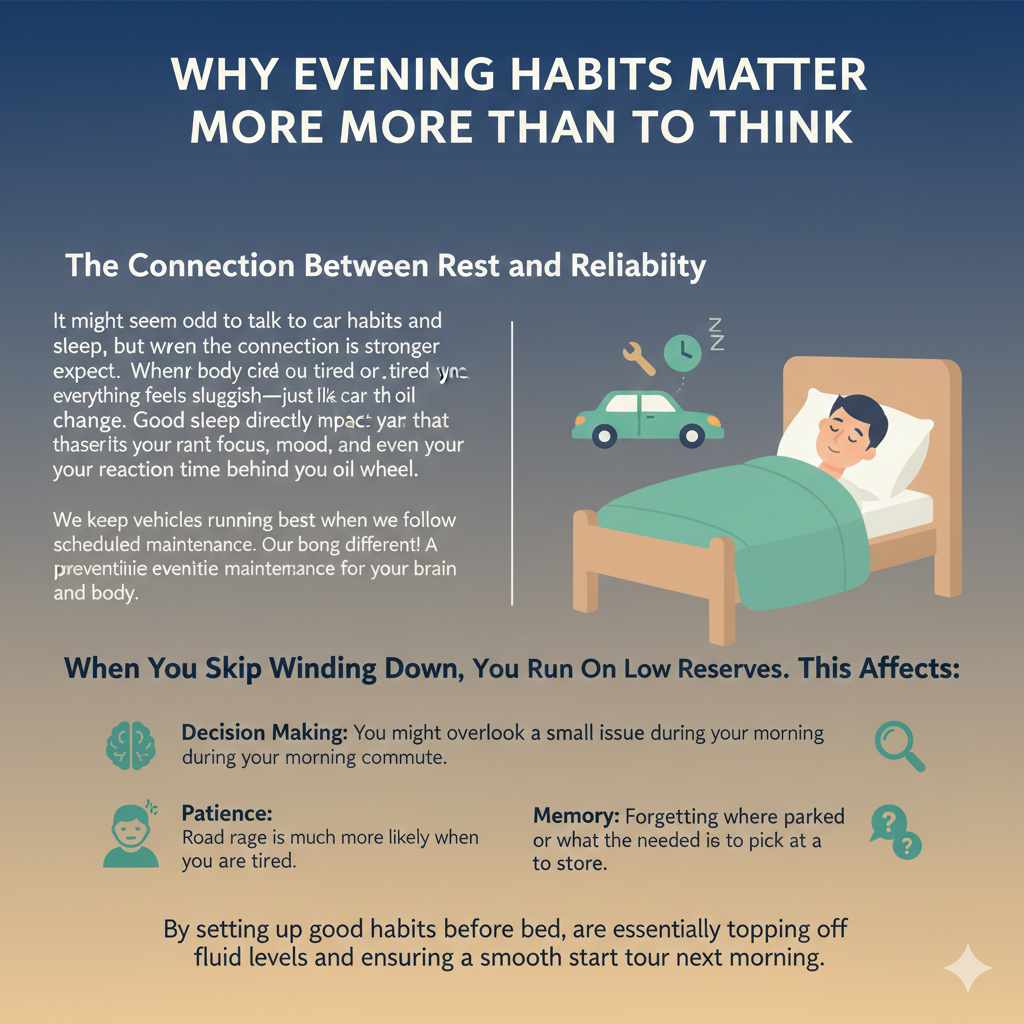
Why Evening Habits Matter More Than You Think
It might seem odd to talk about car habits and sleep, but the connection is stronger than you might expect. When your body is tired or out of sync, everything feels sluggish—just like a car that hasn’t had an oil change. Good sleep directly impacts your focus, mood, and even your reaction time behind the wheel.
The Connection Between Rest and Reliability
We keep vehicles running best when we follow scheduled maintenance. Our bodies are no different! A strong evening routine is preventative maintenance for your brain and body.
When you skip winding down, you run on low reserves. This affects:
- Decision Making: You might overlook a small issue during your morning commute.
- Patience: Road rage is much more likely when you are tired.
- Memory: Forgetting where you parked or what you needed to pick up at the store.
By setting up good habits before bed, you are essentially topping off your fluid levels and ensuring a smooth start the next morning.
The Golden Rule: Digital Curfew (The Biggest Change)
This is often the hardest piece for people to follow, but it provides the biggest payoff. Our devices emit blue light, which tricks the brain into thinking it’s daytime. This stops the release of melatonin—the hormone that tells your body it’s time to sleep.
Timing Your Shutdown
You need at least 60 minutes, but 90 minutes is even better, between turning off screens and putting your head on the pillow.
- Decide Your Latest Wake-Up Time: If you need to be up at 6:30 AM, aim to be falling asleep by 10:30 PM.
- Set the Alarm for Bed: Set a gentle alarm on your phone or clock for 9:30 PM. When this goes off, that’s your “Digital Curfew” signal.
- Put Devices Away: Place phones, tablets, and laptops in another room or in a drawer where you don’t see them. If you must use a phone for an alarm, switch it to airplane mode.
What to Do Instead of Scrolling
This time needs to be filled with relaxing, low-stimulation activities. Think of it as letting the engine idle down slowly.
| Activity Type | Good Evening Choices | Bad Evening Choices (Keep Away!) |
|---|---|---|
| Reading | Physical book, magazine (non-stimulating topic) | Work emails, intense novels, anything on a bright screen |
| Mental Work | Light journaling, planning tomorrow’s top 3 tasks | Paying bills, complex problem-solving, doom-scrolling the news |
| Relaxation | Gentle stretching, listening to calm music, breathing exercises | Watching action movies, intense video games, stressful podcasts |
Habit 1: The Body Check (Physical Comfort)
Just like you check tire pressure and fluid levels, you need to check your body’s comfort level. Physical discomfort is a major sleep disrupter.
Light Stretching and Breathing
You don’t need a full yoga routine. Five minutes of gentle movement helps release tension you built up sitting all day.
- Neck Rolls: Very slowly drop your chin to your chest, then gently roll one ear toward one shoulder and back. Do this 3 times per side.
- Child’s Pose: Kneel on the floor, sit back on your heels, and fold your torso forward, resting your forehead on the ground. Hold for 30 seconds. This is wonderfully relaxing.
- 4-7-8 Breathing: Inhale quietly through your nose for a count of 4. Hold your breath for a count of 7. Exhale completely through your mouth with a “whoosh” sound for a count of 8. Repeat 4 times. This technique is proven to calm the nervous system (check out the research on relaxation techniques endorsed by groups like Harvard Health Publishing).
Temperature Control
Your body naturally cools down when preparing for sleep. If your bedroom is too hot, it fights against this natural signal.
Aim for a room temperature between 60°F and 67°F (about 15.5°C to 19.5°C). If adjusting the thermostat isn’t possible, taking a warm shower or bath 90 minutes before bed actually helps! The initial warmth causes your body temperature to rise, but when you step out, the rapid cooling afterward mimics the natural temperature drop needed for sleep.
Habit 2: The Brain Dump (Mental Preparation)
Did you ever drive a car that was overloaded? It runs rough, right? The same happens when your brain is overloaded with tasks, worries, and things you can’t forget.
The brain dump is your intellectual “off-loading ramp.” You take everything swirling in your head and put it onto paper so your brain doesn’t feel responsible for remembering it all until morning.
- Grab Your “Brain Dump” Notebook: Keep a dedicated notebook and pen on your nightstand—nothing else electronic nearby.
- Write Everything Down: Don’t filter. Write down every stray thought: “Need to call the mechanic about the brakes,” “Don’t forget the dry cleaning,” “Worry about that meeting tomorrow.” Get it all out.
- Create a Triage List (Optional but Helpful): Once it’s all out, quickly circle the 1-3 most urgent items for tomorrow. Reassure yourself: “I will handle these first thing in the morning.”
- Close the Book: Physically close the notebook. The thoughts are safely stored, and you are done thinking about them for the night.
Avoiding Stressful Topics
While journaling is great, the hour before bed is not the time to debate politics, check stressful bank balances, or reread old arguments. Keep the brain dump focused on practical to-dos, not emotional processing.
Habit 3: The Environment Reset (Setting the Stage)
Your bedroom should be a cave—cool, dark, and quiet. It should be associated only with rest, not work, eating, or watching confusing TV shows.
Making It Darker Than a Tunnel
Even small amounts of light can disrupt sleep quality. You want true darkness.
- Cover LEDs: Use black electrical tape or small stickers to cover any glowing lights—like on your smoke detector, charging cables, or cable box.
- Blackout Curtains: If streetlights bother you, invest in simple blackout curtains. They are inexpensive and make a massive difference.
- Eye Mask Check: If you can’t control the external light, a comfortable silk or foam eye mask is an excellent tool.
The Sound of Silence (or White Noise)
Sudden noises (like a car alarm or a slamming door) wake us up. Consistent, predictable sound is much easier for the brain to ignore.
If your home is usually quiet, try using a sound machine or app that generates:
- White Noise: Like static, it masks sudden sounds.
- Brown Noise: Deeper, lower frequency sounds (often described as a calming roar or heavy rainfall).
- Tibetan Singing Bowls: Very gentle, calming tones.
Keep the volume low—it should be background texture, not the main event.
Habit 4: The Fuel Gauge Check (Diet and Hydration)
What you put into your body in the late evening directly affects how that body performs all night long. We need to make sure we aren’t overloading the system right before we ask it to shut down.
Avoiding the Late-Night Snack Trap
Your digestive system needs a break. Eating a heavy meal close to bedtime forces your body to focus on digestion rather than repair and rest.
Aim to finish your last substantial meal 2–3 hours before your target sleep time. If you absolutely must eat, keep it small and simple.
Simple Bedtime Snack Options (If Needed):
| Good Choice (Easy Digestion) | Why It Works |
|---|---|
| Small handful of almonds or walnuts | Contains magnesium, which can help relax muscles. |
| A banana | Good source of potassium and magnesium. |
| Small cup of herbal tea (Chamomile or Valerian Root) | Naturally calming without caffeine. |
Caffeine and Alcohol Check
This is crucial. Caffeine has a long half-life, meaning that cup of coffee you had at 3 PM might still be affecting your sleep quality at 11 PM.
For most people, cutting off caffeine strictly by 2 PM is a safe bet. Alcohol might make you feel sleepy faster, but it fragments your deep sleep later in the night, leading to poor quality rest. Try to avoid alcohol entirely in the 3 hours leading up to bed.
Habit 5: The Morning Prep (Setting Up Success)
Preparing for tomorrow tonight eliminates decision fatigue when you are groggy in the morning. This sets your success in stone before you even close your eyes.
Lay Out Your Gear
Think about the small decisions you make when you first wake up. Each one costs mental energy. Eliminate them tonight!
- Clothes: Pick out everything—socks, shirt, work trousers, or workout gear. Lay it out nicely.
- Keys and Wallet: Place your important items right by the door or on a dedicated hook.
- Lunch/Bag: Pack your lunch, fill your water bottle, and put your work bag by the door.
This simple routine is similar to how professional drivers perform a thorough walk-around inspection. By checking everything tonight, you guarantee a smooth departure tomorrow morning.
Review Your Schedule
Spend just two minutes tomorrow:
- Look at your calendar.
- Note any appointments or known challenges (like traffic alerts).
- Remind yourself of the one top priority you circled during the Brain Dump.
Once reviewed, let it go. You know the plan; the work is done.
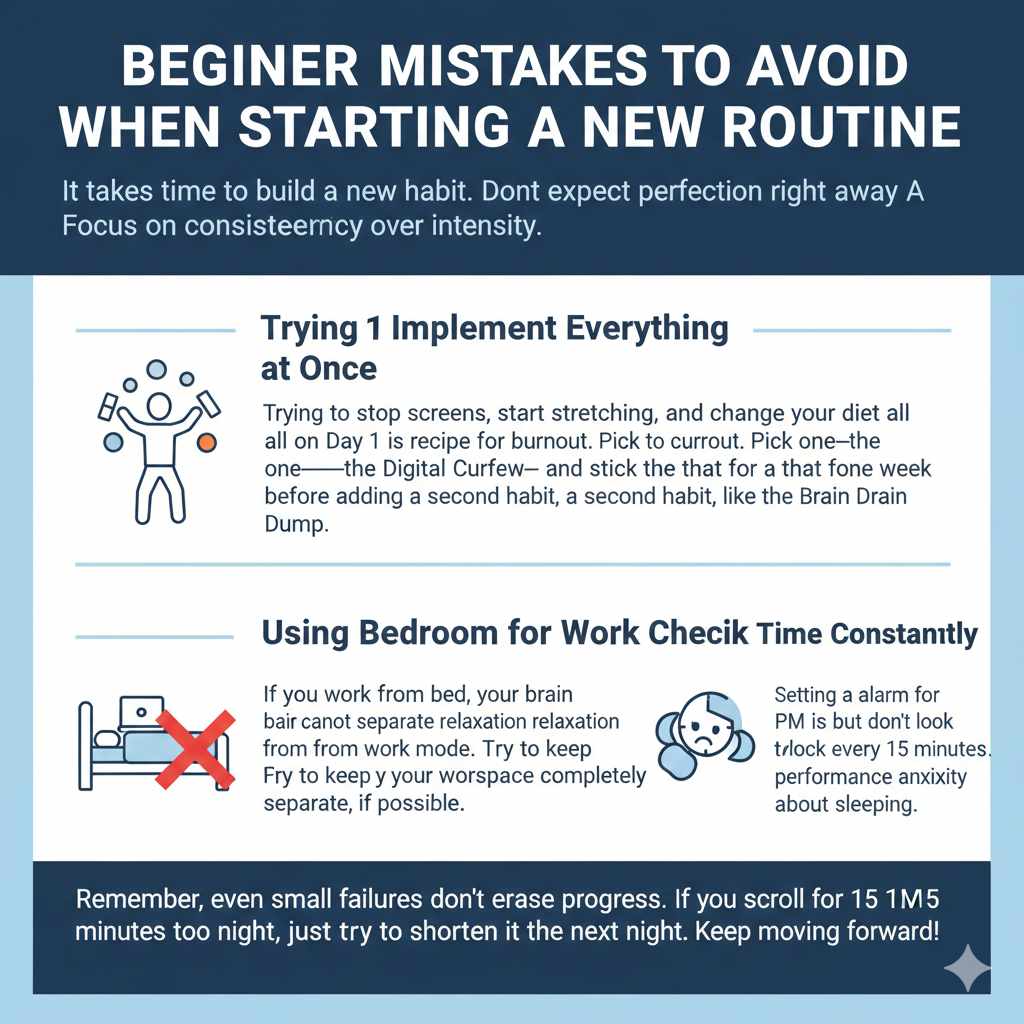
Beginner Mistakes to Avoid When Starting a New Routine
It takes time to build a new habit. Don’t expect perfection right away. Focus on consistency over intensity.
Here is what often goes wrong when people try to implement these steps:
- Trying to Implement Everything at Once: Trying to stop screens, start stretching, and change your diet all on Day 1 is a recipe for burnout. Pick one—the Digital Curfew—and stick to that for one week before adding a second habit, like the Brain Dump.
- Using the Bedroom for Work: If you work from your bed, your brain cannot separate relaxation mode from work mode. Try to keep your workspace completely separate, if possible.
- Checking Time Constantly: Setting an alarm for 10:30 PM is fine, but don’t look at the clock every 15 minutes. This creates performance anxiety about sleeping.
Remember, even small failures don’t erase progress. If you scroll for 15 minutes too long one night, just try to shorten it the next night. Keep moving forward!
Frequently Asked Questions (FAQ)
Q1: How long does it take to feel the benefit of a new bedtime routine?
A1: You might notice a small difference in how quickly you fall asleep within the first three nights, especially if you implemented the Digital Curfew. However, for your body’s natural rhythms (Circadian Rhythm) to fully adjust, give the routine four solid weeks of consistency before judging its full effectiveness.
Q2: Is it okay to drink water before bed?
A2: Yes, hydration is important! However, try to finish your main glass of water about 90 minutes before bed. If you drink too much right before lying down, you risk waking up mid-sleep to use the restroom, which breaks up your rest cycle.
Q3: What if I absolutely cannot find time for stretching?
A3: Even five deep, slow breaths while lying in bed counts as a powerful body check! Focus on the breathing technique (4-7-8). This requires zero extra time and actively calms your system faster than light stretching alone.
Q4: Can I read on my tablet if I use a blue light filter?
A4: While blue light filters (like Night Shift or f.lux) are better than nothing, they don’t eliminate eye strain or the mental engagement of reading exciting content. For the best sleep results, switch to a physical book or an e-reader that uses E-Ink technology (which has no backlight at all) during your mandatory screen-free hour.
Q5: I have insomnia; will these habits really help?
A5: These habits form the foundation of good Sleep Hygiene, which is the first step recommended for managing insomnia by centers like the CDC. While they are often incredibly helpful for mild to moderate sleep issues, severe or chronic insomnia might require consultation with a doctor or certified sleep specialist.
Q6: I feel sleepy at 9 PM; should I just go to bed earlier?
A6: If your body is naturally ready at 9 PM, listen to it! However, try to maintain a consistent wake-up time every day (even weekends) to keep your internal clock reliable. If 9 PM works best for your schedule, start your wind-down activities slightly earlier, say around 7:30 PM, to honor that natural shift.
Final Tune-Up: Your Commitment
Building a successful nightly routine isn’t about becoming perfect; it’s about being consistent. Think of your evening ritual as the final pre-flight check before you park the car for the night. You’re not doing anything extreme or complicated—you’re simply making sure everything is set up to run smoothly tomorrow.
A low-light, screen-free wind-down period is your foundation. From there, each small habit—the Brain Dump, the gentle stretches, the environment reset, the caffeine cut-off, the morning prep—works together to create momentum. None of them are dramatic on their own. But together, they transform your nights from chaotic and rushed into calm and predictable.