Tanning bed bulbs are not all the same the main difference lies in their UV output (UVA vs UVB) and their design (standard fluorescent vs. high-pressure bulbs). Understanding these differences is key to achieving the desired tan safely and knowing what equipment you are using or renting.
Do you ever look at a tanning bed and wonder why some deliver a quick color while others seem milder? It’s a common question, especially when you are just starting out or choosing a salon. The confusing part is all the technical talk, like “high-pressure” or “low-pressure” bulbs. You want a nice tan without guessing, right? Think of these bulbs like different engine types in cars—they all run, but they work in distinct ways. We are going to break down the actual, proven differences in these bulbs so you can feel confident about the equipment you use. Let’s clear up the jargon and see exactly what shines inside those beds!
What Makes Tanning Bed Bulbs Different? The Core Components
When you step into a tanning bed, you are experiencing a carefully controlled light show. The bulbs inside are the stars of that show, and they are specialized to produce specific types of ultraviolet (UV) light. The main difference boils down to who makes the light and what kind of light they make.
Understanding UVA vs UVB Light
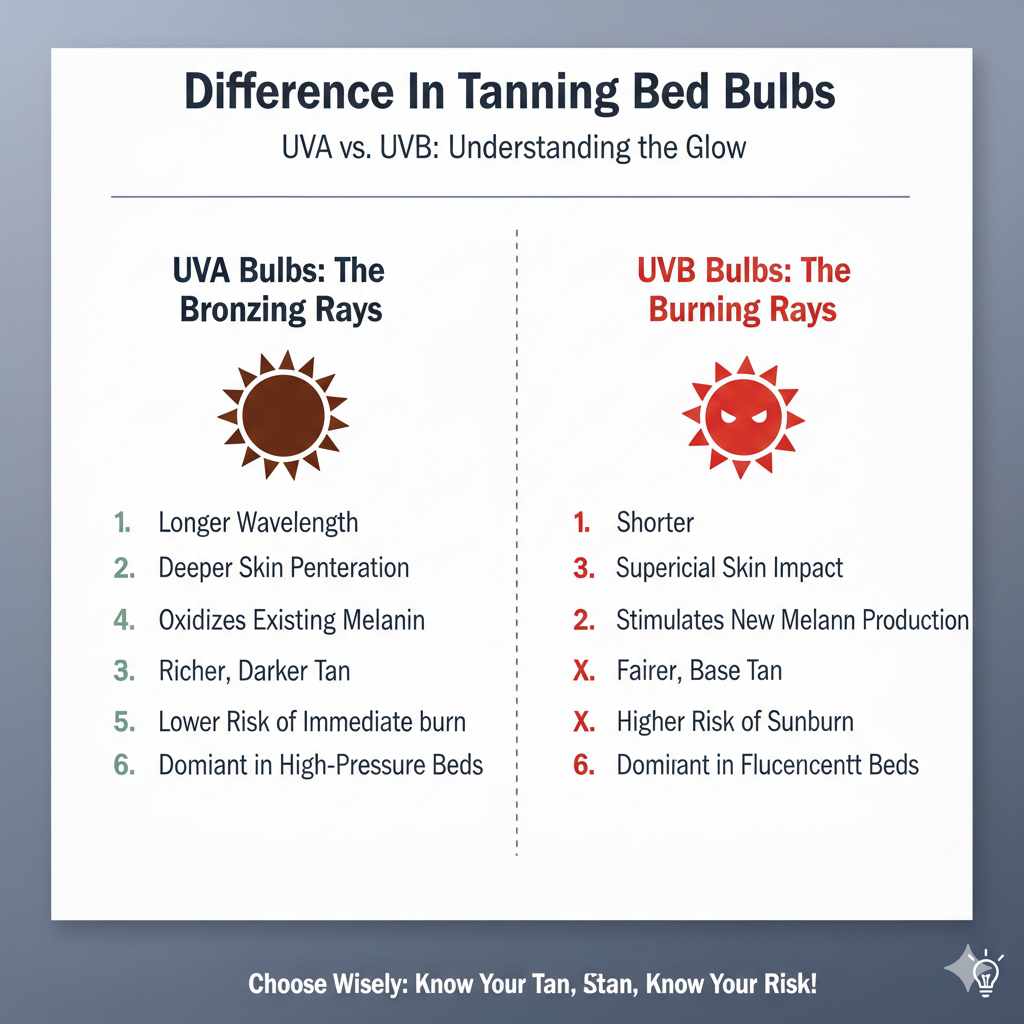
This is the most critical distinction. Both UVA and UVB light come from the sun, and both are present in tanning beds. However, they do different jobs on your skin.
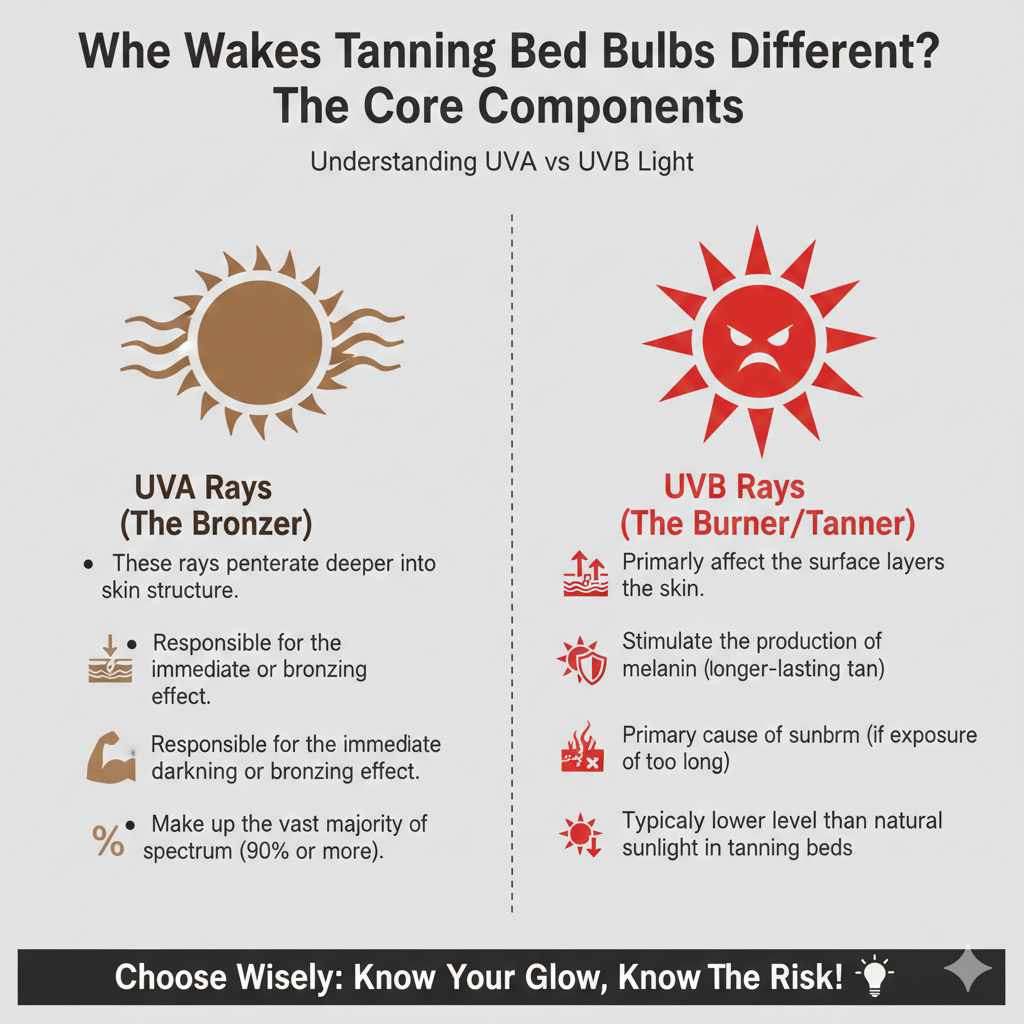
UVA Rays (The Bronzer):
- These rays penetrate deeper into the skin structure.
- They are responsible for the immediate darkening or bronzing effect you see shortly after exposure.
- In tanning beds, UVA bulbs make up the vast majority of the spectrum (often 90% or more).
UVB Rays (The Burner/Tanner):
- These rays primarily affect the surface layers of the skin.
- They stimulate the production of melanin, which leads to a longer-lasting tan over time.
- They are also the primary cause of sunburn if exposure is too long or unregulated. Some modern, specialized bulbs are designed to increase UVB output slightly for better color development, but typically, tanning beds keep this level lower than natural sunlight.
The Tube Technology: Fluorescent vs High-Pressure
Tanning beds generally use one of two main technological approaches, which dictates the bulb type.
1. Low-Pressure Fluorescent Lamps (The Standard Bed)
These look similar to long fluorescent tubes you might see in an office or garage, but they are specially coated. They are the most common type found in traditional, widely available tanning beds. These beds rely on lower intensity bulbs that require a longer session time to develop a tan because the UV output is spread across a larger surface area.
2. High-Pressure Lamps (Generally Used in Stand-Up Booths)
Instead of long tubes, these bulbs look more like traditional halogen or projector lamps. They contain inert gas under high pressure. These lamps concentrate their UV output into a very small area, making them much stronger and capable of producing a deep tan in a very short session (often 5 to 10 minutes).
Safety Note for Drivers: Just as you wouldn’t put low-octane fuel in a high-performance engine, you shouldn’t treat sessions in different bed types the same. Always follow the recommended session times specifically set for the equipment being used. Exposure levels can change dramatically between bed types.
Deep Dive: Tanning Bed Bulb Types and Components
To really understand the core difference in tanning bed bulbs, we need to look at the technical specifications that define their performance. Salons often label beds by these specs, which usually relate directly to the bulb wattage and intensity.
Bulb Wattage and Length
Wattage determines the power of the lamp. A standard tanning bed might use 100-watt bulbs, while newer, higher-intensity beds might boast 160-watt or even 200-watt lamps. Higher wattage means more energy emitted, resulting in a stronger tan (and a faster risk of burning if time limits aren’t respected).
The length of the bulb also plays a role in effective coverage, but wattage is the main indicator of intensity.
Reflectors and Coatings
This is where smart engineering comes in. The inside surface of the glass tube (or sometimes a separate shield) is coated with phosphors. These chemicals capture the initial UV light produced by the arc inside the lamp and then re-emit it as the desired UV wavelengths (UVA and UVB).
The quality and configuration of these phosphors are what differentiate a high-quality, long-lasting bulb from a cheap, quick-dimming one. Better coatings boost the effective UV output without simply increasing the electricity draw.
Acrylic/Canopy Shields
While not technically the bulb, the acrylic sheets above and below you significantly filter the light before it hits your skin. Standard acrylic blocks almost all UVB light, leaving mostly UVA exposure. Advanced or newer beds might utilize specially formulated acrylics designed to allow a controlled, small amount of beneficial UVB in, which helps your body produce Vitamin D and encourages more lasting melanin development, while still prioritizing tanning (UVA).
Why does this matter to you? Think of it like tire tread. A smooth tire (low-quality bulb/acrylic) gives decent initial grip but wears out fast or performs poorly in tricky conditions. A high-quality system gives consistent results session after session.
Comparing Low-Pressure (Fluorescent) vs. High-Pressure (Quartz) Systems
The easiest way to see the difference in tanning bed bulbs is by comparing the two dominant system types used in commercial tanning environments. This comparison helps you understand why a 15-minute session in one machine might be equivalent to a 7-minute session in another.
Table 1: Key Differences Between Low-Pressure and High-Pressure Tanning
| Feature | Low-Pressure Fluorescent Beds (Tubes) | High-Pressure Quartz Lamps (Booth/Specialty) |
|---|---|---|
| Lamp Style | Long fluorescent tubes | Small, sealed quartz capsules |
| UV Output Focus | Primarily UVA (Slower, less intense bronzing) | Primarily UVA, highly concentrated (Fast, deep bronzing) |
| Typical Session Time | Longer (e.g., 12–20 minutes) | Shorter (e.g., 5–10 minutes) |
| Heat Generated | Lower overall heat felt | Higher concentration of heat emitted |
| Cost per Session | Generally lower | Generally higher |
| Bulb Replacement Frequency | Depends heavily on usage/maintenance | Often replaced on strict schedules due to high intensity |
The Role of Bulb Age on Tanning Results
Just like the headlights on your car dim over time, tanning bulbs lose their effectiveness. This is a crucial, often overlooked, fact when discussing the difference in tanning bed bulbs.
How Bulbs Deteriorate
As a fluorescent bulb operates, the chemicals (phosphors) that coat the inside of the glass slowly degrade or sputter away. This means:
- The color of the light changes (it might look whiter or duller).
- The ratio of UVA to UVB shifts, often favoring less effective light output.
- The overall intensity drops significantly.
Why Salon Maintenance Matters
A popular, high-traffic tanning salon might replace its bulbs every 300–500 hours of use, maximum. A less reputable salon might push them past 800 or 1,000 hours. If you feel like a session isn’t working like it used to, it might not be your skin; it could be tired bulbs.
To ensure you are getting the intended quality of light, always choose established facilities that keep detailed maintenance logs. For more information on UV safety standards (which dictate bulb quality and maintenance schedules), you can refer to guidelines provided by public health organizations, such as those monitored by the U.S. Centers for Disease Control and Prevention (CDC).
Maximizing Your Tan: Choosing the Right Bulb Generation
Modern tanning technology has tried to improve results while keeping exposure times manageable. This leads to different generations or “levels” of tanning lotions and beds, often corresponding to the bulb technology installed.
Level I, II, III, and IV Beds
Tanning salons often categorize their beds by “levels.” This naming scheme usually correlates directly to the intensity and type of bulbs installed. As a beginner, start low and work your way up.
Level I Beds: Often the oldest technology, focusing heavily on standard fluorescent bulbs. Longest session times are usually required. Very beginner-friendly.
Level III/IV Beds: These frequently feature higher-wattage bulbs (160W+) or incorporate high-pressure lamps in critical areas. They deliver faster, deeper color. Be very cautious if you are new to tanning, as these offer significantly more UV energy per minute.
The Emergence of Facial Tanners (High-Pressure Spots)
Many lower-level beds integrate high-pressure bulbs specifically to target the face. This is a distinct difference in tanning bed bulbs—mixing low-pressure body bulbs with high-pressure facial bulbs.
Why? Because facial skin often tans differently than body skin. These small, powerful bulbs deliver quick color to the face, potentially without needing the high intensity of a full high-pressure bed.
Quick Guide: Identifying Bulb Types in the Wild
If you are touring a salon or thinking about buying a used unit, how can you tell what you are looking at? Use this simple checklist.
Checklist for Identifying Bulb Types
- Look at the Bed Style: Is it a large tunnel or flat couch style? It almost certainly uses long fluorescent tubes (Low-Pressure).
- Examine the Lamp Shape: If the light sources are small, round, or capsule-shaped, you are dealing with high-pressure lamps.
- Check Session Times: If the facility recommends 15+ minutes, it is likely low-pressure fluorescent. If they recommend 10 minutes or less, it is usually a high-intensity or high-pressure system.
- Ask the Staff: A reputable salon worker will immediately know the wattage and type of lamps in their equipment. Don’t be shy about asking!
Table 2: Session and Intensity Comparison (General Guideline)
| Intensity Level | Likely Bulb Type | Approximate UV Power | Beginner Advice |
|---|---|---|---|
| Low (Level 1) | Standard Fluorescent (e.g., 100W) | Low | Start with 5–8 minutes if new. |
| Medium (Level 2–3) | High-Output Fluorescent (e.g., 140W–160W) | Medium | Limit initial exposure to 4–6 minutes. |
| High (Level 4+) | Mixed Fluorescent and High-Pressure | High | Consult a professional; session times often 10 mins max. |
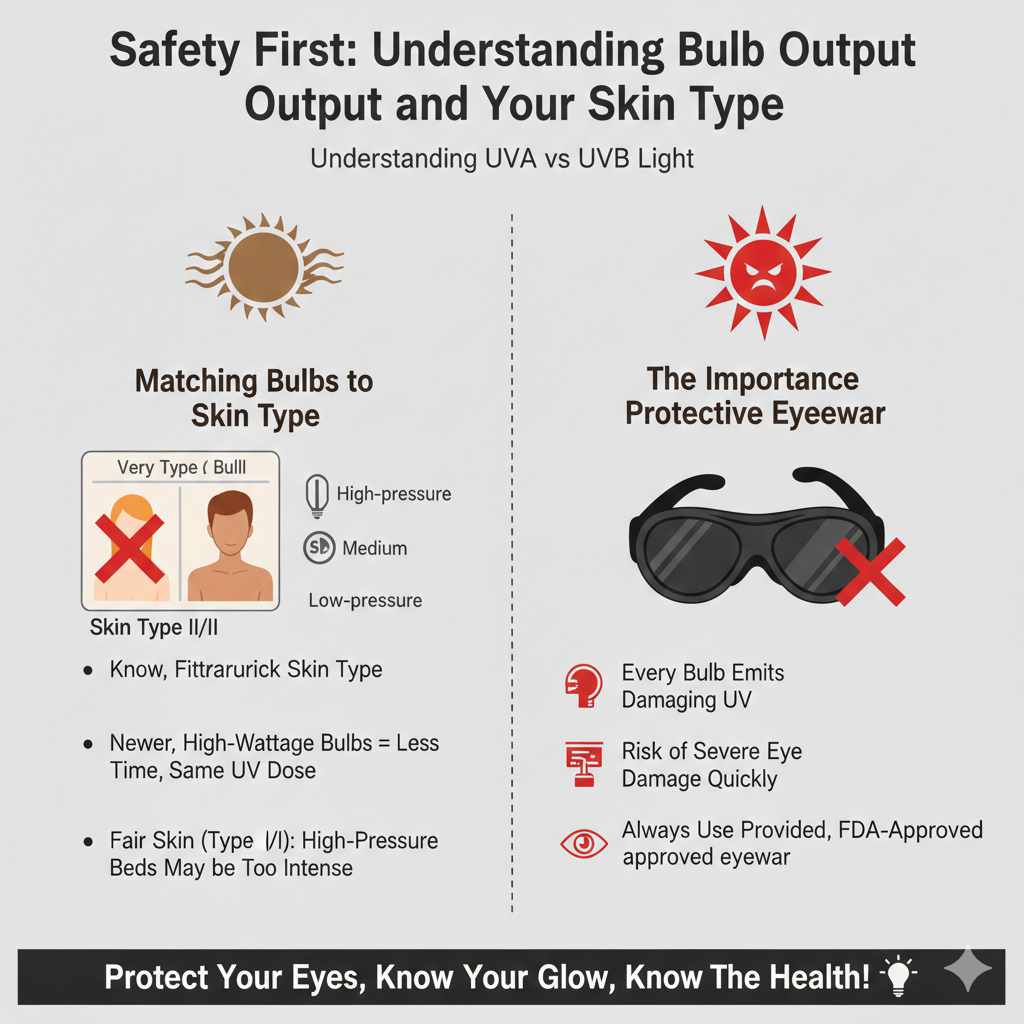
Safety First: Understanding Bulb Output and Your Skin Type
As a guide who values reliability and safety, I always stress that knowing your equipment is the first step to preventing trouble. Incorrect usage based on misunderstanding the difference in tanning bed bulbs is a common way people get burned.
Matching Bulbs to Skin Type
Your skin’s natural ability to tan—your Fitzpatrick skin type—dictates how quickly you react to UV light. Newer, higher-wattage bulbs often deliver the same UV dose in less time, meaning people who used to tolerate 15 minutes in an old bed might burn instantly in a new 160W bed if they use the old time slot.
If you have very fair skin (Type I or II), even the lowest-level beds produce significant UV. High-pressure systems might simply be too intense for you, regardless of the short session time.
The Importance of Protective Eyewear
Every type of bulb, whether low- or high-pressure, emits damaging UV radiation strong enough to cause severe eye damage very quickly. This is non-negotiable whether you are in the gentlest bed or the most intense booth. Always use the provided, FDA-approved protective eyewear. Skipping this step is like driving without your seatbelt—it just isn’t worth the risk.
Frequently Asked Questions (FAQ) for Beginners
Q1: Do all tanning beds use the exact same bulbs?
No, definitely not. Tanning beds use different technologies, including low-pressure fluorescent tubes and high-pressure quartz lamps, which provide very different levels of UV intensity and require different session times.
Q2: What does “High-Pressure” mean for my tanning session?
High-pressure means the bulb is much more concentrated. These beds usually create a deeper, faster tan, but session times are drastically shorter—often under ten minutes—to prevent burning because the UV energy is delivered so intensely.
Q3: Can I tell the difference between a new bulb and an old bulb visually?
Sometimes. Old bulbs may have visible black ends or look duller or slightly pinkish when off. However, the best way to tell is by the results; if sessions are taking much longer than they used to, the bulbs are likely old and need replacement.
Q4: Which bulbs tanning beds use more of: UVA or UVB?
Tanning bed bulbs are engineered to produce a vast majority of UVA rays (often over 90%) because UVA causes the immediate bronzing effect. They contain less UVB, which is the agent primarily responsible for sunburn.
Q5: Are higher wattage bulbs (e.g., 160W vs. 100W) always better?
Higher wattage means more intensity, which can lead to a faster tan. However, “better” depends on your skin. If you tan easily, a lower-wattage, longer session might give you a more controlled, even color. High wattage requires strict adherence to time limits.
Q6: Do these bulbs affect Vitamin D production?
UVB rays are what stimulate Vitamin D synthesis in the skin. Because most tanning beds focus heavily on UVA, they are not an effective or safe primary source for Vitamin D production when compared to controlled sunlight exposure or supplements.
Conclusion: Driving Your Tanning Choices with Confidence
We’ve covered a lot of ground, from the simple division of UVA and UVB light to understanding the high-energy output of high-pressure lamps versus standard fluorescent tubes. The key takeaway, much like knowing the difference between synthetic and conventional oil in your engine, is that knowing the components lets you operate the system safely and efficiently.
Understanding the difference in tanning bed bulbs empowers you. It means you can walk into any facility, understand why a Level 4 bed session is only five minutes long, and make an informed choice about what your skin needs. Always choose longevity of color over speed of session, respect the stated time limits according to the bulb type, and never skip eye protection. By respecting the power these specialized bulbs hold, you can enjoy a consistent tan while staying confident in your routine. Keep learning, keep asking questions, and keep your maintenance routine—whether for your car or your specialized tanning session—on point!