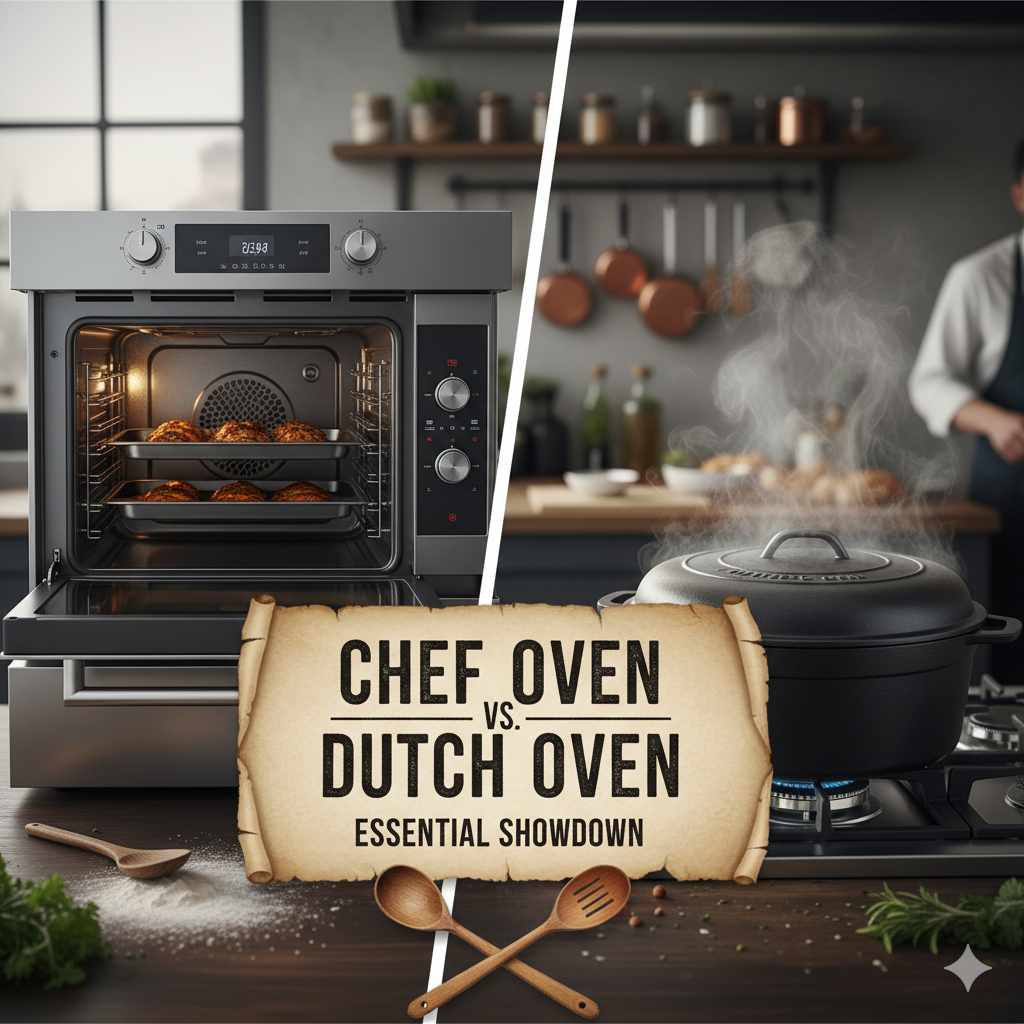
Chef Oven Vs Dutch Oven: The core difference is mobility and construction; a Dutch Oven is a heavy, portable cast-iron pot perfect for even heating on stovetops or campfires, while a Chef Oven typically refers to a standard, built-in kitchen range/oven unit used for baking and roasting.
When you hear the terms “Chef Oven” and “Dutch Oven,” it’s easy to get confused. They both cook food, right? Well, yes, but they are vastly different tools for your kitchen. Choosing the wrong one can lead to frustrating cooking results or wasted money. Don’t worry! I’m Dustin Hall, and I help everyday drivers and home cooks keep things simple and working right. We are going to break down exactly what each one is, what they do best, and when you should use them. By the end of this guide, you’ll feel confident picking the right pot or appliance for your next meal. Let’s jump in and clear up this common kitchen confusion!
Understanding the Two Kitchen Stars: Chef Oven vs Dutch Oven
Before comparing them side-by-side, we need a clear definition. Think of it like knowing the difference between an engine block and a portable generator—both involve power, but they serve very different roles.
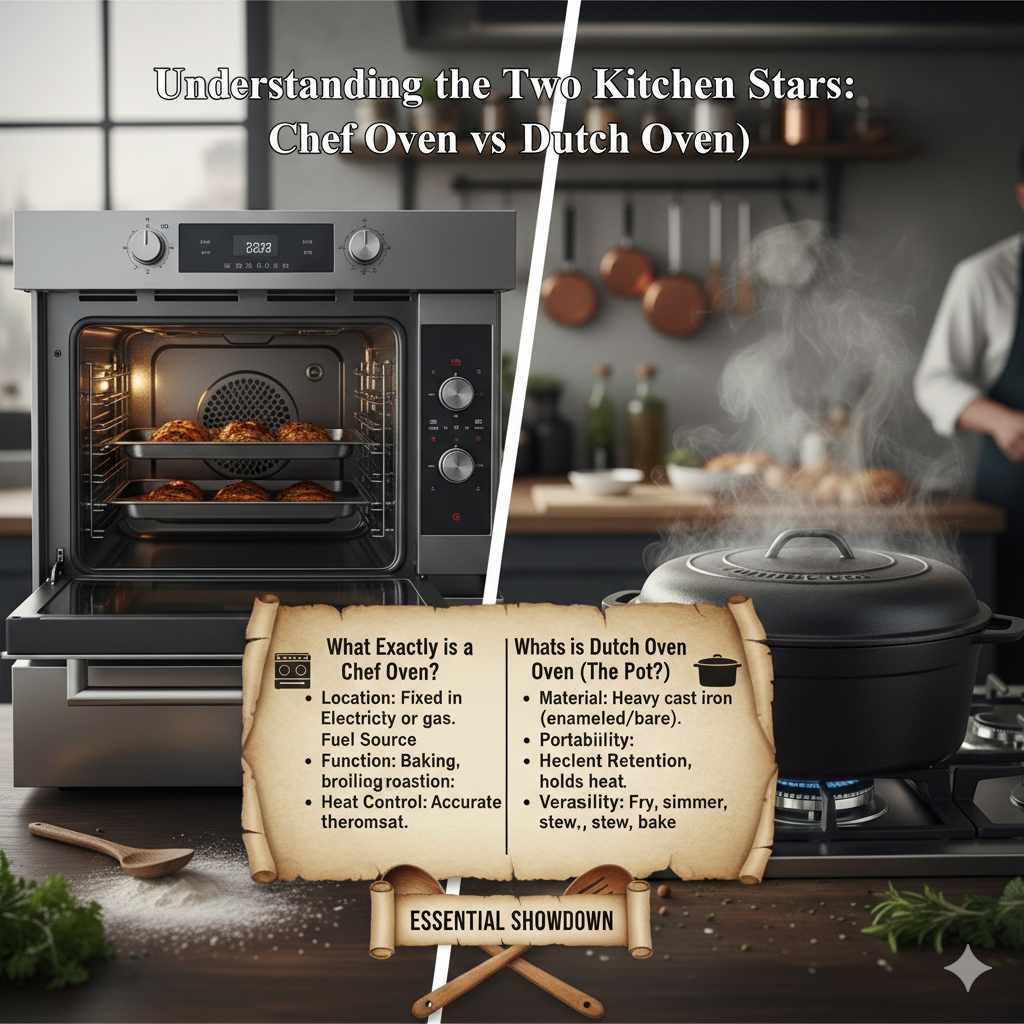
What Exactly is a Chef Oven?
When most people say “Chef Oven,” they are usually referring to the main cooking appliance built into their kitchen—the standard range or wall oven. It’s the big metal box that uses electricity or gas flames to heat up the inside compartment where you bake cakes, roast turkeys, or cook casseroles.
These ovens are the workhorses of the modern kitchen. They provide consistent overhead and bottom heat, controlled by a thermostat. While very precise, they are fixed in place.
Key Characteristics of a Standard Kitchen Oven:
- Location: Fixed in your home cabinetry or as part of a freestanding range.
- Fuel Source: Usually powered by electricity or natural gas/propane.
- Function: Primarily used for baking, broiling, and roasting large quantities of food.
- Heat Control: Highly accurate digital or dial-controlled thermostats.
What is a Dutch Oven (The Pot)?
A Dutch Oven is completely different. It’s not a machine; it’s a heavy cooking pot. Traditionally, it’s made of thick cast iron, often with a tight-fitting lid.
These pots have been around for centuries because they are incredibly versatile. Because the cast iron is so thick and holds heat so well, they distribute warmth evenly, eliminating hot spots—a common annoyance when using thin pots. They can be used on your stovetop, placed directly over a campfire, or even inside your standard Chef Oven!
If you’ve ever seen someone baking artisan bread with that perfect crust, chances are they used a Dutch Oven to trap the steam.
Key Features of a Classic Dutch Oven:
- Material: Heavy cast iron (enameled or bare).
- Portability: Fully portable; moves easily from stove to oven to grill.
- Heat Retention: Excellent at absorbing and holding heat for long periods.
- Versatility: Can fry, simmer, stew, bake bread, and braise.
The Essential Showdown: Chef Oven Vs Dutch Oven
Now that we know what they are, let’s put them head-to-head in a structured comparison. Think of this comparison like checking the specs on a new set of tires. You need the right tool for the road (or recipe) ahead.
Table 1: Direct Comparison of Features
| Feature | Chef Oven (Standard Range/Built-in) | Dutch Oven (Cast Iron Pot) |
|---|---|---|
| Type | Large Cooking Appliance | Heavy Cooking Vessel/Pot |
| Primary Use Location | Fixed in Kitchen | Stove, Grill, Campfire, or Inside Chef Oven |
| Heating Method | Radiant heat from elements/burners | Conduction (direct contact with heat source) |
| Material Focus | Sheet metal, insulation, electronics/gas lines | Thick Cast Iron (high heat retention) |
| Best For | Large roasts, sheet pan meals, consistent baking | Searing, long-slow braises, baking sourdough bread |
Where the Dutch Oven Shines (Mobility and Searing)
The Dutch Oven truly excels where the fixed Chef Oven cannot go. Think about cooking outside or getting a phenomenal sear on a piece of meat before slow-cooking it.
Advantages of Using a Dutch Oven:
- Superior Searing: Cast iron gets incredibly hot and holds that heat steady. This means when you place a cold steak in it, the pan temperature barely drops, giving you that perfect, crispy crust.
- Campfire Ready: It’s tough enough to sit directly on hot coals, making it ideal for camping or outdoor cooking. Safety note: Always check that your specific Dutch Oven doesn’t have plastic handles if you plan to put it over direct flame!
- Heat Distribution: For things that need gentle, even cooking—like chili or thick stews—the heavy bottom prevents scorching, which can happen easily on a standard stovetop burner inside your machine.
- Moisture Retention: The heavy lid acts like a seal, trapping steam inside. This is crucial for keeping meats moist or creating the professional humidity needed for beautiful bread crusts. For more on kitchen steam dynamics, resources like those from university extension services often cover the science of cooking environments.
When the Chef Oven is Non-Negotiable
While the Dutch Oven is portable and tough, the standard kitchen oven is indispensable for several tasks that require space, precise temperature control, and specific airflow.
Why You Need Your Chef Oven:
- Size Matters: You cannot fit a full Thanksgiving turkey or a large sheet pan of cookies into a 5-quart Dutch Oven. The appliance is built for capacity.
- Precise Baking: If you are making delicate pastries or need a very specific, consistent temperature (like 325°F) for an hour, the calibrated thermostat in your kitchen oven is more reliable and easier to monitor than managing a campfire.
- Broiling: The intense, direct top-down heat element found in standard ovens is necessary for melting cheese or charring peppers quickly—a function a simple pot cannot replicate.
- Volume Cooking: Making dinner for a large crowd? The sheer volume capacity makes the oven the default choice for large-batch cooking.
Getting the Best of Both Worlds: Using Them Together
The real magic often happens when you run these two tools in tandem. This technique is exactly how many restaurant chefs achieve deep flavor followed by perfect background heat!
Step-by-Step: The Perfect Braise (Stove to Oven)
Braising (cooking meat slowly in a small amount of liquid) is the perfect example of combining their strengths. We use the Dutch Oven for intense surface cooking and the Chef Oven for gentle, prolonged heat.
- Prep the Pot: Place your Dutch Oven (empty) on your stovetop burner (the ‘Chef Oven’s’ cousin). Set the stovetop heat to medium-high.
- Sear the Meat: Add a coating of high-heat oil. Once shimmering, carefully place your seasoned meat (like chuck roast) into the hot cast iron. Let it sear undisturbed for 3–4 minutes per side until deeply browned. This builds flavor.
- Sauté Aromatics: Remove the meat. Add chopped onions or garlic to the same pot to cook them in the rendered fat.
- Deglaze and Liquid: Pour in a splash of wine or broth, scraping up all the browned bits from the bottom of the Dutch Oven. Add the rest of your braising liquid.
- Transfer to Appliance: Place the lid securely on the Dutch Oven. Carefully move the entire, heavy pot from the stovetop into your preheated standard Chef Oven (usually set between 300°F and 350°F).
- Cook Low and Slow: Let it cook, undisturbed, for 2–4 hours until the meat is fork-tender. The Dutch Oven maintains even heat inside the consistent environment of the Chef Oven.
This synergy ensures you get the initial intense browning that needs high, direct heat, followed by the gentle, all-around ambient heat that the standard oven provides for tenderness.
Maintenance Matters: Caring for Your Tools
Just like maintaining your car engine requires the right oil and regular checks, your cooking tools need specific care to last. A Dutch Oven and a standard oven require very different maintenance routines.
Caring for Your Cast Iron Dutch Oven
If your Dutch Oven is bare (not enameled), it needs seasoning. Seasoning is essentially baking oil onto the surface to create a natural, non-stick layer. If you skip this step, you risk rust and food sticking.
Basic Cast Iron Seasoning Steps (for Bare Iron Only):
- Wipe the pot clean (avoid harsh soap unless absolutely necessary).
- Rub a very thin layer of high smoke-point oil (like vegetable or grapeseed) over the entire surface, inside and out. Wipe off any excess until it looks dry.
- Place the pot upside down in your Chef Oven preheated to 450°F.
- Bake for one hour, then turn the oven off and let the pot cool completely inside. Repeat this process 2-3 times for a great initial seasoning.
Never put cast iron in the dishwasher, as this will strip the seasoning and cause rust. For more detailed preservation techniques, resources focused on heirloom cookware offer great insights.
Caring for Your Chef Oven (Appliance)
Your standard kitchen oven requires safety checks and cleaning maintenance.
Appliance Checkpoints:
- Check the Seal: Look at the rubber gasket that seals the oven door. If it’s cracked or loose, your oven loses heat efficiency, costing you money on utility bills (similar to a leaky tire reducing MPG).
- Calibrate Temperature: Ovens can drift over time. An inexpensive oven thermometer placed inside can tell you if your set temperature matches the actual heat. If it’s off by more than 25 degrees, you may need service.
- Cleaning: Use the self-clean cycle if available, or use specialized oven cleaners according to the manufacturer’s safety guide. Always ensure the oven is cool before deep cleaning.
The Economics: Which One Saves You More Money?
For the beginner car owner wanting to save money, it’s smart to look at the long-term value of kitchen investments.
Dutch Oven Cost vs. Life Expectancy
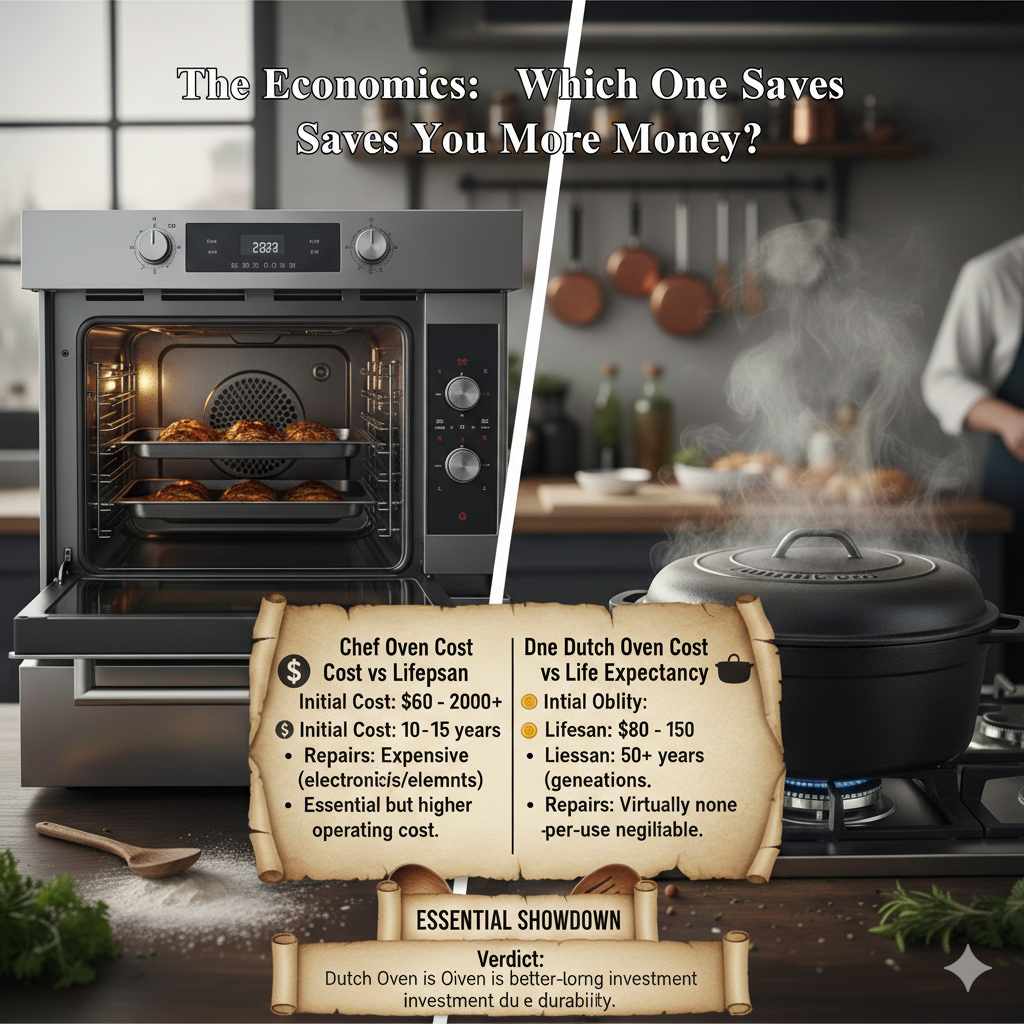
A good quality, entry-level enameled Dutch Oven might cost between $80 and $150. Bare cast iron can often be found for less. Because they are virtually indestructible with proper care—they don’t rely on electronics or gas lines—their operating cost is incredibly low. They can easily last 50 years or more, making the cost-per-use negligible.
Chef Oven Cost vs. Lifespan
A new, standard range oven costs anywhere from $600 to $2,000 or more. While essential for daily living, they contain electronic components, fans, and heating elements that will eventually break down and cost money to repair or replace. Their lifespan is typically 10–15 years.
Verdict: While the initial outlay for the Chef Oven is necessary, the Dutch Oven represents a better long-term investment in terms of durability and versatility for cooking specific tasks efficiently.
FAQ: Beginner Questions About Kitchen Tools
Q1: Can I use a Dutch Oven on my electric glass cooktop?
A: Yes, you can, but you must be careful. Make sure the bottom of the Dutch Oven is perfectly clean and dry. Lift the pot onto the burner; never slide it, as the heavy cast iron can scratch the glass surface. Use medium heat initially.
Q2: Do I need an enameled or bare cast iron Dutch Oven?
A: Enameled is easier for beginners because it requires less maintenance and can handle acidic foods (like tomato sauce) without issue. Bare cast iron requires regular seasoning but often holds heat slightly better.
Q3: If I cook something acidic in my bare cast iron, what happens?
A: Acidic foods (vinegar, tomatoes, wine) can react with the bare iron, causing the food to taste metallic and potentially stripping some of the hard-earned seasoning layer. Stick to enameled for long-simmering acidic dishes.
Q4: Do Dutch Ovens work well in convection Chef Ovens?
A: Absolutely! They work great because the convection fan in the Chef Oven circulates air evenly around the already heat-retentive Dutch Oven, leading to incredibly even browning on roasts or bread crusts.
Q5: If my Chef Oven stops heating evenly, what should I check first?
A: If you have an electric model, check your bake element (the bottom heating rod) for cracks or glowing spots. If it’s not glowing when the oven is supposed to be hot, it may need replacing. For gas ovens, check the flame stability and pilot light.
Q6: What is the main purpose of the heavy lid on a Dutch Oven?
A: The heavy lid traps moisture released by the food as it cooks. This trapped steam keeps food juicy and creates humidity necessary for perfect bread crusts, preventing excessive drying out that can happen in a standard, dry oven environment.
Conclusion: Making the Right Choice for Your Kitchen
There you have it—the essential showdown between the Chef Oven and the Dutch Oven. Remember this simple takeaway: The Chef Oven is your stationary, high-capacity appliance for standard baking and roasting. It’s fixed, powerful, and controlled by technology.
The Dutch Oven, on the other hand, is your rugged, portable workhorse. It’s the master of heat retention, searing, and outdoor cooking. It’s the single piece of cookware that can arguably do the most jobs successfully, and it will likely outlast your current car engine!
Don’t think you have to choose one or the other; the best kitchens utilize both. Use your Chef Oven for big meals and steady baking, and bring out that heavy Dutch Oven when you need a perfect sear, a long, slow braise, or you plan to cook under the stars. Confidence in the kitchen comes from knowing your tools. Now you know exactly what each one is built to handle. Get out there and start cooking with confidence!