Dutch Oven Cooking Tips: The Troubleshooting Masterclass
You bought a beautiful Dutch oven, brought it home, and the first pot roast stuck to the bottom. Or maybe the bread came out with a scorched crust. Or the enamel chipped and now you’re afraid to use it. These failures are common, and they’re rarely the pot’s fault. Most Dutch oven problems come down to heat management and a few habits that are easy to fix once you know what to look for.
This guide covers the practical side of Dutch oven cooking: choosing the right size and material, controlling temperature so food doesn’t burn, searing and deglazing properly, using the lid to your advantage, baking bread and desserts, frying safely, and fixing common issues like rust and stuck-on food. You’ll walk away with specific numbers, techniques, and troubleshooting steps you can use tonight.

As an Amazon Associate I earn from qualifying purchases.
If you want a cookbook that puts all these techniques into practice, Cook It in Your Dutch Oven by America’s Test Kitchen offers 150 recipes built around the pot’s strengths. It covers everything from weeknight stews to bread and desserts, so you can test your skills without guessing at times or temperatures. Check the current price on Amazon if that sounds useful.
Why the Dutch Oven is the Most Versatile Pot You Own
Dutch ovens combine the heat retention of cast iron with the convenience of a covered pot. They go from stovetop to oven, sear meat, braise tough cuts, simmer soups, fry chicken, and bake bread. Few other pieces of cookware do all of that.
The heavy walls and tight-fitting lid create a sealed environment. Steam builds up, condenses on the lid, and falls back onto the food. That cycle keeps meat moist and develops deep flavor without constant stirring. It’s like a slow cooker with better browning.
But that same heat retention cuts both ways. A Dutch oven holds heat so well that it can easily burn food if you leave the burner on high. Most recipes that call for a Dutch oven work best on low or medium heat, even when the instructions on a stovetop pot say otherwise.
Choosing the Right Dutch Oven (Size, Weight, and Enamel)
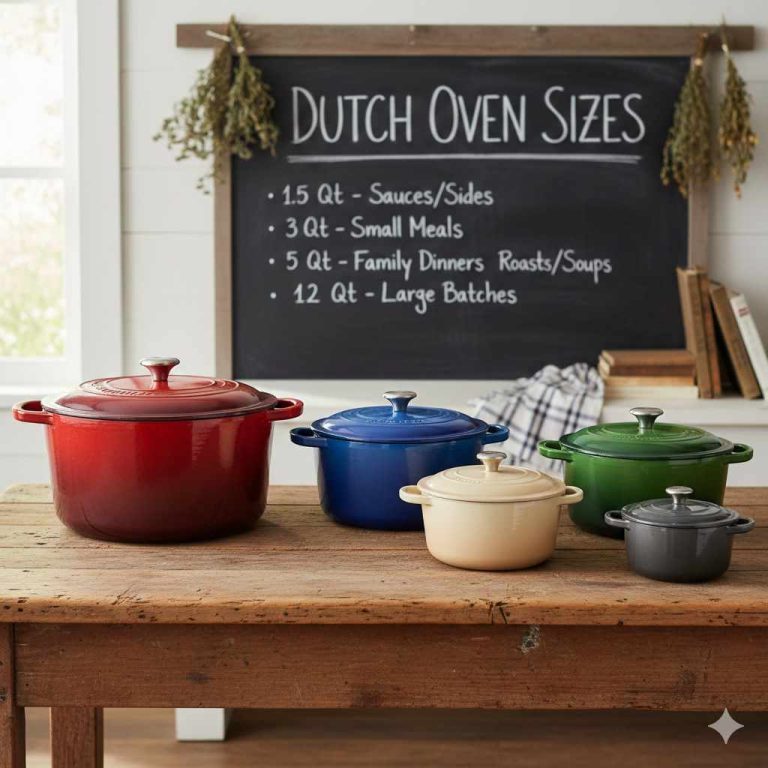
Size matters more than you think. A 5.5-quart round Dutch oven handles most home cooking: a 4-pound roast, a loaf of bread, a batch of chili. If you regularly cook for one or two, a 3.5-quart pot is easier to manage and heats faster. For large gatherings or big batches of stock, a 7.5-quart oval gives you more surface area for searing multiple pieces of meat at once.
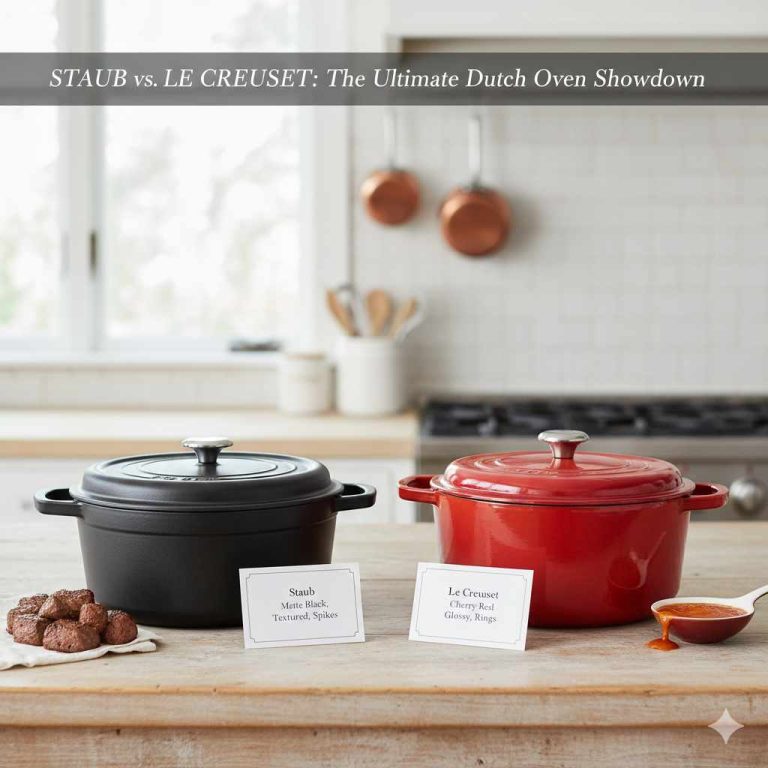
Material matters too. Enameled cast iron is the most popular choice because it requires no seasoning and works with acidic ingredients like tomatoes and wine. Raw cast iron is lighter on the wallet but needs regular seasoning and reacts with acidic foods, which can leave a metallic taste.
Weight is a trade-off. A heavier pot holds heat more evenly but is harder to lift when full. If you have wrist or shoulder issues, look for a lighter brand or stick to smaller sizes. You can always sear in batches instead of lifting a heavy pot.
For a deeper comparison of materials, check out this guide on enameled vs non-enameled Dutch ovens before you buy.
The Golden Rule: Low and Slow Heat Management
Here’s the single most important Dutch oven cooking tip: preheat empty on low, then add food, then adjust. Most burning happens when you crank the burner to high to speed things up. The pot’s thick walls store that heat and keep transferring it to the food even after you turn the burner down.
Use these heat settings as a starting point:
- Searing meat: medium-high, but only for 2-3 minutes per side. Watch for smoke.
- Braising or stewing: low to medium-low on the stovetop, or 300-325°F in the oven.
- Simmering soups: low, and check after 10 minutes. If it’s boiling hard, it’s too hot.
- Deep frying: medium, and use a thermometer. Don’t trust the dial.
Boil-overs happen when the heat is too high and the lid traps steam. Leave the lid slightly ajar when simmering liquids, or use the oven instead. The oven heats from all sides, which prevents the hot spot on the bottom that causes scorching.
Thermal shock is another risk. Never put a cold Dutch oven on a hot burner, and never plunge a hot pot into cold water. The enamel can crack. Let the pot cool gradually on the stove or a trivet.
How to Sear and Deglaze Like a Pro
Searing creates the brown crust that adds flavor. The trick is patience. Pat the meat dry with paper towels first. Wet meat steams instead of browning. Add oil with a high smoke point, like canola or grapeseed, and heat it until it shimmers. Then place the meat in the pot and leave it alone for 2-3 minutes. If it sticks, it’s not ready to flip.
Deglazing is the step most people skip. After searing, the bottom of the pot has browned bits called fond. That’s concentrated flavor. Pour in wine, broth, or even water, and scrape with a wooden spoon while the liquid bubbles. Those bits dissolve into the sauce. This one step turns a good stew into a great one.
If you’re cooking a braise, deglaze before adding the rest of the liquid. The fond will flavor everything. If you’re making a pan sauce, deglaze after removing the meat, then reduce the liquid by half.
For more on the differences between braising pots, read this comparison of braiser vs Dutch oven to see which fits your cooking style.
Mastering the Lid: Steam, Condensation, and Braising
The lid is not just a cover. It’s a tool for controlling moisture. When the lid is on tight, steam circulates and condenses on the cooler lid, then drips back down. This keeps food moist without added liquid. It’s perfect for braising, where you want tender meat in a rich sauce.
When the lid is off, moisture escapes and the surface dries out. That’s useful for reducing sauces or crisping skin. For a pot roast, keep the lid on for the first hour, then crack it open for the last 30 minutes to thicken the sauce.
Condensation also matters for bread. The steam trapped inside the pot mimics a professional steam-injected oven, which gives bread a crackly crust. That’s why Dutch oven bread works so well.
Oven vs. Stovetop: When to Switch Methods
Both methods work, but they behave differently. The stovetop heats from the bottom only, which can create hot spots. The oven heats from all sides, giving more even cooking. For long braises, the oven is more forgiving. You can walk away for an hour without worrying about burning.
The stovetop is better for tasks that need quick adjustments: searing, reducing sauces, frying. You can see the heat change immediately. In the oven, changes take longer to show up.
A common mistake is starting a braise on the stovetop and leaving it there. The bottom scorches while the top stays undercooked. Instead, sear on the stovetop, then transfer the covered pot to a 300°F oven. The heat surrounds the pot, and the liquid simmers gently without burning.

If you’re comparing cookware options, this guide on chef oven vs Dutch oven explains the differences in capacity and heat distribution.
Dutch Oven Bread (and Beyond)
No-Knead Bread Basics
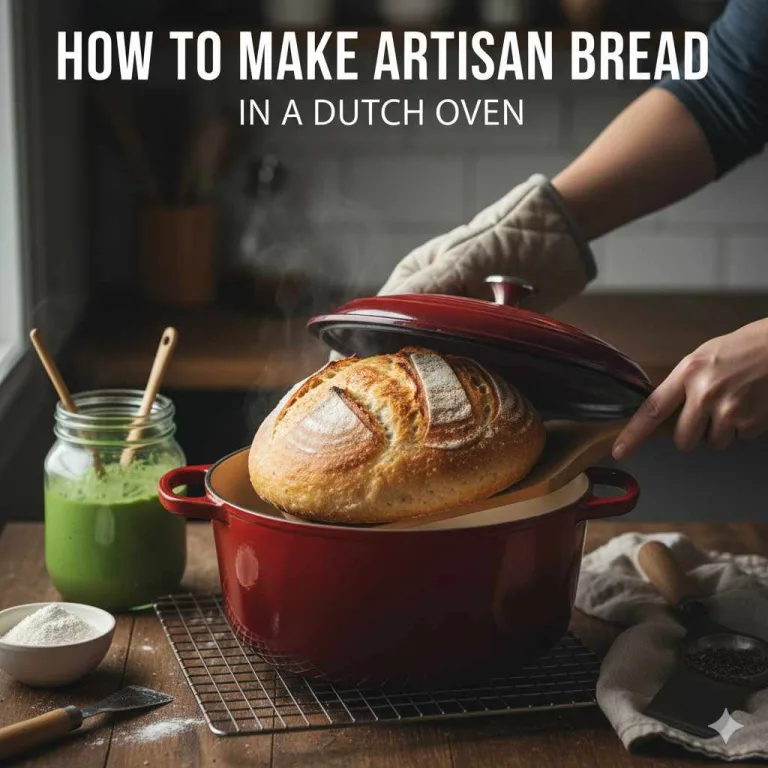
Dutch oven bread is the gateway recipe. Mix flour, water, salt, and a tiny bit of yeast, let it rest overnight, then bake in a preheated covered pot. The pot traps steam, creating a crisp crust and airy crumb.
Preheat the empty pot in the oven at 450°F for 30 minutes before adding the dough. Drop the dough in carefully with parchment paper to avoid burning yourself. Cover and bake for 30 minutes, then remove the lid and bake for another 15-20 minutes to brown the top. Let it cool completely before slicing. Cutting warm bread makes it gummy.
For a full walkthrough, see this guide on how to make bread in a Dutch oven.
Baking Casseroles and Desserts
Bread isn’t the only thing your Dutch oven can bake. Casseroles, cobblers, and even cakes work well because the pot distributes heat evenly. A 9-inch round Dutch oven can bake a skillet-style cornbread or a rustic apple cobbler.
For desserts, use a lower oven temperature (325°F) and check earlier than the recipe says. The heavy cast iron holds heat, so baked goods can over-brown on the bottom. Place a baking sheet under the pot if you notice scorching.
You can also make a simple frittata: whisk eggs, add cooked vegetables and cheese, pour into a lightly oiled pot, and bake at 350°F for 20-25 minutes. It’s a one-pot breakfast that feeds four.
Deep Frying and Shallow Frying Safety
Dutch ovens are excellent for frying because the high sides prevent splatter and the heavy base holds a steady temperature. Fill the pot no more than halfway with oil. Any more and it can foam up and overflow when you add food.
Use a deep-fry thermometer. The oil temperature will drop when you add food, so heat it 25°F higher than your target. For chicken, aim for 325-350°F. For doughnuts, 375°F. If the oil starts smoking, it’s too hot. Turn off the heat and let it cool.
Never leave hot oil unattended. And when you’re done, let the oil cool completely before straining and storing. Never pour oil down the drain.
Cleaning, Seasoning, and Rust Repair
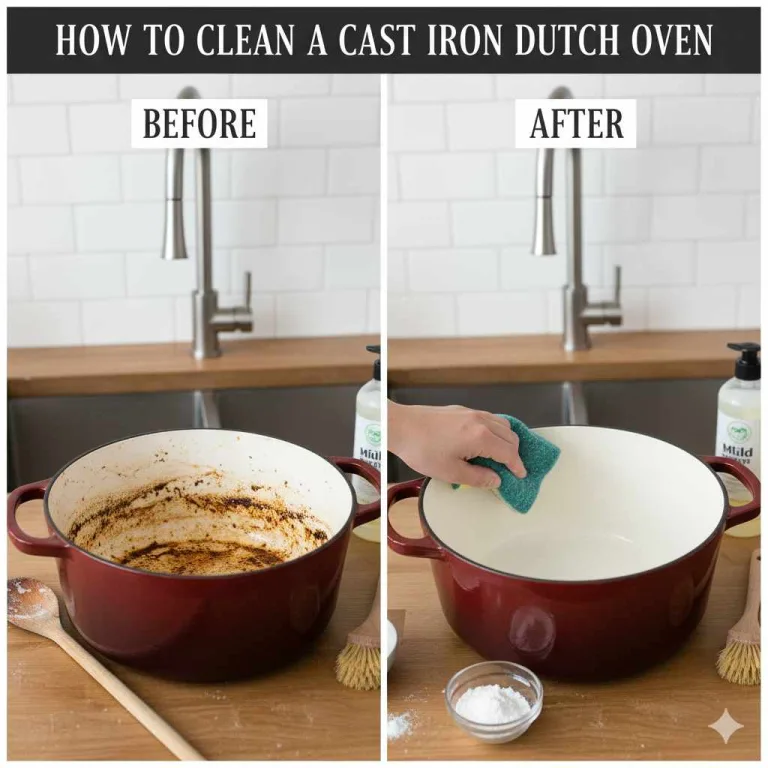
Cleaning an enameled Dutch oven is simple: warm soapy water and a soft sponge. Avoid steel wool and harsh scrubbers that scratch the enamel. Stubborn food bits can be loosened by soaking with warm water and baking soda for 15 minutes.
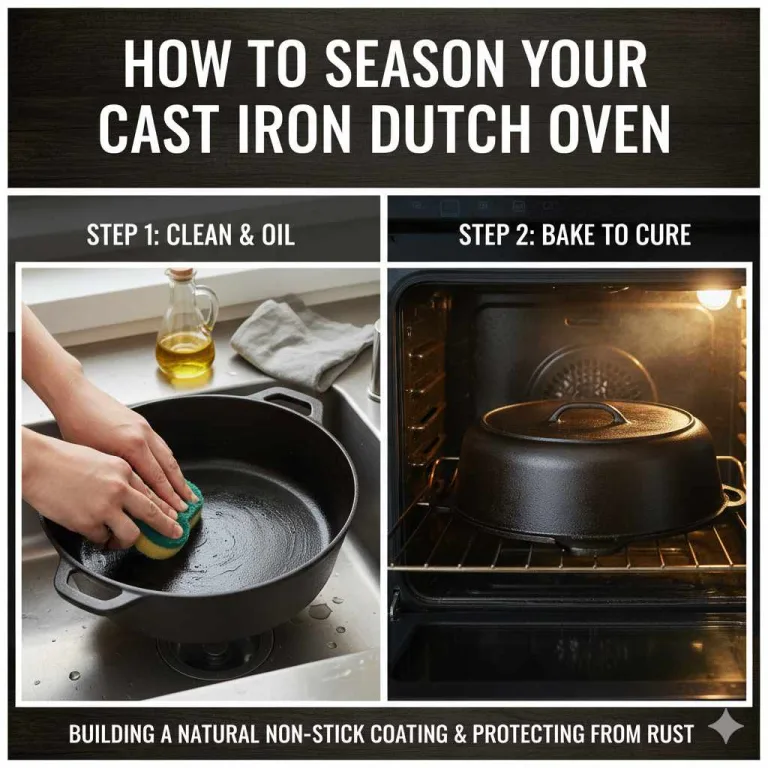
Raw cast iron needs different care. Wash with hot water and a stiff brush, dry thoroughly, then rub a thin layer of oil over the entire surface. Heat it on the stove for a few minutes to set the seasoning. Never let a raw cast iron pot air dry; it will rust.
If rust appears, scrub it off with steel wool, wash, dry, and re-season. For enameled pots, rust isn’t an issue, but chipped enamel is. If the enamel chips, stop using the pot. The exposed cast iron can leach into food, and the chip can grow. Some manufacturers offer warranty replacements, so check before buying a new one.
For a complete cleaning guide, visit how to clean a cast iron Dutch oven.
Common Mistakes and How to Fix Them
| Problem | Cause | Fix |
|---|---|---|
| Burnt bottom on stews | Heat too high, or no liquid at the bottom | Use low heat, or move to a 300°F oven. Add more liquid if it looks dry. |
| Food sticks during searing | Pot not hot enough, or meat was wet | Pat meat dry. Heat oil until it shimmers. Wait 2-3 minutes before flipping. |
| Boil-overs | Heat too high, or lid on tight | Lower heat. Crack the lid. Use the oven for long simmers. |
| Bread crust too dark | Oven too hot, or pot not preheated | Lower oven by 25°F. Always preheat the empty pot. |
| Rust on raw cast iron | Moisture left on the surface | Scrub rust off, dry on the stove, re-season with oil. |
| Chipped enamel | Thermal shock or metal utensils | Stop using the pot. Check warranty. Use wooden or silicone tools going forward. |
Sticking food is usually a heat issue, not a pot issue. If you’re searing and the meat won’t release, give it more time. If it’s still stuck after 4 minutes, your heat was too low. The protein bonds to the surface until it’s browned enough to release.
Quick Wins: 5 Recipes to Test Your Skills
- No-knead bread: Mix 3 cups flour, 1.5 cups water, 1 tsp salt, 1/4 tsp yeast. Rest 12 hours. Bake in preheated covered pot at 450°F for 45 minutes total.
- One-pot chicken thighs: Sear 6 thighs skin-side down, flip, add onions and garlic, pour in 1 cup broth, cover, and braise at 325°F for 40 minutes.
- Simple tomato sauce: Sauté onions in olive oil, add 2 cans crushed tomatoes, simmer on low for 1 hour with the lid slightly ajar.
- Apple cobbler: Toss sliced apples with sugar and cinnamon, top with biscuit dough, bake at 350°F for 30 minutes.
- Beef stew: Sear chuck cubes, deglaze with red wine, add carrots, potatoes, and beef broth. Cover and bake at 300°F for 2.5 hours.
Frequently Asked Questions
Can I use a Dutch oven on an induction cooktop?
Yes, if the pot is magnetic. Most cast iron Dutch ovens work on induction. Test by holding a magnet to the bottom. If it sticks, you’re good.
How do I store a Dutch oven?
Store it with the lid off or slightly ajar to let air circulate. If you store it with the lid on, moisture can get trapped and cause rust on raw cast iron or mildew smells on enameled pots.
Can I put a cold Dutch oven in a hot oven?
No. Thermal shock can crack the enamel. Always let the pot come to room temperature before heating, and don’t put a hot pot under cold water.
Is it safe to use metal utensils in an enameled Dutch oven?
It’s risky. Metal can chip the enamel over time. Use wooden, silicone, or plastic utensils to protect the surface.
Why does my Dutch oven food taste metallic?
If you have a raw cast iron pot, acidic foods like tomatoes or wine react with the iron. Switch to an enameled pot for those recipes.
What to Remember When You Cook
- Heat is the main variable. Start low, adjust slowly, and use the oven for long cooks.
- Always preheat the pot before adding oil or food, but never on high.
- Deglaze after searing to build flavor in every braise and stew.
- Use the lid to trap steam for moist cooking, and crack it open to reduce sauces.
- Clean enameled pots with soap and water. Season raw cast iron after every wash.
- If food sticks, wait longer before flipping. If it burns, lower the heat.
- Keep a deep-fry thermometer handy for any frying. Don’t guess.
Your Dutch oven is a workhorse. Learn its heat habits, respect its limits, and it will outlast every other pot in your kitchen.
Products related to this article
Sponsored / affiliate links. As an Amazon Associate I earn from qualifying purchases. I may earn additional commission from eligible campaigns.