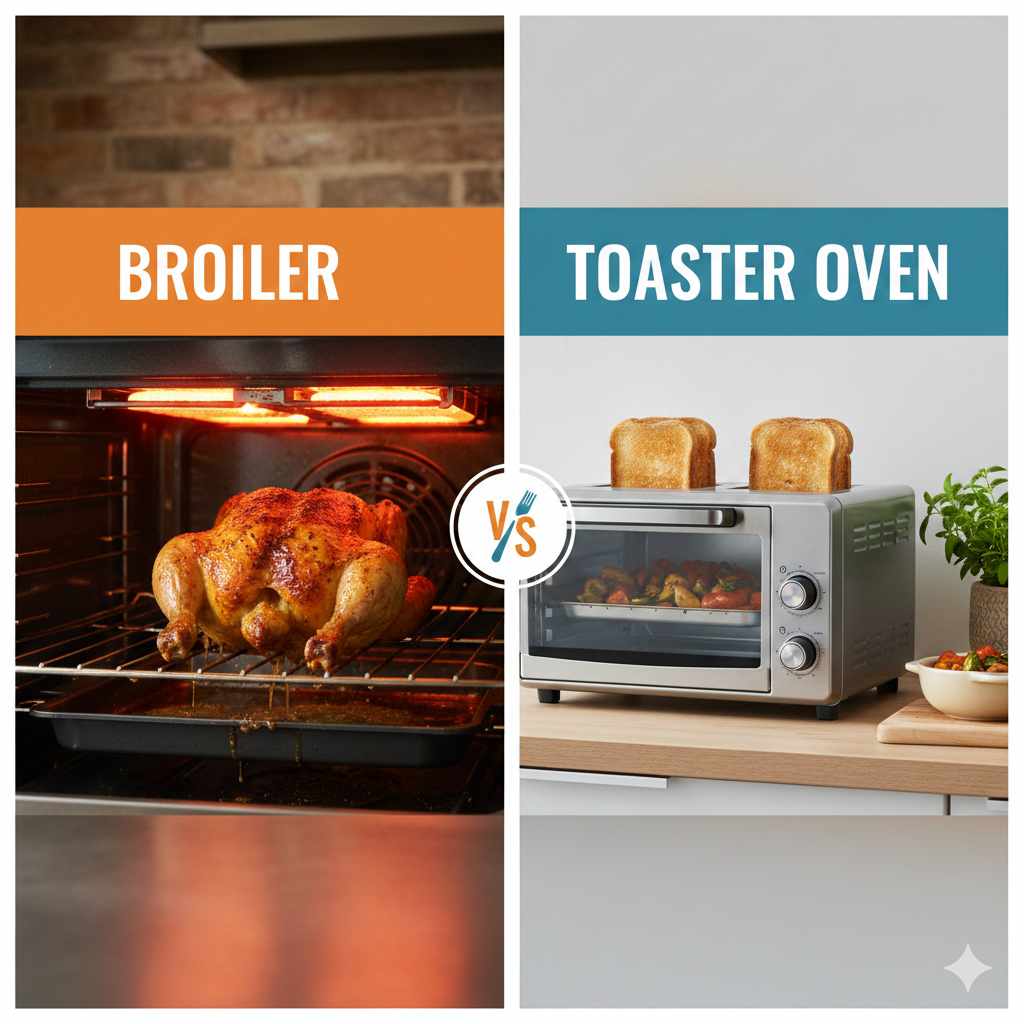
The broiler focuses intense, direct heat from the top for quick crisping, searing, or melting, like a grill element. A toaster oven offers versatile, all-around heating like a small conventional oven, perfect for baking, toasting, and reheating small meals efficiently.
Choosing between a broiler and a toaster oven can feel confusing when you just need a quick meal. Both appliances heat food, but they do it in very different ways! This difference is important for making sure your pizza crust is crispy or your cheese melts just right. We’ve all been there, squinting at the instruction manual. Don’t worry! I’m Dustin, and I’ll walk you through exactly what each one is and which one you should use for your next cooking task. Let’s simplify this and get you cooking like a pro in no time. We’ll break down the heat, the size, and the best jobs for each appliance.
Understanding the Heat: The Core Difference in Broiler vs Toaster Oven Functions
When we talk about the “broiler vs toaster oven” showdown, the real contest is about where the heat comes from and how it cooks your food. Think of them like two different types of mechanics: one specializes in high-speed, direct work, and the other handles general tuning up.
What Exactly is a Broiler?
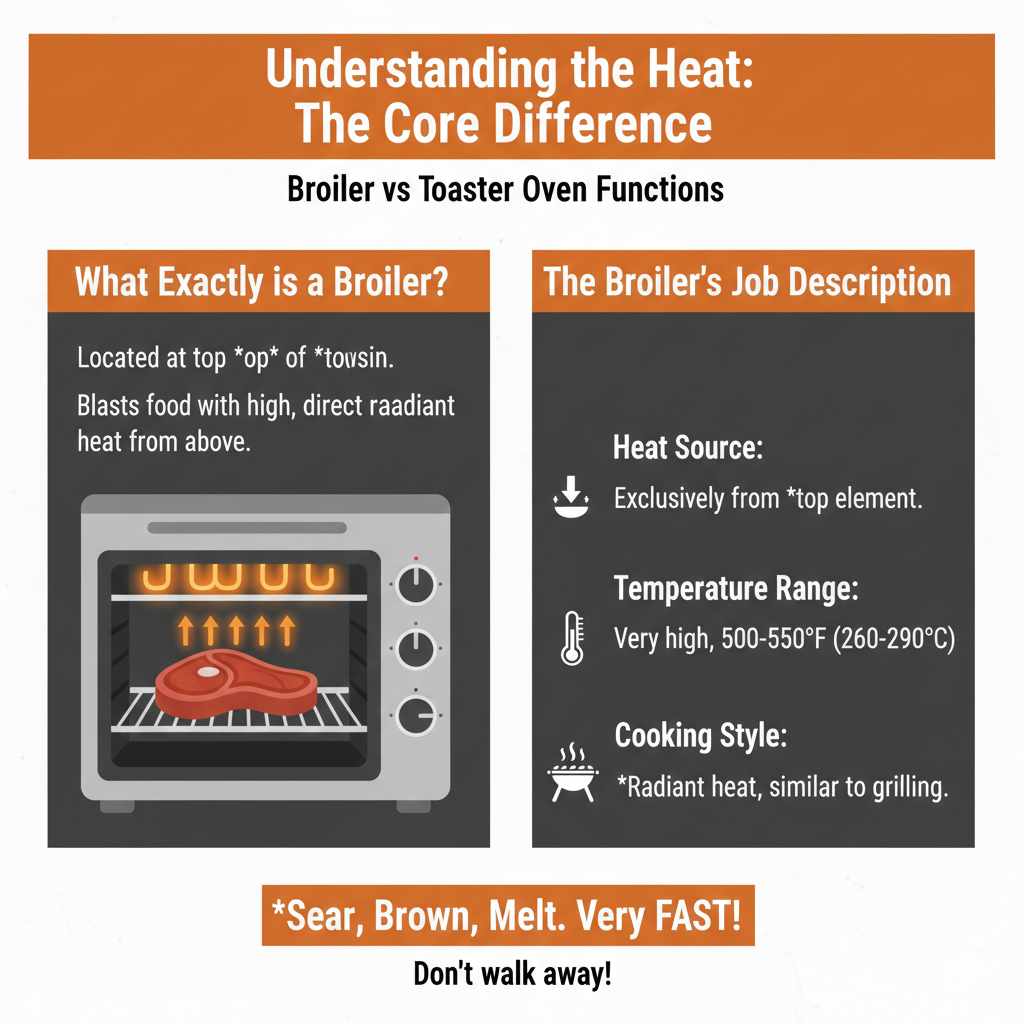
A broiler is essentially the heating element located at the very top of your full-sized oven, but it’s often smaller and more intensely focused in dedicated units or toaster ovens. Its sole job is to blast food with high, direct radiant heat from above.
The Broiler’s Job Description
The key takeaway here is that broilers cook very fast and use intense heat. They don’t bake or roast; they sear, brown, and melt. If you placed food underneath and walked away for too long, you’d have charcoal!
- Heat Source: Exclusively from the top element.
- Temperature Range: Usually very high, often around 500–550°F (260–290°C).
- Cooking Style: Radiant heat, similar to grilling outdoors, just inside your kitchen.
What is a Toaster Oven?
A toaster oven is just a miniature version of your main oven. It usually has both top and bottom heating elements (sometimes hidden) that work together to circulate heat around the food, just like a regular oven. This controlled environment allows for actual baking, roasting, and toasting.
The Toaster Oven’s Job Description
This appliance is the countertop king of versatility. Because it’s smaller than your main oven, it heats up faster and uses much less energy to cook smaller portions. This feature is great for saving money on your energy bill, especially during hot weather when you don’t want to warm up the whole kitchen.
- Heat Source: Top and bottom elements working together for ambient heat.
- Temperature Range: Fully adjustable, typically from 150°F to 450°F (65°C to 230°C).
- Cooking Style: Convection and radiant heating, designed for even cooking.
Direct Comparison: Broiler Function Built Into Toaster Ovens
This is where most confusion happens. Almost every modern toaster oven has a broiler function, which uses only the top heating element—mimicking a dedicated broiler. However, the quality and intensity of that broiler function vary wildly between models.
Table 1: Core Functional Differences
| Feature | Dedicated Broiling Function (or a pure broiler) | Toaster Oven Function (Standard Bake/Toast) |
|---|---|---|
| Heat Application | Direct, intense heat from above only. | Indirect, circulating heat from top and bottom. |
| Speed | Extremely fast browning/melting. | Moderate speed; requires preheating. |
| Best For | Melting cheese, searing thick steaks (briefly), finishing casseroles. | Baking cookies, roasting vegetables, making toast, reheating leftovers. |
| Safety Note | Requires constant monitoring due to high risk of burning. | More forgiving; better for unattended cooking. |
When to Choose the Broiler Function (High Heat, Top Down)
If your goal is surface-level transformation—crispiness, browning, or melting—the broiler setting on your toaster oven (or a full oven broiler) is your best friend. Remember, because the heat is so direct, you must stay close!
Perfect Broiler Tasks for Quick Results
Use this setting when you want the top crust or layer to cook much faster than the inside, or when you need browning without waiting for the whole unit to heat up for a full bake cycle.
- Melting Cheese on Sandwiches: Place your open-faced sandwich or French onion soup bowl on the highest rack position. Broil for 1–3 minutes until the cheese is bubbly and golden brown.
- Searing Small Cuts of Meat: For a quick crust on thin chicken breasts or steaks, position the rack low (to give some distance from the element) and sear for 2 minutes per side. Safety tip: Ensure your pan is oven-safe metal!
- Finishing Casseroles or Baked Pasta: If your lasagna is cooked through but the topping looks pale, switch to broil to get that beautiful golden-brown top layer in under 5 minutes.
- Making Perfect Garlic Bread: Spread butter and garlic mixture on sliced bread, position it close to the element, and watch it turn golden instantly.
Pro Tip from Dustin: When using the broiler setting, always use the middle or lowest rack position unless the recipe specifically calls for ‘High Broil.’ Heat travels incredibly fast. If you place food too close, you ruin the texture before the flavor develops.
When to Choose the Toaster Oven Function (Even Baking and Roasting)
If the job involves cooking something all the way through evenly—like baking a batch of cookies, roasting potatoes, or reheating pizza so the crust gets warm but not hard—you need the toaster oven’s standard bake or toast settings. These settings engage both the top and bottom elements, surrounding the food with heat. This is generally safer for beginners.
Essential Toaster Oven Applications
These tasks require the ambient, controlled heat that mimics a traditional oven. This allows the interior temperature of the food to rise gently along with the appliance temperature.
- Baking Small Batches: Muffins, small cakes, or a few cookies. The small chamber heats quickly, saving energy versus waiting for a huge oven.
- Roasting Vegetables: Broccoli, asparagus, or sweet potatoes benefit from the circulating heat that crisps the edges while softening the inside.
- Reheating Leftovers: Unlike a microwave that steams food, the toaster oven brings moisture back to crispy foods like fried chicken or pizza slices.
- Making Perfect Toast: Of course! This setting controls the duration precisely to achieve your desired shade of brown across the bread slice.
Learning how your toaster oven manages heat is key. For example, if you are trying to bake something delicate, you might want to check out resources on how different oven temperatures affect food structure, similar to what professional kitchens research. For more in-depth knowledge on heat distribution, you can explore resources from culinary science foundations, though we keep our tips simple here!
Energy Efficiency and Size Matters
One of the biggest practical differences between using your main oven and your countertop appliances centers on efficiency. As an everyday driver, you appreciate efficiency in your car; the same logic applies here—smaller jobs need smaller tools.
Why the Toaster Oven Wins on Energy
Your standard oven is a large metal box. It takes a lot of electricity (or gas) to heat all that empty space to 350°F. A toaster oven, on the other hand, is tiny in comparison. It requires significantly less energy to reach and maintain temperature for smaller quantities of food.
Energy Saving Comparison
- Preheat Time: A toaster oven usually preheats in 5–10 minutes. A full oven can take 15–20 minutes. That’s immediate energy savings.
- Running Time: For heating up two dinner rolls or toasting four slices of bread, the toaster oven uses a fraction of the power. If you are cooking for one or two people frequently, choosing the toaster oven over the main range often translates to lower monthly power bills.
Size Limitations
While the toaster oven is efficient, its size is its main limitation. You cannot roast a whole turkey or bake two dozen cookies at once. If you are cooking for a large family or entertaining guests, you’ll still need to rely on your full-sized range.
| Appliance | Typical Capacity | Best For |
|---|---|---|
| Toaster Oven | 4–6 slices of bread, 9-inch pizza, small roast chicken. | Daily meals for 1–3 people; quick snacks. |
| Full Oven (Broiler) | Multiple racks, large roasts, baking sheets. | Holidays, batch cooking, large family meals. |
Safety First: Essential Precautions for Both Appliances
Just like when working under the hood of your car, safety around high-heat appliances cannot be ignored. Since both broilers and toaster ovens generate extreme heat, a few simple checks keep your kitchen safe.
Toaster Oven Safety Checklist
Because these units sit on the countertop near cabinets, they require special attention to clearance.
- Clear the Area: Ensure there are at least 4 to 6 inches of clear space above and around the toaster oven for proper ventilation. Do not store anything flammable (like dish towels or spray cans) directly above it.
- Use the Right Pan: Never use plastic or anything not explicitly marked as oven-safe. Metal baking sheets or ceramic dishes designed for ovens are best.
- Unplug When Not In Use: Since toaster ovens are often left plugged in, unplugging them when you are performing deep cleaning or are leaving the house for a long period reduces any potential risk.
Broiler Safety—The High-Heat Hazard
The broiler setting is the hottest setting, so vigilance is required. Think of it like running a high-performance engine—you need to watch the gauges closely.
When broiling, food is often placed very close to the heating element (sometimes only 3–5 inches away). This means:
- Never Walk Away: If the recipe says 3 minutes, set a timer for 2 minutes, check it, and reset if needed. Burning happens in seconds.
- Racking Matters: Always use the provided racks and ensure the drip pan underneath is securely in place to catch fat runoff.
- Watch for Smoke: If you see thick smoke, immediately turn the setting off and pull the food out gently. Smoke means grease has ignited or food has charred significantly.
Maintenance for Longevity: Keeping Your Appliance Running Right
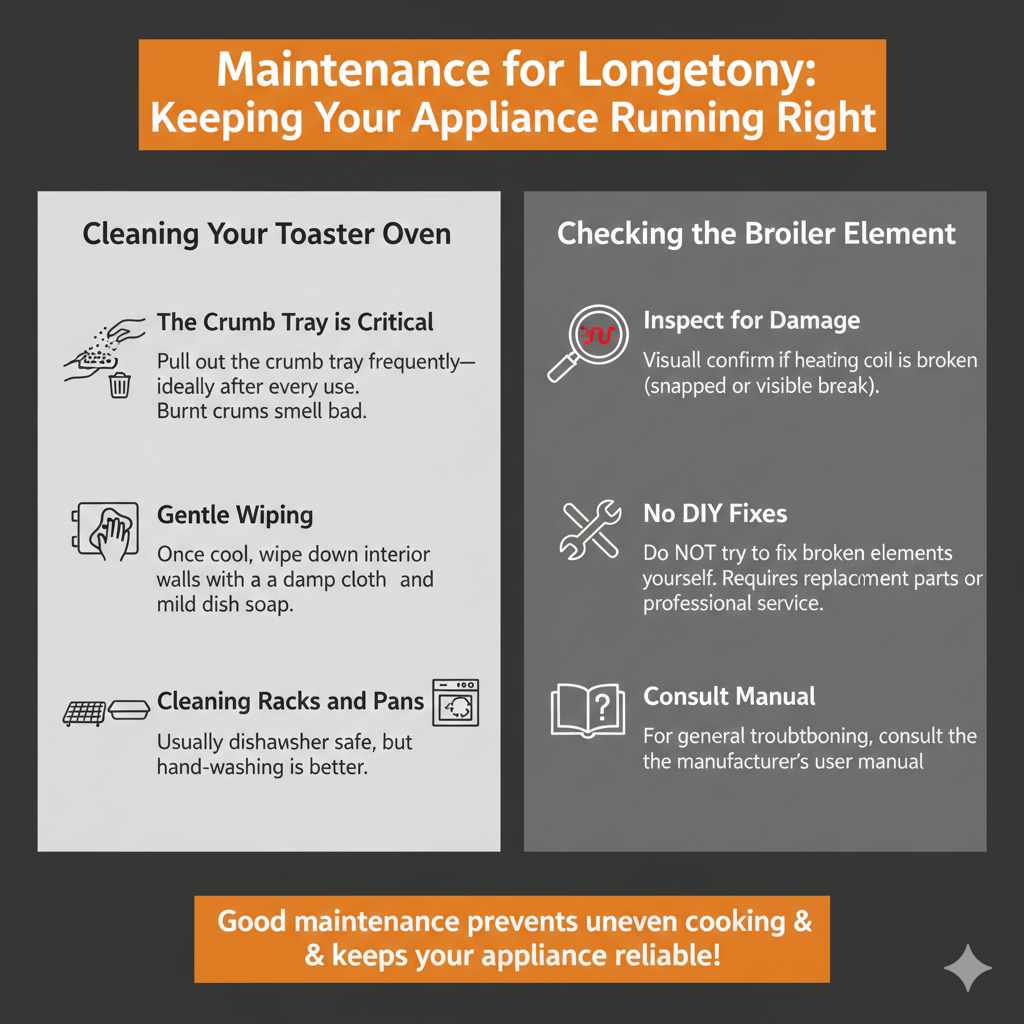
To ensure your investment lasts, treat it well. Good maintenance practices prevent uneven cooking (a sign of failing elements) and keep your appliance reliable, just like regular oil changes keep your car running smoothly.
Cleaning Your Toaster Oven
Crumbs and spilled grease affect how heat circulates, throwing off the balanced heating that makes a toaster oven great.
- The Crumb Tray is Critical: Pull out the crumb tray underneath the heating elements frequently—ideally after every use. Burnt crumbs smell bad and can sometimes smoke.
- Gentle Wiping: Once cool, wipe down the interior walls with a damp (never soaking wet) cloth and mild dish soap. Avoid abrasive scrubbers on the elements themselves.
- Cleaning Racks and Pans: These are usually dishwasher safe, but hand-washing with a non-scratch sponge maintains their finish longer.
Checking the Broiler Element
If you notice your broiler isn’t getting hot at the very top, or if your toast is only browning on one side, the elements might need inspection. In simpler models, you can visually confirm if a heating coil is broken (it will look clearly snapped or have a visible break). Do not try to fix broken heating elements yourself; that requires replacement parts specific to your model or professional service. For general troubleshooting, consulting the manufacturer’s user manual is always the safest first step if performance drops.
FAQ: Beginner Questions About Broilers and Toaster Ovens
Q1: Can I use a toaster oven to cook raw meat safely?
A: Yes, you absolutely can! Use the standard bake or roast setting, not the high-intensity broiler. Always check the internal temperature with a meat thermometer to ensure it reaches safe minimums, just like a full oven.
Q2: Is the broiler setting the same as the Bake setting?
A: No. The Broil setting uses heat only from the top element for fast surface cooking. The Bake setting uses both top and bottom elements for even, enclosed heat distribution throughout the chamber.
Q3: Why is my toast burning on the edges but still white in the middle?
A: This usually means your heating elements are unevenly heating, or you have too many crumbs/grease residue blocking the heat flow at the bottom of the unit. Clean the crumb tray thoroughly and test again.
Q4: Can I use aluminum foil in my toaster oven?
A: Generally, yes, for lining the crumb tray or a drip pan to catch messes. However, never cover the heating elements or place foil where it can touch the exposed elements, especially on the broiler setting, as this is a fire hazard.
Q5: Which appliance is cheaper to run for reheating a single slice of pizza?
A: The toaster oven is significantly cheaper. It heats up its small space much faster and uses less overall energy wattage than turning on a full oven (even if you use the broiler function briefly).
Q6: Do I need to preheat my toaster oven?
A: For toasting bread, no. For baking, roasting, or using the broiler intensely, preheating for 3–5 minutes helps ensure immediate, even temperature when the food goes in. This is crucial for recipes that need a hot start.
Conclusion: Making the Right Choice for Your Kitchen Task
Deciding between using the broiler vs toaster oven function boils down to one simple question: Do I need intense, fast, top-side heat, or do I need gentle, even, all-around heat?
If you need to achieve a golden-brown finish, melt mozzarella until it stretches, or give that final sear to a small cut of fish, flick the switch to Broil. Just stand close, set a timer, and watch carefully—that direct heat works miracles quickly!
If you’re baking a small batch of biscuits, roasting some carrots for dinner, or just making lunchtime toast, use the standard Toaster Oven (Bake/Toast) settings. You get the energy savings, the quick preheat time, and the reliable, even performance of a full oven on a smaller scale. Understanding these simple differences ensures you get the perfect result every time without wasting energy or overcooking your favorite foods. You’ve got this!