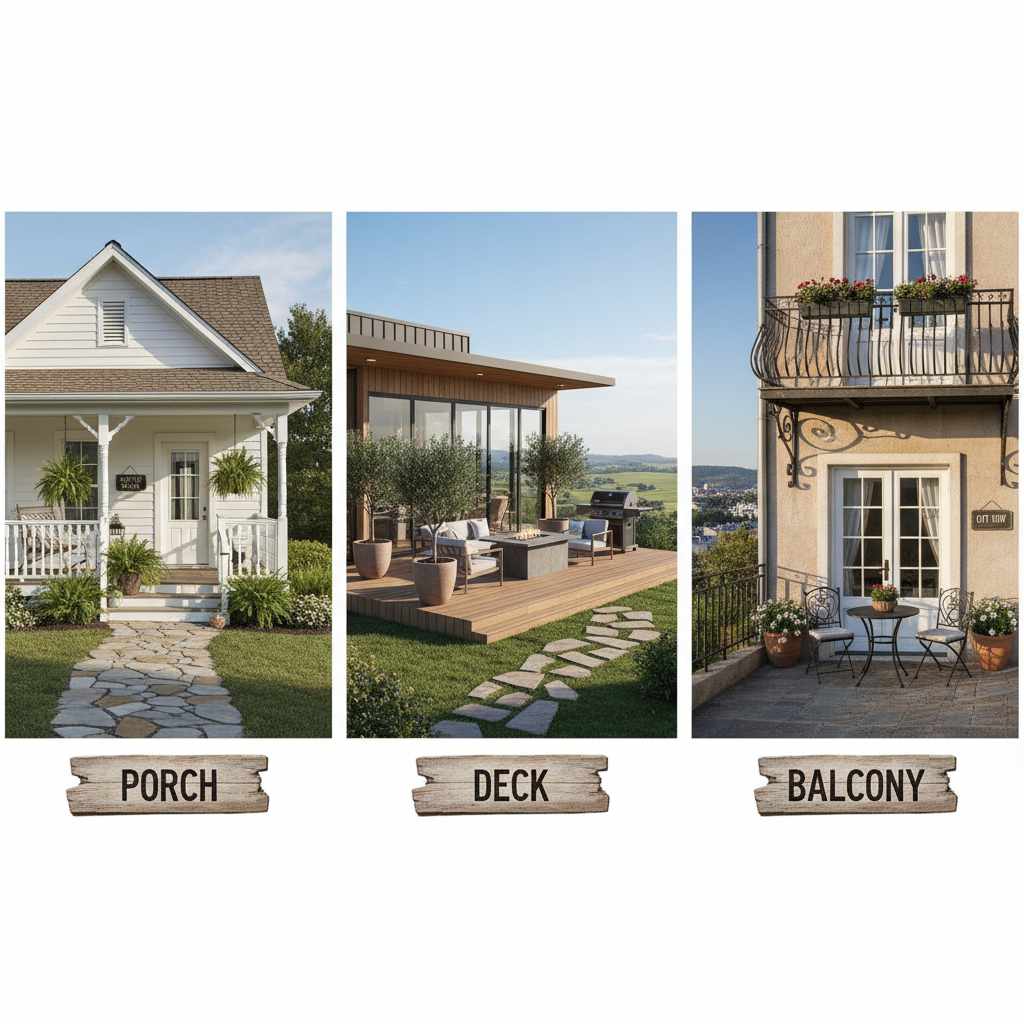
These outdoor spaces confuse many homeowners. Simply put, a porch is covered and attached to the ground floor, a deck is usually open to the sky and elevated, and a balcony is a small, elevated platform attached only to the upper level of a building. We will break down the key differences in size, style, and function so you can choose or describe your outdoor space easily.
Buying a new house or planning an upgrade often brings up confusing terms for outdoor living areas. You hear neighbors talking about their new deck, or maybe you’re looking at a home with a nice front porch. How do you tell a balcony from a deck or a porch?
By the end of this guide, you will know exactly what you’re standing on. Let’s get those outdoor structures sorted out!
Decoding Outdoor Spaces: Balcony vs Deck vs Porch
Understanding the difference between a balcony, a deck, and a porch comes down to three main things: location, roofing, and how they are supported. Think of it like the difference between your car’s hood, trunk, and roof—they are all outside, but they serve different purposes and have different structures.
What is a Porch? The Welcoming Entrance
The porch is probably the most traditional outdoor space we have. Think of classic American homes with comfortable rocking chairs inviting neighbors over. It’s all about accessibility and shelter.
Key Features of a Porch
- Location: A porch is almost always located on the ground level of a home. It is directly accessible from the outside ground.
- Roofing: This is the big one. A true porch must have a roof that is an extension of the main house roofline. This provides excellent shelter from sun and rain.
- Support: Porches are typically supported by foundational structures, often resting on concrete piers or the home’s foundation.
- Purpose: Designed for sitting, greeting guests, and providing a transition space between the outdoors and indoors.
If it’s covering the front door and it has a solid roof attached to the house, it’s a porch. Think of it as the home’s front-facing welcome mat, protected from the weather. Sometimes, porches can wrap around the side of a house, and those are often called wraparound porches.

What is a Deck? The Elevated Outdoor Living Room
Decks are the modern choice for outdoor entertaining. They are designed to extend your living space outside, often overlooking a backyard or garden. If you love grilling or soaking up the sun, you probably want a deck.
Key Features of a Deck
- Location: Decks are typically elevated significantly above the ground. They are often built off the second story or raised high in the backyard.
- Roofing: Generally, decks are open to the sky. While you can add a pergola or awning later, the structure itself is usually uncovered.
- Support: Decks are self-supporting structures, relying on posts, beams, and footings dug into the ground. They are not attached to the main roof structure in the way a porch is.
- Materials: Decks are famous for using wood (like cedar or treated pine) or composite materials (which require less maintenance).
Because decks are constructed structures built on posts, they can achieve much greater heights and sizes than porches often allow, especially when extending far out from the house. For best practices on setting deck footings, check out the guidelines provided by organizations like the American Wood Council (AWC).
What is a Balcony? The Upper-Level Retreat
The balcony is all about vertical living. You usually find them attached to apartments, condos, or upper floors of a house. Think small, private, and suspended.
Key Features of a Balcony
- Location: A balcony is attached exclusively to an upper floor of a building. It does not touch the ground.
- Roofing: Balconies usually do not have their own roof. The floor of the balcony above it acts as its covering, or it is completely open to the elements.
- Support: They are primarily supported by the main structure of the building, often cantilevered (extending outward without direct support from underneath) or minimally supported by brackets.
- Size: Balconies tend to be smaller than decks, designed for one or two people to enjoy a view or step out for fresh air.
The easiest way to identify a balcony is its position: if it’s off a second-story bedroom and sits directly over the ground floor, it’s a balcony. It doesn’t have its own structural supports reaching the ground like a deck does.
Comparison Table: Balcony vs Deck vs Porch
To make sure you have a crystal-clear understanding, let’s put the essential differences into a simple chart. This side-by-side comparison is perfect for quick reference when you’re talking to a contractor or filling out paperwork.
| Feature | Porch | Deck | Balcony |
|---|---|---|---|
| Ground Level Access | Yes (Ground Floor) | Usually Elevated (Needs Stairs) | No (Only Upper Floors) |
| Roof Coverage | Yes (Attached to House Roof) | No (Usually Open to Sky) | No (Covered only by structure above, if any) |
| Primary Support | Foundation/Piers | Posts/Beams anchored to the ground | Building Structure (Cantilevered or Braced) |
| Typical Size | Medium to Large | Medium to Very Large | Small to Medium |
| Main Function | Sheltered Entry/Relaxation | Outdoor Living/Entertaining | Small Private Retreat/Viewpoint |
When Does a Deck Become a Porch, or a Balcony Become a Deck?
Sometimes, things in construction can get a little blurry. Homeowners often try to add features to an existing structure, which can make the lines between these three spaces less clear. Think of it like adding a roof rack to your car—it changes how you use the exterior, but doesn’t change the car itself.
The Porch-Deck Crossover: Roofs Matter Most
The most common mix-up happens when someone builds a low-level platform next to their house (which looks like a deck) but then adds a permanent roof over it.
- If it’s on the ground level and has a roof attached to the home’s main structure, it’s a porch. Even if it’s made of composite decking material, the roof makes it a porch.
- If it’s elevated and needs stairs/ladders to access it, but you add a full, separate roof structure over it, it’s generally still called a deck. A separate roof structure means it is no longer relying on the main house roof as its cover.
The Balcony-Deck Gray Area: Support Systems
This is especially tricky in multi-story buildings. Sometimes, a very small, open platform off an upper floor might look like a tiny deck. Here is the simple test:
- If the platform relies entirely on jutting out from the main wall (cantilevered) or is supported by brackets attached high up, and it has no visible ground support, call it a balcony.
- If the platform requires its own set of posts running from the ground all the way up to the platform floor for support, it functions more like an elevated deck, even if it’s on the second floor.
Pro Tip: Building codes often treat decks differently than balconies because of the different support requirements. Always check with your local building department if you plan major changes!
Practical Considerations When Building or Buying
When you are deciding which space you want, or when you are evaluating a house for purchase, there are practical aspects to consider—things like maintenance, cost, and usability. These differ significantly between the porch, deck, and balcony.
Maintenance and Durability
Just as you need to choose the right tires for the season, choosing the right material for your outdoor space is key to long-term enjoyment.
Porch Maintenance
Since porches are covered, the materials used for the floor (often concrete, tile, or wood decking) are somewhat protected from direct sun damage and heavy rain. Maintenance usually involves cleaning and periodic resealing of painted wood.
Deck Maintenance
Decks take the brunt of the weather. They need regular attention:
- Wood decks need power washing, staining, or sealing every 1–3 years to prevent rot and splintering.
- Composite decks are much lower maintenance but can fade over time if exposed to intense UV rays.
Balcony Maintenance
Balconies, especially cantilevered ones, require specialized attention because their structural integrity affects the main building. Waterproofing underneath is crucial, as leaks can damage ceilings and walls of the floor below. Inspections are often more complex due to their height.
Cost and Construction Complexity
Building costs vary widely based on complexity, materials, and, most importantly, whether you need extensive ground support.
As a general rule of thumb, porches and decks often involve substantial footing support anchored to the ground, which can be an expensive part of the project. Balconies involve specialized engineering to ensure they properly transfer load back into the main home frame.
| Structure Type | Typical Construction Complexity | Primary Cost Driver |
|---|---|---|
| Porch | Medium (Requires foundation work) | Roof tie-in and foundation pouring |
| Deck (Elevated) | Medium to High (Requires extensive post/beam construction) | Height, size, and material costs (e.g., composite) |
| Balcony | High (Requires structural tying into the house frame) | Engineering sign-off and specialized attachment hardware |
If you are looking at adding a deck, look into safe anchoring hardware. According to safety guidelines, proper connection points between the ledger board (the board attached to the house) and the house frame are vital for preventing catastrophic failure. This is not a place to cut corners!
How Each Space Affects Your Home’s Value and Usage
The outdoor space you choose or have dictates how you will use that area and how appraisers or potential buyers will view it. Think about what you want to do outdoors.
Using Your Porch
Porches encourage casual, sheltered activity. They are perfect for:
- Morning coffee protected from drizzle.
- Placing outgoing mail or packages that need slight protection.
- Creating a clear visual boundary between the public sidewalk and your private home.
A nice, deep porch adds significant curb appeal and charm, often making a home feel more established and welcoming.
Using Your Deck
Decks are built for volume—for entertaining large groups, setting up big grills, or placing outdoor sofas and dining sets. They capitalize on backyard views and sunlight.
If you plan on hosting big summer parties or having a large outdoor dining setup, the uninterrupted surface area of a deck is superior.
Using Your Balcony
Balconies offer intimacy and altitude. They are best suited for:
- A quiet place for one or two people to read or relax.
- Container gardening where ground space is unavailable.
- Enjoying a specific view above the street level.
In condos or apartments, a good-sized balcony is a major selling point, often increasing the perceived livable space.
DIY vs. Professional Installation: Getting It Right
As someone interested in DIY projects, you might think about tackling one of these structures yourself. While painting a porch railing is a great weekend project, building these structures requires careful attention to load-bearing safety.
DIY Suitability Levels
- Porch Repair/Refinishing: High DIY suitability. Simple repairs like re-staining wood or fixing minor trim can usually be handled by beginners.
- Balcony Repair/Modification: Low DIY suitability. Because balconies are integrated into the home’s structure, modifications often require engineering knowledge to ensure the load is safely transferred to the frame. Leave structural balcony repairs to licensed professionals.
- Deck Construction: Medium to Low DIY suitability. Building a deck involves critical structural elements: digging proper footings (which requires specific depth based on local frost lines), correctly fastening the ledger board, and ensuring railings meet strict safety codes. While experienced DIYers can do this, beginners should seriously consider hiring a contractor, especially for elevated decks.
When in doubt about structural support, think safety first—yours, your family’s, and your friends’. If you hit a high point in complexity, calling in an expert gives you great peace of mind. For instance, understanding wind load requirements for railing attachment is sometimes best left to those who deal with local building codes every day.
Finalizing the Differences: Clear Definitions to Remember
Let’s review the easiest way to file this information away so you can confidently use the right term next time.
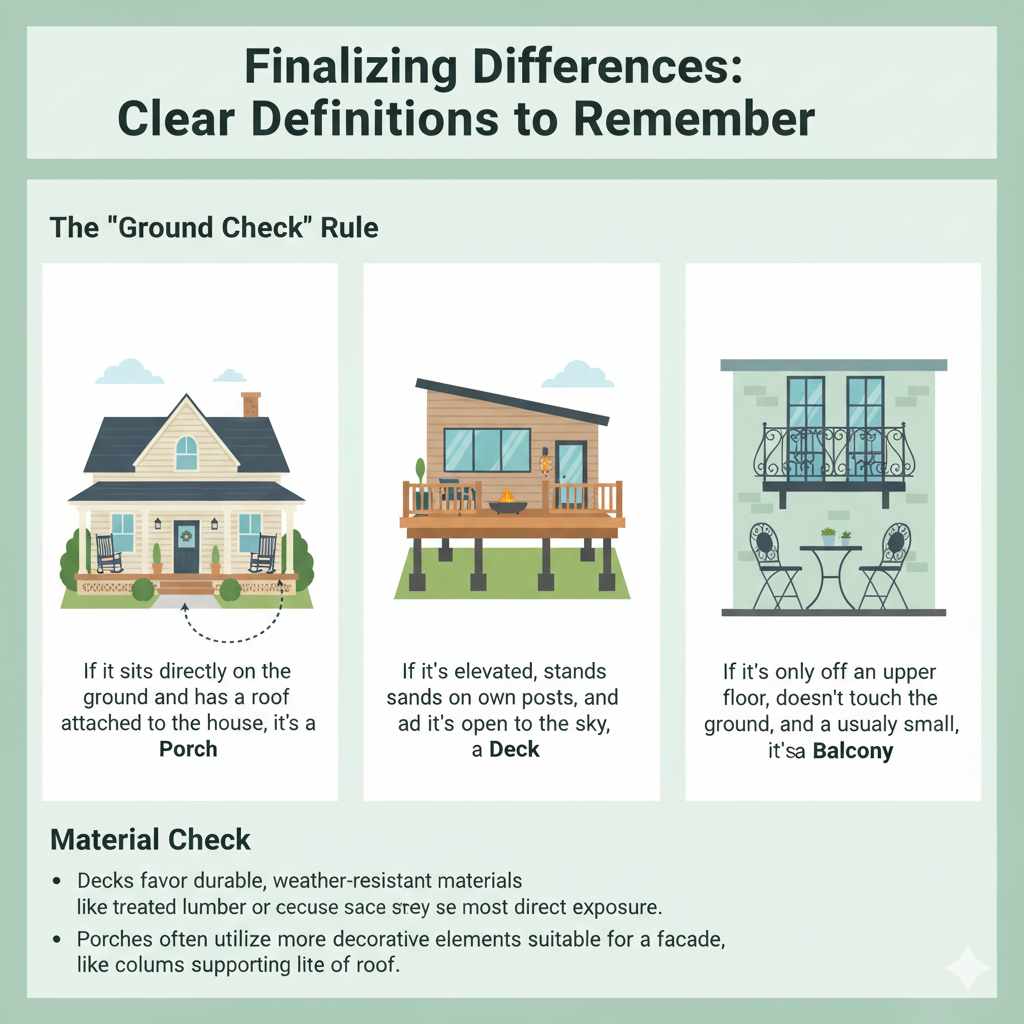
The “Ground Check” Rule
This is the simplest way to start differentiating:
- If it sits directly on the ground and has a roof attached to the house, it’s a Porch.
- If it’s elevated, stands on its own posts, and is open to the sky, it’s a Deck.
- If it’s only off an upper floor, doesn’t touch the ground, and is usually small, it’s a Balcony.
Material Check
While materials can cross over (you can put composite flooring on a porch), traditional use offers clues:
Decks favor durable, weather-resistant materials like treated lumber or composite because they see the most direct exposure. Porches often utilize more decorative elements suitable for a facade, like columns supporting the roof.
Frequently Asked Questions (FAQ)
Q1: Can a deck be covered?
A: Yes, a deck can be covered with an awning, pergola, or even a separate roof structure. However, if the covering is an extension of the main house roof and it sits flush with the ground floor, it officially becomes a porch.
Q2: If a porch is on the second floor, is it a balcony?
A: If a covered structure is on the second floor, but it has its own substantial support posts running all the way down to the ground (like a porch roof extension), it is technically an upper-level covered porch or sometimes called a loggia. If it is attached only to the upper floor and hangs out without ground support, it is a balcony.
Q3: Do balconies need railings?
A: Yes, in nearly all residential and commercial building codes. Any elevated surface that poses a fall hazard needs protective railings. The required height and strength depend heavily on local safety codes. Always verify local requirements.
Q4: Which one adds the most value to a home?
A: Generally, a well-built, large deck that is integrated with the backyard landscaping often provides the best return on investment for increased living space. A beautiful, deep porch also significantly boosts curb appeal and perceived value.
Q5: What is the difference between a patio and a porch?
A: A patio is a paved, ground-level area (made of stone, brick, or concrete) that typically has no permanent roof or vertical rails. A porch must have a roof structure tied into the house.
Q6: Are balconies always smaller than decks?
A: Not always strictly, but typically yes. Decks are designed to be large outdoor “rooms,” while balconies are generally smaller platforms used for stepping out, often dictated by the size of the room behind them.
Conclusion: Confidence in Your Outdoor Structures
Navigating the world of exterior home terminology doesn’t have to feel like deciphering complex engine codes. Whether you are admiring a charming, sheltered front porch, planning a massive backyard deck, or relaxing on a compact upper-level balcony, each structure has its own purpose and character.
The important thing to remember is that these outdoor spaces are defined mainly by where they are located, how they are supported, and whether they have a roof. A porch offers protection and a welcoming entryway, a deck creates a spacious open-air area for entertaining, and a balcony provides a private elevated retreat with a view.
When you understand these differences, conversations with contractors, real estate agents, or homeowners become much easier. You will also be able to evaluate homes more confidently, knowing exactly what kind of outdoor space you are looking at or planning to build.
In the end, there is no “best” option—only the one that fits your home’s layout, lifestyle, and outdoor needs. A cozy porch may be perfect for greeting neighbors and enjoying rainy mornings, a deck might be ideal for weekend barbecues and gatherings, while a balcony can offer a quiet personal escape above the hustle and bustle below.