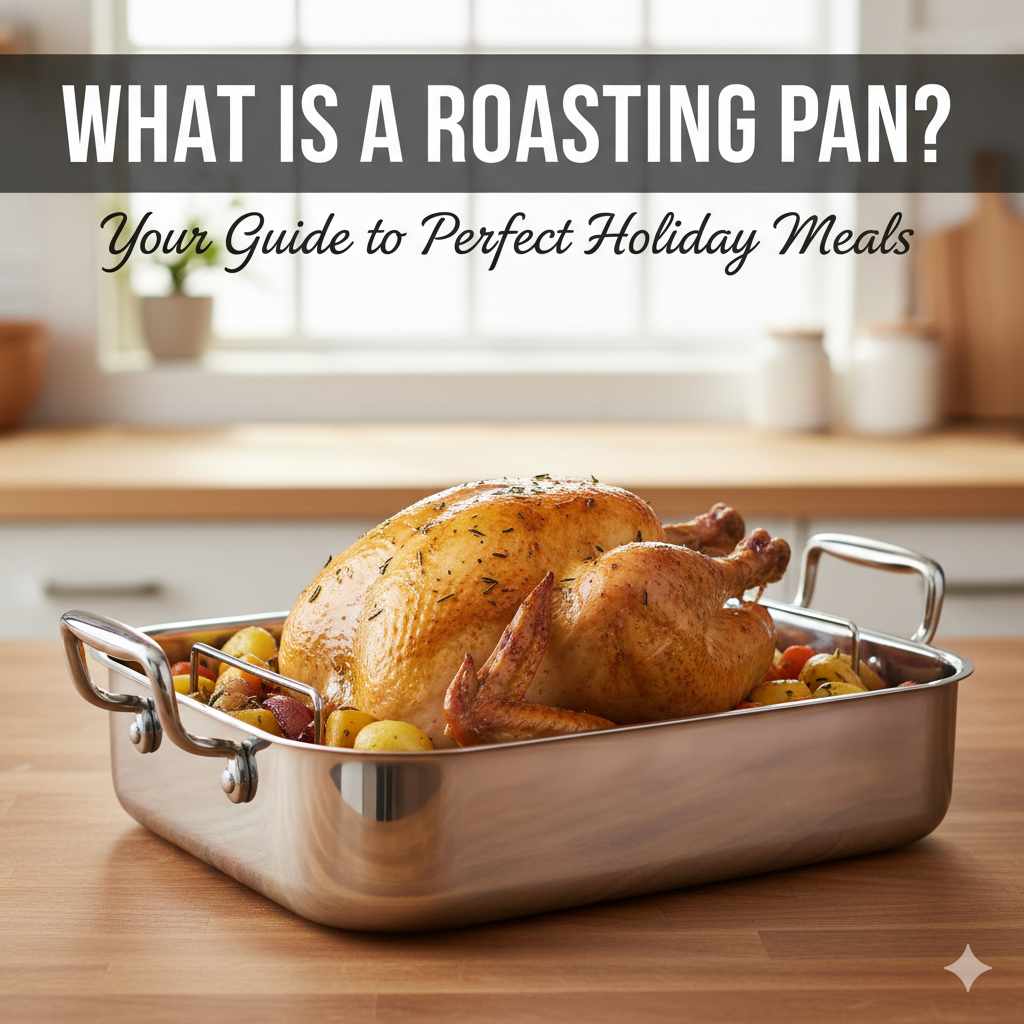
A roasting pan is a large, high-sided oven-safe pan designed for roasting meats and vegetables. Its sturdy construction holds heavy items like a Thanksgiving turkey, while the high walls contain juices and splatters. Often paired with a rack, it promotes even air circulation for perfectly browned, delicious results every time.
Ever wondered what that giant pan is that only seems to appear during the holidays? That’s a roasting pan, and it’s one of the most valuable—yet often misunderstood—tools in the kitchen. It might seem intimidating, but it’s actually your secret weapon for creating unforgettable meals, from juicy holiday roasts to simple weeknight dinners.
What Exactly Is a Roasting Pan?
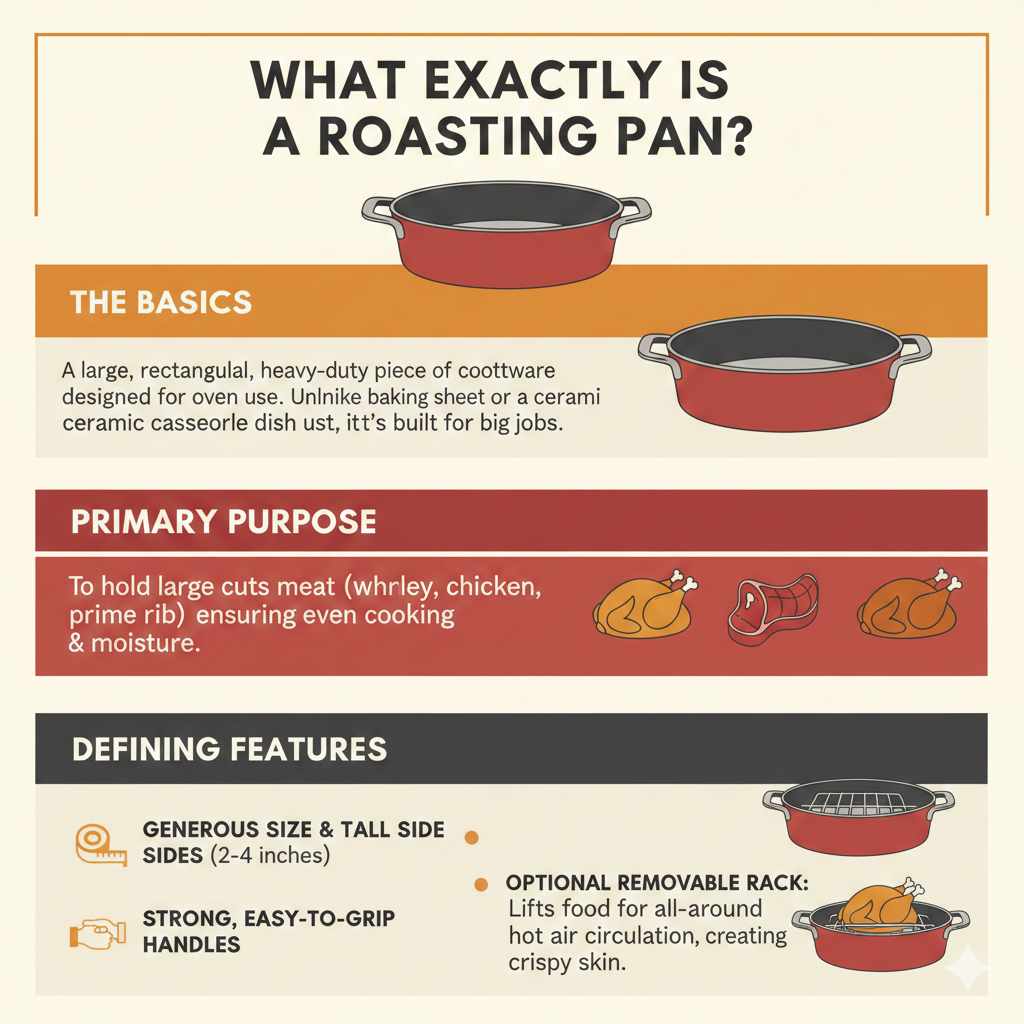
At its core, a roasting pan is a large, rectangular piece of cookware specifically designed for cooking in the oven. Think of it as the heavy-duty workhorse of your kitchen. Unlike a baking sheet, which is flat, or a casserole dish, which is often smaller and made of ceramic or glass, a roasting pan is built for big jobs.
Its primary purpose is to hold large cuts of meat—like a whole turkey, chicken, prime rib, or pork loin—while they cook. The defining features are its generous size, tall sides (typically two to four inches high), and strong, easy-to-grip handles. These features work together to ensure your food cooks evenly, stays moist, and is easy to transport from the oven to the counter.
Many roasting pans also come with a removable rack. This small but mighty accessory lifts the food off the bottom of the pan, allowing hot air to circulate all around it. This is the key to achieving that crispy, golden-brown skin on a chicken or turkey while the inside remains tender and juicy.
The Anatomy of a Roasting Pan: Key Features to Look For
Not all roasting pans are created equal. When you’re shopping for one or trying to understand the one you have, pay attention to these key features. Each plays a crucial role in your cooking success.
Size and Shape
Roasting pans are almost always rectangular to accommodate the shape of large roasts and birds. Their size is the most important consideration. You want a pan that is large enough to hold your food with at least an inch or two of space around it for air circulation. However, you don’t want a pan that is excessively large, as the drippings can spread out and burn.
- Small Roasting Pans: Ideal for whole chickens, pork tenderloins, or a large batch of roasted vegetables.
- Medium Roasting Pans: A great all-purpose size that can handle a 12-15 pound turkey, a small ham, or a beef roast. This is the most versatile option for most households.
- Large Roasting Pans: Reserved for the biggest jobs, like a 20+ pound turkey for a large family gathering. Make sure a pan this size will fit in your oven before you buy!
High Sides
The sides of a roasting pan are typically between two and four inches high. This design serves two important purposes. First, the high walls contain meat juices and prevent fat from splattering all over your oven, saving you a lot of cleanup time. Second, they help to collect those precious drippings, which are the foundation for a rich, flavorful pan gravy.
Sturdy Handles
This feature is all about safety. A roasting pan filled with a 20-pound turkey and hot liquid is incredibly heavy. You need large, sturdy handles that you can grip securely, even when wearing bulky oven mitts. Look for handles that are riveted or welded onto the pan’s body for maximum strength and durability. Avoid pans with small or flimsy handles, as they can be a safety hazard.
The Roasting Rack
The rack is an insert that sits inside the pan. Its job is to elevate the food above the bottom of the pan. Why is this so important? Lifting the roast allows hot air to flow underneath it, promoting even cooking and browning on all sides. It also keeps the bottom of the meat from sitting in its own juices and becoming soggy. If your pan doesn’t come with a rack, you can create a makeshift one with thick slices of onion, carrots, and celery, which will also add amazing flavor to your drippings.
Choosing Your Champion: Roasting Pan Materials
The material of your roasting pan affects how it heats, how durable it is, and how easy it is to clean. Understanding the differences will help you choose the best pan for your needs and budget. According to research on cookware safety from Cornell University, the material of your pan plays a significant role in both cooking performance and health.
Here’s a breakdown of the most common materials:
| Material | Pros | Cons | Best For |
|---|---|---|---|
| Stainless Steel | Durable, non-reactive, often dishwasher safe, excellent for browning and making pan sauces on the stovetop. | Can be more expensive, doesn’t conduct heat as evenly without a multi-ply core (like aluminum or copper). | Serious home cooks who want a versatile, long-lasting pan for both roasting and stovetop gravy making. |
| Anodized Aluminum | Excellent heat conductor, lightweight, durable, and often has a nonstick coating. | Nonstick coatings can scratch and wear out over time; not all are stovetop-safe. | Beginners and anyone looking for an affordable, easy-to-clean option that provides even cooking. |
| Cast Iron | Incredible heat retention, creates a superior crust, extremely durable (can last a lifetime). | Very heavy, requires regular seasoning to prevent rust, can react with acidic ingredients like tomatoes. | Cooks who prioritize exceptional browning and heat retention and don’t mind the extra weight and maintenance. |
| Carbon Steel | Lighter than cast iron but with similar heat retention and browning capabilities. Becomes naturally nonstick with seasoning. | Requires seasoning, can rust if not cared for properly. | Enthusiasts who want the performance of cast iron in a more lightweight package. |
When Should You Use a Roasting Pan?
While a roasting pan shines during the holidays, its usefulness extends far beyond special occasions. It’s the perfect tool for any dish that involves cooking large items with dry heat in the oven. Here are just a few ideas to get you started:
- Holiday Feasts: The obvious choice for Thanksgiving turkey, Christmas ham, or a celebratory prime rib.
- Sunday Dinners: Perfect for a whole roasted chicken, a leg of lamb, or a classic pot roast.
- Large-Batch Vegetables: Roast a huge tray of root vegetables like potatoes, carrots, and parsnips for meal prep or a crowd.
- Big Casseroles: Its large size makes it ideal for dishes like lasagna, shepherd’s pie, or baked ziti for a party.
- Braising: While not its primary function, a sturdy, stovetop-safe roasting pan can be used to braise large cuts of meat like brisket or pork shoulder.
Roasting Pan vs Other Cookware: What’s the Difference?
It can be tempting to just grab whatever pan is handy, but using the right tool for the job makes a huge difference. Here’s how a roasting pan compares to other common kitchen cookware.
| Feature | Roasting Pan | Baking Sheet | Casserole Dish |
|---|---|---|---|
| Sides | High (2-4 inches) | Very low (1 inch or less) | Medium to high (2-3 inches) |
| Size | Large and deep | Wide and shallow | Varies, typically smaller than a roasting pan |
| Material | Heavy-gauge metal (stainless steel, aluminum) | Thin metal (usually aluminum or steel) | Ceramic, glass, or stoneware |
| Primary Use | Roasting large meats, poultry, and vegetables | Baking cookies, roasting small batches of vegetables, toasting nuts | Baking casseroles, lasagnas, and baked desserts |
Using a baking sheet for a turkey, for example, would lead to juices spilling and burning in your oven. Using a casserole dish might be too small, causing the meat to steam in its own juices rather than roast.
How to Use a Roasting Pan Like a Pro: A Beginner’s Guide
Ready to get cooking? Using a roasting pan is easy. Follow these simple steps for delicious, perfectly cooked results every time.
- Prepare Your Pan and Rack: If your pan has a rack, place it inside. Lightly grease the rack with oil or cooking spray to prevent your food from sticking. If you don’t have a rack, create a natural one by arranging thick-sliced onions, carrots, and celery on the bottom of the pan.
- Arrange Your Food: Prepare your meat or vegetables with your desired seasonings. Place the main item (like a turkey or chicken) in the center of the rack. Arrange any accompanying vegetables around it, either on the rack or in the bottom of the pan to soak up the flavorful drippings.
- Place it in the Oven: Carefully place the roasting pan in the center of your preheated oven. Ensure there is enough space above and around the pan for air to circulate freely.
- Basting and Monitoring: During the cooking process, you can use the collected juices in the bottom of the pan to baste your roast. Use a turkey baster or a large spoon to drizzle the liquid over the top of the meat every 30-45 minutes. This helps keep it moist and adds flavor.
- Rest Your Roast: Once your food is cooked, carefully remove the heavy pan from the oven. Transfer the roast from the pan to a cutting board and let it rest for at least 15-20 minutes before carving. This allows the juices to redistribute, resulting in a more tender and flavorful piece of meat.
- Make Pan Gravy (The Best Part!): Don’t discard those drippings! If you have a stovetop-safe roasting pan, you can place it directly over your burners on medium heat. Whisk in some flour to create a roux, then slowly pour in broth while whisking continuously until you have a smooth, rich gravy.
Keeping Your Roasting Pan in Top Shape: Cleaning and Care Tips
A good roasting pan is an investment that can last for years with proper care. Cleaning it might seem like a chore, but these tips make it much easier.
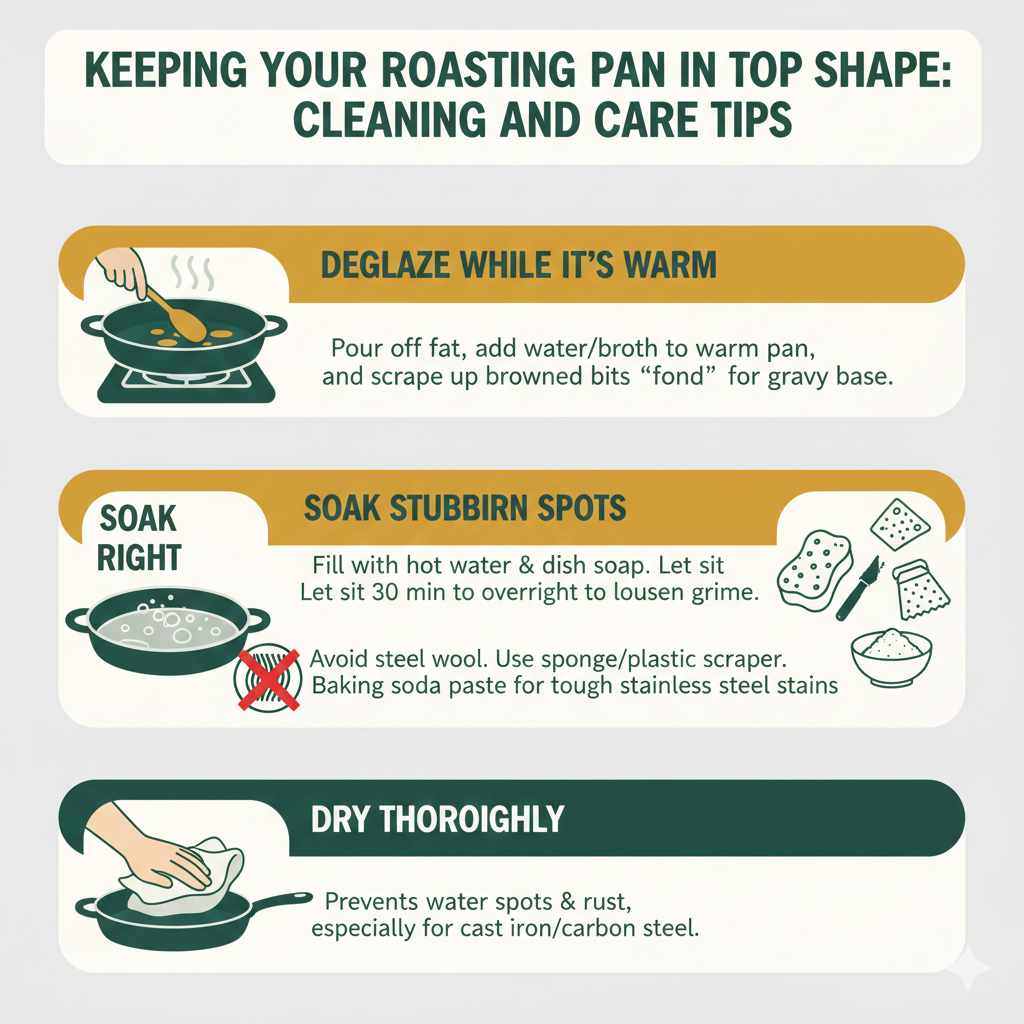
- Deglaze While it’s Warm: The easiest way to start the cleaning process is right after you remove the roast. Pour off the excess fat, then place the warm pan on the stovetop and add a cup of water or broth. As it simmers, use a wooden spoon to scrape up all the browned bits (the “fond”) from the bottom. This not only makes cleaning easier but also creates a flavorful base for gravy.
- Soak Stubborn Spots: For any baked-on food, fill the pan with hot water and a few drops of dish soap. Let it soak for at least 30 minutes or even overnight. This will loosen the grime, making it much easier to scrub away.
- Use the Right Tools: Avoid using steel wool or harsh abrasive cleaners, especially on nonstick surfaces, as they can scratch and damage the pan. A non-abrasive sponge or a plastic scraper is usually all you need. For tough stains on stainless steel, a paste of baking soda and water can work wonders.
- Dry Thoroughly: After washing, always dry your roasting pan completely to prevent water spots or rust, especially with cast iron or carbon steel pans.
Frequently Asked Questions About Roasting Pans
Do I really need a roasting pan?
If you plan on roasting whole poultry or large cuts of meat more than once a year, a roasting pan is a worthwhile investment. It makes the process safer, cleaner, and yields better results than makeshift solutions. For occasional cooks, a large cast-iron skillet or a sturdy casserole dish can work in a pinch for smaller items like a single chicken.
Can I use a roasting pan without a rack?
Yes, you can! A rack helps with air circulation, but you can achieve a similar effect by placing your roast on a bed of sturdy vegetables like onions, carrots, and celery. This “vegetable rack” elevates the meat and adds incredible flavor to the pan drippings.
What can I use if I don’t have a roasting pan?
For smaller roasts, a 12-inch cast-iron skillet or a large oven-safe sauté pan can work well. A 9×13-inch glass or ceramic baking dish can also suffice, though it won’t be suitable for making gravy on the stovetop. For a large turkey, a disposable aluminum roasting pan is a cheap, one-time option, but be extremely careful as they are flimsy and can easily buckle when full.
Can you put a roasting pan on the stovetop?
It depends on the material. Pans made from stainless steel, cast iron, and carbon steel are generally safe for stovetop use, which is ideal for searing meat before roasting or making pan gravy afterward. Always check the manufacturer’s instructions, as pans made from aluminum or with certain nonstick coatings may not be stovetop-safe.
What size roasting pan should I buy?
A medium-sized pan, typically around 16 inches long, is the most versatile choice for most families. It can handle a chicken, a medium-sized turkey (up to about 15 pounds), or a large beef roast. If you regularly host large holiday gatherings, you may want to invest in a larger pan that can accommodate a 20+ pound turkey.
Are expensive roasting pans worth it?
For most home cooks, a mid-range roasting pan (like one made from heavy-gauge anodized aluminum or basic stainless steel) offers the best value. Very expensive, multi-ply stainless steel pans are fantastic for their durability and stovetop performance, but they aren’t necessary to get great results. The most important factors are sturdy construction and a size that fits your needs.
Your Kitchen’s New Best Friend
A roasting pan might look like a simple piece of equipment, but it is truly a gateway to some of life’s most delicious and memorable meals. From holiday feasts that bring everyone together to a simple, comforting Sunday dinner, this kitchen workhorse does it all with grace. It contains messes, promotes even cooking, and helps you create the most flavorful gravies imaginable.
Now that you understand what a roasting pan is, what to look for, and how to use it, you can approach your next big cooking project with confidence. Don’t let it gather dust in the back of a cabinet. Embrace it as the essential tool it is, and get ready to create amazing meals that will impress your family and friends. Happy roasting!