What Does An LED Light Bulb Look Like: Stunning Essentials
LED light bulbs are compact, energy-efficient, and come in various shapes and sizes to fit your fixtures. They often have a distinct, often plastic or frosted appearance, differentiating them from traditional incandescent bulbs. Learning their look helps you choose the right one for style and functionality.
For a related lighting or fan project, Are Fish Attracted To Light At Night? gives readers another setup detail to compare.
For a related lighting or fan project, What Size Vanity Light For 48 Inch Vanity gives readers another setup detail to compare.
For a related lighting or fan project, What Is The Difference Between LED And Light Bulb gives readers another setup detail to compare.
Are you standing in the lighting aisle, feeling a bit lost with all the bulb options? Don’t worry, you’re not alone! For many of us, the world of lighting can feel a little overwhelming, especially when trying to figure out exactly what an LED light bulb looks like compared to the ones you’re used to. The good news? It’s simpler than you might think! Understanding the visual cues of an LED bulb not only makes shopping easier but also helps you make stylish and smart choices for your home. We’ll walk through everything you need to know, making sure you feel confident next time you need to replace a bulb or upgrade your lighting. Let’s make your home shine!
The Simple Guide to Identifying LED Light Bulbs
When you first encounter an LED bulb, its appearance can be a little different from old-fashioned incandescent bulbs. They’ve been designed to be energy-efficient and long-lasting, which influences how they look and are constructed. Instead of a delicate glass filament you might remember, LEDs use tiny semiconductors that emit light.
This foundational difference means LEDs often have a different profile. They are usually made with a more durable plastic casing rather than fragile glass, and their internal components are more robust. This is part of what makes them so resilient and popular for everyday use. Let’s dive into the specifics of what makes an LED bulb visually distinct.

The Exterior: What You See First
The outside of an LED bulb is often your first clue. Unlike the clear glass or frosted glass of traditional bulbs, many common LED bulbs feature a base and a more substantial, often opaque or frosted “envelope” (the part that encloses the light source).
- Material: While some LEDs still use glass, many utilize durable plastic (like polycarbonate) for their envelopes. This makes them less prone to breaking if dropped, a big plus for safety and longevity.
- Shape and Size: LEDs come in a vast range of shapes and sizes, designed to mimic or replace traditional bulb forms. You’ll find them in familiar shapes like A19 (standard bulb shape), G25 (globe), BR30 (floodlight), and candle-shaped C7 or C9 bulbs. However, their internal structure means they don’t always have the exact same proportions or curves as their incandescent predecessors.
- Color: The plastic or glass of an LED bulb is typically white or frosted. This is because the actual light-emitting diodes (the tiny chips within) are very small and often very bright. The frosted covering helps diffuse this light, creating a softer, more pleasant glow that’s easier on the eyes and spreads more evenly, much like frosted incandescent bulbs.
The Interior: The “Magic” Inside
Peek inside or look closely, and you’ll see the real difference. Traditional bulbs have a thin wire filament that glows when heated. LEDs are completely different. They use Light Emitting Diodes, which are semiconductor devices. These diodes are mounted on a small circuit board or heat sink.
- Heat Sink: Because LEDs produce very little heat in the form of infrared radiation (they get warm, but not hot like incandescents), they don’t need a large glass bulb to manage heat. Instead, they often have a finned or solid metal portion at the base. This is a crucial heat sink designed to draw heat away from the LEDs and dissipate it into the air, ensuring the bulb lasts a long time. This heat sink is often metallic (aluminum is common) and may be visible below the plastic or frosted part of the bulb.
- Circuit Board: The actual LEDs themselves are tiny, small dots or squares mounted on a circuit board. You typically won’t see these clearly unless the bulb is disassembled, but their presence dictates the bulb’s internal structure.
- Driver: To convert household AC (alternating current) electricity into the DC (direct current) that LEDs require, an electronic component called a driver is built into the bulb, often housed in the base or below the LED array.
Common LED Bulb Shapes and Their Looks
The beauty of LED technology is its versatility. Manufacturers create LEDs that fit into virtually any lighting fixture you have. Here’s a look at some common shapes and what they typically look like:
The Standard A-Type Bulb (A19)
This is the most common bulb shape you’ll find, designed to replace the classic pear-shaped incandescent bulb.
- Appearance: Usually features a white or frosted plastic or glass dome that is easily recognizable. The base is typically a standard screw-in base (E26 in North America).
- What to Look For: The upper part will be smooth and opaque or frosted, and you won’t see a filament. The base might have a bit more bulk due to the internal electronics.
Globe or G-Type Bulbs (G25, G30)
These are round bulbs, often used in vanity lights, decorative fixtures, or pendant lights where the bulb itself is a design element.
- Appearance: They appear as perfect spheres or slightly flattened spheres. Like A-type bulbs, they are usually frosted white.
- What to Look For: The smooth, round shape is the giveaway. They often have a smaller screw base (E12) or the standard E26 base.
Candle-Style Bulbs (Candelabra E12, C7)
These bulbs mimic the look of a candle flame and are often found in chandeliers, wall sconces, and decorative lamps.
- Appearance: These are slender and tapered towards the tip, resembling a flickering candle. LEDs designed in this style can be quite convincing, often with a frosted finish. They typically have a smaller screw-in base (E12 or E14).
- What to Look For: The distinct elongated, slender shape with a rounded or slightly pointed tip.
Reflector or R-Type & BR-Type Bulbs
These are designed for directional lighting, often found in recessed lighting (can lights), track lighting, or spotlights. BR stands for “Bulb Reflector.”
- Appearance: They have a more bulbous front end that acts as a reflector, directing light forward. The front is usually a lens (clear or diffused) and the back part is often a more robust, sometimes finned, housing.
- What to Look For: Their shape is less like a traditional bulb and more like a spotlight. The designation like BR30 tells you the diameter in eighths of an inch (e.g., BR30 is about 30/8, or 3.75 inches in diameter).
Specialty Shapes
LEDs also come in ultra-modern designs, capsule shapes (like for appliance indicators), and unique decorative forms that don’t directly mimic older bulb types. The common thread is the absence of a visible filament and the presence of more modern materials and construction.
Comparing LED Bulbs to Incandescent and Halogen Bulbs
Understanding how LED bulbs differ visually from their predecessors can help you pinpoint them every time.
| Feature | Incandescent Bulb | Halogen Bulb | LED Bulb |
|---|---|---|---|
| Bulb Material | Thin, clear or frosted glass | Quartz glass (often clear) | Durable plastic or glass; often frosted |
| Filament/Light Source | Visible thin wire filament that glows | Tungsten filament (similar to incandescent, but often smaller) | Tiny semiconductor diodes mounted on a circuit board; not visible as a filament. |
| Heat Management | Glass bulb helps radiate heat. Gets very hot. | Quartz glass handles higher temperatures. Gets very hot. | Internal heat sink (metal fins or solid base) manages heat. Surface remains much cooler. |
| Energy Efficiency | Very low | Low | Very high |
| Lifespan | Short (approx. 1,000 hours) | Medium (approx. 2,000 hours) | Very long (approx. 25,000+ hours) |
| Typical Appearance | Classic pear shape, sometimes globe or candle. Filament clearly visible. | Similar shapes to incandescent, often clear glass. Filament visible. | Smooth, opaque/frosted white envelope. May have visible metal heat sink at base. No filament. |
The key visual takeaway is that LED bulbs are built differently to be more efficient and durable. The absence of a glowing filament is the most significant internal difference, replaced by modern electronic components and often a more robust external casing.
Why Do LED Bulbs Look Different? The Technology Behind Their Design
The distinct appearance of LED bulbs is directly tied to the revolutionary technology they employ. Unlike traditional bulbs that generate light by heating a filament until it glows (incandescent) or using a filament within a halogen gas (halogen), LEDs create light through a process called electroluminescence.
Here’s a simplified look at what makes them unique:
- Electroluminescence: When electric current passes through a semiconductor material (the diode), it excites electrons, causing them to release energy in the form of photons—light! This process is incredibly efficient, generating very little wasted heat compared to older technologies. For more on the physics of LED lighting, you can explore resources from institutions like Energy.gov’s Solid-State Lighting Program, which provides comprehensive information on LED technology and its benefits.
- Heat Dissipation: While LEDs are far more efficient, they still produce some heat. Because this heat is generated at the semiconductor junction, it needs to be moved away from the diodes to prevent damage and ensure longevity. This is the primary function of the heat sink you often see at the base of an LED bulb. It’s a vital component that influences the bulb’s overall shape and design, differentiating it from the simpler construction of incandescent bulbs.
- Optics and Diffusion: The light emitted by individual LEDs can be very bright and sometimes directional, or even appear as distinct points of light. To create a pleasant, room-filling illumination, LED bulbs often incorporate diffusers (the frosted plastic/glass part) and internal optics to spread the light evenly. This is why many have that smooth, uniform appearance rather than clear glass showing a filament.
Decoding the Markings on LED Bulbs
Beyond their appearance, several markings on the bulb itself can tell you more about its type, performance, and compatibility. While you might not see a glowing filament, you can definitely read the labels!
Key Markings to Look For:
- “LED”: This is the most obvious and important marking. It will clearly state that the bulb is an LED.
- Wattage (W): You’ll see a wattage listed, but remember that for LEDs, this indicates the energy consumed, not the brightness. A 10W LED might provide the same light as a 60W incandescent.
- Lumens (lm): This is the true measure of brightness. Higher lumen numbers mean a brighter bulb. This is a crucial spec when choosing an LED to match the brightness of your old bulbs.
- Color Temperature (Kelvin, K): This describes the color of the light. Lower numbers (2700K-3000K) are warm and yellowish, like incandescent bulbs. Higher numbers (4000K-6500K) are cooler and bluer.
- Color Rendering Index (CRI): This measures how accurately the bulb shows the true colors of objects. A CRI of 80 or higher is generally good for homes.
- Bulb Type/Shape: You’ll often see designations like A19, BR30, E26 (base type), etc.
- “Dimmable” or “Non-Dimmable”: Crucial if you have dimmer switches. Only use dimmable LED bulbs with a dimmer.
These markings are usually printed directly on the bulb’s base or envelope, or on a sticker. They are essential for choosing the right LED for your needs and ensuring compatibility with your existing fixtures and controls.
Where You’ll Find LED Light Bulbs in Your Home
LEDs are everywhere! They’ve become the dominant lighting technology due to their efficiency and versatility. You’ll find them replacing traditional bulbs in almost every application:
- Living Rooms & Bedrooms: Standard A19 bulbs in lamps, ceiling fixtures, and sconces. Globe bulbs in decorative pendants.
- Kitchens & Bathrooms: Recessed lighting (BR30, PAR bulbs), vanity lights (globe bulbs), under-cabinet lighting, and general ceiling fixtures.
- Hallways & Entryways: Ceiling lights, wall sconces, and flush mounts.
- Outdoor Lighting: Porch lights, landscape lighting, and security lights. Their durability and weather resistance are a big advantage.
- Specialty Fixtures: From chandeliers with candle-shaped LEDs to small indicator lights in appliances, LEDs have replaced older technologies.

Frequently Asked Questions About LED Light Bulbs
Let’s clear up common questions beginners have about what LED light bulbs look like and how they work.
Q1: Do all LED bulbs look like plastic?
Not all. While many common LED bulbs use a durable plastic or polycarbonate for their frosted envelope, you can also find LED bulbs with glass envelopes, especially for decorative or vintage-style bulbs. The key is that the light source itself is different; it’s LEDs, not a filament, inside.
Q2: How do I know if a bulb is an LED just by looking at it?
Look for markings that explicitly say “LED” on the bulb. Visually, the absence of a visible filament through clear glass is a strong indicator. Many also have a more opaque or frosted appearance and a slightly bulkier base where the electronic components are housed.
Q3: Are LED bulbs fragile?
Generally, no. Many LED bulbs are made with shatter-resistant plastic, making them far less fragile than traditional glass incandescent bulbs. This makes them much safer and more durable for everyday use.
Q4: Can I use any LED bulb in any light fixture?
You should always check the wattage and base type. Ensure the LED bulb’s base (e.g., E26, E12) matches your fixture. Also, be mindful of the maximum wattage your fixture is rated for; choose an LED bulb with a low wattage that provides the desired brightness (lumens). If you have a dimmer, you must use a dimmable LED bulb; non-dimmable LEDs may flicker or be damaged on a dimmer.
Q5: Do LED bulbs get hot?
LED bulbs produce significantly less heat than incandescent bulbs. While the small heat sink at the base can get warm to the touch, the bulb itself remains much cooler than incandescent bulbs, which are literally designed to get white-hot to produce light. This is a major safety advantage.
Q6: What does the “frosted” part of an LED bulb do?
The frosted part, usually made of plastic or glass, acts as a diffuser. It softens and spreads the light from the tiny LED diodes, preventing harsh glare and creating a more even, pleasant illumination that mimics the diffused light from traditional bulbs.
Q7: Can I identify the color temperature (warm vs. cool light) from the bulb’s appearance?
Not reliably just by looking at the physical appearance of the bulb’s envelope. The color temperature (warm white, cool white, daylight) is indicated by a number in Kelvin (K) printed on the bulb or its packaging. A frosted white appearance is common for most color temperatures.
Conclusion
You’ve now got a clear picture of what an LED light bulb looks like! From their durable casing and frosted diffusers to the hidden heat sinks and electronic components, they are a testament to modern innovation. The absence of a glowing filament, coupled with clear markings on the bulb itself, makes them easy to identify.
Choosing LED bulbs is a fantastic step towards a more energy-efficient, long-lasting, and stylish home. They offer incredible flexibility in terms of shape, size, and light quality, allowing you to create the perfect ambiance for every room. Remember to look for the “LED” label, check the lumen output for brightness, and consider the color temperature that best suits your space. By understanding these simple visual cues and specifications, you can confidently select the right LED bulbs for all your lighting needs, making your home brighter and your decorating decisions easier. Happy lighting!
Products related to this article
Sponsored / affiliate links. As an Amazon Associate I earn from qualifying purchases. I may earn additional commission from eligible campaigns.
 CONGARTENO Heat-Resistant Square Ceiling Light Shade Soft Diffuser Covers for Ceiling Lights Filters DIY Lampshade Fabric Lamp Shade Modern Diffuser
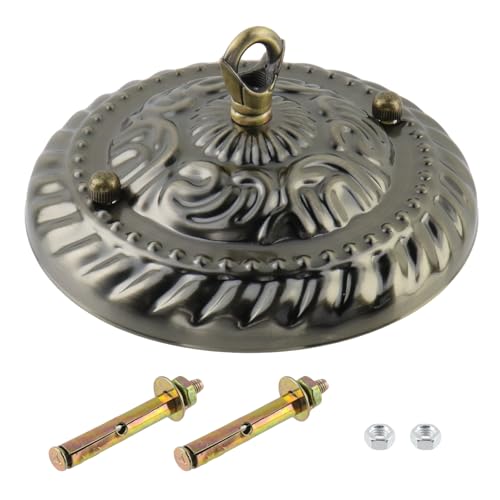 Tighall Ceiling Lighting Plate Lamp Base Ceiling Light Cover Pendant Light Plate with Embossed Pattern Chandelier Accessories with Screw (Antique Brass)