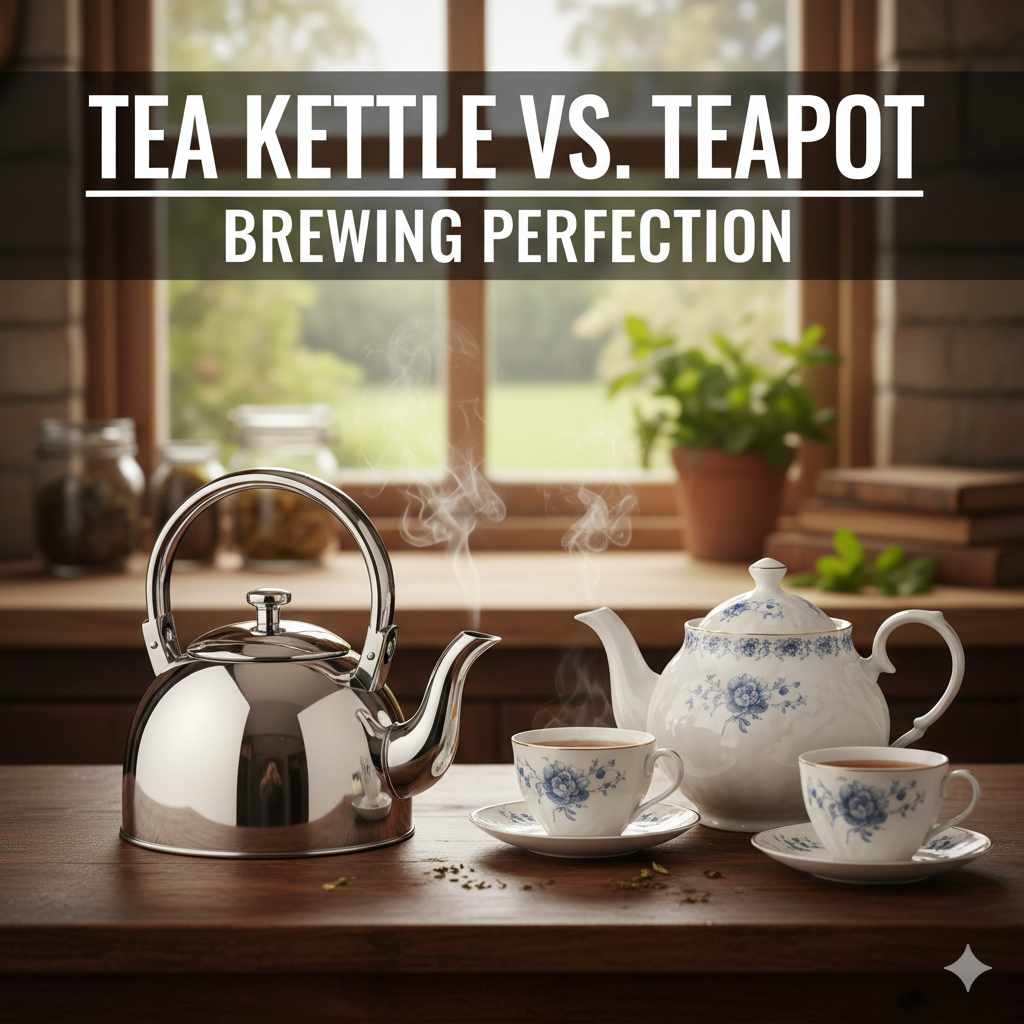
A tea kettle is specifically designed to boil water on a direct heat source, like a stove or an electric base. A teapot is used only for steeping tea leaves in hot water after it has been boiled. Never put a teapot on the stove—it will likely crack. The kettle heats, the pot brews.
Have you ever found yourself in the kitchen aisle, staring at a shiny tea kettle and a beautiful teapot, wondering what the real difference is? It’s a very common question. Many people use the names interchangeably, but they are two completely different tools with specific jobs. Using them the wrong way can lead to a bad cup of tea or even a broken pot.
Don’t worry, we are here to clear up all the confusion for you. This simple guide will explain everything you need to know. We’ll look at what each one does, why they are made differently, and how to use them together to make a perfect cup of tea. By the end, you’ll feel like a tea expert, ready to brew with total confidence.
What is a Tea Kettle? The Powerhouse for Boiling Water
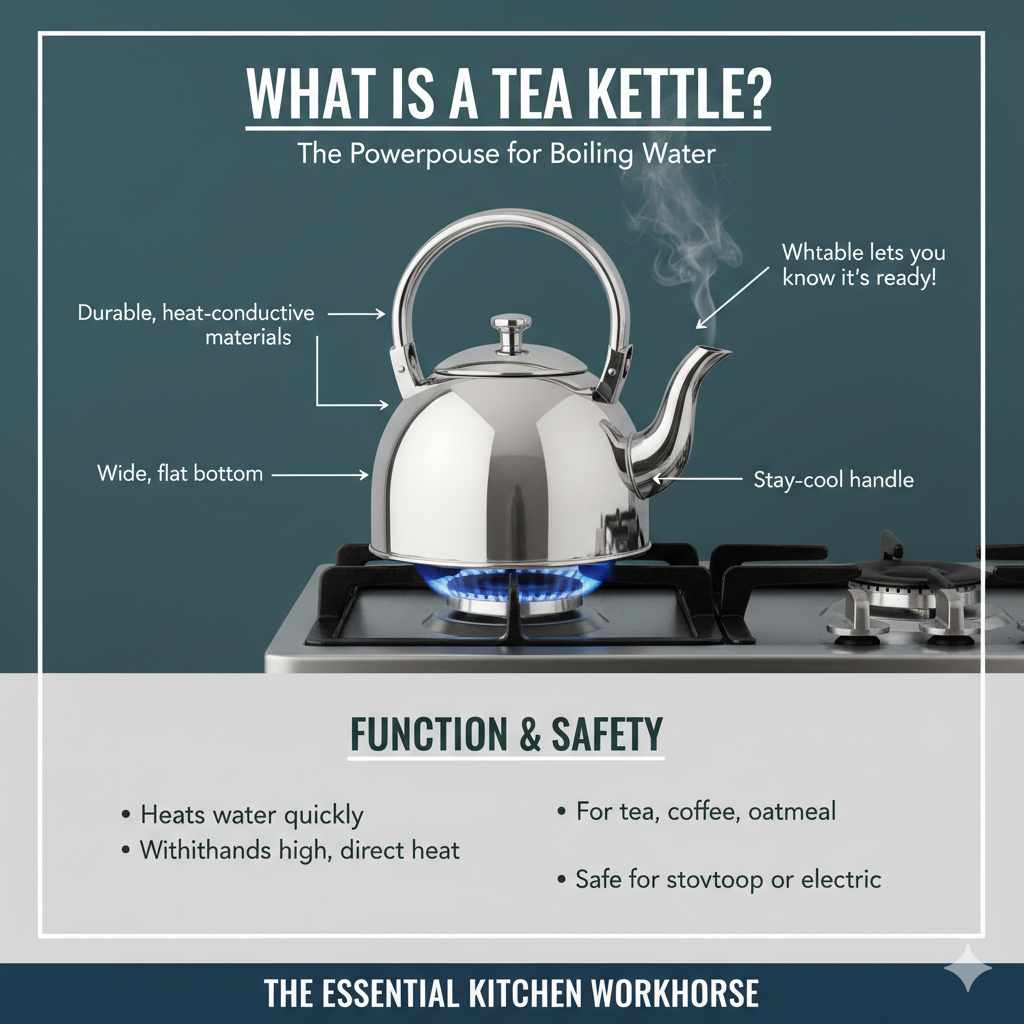
Think of a tea kettle as the workhorse of your kitchen. Its one and only job is to heat water quickly and safely. It is built to withstand high, direct heat from a stovetop burner or an internal electric coil. Kettles are your go-to tool for getting water to the perfect temperature for tea, coffee, oatmeal, or any other recipe that calls for boiling water.
The design of a tea kettle is all about function and safety. It typically has a wide, flat bottom to absorb heat efficiently. The body is made from durable, heat-conductive materials like stainless steel, copper, or aluminum. The handle is positioned to stay cool to the touch, and the spout is designed for pouring hot water without splashing. Many stovetop models also feature the classic, cheerful whistle that lets you know when the water is ready.
Types of Tea Kettles
There are two main types of tea kettles, and the best one for you depends on your kitchen setup and personal preference.
Stovetop Kettles
This is the traditional kettle you probably picture in your mind. It sits directly on your stove burner—whether it’s gas, electric, or induction. You fill it with water, place it on the heat, and wait for the whistle. They are simple, reliable, and come in a huge variety of styles and colors to match your kitchen decor.
- Pros: Generally less expensive, durable, no electricity required, available in many classic and modern designs.
- Cons: Can take longer to boil water, requires you to be nearby to turn off the stove, can be damaged if it boils dry.
Electric Kettles
Electric kettles are a modern convenience that many people swear by. They have a self-contained heating element in the base. You just fill the kettle with water, place it on its base, plug it in, and press a button. They are incredibly fast and often have helpful features like automatic shut-off, which turns the kettle off once the water boils. This prevents it from boiling dry and is a great safety feature.
More advanced models even offer variable temperature control. This is perfect for serious tea drinkers, as different types of tea require different water temperatures for the best flavor. For example, delicate green tea tastes best with water that is hot but not boiling. You can learn more about ideal steeping temperatures from experts at the University of Massachusetts Amherst.
- Pros: Boils water very quickly, automatic shut-off for safety, many models have variable temperature settings, portable and can be used anywhere there is an outlet.
- Cons: More expensive than most stovetop models, requires electricity, can take up counter space.
What is a Teapot? The Vessel for Perfect Steeping
While the kettle does the heavy lifting, the teapot is where the magic of brewing happens. A teapot is a special vessel designed for one purpose: to steep tea leaves in hot water. Its job is to hold the tea and water at a stable temperature, allowing the leaves to unfurl and release their full flavor and aroma.
Teapots are made from materials that are excellent at retaining heat, but they are NOT designed to be placed on a direct heat source. Materials like ceramic, porcelain, glass, and cast iron are chosen for their ability to keep your tea warm while you enjoy it. Putting one of these on a stove will almost certainly cause it to crack or shatter from the thermal shock.
The design of a teapot focuses on the brewing and serving experience. It has a large chamber to allow tea leaves to expand, a spout designed for a smooth, drip-free pour, and a comfortable handle for serving. Many teapots also come with a built-in infuser basket to hold loose-leaf tea, making cleanup easy.
Types of Teapots
Teapots come in a beautiful array of materials, each offering a slightly different brewing experience.
Ceramic and Porcelain Teapots
These are the most common types of teapots. Ceramic and porcelain are fantastic at holding heat, which makes them ideal for brewing black teas and oolongs that require high temperatures and longer steeping times. They come in countless shapes, sizes, and decorative patterns, from a classic English-style pot to a minimalist modern design.
- Pros: Excellent heat retention, available in a vast range of styles, does not absorb flavors (glazed versions).
- Cons: Can be fragile and chip or break if dropped.
Glass Teapots
Glass teapots offer a wonderful visual experience. They allow you to watch the tea leaves dance and unfurl as they steep, and you can see the color of the tea develop. This makes them especially popular for brewing “blooming” or “flowering” teas, which are bundles of tea leaves that open up into a beautiful shape in the water. Glass does not retain heat as well as ceramic, so it’s best for teas with shorter steeping times, like green or white teas.
- Pros: Visually beautiful, allows you to monitor the tea’s strength, does not stain or absorb flavors.
- Cons: Loses heat more quickly than other materials, can be delicate.
Cast Iron Teapots (Tetsubin)
Originally from Japan, cast iron teapots are renowned for their incredible durability and heat retention. They can keep tea hot for a very long time. Most modern cast iron teapots have an enamel lining on the inside to prevent rust and keep the iron from altering the taste of the tea. They are heavy and take a while to heat up (you should pre-warm them with hot water), but they provide an even, consistent temperature for steeping.
- Pros: Unmatched heat retention, extremely durable, often beautifully crafted.
- Cons: Very heavy, can rust if the enamel is chipped, more expensive.
Tea Kettle vs Teapot: A Head-to-Head Comparison
Sometimes, seeing the differences side-by-side is the easiest way to understand them. Here is a simple table that breaks down the key distinctions between a tea kettle and a teapot.
| Feature | Tea Kettle | Teapot |
|---|---|---|
| Primary Function | To boil water | To steep tea leaves |
| Heat Source | Direct heat (stove, electric base) | Indirect heat (hot water is poured into it) |
| Materials | Heat-conductive metals like stainless steel, copper, aluminum | Heat-retentive materials like ceramic, porcelain, glass, cast iron |
| Core Purpose | Heating | Brewing and Serving |
The Biggest Mistake to Avoid (And Why It Matters)
If you remember only one thing from this article, let it be this: Never, ever put a teapot on a stove burner.
This is the most common and costly mistake people make. Teapots are made from materials like ceramic or glass that cannot handle the intense, direct heat from a stove. The sudden temperature change will cause thermal shock, leading the material to crack, shatter, or even explode. It’s not only dangerous, but it will also ruin your beautiful teapot.
Always use a tea kettle to boil the water first. Once the water is at the right temperature, you pour it from the kettle into the teapot, where the tea leaves are waiting. They are a team, and each has its own important role to play.
How to Use a Kettle and Teapot Together: The Perfect Cup in 4 Steps
Making tea with a kettle and a teapot is a simple, relaxing ritual. Follow these four easy steps for a perfect brew every time.
- Heat Your Water: Fill your tea kettle (stovetop or electric) with fresh, cold water. Heat it to the appropriate temperature for the type of tea you are making. For black tea, use boiling water. For green or white teas, use water that is hot but not boiling (around 175°F / 80°C).
- Warm Your Teapot: While the kettle is heating, pour a little hot tap water into your teapot. Swirl it around for about 30 seconds and then pour it out. This simple step warms the pot so it doesn’t cool down your brewing water, ensuring a more consistent steep.
- Add Tea and Water: Place your loose-leaf tea or tea bags into the warmed teapot. Once the water in your kettle has reached the desired temperature, carefully pour it over the tea leaves in the teapot.
- Steep and Serve: Put the lid on the teapot and let the tea steep for the recommended time (e.g., 3-5 minutes for black tea, 1-3 minutes for green tea). Once it’s done steeping, pour the delicious tea into your cup and enjoy!
Choosing the Right Tools for You
Now that you know the difference, you might be wondering what kind of kettle and teapot you should buy. Here are a few things to consider.
What to Look For in a Tea Kettle
- Capacity: How many people are you usually making tea for? Kettles come in various sizes, so pick one that fits your needs.
- Material: Stainless steel is durable and easy to clean. Glass kettles let you see the water boil, but can be more fragile.
- Electric vs. Stovetop: If you value speed and convenience, an electric kettle is a great choice. If you prefer a classic look and don’t mind waiting a few extra minutes, a stovetop kettle is perfect.
- Features: For electric models, consider if you want features like variable temperature control or a keep-warm function.
What to Look For in a Teapot
- Material: Choose based on the type of tea you drink most often. Ceramic is a great all-rounder. Glass is lovely for herbal and blooming teas.
- Size: Teapots are measured in cups. A 4-cup pot is a good standard size for serving two people.
- Infuser: If you drink loose-leaf tea, look for a teapot with a good-quality, fine-mesh infuser basket. This will keep small tea particles out of your cup.
- Spout: A well-designed spout will pour smoothly without dripping.
To help you decide, here is a breakdown of how different materials perform for both kettles and pots.
| Material | Best For | Pros | Cons |
|---|---|---|---|
| Stainless Steel | Tea Kettles | Durable, easy to clean, doesn’t rust, affordable | Can get very hot to the touch, can discolor over high heat |
| Glass | Teapots & some Kettles | Doesn’t absorb flavors, can see inside, looks elegant | Fragile, loses heat faster (for teapots), can show hard water stains |
| Ceramic/Porcelain | Teapots | Excellent heat retention, huge variety of styles and colors | Can chip or break easily, should never be placed on a stove |
| Cast Iron | Teapots | Superior heat retention, extremely durable, beautiful aesthetic | Very heavy, requires careful handling to avoid chipping enamel lining |
Caring for Your Kettle and Teapot
Proper care will keep your tea tools in great shape for years to come. Here are some simple tips.
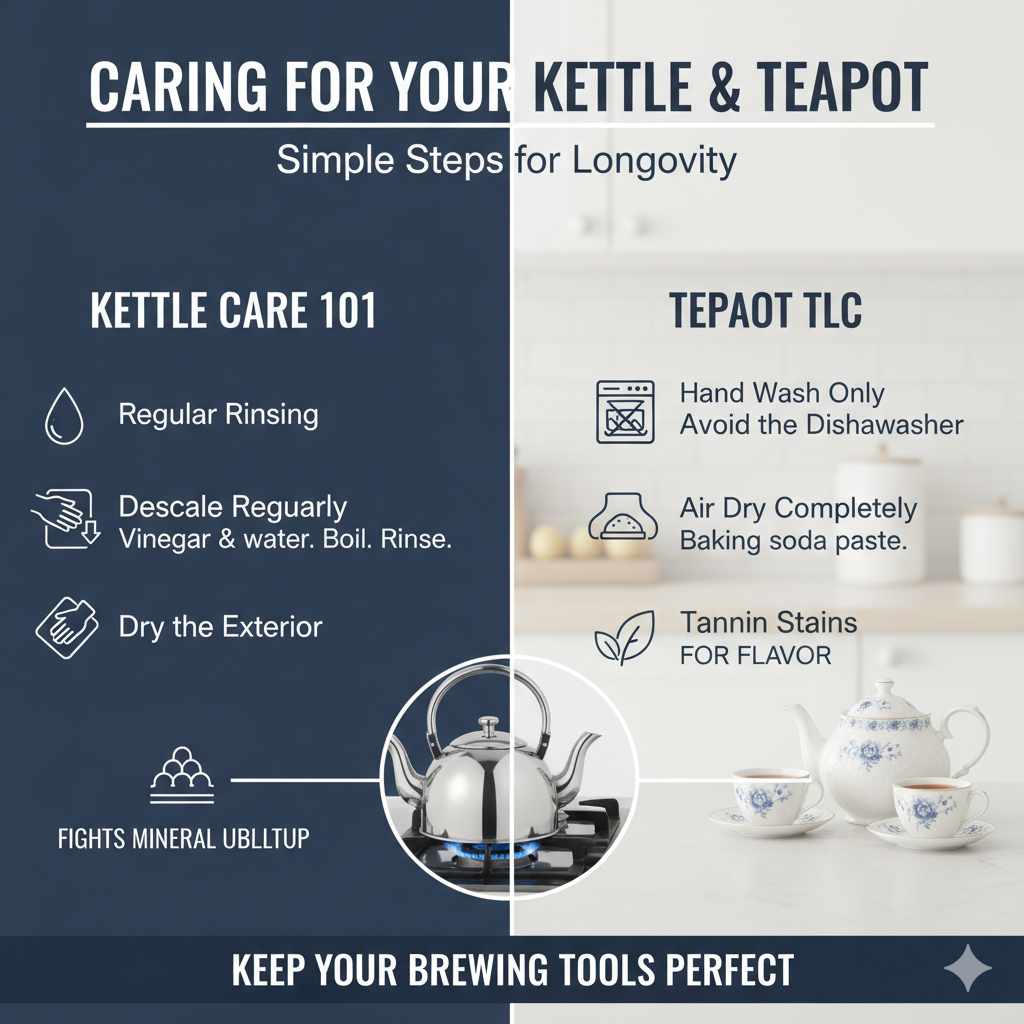
Kettle Care 101
The biggest issue for kettles is mineral buildup, or “scale,” from hard water. This can affect its performance and the taste of your water.
- Regular Rinsing: Rinse your kettle with fresh water after each use.
- Descale Regularly: To remove mineral buildup, fill the kettle with a mixture of equal parts white vinegar and water. Let it sit for an hour, or bring it to a boil and then let it sit. Pour out the mixture, rinse thoroughly, and then boil a pot of fresh water to remove any lingering vinegar taste.
- Dry the Exterior: Wipe the outside with a soft cloth to keep it looking shiny and new.
Teapot TLC
Teapots are often more delicate and require gentle handling.
- Hand Wash Only: Most teapots, especially those made of ceramic or cast iron, should be washed by hand with warm water. Avoid harsh soaps, which can leave a residue.
- Avoid the Dishwasher: The high heat and harsh detergents in a dishwasher can damage or break your teapot.
- Air Dry Completely: After rinsing, turn the teapot upside down on a drying rack and let it air dry completely before storing it with the lid off. This prevents musty smells from developing.
- Tannin Stains: Tea can leave brown tannin stains inside a pot over time. To remove them, make a paste of baking soda and water, gently scrub the inside, and rinse well.
Frequently Asked Questions (FAQ)
Can I boil water in a teapot?
No, you should never boil water in a teapot by placing it on a stove or other heat source. Teapots are not made to withstand direct heat and will likely crack or break.
Can I put tea leaves directly in my kettle?
You should avoid putting tea leaves in your kettle. Kettles are designed only for water. Tea leaves can clog the spout and are very difficult to clean out from inside a kettle, especially an electric one with a heating element.
Do I really need both a kettle and a teapot?
If you want to make the best-tasting tea, especially loose-leaf tea, then yes. The kettle heats the water efficiently, and the teapot allows the leaves to steep properly. While you can steep a tea bag in a mug, using a teapot gives the leaves more room to expand, resulting in a much better flavor.
What’s the difference between an electric kettle and a stovetop kettle?
An electric kettle uses an internal heating element to boil water and plugs into an outlet. It’s usually faster and has an auto shut-off feature. A stovetop kettle is a traditional pot that you place on a stove burner to heat water.
Why does my tea taste bitter?
Bitterness in tea is usually caused by two things: using water that is too hot or steeping the tea for too long. This is especially true for green and white teas. Try using cooler water or reducing your steep time.
Can I use my kettle for things other than tea?
Absolutely! A kettle is fantastic for boiling water for French press coffee, instant noodles, oatmeal, or any recipe that calls for hot water.
Conclusion: Your Journey to the Perfect Brew
The confusion between a tea kettle and a teapot is an easy mistake to make, but now you have the ultimate answer. Remember this simple rule: the kettle is for boiling, and the pot is for brewing. The kettle is the tough, heat-resistant tool that gets the water hot, while the teapot is the delicate, heat-retaining vessel that coaxes the wonderful flavors from your tea leaves.
By understanding their different jobs and using them correctly, you’re not just avoiding a broken teapot—you’re taking a big step toward making a truly exceptional cup of tea. Whether you prefer a classic stovetop kettle and a ceramic pot or a high-tech electric kettle and a sleek glass teapot, you now have all the knowledge you need. So go ahead, put that kettle on, and enjoy the simple, wonderful ritual of brewing the perfect cup.