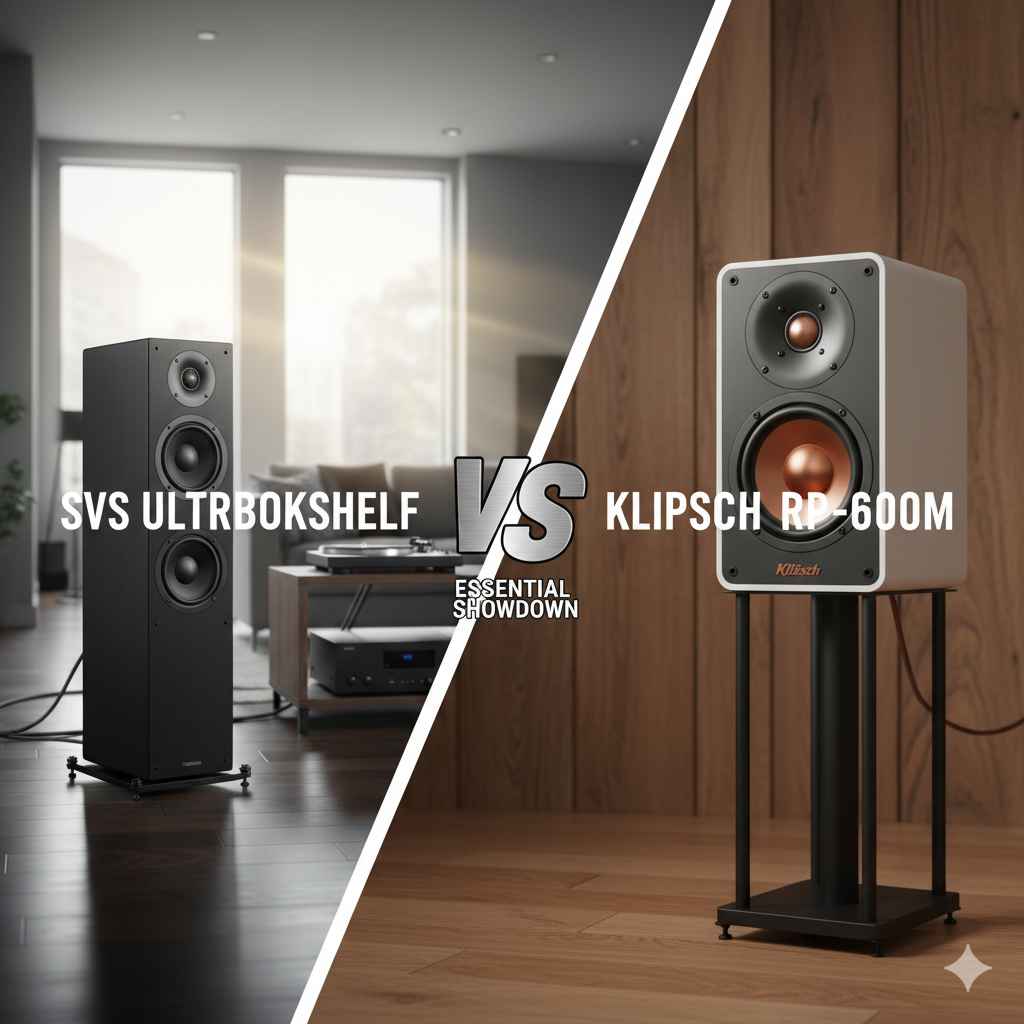
The SVS Ultra Bookshelf and Klipsch RP600M are sonic powerhouses, but for most beginners, the SVS often offers a smoother, more balanced sound profile, while the Klipsch delivers incredible efficiency and that signature dynamic punch. Choosing depends heavily on your room size and music taste.

SVS
SVS Ultra Evolution Bookshelf Speakers – Pair…
- Reference flagship bookshelf speaker is a technology tour-de-force that stands toe-to-toe with the finest loudspeakers in the worl…
- Time-aligned cabinet architecture aligns the sonic emanation point of all drivers on a vertical plane ensuring sound from each dri…
- Diamond coated aluminum dome tweeter raises the frequency response well beyond the limits of human hearing resulting in effortless…
As an Amazon Associate I earn from qualifying purchases.
For a closely related home or decor topic, How To Build Your Own Bookshelf Step By Step gives readers a useful next step.
For another door or hardware repair, How To Make A Hidden Bookshelf Door: Diy gives readers a closely related troubleshooting step.
For a closely related home or decor topic, How To Store Books Without A Bookshelf Creatively gives readers a useful next step.
Deciding on your first serious pair of bookshelf speakers can feel like trying to pick the perfect tire alignment—lots of specs, and everyone has a different strong opinion! Many new audiophiles get stuck comparing the SVS Ultra Bookshelf speakers against the wildly popular Klipsch RP600M. Both deliver sound way beyond their size, but they do it using very different engineering philosophies, which means one might fit your living room better than the other. Understanding these differences is key to making a purchase you’ll love for years. Don’t worry; we’ll break down these audio titans using simple language so you can confidently choose the right pair for your setup.
SVS Ultra Bookshelf Vs Klipsch RP600M: The Quick Look
Before we dive deep into the nitty-gritty details—like how electricity flows through them or what their drivers are made of—let’s look at the basic setup. Think of this as checking the engine specs before you take the car for a test drive.
The fundamental split often comes down to this: Klipsch is famous for its horn-loaded tweeters, which make them incredibly loud and energetic (highly efficient). SVS, known for its world-class subwoofers, brings that same attention to accurate, detailed bass extension and a generally more neutral, room-filling sound from their bookshelf line.
Key Specifications Comparison Table
Comparing specs side-by-side helps clear up early confusion. Remember, a lower impedance number means the speaker is easier for your amplifier to drive, but modern receivers handle both of these excellent speakers without breaking a sweat.
| Feature | SVS Ultra Bookshelf | Klipsch RP600M |
|---|---|---|
| Tweeter Technology | 1″ Aluminum Dome (Protected) | 1″ Tractrix Horn-Loaded LTS (Copper/Black finish) |
| Woofer Size | 6.5” Polypropylene Cone | 6.5” Cerametallic Cone |
| Sensitivity (dB) | 87 dB | 96 dB |
| Frequency Response (±3dB) | 45 Hz – 32 kHz | 49 Hz – 24 kHz |
| Recommended Power (RMS) | 50 – 200 Watts | 100 Watts Continuous / 400 Watts Peak |
| Weight (Each) | 17.9 lbs | 15 lbs |

Understanding Speaker Efficiency: Sensitivity Matters
One of the biggest differences you’ll see immediately on that spec sheet is the sensitivity rating. This is perhaps the single most important factor for beginners to grasp when pairing speakers with an amplifier or receiver.
Sensitivity tells you how loud a speaker will play with a specific amount of power. Think of it like gas mileage in a car—a higher number means better performance for the resources (power) you put in.
Klipsch’s Power Advantage (High Sensitivity)
The Klipsch RP600M boasts a massive 96 dB sensitivity. What does that mean in real terms? It means the RP600M is extremely efficient. You can get them loud with very little power from your amplifier. If you have a modest receiver, or if you plan on playing music very loudly in a large space, the Klipsch speakers will reach high volumes easily without straining tiny amplifiers. This efficiency is thanks to their legendary horn-loaded tweeter.
SVS’s Power Requirement (Moderate Sensitivity)
The SVS Ultra Bookshelf measures in at 87 dB. This is a perfectly respectable number, but it’s noticeably lower than the Klipsch. To achieve the same volume level as the RP600M, the SVS speakers need roughly double the amplifier power. This isn’t a problem if you plan on getting a beefy A/V receiver or a dedicated power amplifier, but it’s something to keep in mind if you are starting with a small, budget receiver. For more information on how amplifier power relates to speaker behavior, reliable sources like the Crutchfield learning center offer great primers.
The Sound Signature: How They Listen Differently
This is where personal preference really kicks in. If you are new to high-fidelity audio, the “sound signature” is just how the speaker colors the music it plays. Does it make music sound super bright, warm, punchy, or smooth? Both of these speakers are excellent, but they aim for different sonic goals.
Klipsch RP600M: Dynamic and Exciting
Klipsch speakers are famous for their dynamic presentation. Thanks to that Tractrix horn tweeter:
- Transparency: High-frequency sounds (cymbals, strings, breath sounds) are incredibly crisp and detailed. You hear every tiny nuance.
- Forward Soundstage: The sound seems to come right at you, which many people find exciting for rock, metal, and action movie soundtracks.
- Punchy Bass: While the bass isn’t as deep as the SVS, the mid-bass impact feels immediate and tight, matching the fast top end very well.
If you primarily listen to faster genres or want a speaker that grabs your attention immediately, the Klipsch offers that thrilling experience.
SVS Ultra Bookshelf: Balanced and Detailed
SVS speakers are generally engineered to be more neutral—meaning they try to reproduce the sound exactly as the artist intended, without adding or subtracting much from the original recording. For the Ultra Bookshelf:
- Smooth Highs: Because they use a traditional aluminum dome tweeter (not a horn), the very high frequencies are generally smoother and less fatiguing over long listening sessions. This is great for classical or acoustic music.
- Superior Midrange: The 6.5-inch polypropylene woofer provides excellent, cohesive midrange clarity. Voices sound natural and present.
- Bass Extension: Even without a subwoofer initially, the SVS reaches slightly lower into the bass frequencies naturally compared to the RP600M, thanks to meticulous cabinet and driver design.
If you value a sound that lets you relax and listen for hours without harshness, the SVS often wins the smoothness battle.
Cabinet Design and Build Quality
A speaker cabinet isn’t just a pretty box; it’s a vital piece of acoustic engineering. A poorly designed cabinet vibrates, causing muddy, distorted sound. Both SVS and Klipsch know this, but their execution differs.
SVS Ultra Bookshelf: The Tank
SVS is known for building exceptionally sturdy cabinets. When you pick up an SVS Ultra Bookshelf, you feel the weight immediately. They use extensive internal bracing (think of internal support beams in a building) to minimize cabinet resonance. This dense construction is a primary reason why the SVS can reproduce deep bass notes without vibrating the enclosure.
- Finish Options: Often comes in gloss black or piano white, giving it a very modern, high-end furniture look.
- Grille System: Usually features magnetic grilles, which snap on neatly, keeping the front baffle clean when removed.
Klipsch RP600M: Style Meets Function
The RP600M features the signature Klipsch copper-colored Cerametallic woofer and, often, a beautiful wood-grain veneer finish (like Walnut or Black Ash). While the cabinets are solid, they tend to rely slightly less on sheer mass compared to SVS, focusing that engineering energy on the horn tweeter unit.
- Venting: The RP series utilizes rear-firing ports. This is important because you cannot place these speakers directly against a back wall without potentially muffling the bass response.
- Aesthetics: The iconic copper woofers and exposed horn make the RP600M a visual statement piece.
Setup Advice: Where Placement Matters Most
Where you put your speakers dramatically affects how they sound. For beginner setups, this often determines which speaker works better. We highly recommend reviewing guidelines published by organizations like the Audio Engineering Society (AES) for optimal positioning advice, although we will simplify the practical application here.
Placement Considerations for SVS Ultra Bookshelf
The SVS Ultra Bookshelf typically uses a rear-firing port (check your specific model, but most bookshelf versions do). A rear port acts like a bass booster that needs room to breathe.
- Distance from Wall: Aim for at least 1 to 3 feet away from the rear wall. Too close, and the bass will sound boomy and overload the room.
- Toe-In: Experiment with pointing the speakers slightly inward (toe-in) toward your main listening position to fine-tune the center image. The SVS generally benefits from a balanced distance between the speakers and the listener.
Placement Considerations for Klipsch RP600M
Like the SVS Ultra, the standard RP600M also typically features a rear port, meaning wall placement is critical. However, because the Klipsch is generally more sensitive, its interaction with boundary reinforcement (sound bouncing off nearby surfaces) can sometimes be more pronounced.
- Initial Placement: Start at least 2 feet out from the back wall to allow the low frequencies to develop clearly rather than booming into the wall.
- Height: Ensure the tweeter (the horn part) is roughly ear-level when you are seated. This is crucial for enjoying the horn’s clarity.
The Subwoofer Factor
If you plan on adding a subwoofer later (which we highly recommend for any bookshelf speaker), the equation changes slightly.
- SVS Advantage: Because SVS makes some of the best subwoofers on the market, pairing the SVS Ultra Bookshelf with an SVS subwoofer creates a perfectly matched system where the crossover point (where low bass hands off to the speaker) is virtually seamless.
- Klipsch Synergy: Klipsch speakers integrate very well with their own subwoofers too, providing that dynamic punch right through the low end.
Amplification Matching: What Gear Do I Need?
You can’t just plug these speakers into any old radio! They require an amplifier or an A/V receiver that can supply clean power. This is where the sensitivity numbers come into play again.
Amplifier Needs for SVS Ultra Bookshelf
Since the SVS is less sensitive (87dB), it thrives with quality power. While you can run them with receivers providing 50 watts per channel, to really unlock their potential and lower bass extension, an amplifier delivering a clean 75 to 125 watts per channel (RMS) is ideal. They handle higher power levels very well, but ensure the power supply is stable, as SVS speakers can present a tricky, low impedance load at high volumes.
Amplifier Needs for Klipsch RP600M
The RP600M’s 96 dB sensitivity means it’s forgiving. You could get very respectable volume levels with an amplifier supplying just 40 or 50 watts per channel. However, they can handle a lot more power before clipping (distorting). If your amplifier can push 100 watts cleanly, the Klipsch will sound breathtakingly dynamic.
A quick note on impedance: Both speakers are nominally rated at 8 ohms, which is the industry standard and compatible with nearly every modern receiver or stereo amplifier on the market. You shouldn’t need special gear just to make them work, but better gear makes them sound better.
The Practical Breakdown: Pros and Cons Showdown
This table summarizes the practical benefits and drawbacks for the everyday listener choosing between these two fantastic options.
| Area of Comparison | SVS Ultra Bookshelf (Pros/Cons) | Klipsch RP600M (Pros/Cons) |
|---|---|---|
| Pros | Extremely neutral, smooth sound signature; Excellent bass extension for its size; Superb cabinet build quality and damping. | Highly efficient (plays loud easily); Very dynamic and exciting presentation; Iconic look with copper drivers. |
| Cons | Requires a bit more amplifier power to shine; Higher initial price point; Less inherently “exciting” sounding than Klipsch. | Horn tweeter can sound slightly harsh or fatiguing for some listeners; Bass extension slightly less deep than SVS. |
| Room Suitability | Best for small to medium rooms where accuracy is prioritized. | Excellent for small to medium rooms, even those without high-powered amps, or large rooms that need high output. |
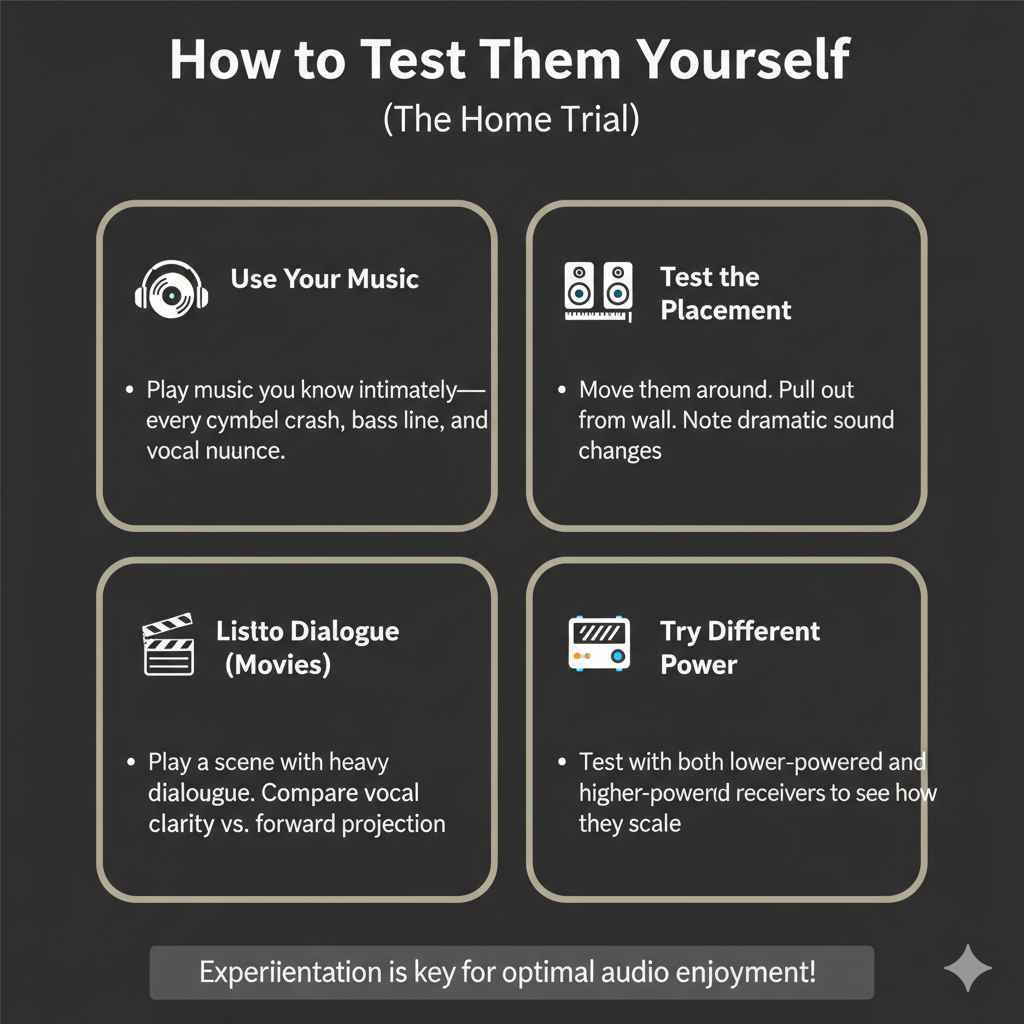
How to Test Them Yourself (The Home Trial)
Buying speakers online without hearing them is risky, even with great reviews. The absolute best thing you can do is take advantage of generous return policies. Both companies understand that speaker preference is subjective.
Best Practices for Your Home Listening Test:
- Use Your Music: Don’t just play the store demo tracks. Play music you know intimately—songs where you recognize every cymbal crash, bass line, and vocal nuance.
- Test the Placement: Move them around. Try pulling them out from the wall. If the sound changes dramatically, that’s an indication of how placement-sensitive they are for your room.
- Listen to Dialogue (Movies): If you use them for movies, play a scene known for heavy dialogue interaction. Does the SVS vocal clarity beat the Klipsch forward projection, or vice versa?
- Try Different Power: If you have access to a couple of different receivers or amplifiers, try testing them both with lower-powered gear and higher-powered gear to see how they scale.
Frequently Asked Questions (FAQ) for Beginners
Q1: Which speaker is better for action movies?
Both are fantastic! The Klipsch RP600M offers a more immediate, thrilling impact due to its efficiency and horn’s quick response time, making explosions sound punchier instantly. The SVS Ultra provides a slightly more cohesive sound across the whole frequency spectrum, especially once paired with a good subwoofer.
Q2: Do I need special speaker cables for these speakers?
No, not really. For speakers in this price range, standard 14-gauge or 16-gauge oxygen-free copper (OFC) speaker wire purchased from any reputable electronics store will work perfectly fine. Don’t waste money on exotic, expensive cables; focus that budget on better amplification or a subwoofer.
Q3: Can I use these speakers without a subwoofer at first?
Yes, you absolutely can! Both speakers play low enough (down to the mid-40Hz range) to provide enjoyable, full-bodied sound for general music listening. However, for deep bass in movies or music genres like EDM or hip-hop, adding a dedicated subwoofer significantly enhances the experience.
Q4: Which speaker takes up less space on my shelf?
The Klipsch RP600M is usually slightly smaller in overall volume and lighter than the SVS Ultra Bookshelf. Always check external dimensions, but generally, the Klipsch has a slightly more compact footprint.
Q5: Does the SVS speaker sound warm, or is the Klipsch speaker hot/bright?
The Klipsch RP600M is generally described as “bright” due to its highly revealing, horn-loaded tweeter, which can sometimes sound “hot” if you listen at very high volumes or have aggressive music. The SVS Ultra is generally considered “neutral” or smoother, leaning away from that sharp high-frequency energy.
Q6: Is it worth paying extra for the SVS Ultra Bookshelf?
If you prioritize a neutral, accurate sound signature meant for long, critical listening sessions, and you have the appropriate amplifier power, the extra cost for the SVS Ultra is often justified by its superior cabinet engineering and tonal balance. If sheer excitement and volume potential are your main goals, the Klipsch offers better value in that specific area.
Final Thoughts on Your Speaker Upgrade Journey
Choosing between the SVS Ultra Bookshelf and the Klipsch RP600M isn’t about finding the “best” speaker overall; it’s about finding the best fit for your ears, your power source, and your room. Think of it like choosing between a luxury sedan and a high-performance sports car. One prioritizes smoothness, balance, and long-distance comfort, while the other focuses on speed, excitement, and instant impact. Both are excellent machines — they just deliver their strengths in different ways.
If you value accuracy, smooth listening over long sessions, and a more refined, balanced presentation that works beautifully across many music genres, the SVS Ultra Bookshelf is often the safer long-term choice. It rewards better amplification and careful placement with a rich, controlled sound that feels natural and detailed.
On the other hand, if you want a speaker that sounds lively right away, plays loud with minimal power, and delivers that energetic, front-row experience for rock, movies, and dynamic music, the Klipsch RP600M stands out as the more thrilling option. Its efficiency makes it especially appealing for beginners who may not have a powerful amplifier yet.
In the end, both speakers are serious upgrades from entry-level systems and can anchor a great home audio setup for years. Your decision should come down to how you listen, what you listen to most, and how much power your system can provide. Pick the one that matches your taste, and you’ll likely stop worrying about specs and simply start enjoying the music — which is the whole point of the journey.
Related pick: Check today's price on Amazon