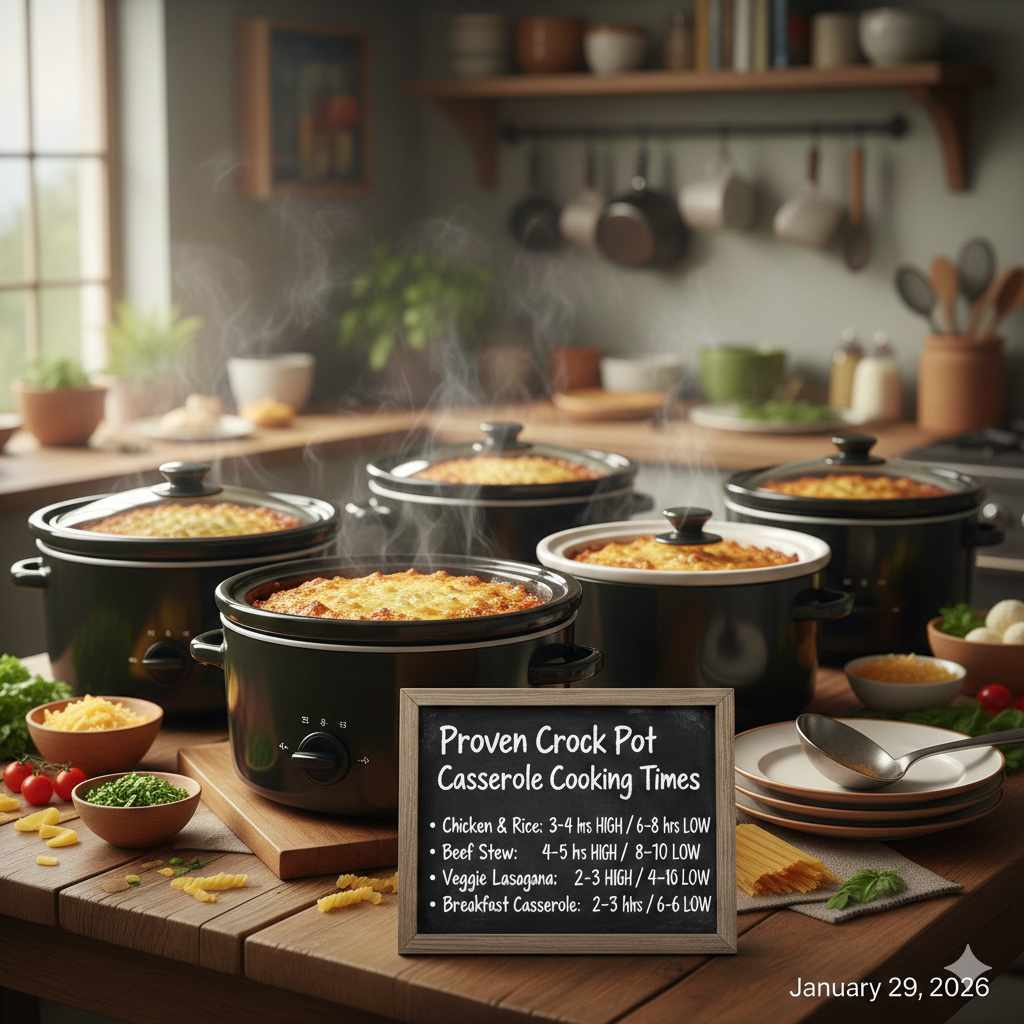
Mastering Crock Pot Casserole cooking times means following simple guidelines for low and high settings, usually ranging from 2 to 6 hours, depending on ingredients like meat or density. Use the low setting for tender results and always check that meat reaches a safe internal temperature, typically 165°F (74°C), to ensure delicious, safely cooked meals every time.
Welcome! If you’ve ever stared at your slow cooker recipe, wondering if “low and slow” really means all day, you are not alone. Just like checking your oil level before a road trip, knowing how long to let that casserole cook is key to a perfect meal. It can be frustrating to pull out a dish that is either still cold in the middle or completely dried out. Slow cookers are amazing tools, but timing them correctly feels like a mystery sometimes.
Why Casserole Timing in a Slow Cooker is Different
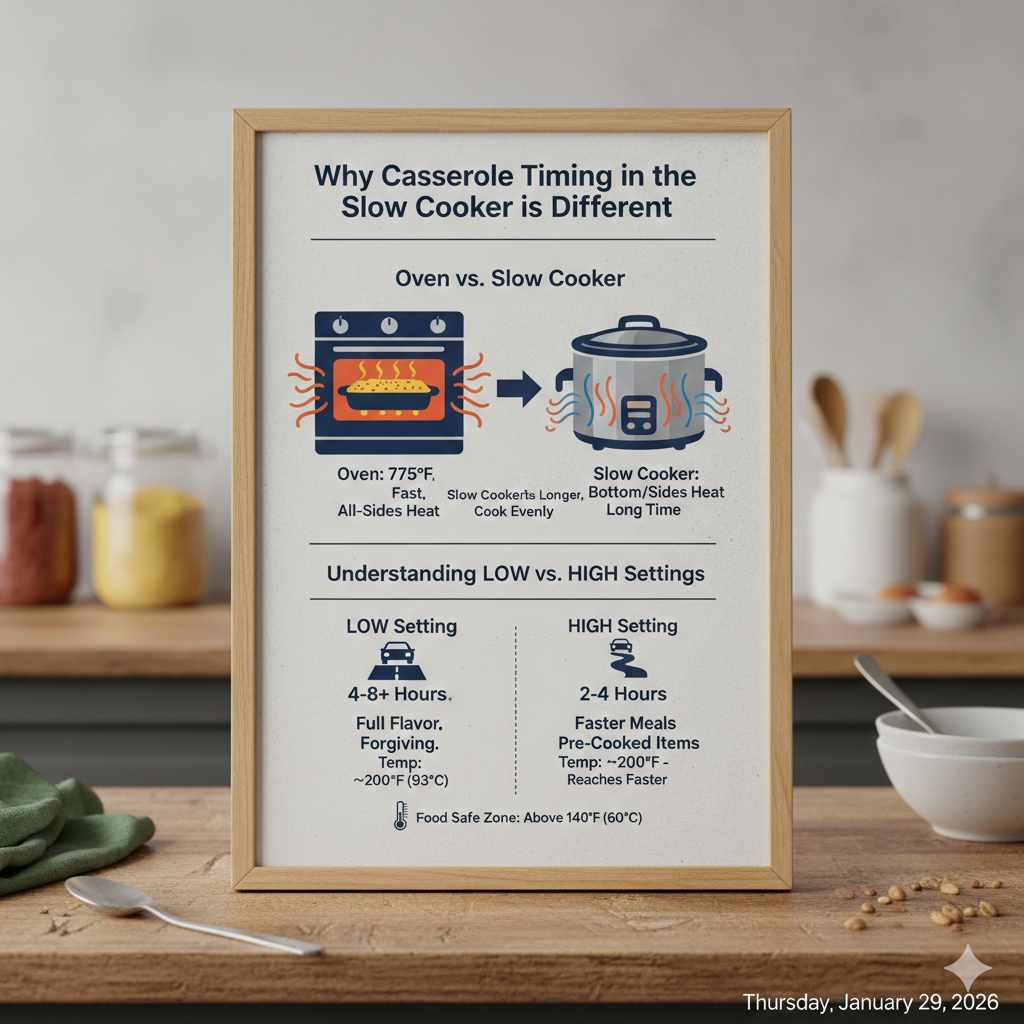
When you’re baking a casserole in a regular oven, the heat comes from all sides and gets very hot, very fast. Your oven might be set to 375°F. A slow cooker, however, works differently. It heats food gently from the bottom and sides over many hours. This slow, steady heat is fantastic for breaking down tough cuts of meat and blending flavors, but it changes how long things take.
The main difference you need to know is this: Slow cookers generally take longer than an oven, but they cook very evenly. You are working with two primary heat settings: LOW and HIGH. Understanding these two settings is the foundation of perfect crock pot timing.
Understanding LOW vs HIGH Settings
Most modern slow cookers heat to maintain a temperature that keeps food above the food safety danger zone (between 40°F and 140°F, where bacteria grow fastest). Even on LOW, the cooker eventually reaches a temperature similar to poaching water (around 200°F or 93°C). The HIGH setting just gets there faster.
Think of it like driving. LOW is cruising on the highway—it takes longer to reach your destination, but the ride is smoother. HIGH is taking the faster side roads—you get there sooner, but you might have more stops along the way.
- LOW Setting: Best for full flavor development and longer cooks (4 to 8 hours). It’s forgiving if you are running late.
- HIGH Setting: Good for quick meals (2 to 4 hours) or when you need to cook something faster, like ground meat or pre-cooked items.
The Golden Rules for Crock Pot Casserole Timing
Before we look at specific recipes, there are a few universal truths for slow cooker timing. Ignoring these rules can lead to dry chicken or undercooked potatoes. These rules apply whether you are making mac and cheese or beef stew.
Rule 1: Always Cook Meat to Safe Temperatures
This is the most important rule, just like checking your tire pressure for a long drive. Any casserole containing meat—chicken, pork, or beef—must reach a safe internal temperature to ensure it’s safe to eat. The U.S. Department of Agriculture (USDA) sets food safety standards to prevent foodborne illness.
You absolutely must use a reliable meat thermometer for accuracy. Don’t guess!
For poultry (chicken, turkey): target 165°F (74°C).
For ground meats (beef, pork): target 160°F (71°C).
For roasts/whole cuts (pork shoulder, beef roast): target 145°F (63°C) followed by a three-minute rest, although many slow cooker recipes cook these cuts much higher (like 195°F) to make them tenderky.
Pro Tip: If your recipe calls for raw chicken breasts, always plan for the HIGH setting to hit 165°F in about 2.5 to 3 hours, or the LOW setting in 4 to 5 hours.
Rule 2: Density Matters More Than Volume
A half-full crock pot cooks almost as fast as a three-quarter-full one because the heating element is consistent. What truly affects time is how dense the ingredients are. A casserole packed tightly with raw potatoes and carrots will take much longer than a creamy soup with thin noodles.
Dense Casseroles (Longer Time): Anything with raw root vegetables, large chunks of meat, or thick layers of pasta/rice.
Looser Casseroles (Shorter Time): Soups, creamy dips, or casseroles using pre-cooked ingredients like canned beans or shredded chicken.
Rule 3: The One-Hour Buffer
Because slow cookers vary slightly in their actual output temperature, it is wise to give yourself a buffer. If the recipe says 4 hours on HIGH, start checking at 3.5 hours. If it says 8 hours on LOW, start checking near the 7-hour mark. This prevents overcooking, which is the number one flavor killer in slow cooking.
General Crock Pot Casserole Cooking Time Chart
This table gives you a solid starting guideline. Remember these are estimates; always test your food for doneness, especially meat!
| Casserole Type (Main Ingredients) | LOW Setting Time | HIGH Setting Time | Notes |
|---|---|---|---|
| Creamy Chicken & Rice/Noodles (Raw Chicken) | 5 – 6 hours | 3 – 3.5 hours | Ensure chicken reaches 165°F (74°C). |
| Potato Casserole (Raw Sliced Potatoes) | 6 – 7 hours | 3.5 – 4 hours | Potatoes are done when easily pierced with a fork. |
| Green Bean Casserole (Pre-cooked ingredients) | 2.5 – 3 hours | 1.5 hours | Mostly heating/blending flavors; watch for scorching on high. |
| Cheesy Pasta Bake (Pre-cooked Pasta) | 3 – 4 hours | 2 hours | LOW is better to keep the sauce from separating. |
| Layered Enchilada Casserole (Beans, Sauce, Tortillas) | 4 – 5 hours | 2.5 – 3 hours | Aim for bubbly throughout, not just the edges. |
Proven Times for Popular Crock Pot Casserole Recipes
Let’s dive into some of the most popular entries in the crock pot world. These times are based on standard 6-quart slow cookers, which most home cooks use. If you have a smaller (3-quart) or much larger (8-quart) model, you may need to adjust by 30 minutes or so.
1. Chicken and Rice Casserole Timing
This is a classic comfort food, but getting the rice just right without making it mushy takes precision. Raw chicken is usually the ingredient that dictates the total time.
Scenario: Using raw chicken breasts, uncooked white rice, broth, and condensed soup.
- Low Setting: 5 to 6 hours. The rice needs this time to fully absorb the liquid and get tender while the chicken cooks safely.
- High Setting: 3 to 3.5 hours. Once the chicken is done, check the rice. If it’s slightly firm, cover and let it sit on the WARM setting for 30 minutes.
Pro Tip: To minimize mushiness, use long-grain white rice, or even better, par-cook the rice slightly (cook for 5 minutes) before adding it to the crock pot. This can shave 30 minutes off your total time.
2. How Long to Cook Green Bean Casserole in the Crock Pot
This is a famous dish, especially around holidays, and it’s fantastic in the slow cooker because you don’t have to battle for oven space! The timing here is much quicker because most ingredients are already cooked or require minimal cooking.
Scenario: Using canned green beans, canned cream of mushroom soup, and milk/broth.
- Low Setting: 2.5 to 3 hours. You are mainly aiming to heat everything thoroughly and allow the flavors to marry. Since the beans are canned, they just need to warm up.
- High Setting: 1.5 hours. Be careful on HIGH. Because the mixture is thick and sits right on the heating element, it can scorch or develop a skin on the bottom if left unattended for too long.
Crucial Step for Green Bean Casserole: Save the crispy onion topping! Add the fried onions during the last 15 minutes on HIGH or right before serving on LOW. If you add them at the beginning, they will be soggy mush.
3. Beef and Potato Casserole Timing (Using Raw Chunks)
When you use chunks of raw beef (like stew meat or chuck roast cut into cubes), you need time for both the meat to become tender and the potatoes to soften.
Scenario: Cubed beef, raw carrots, raw potatoes, and a thick gravy base.
- For Tender Meat: Beef requires a long, slow cook. Aim for a minimum of 6 hours on LOW.
- Potatoes Factor: If you are using dense, raw potatoes, you need the full 8 hours on LOW or 5 hours on HIGH.
Best Practice: If you want both tender meat AND tender potatoes, setting it to 7 to 8 hours on LOW is your safest bet. If you are in a hurry, sear the beef first (a quick step outside the crock pot), and then use the HIGH setting for 4 to 5 hours.
Adjusting Cooking Times for Common Ingredients
The biggest variable in any casserole is what you put in it. Some ingredients need protection from drying out, while others need strong heat to cook through. Here is guidance based on common additions.
Raw vs Pre-Cooked Meats
This difference accounts for over half of timing confusion. Always know the state of your meat when you start.
- Raw Ground Beef/Sausage: Needs about 2 to 3 hours to brown properly on HIGH before you add the remaining ingredients. If you add sauce and cheese immediately, it delays the cooking of everything else.
- Raw Chicken Breasts/Thighs: Require 3 to 4 hours minimum on LOW to become food-safe tender. They dry out easily if kept on HIGH too long past the necessary time.
- Pre-Cooked/Canned Meat (e.g., Canned Chili, Shredded Rotisserie Chicken): These only need about 1 to 2 hours on LOW just to heat through and mingle with the sauce.
Dairy and Cheese Additions
Cheese, sour cream, and milk do not like high heat or long cooking times. They break down, turn grainy, or separate if held at high temperatures for too long.
The Slow Cooker Rule for Dairy: Add all dairy, shredded cheese, or sour cream in the last 30 minutes of cooking. Use the WARM setting or turn the cooker off and let residual heat mix it in.
If you are making a purely dairy-based casserole, like a cheesy potato bake, drop the HIGH setting time down, or use the LOW setting to prevent curdling. For reference, the National Center for Home Food Preservation suggests that dairy-based soups should use lower heat settings whenever possible to maintain emulsion quality.
Carbohydrates: Rice, Pasta, and Potatoes
These ingredients swell and absorb liquid, which changes the overall texture of your casserole.
Potatoes: Are dense. For tender cubes or slices, plan on 6+ hours on LOW. If you chop them smaller (dime-sized), you can reduce this to 4 hours on LOW.
Dried Pasta (Macaroni, Penne): Pasta will get very soft, likely mushy, in a slow cooker because it continues to absorb liquid long after it is technically ‘cooked.’ If using pasta, either pre-cook it until al dente (half-cooked) or reduce the cooking time significantly. For a 4-hour LOW cook, aim for 2 hours maximum if using fully dried pasta, checking frequently.
Important Note on Hydration: When cooking pasta or rice in a crock pot, you must use slightly less liquid than a stovetop recipe. The slow cooker lid traps virtually all steam, meaning your liquid isn’t evaporating away. Less evaporation equals faster cooking and less chance of a soupy mess.
Troubleshooting Common Timing Mistakes
Even with the best timing charts, sometimes things go slightly off track. Here is quick advice on how to fix common crock pot casserole issues safely.
What If My Casserole Isn’t Hot Enough? (Too Early)
If you are ready to eat, but the center is still cool (or the meat is under the safe temperature):
- Switch to HIGH: If it’s on LOW, switch it to HIGH for 30 to 45 minutes.
- Stir Gently: If it’s thick, carefully stir the bottom layer up to redistribute the heat.
- Test Again: Re-test the internal temperature of the thickest piece of meat before serving.
What If My Casserole is Too Dry? (Too Late)
This usually happens when recipes involving lean chicken breast run too long on HIGH.
- Add Moisture: Stir in half a cup of hot broth, milk, or cream (if it’s a creamy recipe).
- Use WARM Setting: Turn the heat down to WARM immediately. The WARM setting will hold the food safely without cooking it further.
- Keep the Lid On: Resist the urge to lift the lid while it rests on WARM, or you will lose the heat you’ve built up.
What If My Sauce is Too Thin?
This often happens when using raw vegetables that release a lot of water, or if you used too much initial liquid.
- Create a Slurry: In a small bowl, mix 1 tablespoon of cornstarch with 2 tablespoons of cold water until smooth (this is a slurry).
- Stir In: Remove the crock pot liner (carefully, it’s hot!) and pour the slurry into the liquid part of the casserole.
- Cook Briefly: Place back on HIGH for 20 to 30 minutes. The sauce will thicken beautifully.
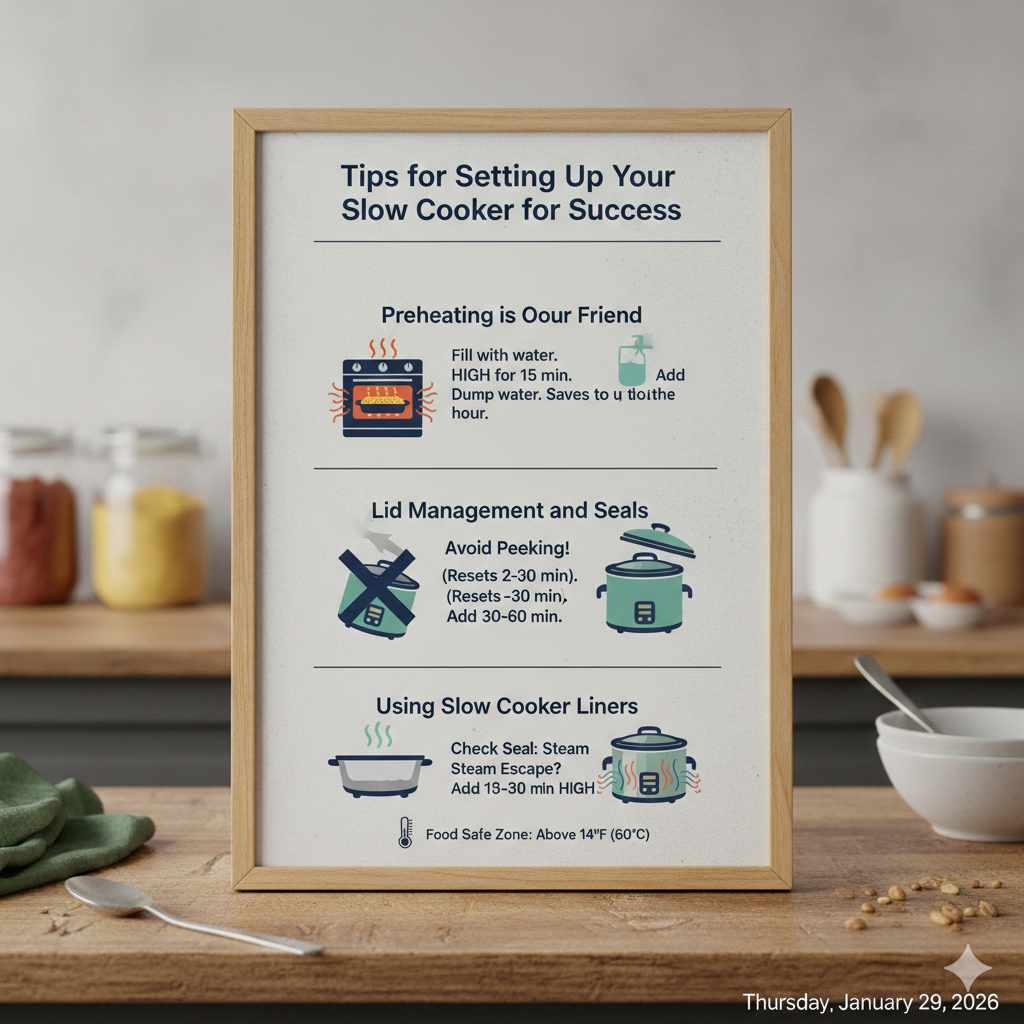
Tips for Setting Up Your Slow Cooker for Success
Proper setup helps you hit those timing targets consistently. If you feel like your slow cooker is always running too hot or too cold, try these practical checks.
Preheating is Your Friend
While slow cookers are designed to start cold, preheating can save you up to an hour on the cook time, especially for dense casseroles.
How to Pre-Heat: Fill the slow cooker insert with water, turn it on HIGH for 15 minutes, then dump the water out before adding your actual ingredients. This gets the ceramic insert hot so it starts cooking immediately when you add the cold food.
Lid Management and Seals
Every time you lift that heavy glass lid to peek, you lose a significant amount of heat, resetting the cooking clock by as much as 20 to 30 minutes. Try to avoid peeking before the recipe’s minimum time has passed.
The lid must seal well. If you notice steam escaping heavily around the edges, your cooker is inefficiently heating, and you will need to extend your cook time by at least 30 to 60 minutes.
Using Slow Cooker Liners
While convenient for cleanup, the plastic liners can sometimes slightly impede heat transfer between the ceramic insert and the food. If you switch from cooking ceramic-to-food one day, to ceramic-to-liner-to-food the next, add 15 to 30 minutes to your HIGH setting time as a safety net.
Frequently Asked Questions (FAQ) about Crock Pot Casserole Timings
Q1: Can I cook a casserole from frozen in the slow cooker?
A: Generally, no. Cooking a frozen casserole in a slow cooker is not recommended because it can keep food in the danger zone (40–140°F) too long. For best safety and texture, thaw casseroles completely in the refrigerator before slow cooking.
Q2: Is it better to cook a crock pot casserole on LOW or HIGH?
A: LOW is usually best for casseroles. It allows even cooking, better flavor development, and helps prevent dry meat or scorched edges. HIGH is best for pre-cooked ingredients or when you’re short on time.
Q3: Why does my slow cooker casserole turn out watery?
A: Slow cookers trap steam, so liquid does not evaporate like it does in an oven. Too much broth, raw vegetables releasing moisture, or frozen ingredients can all cause excess liquid. Reducing added liquid or thickening near the end helps.
Q4: Can you overcook a casserole in a slow cooker?
A: Yes. Lean meats, pasta, rice, and dairy-based sauces can dry out or become mushy if cooked too long. Once the casserole is done, switch to the WARM setting to prevent overcooking.
Q5: How do I know when a crock pot casserole is done?
A: A casserole is done when meat reaches a safe internal temperature (165°F for poultry), vegetables are fork-tender, and the dish is evenly hot throughout, not just around the edges.
Final Thoughts: Perfect Timing Makes All the Difference
Mastering crock pot casserole cooking times isn’t about guesswork—it’s about understanding how your slow cooker works and choosing the right timing for your ingredients. Once you know when to use LOW versus HIGH, how density affects cooking, and why food safety temperatures matter, slow cooking becomes effortless and reliable.
With a little planning, a thermometer for accuracy, and the flexibility to adjust when needed, you can avoid undercooked centers, watery sauces, or dried-out meat. Whether you’re making a creamy chicken casserole, a hearty beef and potato bake, or a quick holiday side dish, the right timing ensures consistent, flavorful results every time.
Now that you have the guidelines, charts, and troubleshooting tips, you can confidently set your slow cooker, walk away, and come back to a perfectly cooked casserole—warm, comforting, and ready to enjoy!