Indoor Cookware Safety Tips: Safer Choices for Everyday Cooking
Choose cookware by heat level, food type, cooktop, and visible wear: use stainless steel or cast iron for high heat, nonstick for low-to-medium heat, and replace anything warped, flaking, or deeply scratched. Wrong pairings can cause sticking, uneven heating, coating wear, or unsafe chemical transfer. This guide covers safe choices by temperature, ingredient, cooktop type, and signs it is time to retire a pan.
What cookware is safest for everyday cooking?
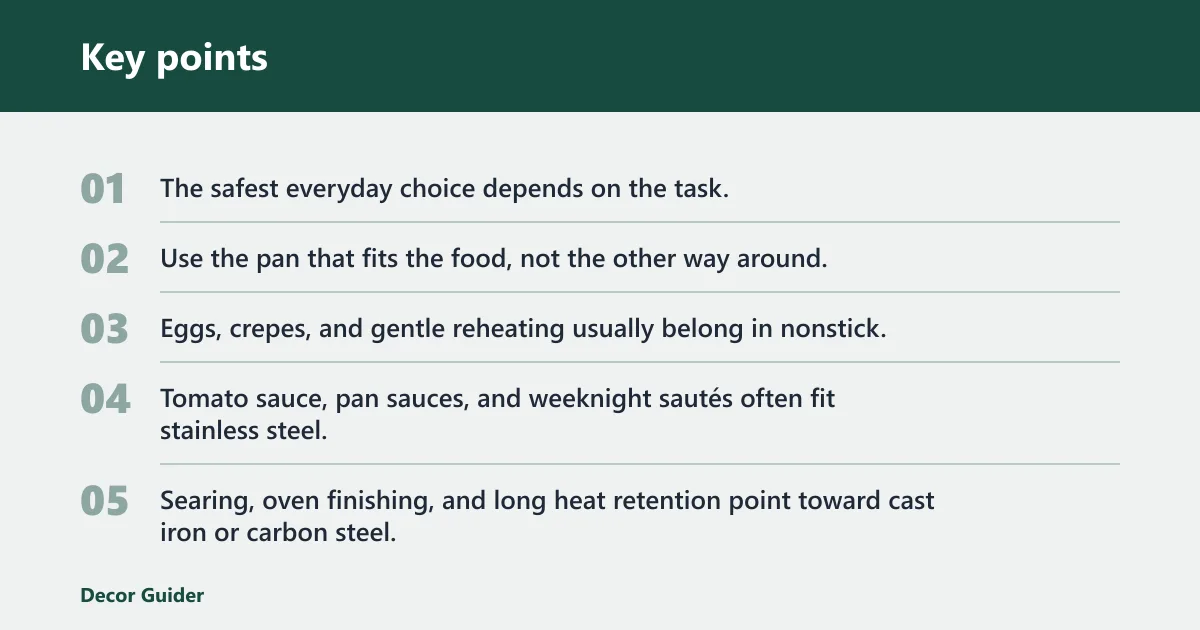


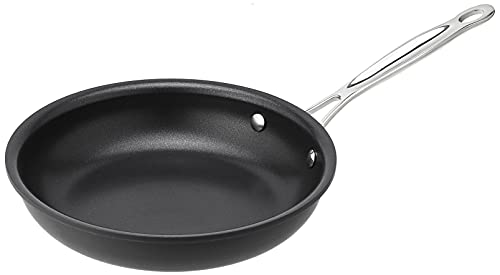
The safest everyday choice depends on the task. For many stovetop meals, stainless steel is often a strong default because its food-contact surface handles medium to high heat and tends to react less with acidic foods than more reactive metals. Nonstick is commonly used for eggs and delicate fish at low to medium heat, while cast iron and carbon steel are often better for hotter jobs.
Match the pan to the meal
Use the pan that fits the food, not the other way around. Eggs, crepes, and gentle reheating usually belong in nonstick. Tomato sauce, pan sauces, and weeknight sautés often fit stainless steel. Searing, oven finishing, and long heat retention point toward cast iron or carbon steel.
A common first-timer mistake is using a thin nonstick skillet for a hard sear on steak. The pan can overheat before the food browns well, which shortens coating life and can lead to smoking long before the meal is done.
Why heat level matters as much as material
A pan can be safe in one use case and poor in another. A high-heat skillet that is warped or has a damaged coating is a bad fit even if the material itself is usually durable. The same pan may still be fine for low-heat reheating, but only if the manufacturer’s temperature limit and visible condition support that use.
When stainless steel is the safer default
Stainless steel is often the safest general-purpose pick because it tolerates medium to high heat, usually handles acidic foods well, and often comes with an aluminum or copper core for better heat spread. That makes it a sensible default for small-space cookware safety for apartment cooks who want one pan for sautéing, simmering, and pan sauces.
Nonstick cookware safety
Nonstick cookware is safe for everyday use when you keep it in its heat range and protect the coating. It is best for low to medium heat, gentle utensils, and careful cleaning. If the coating is scratched, chipped, or flaking, replacement is the safer choice because wear can spread and food may contact damaged surfaces.
Safe heat range for coated pans
Many nonstick pans are intended for low to medium heat rather than prolonged high heat. Follow the pan’s labeled limit if one is provided, and avoid empty-pan preheating because a dry pan can heat quickly and exceed safe use before food is added. If the handle, lid, or label lists an oven-safe temperature, follow that exact number rather than assuming all nonstick is oven-safe.
PFAS, PFOA, and cookware safety standards
Modern nonstick concerns often center on PFAS, a large class of fluorinated chemicals, while older cookware concerns were tied more specifically to PFOA, a legacy processing aid used in some older products. The key practical point is that cookware should meet applicable food-contact rules and be used within the manufacturer’s instructions. For consumers, that means checking the pan’s labeled use limits, keeping damaged coatings out of service, and replacing cookware that no longer holds up to normal use.
Scratch, chip, and flaking warning signs
Small surface marks are not all equal. Light utensil marks can be cosmetic, but deep scratches, peeling edges, chips, or visible flaking are common signs that replacement may be needed. Once the coating lifts, the surface can lose release performance and wear faster with each wash.
Care that slows coating wear
Hand-wash nonstick when possible, use soft sponges, and choose wooden, silicone, or nylon utensils. Avoid abrasive scrubbers and harsh tools that can score the surface. Let the pan cool before washing so sudden temperature change does not stress the coating or the metal base.
Which cookware should you use for high heat?
For high heat, cast iron and carbon steel are usually the better choices, with stainless steel also being a solid option when the pan is built for it. Nonstick is the least suitable of the common everyday materials because coating limits matter more as the temperature rises. Thin pans also become less stable under strong burner output.
Cast iron for searing and oven use
Cast iron handles high heat without trouble and holds temperature for searing, baking, and skillet meals. Its seasoning layer is part of normal use, not a defect. Keep it dry after washing, because leftover moisture can lead to rust. If the seasoning looks patchy, re-seasoning restores protection better than scrubbing harder.
Carbon steel for quick, hot cooking
Carbon steel is lighter than cast iron and also depends on seasoning. It responds quickly to heat, which makes it a good fit for fast searing and stir-fry-style cooking. Like cast iron, it needs dry storage and occasional re-seasoning to keep rust away.
Why thin pans warp sooner
Thin pans are more likely to warp when they face repeated high heat or sudden temperature swings. Warping creates uneven contact with the burner, which can cause hot spots, wobble, and poor heat transfer. On glass or induction tops, a warped base can also reduce stability and make the pan sit unevenly.
If a pan no longer sits steadily on the cooktop, it is time to evaluate replacement. A base that rocks can make stirring awkward, weaken heat contact, and increase the chance of spills when the pan is full.
How do acidic foods change your cookware choice?
Acidic foods change cookware choice because some surfaces react more than others. Stainless steel is usually a safer everyday pick for tomato sauce, vinegar-based dishes, and citrus-heavy recipes. Uncoated aluminum can react with acidity, while seasoned surfaces and coated pans may lose protection or flavor neutrality if abused by long acidic simmering.
Stainless steel and acidic sauces
Stainless steel is commonly used for sauces because its food-contact surface is less reactive with acidic foods than reactive metals. It is a good option when you need a pan that can move from sautéing aromatics to simmering tomatoes without changing the pan’s surface.
Why uncoated aluminum can react
Uncoated aluminum conducts heat well, but it can react with acidic foods and may dull or pit over time. Anodized aluminum is more durable than bare aluminum because the finish is harder and less reactive, but the finish still matters. If the anodized layer is badly worn, scratched through, or damaged, replace the pan sooner.
Seasoned surfaces and long simmers
Cast iron and carbon steel can handle heat well, but long acidic simmering may wear seasoning faster. That does not automatically make them unsafe, but it can shorten the life of the protective layer. For long tomato sauces, stainless steel often needs less maintenance and gives more predictable results.
Cookware safety checklist
Use this checklist to judge whether a pan is safe for the job you have in mind. It focuses on visible condition, heat limits, and the material’s normal use case, because safety is not the same as performance or convenience.
| Cookware material | Safe use conditions | Replace-now warning signs |
|---|---|---|
| Stainless steel | Medium to high heat; good for acidic foods; often paired with aluminum or copper cores for even heating | Severe warping, loose handle, detached rivets, or pitting that affects the cooking surface |
| Nonstick | Low to medium heat; gentle utensils; hand-wash care; follow listed oven temperature if oven-safe | Flaking, peeling, deep scratches, bubbled coating, or a manufacturer heat limit you cannot follow |
| Cast iron | High heat, searing, baking; seasoning kept intact; fully dried after washing | Rust that keeps returning, cracked metal, or seasoning damage that does not improve with re-seasoning |
| Carbon steel | High heat and searing; seasoning maintained; dry storage to prevent rust | Rust patches that keep spreading, a warped base, or surface damage that breaks the seasoned layer |
| Aluminum | Anodized versions for better durability; use carefully with acidic foods if uncoated | Deep gouges, severe finish loss, warped base, or exposed worn areas on anodized cookware |
How do you tell if cookware is unsafe?
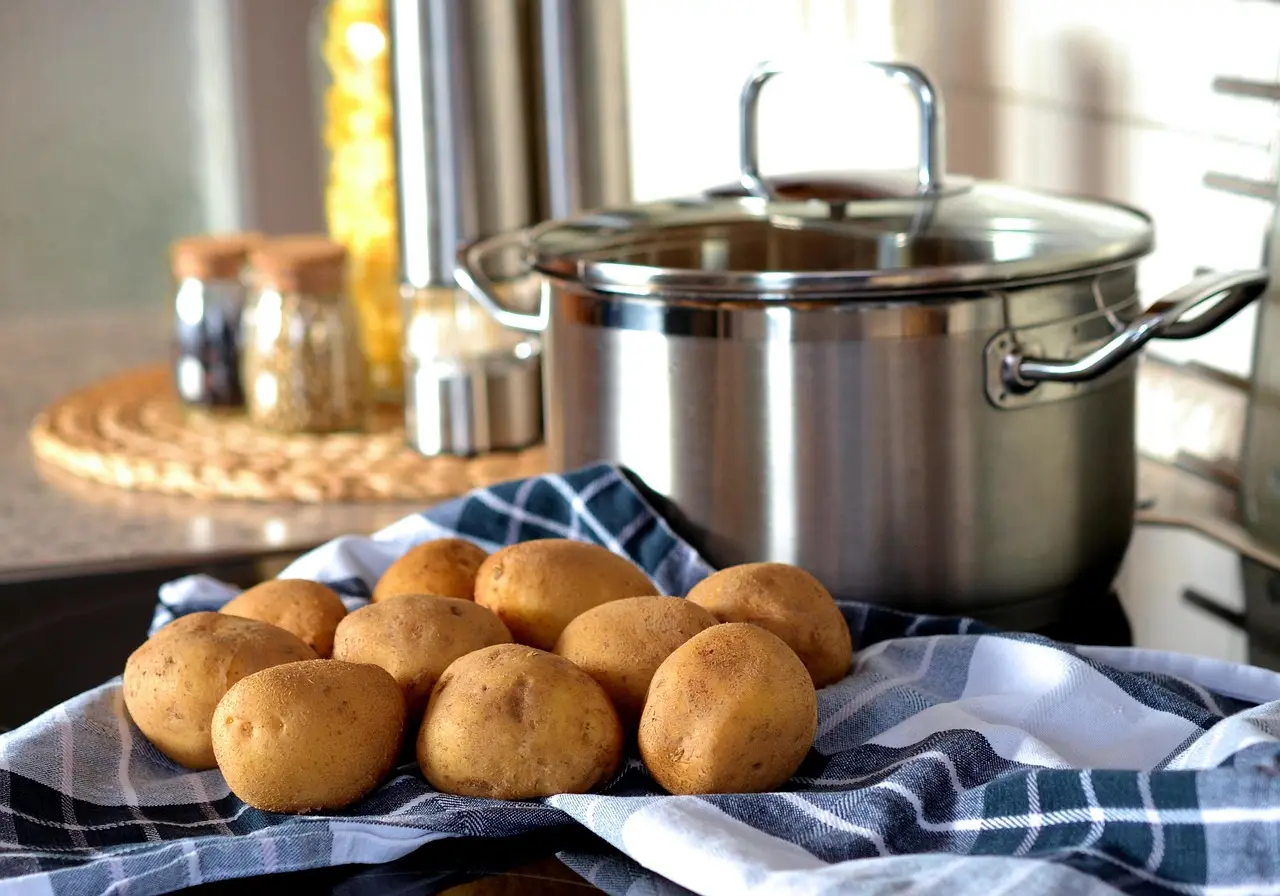
Cookware is unsafe when the shape, surface, or hardware no longer supports steady, controlled cooking. Look for warping, wobble, rust that keeps returning, damaged seasoning, loose handles, and lids that no longer fit properly. Those issues can affect heating, cause burns, or make the pan fail earlier than it should.
Warping, wobble, and uneven contact
Set the pan on a flat counter and press gently near the rim. If it rocks, the base may be warped. On the cooktop, that often means uneven heating and a less stable fit. Thin pans are more likely to warp, especially if they are overheated empty or cooled too fast.
Rusted cast iron and damaged seasoning
Rust does not always mean a pan is done, but repeated rust after drying and re-seasoning signals a maintenance problem. A good seasoning layer should be smooth, dry, and protective. If the surface stays rough, sticky, or patchy after proper care, the pan may no longer be dependable for daily use.
Handles, lids, rivets, and loose parts
Check handles for heat-resistant material, firm attachment, and any signs of loosening. Look for loose rivets, cracked knobs, steam vent issues, and lid fit that no longer seats properly. A handle may be safe on the stovetop but not in the oven if the manufacturer sets a lower oven-safe limit. Tight-fitting lids matter too, because poor fit can vent steam unpredictably and create burn risk when you lift the lid.
Replace now vs keep using
Replace the pan now if the coating is flaking or peeling, the base is severely deformed, the handle or rivets are loose, or the lid hardware is cracked. Keep using it only if the wear is minor, the pan sits flat, the hardware is secure, and the surface still performs within its intended use. When in doubt, downgrade the pan to gentler use or retire it.
-
Check the label first.
Look for food-contact compliance, oven-safe limits, and dishwasher-safe guidance before the pan goes on heat. If the label is missing, treat that as a reason to be more conservative with heat and cleaning. -
Inspect the cooking surface.
Look for scratches, chips, flaking, rust, or exposed metal where the coating used to be. Small marks can be cosmetic on some pans, but peeling or flaking on nonstick calls for replacement. -
Test the base for flatness.
Place the pan on a flat counter and see whether it rocks. A warped base can heat unevenly and sit poorly on electric, gas, or induction surfaces. -
Check handles and rivets.
Wiggle the handle gently and inspect the attachment points. Loose hardware can fail under heat or weight, which creates a burn hazard when the pan is full. -
Match the pan to the meal.
Use nonstick for gentle cooking, stainless steel for acidic or mixed-heat jobs, and cast iron or carbon steel for high heat. If the pan is outside its best use case, replace it or switch pans.
Frequently asked questions
What temperature is too hot for nonstick cookware?
Too hot means any heat level that goes beyond the pan’s labeled limit or starts causing smoking, discoloration, or coating stress. Because labels vary, the safest rule is to follow the manufacturer’s maximum temperature and avoid empty-pan preheating, which can push a nonstick pan past safe use fastest.
Is nonstick cookware safe to use every day?
Yes, if you keep it within the manufacturer’s heat limit and replace damaged pans. Nonstick is best for low to medium heat, gentle utensils, and hand-washing when possible. If the coating is peeling, flaking, or deeply scratched, daily use is no longer a good idea.
What cookware materials should I avoid for high heat?
Avoid pushing nonstick pans into high-heat use unless the label clearly allows it, and avoid thin pans that warp quickly. Bare aluminum is also a poor fit for some acidic or high-wear tasks. For high heat, stainless steel, cast iron, and carbon steel are usually better choices.
How do I know if my cookware is warped or unsafe?
Set the pan on a flat surface and see whether it rocks. On the stove, uneven contact, hot spots, or poor stability are warning signs. Unsafe cookware may also have loose handles, damaged rivets, cracked lids, or coating failure that exposes the surface beneath.
Can scratched nonstick pans still be used safely?
Light scratches may still allow short-term use, but deep scratches, chips, or flaking mean replacement is the safer call. Scratches can shorten coating life and make the surface harder to clean. If the pan loses its smooth release or the coating lifts at the edges, retire it.
How should I clean cookware to keep it safe longer?
Use non-abrasive cleaners, soft sponges, and utensils that match the surface. Hand-wash nonstick when possible, dry cast iron and carbon steel right away, and avoid sudden temperature changes that stress metal and coating. Follow the manufacturer’s care instructions for dishwasher use, oven use, and heat limits.
Products related to this article
Sponsored / affiliate links. As an Amazon Associate I earn from qualifying purchases. I may earn additional commission from eligible campaigns.
 Ipetboom Heavy Duty Secure Lock for Glass Doors and Drawers, Stainless Steel Cabinet Lock Kit with Sturdy Structure and Efficient Use, for Home and Office Security
 RISOON Solar Strobe Warning Safety Flashing Light:Ceiling Strobe Lamp with Strong Magnetic Base Waterproof for Construction, Traffic, Factory, Crane Tower, Boat Navigation (Red+Blue Light)