
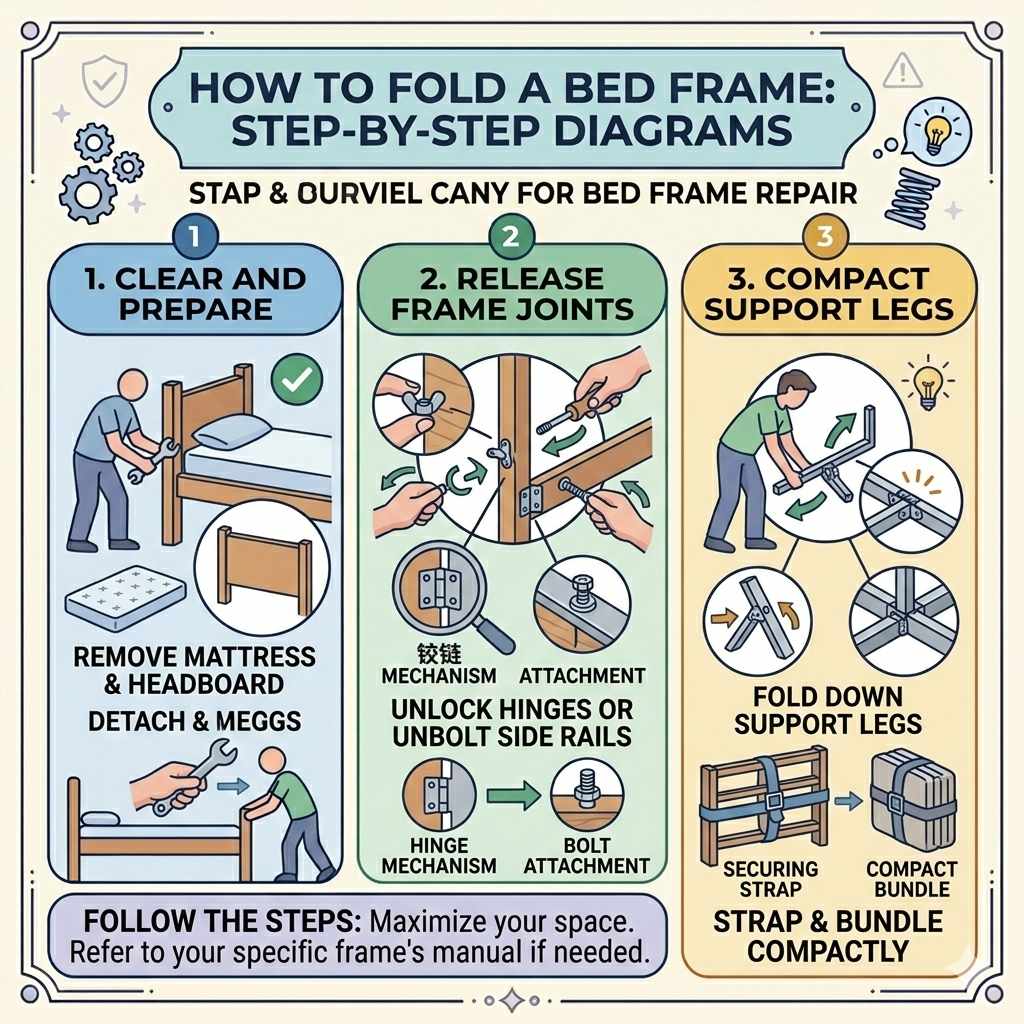
To successfully fold a bed frame, you must first identify its type (standard metal, platform, or folding guest frame), clear the area completely, remove the mattress, and locate the locking mechanism—usually a latch, pin, or knob—to release the hinges before gently collapsing the sides inward for storage or moving.
Moving day or just rearranging the bedroom can feel overwhelming, right? One of the biggest hassles is dealing with that bulky bed frame. You might look at it and think it’s a solid, unmovable piece of steel. Don’t worry! Most modern bed frames are designed to break down easily, especially the popular metal or platform styles.
Knowing how to fold a bed frame saves you big chunks of time, money on moving costs, and storage headaches later. I’m here to walk you through it, step-by-step, just like showing you how to change your oil. We’ll cover different types of frames and make sure you do it safely. By the end of this guide, you’ll feel totally confident collapsing that frame like a pro!
Let’s get started by making sure we know exactly what kind of frame we’re dealing with.
Understanding Your Bed Frame Type: The First Crucial Step
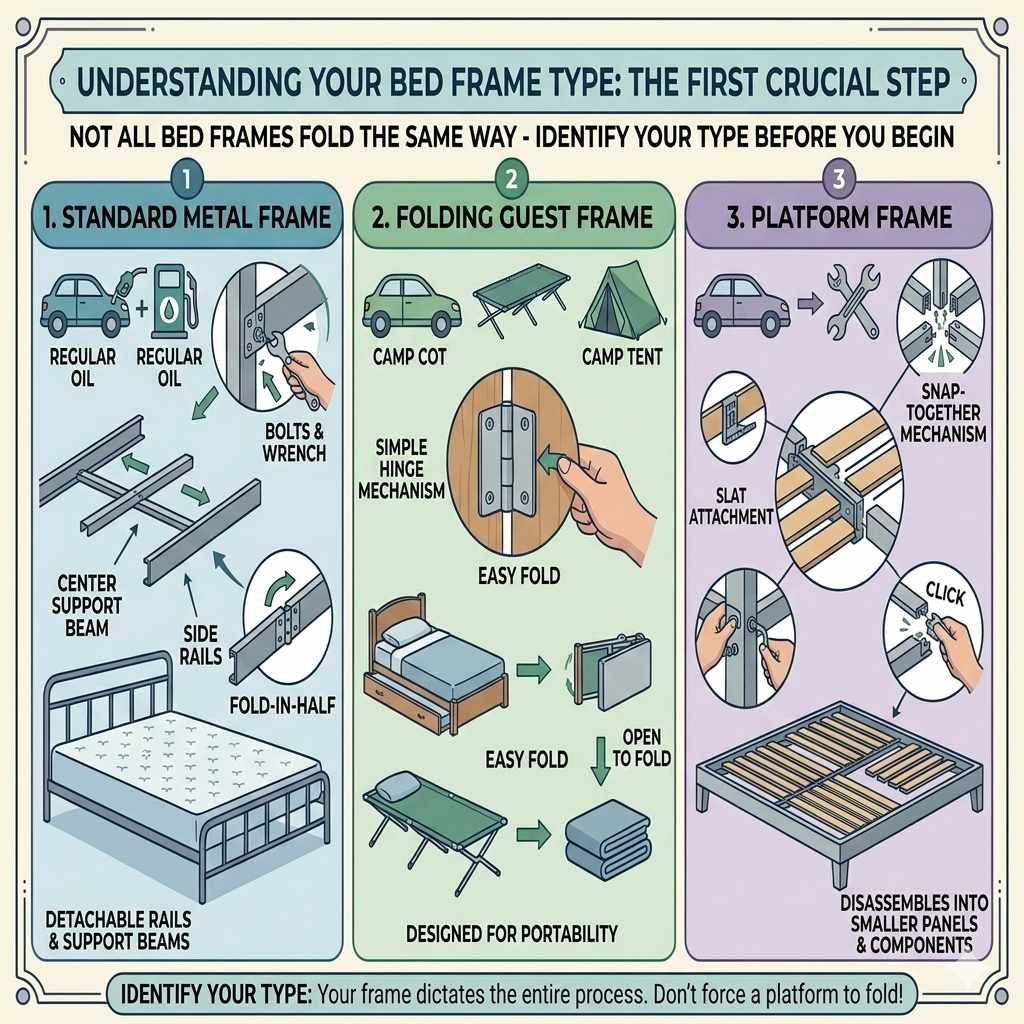
Before you try forcing anything, stop and look closely. Not all bed frames fold the same way. Identifying your frame type is like knowing whether your car needs regular or synthetic oil—it dictates the whole process. We usually see three main types that benefit from folding or disassembly:
- Standard Metal Frames (Often used with box springs): These usually have center support beams and side rails that detach and sometimes fold in half.
- Folding Guest Frames (Trundles or portable beds): These are the easy ones! They are explicitly designed to fold like a camp cot.
- Platform Frames (Slat systems): These often don’t “fold” as much as they “disassemble” by removing bolts or snapping components together.
Preparation: Setting the Stage for Easy Folding
Never start taking something apart while furniture is still on it! Preparation is key to safety and keeping things organized.
Step 1: Clear Out the Area
You need room to move. Push other furniture (dressers, nightstands) well out of the way. You don’t want to scratch the walls or catch your fingers when the frame collapses.
Step 2: Remove All Bedding and Mattress
This might seem obvious, but take everything off down to the bare frame:
- Take off pillows, sheets, and blankets.
- Carefully lift the box spring (if you have one). This is heavy, so ask a friend for help if needed.
- Finally, lift the mattress off the frame and set it somewhere safe, usually leaning against a wall in another room.
Step 3: Gather Your Simple Tools
For most standard folding metal or platform frames, you won’t need a full toolbox. Keep it simple. Having the right tools prevents stripping screws or breaking plastic locks.
| Potential Tool Needed | When You Need It | Pro Tip |
|---|---|---|
| Phillips Head Screwdriver | For standard bolts on platform or older metal frames. | Keep a magnetic tip handy so screws don’t roll away. |
| Adjustable Wrench or Socket Set | For securely fastened hex bolts on heavy-duty frames. | Start with a small size and work your way up; don’t overtighten when reassembling. |
| Gloves | To protect your hands from sharp edges or rust. | Thin work gloves are usually enough. |
| Zip-top Bags or Tape | For keeping small hardware together. | Label the bag with the frame part it belongs to! |
How To Fold A Bed Frame: Step-by-Step Guides by Type
Now that you’re prepped, let’s tackle the actual folding based on what you own. Safety first—always support the frame as you unlock it so it doesn’t suddenly fall.
Method 1: Folding Standard Metal Bed Frames (The Simplest Fold)
These frames often use a simple hinge mechanism in the middle of the long side rails, designed for moving a long frame into a shorter, transportable shape. We are removing legs first, then folding the rails.
A. Removing the Legs
Most modern metal frames have legs that screw directly into the center bar or the side rail brackets. These must come off before the frame can collapse properly.
- Locate the Legs: They might be bolted or merely resting in a bracket.
- Unscrew or Unlatch: If they screw in, turn them counter-clockwise until they come free. If they slide into a bracket, look for a small lever or button near the top bracket to release the leg slide.
- Keep Them Safe: Place all legs immediately into a labeled zip-top bag. Many times, the center legs are slightly different sizes, so keep them grouped by where they came from.
B. Folding the Center Section
The center support beam often dictates the fold. Look for the hinge point.
- Find the Release Point: Run your hand along the center support bar. You’ll find a hinge point, usually secured by a simple spring clip, a wingnut, or a pin.
- Release the Lock: If it’s a clip or pin, press it firmly or pull it out. If it’s a wingnut, loosen it a few turns.
- Fold it Over: With the central lock released, gently lift one half of the center bar and fold it over the other half. It should collapse neatly.
C. Folding the Side Rails
The side rails are trickier as they are long and unsupported once the bed is empty.
- Disconnect Head/Footboard Brackets (If applicable): If your frame attaches to a separate headboard, slide those hooks out now. Many folding frames have the ability to detach the side rails near the head and footboards.
- Look for the Side Hinge: Some frames have a secondary hinge midway down the long side rail. If you find one, release its latch (often a metal tab you have to pry up slightly).
- Fold Segments: Fold the side rail segments together. You may end up with two long pieces that now stack neatly.
- Secure the Fold: Once folded, use bungee cords, ratchet straps, or heavy-duty tape to keep the pieces together so they don’t spring open during transport.
Method 2: Disassembling Platform Bed Frames (The Bolt Method)
Platform beds, especially those with wooden slats or solid metal frames, usually don’t fold in half. They disassemble into sections that are stacked flat. This is common for modern, low-profile designs. You can learn more about proper structural assembly from resources like the National Institute of Standards and Technology (NIST) regarding structural integrity, which applies when taking apart heavy structures.
- Remove Slats: If your platform uses individual wooden or metal slats resting on side rails, you must take them out first. Sometimes they are screwed down; sometimes they clip into slots on the side rails. Remove them all and stack them neatly.
- Identify Connection Points: Look at the four main corners where the head, foot, and side rails meet. These are usually secured by heavy-duty bolts.
- Use Your Wrench: Use your adjustable wrench or socket set to carefully loosen all the bolts connecting the main corner pieces. Keep track of which bolt goes where—they are rarely interchangeable.
- Separate Sections: Once all bolts are removed, the frame should break down into four main pieces: the head panel section, the foot panel section, and two long side rails. Stack them flat.
Method 3: Collapsing Folding Guest or Trundle Frames
These are designed for ultimate convenience. If you have a frame advertised as a “folding cot” or “instant guest bed,” follow these simple steps:
- Ensure the surface is completely clear of pillows or thin blankets that could jam the mechanism.
- Locate the main pivot point, which is usually near the center where the legs meet.
- Look for a safety latch or handle. On some models, you might need to pull a small release lever or unlock a clip near the side hinge.
- Gently push the top half towards the bottom half. The frame should pivot smoothly until the legs fold inward, stacking the frame onto itself.
- Once fully collapsed, many models have a strap or small plastic clamp to lock the frame closed for storage.
Safety First: Essential Reminders for DIY Frame Work
As your guide, I always put safety at the top of the list. Metal frames can have sharp edges, and heavy beams can shift unexpectedly.
Working Safely with Heavy Components
- Never Work Alone: Always have a second set of hands, especially when lifting the mattress off or maneuvering long, folded rails.
- Mind the Pinch Points: When the frame starts to fold, keep your fingers well clear of the hinges and pivot points. A pinched finger hurts for weeks!
- Support Center Beams: If you release the center support leg and the frame starts to sag, hold it up until you can safely maneuver the next piece.
- Wear Gloves: Rust, grime, and sharp edges are common culprits for cuts. Good leather or work gloves make this job much less frustrating.
Organizing Hardware for Reassembly (The Key to Future Success)
The hardest part about taking things apart isn’t the disassembly—it’s putting them back together six months later! You need a rock-solid organization system.
Visualize this: You have eight bolts for the headboard connection, four shorter bolts for the center legs, and two unusual pivot pins. Mix them up, and you’re in trouble.
Use the labeling system we mentioned earlier:
- Small Bags are Your Best Friend: Put all hardware related to one specific section (like “Headboard Bracket Bolts”) into one bag.
- Label Everything Clearly: Use a permanent marker. Example labels: “Center Legs,” “Side Rail Hinges,” “Footboard Connectors.”
- Tape to the Frame: If you are storing the frame immediately after folding, use strong duct tape to secure the hardware bags directly onto the folded metal frame parts. This ensures when you move the frame, the hardware travels with it.
| Hardware Group | Best Storage Method | Reassembly Placement |
|---|---|---|
| Long Bolts (4-8 pieces) | Bagged and labeled “Corner Posts.” | Connecting side rails to head/foot sections. |
| Leg Screws/Knobs | Bagged and taped to the center beam. | Attaching vertical support legs. |
| Hinge Pins/Clips | Small baggie taped inside the main fold. | Securing the main center fold mechanism. |
Common Folding Frame Issues and Quick Fixes
Sometimes things stick, rust up, or simply won’t cooperate. Don’t panic; these are usually minor issues.
Stuck Hinges or Bolts
If a bolt won’t turn or a hinge is seized, don’t force it with extreme leverage, which might strip the threading or snap the metal. Try this sequence:
- Lubricate: Apply a small amount of penetrating oil (like WD-40 or PB Blaster) directly onto the threads or hinge point. Give it five minutes to work in.
- Tap Gently: Lightly tap the area around the stuck part with the handle of your screwdriver or a rubber mallet. This vibration helps break the rust bond.
- Try Again: Attempt to turn the bolt or release the hinge gently. If it’s still stuck, stop and reconsider using a professional if the frame is extremely valuable or antique.
The Frame Won’t Lie Flat
If you folded the side rails, but they still bow out instead of sitting flat for storage, it usually means one of two things:
- Center Beam Misalignment: The center support didn’t fold completely flat. Check the hinge point again and push firmly to ensure it fully locks into the collapsed position.
- Stuck Slider: If your frame uses rail sliders instead of hinges, sometimes the locking mechanism doesn’t fully disengage. Wiggle the rail slightly while pressing the release button or lever until it slides smoothly.
Folding a bed frame properly can sometimes be complicated by the addition of bed risers or under-bed storage boxes. Always remove these first and ensure the frame rails are completely clear of any obstruction before attempting to fold or disassemble.
Why Folding Your Frame Matters (Beyond Just Moving)
You might be folding your frame just to clean behind it, or perhaps you’re moving across town. Regardless, breaking down the frame correctly offers great benefits. We want reliable solutions for everyday drivers and homeowners, and this applies here too!
Benefits of Disassembly/Folding:
- Easier Transport: A standard queen frame, when broken down, often fits easily inside an SUV or pickup truck bed, avoiding expensive truck rentals.
- Storage in Tight Spaces: Folded frames take up much less space in a garage or storage unit, often fitting vertically against a wall.
- Reduced Risk of Damage: Trying to maneuver a large, rigid frame through doorways or around stairwells almost guarantees dings, scratches, or wall damage. Flat pieces are much safer.
- Easier Inspection: Taking the frame apart lets you inspect for bent supports or worn hardware that could cause mattress sagging later on. Think of it like a basic vehicle inspection!
Reassembly Confidence: A Quick Look Ahead
Folding a frame only works if you can put it back together just as easily. Since you followed our hardware organization tips, reassembly should be a breeze. Generally, you just reverse the process:
- Unstrap the folded sections.
- Unfold the side rails and center support, securing their hinges/latches.
- Reattach the side rails to the head/foot brackets.
- Screw the legs back onto the center and side rails.
- Double-check every single bolt connection with your hand or wrench to ensure tightness. Err on the side of slightly tight, but never force it to the point of straining the metal.
Frequently Asked Questions (FAQ) About Folding Bed Frames
Q1: Do all metal bed frames really fold in half?
A: Not all of them. Many heavy-duty frames only detach at the corners (headboard/footboard) and are stored as long, separate pieces (side rails, center bar). True folding designs usually have visible hinges halfway down the long rails.
Q2: Can I fold my platform bed frame without removing the slats?
A: Almost never. Platform beds rely on the tension and support of the slats. If the slats are screwed down, removing them is mandatory before disassembly. If they are loose, they will spill out and become a hazard.
Q3: What if the frame squeaks after I put it back together?
A: Squeaking usually means metal-on-metal friction at a joint. Take the mattress off, find the noisy connection (often where the center bar meets the side rail), and apply a small amount of lubricant (like silicone spray or even petroleum jelly) to the contact points.
Q4: How do I know how much weight a folding frame can hold?
A: Manufacturers must state weight limits. If you cannot find the original manual, assume a basic folding metal frame holds up to 500–700 lbs total (including the mattress and occupants). If you have a very old or flimsy frame, consider reinforcing the center support when you reassemble it.
Q5: Should I keep the box spring if I have a platform frame?
A: If you have a true platform frame with closely spaced slats, you typically do not need a box spring. The slats provide the direct support. Putting a box spring on can raise the mattress too high and might not be compatible with the frame’s design.
Conclusion: Folding Your Bed Frame the Smart, Stress-Free Way
Folding or disassembling a bed frame might look intimidating at first glance, but as you’ve seen, it’s really about understanding your frame type, preparing properly, and working methodically. Once you identify whether you’re dealing with a standard metal frame, a platform system, or a folding guest bed, the rest becomes a simple step-by-step process.
By clearing the area, removing the mattress, locating the locking mechanisms, and keeping your hardware organized, you eliminate the frustration that usually comes with moving bulky furniture. Taking your time and handling each section carefully not only protects your frame from damage but also makes reassembly quick and painless when you’re ready to set it back up.
The real benefit goes beyond just saving space. Properly folding or disassembling your frame makes transportation easier, reduces the risk of wall and floor damage, and gives you a chance to inspect the structure for wear or loose hardware. It’s a practical skill that pays off every time you move, rearrange, or store furniture.