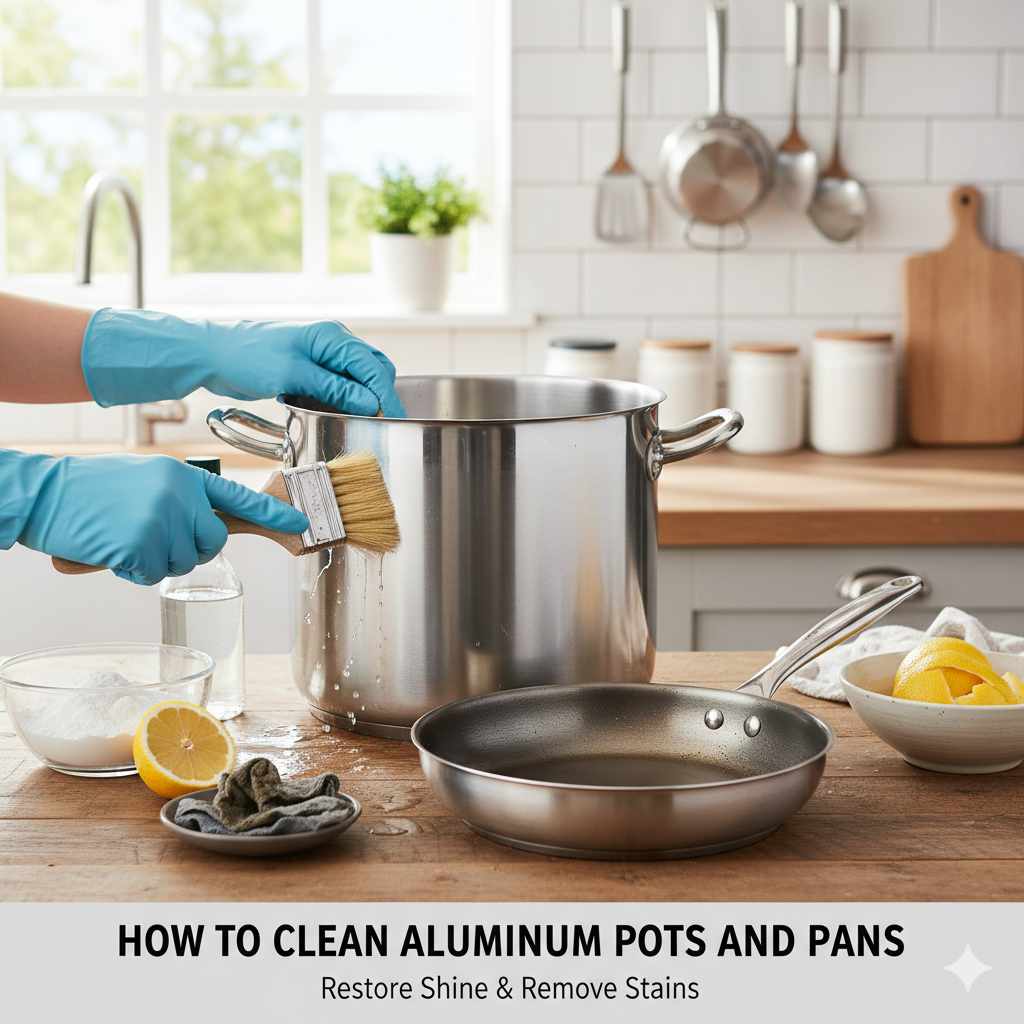
To clean aluminum pots and pans, fill the pot with water and add two tablespoons of white vinegar, lemon juice, or cream of tartar for every quart of water. Bring the mixture to a boil and let it simmer for 15 minutes. The discoloration will lift away. Let it cool, then wash with soap and water.
Hey there, Dustin Hall here. You might know me from my work under the hood of a car, but today, we’re stepping into the kitchen. Believe it or not, keeping your cookware in top shape isn’t so different from maintaining a vehicle. That dull, chalky film on your favorite aluminum pot? It’s a lot like cloudy headlights. It happens over time, but the fix is surprisingly simple.
Why Do Aluminum Pots and Pans Get Stained?
Before we jump into the cleaning, it helps to understand what’s happening to your cookware. Think of it like diagnosing a funny noise in your engine—knowing the cause makes the fix easier. The main culprit behind dull, stained aluminum is a natural process called oxidation.
When aluminum is exposed to air, it forms a thin, hard layer of aluminum oxide. This layer is actually protective and prevents the metal from corroding. However, certain things can disrupt this layer and cause discoloration:
- Alkaline Foods: Cooking starchy foods like pasta or potatoes, or alkaline vegetables like spinach, can cause dark spots to appear.
- Acidic Foods: On the other hand, highly acidic foods like tomatoes or citrus can sometimes strip away the oxidized layer, leaving the pot looking dull or pitted.
- Hard Water: The minerals in hard water can leave chalky white deposits on the surface after boiling water.
- The Dishwasher: This is a big one. Harsh dishwasher detergents are highly alkaline and will strip the finish right off your aluminum pans, leaving them with a dark, powdery coating.
The good news is that this discoloration is usually just on the surface and is easy to remove. You just need the right tools and a little bit of know-how.
Tools and Supplies You’ll Need
You don’t need a professional mechanic’s toolbox for this job. Most of what you need is probably already in your kitchen pantry. Keeping it simple is key.
The Essentials:
- An acidic cleaning agent (choose one):
- White Vinegar
- Lemon Juice (fresh or bottled)
- Cream of Tartar
- Water
- A soft sponge or non-abrasive scrubbing pad
- Mild dish soap
- A soft, clean towel for drying
For Tougher Jobs:
- Baking Soda
- A plastic or wooden scraper
That’s it! Notice what’s not on the list? Harsh chemicals like bleach, or abrasive tools like steel wool. Those will do more harm than good, like using the wrong kind of oil in your engine.
The Best Proven Way to Clean Aluminum Cookware: A Step-by-Step Guide
This is our go-to method. It’s safe, effective, and uses simple ingredients. We’re going to use a mild acid to react with the discoloration and gently lift it away, restoring the pan’s natural brightness. Follow these steps, and you can’t go wrong.
Step 1: Fill the Pot with WaterPlace your stained aluminum pot or pan on the stovetop. Fill it with enough water to completely cover all the discolored areas on the inside.
Step 2: Add Your Acidic CleanerNow, it’s time to add your cleaning agent. The ratio is simple: use two tablespoons of your chosen acid for every one quart of water. You can use white vinegar, lemon juice, or cream of tartar. They all work great. If you have lemons, you can even just toss in a few sliced-up lemons.
Step 3: Bring to a BoilTurn the heat on high and bring the water-acid mixture to a rolling boil. As the water heats up, you’ll start to see the magic happen. The discoloration will begin to loosen and float away from the sides of the pot.
Step 4: Simmer for 15 MinutesOnce the water is boiling, reduce the heat to a medium-low setting and let it simmer for about 15 minutes. This gives the acid enough time to work on all the stains without boiling off all the water. You can watch as the inside of your pot gets brighter and cleaner.
Step 5: Cool and EmptyTurn off the heat and carefully move the pot off the burner. Let the water cool down until it’s safe to handle. Then, pour the water down the drain. Your sink will get a nice cleaning in the process!
Step 6: Wash and RinseWith the pot now empty, give it a quick wash with warm water, mild dish soap, and a soft sponge. This will remove any lingering residue from the cleaning process. Rinse it thoroughly with clean water.
Step 7: Dry CompletelyThis final step is important. Use a clean, soft towel to dry your pot completely, inside and out. Letting it air dry can sometimes lead to new water spots, so a good towel-dry gives you the best finish.
And that’s it! Your pot should look significantly brighter and cleaner. This method works wonders on the general dullness and mineral deposits that build up over time.
How to Tackle Burnt-On Food and Tough Stains
Sometimes you’re dealing with more than just discoloration. Maybe dinner got a little too crispy, and now you have a black, crusty mess to deal with. Don’t worry, and definitely don’t reach for a metal scraper. Here’s how to handle those stubborn, burnt-on spots.
Method 1: The Baking Soda Paste
Baking soda is a fantastic, gentle abrasive. It can scrub away grime without scratching the soft aluminum surface.
- Create a thick paste by mixing baking soda with a small amount of water.
- Apply the paste directly onto the burnt-on food or stubborn stain.
- Let it sit for at least 30 minutes, or even a few hours for really tough jobs.
- Use a non-abrasive scrubber or a plastic scraper to gently work away the loosened food.
- Wash the pot as usual with soap and water.
Method 2: Boil with Baking Soda
For large areas of burnt-on residue, this method works well.
- Fill the bottom of the pan with a thin layer of water, just enough to cover the burnt area.
- Add a few tablespoons of baking soda and stir it around.
- Place the pan on the stove and bring the water to a simmer.
- Let it simmer for 10-15 minutes. The burnt bits should start to lift off.
- Use a wooden spoon or spatula to gently scrape the bottom of the pan as it simmers.
- Let it cool, then wash thoroughly.
Cleaning the Outside of Aluminum Pots and Pans
The outside of your pan needs love, too! It can get greasy and discolored from drips and splatters. You can’t boil the outside, so we need a different approach.
A simple paste of baking soda and water is often all you need. Apply it with a soft cloth, rub in a circular motion, and rinse it off. For a bit more power, you can use a commercial cleaner specifically designed for metal, like Bar Keepers Friend. Just be sure to read the instructions and test it on a small, inconspicuous area first.
Cleaning Method Comparison
Wondering which acidic cleaner to use? They are all effective, but here’s a quick breakdown to help you choose.
| Cleaning Agent | Best For | Cost | Notes |
|---|---|---|---|
| White Vinegar | General discoloration and hard water stains. | Low | Very common household item. Has a strong smell, but it disappears after rinsing. |
| Lemon Juice | General discoloration and adding a fresh scent. | Low-Medium | Can use bottled juice or fresh lemons. Leaves a pleasant, clean smell. |
| Cream of Tartar | Tough stains and achieving a very bright, polished look. | Medium | A mild acid powder found in the baking aisle. It’s known for its excellent whitening ability. |
What NOT to Do: Common Mistakes to Avoid
Just as important as knowing what to do is knowing what to avoid. Treating your aluminum cookware right will ensure it lasts for years. Think of this as the “don’t-do-this” checklist you’d follow before working on your car.
- NEVER Use Bleach: Bleach is extremely corrosive to aluminum. It will cause severe pitting and dark, permanent stains. Keep it far away from your aluminum cookware. For more details on chemical safety in the kitchen, you can refer to guidelines from the U.S. Department of Agriculture on kitchen cleanliness.
- AVOID Abrasive Scrubbers: Steel wool, scouring powders, and heavy-duty scrub pads will permanently scratch the soft surface of your aluminum pans. Stick to soft sponges, cloths, or non-abrasive pads.
- DON’T Use the Dishwasher: We mentioned this earlier, but it’s worth repeating. The combination of high heat and harsh, alkaline detergents is a recipe for disaster for aluminum. It will cause the metal to oxidize rapidly, leaving it with a dull, dark gray finish that can rub off on your hands and food. Always hand wash.
- AVOID High Heat When Cooking: Aluminum is a great heat conductor, which means it heats up fast. Using excessively high heat can cause food to burn easily and can even warp the pan over time. Stick to low or medium heat.
Common Cleaning Mistakes and How to Fix Them
We all make mistakes. Here’s a table outlining some common ones and the right way to do things.
| The Mistake | The Right Way |
|---|---|
| Scrubbing a burnt pan with steel wool. | Soaking it with a baking soda solution and using a non-abrasive scraper. |
| Putting an aluminum pan in the dishwasher. | Always washing by hand with mild dish soap and warm water. |
| Using chlorine bleach to try and “whiten” a stained pot. | Using a natural acid like vinegar or lemon juice to safely brighten the metal. |
| Letting the pan air dry, which leaves water spots. | Drying it thoroughly with a soft towel immediately after washing. |
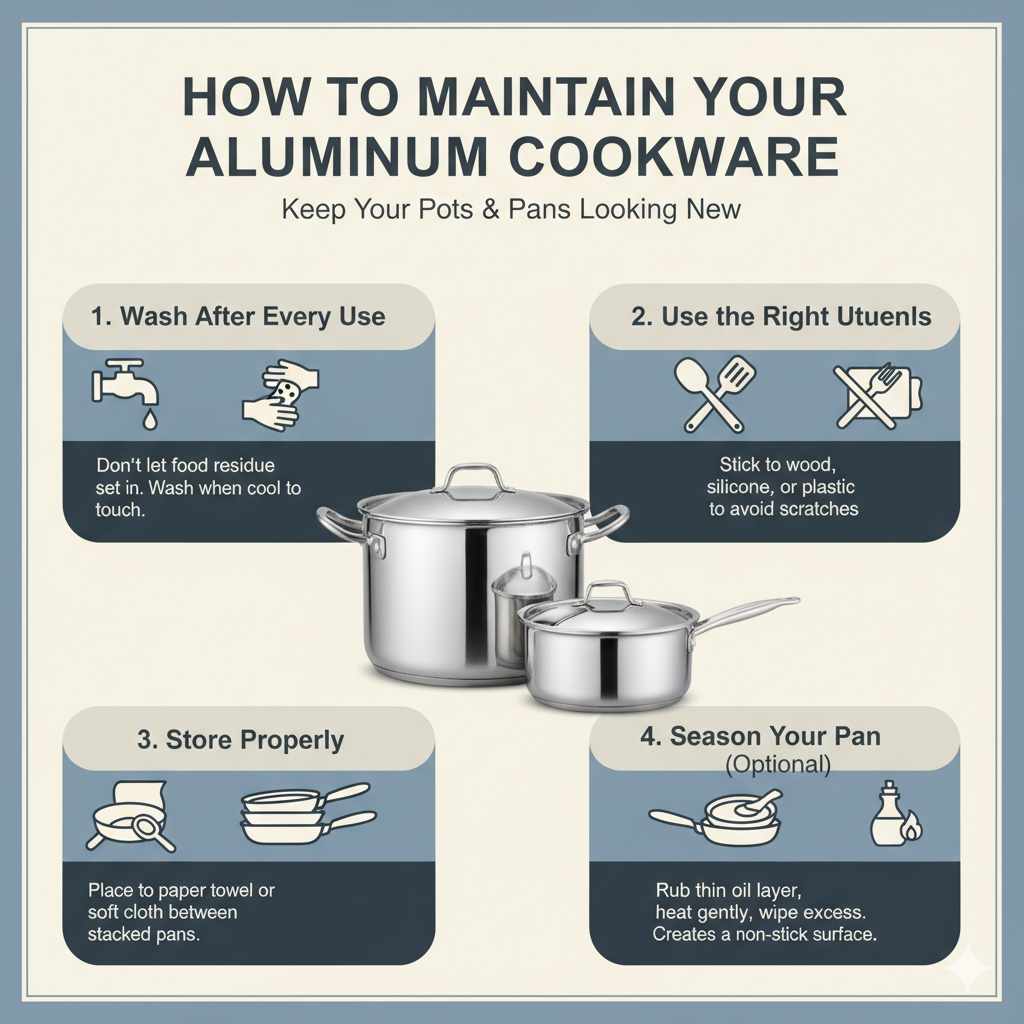
How to Maintain Your Aluminum Cookware
Once you’ve got your pots and pans looking great, you’ll want to keep them that way. Proper maintenance is like getting regular oil changes for your car—it prevents bigger problems down the road.
- Wash After Every Use: Don’t let dirty pans sit. Wash them as soon as they are cool enough to handle. This prevents food residue from setting in.
- Use the Right Utensils: Stick to wood, silicone, or plastic utensils to avoid scratching the inside of the pan.
- Store Properly: If you stack your pans, place a paper towel or a soft cloth between each one to prevent scratches.
- Season Your Pan (Optional): While not as common as with cast iron, you can season an aluminum pan to create a more non-stick surface. To do this, wash and dry the pan completely. Rub a thin layer of cooking oil on the inside, then heat it on a medium-low burner for a few minutes. Let it cool, wipe out the excess oil, and it’s ready.
Frequently Asked Questions (FAQ)
Is it safe to cook in stained or discolored aluminum pots?
Yes, it is generally safe. The discoloration is a natural reaction of the metal and is not harmful. However, cleaning it helps your cookware look better and can prevent any metallic taste from transferring to very sensitive foods.
Why did my aluminum pan turn black in the dishwasher?
Harsh dishwasher detergents are highly alkaline, which reacts with the aluminum and causes it to oxidize rapidly. This creates a dark, chalky layer. This is why you should always hand wash aluminum cookware.
Can I use steel wool to clean a badly burnt aluminum pan?
You should never use steel wool on aluminum. It is a soft metal, and steel wool will leave deep, permanent scratches. Instead, use a baking soda paste and a non-abrasive scrubber.
How can I make my old aluminum pans shiny again?
The boiling method with cream of tartar is excellent for restoring shine. For the outside, you can make a paste of cream of tartar and water, apply it, let it sit for 10 minutes, and then buff it off with a soft cloth. This will polish the metal and bring back its luster.
Is cleaning with vinegar bad for aluminum?
No, cleaning with a diluted vinegar solution (as described in our method) is perfectly safe. The mild acid is just strong enough to remove the alkaline stains without damaging the pot itself. You should avoid long-term soaking in pure vinegar, but the boiling method is quick and effective.
What’s the difference between aluminum and anodized aluminum?
Anodized aluminum has been electrochemically treated to create a much harder, more durable, and corrosion-resistant surface. It’s less reactive than plain aluminum and often has a darker, matte finish. The cleaning methods here are for standard aluminum; always check the manufacturer’s instructions for anodized cookware.
Conclusion: Your Cookware, Restored and Ready
There you have it. Cleaning those dull, stained aluminum pots and pans is a simple job anyone can handle. You don’t need harsh chemicals or a lot of elbow grease—just a little patience and some basic kitchen staples.
By understanding why your pans get discolored and by using the right, gentle method, you can keep your cookware performing well and looking great for years to come. It’s all about proper maintenance, whether you’re in the garage or the kitchen. Now you can get back to cooking with confidence, knowing your equipment is in top condition.