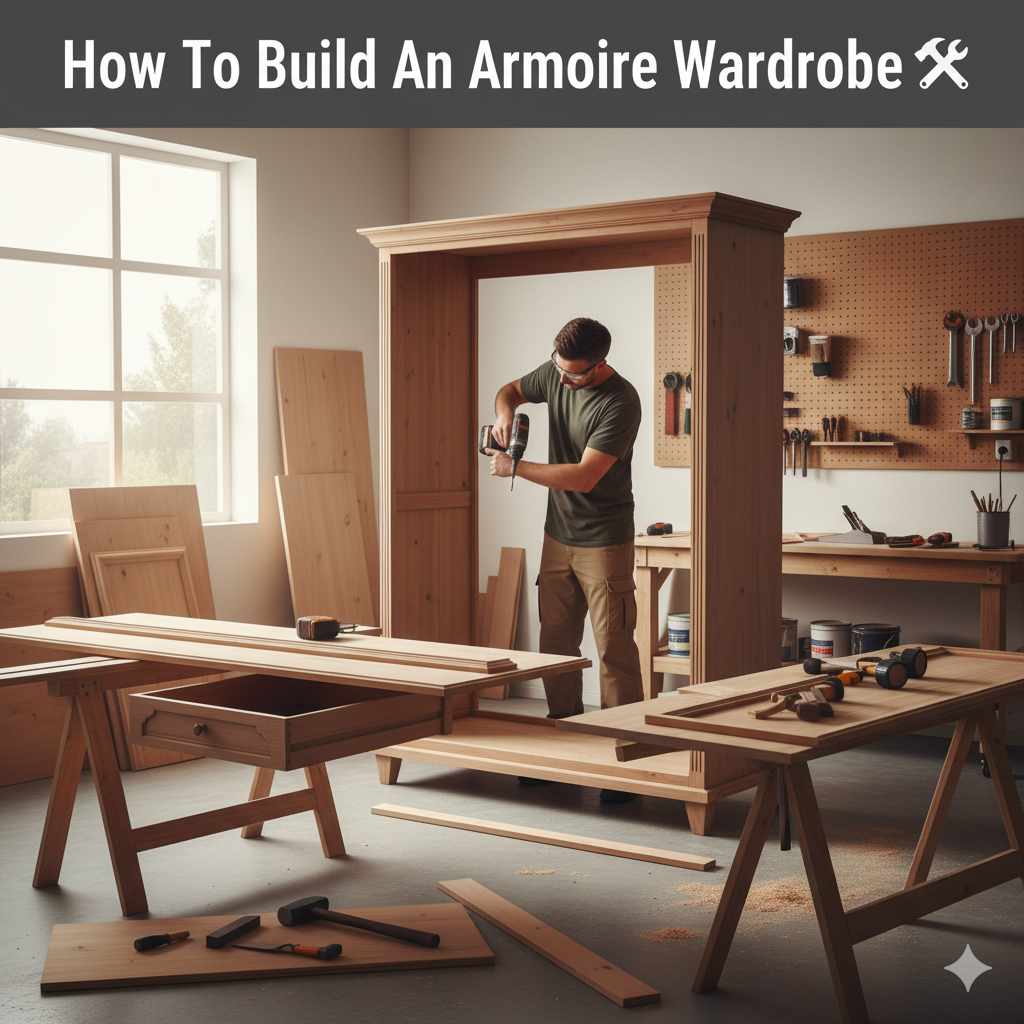
Learn exactly how to build an armoire wardrobe this weekend. This guide breaks down building a sturdy, stylish armoire into simple, step-by-step actions perfect for beginners, ensuring you end up with custom, functional storage for your clothes.
Do you dream of custom storage but dread opening those big, expensive furniture catalogs? Many homeowners find standard closets just aren’t big enough or don’t fit their style. Building your own armoire wardrobe seems tough, right? It doesn’t have to be! With simple tools and a clear plan, you can construct a beautiful, strong piece of furniture that fits your space perfectly. We promise to walk you through every step, keeping things easy and safe. Let’s unlock your inner carpenter and tackle this rewarding project together.
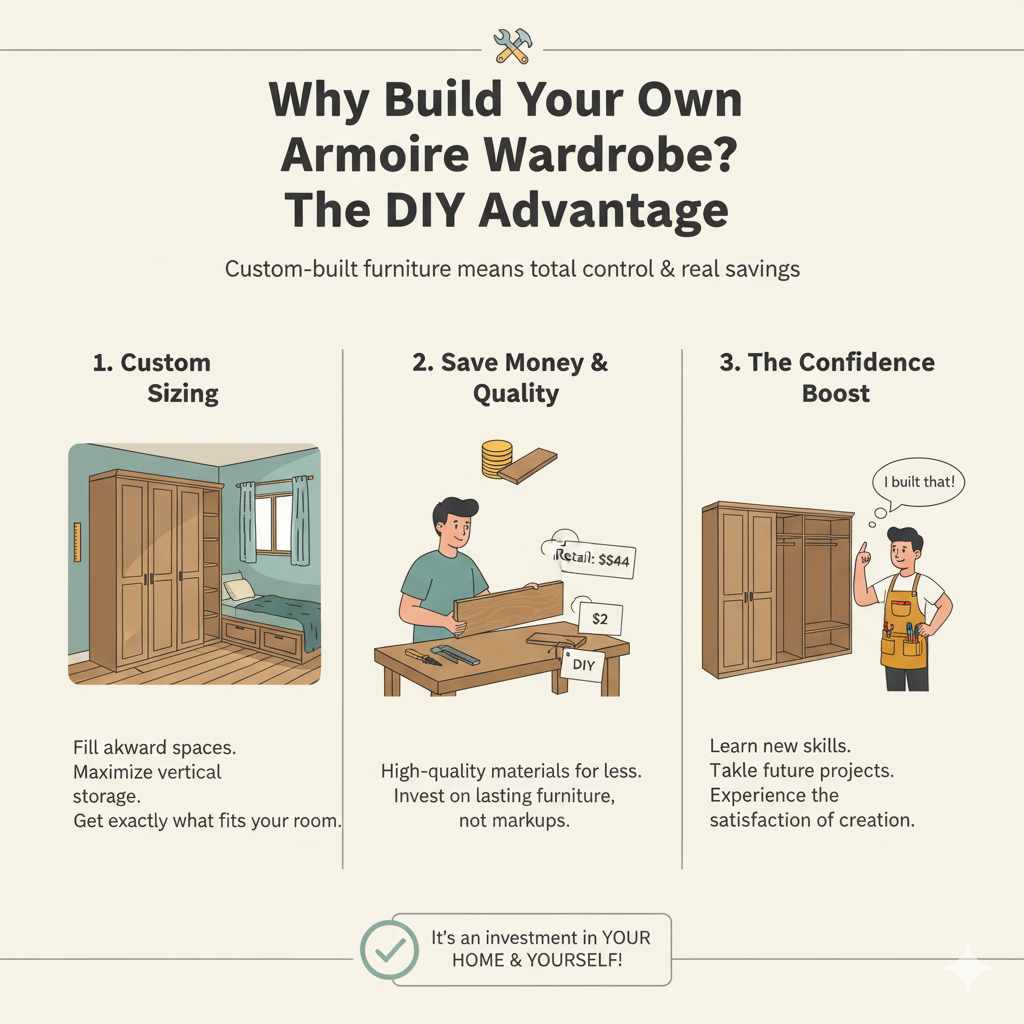
Why Build Your Own Armoire Wardrobe? The DIY Advantage
When you buy furniture off the shelf, you often have to compromise. Maybe the depth is wrong, or the finish doesn’t match your bedroom exactly. Building an armoire wardrobe yourself flips the script. You gain total control over size, materials, and style. It’s an investment in both your home and your skills.
Custom Sizing for Any Room
Rooms are weirdly shaped, and sometimes you have an awkward nook that regular furniture won’t fill. An armoire built by you perfectly fills that space. Think about maximizing vertical space—something store-bought units often forget to do.
Saving Money (Without Sacrificing Quality)
While the initial cost for wood and hardware adds up, building high-quality pieces often costs significantly less than buying comparable solid-wood furniture from high-end retailers. You choose the material grade, focusing your budget where it matters most.
The Confidence Boost
Finishing a big project like an armoire is incredibly satisfying. You’ll learn valuable skills that make future home repairs or upgrades much less intimidating. You’ll look at that piece every day and know, “I built that!”
Phase 1: Planning and Preparation—The Blueprint for Success
In construction, the rule is simple: Measure twice, cut once. This planning phase is the most crucial part of learning how to build an armoire wardrobe. Skip this, and you’ll be fixing mistakes later.
Step 1: Design and Dimensions
Before touching any wood, decide what you need inside. Are you hanging long dresses, or do you need more shelves for folded sweaters?
- Determine Footprint: Measure the exact height, width, and depth where the armoire will sit. Leave a few inches of breathing room around the sides for door swings or wall settling.
- Interior Layout: Sketch out the inside. A common, effective layout includes a high hanging rod on one side and shelving or drawer space on the other.
- Door Style: Will you use standard hinged doors, or maybe sliding doors if space is tight? Hinged doors are easier for beginners.
Step 2: Choosing Your Materials
The wood you select affects weight, cost, and how easy it is to work with. For a beginner building a large piece like an armoire, stability is key.
| Material Option | Pros | Cons | Best For |
|---|---|---|---|
| Plywood (Cabinet Grade) | Stable, avoids warping, lighter than solid wood. | Edges need careful finishing (edging tape or veneer). | The main carcass (body) of the armoire. |
| Solid Wood (Pine, Poplar) | Looks fantastic, easy to sand and finish. | Can warp with humidity changes, more expensive. | Doors, face frames, and trim details. |
| MDF (Medium Density Fiberboard) | Very smooth finish for painting, inexpensive. | Very heavy, sensitive to water/moisture. | Internal fixed shelves where weight isn’t an issue. |
Step 3: Gathering Essential Tools
You don’t need a professional shop, but a few key tools make the job safe and repeatable. Always check resources like the OSHA safety guidelines before operating power tools.
- Measuring & Marking: Tape measure, carpenter’s square, pencil.
- Cutting: Circular saw (with a good guide rail for straight cuts) or a table saw if available. Miter saw for perfectly square cuts on trim.
- Assembly: Power drill/driver, clamps (essential for holding pieces while glue dries), sandpaper (various grits).
- Joinery: Kreg Jig (Pocket hole jig) – highly recommended for strong, hidden joints for beginners.
Phase 2: Cutting and Assembling the Carcass (The Box)
The carcass is the main, sturdy box that holds everything. Precision here means the doors will line up later.
Step 4: Cutting the Panels
Based on your plan, cut your side panels, top, bottom, and any fixed internal dividers. Remember, if using plywood, account for the thickness of the material in your overall measurements.
Pro Tip: If you are not completely comfortable cutting large sheets of plywood perfectly straight, many large home improvement stores will make the main cuts for you if you bring in your cut list. This is a huge time-saver and accuracy booster!
Step 5: Building the Base and Sides
Start by creating a solid base structure. Often, it’s easier to build a small toe kick or base frame that lifts the entire unit slightly off the floor. This prevents the bottom panel from sitting in any potential moisture.
- Attach the bottom panel to the two vertical side panels using strong wood glue and screws (pocket holes work best here).
- Ensure every connection is perfectly square using your carpenter’s square. A wobbly or skewed box leads to door problems later.
- Attach the top panel to complete the basic rectangular box. Clamp everything tightly and let the glue cure fully before moving on.
Step 6: Installing Fixed Interior Components
Now, we add the internal structure that gives the armoire its function.
If your design includes a fixed central divider or fixed shelves, install them now. Always use pocket holes or dado joints for internal shelves. Screwing directly through the side panels is fast, but it looks messy if you ever decide to remove the shelf.
- Mark the exact locations for the fixed shelves on the interior faces of the side panels before drilling.
- Install the vertical divider first, ensuring it is perpendicular to the top and bottom.
- Install any fixed shelves that help square up the carcass and provide structural rigidity.
Step 7: Attaching the Back Panel
The back panel (usually thin 1/4-inch plywood) is critical. It keeps the entire cabinet from twisting or racking (becoming parallelogram-shaped).
Lay the unit face-down on a clean workspace. Apply a thin bead of glue around the entire perimeter where the back panel will sit. Place the back panel on top and secure it using small brad nails or short wood screws, making sure the carcass is perfectly square before you finish nailing it down. This final squaring step is non-negotiable for professional results.
Phase 3: Constructing the Doors and Face Frame
The doors are what everyone sees! High-quality doors make a big difference in how professional your final armoire looks.
Step 8: Building the Face Frame (Optional but Recommended)
A face frame is a border made of solid wood strips glued and screwed around the front edges of the carcass opening. This covers the rough edges of your plywood and gives you a solid surface to attach hinges to.
Cut your face frame stiles (vertical pieces) and rails (horizontal pieces) to fit the front opening. Assemble the frame with glue and pocket screws first. Once assembled, attach the frame to the front of the carcass using glue and screws driven from the inside of the carcass out into the frame.
Step 9: Building Reliable Armoire Doors
For a beginner, building durable shaker-style doors is often the best route. This involves building a frame around a flat center panel. This method allows the center panel to expand and contract naturally with humidity without cracking the door structure.
Measure the opening: subtract about 1/8 inch from the combined height and width to account for hinge set-in and door gaps (usually 1/16th of an inch gap per side).
- Cut your door rails and stiles (the four surrounding pieces).
- Rout or cut grooves (dadoes) into the inside edge of the rails and stiles to hold the center panel securely.
- Assemble the door frame using glue and pocket screws or dowels. Slide the center panel into the grooves as you connect the final pieces.
Phase 4: Installing Hardware and Finishing Touches
Hardware makes the piece functional. Take your time here; sloppy hinge installation is the number one giveaway of a beginner build.
Step 10: Mounting the Hinges
For modern freestanding armoires, you will likely use European-style (or “cup”) hinges. These are adjustable and easy to install if you use a template.
- Determine Hinge Type: Overlay (hinge covers the edge of the door frame) or Inset (door sits flush inside the frame). Inset doors look stunning but require greater precision.
- Drill Cup Holes: Use a Forstner bit designed for your specific hinge cup size (usually 35mm) to drill the shallow hole into the back of the door where the hinge mounts.
- Mount to Carcass: Secure the mounting plates to the inside of the armoire face frame or side panel, following the hinge manufacturer’s instructions for spacing. Attach the doors to the plates.
Step 11: Hanging the Doors and Getting the Gaps Right
This step requires patience. Once the doors are loosely attached, you adjust them using the screws on the European hinges.
Start with the bottom hinge screw (depth adjustment). Then adjust the middle screw (side-to-side alignment). Finish with the top hinge screw (up/down leveling).
A good goal is a consistent 1/16-inch gap all the way around the doors. Even if the interior construction isn’t perfect, well-adjusted doors hide minor flaws spectacularly. For more complex adjustments, consult a guide on hinge installation, such as those found on trusted woodworking resource sites.
Step 12: Installing Shelving, Rods, and Drawers (If Applicable)
If you are adding adjustable shelves, install shelf pins into pre-drilled holes—many woodworkers use a template guide to drill perfectly straight rows of holes for this step.
For hanging rods, ensure they are installed level and securely anchored into the cabinet sides or dividers. If you added drawers, this is the time to install the drawer slides and fully assemble and fit the drawer boxes into the unit.
Step 13: Final Sanding and Finishing
The finish protects your work and defines the style. Since this is a large piece, finishing it before bolting it into its final spot is smart.
- Sand Everything: Start with 100 or 120-grit sandpaper to smooth out any rough spots. Move up to 180-grit, and finish with 220-grit for a silky-smooth surface. Wipe down constantly with a tack cloth to remove all dust.
- Apply Stain or Paint: If staining, apply the stain according to the can directions, wiping off excess promptly. If painting, apply a quality primer first.
- Seal It: A clear coat (polyurethane or lacquer) is essential for durability, especially on high-touch areas like door edges and handles. Apply thin, even coats, lightly sanding with very fine (320-grit) paper between coats for the best result.
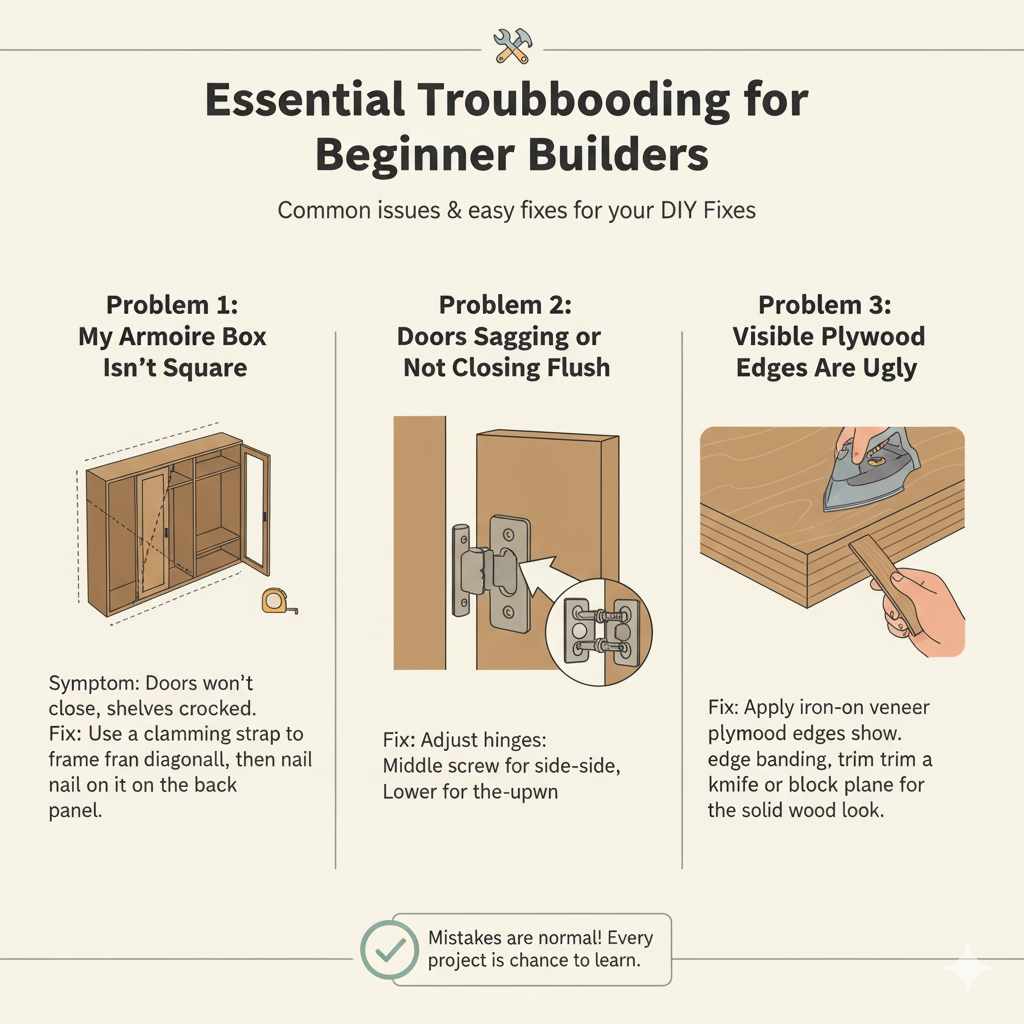
Essential Troubleshooting for Beginner Builders
Something never goes perfectly the first time. That is normal! Here are common issues beginners face when learning how to build an armoire wardrobe and how to fix them easily.
Problem 1: My Armoire Box Isn’t Square
Symptom: Doors won’t close properly, or the internal shelves are slightly askew.
Fix: If the back panel is not yet attached, gently push the longer diagonal corners until the base corners measure the same (use your tape measure diagonally from opposite corners). Then, nail the back panel on while holding the square shape. If the back is already on, you might need to gently twist the frame while applying pressure to the corners—a clamping strap around the whole open box can sometimes pull it back into square.
Problem 2: Doors Sagging or Not Closing Flush
Symptom: One door hangs lower than the other, or the gap between them is uneven.
Fix: This is almost always a hinge adjustment issue. Use the middle adjustment screw on the European hinge to move the door side-to-side until the gap is even. Use the lower screw to adjust the door up or down until the top edges line up perfectly. Do not mess with the screws holding the hinge plate to the frame until you have exhausted the adjustments on the door hinge itself.
Problem 3: Visible Plywood Edges Are Ugly
Symptom: The raw, layered look of the plywood sides shows on the front edge of your carcass.
Fix: Purchase pre-glued iron-on veneer edge banding (iron-on tape). You simply lay it over the raw edge, run a household iron over it to melt the adhesive, and trim the excess with a block plane or utility knife. This instantly gives the edge a solid wood look matching your finish.
Frequently Asked Questions (FAQ) About Building Wardrobes
Q1: How much carpentry skill do I need to build an armoire?
A: You need basic beginner skills: safe operation of a drill, measuring accurately, and understanding the use of wood glue. A pocket hole jig greatly simplifies strong joinery, leveling the skills required for success.
Q2: What is the standard depth for an armoire that holds clothes?
A: For standard hangers (like shirts and jackets) to hang without hitting the doors, the interior hanging depth should be at least 24 inches. If you are using European hinges, which require the hinge plate to mount slightly inside the door edge, aim for a total cabinet carcass depth of 25 to 26 inches.
Q3: Should I build the armoire in one piece or in sections?
A: For beginners, building the armoire in one single, large box is often easier, provided you can move the finished piece into the room. If your armoire is very tall or wide (over 6 feet without support), consider building it in two halves—a top storage section and a bottom base—and joining them securely once in place. This makes moving it much easier.
Q4: What size wood thickness should I use for the doors?
A: For doors, 3/4-inch thick material (like cabinet-grade plywood or solid wood panels) is standard. This thickness provides enough heft so the door doesn’t feel flimsy while remaining light enough for the hinges to manage easily.
Q5: How do I ensure the wood doesn’t warp after I finish it?
A: Wood moves with moisture. To minimize warping, use high-quality, stable sheet goods like cabinet-grade plywood for large panels rather than solid wood planks. When finishing, always seal all six sides of the doors and panels (front, back, all four edges), as this equalizes moisture absorption from the air.
Q6: Are there specific safety considerations when building large furniture?
A: Yes. Always ensure tall units are secured to the wall studs once placed, especially if children are in the house, to prevent tip-overs. Also, when cutting large panels, use a helper or specialized clamps to support the wood, preventing kickback or uncontrolled movement of heavy stock.
Conclusion: Your Custom Storage Awaits
Learning how to build an armoire wardrobe might sound like something reserved for seasoned professionals, but as we’ve walked through, it’s really about breaking a big task into manageable, smaller steps. You planned your needs, built the stable core (the carcass), crafted strong doors, and installed hardware with precision. That satisfaction you feel when you slide open those perfectly aligned doors for the first time? That’s the reward of DIY furniture building.
Don’t let complex diagrams scare you away. Remember to work patiently, measure carefully, and rely on strong glue alongside your fasteners. With practice, you’ll find that building custom furniture not only solves storage problems but adds real value and character to your home. Go ahead, measure that wall space—your beautiful, personalized armoire is waiting for you to build it!