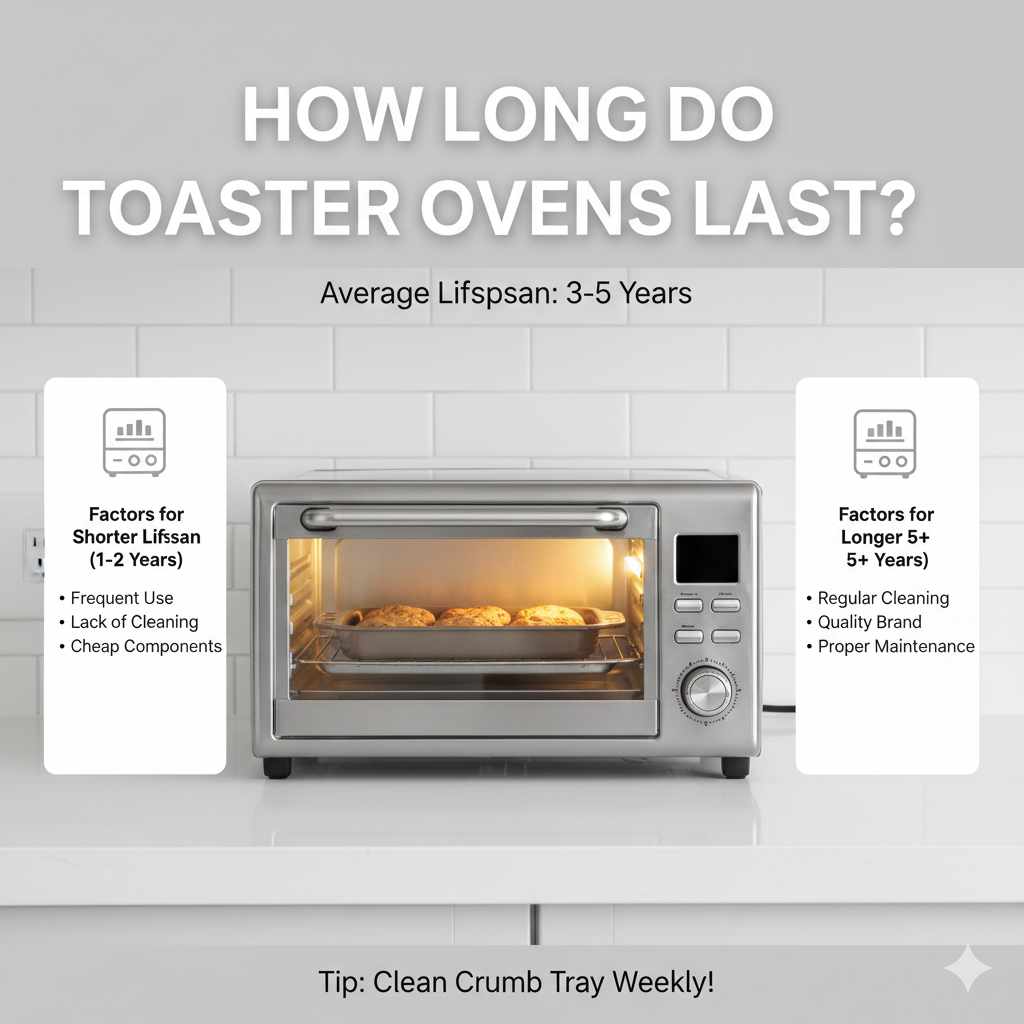
On average, a well-maintained toaster oven lasts between 5 to 10 years. Reliability heavily depends on the quality of the initial purchase, how often you use it, and the simple cleaning steps you take. This guide breaks down the lifespan factors and what signs mean it’s time for a safe replacement.
When you buy a small kitchen appliance, you want it to be a reliable helper, not a temporary tool. Many of us use our toaster ovens almost daily—for toast, reheating leftovers, or even small baking jobs. It can be frustrating when that trusty little box suddenly stops heating evenly or simply won’t turn on anymore. You might wonder, “What is the average lifespan for this thing?”
That is a fair question. Unlike big appliances like refrigerators, toaster ovens don’t come with easy-to-find lifespan estimates. Don’t worry, though! As someone who loves making sure our everyday tools last as long as possible, I’m here to demystify this for you. We will look at what affects their life, the warning signs they give before they quit, and simple tips to give your current one extra years. Let’s get your toaster oven running smoothly for years to come!
Understanding the Average Toaster Oven Lifespan
When we talk about kitchen appliances, “lifespan” isn’t a fixed number. It’s a range influenced by several key factors, much like how often you change your car’s oil impacts its engine life. For a toaster oven, the general ballpark for dependable service is 5 to 10 years.
However, seeing one last 12 or 15 years isn’t unheard of, especially with quality units that see light use. Conversely, a very cheap model used several times a day might only last 3 or 4 years before giving up. The secret lies in understanding the variables.
Factor 1: Build Quality and Brand Reputation
The biggest indicator of longevity is the initial quality. Think about it like buying a vehicle: a premium model built with robust heating elements and tougher casing will generally outlive a budget model.
- High-End Models (Convection/Air Fryer Combos): These often use better heating elements and components that handle higher, more frequent use better. They might cost more upfront but usually hit the 8-to-10-year mark reliably.
- Basic Models: These are designed for the most essential tasks. While great for simple toasting, their internal wiring and timers might wear out faster, sometimes clocking in closer to the 5-year average.
Factor 2: Frequency of Use
This might seem obvious, but it’s crucial. If you use your toaster oven just once a month for bagels, it will last much longer than a unit used three times a day for toast, snacks, and dinner reheating. Every time the machine cycles, the heating elements experience thermal stress, which slowly degrades them.
Factor 3: Internal Components and Reliability
The lifespan often comes down to the weakest link. What usually fails first?
- Heating Elements:These are the glowing rods. They break, short out, or lose efficiency over time due to constant heating and cooling cycles.
- Thermistor/Thermostat: This component tells the oven when it’s reached the right temperature. If it fails, the oven will either overheat drastically or never get hot enough.
- Mechanical Timers and Knobs: On older or cheaper models, the physical turning mechanisms can wear out, leading to inaccurate settings or the oven running indefinitely.
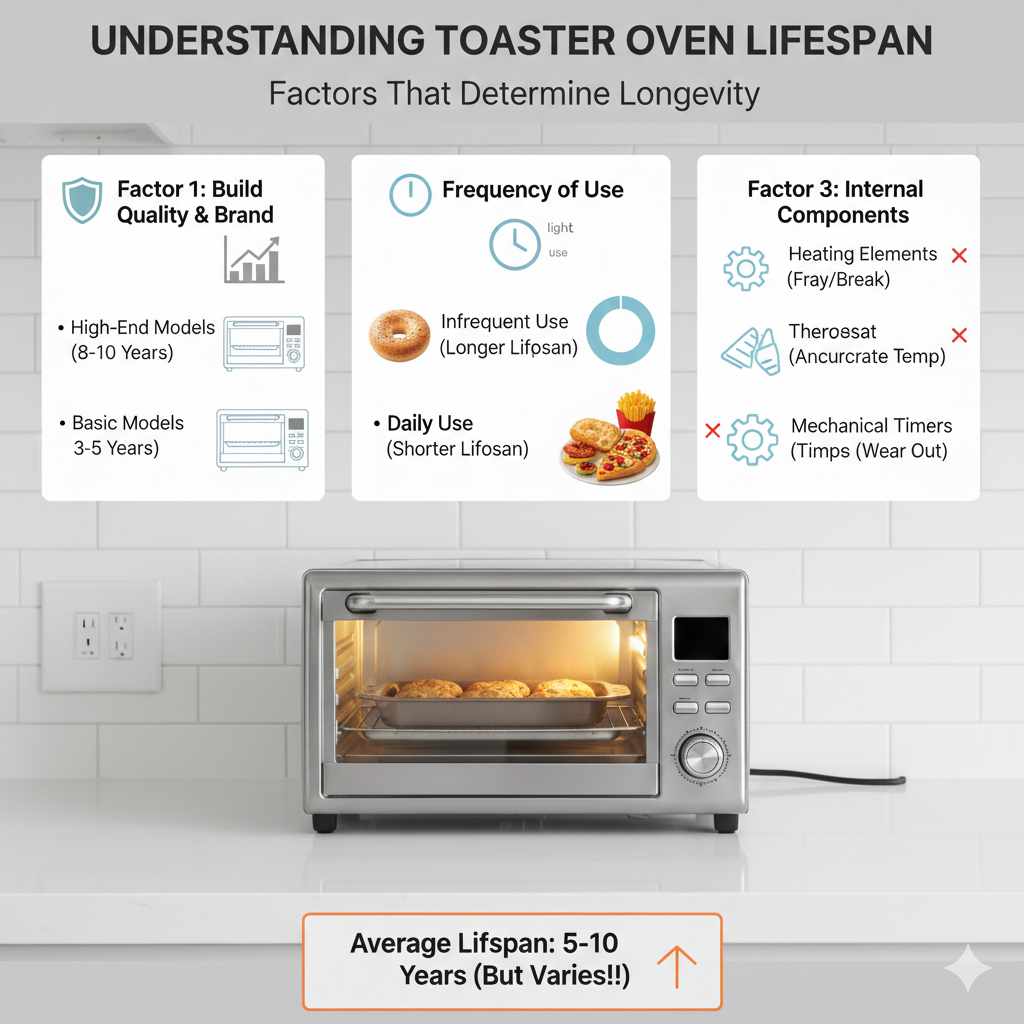
Table: Expected Lifespan Based on Use Frequency
This chart gives you a realistic peek at what you might expect based on how often you rely on your toaster oven. Remember, these are estimates!
| Usage Frequency | Typical Daily Cycles | Estimated Lifespan Range (Years) |
|---|---|---|
| Light Use | 1–2 times per week | 8 – 12+ years |
| Moderate Use | 3–5 times per week | 6 – 9 years |
| Heavy Use | Daily (3+ times) | 4 – 7 years |
Signs Your Toaster Oven Is Nearing the End of Its Life
Your toaster oven rarely just “dies” silently. It usually sends out trouble signals first. Recognizing these signs early can help you decide if a quick fix is possible or if it’s safer (and smarter) to replace the unit entirely. Safety, as with maintaining any electrical device, is always the top priority.
1. Inconsistent or Uneven Heating
This is perhaps the most common symptom. If one side of your toast is burnt while the other is barely warm, you have a heating element problem. A single dead element means the oven relies on the remaining ones, leading to poor cooking performance.
- What it means: A heating element is likely failing or has completely burned out.
- DIY Check: Plug it in and set it to “Broil.” Do all the visible heating elements glow orange? If one stays dark, that element is done.
2. The Smell of Burning Plastic or Wires
This is a serious warning that you should unplug the unit immediately. A mild, slightly acrid smell when you first turn it on might just be dust burning off old grease, which is normal. However, a persistent, strong odor of melting plastic or hot wire is a sign of internal electrical failure.
This often indicates that the insulation on the internal wiring is melting or that a component is shorting out. Continuing to use it risks a fire hazard. This kind of failure usually means replacement is necessary.
3. The Door Latch/Seal is Failing
The door seal is critical for maintaining the internal temperature. If the glass door doesn’t close tightly, the oven has to work much harder to reach the target temperature, wasting energy and stressing the heating components.
If you notice the latch mechanism is loose or the gasket around the door looks warped or cracked, efficiency drops severely, signaling significant wear and tear.
3. The Timer or Temperature Dial Stops Working Accurately
When you set the dial to 350°F, does it run cold? Or do you set it for 10 minutes, and it shuts off after 3? Mechanical and digital controls are complex. When they fail, troubleshooting them is often more expensive than buying a new oven. For example, if the internal thermostat is faulty, it won’t regulate the heat.
4. Excessive Smoke or Sparks
If you see visible sparks coming from inside the unit when it’s on, or if it produces dark, excessive smoke unrelated to the food you are cooking, unplug it immediately. This indicates a serious electrical short or a component failure—do not attempt to use or repair this yourself unless you are a qualified technician dealing with low-voltage electronics.
Extending Your Toaster Oven’s Life: Simple Maintenance Tips
You don’t need to be a mechanic to keep your toaster oven running smoothly. Basic, regular care dramatically increases the chances of hitting that 10-year mark. Think of these steps as the equivalent of washing and waxing your car—it protects the investment!
Tip 1: Clean It Regularly (The Most Important Step)
Grease, crumbs, and baked-on food are enemies of efficiency. They insulate the heating elements, forcing them to work harder, and they can smoke or burn onto the interior surfaces.
- Unplug First, Always: Never clean a plugged-in appliance. Wait until it’s completely cool.
- Empty the Crumb Tray: Most models have a sliding tray underneath. Pull this out frequently (weekly, if you use it daily) and dump the crumbs. This prevents them from burning onto the bottom heating elements.
- Wipe Down the Interior: Use a damp, soapy cloth (mild dish soap only). For tough spots, baking soda paste works wonders, but unlike the National Park Service guidelines for cleaning sensitive outdoor equipment which often suggest eco-friendly solutions, for cooking appliances, we stick to safe kitchen degreasers.
- Clean the Exterior Glass: Keeping the front viewing window clean helps you monitor cooking, reducing the need to open the door unnecessarily.
Tip 2: Use the Correct Cookware
Small appliances can be sensitive to what you put inside them. You wouldn’t put heavy cast iron in a tiny vehicle; similarly, don’t overload your toaster oven.
- Avoid Overcrowding: Make sure no food, foil, or cookware is touching the heating elements. Contact can cause short circuits or burn the contact points unevenly.
- Use Oven-Safe Materials: Only use glass, ceramic, or metal pans rated as oven-safe. Never use plastic or non-safe containers, which can melt or leach chemicals.
Tip 3: Allow for Cooling Down
Just like you shouldn’t immediately shut off a running engine, don’t slam the door and unplug the toaster oven right after a high-temperature bake cycle. Allow the unit to cool down naturally for a few minutes before handling or storing it. This reduces the thermal shock that can stress internal components.
Tip 4: Proper Ventilation and Placement
Toaster ovens produce a lot of heat. If you block the vents or place it too close to walls or cabinets, the heat traps inside, overheating the casing and the internal electronics year-round. Ensure there are at least a few inches of clear space around the sides and back, preventing premature failure of the plastic housing.
If you are researching best practices for appliance placement, understanding basic thermal dynamics helps. Just as a vehicle needs airflow over the radiator, your appliance needs space for heat dissipation.
Repair vs Replacement: Making the Smart Choice
When something goes wrong, the natural urge is to try and fix it yourself, especially if you like saving money. However, with small electrical appliances, the repair landscape is tricky. Here is a straightforward guide to help you decide whether to call a technician or head to the store.
When Repair Might Be Worth It (The Easy Fixes)
If the issue is external or very simple, a repair might be cost-effective:
- Replacing a Broken Rack or Tray: These parts are usually inexpensive and easy to order directly from the manufacturer or through third-party parts suppliers.
- Cleaning the Heating Elements: If visible elements are coated in grime, deep cleaning might temporarily restore function until the element finally burns out.
- Door Seal Replacement: If the rubber or silicone seal is visibly damaged, sometimes a simple replacement gasket kit is available.
When Replacement is Strongly Recommended (The Safety Call)
If the problem involves the internal wiring, control board, or fundamental heating elements, replacement is nearly always the best and safest option. Repair costs often approach the price of a new, sometimes even better, model.
| Symptom | Likely Fault | Recommendation |
|---|---|---|
| Toast is burnt on one side only | Failing heating element | Replacement (usually not worth finding individual elements) |
| Smells like burning plastic | Internal wiring short or insulation break down | Immediate Replacement (Safety Concern) |
| Won’t turn on, no lights | Blown fuse or failed power cord | Check cord integrity; otherwise, Replacement |
| Digital screen flickering/unresponsive | Control board failure | Replacement |
Remember, many modern toaster ovens come with safety testing certifications. Tampering with internal electrical components voids any remaining warranty and creates a potential hazard. Unless you have specific experience with small appliance wiring, when in doubt, it’s time to buy new.
The Difference Between Toaster Ovens and Air Fryer Toaster Ovens
Today, many countertop appliances market themselves as “Toaster Ovens,” but they are actually multi-function air fryer/toaster oven combos. Their lifespan might differ slightly due to the added complexity.
Air Fryer/Toaster Oven combos have a convection fan that runs constantly during most functions other than simple toasting. This fan motor adds another point of potential failure:
- Added Wear: Constant fan usage translates to more operational hours on that specific component.
- Grease Buildup: The fan vents can easily get clogged with fine grease particles, which can cause the motor to strain or overheat if not cleaned meticulously.
Lifespan Comparison Snapshot
Generally, a dedicated, basic toaster oven might last slightly longer because it has fewer moving parts. A high-quality, multi-function combo unit, provided it’s used correctly and cleaned well, should still achieve the 7-to-10-year target, but the failure point might shift from the heating element to the fan motor.
Safety Check: When to Retire Your Unit Immediately
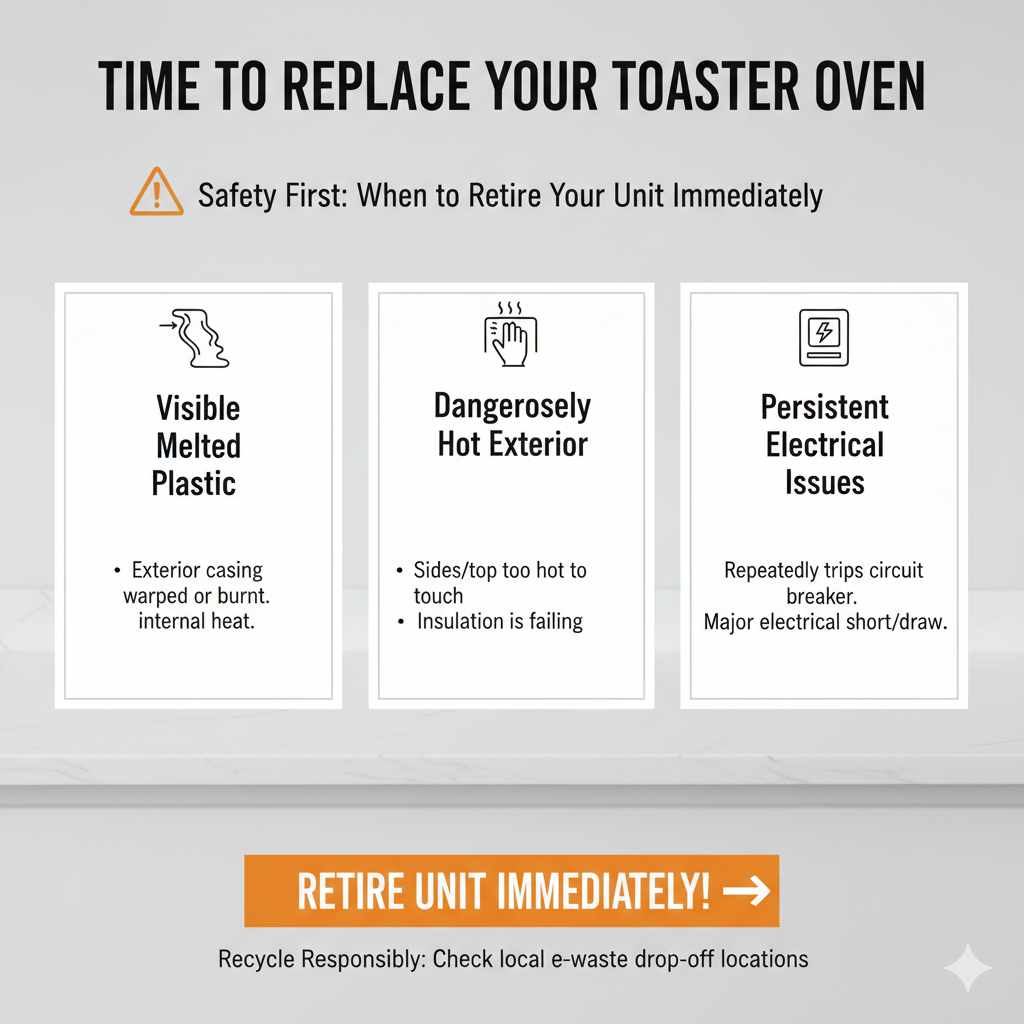
As a guide focused on practical, safe car maintenance, I apply the same caution to the kitchen. When an appliance shows these signs, it’s not about saving a few dollars; it’s about preventing accidents. Please retire the unit immediately if you notice:
- Visible Melted Plastic or Scorching: Any sign that the exterior casing has warped or shows burn marks means the internal heat has become uncontrollably high.
- If the Exterior Gets Dangerously Hot: The exterior will get warm, but if the sides or top are too hot to accidentally touch for a split second, the insulation is failing.
- Persistent Electrical Issues: Repeated tripping of your circuit breaker when using the oven is a sure sign of a major electrical draw or short circuit that the house wiring cannot safely handle during operation.
You can often safely recycle small appliances. Check with your local waste management authority for electronic waste (e-waste) drop-off locations, as many jurisdictions manage these responsibly, similar to how we recycle old car batteries.
Frequently Asked Questions (FAQ) About Toaster Oven Lifespan
Q1: Is it normal for my new toaster oven to smell weird the first time I use it?
A: Yes, this is very common. Most new ovens have manufacturing oils or dust coating the brand-new heating elements. Run the oven empty at a high temperature (like 400°F) for 15–20 minutes before you cook food in it. The initial smell should disappear quickly.
Q2: Can I replace the heating elements myself?
A: For absolute beginners, this is difficult and often unsafe. While parts are available, accessing the elements requires taking apart the casing, dealing with high-voltage wiring connections, and ensuring everything is secured properly when reassembling. We recommend replacement unless you have some experience with small appliance repair.
Q3: Why does my toast come out unevenly cooked?
A: This almost always means one or more of the heating elements has failed (gone dark). Since the remaining elements have to pick up the slack, the heat distribution becomes patchy. This is a major sign of aging within the element system.
Q4: Do convection toaster ovens last longer than standard ones?
A: Not necessarily longer, but differently. Convection models have an extra moving part (the fan). If the fan is high quality, it can circulate heat better, leading to slightly faster cooking times and perhaps less strain on the heating elements overall. However, the fan motor itself is an added point of failure.
Q5: Should I leave my toaster oven plugged in all the time?
A: While many people do, it’s safer practice to unplug small electronics when not in use, especially items that get extremely hot. If the internal thermostat fails while plugged in, the unit will keep heating until it poses a fire risk. Unplugging it removes this low-level risk completely.
Q6: What is the biggest mistake people make that shortens the oven’s life?
A: Not cleaning the crumb tray. Those crumbs burn onto the lower elements, causing them to overheat locally and fail much sooner than they should. Regular crumb removal is the single best thing you can do for longevity.
Conclusion: Keeping Your Countertop Reliable
Understanding how long do toaster ovens last is really about understanding maintenance and recognizing warning signs. With a typical lifespan hovering around five to ten years, these tireless helpers deserve a bit of attention to ensure they meet that high end of the scale. We want reliability in our vehicles, and we should expect the same from our kitchen gear.
By keeping the crumb tray empty, giving the unit proper ventilation, and refusing to use it when it starts smelling like melting wire, you are doing everything right. You gain confidence knowing you are extending the life of your appliance safely, saving money that would otherwise be spent on a replacement. Treat your toaster oven well, and it will keep providing perfectly crispy toast and quickly reheated meals for many years to come!