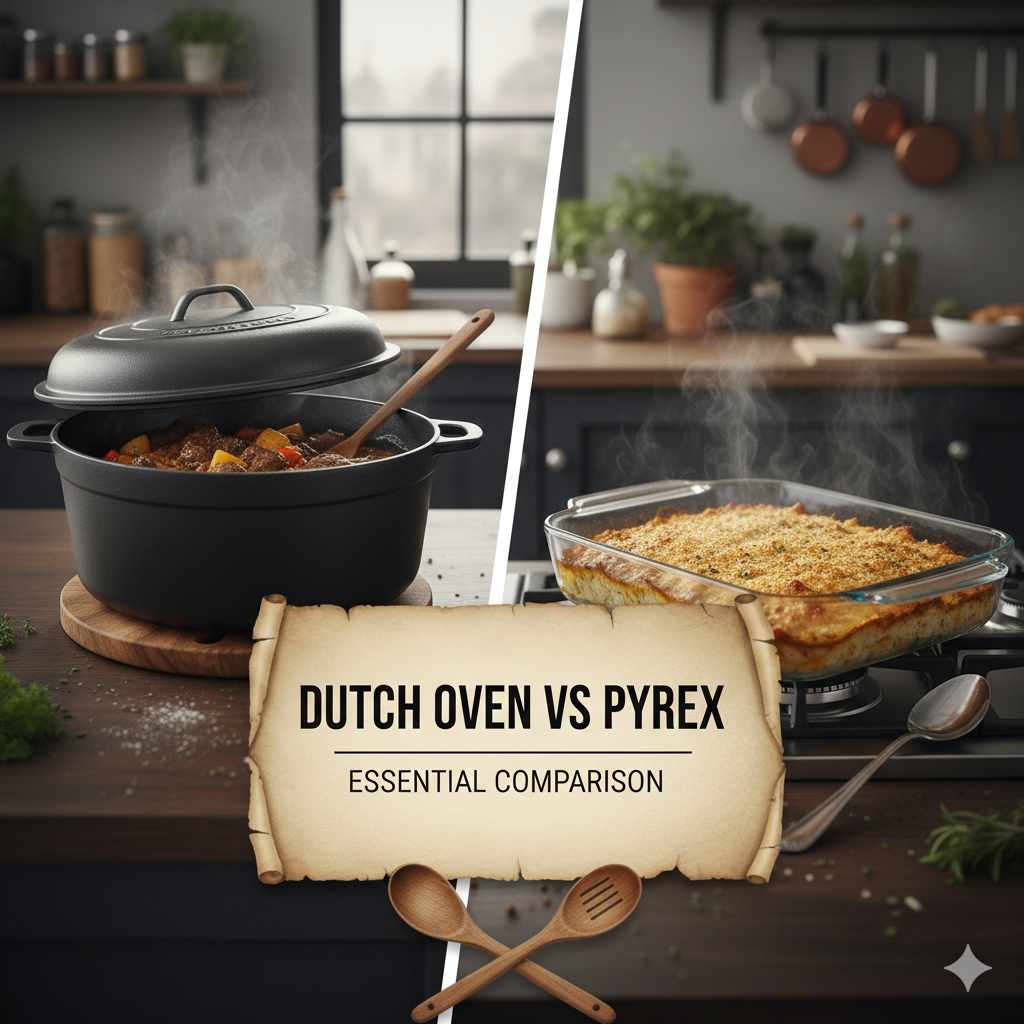
When comparing a Dutch oven versus Pyrex, the key difference is material: Dutch ovens (metal/cast iron) are superb for high-heat searing and even cooking on stovetops or in ovens, while Pyrex (glass) excels at reliable microwave use, freezer-to-oven versatility, and slow, even baking, though it handles direct heat sources poorly.
Choosing the right cookware can feel like a big decision, especially when you see all the great options available. If you’ve ever wondered whether you should grab that heavy, trusty cast iron Dutch oven or your clear, simple Pyrex dish, you are not alone. These two kitchen workhorses seem similar—they both hold food and go in the oven. But they handle heat very differently! Knowing which tool to use prevents burned food and cracked dishes. Don’t worry; this guide will break down exactly what each one does best in plain English. By the end, you’ll feel super confident picking the right pot for any recipe, every time.
Dutch Oven Vs Pyrex: Understanding the Basics
Before we compare them head-to-head, let’s make sure we know what we are talking about. Both Dutch ovens and Pyrex dishes are staples in many kitchens, but they are made from completely different stuff, which changes everything about how they perform.
What is a Dutch Oven?
A Dutch oven is a thick-walled cooking pot with a tight-fitting lid. Think of it as the rugged utility truck of the kitchen. They are traditionally made from thick cast iron. Today, you also see enameled cast iron, which has a smooth, colored coating over the iron.
Key Features of a Dutch Oven:
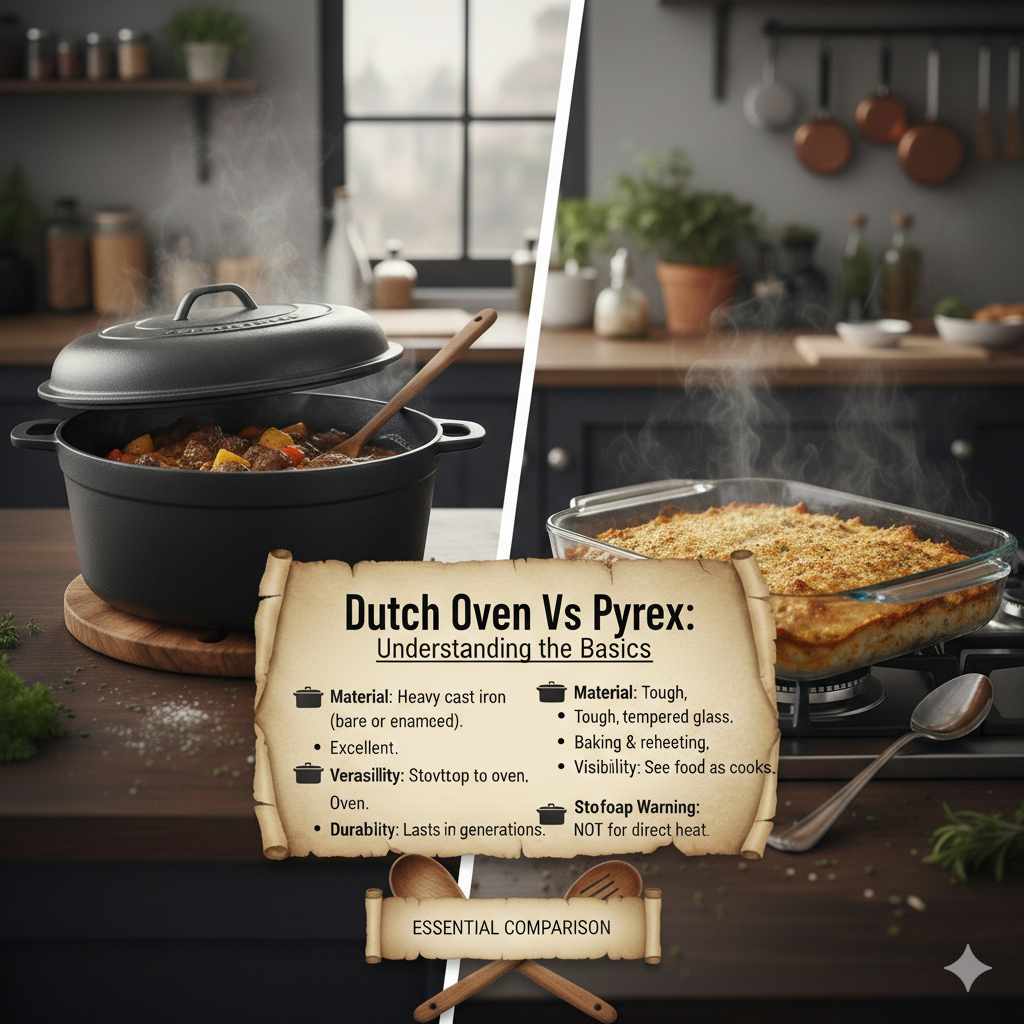
- Material: Heavy cast iron (bare or enameled).
- Heat Retention: Excellent. They hold heat extremely well and distribute it evenly across the entire surface.
- Versatility: Can go from the stovetop (great for searing meat) straight into a very hot oven.
- Durability: Built to last for generations if cared for properly.
What is Pyrex?
Pyrex is a brand name famous for its heat-resistant glassware. When people say “Pyrex dish,” they usually mean the borosilicate or tempered soda-lime glass baking dishes. They are known for being clear, which lets you peek at your food as it cooks.
Key Features of Pyrex:
- Material: Tough, tempered glass.
- Heat Handling: Great for baking and reheating, especially in the microwave. It heats gently and evenly.
- Visibility: You can see the edges and bottom crusts develop without lifting the lid or dish.
- Stovetop Warning: Pyrex is NOT designed for direct heat sources like gas burners or electric coils. Doing so can cause it to shatter.
The Head-to-Head Showdown: Dutch Oven vs Pyrex
When we put them side-by-side, the differences in material lead to very different uses. Think of the Dutch oven as your heavy-duty engine block and the Pyrex as your smooth, reliable transmission—both essential, but for different jobs.
Heat Management and Temperature Limits
This is where the materials truly shine or fail. Cast iron (Dutch oven) absorbs and radiates a huge amount of heat. Glass (Pyrex) heats up slower but holds that gentle oven heat very steadily.
Dutch Oven Heat Profile:
The Dutch oven heats slowly but gets incredibly hot and stays that way. This is perfect for achieving a deep, crusty sear on steaks or slow-cooking tough cuts of meat until they fall apart, often over many hours.
Pyrex Heat Profile:
Pyrex glass heats evenly, making it wonderful for casseroles, no-bake desserts that need setting, or baked pasta dishes. However, because glass expands when heated unevenly, it cannot handle the intense, focused heat of a stovetop burner. For safe use guidelines, always check the manufacturer’s limits, though generally, most Pyrex is safe up to around 450°F (232°C) when used properly in an oven, but rapid temperature swings are dangerous for glass cookware. For information on material safety in cooking, the U.S. Food and Drug Administration (FDA) provides guidelines on safe food contact materials.
| Feature | Dutch Oven (Cast Iron) | Pyrex (Glass) |
|---|---|---|
| Best For | Searing, deep frying, slow braising, bread baking. | Casseroles, lasagnas, layered bakes, reheating. |
| Stovetop Use | Yes (Excellent stability and heat transfer). | No (Risk of cracking/shattering). |
| Heat Retention | Excellent (Stays hot for a long time). | Good (Heats gently and evenly). |
| Weight | Very Heavy | Light to Moderate |
| Cleaning | Requires seasoning (if bare iron) or careful washing (if enameled). | Easy—Dishwasher safe and non-reactive. |
Cooking Techniques: Where They Excel
The best tool depends totally on what you are trying to cook. Think about the goal: Do you need intense heat, or do you need gentle, visible baking?
When to Choose the Dutch Oven (The Searing Champion)
If your recipe involves high heat, simmering for hours, or cooking on an open flame (like at a campsite), the Dutch oven is your go-to.
- Stovetop to Oven: You can brown your onions and chicken right on the burner, then immediately transfer the whole pot to the oven to finish cooking slowly. This traps all those tasty flavors (called fond) at the bottom.
- Deep Frying: The heavy cast iron maintains a steady oil temperature, which is crucial for crispy, non-greasy fried chicken or doughnuts.
- No-Knead Bread: The high, retained heat creates amazing oven spring and a professional-grade crust on homemade bread.
- Soups and Stews: The heavy walls prevent scorching when simmering for long periods.
When to Choose Pyrex (The Visibility Expert)
If your recipe needs even baking, you need to monitor what’s happening underneath, or you are using a microwave, Pyrex is the smart choice.
- Casseroles and Layered Dishes: Pyrex’s even heat reduces hot spots, meaning your lasagna cooks evenly from the center to the edges without burning the bottom.
- Desserts: Brownies, cobblers, and crisps benefit from the stable, moderate heat Pyrex provides, leading to a tender texture.
- Microwaving and Storing: Glass is non-reactive; it won’t stain or hold odors. You can cook, serve, and store leftovers all in the same dish easily.
- Checking Doneness: Being able to see the sides and bottom lets you know if the crust is golden brown or if liquid has soaked through without disrupting the cooking process.
Durability, Maintenance, and Safety
Even though both are tough, they require very different care routines. Knowing how to clean and store them keeps them working perfectly for years to come.
Caring for Your Heavy-Duty Dutch Oven
A Dutch oven is an investment. If you own bare cast iron (not the enameled kind), maintenance is crucial to prevent rust and keep your non-stick surface working.
Dutch Oven Essential Maintenance Steps:
- Seasoning (Bare Iron Only): This means baking thin layers of oil onto the iron to create a natural, protective, non-stick coating.
- Washing: Avoid soaking bare iron. Wash quickly with warm water and use a gentle scrubber. For stuck-on bits, use coarse salt and a dry cloth to gently scour the mess away. Never use harsh soap on a newly seasoned pan.
- Drying: Always dry immediately on the stovetop over low heat for a few minutes. This ensures no moisture hides anywhere, which causes rust spots.
- Oiling: Once dry, rub a tiny bit of cooking oil (like flaxseed or vegetable oil) onto the inside before storing.
Enameled Dutch ovens are much easier—they are essentially dishwasher safe (though handwashing is still recommended) and do not require seasoning. However, the enamel can chip if you drop it or use metal utensils aggressively.
Caring for Your Glass Pyrex
Pyrex is generally much easier to maintain. It’s non-porous, meaning it won’t absorb flavors or stains, and it cleans up beautifully.
Pyrex Essential Care Tips:
- Avoid Thermal Shock: This is the biggest danger. Never take a hot Pyrex dish and place it on a cold, wet surface (like a granite countertop). The sudden, uneven temperature change can cause the glass to stress and shatter. Always place hot glass on a wooden trivet, dry towel, or oven rack.
- Scratches: While durable, deep scratches from metal scrubbers can weaken the glass structure over time. Use plastic or silicone tools when cleaning.
- Freezing: Pyrex handles being moved from the oven to the freezer surprisingly well, but it’s best to let hot food cool a bit before freezing it in the glass container to minimize the temperature stress.
For understanding how different materials react to heat, you might find helpful resources relating to material science, such as those provided by university engineering departments, useful for understanding why thermal shock happens with glass.
Cost and Longevity Comparison
Let’s talk about the wallet impact. You usually pay for material quality and how long that material lasts.
The Investment Factor
In general, a quality cast iron Dutch oven (especially a well-known brand) is a significant upfront investment, often costing much more than a standard glass baking dish.
| Factor | Dutch Oven | Pyrex Dish |
|---|---|---|
| Initial Cost | High (Can range from $80 to $400+) | Low to Moderate (Typically $15 to $40) |
| Expected Lifespan | Generational (Can last 100+ years if maintained) | Long (Many years, but susceptible to shattering from misuse) |
| Repairability | Rust requires re-seasoning; chips in enamel are permanent damage. | Cannot be repaired if cracked or shattered. |
While a Dutch oven costs more upfront, its incredibly long lifespan and high versatility (stovetop + oven) often make its cost-per-use very low over decades. Pyrex is budget-friendly, but you might need to replace a broken dish more often than you would replace a cast iron pan.
Accessibility and Weight: Practical Considerations
Being a great cook isn’t just about the food; it’s about ergonomics—how easy the tool is to handle safely.
The Weight Challenge
This is often the deciding factor for everyday use. A 5-quart bare cast iron Dutch oven, when full of chili, can weigh over 15 pounds! This means lifting it in and out of a hot oven requires proper form and strength.
Pyrex is significantly lighter. Even a large 9×13 Pyrex dish filled with lasagna is much easier to move from the counter to the oven rack, which is a real benefit when speed or physical ability is a concern.
Accessibility in the Kitchen
Where can you use them? Think about your cooking setup.
- Outdoor Cooking/Camping: The Dutch oven is king here. Cast iron is durable enough to sit directly on hot coals or be hung over a fire. Pyrex should never leave the kitchen environment.
- Induction Cooktops: If you have an induction stove, you must use ferromagnetic material. Bare cast iron and enameled cast iron work perfectly. Glass (Pyrex) does not work on induction cooktops at all. (For more on induction cooking, check out guides on magnetic cookware compatibility.)
- Microwaves: Pyrex is ideal for quick reheating. Metal (cast iron) should never go into a microwave, as it causes electrical arcing and can damage the appliance or start a fire.
Step-by-Step: Deciding Which Cookware to Grab
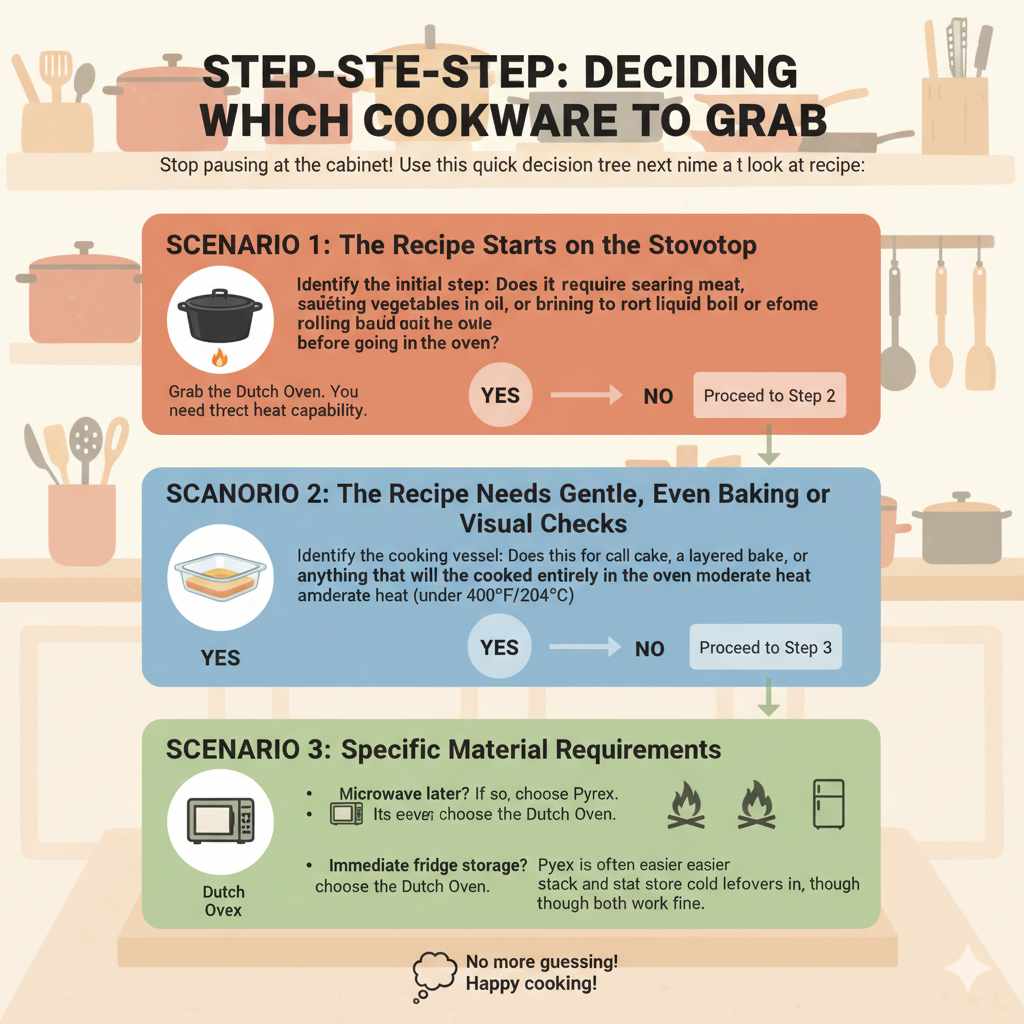
Stop pausing at the cabinet! Use this quick decision tree next time you look at a recipe:
Scenario 1: The Recipe Starts on the Stovetop
- Identify the initial step: Does it require searing meat, sautéing vegetables in oil, or bringing a liquid to a rolling boil before going into the oven?
- The Answer is Yes: Grab the Dutch Oven. You need the direct heat capability.
- The Answer is No (It’s just mixing ingredients): Proceed to Step 2.
Scenario 2: The Recipe Needs Gentle, Even Baking or Visual Checks
- Identify the cooking vessel: Does this call for a cake, a layered bake, or anything that will be cooked entirely in the oven at moderate heat (under 400°F/204°C)?
- The Answer is Yes: Grab the Pyrex. Its even heating and visibility are perfect here.
- The Answer is No (It requires long, slow braising or heavy searing): Proceed to Step 3.
Scenario 3: Specific Material Requirements
- Do you need to microwave it later? If so, choose Pyrex.
- Are you cooking over a campfire or on a gas burner? If so, choose the Dutch Oven.
- Is storage in the fridge immediate after cooling? Pyrex is often easier to stack and store cold leftovers in, though both work fine.
Frequently Asked Questions (FAQ) for Beginners
Q1: Can I put my Pyrex dish in a conventional oven if the recipe calls for a Dutch oven?
A: Generally, yes, if the temperature is moderate (under 400°F/204°C) and there is no direct heat source like a broiler directly over it. However, it won’t produce the same crust or heat retention that the heavy Dutch oven offers for slow cooks.
Q2: Can I use my Dutch oven on an induction cooktop?
A: Yes, almost always! Cast iron is ferromagnetic, making it one of the best materials for induction cooking because it heats up very effectively on those surfaces.
Q3: Is enameled cast iron or bare cast iron easier for a beginner?
A: Enameled cast iron is much easier. It requires no special seasoning, cleans up more like traditional non-stick cookware, and won’t rust if you accidentally leave it wet.
Q4: Which one is better for baking sourdough bread?
A: The Dutch oven is superior for sourdough. The heavy lid traps steam released from the dough, which keeps the crust soft early on, allowing the bread to expand fully before the crust hardens for that perfect, crispy exterior.
Q5: Can I use metal utensils in my Pyrex dish?
A: It’s best not to. While Pyrex is tough, metal utensils can cause tiny scratches on the surface, which can weaken the glass over time and make it more susceptible to breaking under stress or heat.
Q6: If I use a Dutch oven, do I still need to preheat it?
A: Yes, but differently than Pyrex. Instead of preheating for 10 minutes, a Dutch oven often needs 15–20 minutes on low/medium heat to fully absorb the heat evenly before you start cooking or searing.
Conclusion: Trust Your Tool for the Job
You now have a clear picture of the strengths of your kitchen gear. The debate of dutch oven vs pyrex isn’t about which one is “better” overall; it’s about which one is perfectly suited for the specific task at hand. If you need rugged, high-heat searing power, unrivaled heat retention for slow cooking, and stovetop flexibility, you reach for that heavy cast iron Dutch oven. If you need versatile baking, easy cleaning, microwave capability, and the ability to check on your bubbling casserole without uncovering it, your Pyrex dish is ready to perform.
By matching the material to the heat requirement—intense, direct heat for cast iron, and gentle, ambient oven heat for glass—you ensure safety, longevity for your cookware, and, most importantly, perfectly cooked meals every single time. Keep these guidelines handy, and you