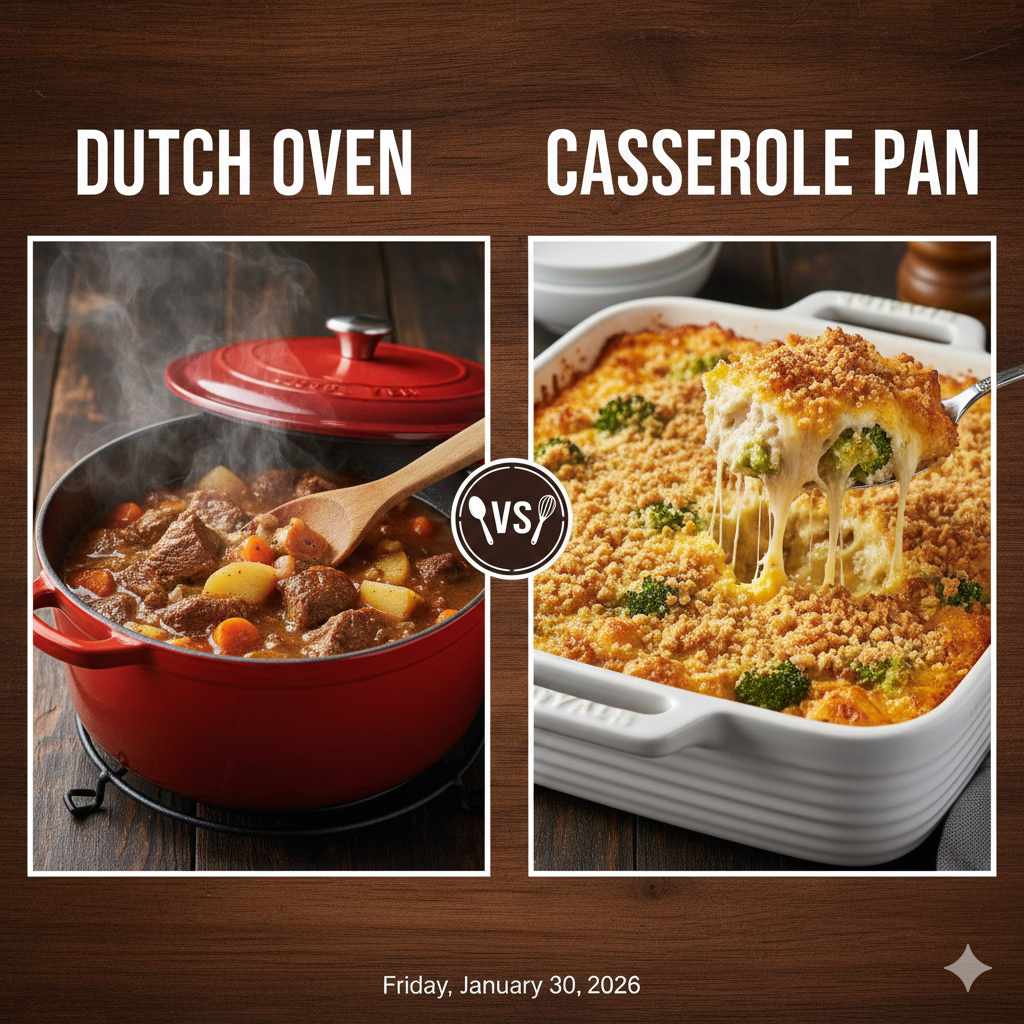
The best choice between a Dutch oven and a casserole pan depends on what you are cooking. A Dutch oven is better for slow cooking, searing, and baking bread due to its heavy lid and heat retention, while a casserole pan excels at even baking, layer dishes, and general oven use where deep walls aren’t needed.
It is easy to get confused when looking at heavy cookware. You see big, deep pots and maybe some rectangular baking dishes, and you wonder which one is truly the workhorse for your kitchen. Choosing the right tool makes cooking safer, easier, and often tastier. If you grab the wrong pan, your food might burn or cook unevenly. We’re here to clear up the confusion about the Dutch oven versus the casserole pan. Don’t worry; we will break down what makes each one special using simple terms. By the end of this guide, you will know exactly which one belongs in your shopping cart for your next meal.
Understanding the Contenders: Dutch Oven vs Casserole Pan
When we talk about cookware, we are talking about tools designed for specific jobs. Think of it like this: you wouldn’t use a rake to dig a deep hole—you need a shovel! Similarly, the Dutch oven and the casserole pan shine in different areas of the kitchen. Let’s look closely at what defines each piece.
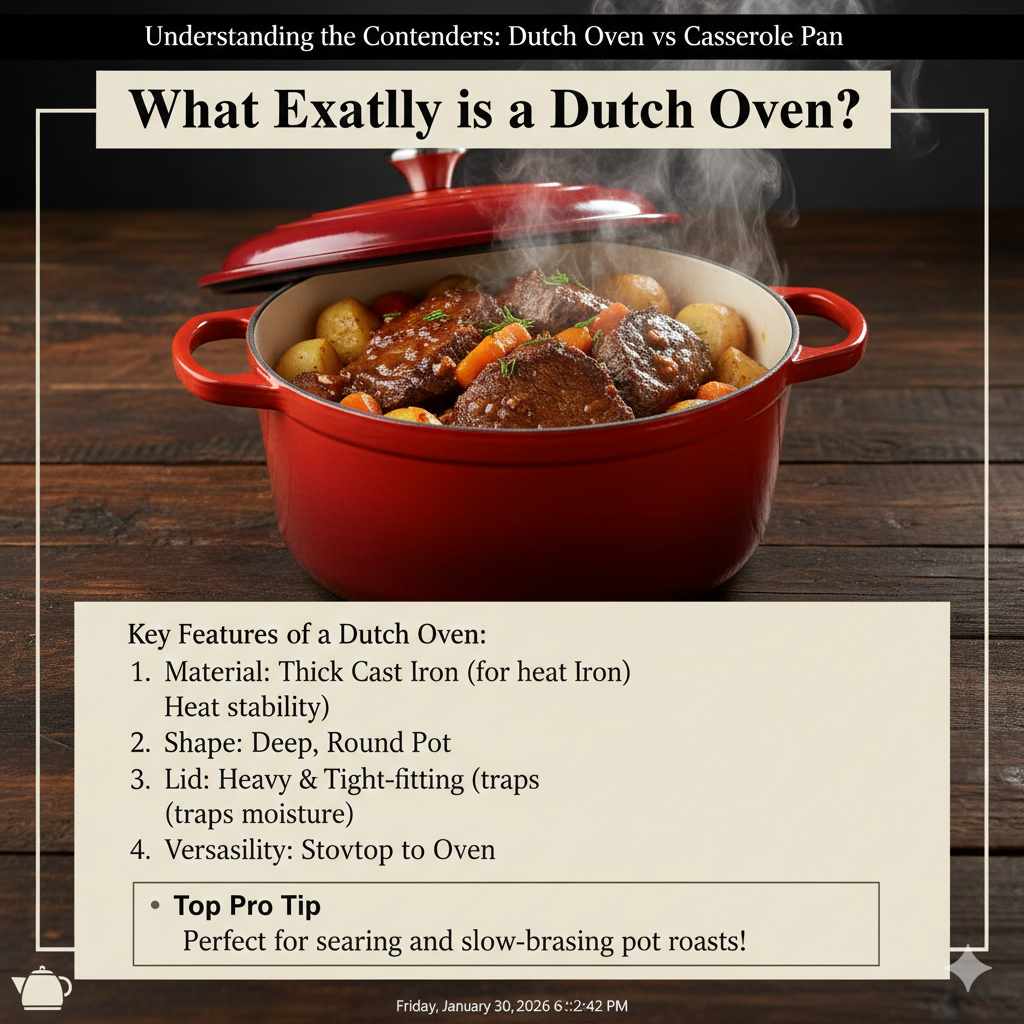
What Exactly is a Dutch Oven?
A Dutch oven is traditionally a very thick, heavy pot with a tight-fitting lid. These pots are usually made from cast iron, though you can find modern versions made from enameled cast iron or even heavy aluminum. Because they are so thick, they hold and distribute heat incredibly well. This stability is key!
Key Features of a Dutch Oven:
- Material: Almost always cast iron (enameled or bare).
- Shape: Deep, round pot, often called a “kettle” shape.
- Lid: Heavy, thick lid that traps moisture and heat perfectly.
- Versatility: Great for stovetop (searing, frying) and oven use (baking, braising).
The Dutch oven is fantastic because it can go from the stovetop directly into a hot oven. This is super handy for dishes that need to start with a sear but finish with a long, slow cook, like tender pot roasts.
What is a Casserole Pan (Baking Dish)?
A casserole pan, often just called a baking dish, is generally a shallower, wider receptacle, usually rectangular or oval. These pans are designed primarily for the oven. Their job is to evenly bake layered dishes, gratins, and, of course, casseroles.
Materials vary widely, but common choices include:
- Glass (like Pyrex): Allows you to see the browning edges.
- Ceramic/Stoneware: Excellent at holding steady, even heat.
- Metal (Aluminum or Stainless Steel): Good for faster cooking and crispier edges.
Casserole pans are built for slow, even heat from all sides (top, bottom, and sides) in the oven, making them perfect for dishes where you are mixing ingredients together before baking.
Dutch Oven Vs Casserole Pan: The Direct Comparison
Now that we know what they are, let’s put them side-by-side. This comparison will help you see which one fits better into your cooking routine. Think about what you cook most often. Do you love deep, rich stews, or do you prefer baked pasta dishes?
Heat Management and Retention
This is the biggest difference mechanically. Cast iron Dutch ovens are heat hogs. They take a while to warm up, but once they are hot, they stay hot, distributing that heat very evenly across the bottom and sides.
Casserole pans, especially glass or thin ceramic ones, heat up faster but might not hold the temperature as steadily as cast iron. This is usually fine because you aren’t typically searing on the stovetop with a casserole dish.
Depth and Shape
The depth allows the Dutch oven to handle large quantities of liquid without boiling over—think of simmering chili or making large batches of soup.
Casserole pans are shallower. This shallow depth is intentional! It allows moisture to evaporate slightly and helps the top layer of your dish get nicely browned and crispy, which is essential for lasagna or cheesy baked pasta.
The Lid Factor
The tight, heavy lid of the Dutch oven is its superpower. It locks in steam. This steam drips back down onto the food, keeping roasts unbelievably moist and tender—a process called braising. Most casserole pans do not come with heavy, sealing lids. If they have lids, they are usually lighter metal or glass meant for storage, not intense cooking.
To make this crystal clear, here is a table summarizing the key functional differences:
Comparison Table: Key Differences
| Feature | Dutch Oven | Casserole Pan |
|---|---|---|
| Primary Use | Stovetop to Oven (Searing, Braising, Deep Frying) | Oven Baking (Layered Dishes, Desserts) |
| Heat Retention | Excellent (Holds heat for a long time) | Good (More even, less intense retention) |
| Material Example | Thick Cast Iron (Enameled or Bare) | Glass, Ceramic, Thin Metal |
| Lid Function | Heavy and sealing; keeps moisture in. | Often no lid, or a light lid for covering/storage. |
| Shape Profile | Deep and round | Shallow and usually rectangular or oval |
When to Reach for the Dutch Oven: The Workhorse
If you want one piece of equipment that can do almost anything—and do it well—the Dutch oven is your dependable friend. It is the ultimate multi-tasker in the kitchen, especially when high, consistent heat transfer is required.
Best Uses for Your Dutch Oven
Think “slow, moist, and high heat.”
- Braising Meats: This is where the Dutch oven proves its worth. Sear a chuck roast on the stovetop to build flavor, then seal the lid and let it simmer slowly in the oven for hours. The trapped steam creates fork-tender results. This is similar to how certain professional kitchens use convection ovens for slow cooks.
- Baking Sourdough Bread: Many bakers swear by a Dutch oven for homemade bread. The superheated cast iron acts like a tiny, perfect steam oven, creating that beautiful, crackly crust we all love.
- Deep Frying: Because the walls are high and the cast iron holds heat so steadily, the oil temperature won’t drop drastically when you add cold food, leading to less greasy, perfectly cooked fried chicken or donuts.
- Stovetop Soups and Stews: Its ability to simmer evenly on the burner without scorching the bottom makes it perfect for chili or hearty vegetable soups.
For safety when lifting a Dutch oven, remember that cast iron retains heat longer than anything else. Always use thick oven mitts or even dry towels, as the handles will stay hot long after leaving the oven. Check safety guides from organizations like the National Safety Council regarding heat handling.
Pros and Cons of the Dutch Oven
Like any specialized tool, it has trade-offs.
Pros:
- Unbeatable heat retention and distribution.
- Extremely durable; lasts generations if cared for properly.
- Versatile: Safe and effective on stovetops, ovens, and even campfires.
- Ideal for one-pot meals where searing and simmering occur.
Cons:
- Very heavy, making it hard for beginners to lift or maneuver.
- Requires seasoning (if bare cast iron) or careful cleaning (if enameled).
- Can be expensive, especially high-quality enameled versions.
- The round shape isn’t always efficient for large, flat dishes like lasagna.
When to Choose the Casserole Pan: The Baker’s Best Friend
The casserole pan is your go-to when the goal is uniform heating across a wide, relatively shallow surface area, especially when you want a nice crust or topping.
Best Uses for Your Casserole Pan
If your recipe needs to fit neatly onto an oven rack and brown evenly on top, grab the casserole dish.
- Baked Pasta Dishes: Lasagna, baked ziti, or mac and cheese. The wide surface area ensures the noodles are evenly cooked and the cheese melts into that perfect bubbly topping, which is harder to achieve in a deep, narrow Dutch oven.
- Sheet Pan/Tray Bakes: While technically a sheet pan is different, casserole dishes excel at roasted vegetables or small chicken pieces that benefit from direct heat exposure on the sides.
- Cakes and Brownies: Many bar-style desserts are baked square or rectangular, requiring the specific shape of a casserole or baking dish for even cooking from edge to edge.
- Au Gratin Dishes: Dishes like potatoes au gratin need a wide surface for slicing and layering, plus a top that can brown nicely under the broiler (if your dish is oven-safe for that).
Pros and Cons of the Casserole Pan
These pans are straightforward and offer excellent value for general baking.
Pros:
- Lightweight and easy to handle, even when full.
- Generally inexpensive and widely available in many shapes and sizes.
- Glass options allow for easy visual checking of the sides and bottom.
- Perfect for dishes that bake evenly and don’t require stovetop searing.
Cons:
- Poor heat retention once removed from the oven; food cools faster.
- Cannot be used on direct stovetop heat (glass can shatter, and thin metal might warp).
- Lid options are usually poor for trapping steam, meaning braising is not recommended.
- Shallow sides can lead to spills, especially with bubbling liquids.
Achieving Great Results: Matching the Tool to the Task
The “proven best” outcome isn’t about one pan being superior overall; it is about which pan performs best for a specific function. Here is how you make the right call virtually every time.
Recipe Goal: Slow Cooked, Tender Meat (Like Coq au Vin or Pot Roast)
Verdict: Dutch Oven.
Why? You need to sear the meat first (stovetop only possible in a Dutch oven) and then keep the high internal moisture locked in while the meat slowly breaks down in the oven. The heavy, sealed lid of the Dutch oven is irreplaceable here.
Recipe Goal: Cheesy Baked Dip or Layered Pasta
Verdict: Casserole Pan.
Why? These dishes need even heat to cook through the middle layers without drying out the top. You want a wide surface area so the cheese melts evenly across the top. A casserole dish, heated evenly from the outside of the oven, delivers this consistent bake.
Recipe Goal: Everyday Roasting of Vegetables or Chicken
Verdict: Either, but Casserole Pan is often easier.
For simple roasting, a standard metal baking sheet or a glass casserole dish often wins because it gives the food more surface area contact, leading to better caramelization on the edges. While a Dutch oven works, its depth traps steam, softening the vegetables instead of crisping them. For crisping, more heat exposure is better, which a casserole pan provides.
To reinforce how material affects cooking, consider the science of heat transfer. Different materials transfer heat at different rates. Understanding your materials helps you predict timing. For instance, glass heats up slower than metal, but retains heat longer than thin metal. This is why glass casserole dishes often cook slightly hotter on the bottom than metal ones for the same recipe.
| Material Type | Best For | Speed of Heating | Heat Retention |
|---|---|---|---|
| Bare Cast Iron (Dutch Oven) | Deep Frying, Maximum Searing | Slow | Extremely High |
| Enameled Cast Iron (Dutch Oven) | Braising, Soups | Medium | High |
| Glass/Ceramic (Casserole Pan) | Even Baking, Layered Dishes | Slow to Medium | High (but less conductive than iron) |
| Metal (Casserole Pan) | Quick Roasting, Crispier Edges | Fast | Low to Medium |
Beginner Tips for Using Both Cookware Types Safely
Getting the right tool is only half the battle. Using it safely and correctly is what builds confidence in the kitchen. Since both items go into the oven, which gets very hot, safety is paramount.
Safety Steps for Dutch Ovens
Dutch ovens are heavy. Always plan where you are going to set it down before you pick it up, especially when it’s full of hot liquid.
- Preheating: Always add your oil or fat to the Dutch oven while it is cold or only slightly warm on the stovetop. Putting cold oil into a scorching hot cast iron pan can cause spattering when you add your ingredients.
- Lid Handling: When you lift the lid during cooking, lift it away from your face. The powerful blast of trapped steam can cause serious burns very quickly. Tilt the lid slightly away from you.
- Cleaning Bare Iron: If using bare (un-enameled) cast iron, never soak it or use harsh soap. A quick scrub with hot water and a scraper, followed by immediate drying and a light coat of cooking oil, preserves the non-stick seasoning.
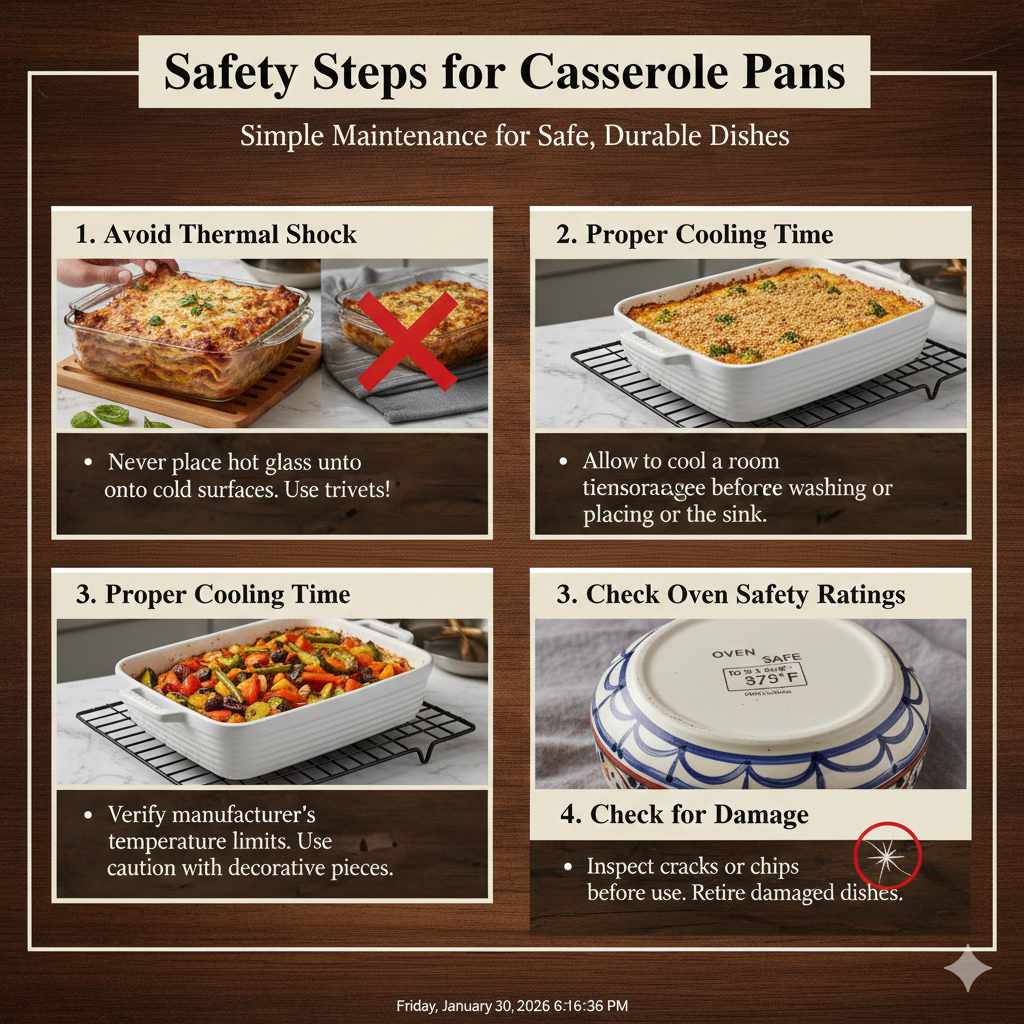
Safety Steps for Casserole Pans
The fragility of glass and ceramic requires a different kind of caution.
- Avoid Thermal Shock: This is critical, especially for glass dishes. Never take a very hot glass casserole dish directly from the oven and place it onto a cold, wet countertop or into cold water. The rapid temperature change causes the glass to crack or even shatter. Set it on a wooden cutting board or a dedicated trivet first.
- Proper Cooling Time: Allow the hot pan to cool down gradually before washing. If it is ceramic, ensure it is completely cool (room temperature) before putting it in the dishwasher or sink.
- Check Oven Safety Ratings: Not all decorative ceramic dishes are rated for high oven temperatures. If you are unsure, check the manufacturer’s guidance or stick to baking below 375°F (190°C).
For more detailed material safety checks, referencing information from organizations that test consumer products, like the Consumer Product Safety Commission (CPSC) resources on cookware safety, can be very helpful for long-term appliance use.
Frequently Asked Questions (FAQ)
Q1: Can I use my Dutch oven lid on my casserole pan, or vice versa?
A: Generally, no. Dutch oven lids are designed to fit the thick, round lip of the Dutch oven perfectly to seal steam. Casserole pans are usually rectangular or oval and lack the specific lip structure needed for a tight seal. Mixing and matching almost never works.
Q2: Is a glass casserole dish or a ceramic one better for baking?
A: Both spread heat well. Ceramic tends to retain heat slightly better and is less prone to cracking from minor temperature swings than clear glass. However, glass lets you easily see if your bottom layer is perfectly browned without disturbing the food.
Q3: Can I put my enameled Dutch oven under the broiler to brown the top?
A: Most high-quality enameled Dutch ovens (like Le Creuset or Staub) are safe under a broiler up to 500°F (260°C). Always check the manufacturer’s instructions first, as some may have heat limits to avoid damaging the enamel.
Q4: Can I use a casserole pan on the stovetop like a Dutch oven?
A: No, casserole pans are designed only for oven use. Glass, ceramic, and thin metal can crack, warp, or break under direct stovetop heat. For stovetop cooking, use a Dutch oven or heavy-duty pot.
Q5: Which cookware is safer for everyday use: Dutch oven or casserole pan?
A: Both are safe if used correctly, but safety depends on their specific design. Dutch ovens are heavy and retain heat longer, so always use thick mitts and avoid sudden movements. Casserole pans are lighter but fragile; avoid thermal shock by never placing a hot pan on a cold or wet surface.
Conclusion: Choosing the Right Cookware for Every Meal
Selecting between a Dutch oven and a casserole pan ultimately depends on what you cook and how you cook it. Dutch ovens excel at slow cooking, searing, and braising thanks to their heavy lids and excellent heat retention, making them ideal for stews, roasts, and even baking bread. Casserole pans, on the other hand, are perfect for oven-baked layered dishes, gratins, and casseroles, offering even heat distribution and a wide surface for browning.
For a versatile kitchen setup, investing in a high-quality Dutch oven first is a smart choice, while adding a casserole pan later ensures you can tackle a wider range of recipes with ease. By understanding the strengths of each piece, you’ll cook more efficiently, achieve better results, and make every meal delicious—whether it’s a comforting stew or a cheesy baked pasta.