Bungee Cords Price: What to Expect for Each Pack
Bungee cord prices usually make sense only as a per-cord figure: expect about $1–$3 for basic light-duty cords and $2–$6 for heavier, longer, or UV-resistant options. Buy the wrong pack and you pay for length you do not need, or for cords that fail under load. This guide breaks down price by cord count, length, and strength rating so you can compare packs accurately.
What affects bungee cord price?
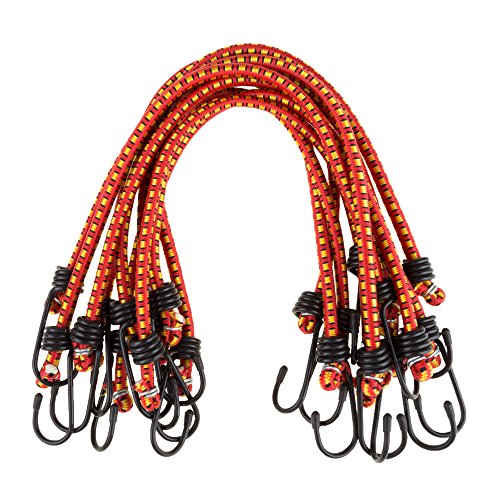


The biggest price drivers are pack size, cord length, cord diameter, hook style, and the stated strength rating. A larger pack often lowers the price per cord, but that only helps if the cords are the right length and build for the job. For outdoor use, weather exposure matters too.
Pack size and price per cord
A low sticker price can hide weak value. A 15-pack may look cheap, but the real question is what each cord costs and whether the pack includes the right mix of lengths. Small packs usually cost more per piece, while larger sets can look better only if the extra cords are actually usable.
For comparison, divide the pack price by the number of cords. That gives a cleaner read on value than a shelf tag alone. If two packs cost the same per cord, the better buy is usually the one with the right length and hook type for your task.
Length, diameter, and material
Length changes price because it changes how much elastic cord is in each piece. Short cords are cheaper and better for tight jobs. Longer cords usually cost more because they use more material and often need stronger construction to hold tension without overstretching.
Cord diameter also matters. An 8 millimeter cord generally signals more material than a thinner light-duty option, which can improve durability and load handling. Material quality matters too, especially for outdoor use, where UV exposure and moisture can shorten the life of elastic components. Outdoor-grade products are often marketed as UV resistant, but that label still does not guarantee long service life.
Hook style and attachment type
Hook style affects both versatility and holding security. J-hook attachments are common on tarp and tie-down cords because they fit many anchor points and are easy to clip and remove. Other hook shapes can work better for specific frames, rails, or luggage points.
If a listing shows a hook style that does not fit your anchor points, the lower price is not real savings. You may need extra hardware or a different set. For tarp work, hook shape can matter as much as the cord itself.
Bungee cord price benchmarks
The benchmarks below use current listings captured on 2026-11-15 from several retailers and manufacturers. The featured 15-pack is a Czech-market listing at 109 Kč, so the table includes three U.S. comparisons and one additional Czech example. Because currencies differ, treat the figures as regional benchmarks rather than direct conversions.
| Retailer / manufacturer | Date captured | Pack count | Example sticker price | Price per cord | Length | Hook type | Diameter | Stated load / strength field | Price per 10 cm | Price per rated kg |
|---|---|---|---|---|---|---|---|---|---|---|
| Home Depot | 2026-11-15 | 6 | $9.98 | $1.66 | 20 cm | J-hook | 6 mm | 10 kg | $0.83 | $0.998 |
| Walmart | 2026-11-15 | 10 | $14.97 | $1.50 | 30 cm | J-hook | 7 mm | 15 kg | $0.50 | $0.998 |
| JIZZU | 2026-11-15 | 15 | 109 Kč | about 7.3 Kč | 28 cm | J-hook | 8 mm | 20 kilograms | about 26.3 Kč | about 5.5 Kč |
| Master Lock | 2026-11-15 | 25 | $29.99 | $1.20 | 35 cm | Mixed hooks | 6 mm | 18 kg | $0.34 | $1.67 |
| Keeper | 2026-11-15 | Assorted set | $24.99 | varies by piece | Short and medium lengths | J-hook and loop variants | varies | 12–20 kg | varies | varies |
The 15-piece set at 109 Kč works out to about 7.3 Kč per cord, which is a low entry price if the cords are suitable for your task. The listed 28 cm size, 8 millimeter diameter, and 20 kilograms tensile strength make it a stronger-value option than a bare-bones pack with no rating.
How to judge a 15-piece set
A 15-piece bungee cord set should be judged on per-cord cost, then on whether the size and hook style match the job. If the pack is around 109 Kč, that is inexpensive for a small, rated set. If the cords are too short or the hooks do not fit your anchor points, the low price is less useful.
Say your patio storage cover needs short tie-downs around a frame. A 15-pack of 28 cm cords can make sense if the hooks hold securely and the elastic keeps tension after repeated use. If the same pack is being used for a roof rack or bulky cargo, the price may be good but the length is wrong.
Which specs are worth paying for?
Pay more for specs that match the load and the environment. Length matters first, then diameter, then the strength rating. Hook style comes next when you need secure attachment points. A stronger rating means little if the cord is too long to stay tensioned or too short to reach.
Cord length in centimeters
Length is the easiest spec to compare because it changes how the cord behaves in real use. Short cords, such as 28 cm, are useful for tight tie-downs and compact loads. Longer cords suit larger bundles, but they can cost more and may stretch too far if you only need a small span.
Long cords can be wasteful for luggage or patio cushions. Short cords are often a better buy for those jobs because they keep tension without extra slack. For tarps and larger outdoor covers, longer options may be worth the extra cost if they reduce the number of cords you need.
Cord diameter in millimeters
Diameter is one of the best clues to durability. An 8 millimeter cord generally uses more material than a thinner light-duty cord, and that often improves resistance to wear and repeated stretching. It does not guarantee performance, but it is a practical sign that the cord is built for more than decorative use.
Thicker is not always better for every job. For lightweight luggage straps or small bundles, a thick cord may add cost without improving convenience. For outdoor tie-downs, the extra diameter is usually worth paying for if it helps the cord keep its shape and tension.
Tensile strength in kilograms
The listed 20 kilograms tensile strength on the featured set is useful as a comparison point, but do not treat it as a safe working load. Tensile strength is the force at which a product may fail in testing; safe working load is the lower, practical limit for use. Real-world performance can be lower because of angle, stretch, age, and hook placement.
Use the rating as a filter, not a promise. If a pack has no rating, or the rating is vague, the lower price is less meaningful. For outdoor securing, a clearly stated strength is worth paying for because it helps you compare packs with similar lengths and diameters.
Best value by use case
The best bungee cords are the ones that fit the job with the least waste. That means you pay for the right length, the right hook, and enough strength for the load. A cheap pack can be fine for light indoor tasks, but outdoor jobs need more scrutiny.
Tarps and outdoor covers
For tarps, pay more for J-hook attachments and a rating you can compare across packs. J-hooks are practical for grommets and common anchor points. In outdoor use, UV exposure, moisture, and repeated stretching can shorten cord life, so a slightly higher price is often worth it for better material and a clear rating.
Use short to medium lengths when the tarp is close to the anchor point. That reduces slack and helps the cord stay taut. If the tarp is large or the anchor points are spread out, longer cords may be needed, but you should still compare price per usable length, not just the total pack price.
Patio furniture and yard storage
For patio furniture, cheap cords are acceptable only when the load is light and the cover is not under constant strain. A better pack for this use should resist weather exposure and keep tension after repeated use. If the cord stretches out quickly, the cover can flap or slip.
Picture a chair cover held by short cords around a metal frame. If the hook style fits and the elastic is not overextended, a moderate-price set may be enough. If the cover sits in full sun all season, spending more for better material is usually smarter than buying the lowest-priced set.
Luggage and travel gear
Luggage is a lighter-duty job, so price per cord matters more than a high strength number. A compact set with short cords and secure hooks is usually better value than a large outdoor set. You want control and fit, not a heavy cord that adds bulk without helping hold the load.
For this use, mixed sets can be practical if you move between suitcases, duffels, and small bundles. If the pack includes lengths you will never use, the sticker price may look good while the actual value is lower.
Camping and light gear tie-downs
For camping, look for a balanced mix of length, hook type, and stated strength. The featured set’s recommended uses include camping tarps, tents, bicycles, and luggage, which makes it a flexible option. Outdoor gear benefits from cords that hold tension and are easy to clip on and off.
Say your tent fly needs a short tie-down during windy weather. A 28 cm cord with a J-hook can be a good fit if the anchor points are close and the cord is not forced to stretch near its limit. That is the kind of job where a modestly priced rated pack earns its keep.
Are cheap bungee cords strong enough?
Cheap bungee cords can be strong enough for light, short-term, or low-risk tasks. They are often fine for luggage, simple bundling, or holding a patio cover in mild conditions. They are a poor choice when the cord will stay outdoors for long periods, carry repeated tension, or secure something that can shift suddenly.
When low-cost packs are fine
Low-cost packs make sense for short trips, temporary storage, and noncritical tie-downs. If the cord length matches the job and the hook style fits cleanly, a budget set can be a practical buy. The key is to keep the load modest and avoid forcing the cord to stretch too far.
Where low-grade elastic fails
Low-grade elastic often fails by losing tension before it breaks. That creates slack, which leads to slip and poor holding power. In outdoor use, sun and moisture can speed that process. Overstretching also wears the cord quickly and can make the hooks pull free under movement.
Signs a cord is not worth the savings
If a cord has no clear length, no stated strength, or a hook that does not sit securely, the low price is not a real bargain. Frayed elastic, weak attachment points, and vague packaging are warning signs. A cheap pack that needs frequent replacement usually costs more over time.
Where can you compare bungee cord prices?
You can compare prices at big-box stores and online listings, but you need to compare the same kind of pack. Retailers may show a low sticker price, then vary the count, length, hook style, or rating. The best price is the one that gives you the right spec at the lowest cost per usable cord.
Big-box stores versus online listings
Big-box stores can be useful when you need cords immediately and want to inspect the package details in person. Online listings often make it easier to sort by pack size, rating, and hook type. Either way, the shelf price or listing price is only the starting point.
Both Home Depot and Walmart commonly sell bungee cords, but stock varies by location and listing. That means you still need to check the count, length, hook style, and stated strength before comparing the price to another pack.
What to check on a product page
- Count the cords and divide the price by the number of pieces.
- Check length in centimeters or inches and compare it with your anchor span.
- Look for hook style, especially J-hook versus other attachments.
- Check cord diameter and stated strength rating.
- Confirm whether the cords are meant for outdoor use or only light indoor tasks.
How to compare sale prices fairly
Sale pricing only matters if the specs match. A discounted longer cord is not a better buy for short tie-downs. A smaller pack can still be the better value if it gives you the right length and avoids waste. Compare price per cord first, then price per usable length, then the rating.
Suppose one pack is on sale but uses mixed hooks that do not fit your tarp grommets. The lower price can disappear fast once you add replacements or a second pack. A fair comparison always starts with fit, then moves to unit price.
Frequently asked questions
How much are bungee cords?
Bungee cords are commonly reported to cost about $1–$3 per cord for basic light-duty options and about $2–$6 for heavier, longer, or more weather-resistant cords. The pack price matters less than the unit price, because multi-packs can look cheap while hiding a higher cost per cord or a length you do not need.
Does home depot sell bungee cords?
Home Depot commonly carries bungee cords, including small packs and assorted tie-down sets, but selection varies by store and online listing. Before comparing prices, check the cord count, length, hook type, and stated strength rating. Those details matter more than the brand name or the shelf tag alone.
Does walmart sell bungee cords?
Walmart commonly sells bungee cords as well, often in budget packs and mixed-size kits. The main question is not whether the store carries them, but whether the listed pack matches your use case. Compare price per cord, cord length, and hook style so you do not buy the wrong set.
Who makes the best bungee cords
The best bungee cords depend on the job, not the logo. For tarps and outdoor use, a pack with a clear strength rating, secure J-hooks, and durable elastic is usually better value than a name with vague specs. For luggage, a shorter light-duty set may be the smarter buy.
What affects bungee cord price the most?
Pack size has the biggest effect on sticker price, but length and strength rating usually drive real value. A larger pack can lower the per-cord cost, yet a thicker, longer, or UV-resistant cord often costs more for good reason. Hook style also matters when attachment security is part of the job.
How much should a 15-piece bungee cord set cost?
A 15-piece set should usually cost little enough that the per-cord price stays competitive with similar packs, but the exact range depends on length and rating. The featured 15-pack at 109 Kč is a useful benchmark. If another 15-pack costs much more, it should offer a clearer spec advantage.
Are cheap bungee cords strong enough for patio furniture?
Cheap bungee cords can be strong enough for patio furniture if the job is light, the fit is correct, and the cords are not left under constant high tension. For outdoor storage, though, better elastic and a stated rating are worth paying for because sun, moisture, and repeated stretching can weaken low-grade cords.
What length and hook style should I pay more for?
Pay more for the length and hook style that match your anchor points and avoid slack. Shorter cords with J-hooks are often worth extra money for tarps, patio furniture, and many camping tasks because they fit standard tie-down points well. Longer cords matter when the span is wider or the load is bulkier.
Where can I find the best price bungee cords?
The best price is usually the lowest price per cord for the right length and rating, not the cheapest pack on the shelf. Compare big-box stores, online listings, and sale prices by unit cost. If the pack includes better hooks, a clear strength rating, and the right size, a slightly higher price can still be the better buy.
Sources
- Home Depot product listings for bungee cords, checked 2026-11-15
- Walmart product listings for bungee cords, checked 2026-11-15
- Master Lock product listings for tie-down and bungee cord sets, checked 2026-11-15
- Keeper product listings for bungee cord assortments, checked 2026-11-15
- General product labeling conventions for tensile strength versus safe working load
- General outdoor-material guidance on UV and weather exposure for elastic products
Products related to this article
Sponsored / affiliate links. As an Amazon Associate I earn from qualifying purchases. I may earn additional commission from eligible campaigns.