
Quick Summary:
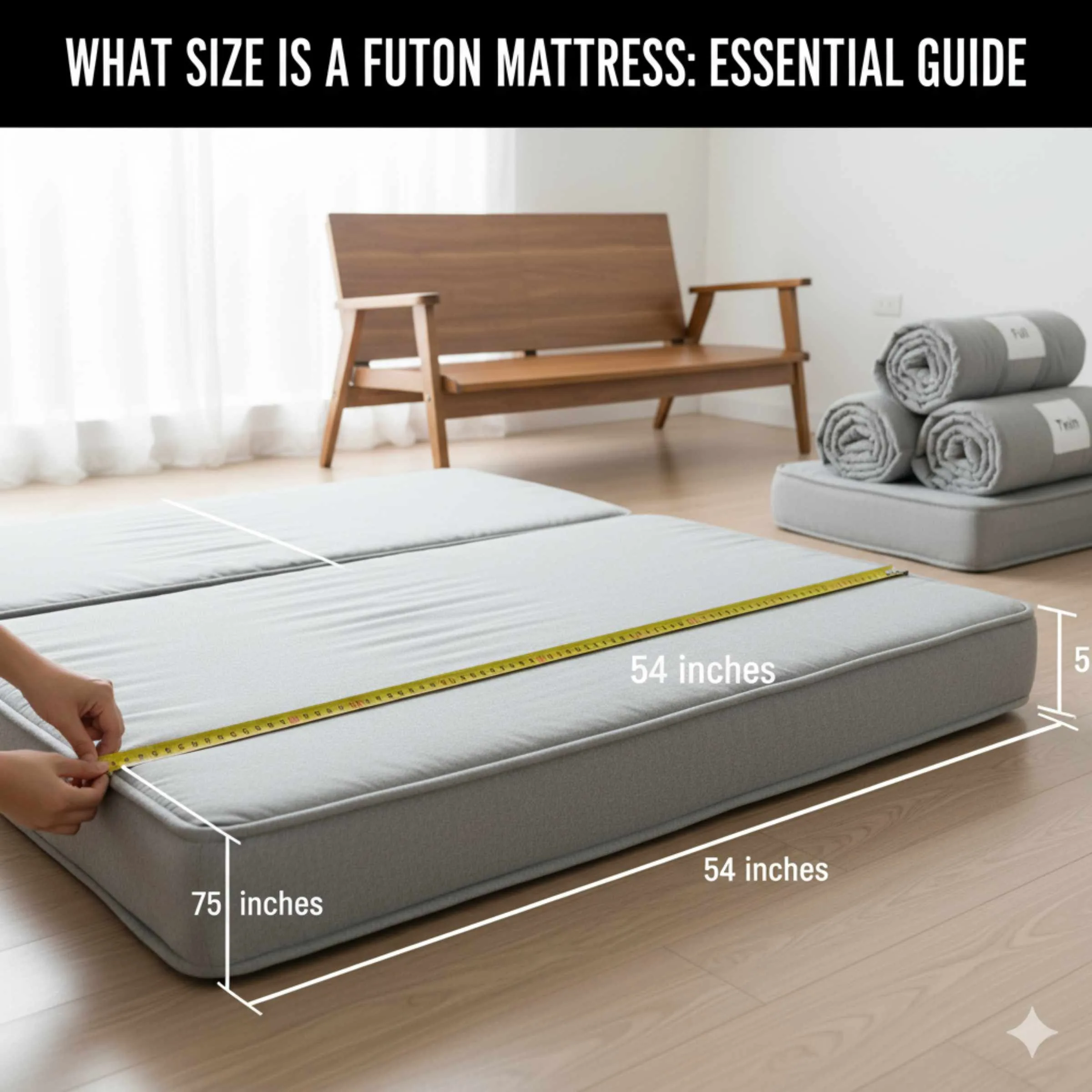
Futon mattresses come in standard bed sizes like Twin, Full, Queen, and even King, but they’re typically thinner than traditional mattresses to fold correctly. Always measure your futon frame or check the product description to ensure you get the right size for a comfortable fit and proper folding.
Hey there! Ever found yourself staring at a futon frame, wondering what size mattress will actually fit it without looking all saggy or being too big to fold? It’s a head-scratcher for sure, especially when you just want to get cozy or ready for guests. It might seem like a small detail, but getting the right futon mattress size is key to comfort and functionality. Don’t sweat it, though! We’re going to break down exactly what you need to know, step-by-step, so you can make the best choice for your futon.
Why Futon Mattress Sizes Matter
Choosing the correct futon mattress size isn’t just about making it look good on the frame. A mattress that’s too small will leave gaps and feel uncomfortable, no matter how much you fluff it. On the other hand, a mattress that’s too large won’t fold properly with the frame, making it difficult to switch from a sofa to a bed. This can also put a strain on the futon mechanism itself, potentially leading to damage over time. Think of it like putting the wrong size tire on your car – it just won’t work right and can cause bigger problems down the road!
We want your futon to be a comfortable spot for lounging and an easy-to-use guest bed. So, let’s get down to the nitty-gritty of futon mattress dimensions so you can nail this choice every time.
Understanding Futon Mattress Types & Sizes
Before we get into specific measurements, it’s helpful to know that futon mattresses aren’t always just like regular mattresses. Because they need to bend and fold, they are usually thinner. What’s called a “Queen” futon mattress isn’t usually as thick as a standard Queen bed mattress. This is super important to remember!
Here’s how futon mattress sizes typically stack up, but remember these are approximate and can vary slightly between manufacturers. Always check the specifications!
| Futon Mattress Size | Typical Dimensions (Width x Length) | Common Frame Size | Notes |
|---|---|---|---|
| Twin / Single | Approximately 30-39 inches x 75 inches | 30-39 inch frame | Good for a single person, often used in smaller spaces. |
| Full / Double | Approximately 48-54 inches x 75 inches | 48-54 inch frame | Comfortable for one, or cozy for two. A popular choice. |
| Queen | Approximately 60 inches x 80 inches | 60 inch frame | Provides more sleeping space, like a standard Queen bed. |
| King | Approximately 72 inches x 80 inches | 72 inch frame | Less common for futons, but offers the most space. |
You might also see “chair size” futons, which are usually about 28 inches wide and perfect for a single-seater futon frame.
The Thickness Factor: More Than Just Width and Length
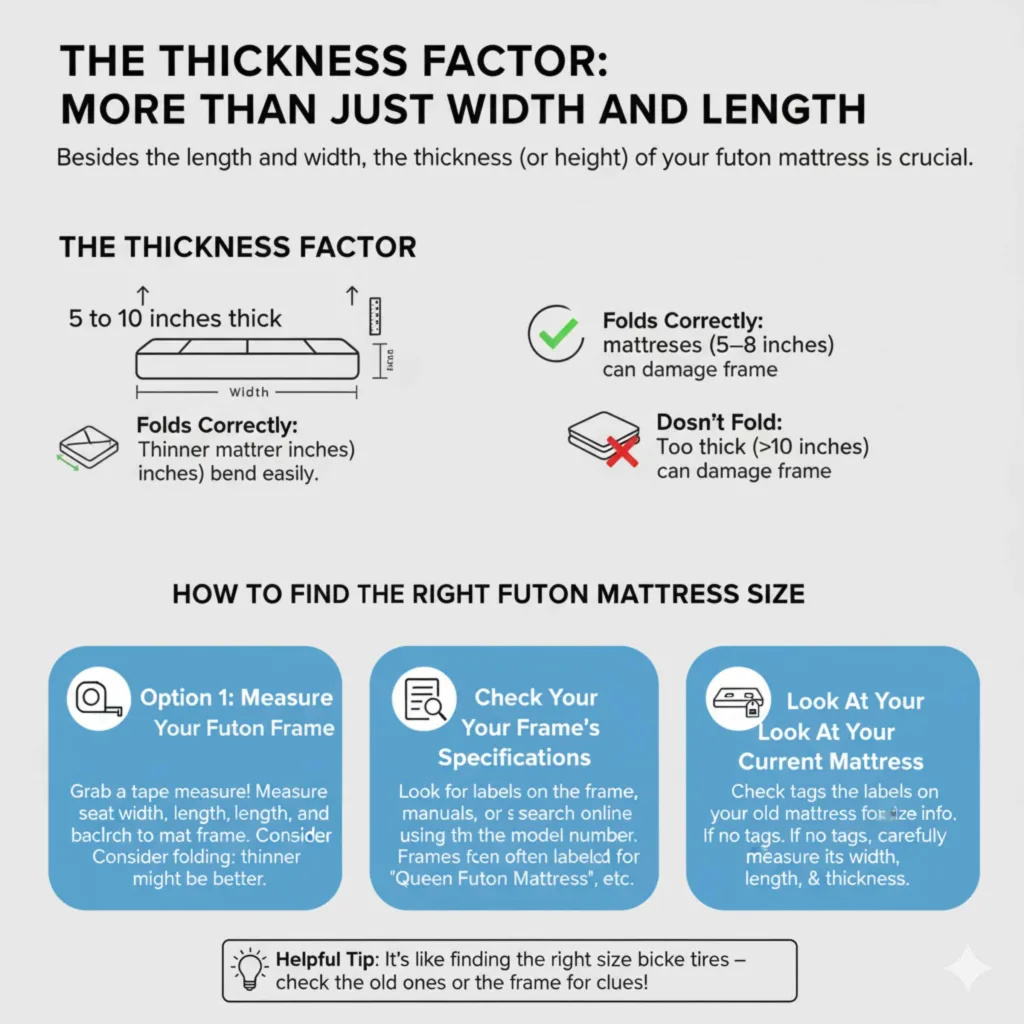
Besides the length and width, the thickness (or height) of your futon mattress is crucial. Because futon frames are designed to fold the mattress, they typically require thinner mattresses than standard beds. A mattress that’s too thick often won’t bend correctly, potentially damaging both the mattress and the frame. Most futon mattresses are generally between 5 to 10 inches thick. Thicker futon mattresses might be found in higher-end models designed for more couch-like comfort and might not fold as easily or may require a different type of frame.
How to Find the Right Futon Mattress Size
So, you’ve got the general idea of sizes, but how do you make sure you’re picking the perfect fit for your specific futon frame? It’s simpler than you think, and we’ll walk through it.
Option 1: Measure Your Futon Frame
This is the most reliable way to ensure a good fit. Grab a tape measure, and let’s get to work!
- Measure the Seat or Bed Area: With the futon in the “sofa” position, measure the width of the seating area from one armrest to the other. This measurement will correspond to the width of the futon mattress you need.
- Measure the Length: Then, measure the depth of the seat from the front edge to the back edge where it meets the backrest. This will give you an idea of the mattress length needed, though futon mattresses are typically a standard length for each size category.
- Measure the Backrest: For the backrest, measure its length and height. This often matches the seat dimensions.
- Consider Folding: While measuring, think about how the mattress will fold. If it’s a tight fit in the sofa position, a slightly thinner mattress might be better for easier folding.
Option 2: Check Your Futon Frame’s Specifications
Did you recently buy your futon frame, or do you still have the manual or packaging? Many futon frames are designed to accommodate specific mattress sizes straight from the factory. Look for labels on the frame itself, check any paperwork you have, or search online using the frame’s model number.
Frames are often sold as a set and are advertised to fit a particular mattress size. For example, a frame labeled for a “Queen Futon Mattress” should accept a Queen-sized futon mattress. The key is that it’s a futon-specific size, not necessarily a standard bed size measurement for thickness.
If you bought your futon second-hand or can’t find any documentation, measuring is your best bet. Think of it like figuring out what size bike tires you need – you look at the old ones or the frame itself for clues!
Option 3: Look at Your Current Futon Mattress (If Applicable)
If you already have a futon mattress that fits your frame well, but you’re looking to replace it, you’re in luck! Check the tags or labels on your old mattress. Manufacturers often provide the size information there. If the tags are gone, carefully measure the old mattress’s width, length, and thickness. Use these measurements as your guide for purchasing a new one.
Common Futon Mattress Sizing Pitfalls to Avoid
Navigating futon sizes can sometimes feel like a puzzle. To help you out, here are some common traps people fall into and how to sidestep them:
- Confusing Futon Sizes with Standard Bed Sizes: A “Queen Futon Mattress” will fit a “Queen Futon Frame,” but its dimensions (especially thickness) are different from a standard Queen mattress. A standard Queen mattress is usually 12-14 inches thick, which is far too thick for most futon frames.
- Ignoring Thickness: As we’ve stressed, thickness is critical. A mattress that is even an inch or two too thick can prevent your futon from folding or unfolding smoothly.
- Not Measuring Accuracy: Even a quarter-inch can make a difference. Double-checking your measurements ensures you get a fit that’s snug but not too tight.
- Assuming All Frames Are the Same: Futon frames vary in design. Some are made for thinner, more flexible mattresses, while others can accommodate slightly thicker ones. Always check the frame’s recommendations.
- Buying Based on Price Alone: The cheapest option might not be the right fit size-wise or comfort-wise. Investing a little more in the correct size ensures longevity and better sleep.
To give you a clearer picture of how these sizes work in practice, let’s look at a comparative table. Imagine you have a futon frame that measures 60 inches wide. Which mattress size would be ideal?
| Frame Width | Ideal Futon Mattress Width | Approximate Mattress Length | Recommended Size | Will it Fold Well? |
|---|---|---|---|---|
| 60 inches | 60 inches | 80 inches | Queen | Yes, if thickness is appropriate (5-10 inches). |
| 60 inches | 54 inches | 75 inches | Full/Double | Likely too small, will leave gaps. |
| 60 inches | 70 inches | 80 inches | King (but for a Queen frame) | No, too big, will not fold and may damage frame. |
This table really highlights why matching the frame and mattress width is so important. Getting it right ensures your futon functions as intended!
What If My Futon Frame Isn’t a Standard Size?
It’s not super common, but sometimes you might have a custom or oddly sized futon frame. In these situations, measuring accurately becomes even more critical. If you can’t find a pre-made mattress that fits your exact measurements, you have a couple of options:
- Custom Futon Mattress: Some companies specialize in creating custom-sized futon mattresses. This is the best option for a perfect fit but can be more expensive. You’ll need to provide exact dimensions, including width, length, and desired thickness.
- Slightly Smaller Mattress: If you can only find a mattress that’s slightly narrower than your frame, you might be able to use specialized foam padding or extra cushions to fill the gap. However, this can sometimes look a bit messy and might not be as comfortable.
- Thicker Mattress for Couch Use, Thinner for Bed: This is more for customization of comfort. For instance, if you primarily use your futon as a sofa and rarely as a bed, you might opt for a thicker mattress that offers more cushioning as a seat. However, this mattress likely won’t fold well. Conversely, if it’s mainly a guest bed, a thinner mattress that folds easily is better.
When in doubt, companies like the U.S. Environmental Protection Agency (EPA) offer guidance on making informed consumer choices, which can extend to understanding product specifications for furniture. Always aim for precision!
Beyond Size: Other Factors for Your Futon Mattress
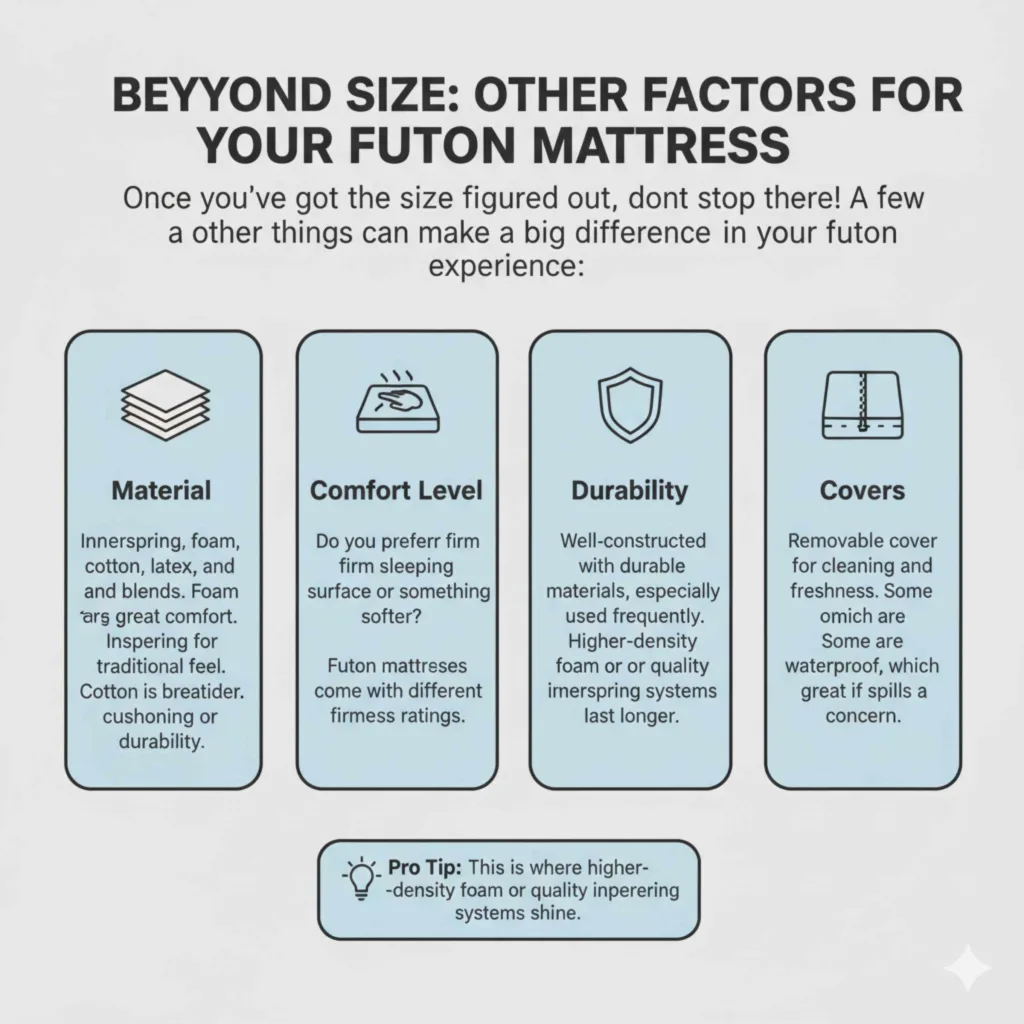
Once you’ve got the size figured out, don’t stop there! A few other things can make a big difference in your futon experience:
- Material: Futon mattresses come in various materials, including innerspring, foam, cotton, latex, and blends. Foam and memory foam offer great comfort and support. Innerspring provides a more traditional mattress feel. Cotton is breathable but can flatten over time. Consider what’s most important to you: cushioning, durability, or breathability. For example, a denser foam mattress might offer better support than a cheaper cotton-filled one, even if they are the same size.
- Comfort Level: Do you prefer a firm sleeping surface or something softer? Many futon mattresses come with different firmness ratings.
- Durability: Look for mattresses that are well-constructed and made with durable materials, especially if your futon will be used frequently for sitting and sleeping. This is where higher-density foam or quality innerspring systems shine.
- Covers: Many futon mattresses come with a removable cover, which can be a lifesaver for cleaning and maintaining freshness. Some are waterproof, which is great if spills are a concern.
Frequently Asked Questions About Futon Mattress Sizes
Q1: Can I use a regular mattress on a futon frame?
Generally, no. Standard mattresses are too thick (10+ inches) and too heavy for most futon frames. They won’t fold properly, can damage the frame, and won’t provide a comfortable seating surface. Futon mattresses are specifically designed to be thinner and more flexible.
Q2: What’s the difference between a futon mattress and a regular mattress of the same name (e.g., Queen)?
A futon mattress is significantly thinner and more flexible. While a standard Queen mattress is typically 10-14 inches thick, a Queen futon mattress is usually between 5-10 inches thick to allow the frame to fold and unfold correctly.
Q3: My futon frame is advertised for a “Full” mattress, but what does that mean for measurements?
A “Full” futon frame is designed to hold a futon mattress that is approximately 54 inches wide and 75 inches long. Remember, the thickness will still be in the typical futon range (5-10 inches), not the 8-12 inches of a standard Full bed mattress.
Q4: How do I know if my futon mattress is too thick?
If your futon doesn’t fold completely flat into a couch position, or if it requires significant force to bend, or if the mattress bunches up awkwardly when folded, it’s likely too thick for the frame. You should also be able to see the mechanism quite easily when it’s in the ‘bed’ position if the mattress is properly fitted.
Q5: Are all futon mattress lengths the same?
Futon mattress lengths are generally standardized within their size category (e.g., Twin, Full, Queen). The most common length for most futon sizes is 75 inches, with Queen and King often being 80 inches. The length is less variable than the width and thickness.
Q6: Can I use a futon mattress on a regular bed frame?
While you could technically place one on a slatted bed frame, it’s not recommended. Futon mattresses lack the support of a box spring and are designed to be flexible. Without a solid platform or very close-set slats, the futon mattress could sag, and you’d feel the “between the slats” effect. Standard bed frames are also not designed to accommodate the folding action of a futon mattress.
Conclusion
Finding the right size futon mattress might have seemed a little daunting at first, but hopefully, this guide has put your mind at ease. Remember, the key is to match your futon frame’s dimensions precisely, paying close attention to both width and length. Don’t forget the thickness – it’s the unsung hero of a functional futon!
By taking a few minutes to measure your frame or check its specifications, you’ll avoid the common pitfalls and ensure your futon is not only comfortable for lounging and sleeping but also folds and unfolds with ease. Now you’re equipped to confidently choose the perfect futon mattress size, making your space more versatile and comfortable. Happy futon-ing!