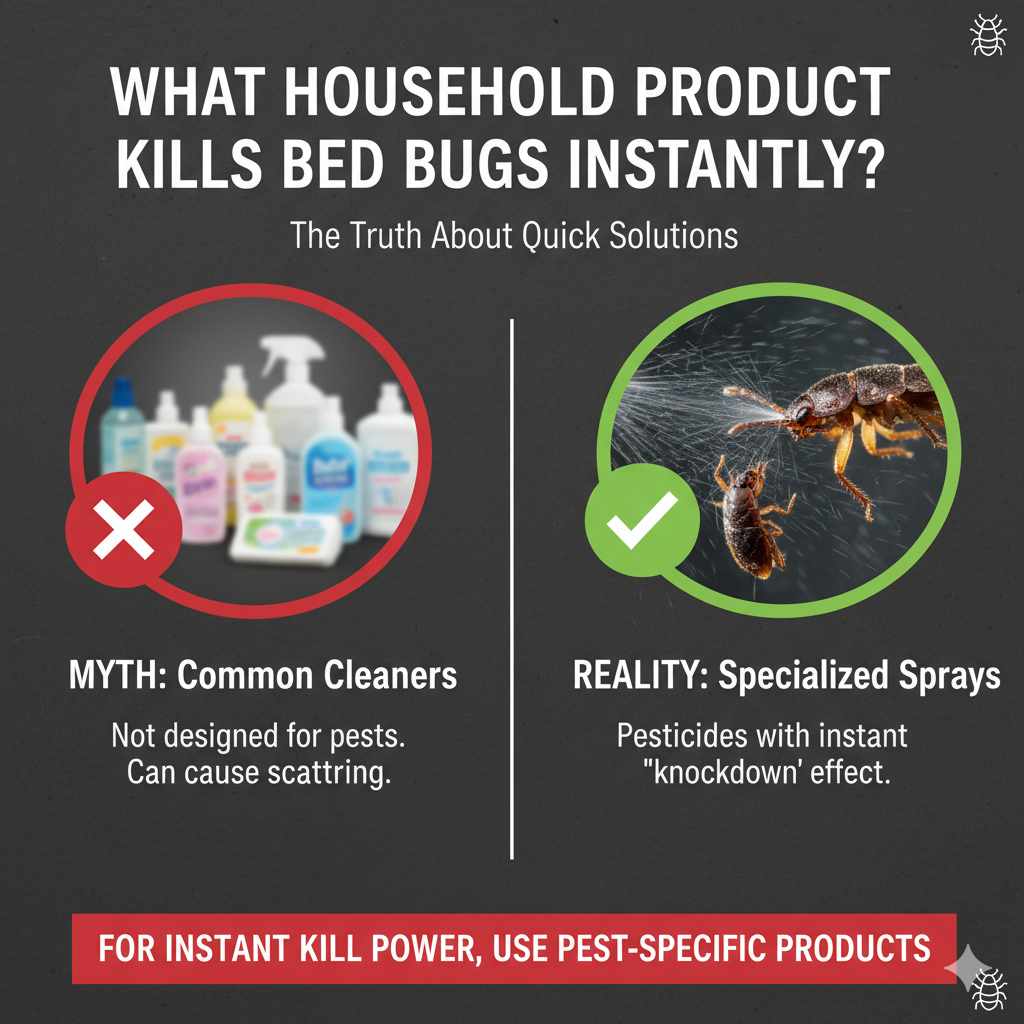
The most effective household product for instantly killing visible bed bugs is high-concentration rubbing alcohol (isopropyl alcohol 90% or higher), applied directly to the insect. However, DIY solutions rarely offer a complete eradication because they cannot reach hidden eggs or deep harborages, making professional treatment often necessary for long-term success.
Dealing with bed bugs is one of the most frustrating and unsettling home problems. Seeing these tiny pests means you need fast action. You are looking for that quick fix—the spray under your sink that solves the whole problem right now. It’s natural to want an instant solution to reclaim your peace of mind and protect your family. Good news: some common items can kill bugs on contact. Better news: we’re going through exactly what works, how to use it safely, and why a multi-step plan is your real path to success. Grab your gloves; we’ll walk through this simply and safely.
The Instant Kill Truth: Household Products That Work on Contact
When you spot a bed bug crawling, you want it gone immediately. For instant results, you need products that break down the bug’s protective outer layer (the exoskeleton), causing rapid dehydration or chemical failure. Keep in mind that “instant kill” on contact does not mean “total eradication” of the infestation.
Rubbing Alcohol (Isopropyl Alcohol): The Quickest DIY Weapon
Of all the common household items, isopropyl alcohol is often cited as the fastest-acting contact killer for visible bed bugs.
How It Works
Alcohol works quickly because it strips the protective natural oils right off the bed bug’s body. This causes the insect to dehydrate rapidly. For maximum effectiveness, you need a high concentration.
What Strength to Use
Recommended Strength: 90% or higher (70% will work, but it is slower and less reliable).
Application: Use a small spray bottle, but target the spray directly onto the bug. Do not oversaturate furniture or mattresses, as alcohol is flammable; it’s only for direct contact.
Safety Note on Alcohol
While effective on the pests, remember that high-proof alcohol is flammable. Do not spray near open flames, pilot lights, or electrical outlets. Always test a hidden spot first, as it can damage wood finishes or fabrics.

Diatomaceous Earth (DE): The Slow Burn Killer (Not Instant, But Essential)
While you asked for instant results, it is crucial to mention Diatomaceous Earth (food grade). DE is essential for long-term control, though it doesn’t kill bugs the second it touches them.
DE is not a spray. It is a fine, naturally occurring powder made of fossilized aquatic organisms. When a bed bug crawls across it, the microscopic sharp edges scratch the insect’s exoskeleton, causing it to dry out and die over several hours or days.
Why DE is Important
It kills bugs that are dormant or hiding where sprays can’t reach.
It remains effective indefinitely as long as it stays dry.
When to Use It
Use DE after initial vacuuming and spot-treating. Dust it lightly into cracks, crevices, behind wall plates, and along baseboards. If you can see a thick white layer, you’ve used too much; it must look like a thin layer of dust.
The Limitations of Household Sprays: Why Instant Isn’t Enough
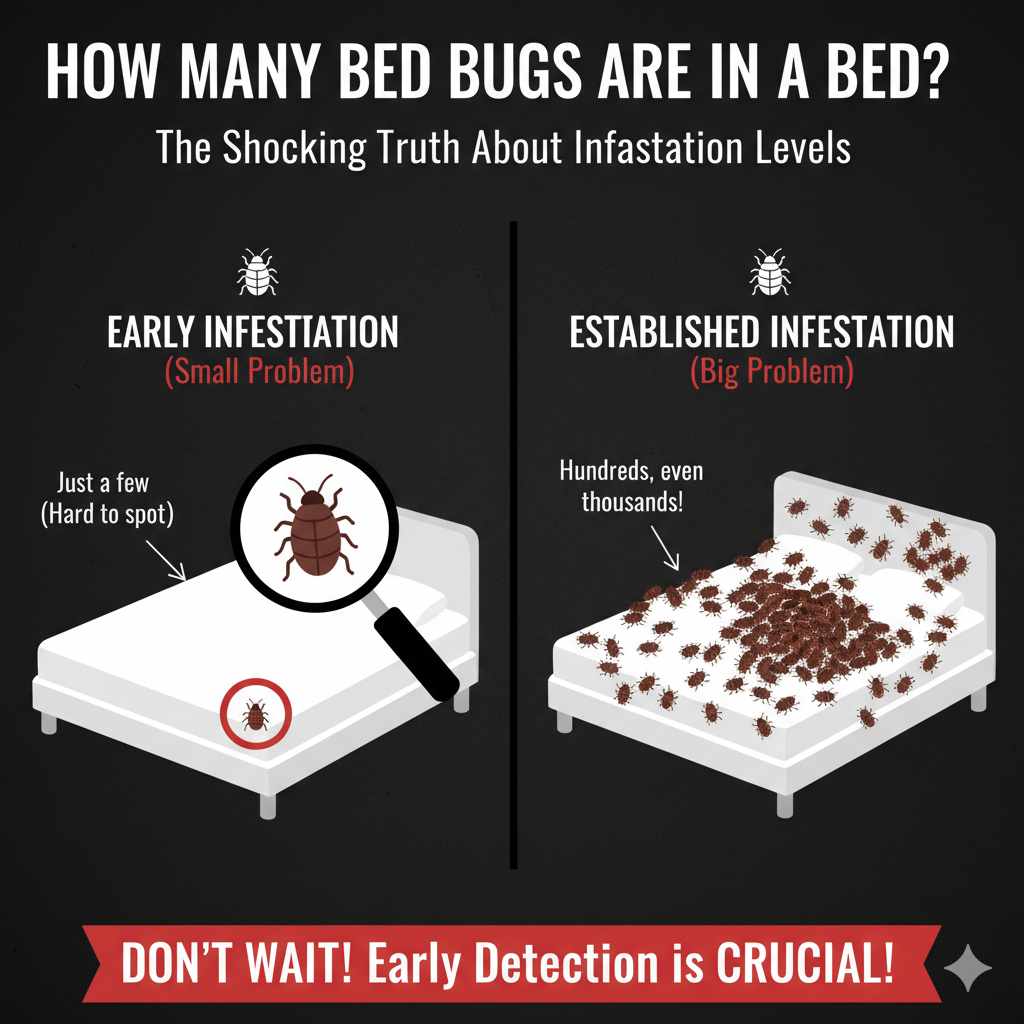
This is the part most homeowners miss. A quick squirt on a bug you see is satisfying, but it doesn’t solve the problem. Bed bugs are masters of hiding. They hide in tiny spots that household cleaners cannot effectively penetrate or reach.
Think of it this way: If you crush one visible ant, you haven’t solved the colony problem. Bed bugs operate similarly.
Where Bed Bugs Hide (The Hidden Majority)
The bugs you see are only a small fraction of the total infestation. A successful treatment must address these hidden areas:
- Inside mattress seams and tufts.
- In the box spring fabric.
- Deep in the frame joints (especially wooden furniture).
- Behind picture frames and electrical outlets near the bed.
- In the carpet backing close to the bed area.
Most general household cleaners or even standard over-the-counter sprays lack the necessary residual kill power or the ability to penetrate deep enough to affect eggs or bugs hiding inside box springs.
Heavy-Duty Household Option: Contact Killers with Residual Effect
If you’re looking for a step up from rubbing alcohol, some specialized, store-bought “contact killer” sprays are available in hardware stores. These often contain pyrethrins or pyrethroids. While these are technically “household accessible,” they are formulated for insect control, not general cleaning.
Understanding Pyrethrin-Based Sprays
Pyrethrins are natural insecticides derived from chrysanthemums. They act as a fast “knockdown” agent.
Pros and Cons of Specialized Contact Sprays
| Feature | Pro (Advantage) | Con (Limitation) |
|---|---|---|
| Kill Speed | Very fast knockdown on direct contact. | Does not kill bed bugs that hatch later. |
| Reach | Good for surface application on hard furniture. | Poor penetration into crevices or deep wood. |
| Residue | Some offer slight residual protection. | Can repel bugs from treated areas rather than killing them all. |
A Critical Warning: Never use foggers or “bug bombs” designed for flying insects. Bed bugs hide low to the ground and deep inside furniture. Foggers barely penetrate these areas and can actually spread the infestation to adjacent rooms by forcing the bugs to flee the treated area.
The Essential Step-by-Step DIY Eradication Plan
Since no single household product provides 100% guaranteed instant eradication, you need a strategy focusing on high-heat, complete coverage, and residual protection. This method uses common tools and readily available products in combination.
Step 1: Preparation and Containment (The Non-Negotiable Start)
Before applying any liquid, you must heat-treat and remove as many active bugs and eggs as possible. This reduces the load dramatically.
What You Need:
- Heavy-duty vacuum with a hose attachment.
- Plastic garbage bags (sealable).
- Sturdy gloves.
- Stiff brush or putty knife.
- Laundry supplies (hot water and dryer).
Action Plan for Preparation:
- Strip the Bedding: Immediately place all sheets, pillowcases, blankets, and mattress covers into sealed plastic bags before taking them out of the room. This prevents spreading bugs to other surfaces while transporting them.
- High-Heat Wash/Dry: Take the sealed bags directly to the laundry room. Wash everything on the hottest setting possible, then dry on the highest heat setting for at least 30 minutes. Heat is a guaranteed killer.
- Vacuum Thoroughly: Systematically vacuum your mattress (every surface, seam, and tuft), box spring, bed frame, nightstands, and surrounding carpet edges. Use a crevice tool for tight spots.
- Immediate Disposal: Seal the vacuum bag immediately in a garbage bag and place it outside in the trash bin. If using a bagless vacuum, empty the canister outside into a sealed bag and clean the filter thoroughly outdoors.
Step 2: Direct Contact Kill (Using Your Household Product)
Now you look for the targets you can see. Use your chosen instant killer here.
Applying Rubbing Alcohol (90%+)
- Pour 90% isopropyl alcohol into a small, clean spray bottle.
- Put on gloves and eye protection if possible.
- Carefully inspect the seams of the mattress, the cracks in the bed frame, and the areas behind the headboard.
- When you see a bug, spray it directly until it stops moving. Do this sparingly; do not soak the materials. Alcohol dries quickly but can cause staining or damage if overused.
Pro Tip: For wooden bed frames, often the best immediate action is wiping down tight joints with a rag soaked in alcohol. The scrubbing action helps break any sticky residue or eggs attached to the wood.
Step 3: Residual Treatment (The Long-Term Defense)
Household products like alcohol and cleaner sprays vanish fast. You need something that stays behind to kill the bugs that hatch later. This is where Diatomaceous Earth (DE) or dedicated insecticidal dust comes in. If you use DE, ensure it is “Food Grade” quality (meeting safety standards often referenced by organizations like the U.S. Environmental Protection Agency (EPA) standards when used as directed).
Applying Dust Effectively
- Use a bellow duster or a very fine paint brush for application.
- Dust a very thin, nearly invisible layer into the following areas:
- The inside of the box spring casing (if you can open the fabric on the bottom).
- Underneath the bed frame where it meets the floor.
- Along electrical outlets or under baseboards near the bed.
- A thick layer defeats the purpose; bugs will walk around large piles. They must crawl through the dust.
What About Other Household Products? Separating Fact from Fiction
Many home remedies circulate online. As a DIY guide, my job is to tell you what is safe, practical, and actually effective versus what is just a myth.
Products That Are NOT Recommended (or Dangerous)
| Product | Why It Fails or Is Risky |
|---|---|
| Vinegar (White or Apple Cider) | It acts as a repellent or irritant but rarely kills on contact quickly and leaves a strong odor. |
| Gasoline or Kerosene | Extremely dangerous, highly flammable, and toxic fumes are left behind, creating an immediate fire hazard inside your home. Never use. |
| Steam Cleaners | While steam (at 212°F) is excellent for killing bugs and eggs on contact, it is not a “product” you spray; it requires specialized equipment and must be used slowly and methodically, often needing professional dedication. |
| Soapy Water | Can work if used in high concentration to break surface tension, but it requires soaking the entire bug and is highly ineffective for hidden pests. |
The Power of Heat: The Most Reliable Instant Household Kill
If you are seeking a truly instant, non-chemical household kill for items you can transport, heat is your best bet, surpassing even chemical contact killers.
The scientific consensus is that sustained temperatures above 120°F (100°C) will kill bed bugs and their eggs. This is why commercial laundry and professional heat treatments are so effective.
DIY Heat Treatment Options:
- The Dryer Method: As mentioned in Step 1, running heat-safe items (clothes, shoes, pillows) on high heat for a minimum of 30 minutes is lethal to all life stages.
- Small Item Heat Chambers: Some people use insulated containers (like foam coolers) combined with small, thermostatically controlled heating pads to bake small items (books, electronics—use caution) for several hours at a controlled, low temperature (like 130°F). This is tricky and requires caution to avoid fire or damage.
Bed Encasements: Creating a Fortress Around Your Mattress
Once you have aggressively cleaned surfaces, the next most important step—before applying any household product—is encasement. This traps any bugs remaining in your mattress or box spring, starving them out, and prevents new bugs from hiding there in the future.
Choosing the Right Encasement
Do not use cheap plastic covers. Bed bugs can bite through them or exploit minor tears. You need high-quality, zippered encasements designed specifically for bed bugs.
Key Features to Look For:
- Zipper Quality: Must have a fine-toothed zipper, often with a locking mechanism.
- Fabric Type: Should be tightly woven material that bed bugs cannot penetrate.
- Coverage: Must fully enclose both the mattress and the box spring separately.
Once enclosed, leave the covers on for at least a year. Any bed bugs trapped inside will eventually die from starvation. This is a passive, long-term solution that complements your active, “instant” treatments on the frame and surrounding areas. For more information on effective integrated pest management, you can review guidelines provided by university extension programs, such as those focusing on residential pest control strategies.
When DIY Fails: Recognizing the Need for Professional Help
We aim to boost your confidence in tackling common car issues, but when it comes to resilient pests like bed bugs, knowing your limits is essential for both safety and effectiveness. If you have gone through the preparation, direct contact, and residual steps above and are still seeing bugs after two full weeks, it’s time to call in the experts.
Signs You Should Stop DIY and Call a Professional
- Widespread Infestation: If you find bugs or feces (tiny black dots resembling marker stains) in rooms adjacent to the bedroom, the infestation is spreading beyond easy containment.
- Severe Hidden Harborage: If you suspect bugs are deep inside wall voids, electrical sockets, or behind heavy baseboards that you cannot easily access.
- Recurring Sightings: You have treated the area thoroughly, but you keep seeing new live bugs after 10–14 days, suggesting high numbers of eggs are surviving your treatment.
- Mental Fatigue: Pest control is mentally exhausting. Professionals have access to commercial-grade, longer-lasting residual chemicals and specialized heating equipment that are unavailable to the public.
A licensed Pest Control Operator (PCO) will use tools far superior to rubbing alcohol, often involving residual sprays that keep killing bugs for weeks after application, something household items simply cannot achieve.

Frequently Asked Questions (FAQ) for Beginner DIY Pest Control
Q1: Can regular Windex or glass cleaner kill a bed bug instantly?
A: While the soap content in Windex can sometimes break down the insect’s outer shell if you soak it thoroughly, it is generally slow and unreliable compared to isopropyl alcohol. It is not a recommended primary treatment.
Q2: How long does it take for rubbing alcohol to kill a bed bug completely?
A: When directly sprayed and soaking the insect, death can occur within minutes to a few hours, depending on the size and saturation level. However, immediate paralysis doesn’t mean the process is complete.
Q3: Is it safe to spray alcohol on my fabric mattress if I let it air dry completely?
A: It is safest to use alcohol only on hard surfaces like metal or wooden bed frames. Spraying large amounts onto a fabric mattress is risky because alcohol is highly flammable and can soak deep into padding. Even after drying, vapors may linger. If you choose to use it, apply very lightly, ensure excellent ventilation, and never spray near electrical outlets or open flames. Mattress encasements are a much safer long-term solution.
Q4: Can hydrogen peroxide kill bed bugs instantly?
A: Hydrogen peroxide may kill a bed bug if sprayed directly and thoroughly, but it is not recommended. It can bleach fabrics, damage finishes, and does not provide any residual effect. Like alcohol, it only works on direct contact and will not eliminate hidden bugs or eggs.
Q5: Will leaving my mattress outside in the sun kill bed bugs?
A: Sunlight alone is unreliable. While extreme heat above 120°F can kill bed bugs, outdoor temperatures rarely stay hot enough long enough to penetrate deep into a mattress. Bed bugs are also skilled at hiding in cooler inner layers. Controlled dryer heat or professional heat treatment is far more dependable.
Conclusion: Instant Kill Is Only the First Step Toward Total Control
When you discover bed bugs, your first instinct is completely natural — you want them gone immediately. And yes, certain household products like high-concentration rubbing alcohol can kill visible bed bugs on contact. That instant result can bring quick relief and a sense of control.
Instant kill does not equal complete elimination.The bug you see is only a small part of the problem. The real challenge lies in the hidden eggs, deep cracks, mattress seams, and furniture joints where sprays can’t fully reach. That’s why lasting success always requires a layered approach — heat treatment, thorough vacuuming, residual dust like diatomaceous earth, and protective mattress encasements.
Think of it like handling a small engine issue. Spraying alcohol is like tightening a loose bolt — it solves what’s visible. But if you ignore the deeper system, the issue returns.