LG, in the context of televisions and electronics, stands for Lucky-Goldstar. This name reflects the 1995 merger of two major South Korean companies, Lucky Chemical Industrial Corp. and Goldstar Co., Ltd. Understanding this history helps clarify why LG is a household name in reliable home entertainment today.
Ever stared at your sleek new television and wondered what those letters—L and G—actually mean? You are not alone! Many drivers know their car’s brand, but the meaning behind the badge often stays a mystery. Knowing the simple history behind your LG TV brand gives you a little extra knowledge when chatting about electronics.
Don’t worry if you’ve never thought about it before. We’re going to break down the origins of LG in a way that is clear and easy to follow. Think of this like checking your tire pressure for the first time—it seems technical, but it’s actually very straightforward once someone shows you the right steps. By the end of this quick guide, you will know exactly what LG means and why that history matters to the quality of the TV you use every day.
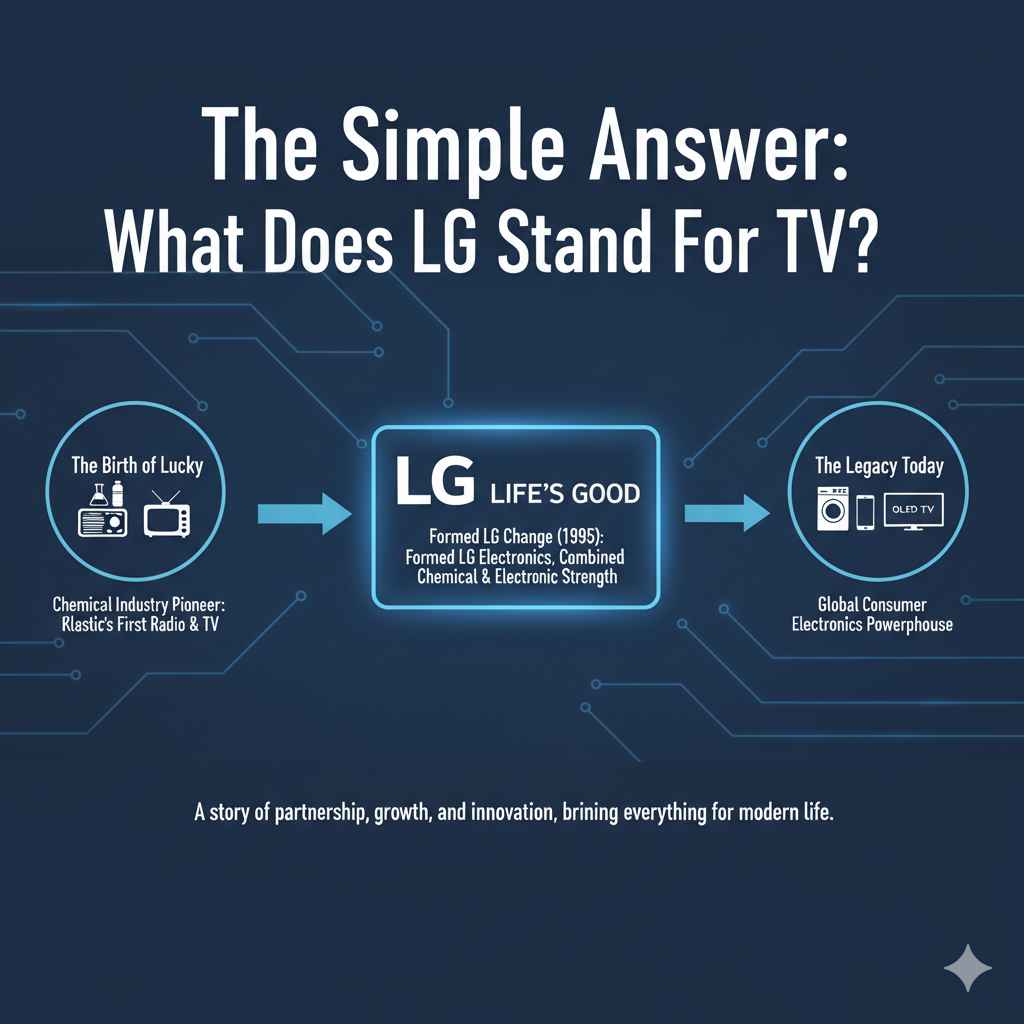
The Simple Answer: What Does LG Stand For TV?
If you want the straight answer right now, LG stands for the combined entity of two companies: Lucky and Goldstar.
This might seem a bit anticlimactic compared to some technical acronyms, but it represents a massive part of South Korean industrial history. For everyday users, this historical context explains why LG has such a broad range of products, from kitchen appliances to cutting-edge OLED TVs.
A Quick Look at the Merger Timeline
The name LG, as we know it today, wasn’t set in stone overnight. It’s the result of decades of innovation from two separate, yet successful, companies.
- The Birth of Lucky: Started primarily in the chemical industry. They were one of the first Korean companies to venture into plastics and cosmetics.
- The Rise of Goldstar: This company focused heavily on electronics, producing Korea’s first radio and later its first television set. This is where the TV DNA originated.
- The Big Change (1995): Lucky and Goldstar officially merged to form LG Electronics. This union combined chemical expertise with electronic manufacturing strength, creating a powerhouse capable of producing everything needed for modern gadgets.
When you see LG on your TV, you are seeing the legacy of two successful industrial pioneers coming together to dominate the consumer electronics market. It’s a story of partnership and growth, much like maintaining a reliable vehicle requires checking all the different systems that work together!
Digging Deeper: The Two Components of LG
To truly appreciate what LG stands for, let’s look at what each initial letter brought to the table before they became one famous brand. This history shows us why LG invests so heavily in both material science (plastics, displays) and electronic engineering (the smart features in your TV).
Part 1: “L” for Lucky (The Chemical Foundation)
The “L” comes from the company known as Lucky Chemical Industrial Corp. While they didn’t make TVs initially, their role was crucial for the development of modern electronics casings and components.
Think of it this way: Every TV needs a strong, safe, and well-designed plastic shell, circuit boards, and internal components. Lucky provided the materials science expertise to create these durable parts.
- Early Focus: Plastics, household goods, and chemical compounds.
- Innovation: They were pioneers in domestic plastics production in Korea, giving them deep knowledge of polymer science—essential for everything from remote controls to TV bezels.
- Contribution to LG: Provided the manufacturing backbone for durable housing and internal materials, ensuring the final product could withstand daily use.
Part 2: “G” for Goldstar (The Electronics Pioneer)
The “G” represents Goldstar Co., Ltd., the true originator of LG’s television lineage. If you are looking for where your TV’s technology started, this is it.
Goldstar was instrumental in bringing modern consumer electronics to the Korean public. They focused squarely on radios, refrigerators, and, most importantly for our topic, televisions.
For context, major consumer electronics innovation often requires deep technological roots. According to reports from organizations tracking global tech leaders, LG’s early commitment to R&D positioned them well for future display technologies like OLED (Organic Light Emitting Diode) screens, a technology they heavily developed.
- Pioneering Electronics: Manufactured Korea’s first radio and television sets.
- Consumer Focus: Built a reputation for producing reliable home appliances and entertainment systems.
- TV Heritage: Directly responsible for the television technology that LG still builds upon today.
Why Does This History Matter to Your TV Experience?
Knowing that LG is Lucky-Goldstar isn’t just trivia. It explains the breadth and depth of their engineering approach. When you buy an LG TV, you are getting a product that benefits from two distinct areas of expertise:
- Material Strength (from Lucky): Better casing durability and heat management.
- Display Technology (from Goldstar): Continuous innovation in picture quality, processing speed, and smart features.
This dual heritage means LG doesn’t just assemble parts; they often design and manufacture critical components in-house, from the OLED panels themselves to the processing chips.
LG’s Commitment to Display Technology
One of the clearest ways this heritage shows up is in LG’s dominance in OLED technology. While other brands use OLED panels, LG Display (a subsidiary) is often the leading manufacturer. This commitment to display innovation stems directly from Goldstar’s long history in electronics manufacturing.
If you are researching the best picture quality, you will inevitably run into terms like OLED and QNED. These display types are where LG puts significant effort. For example, understanding the difference between standard LED/LCD and the self-emissive pixels in OLEDs is key to choosing a great TV, and LG is leading that charge.
| Technology | Key Characteristic | LG’s Role |
|---|---|---|
| OLED | Perfect blacks; pixels light up individually. | Global leader in manufacturing and panel development. |
| QNED (Quantum Nano Emitting Diode) | Combines Quantum Dots with Mini-LED backlighting for high brightness. | A major competitor to traditional high-end LCDs, leveraging material science. |
| LED/LCD | Standard technology using a backlight. | Still produces reliable, cost-effective entry-level models. |
LG vs. Other Electronics Brands: A Quick Comparison
When you are in the store looking for a new TV, you see many names. Knowing what LG stands for helps frame its position in the market. LG is typically positioned as a premium innovator, especially in picture technology, built on a foundation of diversified manufacturing.
Think about the automotive world: some companies focus only on engines, others only on body panels. LG, by virtue of its history, handles both the ‘engine’ (the electronics) and the ‘chassis’ (the materials) exceptionally well.
Here is a quick, generalized look at how LG stacks up against its main competitors in the TV space:
| Brand | Primary Focus Area | Historical Connection |
|---|---|---|
| LG | OLED Display Dominance & Smart OS (webOS) | Lucky (Materials) + Goldstar (Electronics) |
| Samsung | QLED/Mini-LED & Wide Market Share | Primarily electronics/materials conglomerate originating differently. |
| Sony | Picture Processing & Color Accuracy (often partnering for panels) | Long history in imaging and consumer electronics. |
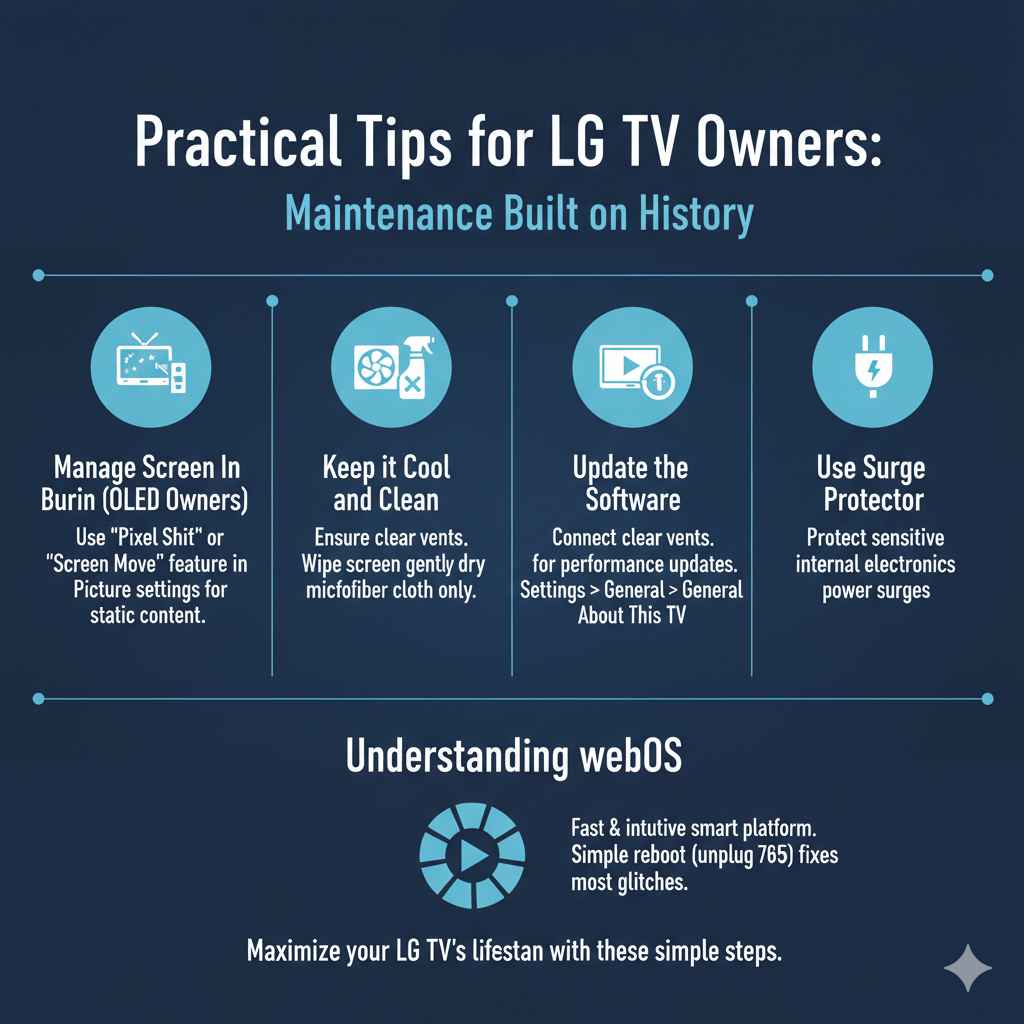
Practical Tips for LG TV Owners: Maintenance Built on History
Now that you know LG stands for Lucky-Goldstar, let’s tie this knowledge back to practical use. Because LG is strong in both material science and electronics, their TVs generally require standard, easy care. Just like checking your oil level is simple maintenance for your car, keeping your TV running well involves a few easy checks.
Simple Steps for Keeping Your LG TV in Top Shape
These steps ensure you get the maximum lifespan out of the high-tech components that Lucky and Goldstar worked so hard to perfect:
- Manage Screen Burn-In (OLED Owners): If you watch static content (like news tickers or game scoreboards) for many hours a day, use the built-in “Pixel Shift” or “Screen Move” feature found in your Picture settings. This feature gently moves the image slightly to protect the pixels.
- Keep it Cool and Clean: Ensure the vents on the back of your TV are not blocked. Good airflow prevents overheating, which helps all electronic components last longer. Wipe the screen gently with a soft, dry microfiber cloth only. Never spray cleaner directly onto the screen.
- Update the Software: LG TVs run on the webOS smart platform. Regularly connecting your TV to the internet allows it to download necessary performance updates. These updates often fix bugs and improve overall system stability. You can usually find the update option under Settings > General > About This TV.
- Use a Surge Protector: Electronic surges, even small ones, can damage sensitive internal circuit boards. Just as you wouldn’t risk a major engine issue from bad fuel, protect your TV’s sensitive electronics with a good surge protector.
Understanding webOS
The operating system (OS) for most modern LG TVs is webOS. This is a key part of the ‘Goldstar’ electronic heritage—the software experience.
webOS is known for being fast and intuitive. If you find it slow, often the best first step is a simple reboot (unplug it for 60 seconds and plug it back in) rather than immediately looking for complex fixes. Software issues are common, but a fresh start usually solves minor glitches quickly.
The Global Reach: LG’s Expansion Beyond TVs
The merger was about creating a global giant, not just a TV manufacturer. Understanding the scope of LG helps you appreciate the engineering resources behind your television.
LG Electronics operates across several major divisions. This massive scale allows them to invest heavily in R&D, benefiting the TV division with superior screen technology and processing power.
| Division Name | Products | Connection to TV Quality |
|---|---|---|
| Home Entertainment (HE) | Televisions (OLED, QNED), Audio Equipment | Direct development and manufacturing of the final product. |
| Home Appliances (H&A) | Refrigerators, Washing Machines, Air Conditioners | Utilizes material science and durable construction principles. |
| LG Display | OLED Panels, LCD Panels | The core technology supplier for the best picture quality components. |
| LG Chem | Batteries, Advanced Materials | Underpins R&D in energy efficiency and next-gen screen materials. |
It’s worth noting that LG Display (the panel maker) is a crucial, separate entity often supplying panels to other TV brands as well. This external business validates their position as a world-class display innovator.
SEO Focus: Addressing Common “What Does LG Stand For” Queries
For drivers looking for reliability, checking what a brand stands for often leads to deeper confidence. Here are answers to related questions people often ask when researching LG.
Frequently Asked Questions (FAQs)
1. Is LG a Korean company?
Yes, LG Electronics is a South Korean multinational corporation headquartered in Seoul. It is one of the largest conglomerates in South Korea.
2. Does LG still make CRT TVs?
No. LG stopped manufacturing older Cathode Ray Tube (CRT) TVs years ago. They are now focused entirely on advanced flat-panel displays like OLED, QNED, and LED technology.
3. Is the quality of LG TVs better now than 10 years ago?
Technologically, yes. The advancements in panel efficiency, brightness, and smart features in modern LG TVs far exceed models from a decade ago, especially in the OLED category.
4. What does the “webOS” on my LG TV stand for?
webOS is the brand name for the smart TV operating system developed by LG (initially acquired from HP). It stands for “web Operating System,” indicating its focus on internet connectivity and apps.
5. Does LG stand for anything related to cars?
No. While LG does produce components for the automotive sector (like displays and batteries), the initials LG on your television specifically refer to Lucky-Goldstar. If you are looking at car brands, Hyundai, Kia, or Genesis are common Korean alternatives.
6. Is LG owned by another company?
No, LG Electronics operates independently as the core of the LG Group conglomerate. While ownership structures can be complex for large international firms, it is not a subsidiary of a larger, non-Korean entity.
7. Where can I find official LG support documentation?
Official support, including manuals and driver updates, can typically be found on the LG Electronics official website under the “Support” section. Always rely on the official site for the most accurate technical data, much like using the manufacturer’s guide for your vehicle’s service intervals.
Conclusion: Confidence in Your LG Purchase
You now possess the essential knowledge: LG stands for the powerful union of Lucky and Goldstar. This history explains why your television combines robust material design with cutting-edge display technology.
Just as knowing the quality of the parts under your car’s hood gives you confidence on the road, understanding the heritage of your LG TV ensures you appreciate the engineering behind your picture quality. LG represents a decades-long journey of Korean innovation, resulting in reliable, high-performance electronics for your home.
Keep up with simple maintenance—like keeping the vents clear and updating the software—and you’ll enjoy clear, brilliant entertainment from your Lucky-Goldstar derived television for years to come. You’ve taken the first step in becoming a more informed consumer, and that’s always a win!