Tagine vs Tajin: The Real Difference (And Why Tahini Confuses Everyone)
You’re reading a recipe for chicken tagine, so you grab a jar of Tajin from the pantry. Or you’re at a market, see a beautiful clay pot labeled ‘tagine,’ and wonder if it makes that chili-lime powder taste better. You’re not alone. The words look almost identical, sound similar when spoken fast, and yet they point to completely different culinary worlds.
This article clears up the confusion for good. You’ll learn what a tagine actually is (both the pot and the dish), what Tajin seasoning does, and where tahini fits into the mix. You’ll also get a quick reference table, a mnemonic to keep them straight, and a straight answer on whether you can combine them without wrecking dinner.

CULIVORA
Culivora Moroccan Tagine for Cooking: Enameled Cast…
- Slow-Simmered Perfection: Our Moroccan tagine features a signature conical ceramic lid that circulates steam evenly, allowing ingr…
- Upgraded Cast Iron Tagine: Say goodbye to fragile clay tagines—our enameled tagine pot features an upgraded, rust-resistant cast i…
- Wholesome Meals, Rich Flavors: The enameled cast iron base ensures stable, low-and-slow cooking, while the cone-shaped ceramic lid…
As an Amazon Associate I earn from qualifying purchases.
If you’re shopping for your first tagine pot, the CULIVORA Moroccan Tagine is a solid choice. It pairs an enameled cast iron base with a ceramic cone lid, so you get the heat retention of cast iron and the steam-recirculating shape of a traditional clay pot. That combination makes it forgiving for beginners and reliable for everyday use.
The Ultimate Confusion: Tagine vs. Tajin vs. Tahini
Let’s start with pronunciation, because that’s where most mix-ups begin.
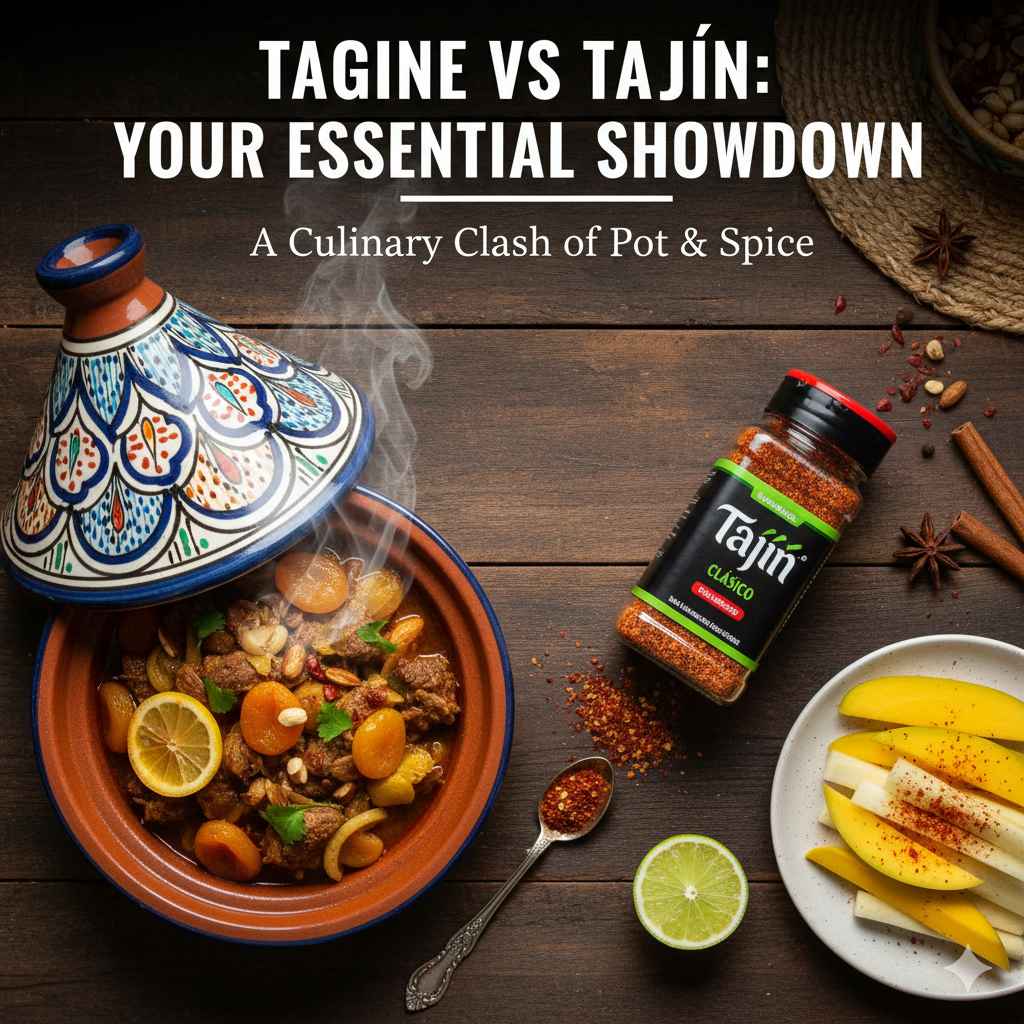
- Tagine (tah-ZHEEN or TAG-een): A North African clay pot with a cone-shaped lid, or the slow-cooked stew made inside it.
- Tajin (tah-HEEN): A Mexican chili-lime-salt seasoning powder sold in a round shaker.
- Tahini (tah-HIN-ee or tah-HEE-nee): A paste made from ground sesame seeds, used in hummus and Middle Eastern cooking.
Three words, three pronunciations, three completely different foods. The spelling similarity is a coincidence — tagine comes from the Arabic ṭajīn meaning ‘shallow earthen pot,’ while Tajin seasoning is a brand name owned by a Mexican company. Tahini traces back to the Arabic ṭaḥīna, meaning ‘ground’ or ‘flour.’
So the false friend problem is real. You’ll see ‘tagine vs tajin‘ searches constantly, and many people throw tahini into the same pile. Let’s untangle each one.
What is a Tagine? (The Pot and The Dish)
A tagine serves double duty. It’s a piece of cookware, and it’s also the name of the stew you cook in it. Both meanings matter.
The Clay Pot and Its Purpose
The traditional tagine pot has two parts: a wide, shallow base and a tall, cone-shaped lid with a small knob on top. The base holds the food, and the lid does the real work.
Here’s the physics: as the food simmers, steam rises, hits the cooler cone, condenses, and drips back down onto the meat and vegetables. This self-basting cycle means you need very little liquid — often just a splash of broth or water. The result is tender meat and concentrated flavors without constant stirring or checking.
Authentic tagines are made from unglazed clay or ceramic. They’re beautiful, but they have real limitations. You can’t put them directly on an electric or induction burner without a heat diffuser, and they can crack if shocked with sudden temperature changes. Clay also absorbs flavors over time, so a fish tagine may leave a trace in your next chicken dish.
That’s why enameled cast iron versions, like the CULIVORA tagine pot, have grown popular. The cast iron base heats evenly and works on induction, gas, and in the oven. The ceramic lid keeps the signature cone shape and steam effect. You trade a bit of rustic authenticity for durability and ease of use.
The Slow-Cooked Stew
The dish itself is a slow-cooked stew named after the pot. Classic Moroccan tagines combine meat — lamb, chicken, or beef — with vegetables, dried fruits, olives, and a warm spice blend. Cinnamon, cumin, ginger, turmeric, and saffron show up often. The cooking time runs 1.5 to 3 hours, depending on the meat and the recipe.
Regional variations exist. Moroccan tagines tend to be sweet-savory, with dates, apricots, or prunes alongside the meat. Tunisian tagines are different: they’re more like a baked egg-and-meat casserole, often with potatoes and cheese. Both are delicious, but they share little beyond the name and the North African origin.
If you’re new to tagine cooking, start with chicken and preserved lemon. It’s forgiving, takes about 90 minutes, and introduces you to the steam-basting effect without a long commitment.
What is Tajin? (The Seasoning)
Tajin is a brand of seasoning, but the name has become generic for the style. The standard blend is simple: mild red chili peppers, lime, and salt. That’s it. No cumin, no garlic, no sugar — just three ingredients balanced to hit sour, salty, and mildly spicy all at once.
The Chili-Lime-Salt Profile
The chili heat in Tajin is gentle. It’s more about tang and salt than actual burn, which is why people pile it on generously. The lime powder provides the sour kick, and the salt ties it together. You’ll find variations — habanero for more heat, and ‘low sodium’ versions — but the core profile stays the same.
This seasoning is not a spice blend in the Moroccan sense. It doesn’t contain warm, aromatic spices. It’s bright, acidic, and sharp. That distinction matters when you’re deciding what to use it on.
Common Uses in Mexican Cuisine
Mexican and Central American cooks use Tajin on fruit — mango, watermelon, jicama, and pineapple get a generous dusting. It’s also a standard rim for micheladas and margaritas, where the salty-sour kick balances the drink. Street corn (elote) gets a sprinkle, and so do fresh vegetables like cucumber and carrots.
You’ll also see it on chips, popcorn, and even in some ceviche recipes. The common thread is fresh, simple food that benefits from acid and salt. Tajin brightens, it doesn’t slow-cook.
Regional differences exist. In Mexico, Tajin is ubiquitous and used mainly on fruit and drinks. In Central American countries like Guatemala and El Salvador, similar chili-lime salts are popular on street snacks and grilled meats. The brand may vary, but the flavor profile stays familiar.
What is Tahini? (The Sesame Paste)
Tahini is the third ‘T’ that gets dragged into this confusion, and it has nothing to do with either tagine or Tajin. It’s a thick paste made from hulled, toasted, and ground sesame seeds. The texture resembles natural peanut butter — it separates when sitting, so you stir it before use.
The flavor is nutty, slightly bitter, and savory. Good tahini tastes rich and complex, not harsh. It’s a staple in Middle Eastern and Mediterranean cooking, appearing in hummus, baba ganoush, halva, and sauces like the lemon-tahini dressing you get with falafel.
Why does it get confused with the other two? The spelling similarity is the main culprit. ‘Tahini’ and ‘tajin’ are one letter apart in some spellings, and people searching for one often land on the other. But no, tahini is not a seasoning, and it’s not a pot. It’s a pantry ingredient with a completely different role.
Tagine vs. Tajin: The Core Differences
Here’s the shortest version: tagine is a cooking vessel and a stew. Tajin is a condiment. One is used for hours of slow cooking; the other is sprinkled on at the last second.
The cultural contexts are different too. Tagine comes from North Africa, specifically Morocco, and carries centuries of Berber and Arab culinary tradition. Tajin originates in Mexico and reflects that country’s love of acid, salt, and mild heat. They share almost nothing except a similar spelling.
A Side-by-Side Comparison Table
| Feature | Tagine | Tajin |
|---|---|---|
| What it is | Clay or cast iron pot, plus a slow-cooked stew | Chili-lime-salt seasoning powder |
| Pronunciation | tah-ZHEEN / TAG-een | tah-HEEN |
| Origin | Morocco, North Africa | Mexico |
| Primary ingredients | Meat, vegetables, dried fruit, warm spices | Chili peppers, lime, salt |
| Flavor profile | Savory, aromatic, often sweet-savory | Sour, salty, mildly spicy |
| How it’s used | Slow-cooked for 1.5–3 hours | Sprinkled on finished food |
| Heat level | Mild to moderate | Mild (tangy, not hot) |
| Common pairings | Lamb, chicken, preserved lemon, olives, apricots | Fruit, corn, drinks, chips, vegetables |
Can You Use Tajin in a Tagine?
Short answer: you can, but you probably shouldn’t — at least not in a traditional recipe. Tajin’s bright lime and sharp salt would clash with the warm, savory spices in a classic Moroccan tagine. Cinnamon, ginger, and saffron don’t want a citrus-salt bomb competing with them.
That said, fusion cooking has its place. If you want to experiment, here’s a concrete approach for a chili-lime chicken tagine that actually works:
- Brown chicken thighs in the tagine base with a little oil.
- Add onions, garlic, and a teaspoon of cumin. Skip the cinnamon and ginger.
- Pour in a cup of chicken broth and add a handful of chopped tomatillos or a squeeze of lime juice.
- Cover and simmer for 45 minutes.
- Finish with a sprinkle of Tajin on top, along with fresh cilantro.
The result is a hybrid — a slow-cooked stew with a Mexican accent. It’s not authentic, but it’s tasty if you like the flavor combo. Just don’t add Tajin during the cooking process; the lime loses its brightness and turns bitter. Sprinkle it on at the end.
How to Remember the Difference
Use this simple mnemonic: The pot is a tagine. The powder is Tajin.
Say it out loud a few times. The ‘g’ in tagine feels heavier, like a cooking pot. The ‘j’ in Tajin is lighter, like a shake of powder. It’s not perfect, but it sticks.
Another trick: tagine has six letters, and a stew needs time — six letters, six hours of slow cooking. Tajin has five letters, and a sprinkle takes five seconds. The shorter word is the faster food.
And tahini? Remember that it’s the one with ‘hi’ in the middle — as in ‘sesame seeds are healthy.’ That’s a stretch, but it works for most people.
Frequently Asked Questions
Is Tajin the same as a tagine?
No. Tajin is a Mexican chili-lime-salt seasoning. A tagine is a North African clay pot and the stew cooked inside it. They share a similar spelling but have no culinary connection.
Can I use a tagine pot on an induction stove?
Traditional clay tagines won’t work on induction burners. You need a version with a cast iron base, like the CULIVORA tagine, which is induction-compatible. Always check the manufacturer’s specs before buying.
What does Tajin taste like?
It tastes like sour lime, salt, and a mild chili warmth. There’s no significant heat — it’s more tangy than spicy. The flavor is bright and sharp, not deep or smoky.
Is tahini a good substitute for Tajin?
No. Tahini is ground sesame paste with a nutty, savory flavor. It has no acid, no salt, and no chili. Substituting one for the other would ruin both dishes.
Can I make a tagine without a tagine pot?
Yes. A heavy Dutch oven or any lidded pot works fine. You’ll lose some of the self-basting effect from the cone lid, but you can compensate by adding a little extra liquid and checking periodically. The dish will still taste great.
Final Thoughts: Don’t Confuse the Pot with the Powder
Keep it simple. A tagine is a cooking vessel and a stew from Morocco. Tajin is a seasoning from Mexico. Tahini is a sesame paste from the Middle East. Three different foods, three different kitchens.
- Use a tagine pot for slow-cooked meats with warm spices.
- Sprinkle Tajin on fruit, corn, or drinks for a sour-salt kick.
- Stir tahini into hummus or sauces for nutty richness.
- Don’t add Tajin to a traditional tagine recipe — the lime will clash with the cinnamon and ginger.
- If you want a fusion dish, finish a chili-lime chicken stew with Tajin at the end, not during cooking.
- Remember the mnemonic: the pot is a tagine, the powder is Tajin.
- When buying a tagine, consider an enameled cast iron version for durability and induction compatibility.
Now you can navigate a recipe, a spice aisle, or a conversation without mixing up your pots and your powders.
Products related to this article
Sponsored / affiliate links. As an Amazon Associate I earn from qualifying purchases. I may earn additional commission from eligible campaigns.