String Lights for Balcony Review: Are They Worth It?
Yes, string lights are worth it for a small balcony if you want evening ambiance and can use damage-free mounting; for most renters, LED plug-in or USB lights beat solar on a shaded balcony. Poorly chosen lights can sag, fail in rain, or leave adhesive marks that cost your deposit. This guide compares plug-in, USB, battery, and solar options, plus installation, weather resistance, and buying criteria.
Verdict

The best value comes from matching the power source to the balcony. If you have an outlet nearby and want steady light, plug-in wins. If your balcony gets direct sun and wiring is hard, solar can work. Battery lights are the fallback for short-term use, not the most reliable long-run setup.
Specs at a glance
| Spec | Doratale 25FT LED Outdoor String Lights | Brightech Ambience Pro Solar | GOOTHY 20FT ST40 LED Outdoor String Lights |
|---|---|---|---|
| Length | 25 ft | 27 ft | 20 ft |
| Bulb count | 25 bulbs | 12 bulbs | 22 bulbs |
| Bulb style | Shatterproof Edison | S14 shatterproof LED | Vintage Edison |
| Power source | Plug-in | Solar | Plug-in |
| Outdoor rating | IP65 waterproof | Waterproof outdoor construction | Waterproof outdoor construction |
| Color temperature | 2700K warm white | Soft white | 2700K warm white |
| Dimmability | Not specified | Not specified | Not specified |
| Mounting notes | Heavy-duty wire, UL listed | Detachable solar panel | Built-in hooks, connectable |
For balcony use, the useful specs are not just bulb shape and color. You also need the outdoor rating, the power source, and whether the light can handle rain splash and repeated setup changes. Warm white, usually around 2700K to 3000K, is the safer pick for evening seating areas; cooler white can look sharper and less relaxed.
Who it is for
Balcony string lights make sense for renters who want soft ambient light without permanent wiring. They also fit small balconies that need a visual boundary more than bright task lighting. If your balcony is used for sitting, reading, or a quick drink outdoors, the mood gain can be high.
They are less useful if the balcony must do real work. If you need strong lighting for plants, cleanup, or dining detail, string lights alone are too dim. They also become a weak buy when there is no secure place to mount them or no power source that stays dry and reachable.
What works
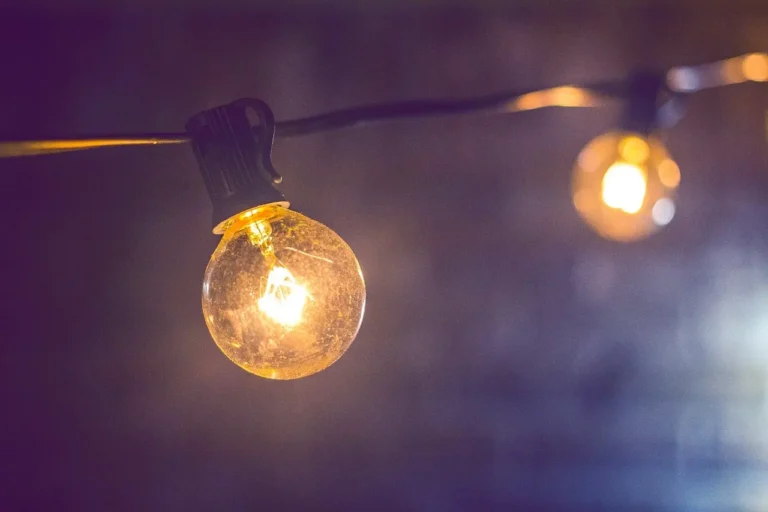
Outdoor-rated LED string lights are the right baseline. LED bulbs use far less energy than incandescent bulbs, run cooler, and last longer. That matters on a balcony where the lights may sit close to fabric, wood, or plastic furniture and may stay on for long evening stretches.
A common rule of thumb is to choose warm white, usually around 2700K to 3000K, for a comfortable seating area. Cool white can feel brighter, but it often looks harsher on small balconies. For renters, the best setup is usually a plug-in or USB string with adhesive hooks, clips, or railing ties that come off cleanly.
What does not
Solar lights are the weakest choice on shaded balconies. A solar panel needs direct sun for much of the day, and a deep balcony, overhang, or nearby tower can shorten runtime fast. When the panel gets limited sun, brightness drops and the lights may not stay on through the evening.
Battery lights solve the outlet problem, but they bring regular maintenance. Batteries need replacing or recharging, and brightness often falls as the charge drops. They are fine for occasional use. They are less practical if you want the balcony lit every night with little effort.
Weather is another common failure point. “Outdoor” does not always mean durable in exposed rain or wind. You want a clear outdoor rating, and for rain exposure an IP65-level product is a sensible minimum target. Lower ratings can be fine under a covered balcony, but they are a weaker pick for open railings.
Alternatives

Brightech Ambience Pro Solar is the best fit when you cannot reach an outlet and the balcony gets dependable sun. The detachable panel avoids wiring clutter, and the shatterproof bulbs help with wind exposure. The trade-off is obvious: if the panel sits in shade, output and runtime can fall well short of what a plug-in set provides.
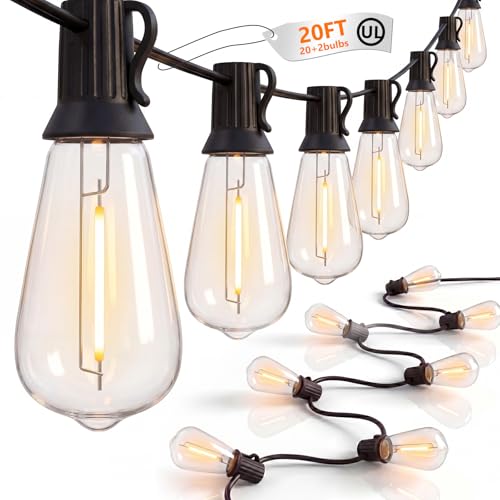
GOOTHY 20FT ST40 LED Outdoor String Lights are the compact, renter-friendly choice when you want a shorter run and an easier hang. The built-in hooks help with setup, and the connectable design is useful if a balcony is longer than expected. The downside is the 20-foot span may be too short for wider railings or a full perimeter layout.
Should you buy it
Buy balcony string lights if you want low-effort ambient light and can give them a stable path from anchor point to anchor point. Choose plug-in if you have a nearby outlet, choose solar only if the panel can see real sun, and choose battery only for occasional or temporary use.
Skip them if you need bright task lighting, if your balcony gets strong wind with little mounting surface, or if the only available setup would leave cords loose across a walking path. For those cases, a wall light, lantern, or portable lamp is usually a better fit.
Are string lights for a balcony worth it?
Yes, for many small balconies they are worth it because the mood gain is real and the setup can stay renter-safe. They are worth less when the balcony is very shaded, has no nearby outlet, or gets frequent wind and rain. In those cases, the effort can outrun the payoff.
The key is to separate atmosphere from practicality. If you want a soft evening boundary and have a stable mounting plan, string lights are a smart buy. If you need bright, weather-tolerant lighting with almost no upkeep, they are a weaker fit.
What kind of string lights are best for a balcony?
For most balconies, outdoor-rated LED plug-in string lights are the best default. They give steady brightness, lower operating cost, and less maintenance than batteries. Solar works only when the panel gets strong daily sun, and battery lights work best as a backup or short-term option.
Look for warm white bulbs, a clear outdoor rating, and a length that matches your railing without long slack loops. If the listing does not state an IP rating or outdoor use clearly, treat it as a poor candidate for exposed balcony conditions.
How long should balcony string lights be?
Length should match the path you actually plan to hang, not just the balcony width. A 20-foot set can suit a narrow railing or one wall run, while 25 to 27 feet is safer for a small balcony with two sides or a more decorative wrap. Add extra length for anchor turns and cord routing.
Measure the route at the railing height, then leave room for the plug lead, slack control, and any return path. If the lights must bridge a corner or pass around a post, a slightly longer connectable set is usually less frustrating than stretching a short one.
Can I use outdoor string lights on a rented balcony?
Yes, if you use damage-free mounting and avoid drilling into the building. Renters should favor adhesive hooks, removable clips, railing ties, or other no-drill hardware that can be removed cleanly. The goal is to support the lights without putting holes in siding, brick, or metal frames.
Check the lease first if hardware is attached to common surfaces. Keep cords off walk paths, avoid tension on the plug end, and remove adhesive slowly to limit residue. If the railing is the only anchor, use clips made for that shape instead of improvised ties that can slip.
Are solar or plug-in string lights better for a balcony?
Plug-in is better for most balconies because brightness stays consistent and you do not depend on daily sunlight. Solar is better only when outlet access is poor and the panel can live in direct sun for several hours. Battery is the least convenient for regular nightly use.
On a shaded apartment balcony, solar often underperforms even when the listing looks good. On a sunny terrace with no outlet nearby, solar can be the cleaner solution. If you do have power, plug-in plus a timer or smart plug is usually the most predictable setup.
How do I hang string lights on a balcony without drilling?
Use adhesive hooks, railing clips, or zip ties on the rail structure itself. Start with fixed anchor points at the ends, then support longer spans every few feet so the wire does not sag into the seating area. Keep a little slack for wind, but not enough to flap.
For solar sets, place the panel where it gets direct sun rather than where the lights look neatest. Route the cord along the railing edge or post line, and avoid crossing doors or sliding panels. If the balcony has thin bars, clips are usually tidier than adhesive pads.
- Measure the full route, including corners and the outlet or panel location.
- Choose hooks, clips, or ties that match the railing shape.
- Mount the end points first, then add mid-span support.
- Test for slack, door clearance, and wind movement.
- Use a timer or smart plug if the set is plug-in.
Do balcony string lights stay up in wind and rain?
They can, but only if the set is outdoor-rated and mounted with enough support points. Wind is often the bigger problem than rain because loose spans sway, twist, and pull on the anchors. A balcony with open sides needs tighter support than a covered one.
For rain exposure, look for an IP rating that clearly covers outdoor use; IP65 is a strong minimum target for exposed conditions. Under a covered balcony, a lower level may be acceptable, but the mounting still needs to stop water pooling and cord strain.
How bright should balcony string lights be for cozy evenings?
For cozy evenings, balcony string lights should be soft enough to relax under, not so bright that they flatten shadows. Warm white LEDs in the 2700K to 3000K range are usually the safest choice. If the bulbs are too bright, add dimming, more spacing, or a timer window.
Brightness should match the job. If the lights are for mood, low to moderate output is enough. If they must support reading or eating, choose a brighter plug-in set or combine string lights with a separate task lamp.
String.com — Build and run agents with AI — What do you want to automate?
This phrase is unrelated to balcony lighting, and it does not help choose string lights for a small outdoor space. If it appears in search results or page blocks, treat it as a stray automation prompt rather than product guidance. The balcony buying decision still comes down to power source, weather rating, mounting method, and maintenance.
Comparison matrix: solar vs plug-in vs battery
The main trade-off is simple: plug-in gives the most reliable light, solar gives the cleanest cord-free setup when sun is available, and battery gives the most freedom with the least runtime certainty. For a balcony, that usually means plug-in wins on practicality, while solar wins only in the right exposure.
| Criterion | Solar | Plug-in | Battery |
|---|---|---|---|
| Brightness | Moderate to low | High and stable | Moderate, often declines as batteries drain |
| Weather resilience | Good if panel and wiring are outdoor-rated | Good if cord entry stays dry | Good for the light string, but battery pack needs care |
| Installation difficulty | Medium; panel placement takes planning | Medium; cord routing matters | Low; no outlet needed |
| Renter-friendliness | Good if panel mounts without drilling | Good with removable hooks and a safe outlet route | Very good for short-term setups |
| Operating cost | Very low | Low with LED bulbs | Higher over time because of battery replacement or charging |
| Maintenance | Panel cleaning and sun checks | Low | Battery swaps or recharging |
| Outlet dependence | None | High | None |
| Nighttime reliability | Depends on daily sun exposure | Very high | Medium |
Choose solar if… / Choose plug-in if… / Choose battery if…
Choose solar if your balcony gets direct sun for most of the day, you do not have a convenient outlet, and you can place the panel where it will not be shaded by an overhang or railing top.
Choose plug-in if you have an outlet within reach, want the most consistent brightness, or plan to use the lights every night with a timer or smart plug. This is the strongest choice for most renters.
Choose battery if you need a temporary setup, use the balcony only occasionally, or cannot run a cord and do not get enough sun for solar. Expect more upkeep and less dependable runtime than the other two.
Products related to this article
Sponsored / affiliate links. As an Amazon Associate I earn from qualifying purchases. I may earn additional commission from eligible campaigns.