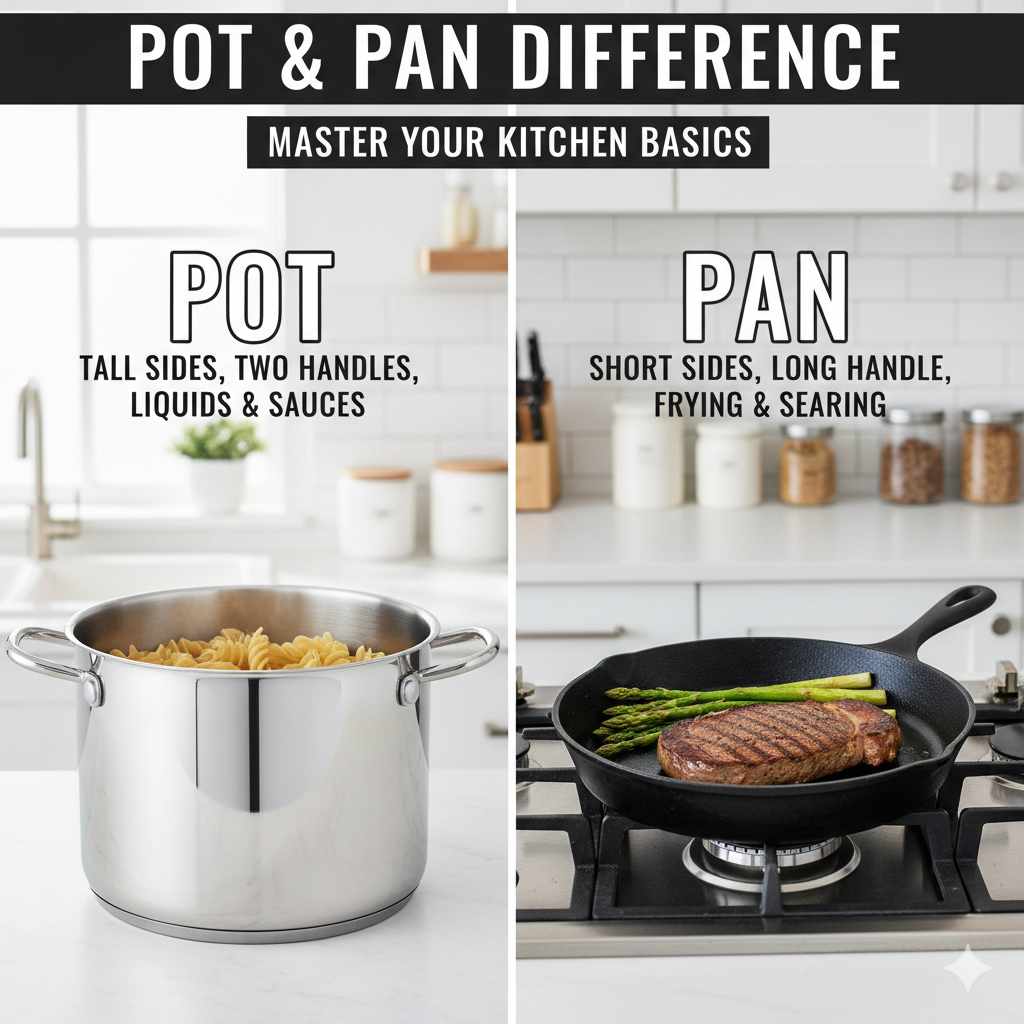
The main difference between a pot and a pan is their shape and purpose. Pots are deep with high walls and are used for cooking with liquids, like boiling soups or pasta. Pans are shallow with low, sloped walls and are used for frying, searing, or sautéing with direct heat.
Walking into a kitchen store can feel overwhelming. You see walls of shiny cookware, and everything seems to have a different name. Pot, pan, skillet, saucepan—what’s the deal? It’s easy to feel lost. You just want to cook a simple meal, not get a degree in culinary science. Don’t worry, you are not alone in this confusion. Understanding the basics is easier than you think. This guide will walk you through everything, step-by-step. We will make it simple, clear, and fun. Soon, you’ll know exactly which tool to grab for any recipe.
What is a Pot? The Basics Explained
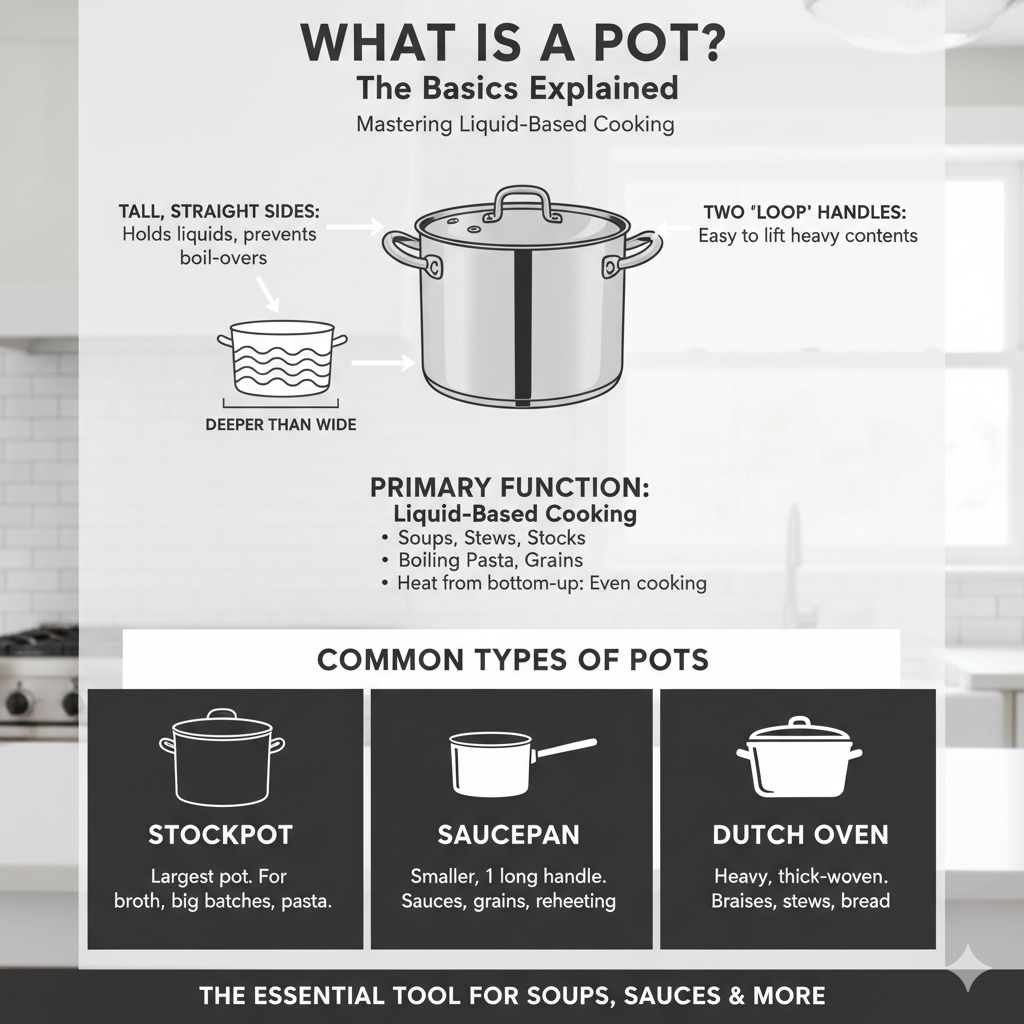
Think of a pot as the deep swimmer of your cookware collection. Its main job is to hold a lot of liquid. You can spot a pot by its key features: it has tall, straight sides and is generally deeper than it is wide. This design is perfect for containing liquids and preventing them from boiling over too easily. Most pots come with two smaller “loop” handles, one on each side. These handles make it easier to lift and carry the pot when it’s heavy with soup or water.
The primary function of a pot is for cooking methods that involve water, broth, or other liquids. The depth ensures that ingredients are fully submerged, allowing them to cook evenly. Heat is distributed from the bottom up, creating a gentle, consistent cooking environment perfect for long simmers or rapid boils.
Common Types of Pots:
- Stockpot: The largest pot in the kitchen, used for making stock, broth, large batches of soup, or boiling pasta.
- Saucepan: A smaller, versatile pot with one long handle, ideal for making sauces, cooking grains, or reheating leftovers.
- Dutch Oven: A heavy, thick-walled pot with a tight-fitting lid, often made of cast iron. It can be used on the stovetop and in the oven, making it perfect for braises, stews, and even baking bread.
What is a Pan? The Fundamentals
If a pot is a deep pool, a pan is a shallow wading area. Pans are all about cooking with direct, high heat. Their defining characteristics are low, often sloped sides and a wide, flat bottom. This large surface area allows food to make direct contact with the hot surface, promoting browning, searing, and frying. Most pans have one long handle, which makes it easy to toss, flip, and move food around quickly.
The main purpose of a pan is for cooking techniques that use less liquid and more fat, like oil or butter. The shallow design allows moisture to evaporate quickly. This is key for getting a crispy sear on a steak or perfectly browning vegetables instead of just steaming them. The heat is meant to be intense and direct, cooking food fast.
Common Types of Pans:
- Frying Pan (or Skillet): A go-to for everyday cooking with sloped sides that make it easy to flip food like eggs or pancakes.
- Sauté Pan: Has straight, vertical sides and a larger surface area than a frying pan. It’s excellent for searing meat and then creating a pan sauce without spilling.
- Griddle Pan: A large, flat pan (sometimes with ridges) designed for cooking things like pancakes, bacon, or grilled cheese sandwiches.
Pot vs. Pan: A Side-by-Side Comparison
Sometimes the easiest way to see the difference is to put them right next to each other. This table breaks down the essential features of a standard pot and a standard pan.
| Feature | Pot | Pan |
|---|---|---|
| Wall Height | Tall, high sides | Shallow, low sides (often sloped) |
| Shape | Deep, often narrow | Wide and shallow |
| Handles | Typically two small loop handles | Typically one long handle |
| Primary Use | Boiling, simmering, stewing (liquid-based) | Frying, searing, sautéing (fat-based) |
| Capacity | Large volume, measured in quarts or gallons | Smaller volume, focused on surface area |
| Heat Application | Even, sustained heat for long cooking times | Direct, high heat for fast cooking |
Diving Deeper: Common Types of Pots and Their Uses
Now that you know the basic difference, let’s look at the specific members of the pot family. Each one has a special job in the kitchen.
The Versatile Saucepan
A saucepan is one of the most-used items in any kitchen. It looks like a small pot but has one long handle like a pan. This hybrid design makes it easy to control. Its smaller size is perfect for tasks that don’t require a giant stockpot.
- Best For: Making sauces, cooking oatmeal, boiling a few eggs, preparing rice or quinoa, and reheating soup for one or two people.
- Key Feature: The tall, straight sides help prevent sauces from reducing too quickly, and the long handle allows you to easily swirl or pour from it.
The Mighty Stockpot
When you need to cook for a crowd or make something in a large batch, the stockpot is your best friend. It is the largest pot in the kitchen, designed for maximum volume. Its tall sides minimize evaporation, which is crucial when you’re simmering a stock for hours.
- Best For: Making homemade stock or broth, boiling pasta, cooking corn on the cob, making large quantities of chili or stew.
- Key Feature: The two loop handles are essential for safely lifting it from the stovetop to the sink to drain.
The Workhorse Dutch Oven
A Dutch oven is a heavy, thick-walled pot, usually made of enameled cast iron, with a tight-fitting lid. It is incredibly versatile because it can go from the stovetop directly into the oven. This makes it the champion of “low and slow” cooking.
- Best For: Braising meats, slow-cooking stews and chilis, baking artisan bread, and deep-frying.
- Key Feature: Its heavy construction provides excellent heat retention and distribution, cooking food evenly from all sides.
Exploring the World of Pans: A Cook’s Essential Toolkit
Pans are where the fast-paced, sizzling action happens. Knowing which pan to grab can be the difference between a perfectly seared scallop and a sad, grey one.
The Everyday Frying Pan (Skillet)
The frying pan, often called a skillet, is likely the pan you’ll use most often. Its sides are flared or sloped, which is a clever design feature. It allows steam to escape easily and makes it simple to slide a spatula underneath your food to flip it.
- Best For: Frying eggs, making pancakes, searing steaks or chicken breasts, and quick stir-fries.
- Key Feature: The sloped sides are perfect for tossing vegetables or getting that perfect omelet fold.
The Professional Sauté Pan
A sauté pan looks similar to a frying pan but with one key difference: it has straight, vertical sides. This gives it a larger flat cooking surface compared to a frying pan of the same diameter. The straight sides also do a great job of containing liquids and preventing splatters.
- Best For: Searing a piece of meat and then making a pan sauce, shallow-frying, or cooking dishes with a sauce component where you don’t want anything to splash out.
- Key Feature: The straight sides make it ideal for dishes where you need to keep food contained, like braised chicken thighs.
The Indoor Grill Pan
Want those beautiful grill marks without firing up the outdoor barbecue? A grill pan is the answer. This heavy pan, usually made of cast iron, has raised ridges on its cooking surface. These ridges lift the food up, allowing fat to drip away and creating char marks just like a real grill.
- Best For: Grilling burgers, chicken, vegetables, and steaks indoors.
- Key Feature: The ridges not only create sear marks but also help drain excess fat away from the food.
Choosing the Right Cookware Material: What You Need to Know
The material of your pot or pan affects how it heats up, how it holds heat, and how you need to care for it. There is no single “best” material—it all depends on the job. According to the U.S. Food and Drug Administration (FDA), materials intended for contact with food must be proven safe for their intended use.
Here’s a quick guide to the most common materials:
| Material | Pros | Cons | Best For |
|---|---|---|---|
| Stainless Steel | Durable, non-reactive, dishwasher-safe, can handle high heat. | Poor heat conductor on its own (look for an aluminum or copper core), food can stick. | Searing, browning, sautéing, making sauces. Great all-purpose choice. |
| Cast Iron | Excellent heat retention, gets very hot, naturally non-stick when seasoned, lasts forever. | Heavy, requires special cleaning (seasoning), can react with acidic foods like tomatoes. | Searing steaks, frying chicken, cornbread, anything you want a deep, crusty brown on. |
| Non-Stick | Food releases easily, requires less oil, easy to clean. | Coating can scratch, cannot be used with very high heat or metal utensils, needs to be replaced. | Delicate foods like eggs, pancakes, fish. A must-have for beginners. |
| Copper | Superior heat conductivity (heats up and cools down fast), precise temperature control. | Very expensive, reactive with some foods, requires polishing to maintain its look. | Delicate sauces, candy making, and professional kitchens where precision is key. |
Building Your First Cookware Set: A Beginner’s Checklist
You don’t need a 20-piece set to get started. A few versatile, high-quality pieces will cover almost every recipe. If you’re building your collection from scratch, here is a great place to start:
- A 10-inch Non-Stick Skillet: This will be your daily workhorse for eggs, grilled cheese, and other quick meals where you don’t want any sticking.
- A 12-inch Stainless Steel or Cast Iron Skillet: Use this for getting a great sear on meats, browning vegetables, and for any cooking that requires higher heat.
- A 3-Quart Saucepan: The perfect size for making sauces, cooking grains for a few people, or heating up a can of soup.
- A 6 to 8-Quart Stockpot or Dutch Oven: Choose a stockpot for boiling pasta and making big batches of soup. Opt for a Dutch oven if you plan to do more slow-cooking and braising.
With just these four pieces, you can cook thousands of different recipes. You can always add more specialized items as your cooking skills and interests grow.
Common Mistakes to Avoid When Using Your Pots and Pans
Taking good care of your cookware will make it last longer and perform better. Here are a few common mistakes that are easy to avoid:
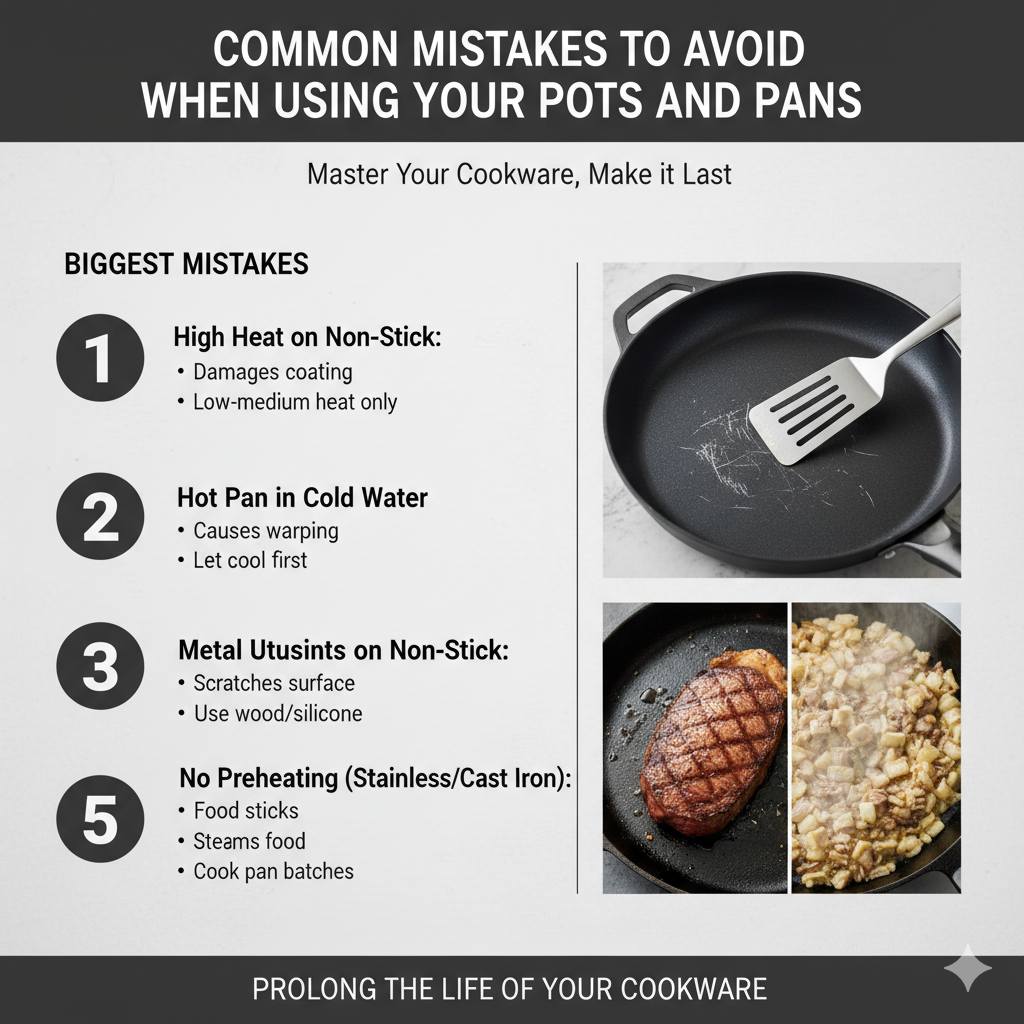
- Using high heat on a non-stick pan. This can destroy the coating and release harmful fumes. Non-stick is for low to medium heat only.
- Putting a hot pan in cold water. The sudden temperature change can cause the metal to warp, meaning it won’t sit flat on your stove anymore. Let it cool down first.
- Using metal utensils on non-stick surfaces. This will scratch and ruin the coating. Always use wood, silicone, or nylon utensils.
- Not preheating your stainless steel or cast iron pan. Putting food in a cold pan is the number one reason it sticks. Let the pan get hot first, then add your oil, and then your food.
- Crowding the pan. If you put too much food in a pan at once, it will steam instead of brown. Cook in batches if you have to.
Frequently Asked Questions (FAQ)
Can I use a pot instead of a pan?
Sometimes, but it’s not ideal. A pot’s high sides will trap steam, which prevents browning and crisping. So, if you try to “fry” chicken in a deep pot, it will likely end up steaming. It works in a pinch for some things, but a pan will always give you better results for frying or searing.
What’s the most versatile pan for a beginner?
A 10 or 12-inch cast iron or stainless steel skillet is incredibly versatile. You can use it to sear, fry, sauté, and even bake. While a non-stick pan is great for eggs, a good skillet can handle a much wider range of cooking tasks and higher temperatures.
How do I clean a cast iron pan?
Never put it in the dishwasher. After cooking, let it cool slightly. Use a stiff brush and hot water to scrub away any food bits. Avoid using soap if you can, as it can strip the “seasoning” (the layer of baked-on oil that makes it non-stick). Dry it completely on the stove over low heat, then wipe a very thin layer of cooking oil inside before storing.
Is non-stick cookware safe?
Modern non-stick cookware is generally considered safe when used correctly. The main concerns are related to overheating the pan, which can damage the coating. Avoid using high heat, don’t heat an empty non-stick pan, and discard any pans that have deep scratches or flaking coatings.
Why is my food sticking to my stainless steel pan?
There are usually two reasons. First, the pan wasn’t preheated properly. The pan needs to be hot before you add the oil. Second, the oil wasn’t hot enough before you added the food. Heat the pan, add the oil, and wait for it to shimmer slightly. Then add your food. Also, don’t try to flip the food too early. It will release from the pan naturally once a good crust has formed.
What does “oven-safe” mean?
It means the entire piece of cookware, including the handles, can be safely used in an oven up to a certain temperature. This is important for recipes that start on the stovetop and finish in the oven. Always check the manufacturer’s instructions, as some handles (especially plastic or rubber ones) have a lower temperature limit.
When should I replace my non-stick pan?
You should replace your non-stick pan as soon as the surface becomes deeply scratched, warped, or starts to peel or flake. A damaged coating won’t perform well, and there are health concerns about bits of the coating getting into your food. A well-cared-for non-stick pan might last a few years.
Time to Get Cooking!
And there you have it. The mystery of pots and pans is solved! It all comes down to a simple idea: use the right tool for the right job. Pots are for wet cooking, and pans are for dry, high-heat cooking. By understanding this basic difference, you’re already on your way to becoming a more confident and successful home cook.
Don’t be afraid to start small with a few essential pieces. As you cook more, you’ll learn what you like and what other tools might make your time in the kitchen even more enjoyable. Now, grab a pot or a pan and go make something delicious!