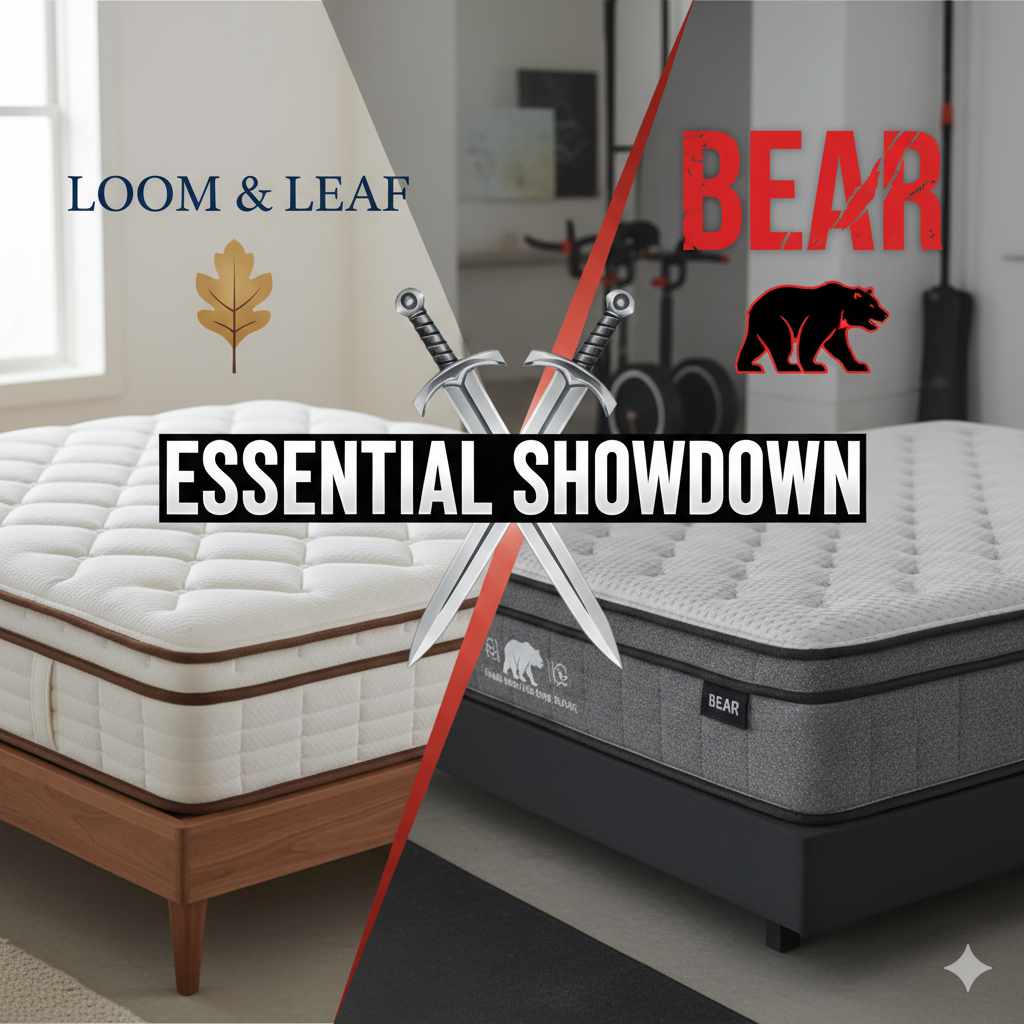
Loom & Leaf versus Bear mattresses present a classic choice between luxury hybrid comfort and excellent cooling performance. Loom & Leaf excels in deep support and plush feel, while Bear shines for hot sleepers needing targeted spinal alignment and better pricing. We break down the differences to help you pick the best one for your sleep style.
Choosing a new mattress can feel like navigating a confusing repair shop. You just want a good night’s sleep, but suddenly you’re flooded with terms like “density” and “coil count.” If you are looking at Loom & Leaf and Bear mattresses, you’ve narrowed down two fantastic, direct-to-consumer options. Many drivers feel frustrated when their old mattress leaves them sore, just like a strange noise under the hood! Don’t worry; we are going to break down these two popular beds simply and clearly. Together, we’ll compare foams, support, and what matters most—your comfort—so you can confidently make the right choice for your bedroom.
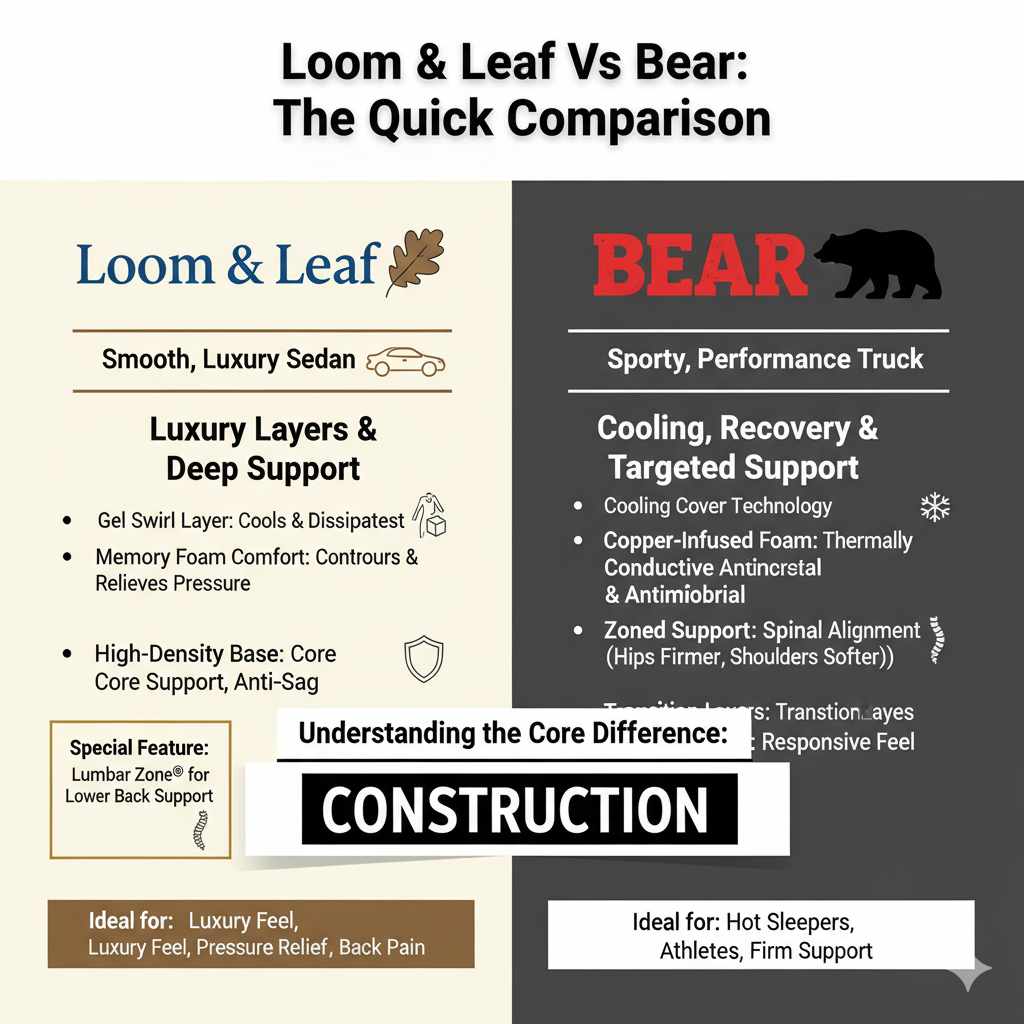
Loom & Leaf Vs Bear: The Quick Comparison
These two brands aim for different sleepers. Think of it like choosing between a smooth, luxury sedan (Loom & Leaf) and a sporty, performance truck (Bear). Both are great, but they offer different rides. Loom & Leaf focuses heavily on high-end materials and a supreme, luxurious feel, often favored by those who enjoy a softer surface that still offers deep support. Bear, on the other hand, heavily prioritizes temperature regulation and athletic recovery, making it a favorite for those who sleep hot or need firm, targeted support.
Understanding the Core Difference: Construction
The biggest difference between these two beds lies in what’s inside. This is your engine; understanding the layers tells you how the mattress will perform night after night.
Loom & Leaf Construction: Luxury Layers
Loom & Leaf, made by Saatva, leans into premium memory foam technology. They focus on creating a dense, durable structure that minimizes motion transfer and provides a premium feel.
- Gel Swirl Layer: This top layer often feels cool to the touch and helps dissipate body heat.
- Memory Foam Comfort Layers: These are dense, high-quality foams designed to contour perfectly to your body, relieving pressure points around the shoulders and hips.
- High-Density Base: Provides the core support, ensuring the mattress stays supportive for years without sagging.
- Special Feature: They often include a specialized Lumbar Zone® layer, using reinforced foam in the center third of the mattress to support your lower back. This is great if you often wake up with lower back stiffness.
Bear Construction: Cooling and Recovery
Bear mattresses (like the Bear Elite Hybrid or original Bear) are famous in the fitness community. Their primary goal is to help your body repair overnight. They use advanced cooling fabric technology combined with zoned coils (in their hybrid versions).
- Cooling Cover Technology: Many Bear models utilize phase change material (PCM) woven right into the cover fabric. This actively pulls heat away from your body.
- Copper-Infused Foam: This is a key feature! Copper is naturally antimicrobial and, more importantly for sleep, an excellent thermal conductor, meaning it pulls heat away from you very quickly.
- Zoned Support: Bear often designs its coils or support foams to be firmer under your hips and softer under your shoulders, promoting better spinal alignment—essential for recovery if you work out a lot.
- Transition Layers: These layers ensure a responsive feel, so you don’t feel “stuck” in the foam.
Feel and Firmness Comparison: Which Feels Better for You?
Firmness is subjective, like picking the right wrench size. What feels perfect for one person might be too soft or too hard for another. We use a standard 1 to 10 scale, where 10 is the firmest.
Firmness Ratings
Loom & Leaf generally runs slightly softer than Bear due to its emphasis on deep contouring, although both brands offer varying firmness options.
| Mattress Model Category | Typical Firmness Score (1-10) | Primary Feel Descriptor |
|---|---|---|
| Loom & Leaf Relaxed Firm | 5.5 – 6.5 | Balanced contouring with reliable deep support. |
| Loom & Leaf Firm | 7.5 – 8.0 | Noticeable pushback, excellent for heavier individuals or back sleepers who prefer less sink. |
| Bear Original/Pro (Memory Foam) | 6.0 – 7.0 | Medium-firm, slightly more responsive than Loom & Leaf’s standard model. |
| Bear Elite Hybrid | 5.0 (Softer side) to 8.0 (Firm side) | Highly customizable, excels at keeping the sleeper “on top” of the bed. |
Motion Isolation (The Partner Test)
If you share a bed, motion isolation is crucial. You don’t want to feel your partner tossing and turning after you finally drift off—that’s like feeling every pothole on the road when you are trying to drive smoothly!
Loom & Leaf Advantage: Because it uses high-density memory foam throughout, Loom & Leaf is typically superb at motion isolation. The foam absorbs nearly all movement, making it an excellent choice for couples.
Bear Performance: Bear mattresses, especially the hybrid versions with coils, are also very good, but perhaps not quite as isolating as the deep-foam feel of Loom & Leaf. The coils allow for slightly more movement transfer, though modern pocketed coils minimize this effect significantly.
Temperature Regulation (Hot Sleeper Alert!)
This is where the competition heats up—literally! If you often wake up sweating, this section is key.
Bear’s Strength: Bear is engineered for cooling. The copper infusion and phase change materials are designed to actively draw heat away from you. If you overheat easily, Bear often wins this head-to-head battle.
Loom & Leaf Cooling: While Loom & Leaf uses gel-infused foam and high-quality covers to sleep cooler than older memory foams, its core focus is deep contouring, which can sometimes trap slightly more heat than Bear’s specialized cooling structure.
Support and Spinal Alignment
Proper support keeps your spine naturally aligned, preventing aches. Think of it like ensuring your car’s frame is perfectly straight after a small bump—everything works better when it’s aligned.
Lower Back Support Focus
For many drivers, the lower back (lumbar region) takes the brunt of a long day. Both brands address this, but differently.
Loom & Leaf: It uses the aforementioned targeted Lumbar Zone®. This means thicker, more resilient foam is placed directly under your midsection. This prevents your hips from sinking too far, which keeps the spine level.
Bear: Bear uses zoned support across the entire mattress profile, sometimes mapping out three or five distinct firmness zones. This means the area under your shoulders is softer to allow sinking, while the area under your hips is firmer to prevent excessive sinking. This results in dynamic support tailored to different body parts.
For side sleepers, getting that shoulder and hip cushioning right is vital. If you are a side sleeper, look closely at the specific model’s zone mapping.
Durability and Materials Quality
A quality mattress is an investment, much like buying reliable auto parts. You want materials that won’t break down quickly.
Foam Density and Lifespan
When buying foam, density (how much material is packed into a cubic foot) is a strong indicator of longevity. Higher density foam generally lasts longer before developing body impressions.
Loom & Leaf is known for using high-density foams across its line. Because it sits in the luxury tier, the materials are meant to perform consistently for well over a decade. This robustness contributes to its slightly higher price point.
Bear also uses high-quality foams, often focusing heavily on open-cell structures for breathability, but their overall density profile might vary more depending on the specific model (e.g., the original Bear vs. the Elite Hybrid).
Edge Support
Edge support refers to how well the perimeter of the mattress holds up when you sit on the edge—say, when putting on your shoes or getting ready in the morning.
- Loom & Leaf: Being foam-based, edge support is generally adequate, but you might feel a slight compression right at the very edge compared to a traditional innerspring model.
- Bear Hybrids: If you choose a Bear Hybrid, you will almost certainly get superior edge support. The perimeter coils or reinforced foams around the side offer a much more stable feeling when sitting near or on the edge.
Pricing Structure and Value Proposition
Your budget is a huge factor. Both brands offer excellent value compared to traditional mattress showrooms, but their starting points differ.
Investment Level
Generally speaking, Loom & Leaf is positioned as the premium, luxury option and carries a slightly higher initial price tag. This price reflects the specialized, high-density foams and the luxury feel they target.
Bear is often more aggressive on pricing, especially during sales events, positioning itself as the high-performance, recovery-focused bed at a very competitive mid-to-upper range price. If you are budget-conscious but still want modern cooling and alignment technology, Bear often provides better immediate value.
When evaluating these costs, remember to look at the base price for a Queen size, as this is the most common comparison point.
Trial Period and Warranty (The Peace of Mind Factor)
Both companies stand behind their products with excellent reassurance policies. Think of this as your money-back guarantee or a generous warranty period—you wouldn’t buy a car without a test drive or warranty, right?
Trial Periods: Both Loom & Leaf and Bear typically offer a 100-night sleep trial. This is a great window to see if the mattress truly suits you. If you hate it, you send it back for a full refund—no hassle.
Warranties: Both brands usually offer long warranties, often 10 years or more. Always check the fine print, but standard warranties cover manufacturing defects and indentations beyond a certain depth (usually 1 inch or 1.5 inches). Loom & Leaf’s warranty often explicitly covers long-term material degradation due to their dense foam structure.
How to Choose: Finding Your Perfect Match
Here is a simple diagnostic tool. Ask yourself these questions, like checking fluid levels before a long trip:
- What is my primary sleeping position? (Side, Back, or Stomach)
- Do I sleep hot? (Yes/No)
- Do I need deep sink-in comfort, or do I prefer sleeping “on top” of the mattress? (Sink/On Top)
- What is my budget priority? (Luxury Feel vs. Best Price/Performance Ratio)
Scenario Guide: Who Should Buy Which?
Use these profiles to quickly see which mattress aligns best with your needs:
Choose Loom & Leaf If:
- You prioritize a very soft, pressure-relieving sink-in feeling.
- You sleep with a partner and need near-perfect motion isolation.
- You love the classic, dense contouring of high-quality memory foam.
- You want significant lumbar support built directly into the center of the bed.
Choose Bear If:
- You are a hot sleeper who sweats often during the night.
- You prefer a slightly more responsive feel that doesn’t hug you too closely.
- You are actively focused on fitness recovery and need targeted spinal alignment (especially with hybrid models).
- You are looking for the highest performance cooling features for a generally lower starting price.
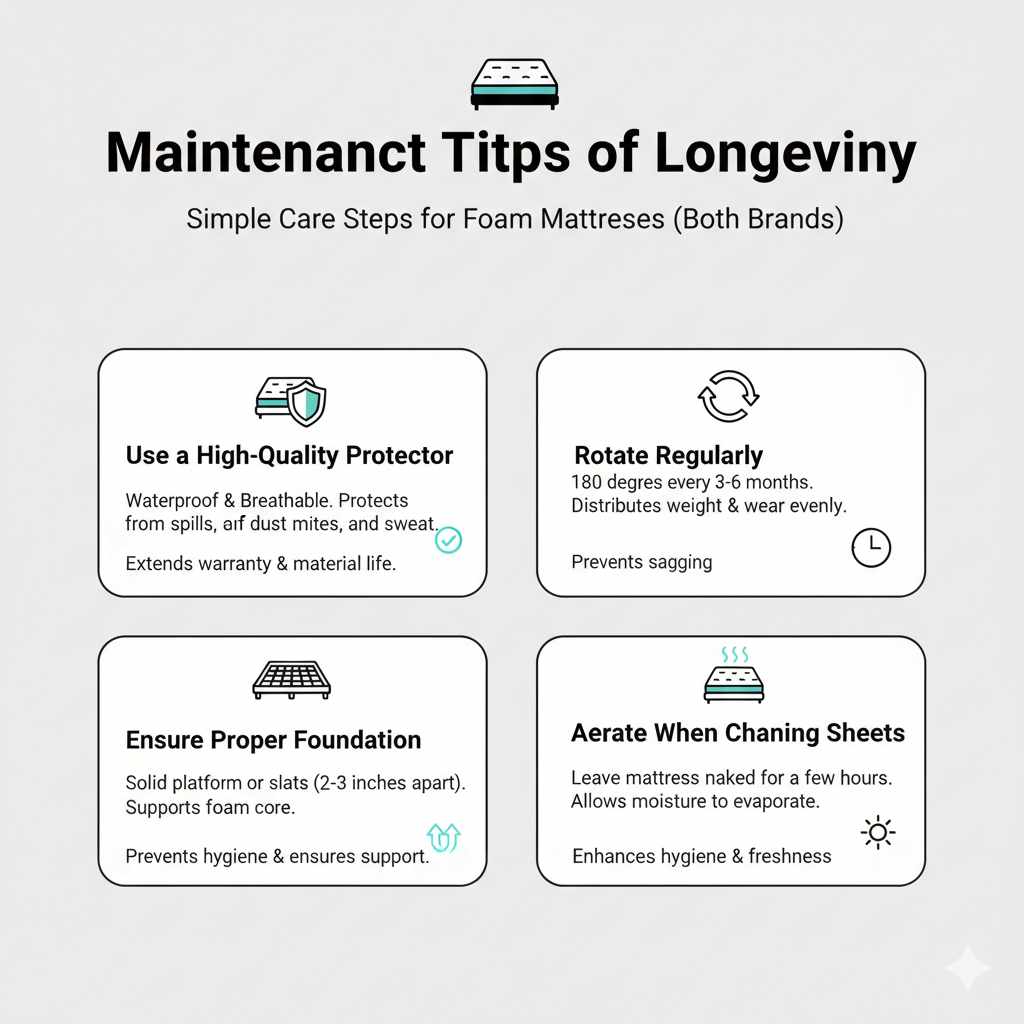
Maintenance Tips for Longevity
Once you choose your bed, treating it right ensures it lasts. This routine maintenance will keep your mattress running smoothly for years, saving you money on premature replacements.
Simple Care Steps for Foam Mattresses (Both Brands)
- Use a High-Quality Protector: A waterproof, breathable mattress protector is essential. It keeps spills, dust mites, and sweat out of the foam core, protecting your warranty and extending the life of the materials. Experts at consumer safety organizations often stress the importance of using mattress encasements. (CDC recommendations on allergen control can be similar to mattress hygiene).
- Rotate Regularly: Though foam mattresses don’t need flipping, you should rotate them 180 degrees every 3 to 6 months. This helps distribute body weight and wear evenly across the surface.
- Ensure Proper Foundation: Neither of these mattresses should be placed directly on the floor. They require a compatible, flat foundation—either a solid platform base or slats spaced no more than 2-3 inches apart. Slats that are too far apart cause the foam to sag in the unsupported areas.
- Aerate When Changing Sheets: When stripping the bed for washing sheets, leave the mattress naked for a few hours to air out. This allows any trapped moisture to fully evaporate.
Frequently Asked Questions (FAQs)
Q: Is Loom & Leaf better for back pain than Bear?
A: Both offer excellent lumbar support. Loom & Leaf uses a specific reinforcing layer for the lower back. Bear uses zoned support across the whole body. If your pain is strictly localized to the lower back, Loom & Leaf’s targeted zone might feel more comforting initially.
Q: Which one is easier to move or set up?
A: Both mattresses are compressed, rolled, and boxed for shipping, making them very easy for one or two people to carry inside. They expand the same way. The key difference is weight; since Loom & Leaf uses denser foams, the boxed version might be marginally heavier than a comparably sized Bear model.
Q: Can I use an adjustable base with Loom & Leaf or Bear?
A: Yes, both modern foam and hybrid models are fully compatible with most electric adjustable bases. Always confirm the specific model you choose supports articulation, but generally, both brands are safe to use on an adjustable frame.
Q: Does the initial “off-gassing” smell last longer on one than the other?
A: Off-gassing (that new foam smell) is common with new memory foam. Bear’s heavy use of cooling agents and copper may sometimes slightly mask or alter the initial smell, but both brands feature low-VOC (Volatile Organic Compound) foams. Ensure good ventilation for the first 48 hours after unboxing.
Q: I’m a heavier person (over 250 lbs). Which firmness is safer?
A: For heavier individuals, prioritizing support is key. You should likely lean towards the Loom & Leaf Firm model or the firmer configurations of the Bear Elite Hybrid. Higher density foam holds up better under sustained pressure over time.
Q: Which mattress is better for side sleepers worried about shoulder pressure?
A: Side sleepers need softness at impact points. The standard Loom & Leaf Relaxed Firm often provides that excellent cushioning sink. If you choose Bear, look at their softer hybrid options that feature adequate zoning to cradle the shoulder.
Final Thoughts: Parking Your Decision
Deciding between Loom & Leaf and Bear is less about finding the “best” overall mattress and more about identifying the best mattress for you. Both companies offer premium products that outperform many traditional beds available at specialty stores.
If your garage space is limited and you need a high-end, luxurious, deeply supportive foam hug without the heat worries of older beds, Loom & Leaf is your ticket. It feels substantial and built to last decades.
However, if you are constantly kicking off the covers or you are trying to optimize your body’s recovery after long days or workouts, Bear’s specialized cooling technology and zoned support structure provide performance advantages that are tough to beat at its price point. Remember, you get a full 100 nights to test drive it. Take advantage of that trial period, and trust your body’s feedback. You’ve got this!