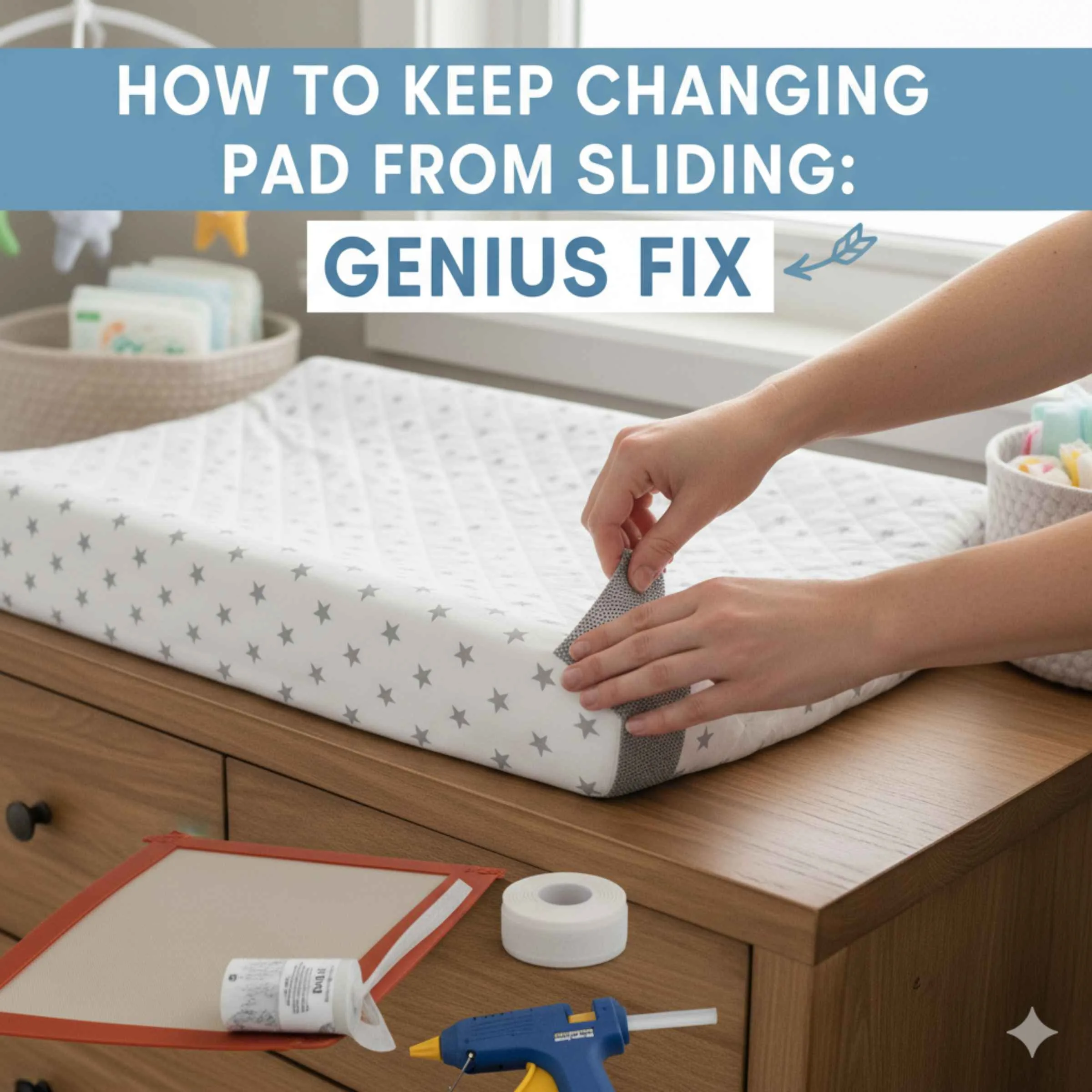
Quick Summary: The easiest way to stop your changing pad from sliding on a dresser is to use a non-slip material like a rug gripper pad or double-sided tape. Simply place the grippy material between the changing pad and the dresser surface to create friction and secure it in place, ensuring a safer changing experience for your baby.
Hey there, fellow parents! Dustin Hall here, your go-to guide for making car care and home safety a breeze. Today, we’re tackling a common nursery headache: the wobbly, sliding changing pad. It’s a small problem that can cause big worries when you’re trying to change a diaper. That changing pad just won’t stay put, no matter how many times you nudge it back. It shifts and slides, making you nervous about your little one’s safety. But don’t you worry! We’ve got some super simple, genius fixes that will keep that pad firmly in place. Get ready to say goodbye to the slide and hello to peace of mind!
Why Does My Changing Pad Slide?
It’s a question many new parents ask. That smooth changing pad and the smooth surface of your dresser or changing table are a recipe for slippage. There’s not enough friction between the two surfaces to keep things stable. Think about trying to slide a book across a shiny table – easy, right? It’s the same principle. Soft materials like foam or vinyl, common for changing pads, don’t naturally grip well. Dresser tops, often made of wood, laminate, or a slick finish, offer even less resistance. This lack of grip is what causes the pad to inch around during those wiggly diaper changes, which can be especially unnerving when your baby is on it.
The “Genius Fix” Explained: Creating Friction
The core of our solution is simple physics: friction. We need to introduce something that creates more grip between the changing pad and the dresser. This might sound technical, but it’s incredibly easy! We’re not talking about complex installations or expensive gadgets. We’re looking for everyday items that can add that much-needed traction. By increasing the friction, we prevent the pad from moving, ensuring it stays exactly where you put it. This makes the whole changing process safer and less stressful for everyone involved.
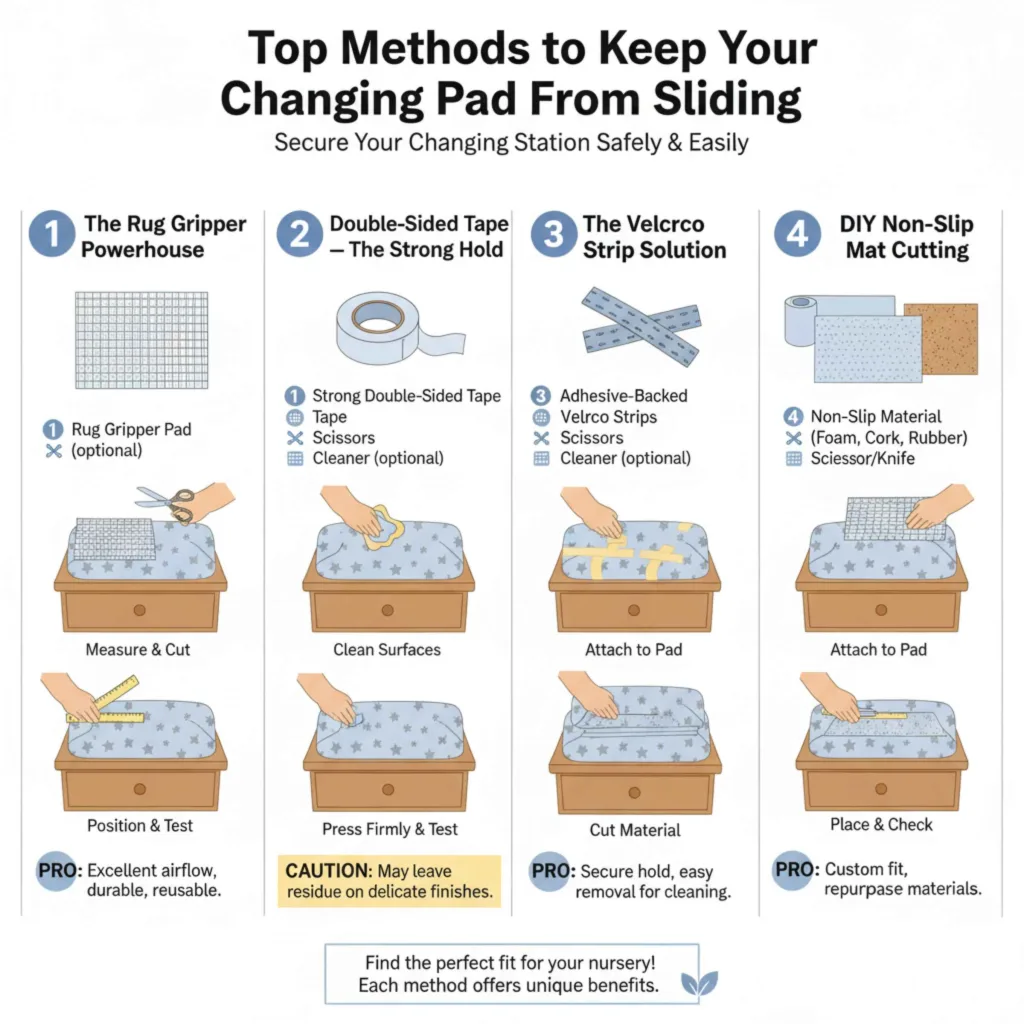
Top Methods to Keep Your Changing Pad From Sliding
There are several effective ways to anchor your changing pad. The best method for you will depend on what you have on hand and your preference. We’ll walk through them step-by-step.
Method 1: The Rug Gripper Powerhouse
This is arguably the most popular and effective method. Rug grippers, also known as rug pads or non-slip mats, are designed to do exactly what we need: keep things from sliding. They have a porous or textured surface that creates lots of little gripping points.
What You’ll Need:
- A rug gripper pad (available at most home goods stores, discount stores, and online retailers)
- Scissors (if trimming is needed)
Step-by-Step:
- Measure and Cut (if necessary): Take your rug gripper pad and lay it on the dresser where the changing pad will go. If it’s much larger than your changing pad, use scissors to trim it down so it’s slightly smaller than the changing pad itself. You don’t want the rug gripper showing around the edges.
- Place the Gripper: Lay the trimmed rug gripper pad flat on the dresser surface. Make sure it’s centered and positioned where you want your changing pad to sit.
- Position the Changing Pad: Carefully place your changing pad directly on top of the rug gripper pad. Press down gently to ensure it makes good contact.
- Test for Stability: Give the changing pad a gentle push from different sides. It should feel significantly more secure and shouldn’t slide easily.
This method is fantastic because rug grippers allow for some airflow, which can be good for preventing moisture buildup underneath. Plus, they are durable and can be reused if needed.
Method 2: Double-Sided Tape – The Strong Hold
If you don’t have a rug gripper, good old double-sided tape can also do the trick. This works by creating a strong adhesive bond between the changing pad and the dresser.
What You’ll Need:
- Strong double-sided tape (look for products designed for household use or crafts; avoid very weak tapes)
- Scissors
- Rubbing alcohol or a general cleaner (optional, for a cleaner surface)
Step-by-Step:
- Prepare the Surfaces: Make sure both the bottom of your changing pad and the dresser surface are clean and dry. Wipe them down with a damp cloth or rubbing alcohol if they feel sticky or dusty. Let them dry completely.
- Apply the Tape: Cut several strips of double-sided tape. Apply these strips to the bottom of your changing pad, spacing them out evenly. You can place them along the edges and a couple in the middle for good measure.
- Press Firmly: Peel off the backing from the tape. Carefully position the changing pad on the dresser and press down firmly on all areas where the tape is applied. This ensures a good bond.
- Test the Hold: Gently try to slide the changing pad. It should feel very secure.
Important Note: Be mindful that strong double-sided tape might, over time, leave residue on your dresser surface or peel off the finish if removed abruptly, especially on delicate wood. Test a small, inconspicuous area of your dresser first if you’re concerned about the finish. For a less permanent solution, consider using painter’s tape folded sticky-side out in a few spots, though this will offer less traction than strong double-sided tape.
Method 3: The Velcro Strip Solution
Velcro can be another excellent option, offering a secure hold that can be easily separated. You’ll need to attach one side of the Velcro to the changing pad and the other to the dresser.
What You’ll Need:
- Adhesive-backed Velcro strips (heavy-duty is recommended)
- Scissors
- Rubbing alcohol or a general cleaner (optional)
Step-by-Step:
- Clean Surfaces: As with the tape method, ensure both surfaces are clean and dry.
- Attach Velcro to Pad: Peel the backing off a few strips of the soft side of the Velcro (the loop side), and attach them to the bottom corners of your changing pad. Press firmly.
- Attach Velcro to Dresser: Peel the backing off the hook side of the Velcro strips. Carefully align your changing pad on the dresser and press down firmly to mark the spots where the hook strips should go on the dresser surface. Alternatively, you can pre-place the changing pad, mark the spots, and then apply the hook strips to the dresser.
- Secure the Pad: Once the hook strips are firmly attached to the dresser, place the changing pad on top, aligning the Velcro sections. Press down to engage the Velcro.
- Test Stability: Gently try to move the pad. It should hold firmly in place.
This method gives you the satisfaction of a firm hold while allowing you to easily remove the pad for cleaning or if you move the changing system later on, without strong adhesive residue.
Method 4: DIY Non-Slip Mat Cutting
If you’re handy with a craft knife or scissors, you can create a custom non-slip mat from various materials.
What You’ll Need:
- A sheet of non-slip material:
- Foam shelf liner (the kind with a bit of texture)
- Thin rubber matting (like a yoga mat remnant, but not too thick)
- Cork sheeting (thin variety)
- Scissors or a craft knife
- Measuring tape or ruler
Step-by-Step:
- Measure Your Changing Pad: Measure the exact dimensions of the bottom of your changing pad.
- Cut the Material: Using your measurements, cut a piece of your chosen non-slip material so it’s slightly smaller than the changing pad. This ensures it won’t be visible.
- Place and Secure: Lay the cut piece of material on your dresser where the changing pad will sit. Then, place the changing pad on top of the DIY mat.
- Check for Slip: Gently test the changing pad for stability. The textured material should provide enough friction.
This is a great way to repurpose materials you might already have around the house!
Choosing the Right Material for Your Changing Pad Fix
The effectiveness of these fixes often comes down to the material you choose. Here’s a quick look at some common options and what makes them work:
| Material Type | How It Works | Pros | Cons |
|---|---|---|---|
| Rug Gripper Pad | Tens of thousands of microscopic gripping points that dig into surfaces. | Excellent grip, breathable, durable, reusable, widely available. | May need trimming, can be more expensive than other options upfront. |
| Double-Sided Tape | Adhesive creates a strong bond between two surfaces. | Very secure hold, readily available household item, easy to apply. | Can leave residue, may damage dresser finish, not reusable, can lose stickiness over time. |
| Velcro Strips | Hook-and-loop system creates a physical connection. | Secure but removable, no residue if installed carefully, can be repositioned. | Requires careful alignment, adhesive on Velcro can leave residue, hook side can snag fabrics. |
| Foam Shelf Liner | Textured surface creates friction. | Inexpensive, easy to cut, provides good grip, readily available. | Less durable, may compress over time, can offer slightly less grip than specialized rug pads. |
| Rubber Matting (thin) | Natural rubber properties provide high friction. | Excellent grip, durable, easy to clean. | Can sometimes have an odor, needs to be thin enough not to create a bulk, might not be readily available. |
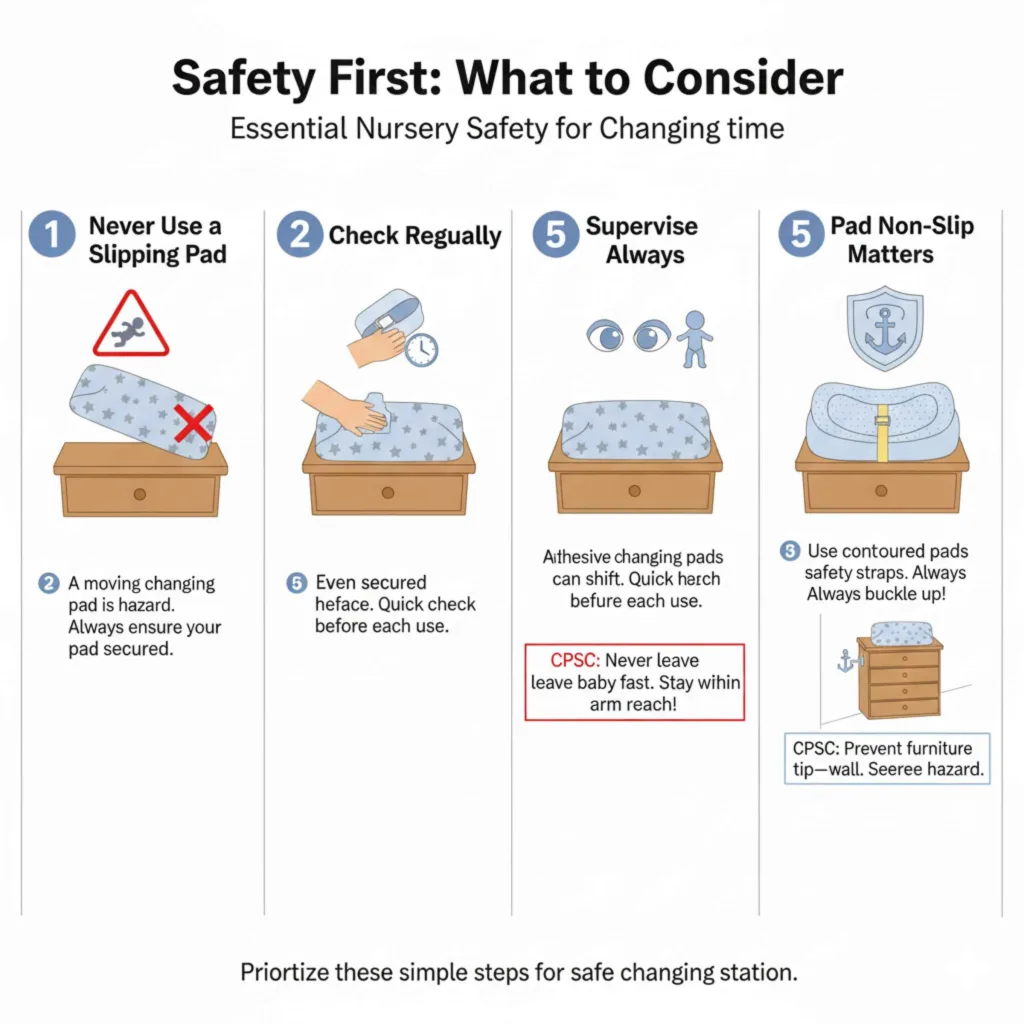
Safety First: What to Consider
When dealing with safety in the nursery, it’s paramount. While these fixes are simple, there are a few extra things to keep in mind:
- Never Use a Slipping Pad: A moving changing pad is a hazard. Always ensure your pad is secured before placing your baby on it.
- Check Regularly: Even secured pads can shift slightly over time. Give your changing pad a quick check for stability before each use.
- Supervise Always: Regardless of how secure the pad is, never leave your baby unattended on the changing table, not even for a second. Distances can be covered quickly. The U.S. Consumer Product Safety Commission (CPSC) strongly emphasizes this critical safety point.
- Pad Type Matters: Most changing pads are designed with a contoured shape and straps. These are crucial safety features. Always use the straps if your changing pad has them.
- Dresser Stability: Ensure the dresser itself is stable and properly anchored to the wall. A tipping dresser is a severe hazard for young children. Organizations like the CPSC offer excellent guidelines for furniture tip-over prevention.
Frequently Asked Questions (FAQ)
Q1: Will a changing pad slide even if it has straps?
While straps are essential for securing your baby, they don’t always prevent the entire changing pad from shifting on the dresser surface. The pad can still slide side-to-side or front-to-back underneath the straps if it isn’t secured to the furniture itself. Adding a non-slip material underneath is still highly recommended for overall stability.
Q2: Can I just use a towel under the changing pad?
A towel might offer a tiny bit of extra friction, but it’s usually not enough to prevent significant sliding, especially with an active baby. Towels can bunch up and may actually create an unstable surface. For true security, a dedicated non-slip material or adhesive solution is much more effective.
Q3: How often should I check the changing pad’s stability?
It’s a good habit to give the changing pad a quick nudge and check its stability before every diaper change. This is especially important if your changing station is in a high-traffic area or if you’ve recently cleaned the area around it. A quick check takes just a second and provides peace of mind.
Q4: My dresser top is glass. Can I still use these methods?
Yes, most of these methods work well on glass. For double-sided tape or Velcro, ensure you test in an inconspicuous area first, as some adhesives might affect glass coatings. Rug grippers and DIY mats are excellent options for glass surfaces as they provide grip without adhesives. For extremely smooth surfaces like highly polished glass, you might need to opt for a strong rug gripper or multiple strips of high-quality double-sided tape for the best hold.
Q5: What if my changing pad is contoured? Does that affect how I secure it?
A contoured changing pad has a specific shape with raised edges. This design is great for keeping your baby safely contained. When securing it, make sure your non-slip material or tape covers the flatter bottom surface of the pad. Avoid letting the securing material become a tripping hazard or interfere with the pad’s shape. The goal is to secure the base, not the contours.
Q6: Can I use a sticky mat (like a placemat) for this?
Some repositionable sticky mats designed for temporary use might work, but they can be hit-or-miss. Many are too smooth or lose their stickiness quickly. Specialized non-slip rug grippers or well-applied double-sided tape are generally more reliable and offer consistent, long-lasting grip. Always prioritize products designed for stability and friction.
Q7: Are there any changing pad brands that have built-in non-slip features?
While many changing pads have a slightly textured bottom, few have truly built-in non-slip features that eliminate the need for an additional layer on problematic dresser surfaces. Some higher-end models might incorporate more grippy materials on their base, but even then, adding a rug gripper or similar product is often the safest bet to guarantee stability on varied dresser finishes.
Conclusion
There you have it! Keeping your changing pad from sliding on your dresser is a simple fix that makes a world of difference in your nursery routine. By adding a layer of friction with a rug gripper, some well-placed double-sided tape, or even a DIY non-slip mat, you can transform a potentially stressful situation into a safe and secure one. Remember, peace of mind in the nursery is priceless. These easy solutions mean one less thing to worry about as you navigate the beautiful chaos of parenthood. So go ahead, try one of these genius fixes, and enjoy those precious diaper changes knowing your little one is staying put!