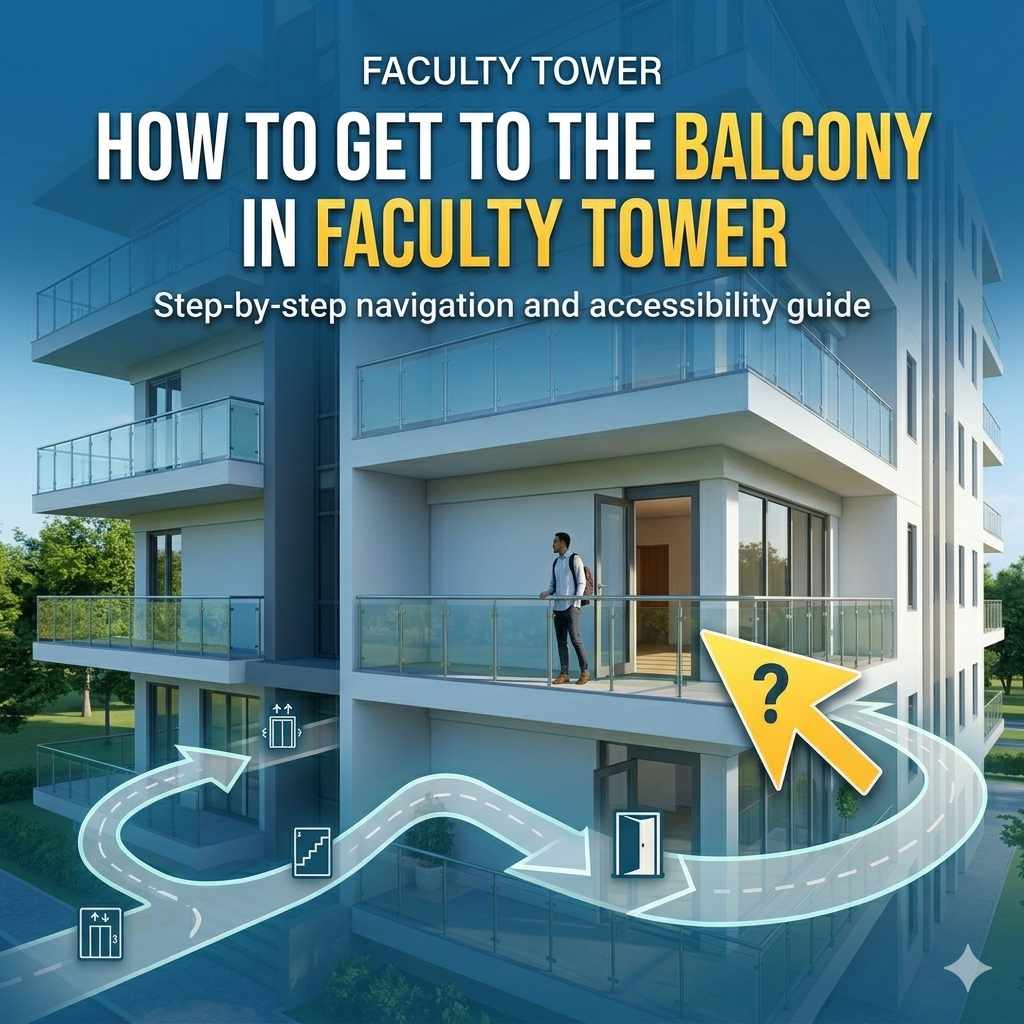
To access the balcony in Faculty Tower, you will typically need to locate the key access door, which is often disguised as a regular interior door near common areas or specific windows on the designated floors. Always check security protocols and ensure you have the proper clearance or keycard access before attempting entry.
Have you ever looked up at the soaring Faculty Tower and wondered how those folks up there get out onto that amazing balcony space? Maybe you’re a new student, a visitor, or a staff member who just wants a little fresh air away from the hustle inside. It can feel a bit confusing because these access points aren’t always obvious! Faculty Tower buildings, especially older ones, often have specific security measures or non-standard access routes for balconies meant for specific staff or maintenance crews.
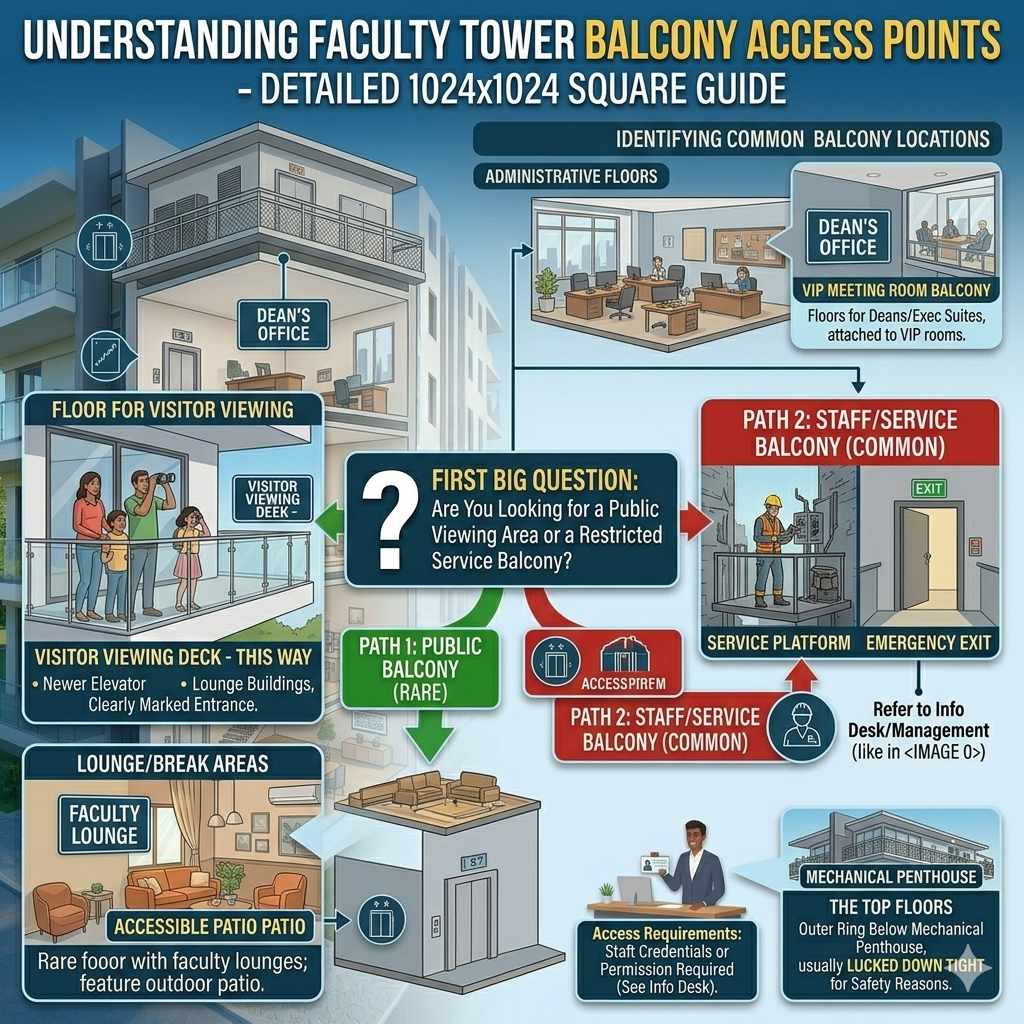
Understanding Faculty Tower Balcony Access Points
Faculty Tower buildings are usually designed with a few key considerations: safety, security, and function. This means that unlike residential balconies, access to balconies in academic or administrative towers is often restricted. We need to figure out which type of balcony you are trying to reach.
Are You Looking for a Public Viewing Area or a Restricted Service Balcony?
This is the first big question. Most modern buildings have observation decks, but historical or technical towers usually have balconies reserved for specific jobs, like window washing or HVAC maintenance. Knowing the purpose helps set the right expectation for access difficulty.
- Public Access Balcony (Rare): If the building is newer or specifically designed for visitor viewing, the entrance might be clearly marked near an elevator lobby or designated lounge area.
- Staff/Service Balcony (Common): If this is a classic academic tower, the balcony is usually an emergency exit or a service platform. Access usually requires staff credentials or permission from building management.
Identifying Common Balcony Locations in Towers
In many academic structures, the balconies are situated on floors known for offices, conference rooms, or sometimes just below the rooftop mechanical areas. They are rarely located near standard classrooms.
- Administrative Floors: Check floors known for Deans’ offices or executive suites. Sometimes, a small balcony is attached to a VIP meeting room.
- Lounge/Break Areas: On rare occasions, a floor dedicated to faculty lounges might feature a small, accessible outdoor patio space.
- The Top Floors: Before the mechanical penthouse, there might be an accessible outer ring, usually locked down tight for safety reasons.
Step-by-Step Guide: Initial Reconnaissance and Inquiry
Since you can’t just try every door, we need a systematic approach. This process focuses on finding the right building authority first, which is the safest and most reliable way to gain access.
Step 1: Locate Building Management or Security Office
In almost every large institutional building, the key to access lies with the people who manage the building’s logistics. Think of them as the keepers of the keys—literally!
- Where to Look: Usually located on the ground floor or in the basement (“B” level). Look for signs pointing to “Facilities,” “Building Services,” or “Security Desk.”
- What to Ask: Be polite and clear. Ask, “I am trying to find the proper pathway or request to access the exterior balcony space on [Mention Floor Number if known], could you direct me to the person in charge of access permissions?”
Step 2: Determine Your Reason for Access (The “Why”)
Security personnel need a valid reason to grant access to non-public areas. Be honest! If you are making things up, you might cause problems later.
| Your Role | Likely Valid Reason | Required Action |
|---|---|---|
| Student/Visitor | Specific research photography, art project, or authorized campus tour requirement. | Requires written approval from a supervising Professor or Department Head. |
| Faculty/Staff Member | Scheduled meeting, need for brief respite or authorized equipment maintenance. | May require a keycard override or temporary escort by a security officer. |
| Vendor/Contractor | Scheduled repair or inspection work. | Must present official work order signed by the Facilities Director. |
Step 3: Identifying the Physical Access Points
Once you have approval (or are waiting for it), you can start looking for the actual door. Balcony doors are often different from standard room doors to deter unauthorized entry.
Look for these visual cues near the potential entry points:
- Door Hardware: Does it have an unusually large deadbolt, a panic bar (the long horizontal bar you push to exit), or a keycard reader that looks different from the others?
- Signage: Even if access is restricted, there must be a sign. It might say “Balcony Access – Authorized Personnel Only” or “Emergency Exit Only.”
- Window View: If you can see a sturdy railing or the edge of the building from a specific internal window, the door to that outside area is usually nearby.
Scenario Deep Dive: Accessing Balconies in Typical University Towers
University towers often follow specific architectural blueprints. Let’s look at the most common scenarios we find when trying how to get to the balcony in Faculty Tower.
Scenario A: The “Fire Escape” Style Balcony
Many older towers use minimal balconies primarily as fire safety overflow points or maintenance walkways. These are the hardest to access legally without an emergency.
Key Safety Note: Never force a door that is clearly alarmed or locked with a security bar. Tampering with fire safety equipment is a serious offense. For more information on general building safety regulations, you can often review guidelines provided by local fire safety authorities, such as those often referenced through state fire marshal pages via the National Fire Protection Association (NFPA) standards.
Procedure for Fire Escape Access
- Confirm Use: Verify with Building Services that this specific door leads to a usable balcony and is not solely an exterior walkway.
- Check Locking Mechanism: If it has a panic bar, pushing it will unlock the door, but it will likely trigger a silent alarm monitored by security.
- Escort Required: In this scenario, you almost always need a security guard present to disable the local alarm before you exit.
Scenario B: The Architectural “Feature” Balcony
These balconies are part of the building’s design aesthetic, often attached to high-level conference rooms or special faculty suites. They are designed for use but access is tightly controlled.
How to find the keyholder:
- Contact the department or office directly associated with that floor level (e.g., Dean’s Office, Provost’s Suite).
- Request permission to use the space during a specific, approved timeframe. They hold the key or the master access card.
Essential Tools for Seeking Access Confidence
You don’t need wrenches or screwdrivers for this task, but you do need the right “tools” to communicate professionally and effectively.
| Tool | Description | Why It Helps |
|---|---|---|
| Official ID/Badge | Your current student, faculty, or employee identification card. | Proves you belong to the institution. |
| Written Request (If needed) | An email or letter from a supervisor stating your need. | Shows prior authorization, convincing security faster. |
| Professional Demeanor | Calm, respectful, and direct communication style. | Security staff are more likely to assist polite individuals. |
Troubleshooting Common Access Barriers
What happens when the door is locked, and no one seems to know how to open it? This is frustrating, but don’t give up! Let’s troubleshoot.
Barrier 1: The Keycard Reader Isn’t Working
If you have a keycard but the reader flashes red above the balcony door, several simple things could be wrong:
- Card Status: Your card might be deactivated, or your permissions haven’t been updated for that specific zone. Revisit Building Security to confirm your card’s active status.
- Reader Malfunction: The reader itself might be broken. Report this immediately to Facilities using the building maintenance reporting app or hotline.
- Wrong Door: Are you sure this is the balcony door? Sometimes utility closets use identical external-looking doors. Double-check against the building floor plan if available.
Barrier 2: Maintenance Says Access is Impossible
If maintenance staff tell you the balcony is permanently closed, they usually mean one of two things:
- Structural Integrity: The balcony may be marked unsafe for use due to age or required inspections. This is a safety issue, and you should respect this closure.
- Seasonal Closure: Some balconies are closed during winter months due to ice buildup or during the summer due to specific insect nesting problems. Ask if the closure is temporary.
If structural integrity is the issue, you might check the university’s Engineering or Facilities planning website for recent capital project notices regarding structural assessments. For instance, many public institutions adhere to strict upkeep schedules regulated by state university infrastructure boards.
Barrier 3: Feeling Intimidated by Security Guards
It’s natural to feel nervous when dealing with security, especially if you feel you might be imposing. Remember, their job is to keep everyone safe, not to block access unnecessarily.
When approaching, always use this simple script:
“Good morning/afternoon. I am [Your Name] from [Your Department/Affiliation]. I have a specific, authorized need to briefly access the outdoor balcony space on the [Floor Number] floor for [Brief, Clear Reason]. Can you advise me on the correct protocol for gaining temporary access today, or do I need an escort?”
Maximizing Your Time on the Balcony (If Allowed)
Congratulations! You found the way. If you are fortunate enough to gain access to a Faculty Tower balcony, remember that you are likely in a space that isn’t meant for long-term lingering. Be respectful of the access rules.
Etiquette for Tower Balcony Use
Treat the space as a privilege, not a right. These rules often vary, but general guidelines help ensure access remains available for others:
- Keep Noise Low: This is often near high-level offices or residential areas where quiet is expected. No loud phone calls or radios.
- Time Limit: If no time limit was given, assume 10-15 minutes is appropriate unless directed otherwise.
- Leave No Trace: Take all trash with you. Do not leave personal items behind.
- No Climbing: Never lean over railings or attempt to tamper with any fixtures.
The Best Times to Seek Access
Timing can significantly influence approval. Early mornings or late afternoons, when administrative activity is lower, might yield better results than peak lunchtime or mid-morning meeting hours.
Consider these time slots:
- 7:30 AM – 9:00 AM: Before the official day starts. Security is often more relaxed.
- 3:00 PM – 4:30 PM: After the main cycle of afternoon meetings has wrapped up.
Safety First: Why Access is Often Restricted
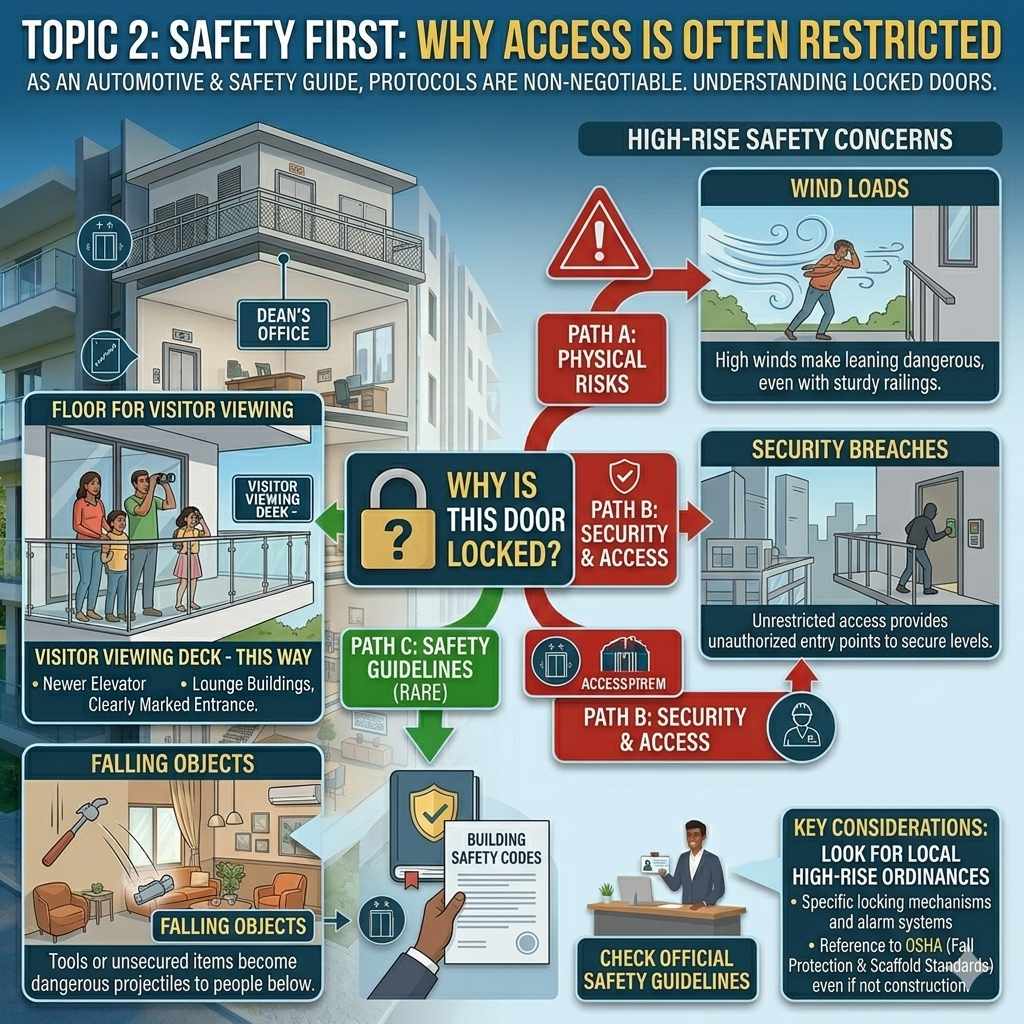
As an automotive guide, I always stress safety first, whether it’s your car or a building. In a high-rise tower, safety protocols are non-negotiable. Understanding why the door is locked might make you less frustrated.
High-Rise Safety Concerns
Balconies and roof access points on tall buildings pose unique risks that standard doors don’t cover:
- Wind Loads: High winds can make leaning against railings dangerous even if the railing seems sturdy.
- Falling Objects: Tools or unsecured items left on a balcony can become dangerous projectiles to people below.
- Security Breaches: Unrestricted balcony access can provide unauthorized entry points into secure levels of the building.
When checking official building safety guidelines, look for local ordinances regarding high-rise access, which often mandate specific locking mechanisms or alarm systems, like those detailed by the Occupational Safety and Health Administration (OSHA) concerning scaffolding and elevated work platforms, even if the balcony isn’t strictly for construction (referencing general fall protection standards).
Frequently Asked Questions (FAQ) About Faculty Tower Balcony Access
Q1: Can I cut through a classroom to reach the balcony door?
A: No, absolutely not. Classroom doors usually lead only into other internal corridors. Attempting to cut through locked rooms is considered unauthorized entry and is against campus policy.
Q2: If I see something interesting outside, can I take pictures from the balcony?
A: Generally, yes, provided you have permission to be on the balcony in the first place and are not photographing private individuals or secure areas against policy. Always check specific campus photography guidelines.
Q3: What should I do if the balcony door is already propped open by someone else?
A: Do not use the door immediately. Find the nearest security personnel or contact the front desk immediately. An open, unsecured balcony door is a serious security lapse that needs immediate attention from building staff.
Q4: Is there a public observation deck on Faculty Tower instead of a walk-out balcony?
A: This depends entirely on the building’s age and original design. If there is no explicit signage for a public deck, assume balcony access is restricted to staff only.
Q5: How long will Building Management typically grant me access for?
A: Usually, access is granted in short increments—10 to 20 minutes is standard for brief observation or quick breaks. For specific needs, like an art project, you must secure pre-approval for an extended, scheduled window.
Q6: If the balcony is locked, can I just ask a faculty member on that floor to open it?
A: Possibly, but it is not recommended as your primary method. Many faculty members may not have the specific key or access code, and they might be hesitant to open a restricted door for liability reasons. Always go through official channels first.
Conclusion: Confidence in Navigating Tower Access
Getting to the balcony in Faculty Tower isn’t a mystery; it’s a matter of following the right administrative path. Whether you are seeking a quiet place to take a quick breather or need access for authorized professional reasons, the keys are always proper identification and polite negotiation with Building Management or Security. Remember the three main takeaways: know your ‘why,’ identify the correct authority figure, and prioritize safety above curiosity.
By approaching the process systematically—starting with the security desk and having your authorization ready—you move from being an outsider looking up to someone who knows exactly how to get to the balcony in Faculty Tower. Go ahead, make the inquiry, and enjoy that fresh high-altitude air responsibly!