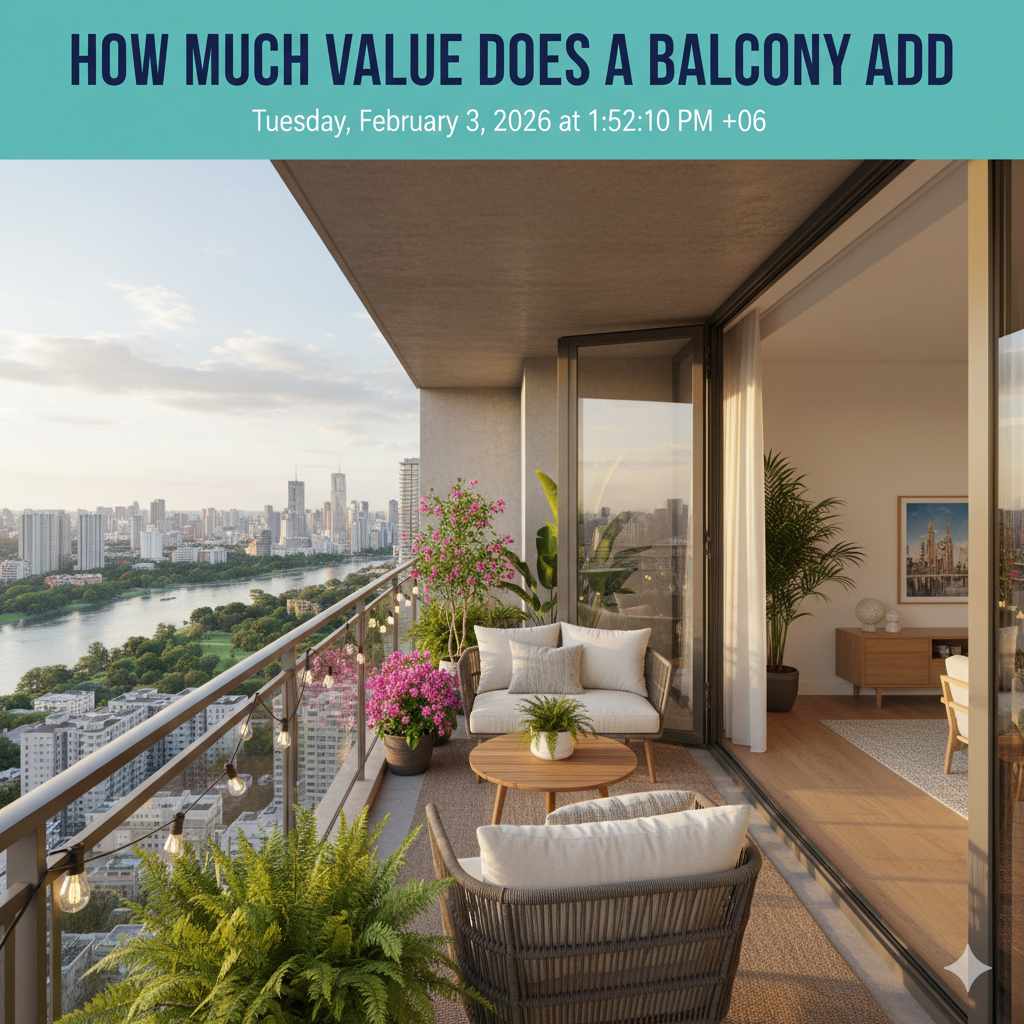
Balconies significantly boost property value, often adding between 5% and 10% to the appraisal price, depending heavily on location, size, view quality, and local market demand. They are often a key selling feature, especially in urban or scenic areas.
Thinking about selling your home or perhaps adding a new feature? You might be wondering about that outdoor space attached to your house—the balcony. It seems like a nice perk, but does that extra square footage really translate into more money when you sell? It’s a common question, and frankly, it can feel confusing. You want to know if that investment (or that existing feature) is worth its weight in gold.
Don’t worry! You don’t need to be a real estate agent to figure this out. We are going to break down exactly how balconies influence your home’s price tag. We’ll look at location, view, and local market trends in simple terms. By the end of this guide, you’ll feel much more confident about the true worth of your balcony space.
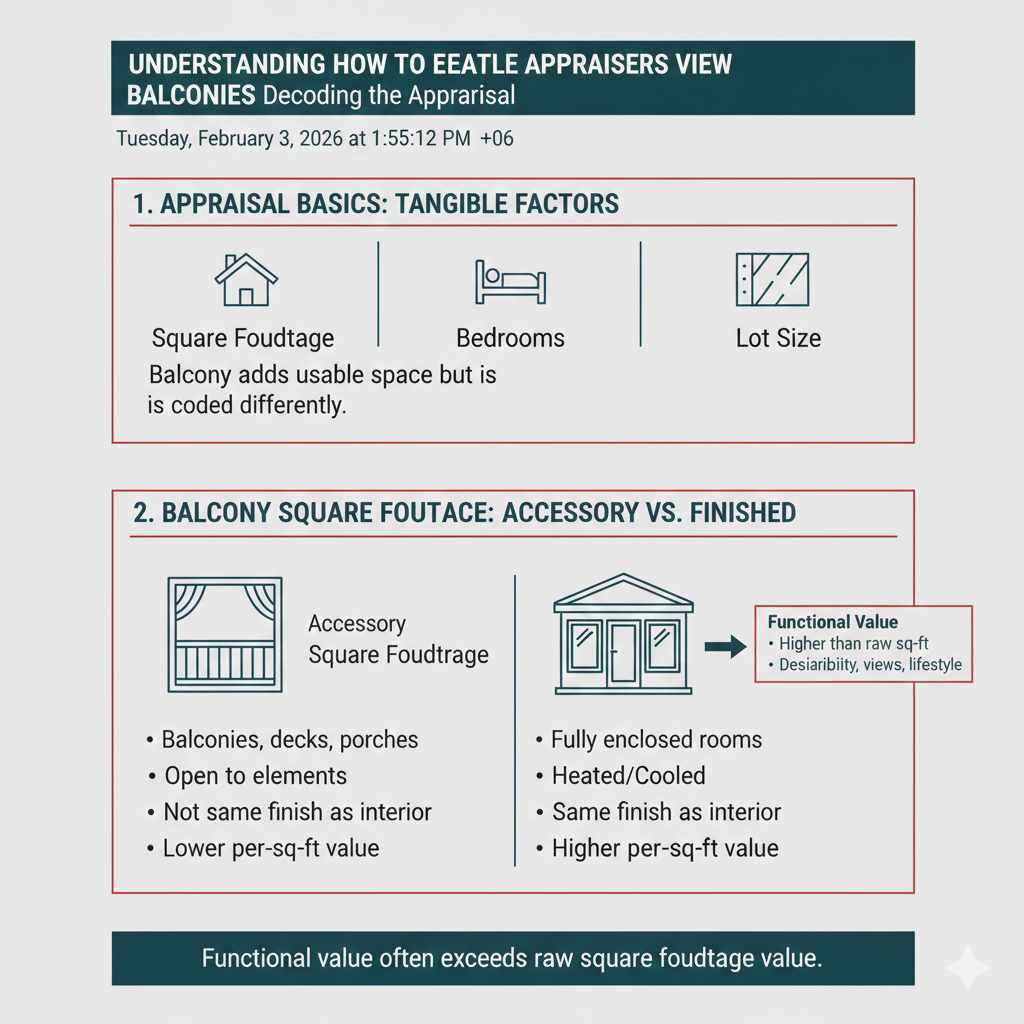
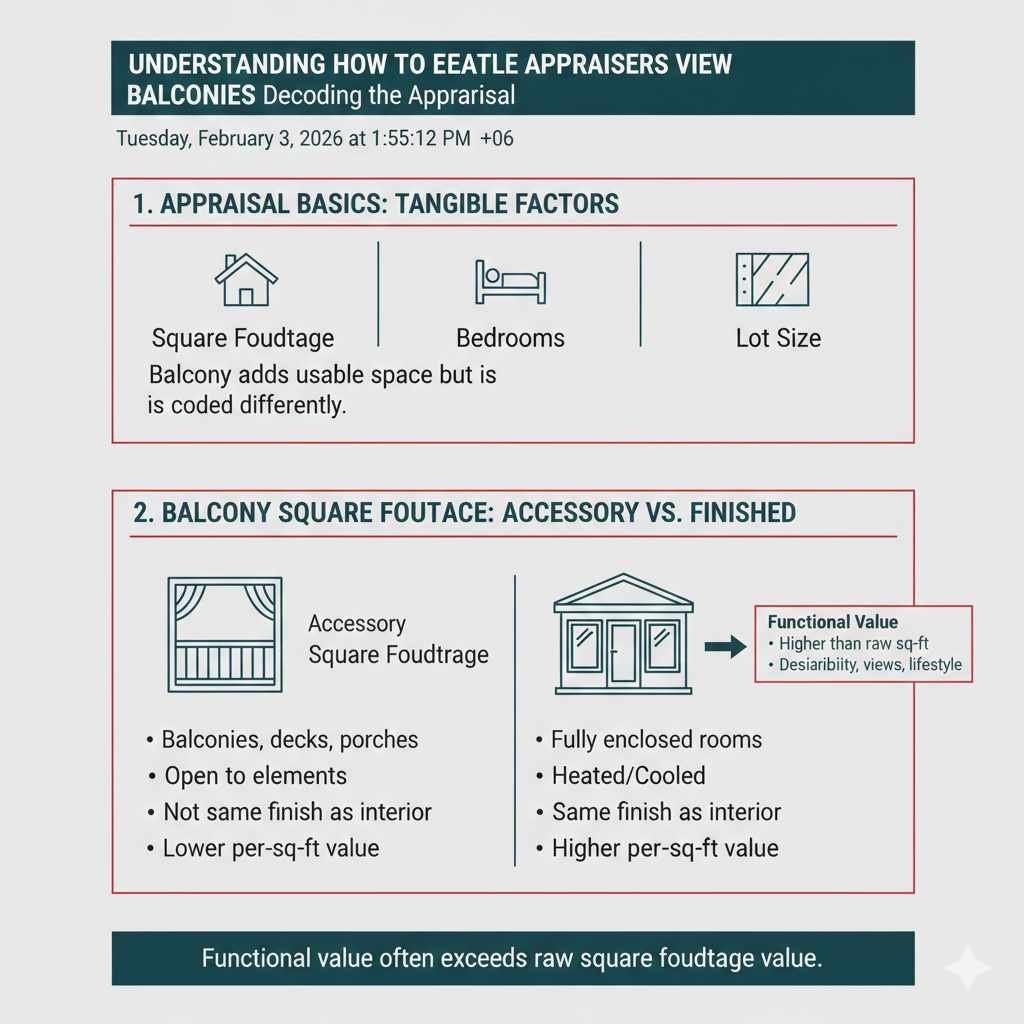
Understanding How Real Estate Appraisers View Balconies
When it comes to home value, real estate professionals look at tangible factors first: square footage, number of bedrooms, and lot size. A balcony adds to the usable space, but it’s slightly different from a fully enclosed room. How much value does a balcony add to a house? It depends on how the appraiser codes that space.
Generally, balconies, decks, and porches are considered “accessory” square footage unless they are fully enclosed and finished to the same standards as the interior of the home. However, their functional value is often much higher than their raw square footage value suggests.
Outdoor Space Premium: Quality Over Quantity
Buyers often prioritize outdoor living space, especially after the last few years. A well-built, accessible balcony acts like an extra room during nice weather—a perfect spot for morning coffee or evening relaxation. Because this adds to the lifestyle of the home, the premium can be substantial.
- Functionality: Is the balcony large enough for seating, or is it just big enough to step out onto? Larger, functional balconies command higher premiums.
- Accessibility: Is it easy to get to from a main living area, like the kitchen or primary bedroom? Easy access boosts perceived value.
- Safety and Condition: Structural soundness is key. A crumbling or unsafe balcony instantly deducts value.
The Three Pillars That Determine Balcony Value Addition
The dollar amount added by a balcony is rarely fixed. It shifts based on three major influencing factors. Think of these as sliders you can adjust when trying to estimate your home’s potential boost.
Pillar 1: Location, Location, Location
This old real estate saying is truer for balconies than almost any other feature. Where you live sets the ceiling for how much value an outdoor space can add.
In dense urban areas where private outdoor space is incredibly rare (think downtown condos or city townhomes), a balcony is a non-negotiable luxury. Buyers are willing to pay significantly more for a little breathing room above the street level.
- High-Value Scenarios (Urban/Scenic): In major cities like New York or San Francisco, or homes overlooking water or mountains, a balcony can easily add 8% to 15% of the total home value, sometimes more if the view is protected.
- Lower-Value Scenarios (Suburban/Rural): If your home is in a suburban neighborhood where most houses already have large backyards, a small balcony adds less perceived value because buyers have other, often larger, outdoor options easily available. It might add 3% to 5%.
For excellent resources on local market trends, checking official municipal planning and zoning sites can give you a sense of how rare private outdoor space truly is in your area. (See local zoning regulations for context on permitted structures.)
Pillar 2: The View Factor
A balcony facing a brick wall adds very little. A balcony facing the ocean, a city skyline, or a protected nature preserve adds immense value. The view dictates whether the balcony is simply a safety feature or a desirable destination.
Appraisers use terms like “premium view” or “desirable outlook.” If your balcony offers a view that cannot be easily replicated by building a deck on the ground level, you’ve struck gold.
Consider this comparison:
| Balcony View Type | Estimated Value Added (Average Scale) | Buyer Perception |
|---|---|---|
| Poor (Facing Alley/Neighbor’s Roof) | 1% – 3% | Minor amenity, potential upkeep issue. |
| Neutral (Standard Neighborhood Look) | 4% – 6% | Nice bonus, standard feature for the price point. |
| Excellent (Waterfront, Skyline, Park) | 7% – 12%+ | Must-have feature, significantly justifies price increase. |
Pillar 3: Size, Usability, and Material Quality
A tiny sliver of concrete that only fits one person standing isn’t as valuable as a generously sized balcony that can host a small dining set or lounge chairs. Usability is crucial. Appraisers and buyers look for space where they can actually live outdoors.
Material quality matters for maintenance costs. A balcony constructed with durable, low-maintenance materials (like composite decking or high-quality treated wood with good railings) signals lower future expenses to buyers, thus increasing current value.
Key Usability Check: Can it accommodate at least a 2-person bistro set? If the answer is yes, it’s adding more value than a purely decorative ledge.
The Cost vs Value Equation: Is It Worth Building One?
If you are considering adding a balcony to increase your home’s sale potential, you need to understand the return on investment (ROI). Construction costs can vary wildly based on engineering needs, materials, and access.
Factors Influencing Construction Cost
Adding a balcony usually requires significant structural work, especially cantilevered additions (those that jut out without visible support underneath). This means specialized labor and permits.
- Support Structure: Does the existing house structure support the new load, or do you need new beams anchored deep into the foundation? This is the biggest cost driver.
- Access: How easy is it to get materials to the planned location?
- Permitting and Codes: Local building codes dictate safety standards (load capacity, railing height). Meeting these codes ensures the addition adds value rather than becoming a liability. For guidance on general residential construction safety, the International Residential Code (IRC) offers core standards that most local authorities adopt.
Balcony ROI Snapshot
While costs can range from $5,000 for a very simple, non-structural repair/upgrade to $30,000+ for a full cantilevered addition in a tough-to-access area, the ROI generally tracks upward with better views and higher local property values.
General Rule of Thumb: If you build a quality balcony that takes advantage of a local premium view, you can often recoup 70% to 90% of the cost in added sale price, especially in competitive housing markets. If the balcony is average and the view is poor, your ROI might dip below 50%.
Balcony vs Deck vs Patio: Where Does the Patio Fit In?
Buyers often lump all three together, but understanding the difference helps understand valuation. A balcony is always elevated.
| Outdoor Feature | Elevation | Typical Added Value Impact |
|---|---|---|
| Balcony | Elevated (Attached to upper floor) | High potential, especially when views are premium. |
| Deck (Ground-level or elevated structure) | Can be ground level or elevated, usually wood/composite platform supported by posts. | Moderate to High. Excellent for entertaining, perceived as an extension of yard space. |
| Patio (Ground level) | At grade (ground level), typically poured concrete or pavers. | Moderate. Adds functional ground space but often less desirable than elevated views. |
Decks and patios often offer more square footage for entertaining than an average balcony. However, a balcony provides privacy and elevation that decks and patios cannot match. If you have a small yard, a balcony becomes exponentially more valuable because it creates outdoor space where none existed before, above the ground level.
Maintenance Hazards That Reduce Balcony Value
A poorly maintained balcony doesn’t just look bad; it screams future expensive repairs to a savvy buyer. Safety concerns related to balconies frequently cause deals to fall apart during inspection.
To ensure your balcony adds value, not headaches, regular inspection is essential. As a beginner DIY enthusiast, focus on the visible components first.
DIY Inspection Checklist for Balcony Health
Walk out onto your balcony and look closely. Does it feel totally solid? Are you seeing any red flags?
- Check the Floor Surface: Look for soft spots in wood, large cracks in concrete, or pooling standing water. Water intrusion is the #1 enemy of balconies.
- Inspect Railings: Give the railing a firm shake. It should not wiggle at all. Check that balusters (the vertical posts) meet local code for spacing (usually less than 4 inches apart to prevent small children from falling through).
- Look Below (If Possible): Check the ledger board—the main piece connecting the balcony structure to the house framing. Look for rot, water stains running down the house wall underneath the balcony, or visible separation between the balcony frame and the home siding.
- Check Fasteners: Do you see rusted bolts or screws poking out where they shouldn’t be? Exposed, rusty metal suggests water is getting into the main structure.
If you find significant signs of rot or separation where the balcony meets the house, call a structural engineer or experienced contractor immediately. Repairing structural decay will always be cheaper than dealing with a liability or code violation during a sale.
Maximizing Perceived Value: Staging Your Balcony
Value isn’t just about the appraisal; it’s about what the buyer feels when they see it. Staging turns a static structure into an inviting living space, maximizing the psychological value add.
When showing your home, treat the balcony like an extra room. Use it!
- Furniture Placement: Clear clutter. Place one small, attractive seating arrangement (two chairs and a small table). Keep it simple and elegant.
- Greenery: Add a few attractive, well-cared-for potted plants or flowers near the railing to draw the eye outward toward the view.
- Lighting: If you have outdoor lighting, ensure the bulbs are working and use warm-toned bulbs for evening showings to create an inviting glow.
- Cleanliness: Power-wash the floor and walls. A dingy balcony suggests neglect.
Expert Takeaways: When Balconies Add the Most Value
To summarize the journey, there are clear situations where your balcony will be a huge financial asset, and others where it’s just a nice bonus. If you fall into one of these high-value categories, you can confidently price your home at the higher end of the range.
A balcony is a value multiplier when:
- It serves a highly dense, competitive urban market craving private outdoor space.
- It provides a stunning, viewable asset (water, skyline, landmark).
- It is large enough to function as an outdoor “room” (fit seating for 2+).
- It is structurally perfect and built with quality materials requiring low initial maintenance.
Frequently Asked Questions (FAQ) for Homeowners
Q1: Can a very small balcony (less than 20 sq. ft.) add any real value?
A: A very small balcony (often called a Juliette balcony or just a safety ledge) usually won’t add significant square footage value, but it can still add psychological value by providing access to fresh air and meeting code requirements for fire egress in some multi-story homes. Its value addition is typically minor, maybe 1% to 2%.
Q2: How does local building code affect how much value a balcony adds?
A: Building codes ensure safety. If your balcony meets all current safety codes regarding railing height, load bearing, and material durability, it adds full value. If it is grandfathered in but clearly violates modern standards, buyers may discount the price by the estimated cost of necessary remediation.
Q3: If I have a large backyard AND a balcony, which adds more monetary value?
A: Generally, a large, usable backyard/patio adds more consistent value across most markets. However, in high-rise or dense urban areas where ground-level yards are impossible, the elevated balcony wins out significantly.
Q4: Do I need a lawyer or specific insurance for selling a home with a balcony?
A: You don’t typically need a lawyer just because you have a balcony, but standard homeowner’s insurance must cover it. If the balcony is new or recently repaired, having the contractor’s warranty or proof of permits can provide confidence to the buyer during due diligence.
Q5: How much does it cost typically to repair rotted wood on a balcony floor?
A: Simple replacement of deck boards often costs between $500 and $2,000, based on the material used. However, if the rot has reached the supporting joists or ledger board, repairs can easily escalate to $4,000 to $8,000+ because the entire structure needs bracing or temporary support during the fix.
Q6: If I enclose my balcony to make a sunroom, is that better for value?
A: Enclosing a balcony can be beneficial but only if it is done to the same structural and aesthetic standard as the rest of the house. If done poorly, it looks like an obvious add-on and lowers value. If done professionally, that space becomes fully counted square footage, often adding significantly more value than an open balcony, provided the local market wants enclosed space.
Conclusion: Making the Most of Your Outdoor Asset
Figuring out how much value a balcony adds to a house isn’t about finding one magic percentage; it’s about understanding context. Is your balcony providing a rare amenity in a crowded city? Is it a safe perch offering breathtaking views? If the answer is yes to these questions, your balcony is likely adding a substantial premium—perhaps 8% or more—over the cost of comparable homes without one.
For homeowners looking to renovate, remember that investment in quality, safety, and view maximization pays off during resale. For those selling, ensure you clean, stage, and strongly highlight this feature in your listing photos and descriptions. Treat it like the premium outdoor room it is, and the market will reward you accordingly. You’ve got this!