How Many Lumens For Garage Lighting: Essential Guide
For most garages, aim for 200-500 lumens per square foot. For workshops or areas needing detailed work, bump it up to 500-1000+ lumens per square foot. Choose LED bulbs for energy efficiency and longevity.
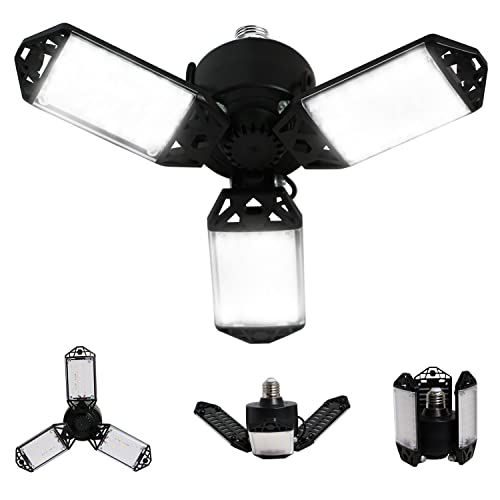
Meiqils
LED Garage Light, 80W 8000 Lumen Ceiling…
- ☀【Upgrade Garage Light -- 80W Super Bright】: MeiqiLS deformable led garage lights with 3 adjustable LED panels, high brightness 80…
- ☀【 3 Adjustable Leafs Led Garage Lights 】: Each leafs of led shop lights can be 0- 90 degree adjustable, which can have a perfect…
- ☀【3 Leafs Garage Lights Safety Use & Long Lifespan】: With FCC, CE, and RoHS certification, the led garage ceiling lights' panels a…
As an Amazon Associate I earn from qualifying purchases.
For a related lighting or fan project, What Size Vanity Light For 48 Inch Vanity gives readers another setup detail to compare.
For another door or hardware repair, What Size Ceiling Fan Do I Need For Outdoor Patio gives readers a closely related troubleshooting step.
For a related kitchen decision, How To Install Recessed Lighting In Ceiling adds another practical detail to check.
Your garage is more than just a place to park cars; it’s a workshop, a storage hub, and sometimes, even a creative space! But if your garage feels dim and uninviting, it’s probably a lighting issue. Figuring out how much light you actually need can seem tricky, but don’t worry! We’re going to break down exactly how many lumens you need for your garage, making it super simple to create a bright, functional, and welcoming space you’ll love using. Get ready to transform your garage from gloomy to glorious!
Why Garage Lighting Matters More Than You Think
Think about your garage for a moment. Is it a place you dread entering because it’s so dark? Or perhaps you struggle to find tools, see clearly when working on a project, or even safely navigate your way around. Poor lighting isn’t just inconvenient; it can be a safety hazard. Tripping over forgotten items, straining your eyes while trying to find something, or even accidentally bumping into your car are all common issues in dimly lit garages.
Good garage lighting, on the other hand, can completely change your experience. It enhances safety, improves functionality for DIY projects or hobbies, and even makes your garage a more pleasant place to be. Imagine easily locating that specific wrench, having enough light to beautifully showcase your classic car, or feeling secure and confident as you walk through your space. It’s all about creating a well-lit environment that serves your needs.

Understanding Lumens: The Key to Brightness
When we talk about light bulbs, you’ll see ratings for watts and lumens. Watts measure how much energy a bulb uses, while lumens (lm) measure the actual amount of light a bulb gives off. For lighting your garage, understanding lumens is your most important tool. The higher the lumen count, the brighter the light.
Think of it this way:
Watts: Like the engine size of a car (how much power it uses).
Lumens: Like how bright the headlights are (how much light they shine).
When you’re choosing garage lighting, you want to focus on lumens to ensure you’re getting the brightness you need, not just a bulb that consumes a lot of electricity. This is crucial for making your garage functional and safe.
How Many Lumens Per Square Foot Do You Need?
Here’s where we get practical! The general rule of thumb for how many lumens you need depends on the size of your garage and what you use it for. We measure this in “lumens per square foot” (lm/sq ft).
General Guidelines:
Basic Storage & Parking: If your garage is primarily for parking vehicles and storing general items, and you don’t do much detailed work, you can get by with less intense lighting.
Target: 200-500 lm/sq ft.
General Workshop & Hobby Areas: If you use your garage for DIY projects, crafting, or light repairs, you’ll need more light. This is where you start to see a significant difference in usability.
Target: 500-1000 lm/sq ft.
Detailed Work & Special Purposes: For serious hobbyists, mechanics, or anyone performing intricate tasks like woodworking, painting, or detailed repairs, you’ll need bright, focused light. This might also apply if you’re using your garage for an at-home gym or a creative studio.
Target: 1000+ lm/sq ft (sometimes up to 2000 lm/sq ft for very specific tasks).
Calculating Your Garage Lighting Needs
To figure out how many total lumens you need, follow these simple steps:
1. Measure Your Garage:
Find the length and width of your garage in feet.
Multiply them to get the square footage (Length ft x Width ft = Square Footage).
Example: A garage that is 20 feet long and 10 feet wide is 200 sq ft.
2. Choose Your Lumens Per Square Foot Target:
Based on how you use your garage (from the guidelines above), decide on your target lumens per square foot.
Example: For a general workshop area, you might aim for 750 lm/sq ft.
3. Calculate Total Lumens Needed:
Multiply your garage’s square footage by your chosen lumens per square foot target.
Formula: Square Footage x Lumens Per Square Foot = Total Lumens Needed
Example: 200 sq ft x 750 lm/sq ft = 150,000 total lumens.
4. Determine Fixture Needs:
Now, look at the lumen output of the light fixtures or bulbs you’re considering. Divide your total lumens needed by the lumens per fixture to see how many fixtures you’ll require.
Example: If you find LED shop lights that output 6,000 lumens each, you would need 150,000 total lumens / 6,000 lumens per fixture = 25 fixtures. (This is a lot! It shows you might need to adjust your expectations or use a combination of different types of lighting.)
Let’s look at a table to make this clearer:
| Garage Size (Sq Ft) | Usage Type | Lumens Per Sq Ft Target | Total Lumens Needed | Example Fixture (Lumens per fixture) | Number of Fixtures Needed |
|---|---|---|---|---|---|
| 200 sq ft | Basic Storage/Parking | 300 lm/sq ft | 60,000 lm | 4,000 lm | 15 fixtures |
| 200 sq ft | General Workshop | 750 lm/sq ft | 150,000 lm | 6,000 lm | 25 fixtures |
| 400 sq ft | Detailed Workbench | 1200 lm/sq ft | 480,000 lm | 8,000 lm | 60 fixtures |
This might seem like a lot of fixtures, but remember, you’re aiming for a total lumen output that’s distributed across your entire space. It’s often better to have multiple, well-placed, moderately bright fixtures than one super-bright one that creates harsh shadows.
The Importance of Fixture Placement and Type
Just knowing how many lumens you need is only half the battle. Where you put your lights significantly impacts how useful they are.
Over Key Areas: Place lights directly above workbench areas, car bays, or any zones where you perform specific tasks. This provides focused illumination and reduces shadows.
General Overhead: Use overhead fixtures to provide ambient light throughout the entire garage. Striplights or ceiling-mounted fixtures work well here.
Task Lighting: Consider adding clamp lights or adjustable fixtures that can be directed where needed. These are fantastic for detailed work.
Daylight Bulbs: For tasks that require accurate color rendering (like painting or detailed assembly), look for bulbs with a high Color Rendering Index (CRI) and consider “daylight” color temperatures.
Popular Garage Lighting Fixture Types:
LED Shop Lights: These are slim, linear lights that often come in 1ft, 2ft, or 4ft lengths. They are incredibly energy-efficient and provide a wide spread of light, making them ideal for garages. Many are linkable, meaning you can connect several together.
LED High Bay Lights: For very large garages or those with high ceilings, high bay lights are designed to project light downwards from a significant height. They are powerful and very efficient.
Recessed Lighting (Can Lights): If you’re going for a cleaner, more integrated look, recessed lights can work, but ensure you use enough of them and that they are powerful enough. They are best for ambient light.
Utility Lights: These are the classic, cage-style fixtures often seen hanging from the ceiling. While they can be effective, they are often less energy-efficient than modern LED options.
Motion Sensor Lights: For security or convenience, motion-sensing fixtures are a great addition, especially for entry points or the exterior of the garage.
Choosing the Right Bulb: LEDs are Your Best Friend!
When updating your garage lighting, making the switch to LED (Light Emitting Diode) bulbs is one of the smartest decisions you can make. They offer significant advantages over older technologies like incandescent or fluorescent bulbs.
Why LEDs for Your Garage?
Energy Efficiency: LEDs use significantly less electricity to produce the same amount of light as incandescent bulbs. This means lower energy bills for you! According to the U.S. Department of Energy, LEDs use at least 75% less energy than incandescent lighting.
Longevity: LED bulbs last much, much longer. While an incandescent bulb might last about 1,000 hours, an LED can last 25,000 to 50,000 hours or more. This means far fewer replacements, saving you time and money.
Durability: LEDs are more resistant to vibrations and shock, making them a good choice for potentially rougher garage environments.
Instant On: Unlike some older fluorescent bulbs that flicker before reaching full brightness, LEDs turn on instantly at their full intensity.
Lower Heat Output: LEDs produce much less heat than incandescent bulbs. This is not only safer but also means your garage won’t feel like an oven in the summer.
Variety: LEDs come in a vast range of brightness (lumens), color temperatures (warm to cool white), and styles to suit any need.
Color Temperature: Finding the Right “Feel”
Beyond lumens or brightness, consider the color temperature, measured in Kelvin (K). This affects the mood and perceived brightness of the light.
Warm White (2700K – 3000K): This is similar to traditional incandescent bulbs, providing a cozy, yellowish glow. It’s generally too warm for most garage tasks, making colors look dull and potentially reducing perceived brightness.
Cool White / Bright White (3500K – 4500K): This offers a neutral to slightly blue-white light. It’s a good all-around choice for garages, providing good visibility and a clean look.
Daylight (5000K – 6500K): This mimics natural daylight, offering a bright, crisp, bluish-white light. This is often the preferred choice for workshops and garages where visual clarity and accurate color perception are essential. It can make spaces feel larger and more invigorating.
For garages, especially those used for projects or detailed work, 5000K to 6500K (Daylight) is often recommended to maximize visibility and color accuracy. If you prefer a less harsh, more neutral light, 4000K is also a popular choice.
Putting It All Together: A Step-by-Step Guide to Brightening Your Garage
Ready to tackle your garage lighting? Here’s a simple plan to get you started:
Step 1: Assess Your Garage Usage
What do you do in your garage? Park cars, store bikes, do woodworking, detail cars, paint, exercise, or just walk through?
Identify problem areas: Where is it too dark now? Are there specific spots that need more light?
Consider your ceiling height: This can influence the type of fixtures you choose.
Step 2: Measure Your Space
Get out your tape measure!
Measure the length and width of your garage in feet.
Calculate the total square footage (Length x Width).
Step 3: Determine Your Lumens Per Square Foot Need
Refer back to our guidelines:
Basic Storage/Parking: 200-500 lm/sq ft
General Workshop/Hobby: 500-1000 lm/sq ft
Detailed Work/Studio: 1000-2000 lm/sq ft
Step 4: Calculate Total Lumens Required
Multiply your garage’s square footage by your chosen lumens per square foot target.
Step 5: Choose Your Fixtures and Bulbs
Opt for LEDs: Always. They are the most efficient and longest-lasting.
Consider fixture type: Do you want slim LED strips, powerful high bays, or something else?
Select color temperature: For most garages, 5000K-6500K (Daylight) is ideal for visibility.
Check lumen output per fixture: Look at the packaging or product description.
Step 6: Plan Your Layout
Sketch it out: Draw a simple floor plan of your garage.
Mark key areas: Where will your workbench go? Where do cars park?
Place your lights: Distribute overhead fixtures evenly. Add task lighting where needed. Think about how to minimize shadows. For example, two rows of strip lights along the length of a two-car garage often provide excellent coverage.
Step 7: Installation (DIY or Hire)
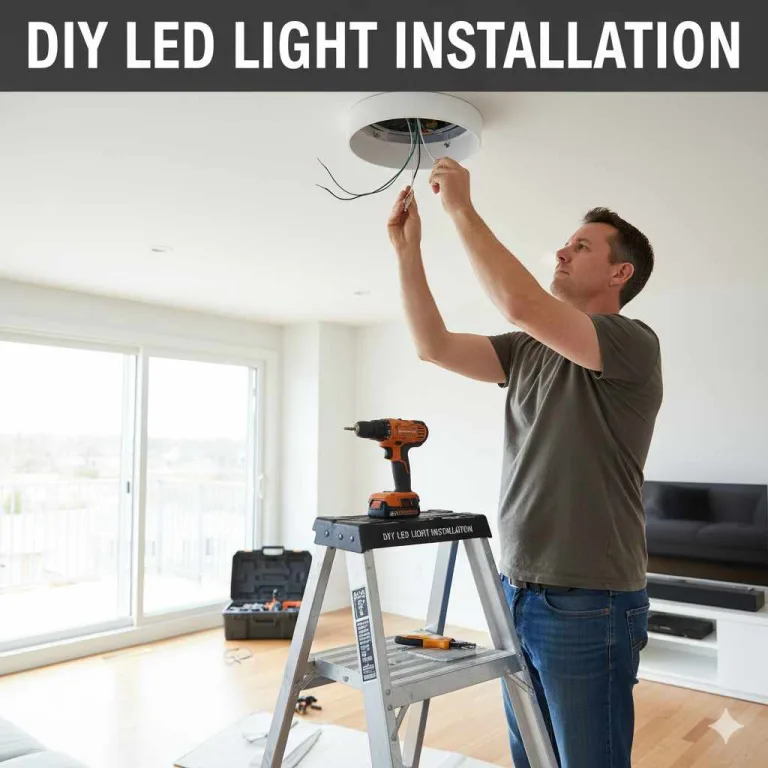
Safety First: If you are uncomfortable with electrical work, it’s always best to hire a qualified electrician. Ensure the power is off at the breaker box before attempting any wiring.
Follow Instructions: Carefully read and follow the manufacturer’s installation instructions for your chosen fixtures.
Test: Once installed, turn on the power and test all your new lights!
Pro-Tip for DIYers: Many modern LED shop lights are designed for easy installation, often with simple mounting brackets or direct-wire options. Some even come with pull chains so you can easily turn them on and off without needing to find a wall switch.

Frequently Asked Questions About Garage Lighting
Q1: Do I really need 1000+ lumens per square foot for my garage?
A1: Not necessarily! That higher range is for specialized tasks like intricate model building or detailed auto work. For most people, 200-500 lumens for basic use, or 500-1000 lumens for general DIY, is perfectly sufficient and provides excellent, bright light.
Q2: Can I use regular household bulbs in my garage fixtures?
A2: You can, but it’s not ideal. Garage lighting often benefits from brighter, cooler-toned bulbs (like LEDs with a 5000K-6500K color temperature) for better visibility. Standard household bulbs are often warmer and dimmer, which might not provide adequate light for tasks or safety.
Q3: How many light fixtures should I install?
A3: This depends on the size of your garage and the lumen output of each fixture. Use our calculation method (Total Lumens Needed / Lumens Per Fixture) to get an estimate. It’s generally better to spread out multiple fixtures for even lighting than to rely on one or two very bright ones, which can create harsh shadows.
Q4: Should I use fluorescent or LED lights in my garage?
A4: LEDs are strongly recommended. While fluorescent tubes were once common, LEDs are far more energy-efficient, last much longer, provide better light quality, and are more durable. They are also instant-on, without flickering, and produce less heat.
Q5: What’s the best color temperature for garage lighting?
A5: For most garages, especially workshop areas, a “Daylight” color temperature (5000K to 6500K) is best. This bright, cool light mimics natural daylight, enhancing visibility and color accuracy, which is great for tasks and safety. A neutral white (around 4000K) is also a good, slightly less intense option.
Q6: How can I reduce shadows in my garage lighting?
A6: Shadows are often caused by light sources being too far apart or too close to walls. Distribute your light fixtures evenly across the ceiling, especially over work areas. Using linear fixtures like LED shop lights can also help spread light more broadly. Consider adding accent or task lighting directed at specific spots where deep shadows might form.
Q7: Is it okay if my garage lights are controlled by a pull chain instead of a wall switch?
A7: Yes, absolutely! Many garage-appropriate fixtures, like LED shop lights, come with convenient pull chains. This is a common and practical solution, especially if you’re not near a wall switch when entering. You can also opt for wall-mounted dimmers or smart switches for more advanced control.
Conclusion
Brightening up your garage doesn’t have to be a complex project. By understanding lumens and how they apply to your specific needs, you can confidently choose the right lighting solutions. Whether you’re simply parking your car or dedicating hours to a passion project, the right illumination makes all the difference. Remember to consider your usage, measure your space, and opt for energy-efficient LEDs. With these tips, you’re well on your way to a garage that’s not just functional, but truly a pleasure to use. Enjoy your newly lit
Related pick: Check today's price on Amazon
Products related to this article
Sponsored / affiliate links. As an Amazon Associate I earn from qualifying purchases. I may earn additional commission from eligible campaigns.