
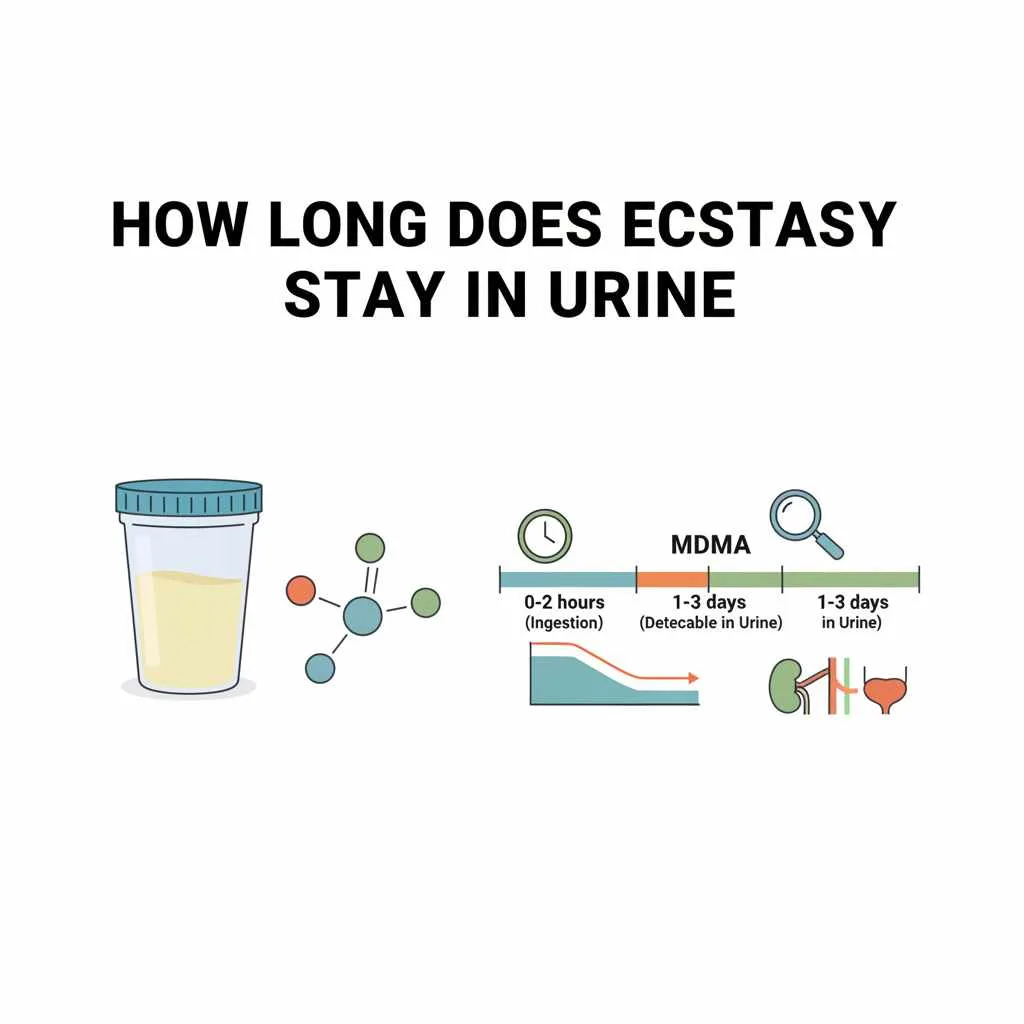
Extasy can be detected in urine for approximately 1 to 3 days after the last use, though this can vary based on several factors.
Ever wondered how long a substance might linger in your system after you’ve stopped using it? It’s a common question, especially when it comes to drug testing for various reasons, like employment or personal peace of mind. When people think about how long substances stay detectable, urine tests often come to mind because they are widely used and relatively straightforward. Understanding the detection window for a substance like ecstasy (MDMA) is super helpful, and I’m here to break it all down in a way that’s easy to grasp. We’ll look at what influences how long it stays in your urine and what you can generally expect. Let’s dive in and clear up any confusion!
Understanding Ecstasy (MDMA) and Urine Detection
Ecstasy, scientifically known as 3,4-methylenedioxymethamphetamine (MDMA), is a synthetic drug that alters mood and perception. When you consume ecstasy, your body metabolizes it, breaking it down into various compounds. These metabolites are then filtered out of your body, primarily through urine. Drug tests, particularly urine tests, look for the presence of these MDMA metabolites. The exact time frame for detection can feel a bit like a moving target because a lot of different things play a role in how quickly your body processes and eliminates the drug.
For most people, a standard urine drug test can detect ecstasy and its metabolites for about 1 to 3 days after the last dose. However, this is a general guideline. Factors like how often someone uses the drug, the dosage taken, their individual metabolism, and even hydration levels can all shift this detection window. It’s important to get a clear picture of these influencing factors to understand your personal situation better.
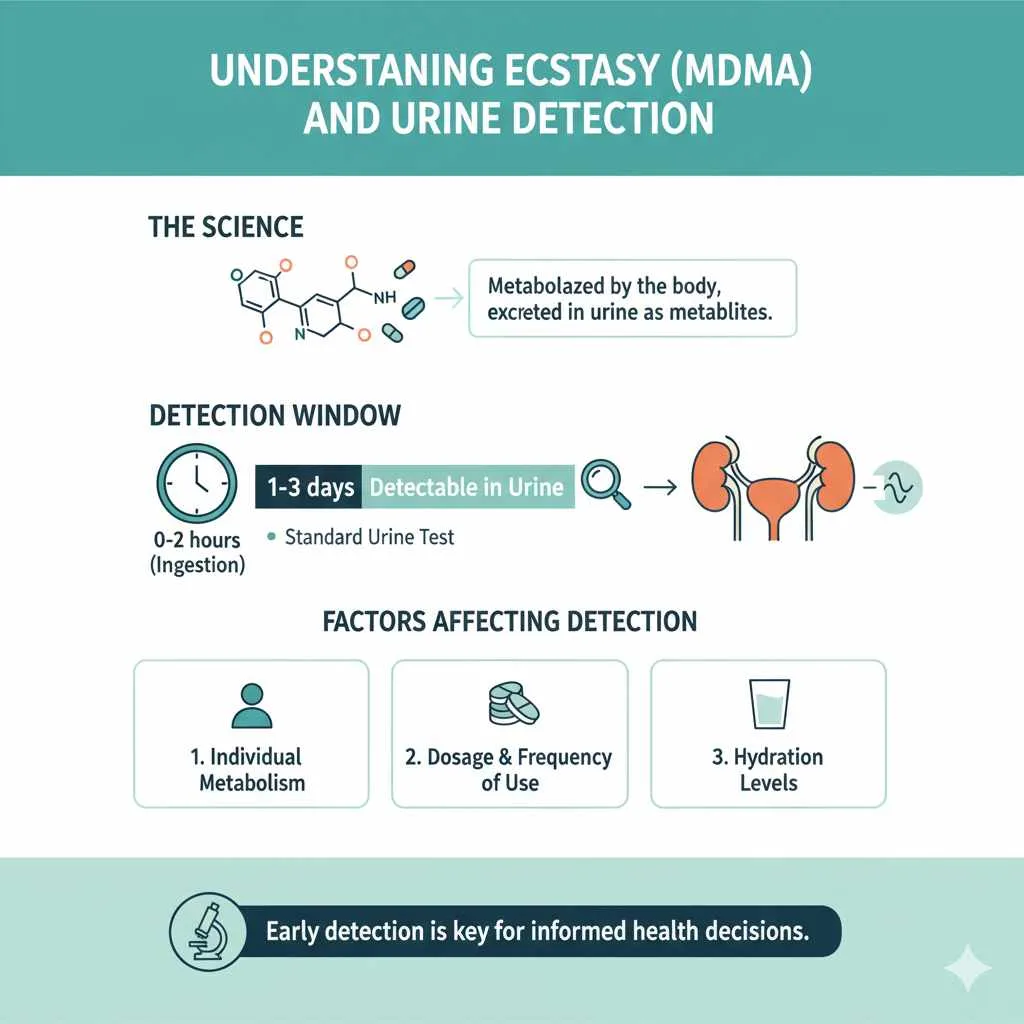
Factors Affecting Ecstasy Detection Time in Urine
As we touched upon, your body is unique, and so is the way it handles substances like ecstasy. Several key factors come into play when we talk about how long ecstasy metabolites hang around in your urine, making them detectable by a drug test.
Dosage and Frequency of Use
This is one of the most significant factors. If someone takes a higher dose of ecstasy, or uses it more frequently over a period, it will naturally take longer for their body to completely clear the drug and its metabolites from their system. A single, low-dose use will be eliminated much faster than regular, high-dose consumption.
Metabolism Rate
Everyone’s metabolism is different. Your metabolism is essentially how quickly your body burns calories and processes substances. People with a faster metabolism tend to process and eliminate drugs more quickly than those with a slower metabolism. Factors like age, genetics, body mass, and overall health can influence metabolic rate.
Hydration Levels
Staying well-hydrated can play a role in diluting urine. While it won’t necessarily speed up the breakdown of ecstasy in your body, drinking a lot of water can reduce the concentration of metabolites in your urine, potentially making them harder to detect in a test. However, excessive dilution can sometimes be flagged by labs as suspicious.
Kidney and Liver Function
Your kidneys and liver are the primary organs responsible for filtering waste and metabolizing drugs. If these organs aren’t functioning optimally, it can take longer for the body to process and excrete ecstasy and its metabolites. Conditions affecting kidney or liver health can extend the detection window.
Body Fat Percentage
MDMA is a substance that can be stored, to some extent, in body fat. Individuals with a higher body fat percentage might retain metabolites for longer periods as they are gradually released from fat tissues. Conversely, those with lower body fat may eliminate the drug more quickly.
Diet and Exercise
While not as impactful as dosage or metabolism, diet and exercise can have some influence. A healthy diet and regular exercise can support overall metabolic function, potentially aiding in quicker elimination. However, extreme dieting or intense exercise right before a test might not drastically alter the detection window for recent use.
Typical Detection Windows for Ecstasy in Urine
When we talk about detection windows, we’re referring to the timeframe after the last known use during which a drug can be identified in a biological sample, like urine. For ecstasy (MDMA) in urine tests, the general consensus among forensic and toxicology experts is as follows:
- Single Use (Low to Moderate Dose): Typically detectable for about 1 to 3 days.
- Heavy or Frequent Use: Detection time can extend to 4 to 7 days, or in very rare cases, even longer.
It’s important to remember that these are estimates. A standard urine test for MDMA usually has a cutoff concentration, meaning it will only show positive if the metabolite levels exceed a certain amount. For MDMA, this cutoff is often around 500 ng/mL (nanograms per milliliter) for initial screening, although confirmation tests might use different thresholds.
Think of it like a fading dye. The more dye you use, the longer it takes to wash out completely. Similarly, the more ecstasy you take, the more “dye” (metabolites) is in your system, and the longer it takes for the “water” (your body’s processes) to clear it all away.
How Ecstasy is Processed by the Body
Once ecstasy enters your bloodstream, your body gets to work breaking it down, a process called metabolism. This happens mainly in the liver. The liver contains enzymes – like cytochrome P450 enzymes – that convert MDMA into various other compounds, known as metabolites.
The primary way these metabolites leave your body is through your kidneys, which filter your blood and produce urine. Some common metabolites of MDMA that are looked for in urine tests include:
- MDMA itself
- MDA (methylenedioxyamphetamine)
- MDEA (3,4-methylenedioxy-N-ethylamphetamine)
- HMA (homovanillic acid)
- CA (catecholamine)
The speed at which these metabolic processes occur determines how long the metabolites remain at detectable levels in your urine. A substance that is quickly broken down and efficiently expelled will have a shorter detection window than one that lingers in the system for longer.
Urine Drug Testing for Ecstasy
Urine drug testing is a common method used to detect the presence of illicit substances, including ecstasy. These tests are convenient, non-invasive, and cost-effective, making them popular in many settings.
Types of Urine Tests
There are generally two main types of urine drug tests:
- Screening Tests: These are usually immunoassay tests. They are designed to detect the presence of drug metabolites. They are quick and can test for multiple drugs at once. If a screening test comes back positive, it usually indicates that a drug may be present but doesn’t confirm it.
- Confirmatory Tests: For a positive screening test result, a laboratory will typically perform a confirmatory test, most commonly Gas Chromatography-Mass Spectrometry (GC-MS) or Liquid Chromatography-Mass Spectrometry (LC-MS). These methods are highly accurate and can specifically identify and quantify the exact drug metabolites present, confirming the positive result and the specific substance used.
The accuracy of these tests is generally high, but as we’ve discussed, the results depend heavily on how long ago the drug was used and the individual’s physiology.
Cutoff Levels
Drug tests have specific “cutoff levels.” This is the minimum concentration of a drug metabolite that must be present in the urine sample for the test to register as positive. These levels are set by the testing laboratory or regulatory bodies and can vary slightly. For MDMA, a common screening cutoff is 500 ng/mL.
This means that if the concentration of MDMA metabolites in your urine is below this level, the test will show as negative, even if trace amounts are present. This is why even if you used ecstasy a few days ago, a test might still come back clean if your body has processed it sufficiently.
Can You Speed Up the Elimination of Ecstasy?
This is a question many people ask when facing a drug test. While there’s no magic bullet to instantly flush ecstasy from your system, certain practices can support your body’s natural elimination processes. However, it’s crucial to understand that these methods are generally more effective at lowering metabolite concentrations to potentially pass a test for recent or borderline use, rather than completely eliminating the possibility of detection after significant use.
Hydration and Dilution
Drinking plenty of water in the hours leading up to a test can help dilute your urine. This lowers the concentration of drug metabolites. However, extremely dilute urine might be flagged by the lab, potentially leading to a request for a retest under observation.
According to the Substance Abuse and Mental Health Services Administration (SAMHSA), laboratories use creatinine levels and specific gravity to check for urine dilution. Low creatinine and specific gravity can indicate dilution.
Healthy Lifestyle Choices
Eating a balanced diet and engaging in regular physical activity can support overall metabolic health. A well-functioning body is generally more efficient at processing and eliminating substances. While strenuous exercise right before a test is not recommended as it can temporarily release metabolites stored in fat, consistent exercise as part of a healthy lifestyle is beneficial for long-term metabolic function.
Avoiding Other Substances
Drinking alcohol or consuming other drugs can interfere with how your body metabolizes and eliminates ecstasy. It’s best to avoid these entirely if you are concerned about drug testing.
It’s important to be wary of products or methods that claim to completely mask or rapidly detoxify your system. These are often ineffective and sometimes even harmful.
Factors That Can Mimic or Affect Test Results
Sometimes, things other than drug use can influence the results of a drug test, or might be mistaken for drug use.
- Certain Medications: Some over-the-counter or prescription medications can, in rare instances, cause a false positive on a drug screening test. This is why it’s essential to inform your testing facility of any medications you are taking.
- Supplements: Similarly, some herbal supplements might contain compounds that can interfere with test results, though this is less common than with pharmaceuticals.
- Dietary Factors: While not typically causing false positives for ecstasy, certain foods can affect the detection of other drugs (e.g., poppy seeds for opioids).
- Technical Errors: Though rare, errors in sample collection, handling, or laboratory processing can also occur. This is why confirmatory tests are so important.
It’s crucial to provide accurate information about your health and any substances you’ve consumed to the testing body. Transparency can help resolve any questions about the results.

A Comparative Look: Ecstasy vs. Other Substances in Urine Tests
Understanding how ecstasy’s detection window compares to other commonly tested substances can provide valuable context. Different drugs are metabolized and eliminated by the body at vastly different rates.
| Substance | Typical Urine Detection Window | Notes |
|---|---|---|
| Ecstasy (MDMA) | 1-3 days | Can extend to 4-7 days with heavy use. |
| Alcohol | 12-24 hours | Can be detected longer in specialized blood tests or with heavy chronic use. |
| Marijuana (THC) | 1-3 days (single use) to 30+ days (chronic heavy use) | Highly variable based on frequency and potency. |
| Cocaine | 1-3 days | Metabolites (benzoylecgonine) are usually tested. |
| Amphetamines | 1-3 days | Includes Adderall, Dexedrine. |
| Opioids (e.g., Heroin, Morphine) | 1-3 days | Generally, except for long-acting synthetic opioids. |
| Benzodiazepines (e.g., Xanax, Valium) | 4-7 days | Some can linger longer. |
As you can see from the table, ecstasy has a relatively short detection window compared to substances like marijuana or some benzodiazepines, especially for infrequent users. This means that for someone who has used ecstasy only once or a few times, it’s likely to be out of their system within a few days, making it less persistent in urine tests than some other drugs.
This difference in detection windows is due to variations in how each drug is absorbed, distributed, metabolized, and excreted by the human body. Understanding these variations is key to understanding drug testing protocols and their limitations. For more detailed information on drug metabolism and detection, resources from organizations like the National Institute on Drug Abuse (NIDA) can be very informative.
FAQ: Your Questions About Ecstasy in Urine Answered
Here are some of the most common questions people have about how long ecstasy stays in urine, answered in a simple, straightforward way.
Q1: How long does one hit of ecstasy show up in a urine test?
A1: Generally, a single, low-to-moderate dose of ecstasy can be detected in urine for about 1 to 3 days after use.
Q2: Will drinking a lot of water help me pass a urine test for ecstasy?
A2: Drinking plenty of water can dilute your urine, which might lower the concentration of ecstasy metabolites. However, extremely diluted urine can be suspect and may result in a failed test or a request for a retest.
Q3: Can I use creatine supplements to beat a drug test for ecstasy?
A3: Creatine supplements are sometimes used to try and mask drug use by increasing creatinine levels in urine, which can help counter dilution. However, their effectiveness is limited and not guaranteed, and labs can check for dilution using other markers.
Q4: How often will it take for my body to clear ecstasy completely?
A4: For most casual users, ecstasy is completely cleared from the urine within 3 days. For heavy or frequent users, this timeframe can be longer, potentially up to a week or more in some cases.
Q5: Does sweating out ecstasy work?
A5: While sweating does eliminate some toxins, the primary routes for ecstasy and its metabolites to leave the body are through urine and, to a lesser extent, feces. Heavy sweating is unlikely to significantly shorten the detection window in a urine test.
Q6: What is the most common reason for detecting ecstasy in urine?
A6: The most common reason is the presence of MDMA metabolites in the urine after someone has consumed ecstasy. Urine tests are designed to pick up these residual compounds.
Q7: Are there home tests for ecstasy in urine?
A7: Yes, there are home urine drug test kits available that can detect various substances, including ecstasy. These kits provide a quick, preliminary result but are not as accurate or legally defensible as laboratory tests.
Conclusion
Understanding how long ecstasy stays in your urine is mainly about knowing the typical detection windows and the factors that can influence them. For most people who use ecstasy occasionally, you can expect it to be detectable in urine for about 1 to 3 days after the last use. Remember, this timeframe can stretch longer with higher doses, more frequent use, or individual differences in metabolism.
While there aren’t foolproof ways to instantly remove ecstasy from your system, supporting your body’s natural processes through good hydration and a healthy lifestyle is always a wise approach. It’s empowering to have this knowledge, whether you’re preparing for a test or simply curious about how your body processes substances. By staying informed, you can make clearer, more confident decisions about your well-being.