How High Should a TV Stand Be? 20-30 Inches
A TV stand should be 20 to 30 inches tall so the screen center lands at eye level when seated, which prevents the neck strain a too-tall or too-short stand causes. The exact number depends on your seat height, so measure from the floor to your eyes while seated before buying. This guide covers the eye-level rule, typical stand heights by TV size, calculating your own number, and wall mounting as an alternative.
Why TV Stand Height Matters More Than You Think
It might seem like a small detail, but the height of your TV stand is a crucial element in your home entertainment setup. Think of it like adjusting the seat in your car – getting it just right makes driving a pleasure, while getting it wrong can be a real pain. The same applies to your TV. Too high, and you’ll be craning your neck upwards. Too low, and you might find yourself slumping or feeling like the TV is dominating the room in an unappealing way.
The main goal is comfort and a clear line of sight. You want the center of your TV screen to be at your eye level when you’re in your usual seating position. This prevents strain, whether you’re watching a movie marathon or just catching the evening news. Plus, proper height contributes to the overall aesthetic of your room, making your television look like a well-integrated part of your decor, not an afterthought.
Understanding Eye Level: The Golden Rule
The guiding principle for TV placement is simple: the center of the screen should align with your seated eye level. Imagine you’re sitting on your couch, relaxed. Your eyes naturally rest at a certain height. This is the target zone for the middle of your TV. This ensures you’re not looking too far up or down, which, over time, can cause discomfort in your neck and shoulders.
Different seating heights will naturally lead to different optimal TV stand heights. A plush, deep sofa might position you lower, while a bar stool in front of a higher counter will put you much higher. It’s all about finding that sweet spot for your specific setup.
How to Find Your Ideal Eye Level
This is where a little bit of hands-on measurement comes in. It’s surprisingly easy and makes a huge difference.
- Get Comfortable: Sit on your couch or primary viewing chair in your usual relaxed position.
- Have a Helper (Optional but Recommended): Ask a friend or family member to help.
- Measure Your Eye Height: If you have a helper, have them measure from the floor to your eyes. If you’re on your own, you can use a long ruler or a yardstick. Simply hold it vertically in front of you while seated, and mark where your eyes are. Then, measure from the floor to that mark.
- Note the Measurement: Write down this measurement. This is the target height for the center of your TV screen.
For example, if your seated eye level is 42 inches from the floor, the center of your TV screen should be as close to 42 inches as possible. Remember, this is for the center of the screen, not the bottom or top.

Best TV Height Fix Pick
YAOHUOO 45-Inch TV Riser Stand Shelf – $59.99
Raises a TV that sits too low on an existing stand, closing the gap to the eye-level range this guide recommends.
- Best for: A TV stand that already exists but sits too low for this guide's 20 to 30 inch eye-level range
- Why we picked it: Adds height without buying a new stand, a cheaper fix for the neck strain this guide warns about
- Main drawback: Fixed riser height, so it only helps if the gap to eye level is modest
Compare more risers and wall mounts
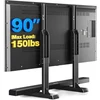 Option 1 Rfiver Table Top TV Stand with Height Adjustable Legs – $29.98
|
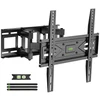 Option 2 USX MOUNT Full Motion TV Wall Mount, 32-70 Inch – $29.74
|
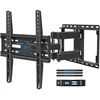 Option 3 Mounting Dream Full Motion TV Wall Mount, 32-70 Inch – $37.99
|
As an Amazon Associate we earn from qualifying purchases.
Typical TV Stand Heights & What They Mean
TV stands come in a wide variety of heights, and understanding these ranges can help you narrow down your choices.
| TV Stand Height Range (Inches) | Typical Use / Considerations |
|---|---|
| 12 – 18 inches | Low-profile stands, ideal for very large TVs or rooms where you want the TV to be less visually dominant. Can be too low for standard seating. Requires careful consideration of seating height. |
| 18 – 24 inches | Common height for many traditional and modern TV stands. Often works well for average seating. The center of a moderate-sized TV is likely to be near eye level. |
| 24 – 30 inches | Taller stands, sometimes referred to as media consoles or cabinets. Can be suitable for higher seating or for those who prefer a slightly elevated viewing angle. Often provides more storage. |
| 30+ inches | Very tall stands or cabinets. Less common for primary TV viewing unless the seating is significantly elevated (e.g., a bar or raised platform). Can also include units with built-in fireplaces. |
As you can see, an 18-24 inch range is often the sweet spot for many living rooms. However, your unique seating arrangement is the ultimate deciding factor.
Calculating the Perfect TV Stand Height for Your Room
Now, let’s put it all together. We know our eye-level target. We also know the height of our TV. The TV stand height is the missing piece that bridges the gap.
The Formula: Simple Math for Perfect Placement
Here’s how to calculate the ideal TV stand height:
Target TV Stand Height = Your Seated Eye Level (inches) – (Screen Height / 2)
Let’s break this down:
- Your Seated Eye Level: This is the measurement you took earlier.
- Screen Height: This is the vertical height of your TV screen itself, not including the stand it might come with. You can usually find this in your TV’s manual or by measuring the diagonal screen size and doing a quick conversion (a 55-inch TV that’s 16:9 aspect ratio is roughly 27 inches tall).
- Screen Height / 2: We divide the screen height by two because we want the center of the screen to be at eye level.
Real-World Example
Let’s say:
- Your seated eye level is 40 inches.
- Your TV is a 55-inch model, and its screen height is 27 inches.
Calculation:
- Screen Height / 2 = 27 inches / 2 = 13.5 inches
- Target TV Stand Height = 40 inches – 13.5 inches = 26.5 inches
In this example, you’d be looking for a TV stand that is approximately 26.5 inches tall. This might translate to stands in the 24-30 inch range, depending on how the TV is mounted or placed on top.
Factors Affecting Your TV Stand Choice
Besides the critical eye-level measurement, other factors play a role in choosing the right TV stand:
1. Seating Height
As we’ve stressed, this is the most important factor. A high sectional sofa might require a lower stand than a dining chair used for impromptu viewing sessions.
2. TV Size
Larger TVs often have greater screen heights. A big 75-inch TV will have a significantly larger screen height than a smaller 32-inch model, impacting the required stand height. Always consider the overall physical dimensions of the TV itself.
3. Room Aesthetics and Layout
While function is key, form matters too. A towering TV stand can make a small room feel cluttered, while a sleek, low-profile one can open up the space. Consider the proportions of your room and existing furniture. For example, a stand that matches the height of a nearby bookshelf or credenza can create a harmonious look.
4. Storage Needs
Do you need space for your gaming consoles, Blu-ray player, soundbar, or decorative items? Many TV stands offer built-in shelves, drawers, or cabinets. The internal dimensions and layout of the stand will influence your choice, and sometimes, you might have to compromise slightly on the perfect height for adequate storage.
5. Viewing Distance
The distance you sit from the TV also affects the optimal viewing experience. While not directly tied to stand height, it’s part of the overall ergonomic setup. Generally, for comfortable viewing, you want to sit about 1.5 to 2.5 times the diagonal screen size away from the TV. A good stand height is part of this holistic viewing comfort.
6. Wall Mounting vs. Stand Placement
If you plan to wall mount your TV, the height calculation changes. You’ll be measuring from the floor to your eye level, and then determining where the mount should go on the wall to position the TV correctly. Many wall mounts allow for height adjustment, offering flexibility. For TV stands, the stand itself dictates the height.
Mounting Your TV: An Alternative to Stands
While this article focuses on TV stands, it’s worth mentioning that wall mounting is a popular alternative. Many people opt for wall mounting to save space or achieve a cleaner look. The principle of eye-level placement still applies:
A full-motion mount adjusts height and angle after installation, which a fixed-height stand cannot do; see our TV stand vs wall mount comparison for the full tradeoff.- Fixed Mounts: These hold the TV flat against the wall. Precise placement is crucial.
- Tilting Mounts: These allow the TV to tilt downwards, which can be helpful if your viewing angle is slightly higher than ideal.
- Articulating (Full-Motion) Mounts: These offer the most flexibility, allowing you to pull the TV out, tilt it, and swivel it in various directions. This is great for rooms with multiple viewing areas or where you need to adjust the angle often.
According to the Home Entertainment experts at CNET, ensuring you find a wall stud is paramount for safety when mounting a TV.
Troubleshooting Common TV Height Issues
Even with careful planning, you might run into a few snags. Here’s how to deal with them:
If the stand height is fine but the TV size itself feels wrong for the room, our TV stand sizing guide covers matching stand to screen size.- TV is Too High: If your TV is already mounted or on a stand that’s too tall, and you can’t easily change it, consider a tilting wall mount to angle the screen down. If it’s on a stand, you might need to explore options for a lower stand or even cut down the legs of your current one (if you’re comfortable with DIY). Adding cushions to your sofa can also subtly lower your eye level.
- TV is Too Low: This is generally easier to fix. You can opt for a taller TV stand, use risers or blocks under the existing stand (ensure they are stable and strong!), or even consider a different seating arrangement.
- Neck Strain Despite “Correct” Height: Ensure you’re sitting back properly and not leaning forward. Also, check if your TV’s refresh rate or brightness settings are causing eye strain – sometimes, adjusting these can indirectly improve comfort.
Making Your TV Stand Work With Your Entertainment System
Your TV stand isn’t just a base for the TV; it’s part of your entire audio-visual setup. Consider how it integrates with other components:
- Soundbars: If you use a soundbar, your TV stand needs to accommodate it. Some stands have dedicated shelves for soundbars, while others might require you to place it in front of the TV (which can obstruct the bottom of the screen if too tall) or mount it above the TV.
- Cable Management: A good TV stand will have features for managing cables – cutouts, grommets, or internal pathways. This keeps your setup looking tidy and prevents a spaghetti-like tangle of wires.
- Component Placement: If you have multiple devices (gaming consoles, streaming boxes, receivers), ensure your stand has enough shelf space and appropriate ventilation. Overheating can damage electronics. The Consumer Reports often highlights the importance of ventilation in their reviews of media furniture.
Choosing a TV stand height that optimizes viewing is like tuning your ride for the best performance. It’s about comfort, clarity, and making the most of your experience.

Frequently Asked Questions (FAQ)
Q1: What is the standard height for a TV stand?
There isn’t one single “standard” height because seating levels vary so much. However, most common TV stands fall between 18 and 24 inches high. The best height for your stand is determined by your seated eye level.
Q2: How do I know where the center of my TV screen is?
The center of your TV screen is exactly halfway up its vertical height. If your TV screen is 30 inches tall, the center is at the 15-inch mark from the top or bottom of the screen.
Q3: Can I put my TV on a stand that’s too high and just tilt it down?
You can tilt a TV down, but it’s not ideal for long-term viewing. Looking down at an extreme angle can still strain your neck. It’s better to get the stand height right so the TV is naturally at eye level.
Q4: What if my TV stand has legs? Do I measure from the floor or the top of the legs?
You measure the total height of the stand from the floor up to the surface where the TV will sit. If the stand has legs, that’s included in its overall height. When calculating, ensure your “target stand height” accounts for this total height.
Q5: Does TV size affect how high the stand should be?
Yes, TV size matters because larger TVs are physically taller. A bigger screen means a greater distance from the bottom to the center. So, for the same seated eye level, a larger TV might require a slightly different stand height compared to a smaller TV.
Q6: What if I have different seating heights in the same room?
This is tricky! Ideally, you’d choose a height that works best for your primary viewing position (e.g., your main sofa). If you have significantly different heights (like a couch vs. bar stools), you might need to compromise or consider adjustable mounts/stands. Sometimes, a slightly higher stand is more versatile if people can bring cushions or taller chairs to achieve eye level.
Q7: Should the TV stand be wider than the TV?
Generally, yes, it’s recommended for stability and aesthetics. The TV stand should be at least as wide as the TV screen, and ideally a few inches wider on each side for a balanced look and to prevent the TV from being top-heavy or unstable on a too-narrow surface.
Conclusion
Getting the height of your TV stand just right is a straightforward process once you know the simple rule: center of the screen at seated eye level. By taking a few quick measurements of your seating height and considering the dimensions of your TV, you can easily calculate the perfect stand height. Remember to factor in your room’s layout, your storage needs, and the overall aesthetics for a truly integrated entertainment experience. Don’t let confusing measurements or overwhelming options stop you from enjoying your favorite shows comfortably. With these steps, you’re well on your way to a perfectly placed TV and a more enjoyable viewing experience!
Products related to this article
Sponsored / affiliate links. As an Amazon Associate I earn from qualifying purchases. I may earn additional commission from eligible campaigns.