

To spell “futon” correctly, it’s F-U-T-O-N. This simple, five-letter word describes a versatile type of sofa bed originating from Japan. Mastering its spelling is key to finding the right furniture for your space.
Ever stared at a furniture catalog or browsed online, only to be stumped by a simple word? You’re not alone! Many of us have faced the same question: “How do you spell futon?” It might seem like a small detail, but getting it right is super important. It ensures you ask for exactly what you want, whether you’re in a store or comparing prices online. A futon is a fantastic, space-saving piece of furniture, and we’re here to make sure you can find it easily. Let’s break down the spelling and dive into what makes a futon so great!
The Simple Answer: How to Spell “Futon”
Let’s get straight to the point. The correct spelling is:
F-U-T-O-N
That’s it! Five letters, easy to remember. It’s not a tricky word with silent letters or unusual combinations. Think of it as a straightforward, phonetic spelling. If it helps, you can remember it by thinking: “For Us, This Outstanding Nook.” While that’s just a memory aid, the core spelling remains F-U-T-O-N. Knowing this will save you time and frustration when you’re looking for this amazing piece of furniture.
What Exactly is a Futon? More Than Just a Bed!
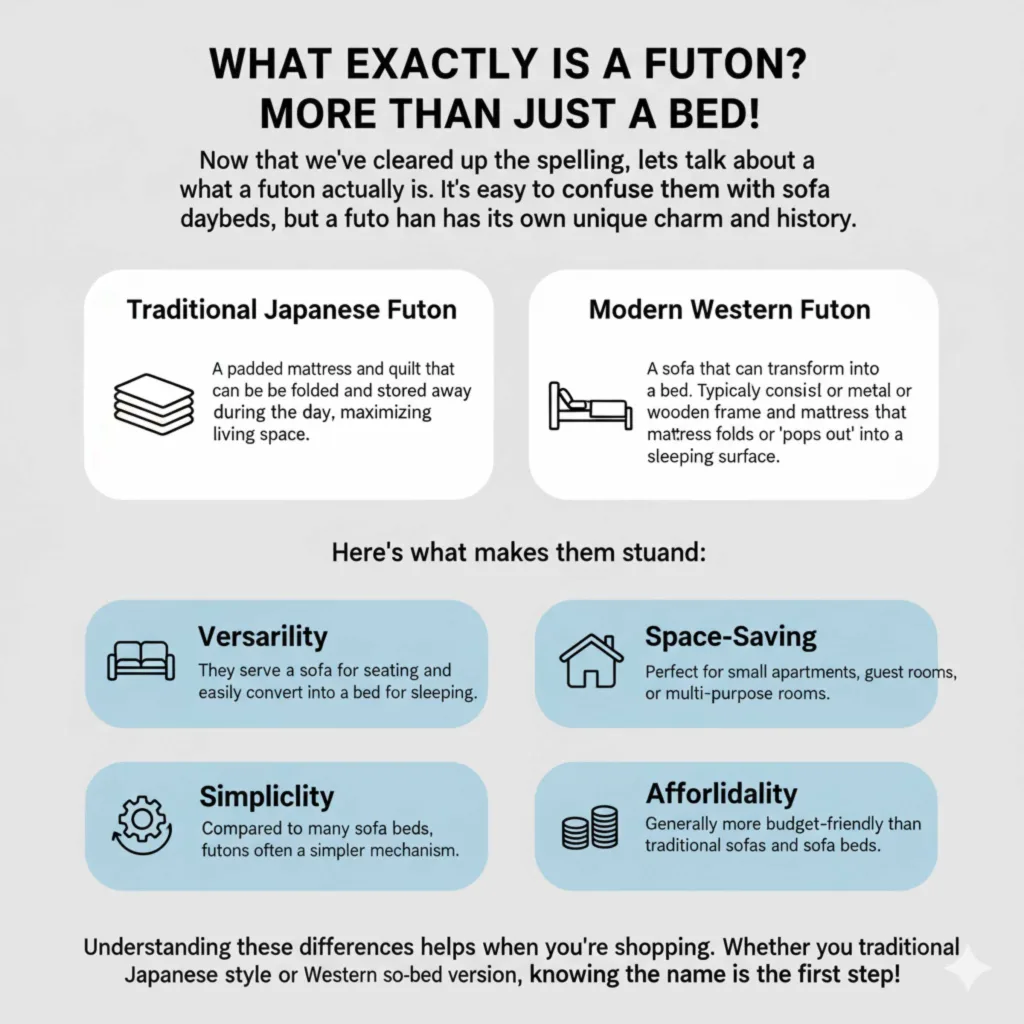
Now that we’ve cleared up the spelling, let’s talk about what a futon actually is. It’s easy to confuse them with sofa beds or daybeds, but a futon has its own unique charm and history.
Traditionally, a Japanese futon is a padded mattress and quilt that can be folded and stored away during the day, maximizing living space. Modern Western futons are inspired by this concept but usually refer to a sofa that can transform into a bed. They typically consist of a metal or wooden frame and a mattress that folds or “pops out” into a sleeping surface.
Here’s what makes them stand out:
- Versatility: They serve as a sofa for seating and easily convert into a bed for sleeping.
- Space-Saving: Perfect for small apartments, guest rooms, or multi-purpose rooms.
- Simplicity: Compared to many sofa beds, futons often have a simpler mechanism.
- Affordability: Generally more budget-friendly than traditional sofas and sofa beds.
Understanding these differences helps when you’re shopping. Whether you’re looking for the traditional Japanese style or the Western sofa-bed version, knowing the name is the first step!
Why is “Futon” a Common Question?
So, why do so many people ask “how do you spell futon?” It comes down to a few things:
- Origin: The word “futon” comes from Japanese. Many English speakers aren’t familiar with Japanese spelling conventions, which can make it seem intimidating.
- Similar-Sounding Words: Sometimes, words that sound similar can get mixed up in our minds.
- Product Naming: Many furniture items have slightly different names or variations, and “futon” might get associated with other types of convertible furniture.
- Online Searches: People often type questions into search engines like “how do you spell futon” when they’re unsure.
It’s completely normal to pause and double-check! Our goal is to clear up any confusion so you can confidently search for and purchase the perfect futon.
Choosing the Right Futon: Types and Features
Now that we know how to spell it and what it is, let’s explore the different kinds of futons available. This will help you figure out which one best suits your needs.
Japanese vs. Western Futons
It’s important to distinguish between the original Japanese style and the Western adaptation:
| Feature | Japanese Futon | Western Futon |
|---|---|---|
| Primary Use | Bedding, portable mattress for sleeping | Sofa by day, bed by night |
| Frame | Usually none; laid directly on tatami mats or a base | Metal or wood frame, designed to fold and support a mattress |
| Mattress | Thin, foldable cotton or synthetic mattress and duvet | Thicker, more padded mattress designed for sofa comfort and bed support |
| Storage | Folded and stored in a closet (oshiire) | Remains on the frame, which converts |
| Portability | Highly portable, easy to store | Stationary piece of furniture |
When most people in the U.S. or Europe refer to a “futon,” they are usually talking about the Western-style sofa that converts into a bed.
Frame Materials
The frame is a crucial part of a Western futon. It affects durability, style, and price. Common materials include:
- Wood: Offers a warmer, more traditional look. Hardwoods like oak, maple, or cherry are more durable but also more expensive. Softer woods like pine are more affordable but can be less sturdy.
- Metal: Often provides a more modern or industrial aesthetic. It can be very durable and is usually more affordable than hardwood. Look for sturdy construction, especially around the folding mechanism.
- Upholstered Bases: Some futons have a fully upholstered base, hiding the frame and giving a more finished sofa look.
Mattress Types
The mattress is what you’ll be sitting and sleeping on, so it’s important! Futon mattresses vary widely in comfort and durability:
- Innerspring: Like a traditional mattress, these have coils for support. They offer a good balance of comfort and firmness.
- Foam: Memory foam or high-density foam mattresses can be very comfortable and supportive. They might be softer or firmer depending on the foam density.
- Cotton-Wrapped: These are often a more budget-friendly option. A layer of cotton is wrapped around an innerspring core. They can be comfortable but might compress more over time.
- Poly-fill/Fiber: Similar to cotton, these offer a softer feel. They are common in more basic futons.
A good rule of thumb is that a thicker mattress (usually 5-8 inches) will offer more comfort for both sitting and sleeping.
Futon Sizes
Futons come in various sizes, just like regular sofas and beds:
- Chair/Twin: Compact, ideal for single sleepers or very small spaces.
- Full/Double: Can comfortably seat a few people and sleep one or two people.
- Queen: Offers more seating space and can sleep two people comfortably in bed mode.
Always check the dimensions in both sofa and bed configurations to ensure it fits your room!
Where to Find a Futon
Now that you know the spelling and the types, where can you actually buy one? You’ve got plenty of options!
- Furniture Stores: Many general furniture stores carry futons, especially those specializing in smaller-space solutions or convertible furniture.
- Online Retailers: Websites like Amazon, Wayfair, Overstock, and dedicated futon retailers offer a vast selection. Shopping online allows you to compare prices and read reviews easily.
- Department Stores: Some larger department stores with home goods sections may also stock futons.
- Second-hand Stores/Online Marketplaces: For budget-conscious shoppers, places like Craigslist, Facebook Marketplace, or local consignment shops can be great places to find deals. Just be sure to inspect them carefully for wear and tear.
Remember to use the correct term, “futon,” when searching online or asking for help in a store. It makes finding what you need so much easier!
Getting the Most Out of Your Futon
Once you’ve purchased your futon, there are a few tips to ensure it serves you well for years to come. Think of these like basic maintenance for your car – simple steps that keep things running smoothly.
Assembly
Most futons require some assembly. Always read the instructions carefully, and don’t hesitate to look for video tutorials online for your specific model. If you’re not comfortable with basic tools, consider asking a friend for help or looking for services that offer assembly.
Regular Maintenance
Even though they are simpler than many pieces of furniture, a little care goes a long way:
- Tighten Bolts: Periodically check and tighten any bolts or screws on the frame, especially after the first few weeks of use. This prevents wobbling.
- Clean the Mattress: Spot clean spills immediately with a mild detergent and water. Most futon mattresses cannot be fully washed, so prompt action is key.
- Rotate the Mattress: If your futon mattress is designed for it, rotate it regularly (every few months) to ensure even wear and prevent sagging in one spot.
- Test the Mechanism: Occasionally test the folding and unfolding mechanism to ensure it operates smoothly. Lubrication might be needed for metal parts over time.
Using it as a Sofa
When using it as a sofa, be mindful of the weight distribution. Avoid constant sitting on the very edge, as this can cause premature wear on the mattress and frame.
Using it as a Bed
For sleeping, a mattress topper can add an extra layer of comfort, especially if your futon mattress is on the firmer side. Using a mattress protector is also a great idea to keep it clean and fresh.
Common Problems and Simple Fixes
Like any furniture, futons can sometimes develop minor issues. Here are a few common ones and how to tackle them:
| Problem | Possible Cause | Simple Fix |
|---|---|---|
| Wobbly Frame | Loose bolts or uneven floor | Tighten all bolts and screws. Use furniture pads or shims under legs to level it. |
| Squeaking Noises | Friction between frame parts or mattress | Lubricate metal joints with silicone spray or wax. Place a thin cloth or felt between the mattress and frame where they rub. |
| Mattress Sagging | Uneven wear, age of mattress | Rotate and flip the mattress if possible. Consider a mattress topper for added support or a new mattress if it’s old. |
| Difficulty Converting | Bent metal parts, debris, or worn mechanism | Clear any obstructions. Check for bent parts and carefully attempt to straighten them. Lubricate moving parts. |
| Uncomfortable Bed | Thin mattress, firm support | Add a mattress topper (memory foam, egg crate). Ensure the mattress is properly aligned on the frame. |
Being proactive with maintenance and knowing these simple fixes can save you the hassle of calling a repair person or buying new furniture too soon.
Futons in Different Living Spaces
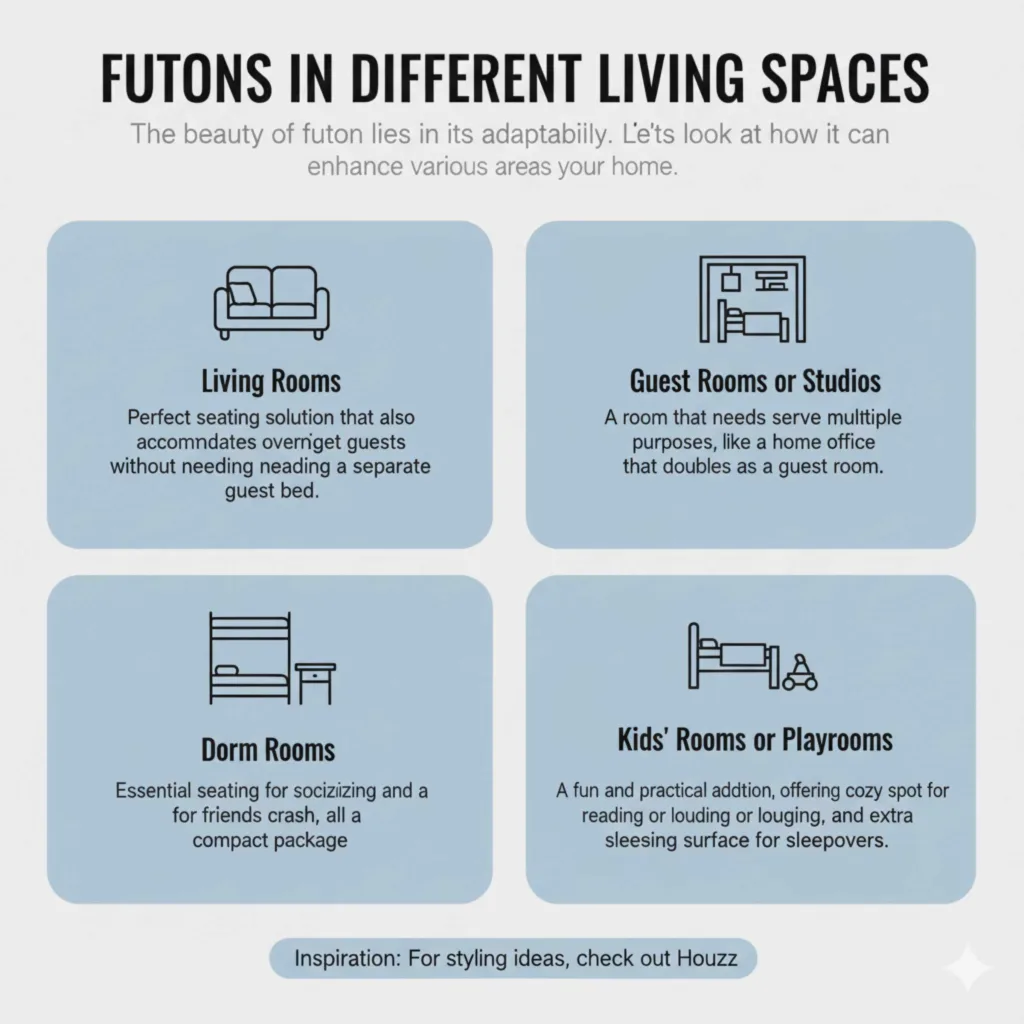
The beauty of a futon lies in its adaptability. Let’s look at how it can enhance various areas of your home.
Living Rooms
In a small living room, a futon can be the perfect seating solution that also accommodates overnight guests without needing a separate guest bed. Many modern futons look so stylish, you won’t even realize it’s a convertible piece!
Guest Rooms or Studios
For a room that needs to serve multiple purposes, like a home office that doubles as a guest room, a futon is ideal. During the day, it’s a comfortable place to sit. At night, it transforms into a guest bed.
Dorm Rooms
College students often love futons for their dorm rooms. They provide essential seating for socializing and a place for friends to crash, all in a compact package.
Kids’ Rooms or Playrooms
A futon can be a fun and practical addition to a child’s room, offering a cozy spot for reading or lounging, and an extra sleeping surface for sleepovers.
To find inspiration for styling your futon, resources like Houzz offer thousands of ideas and images of futons in various settings. This can help you visualize how a futon can fit into your own decor.
Frequently Asked Futon Questions (FAQ)
Let’s address some common questions you might still have about futons:
Q1: Is a futon mattress comfortable to sleep on every night?
A: It depends on the mattress quality and your personal preference. Higher-quality futon mattresses (innerspring, dense foam) with a mattress topper can be quite comfortable for nightly use. Basic models might be too firm or thin for some people.
Q2: How much weight can a futon frame typically hold?
A: Most sturdy futon frames can hold between 300-600 pounds, but this varies by material and construction. Always check the product specifications, especially if multiple people will be using it regularly.
Q3: Can I use a regular mattress with a futon frame?
A: Generally, no. Futon frames are designed for specific futon mattresses that are thinner and more flexible to allow for folding. Regular mattresses are too thick and rigid.
Q4: How do I clean a futon mattress?
A: For minor spills, use a damp cloth with mild soap and water. Blot the area, don’t rub. For deeper cleaning, consult the manufacturer’s instructions, as some may allow for specialized upholstery cleaners. Always allow it to dry completely before use.
Q5: Are futons more expensive than sofa beds?
A: Typically, futons are more affordable than traditional sofa beds, especially when comparing models with similar features and build quality. Their simpler mechanism and design contribute to lower costs.
Q6: What’s the difference between a futon and a daybed?
A: A daybed is primarily designed to look like a sofa or bed and often has a more solid, traditional frame. A futon’s main feature is its convertible mechanism, easily transforming from sofa to bed, with a mattress that folds with the frame.
Conclusion: Your Futon Journey Starts with the Right Spelling!
We’ve covered a lot of ground today, from the simple answer to “how do you spell futon” (it’s F-U-T-O-N!) to exploring the different types, features, and care tips. Understanding the spelling is your first step to confidently navigating the world of convertible furniture.
Whether you’re creating a cozy apartment, furnishing a guest room, or just looking for a versatile seating option, a futon could be the perfect solution. Now you’re equipped with the knowledge to find precisely what you need, maintain it effectively, and enjoy its space-saving benefits for years to come. Happy futon hunting!