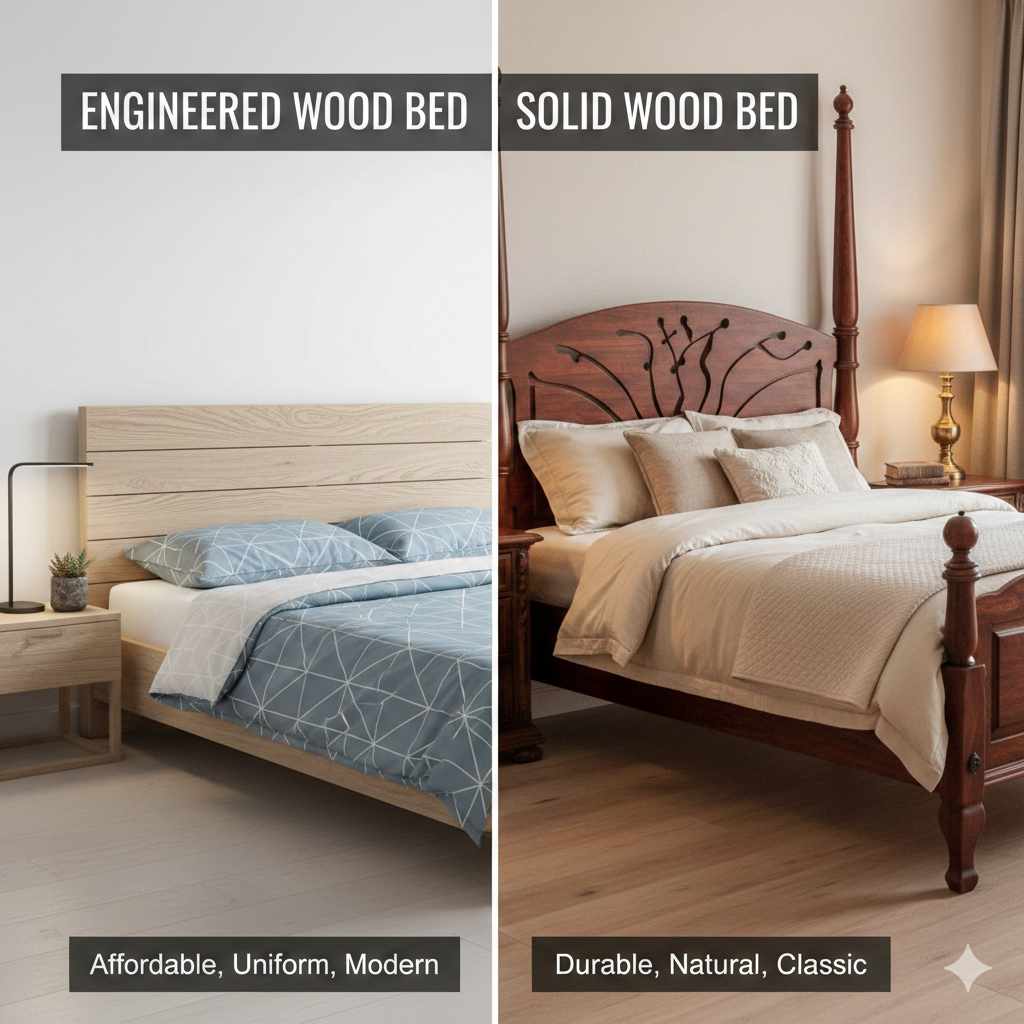
Choosing between an engineered wood bed vs solid wood bed can be tough. Solid wood is naturally durable and classic, but engineered wood offers great value and modern stability. This guide breaks down the key differences in cost, strength, look, and longevity so you can confidently pick the best bed frame for your room and budget.
Deciding on a new bed frame feels like a big choice. You want something strong that won’t creak after a year, but you also don’t want to empty your savings. When shopping, you often see two main terms: “solid wood” and “engineered wood.” It’s easy to get confused by these terms, making you wonder which one will truly last. Don’t worry! I’m here to help you clear up the confusion, just like we tackle simple car maintenance. We will look closely at what each material means so you can buy a bed you love. Let’s break down the pros and cons so you drive home (or order online) with total confidence.
What Exactly Are Solid Wood and Engineered Wood Beds?
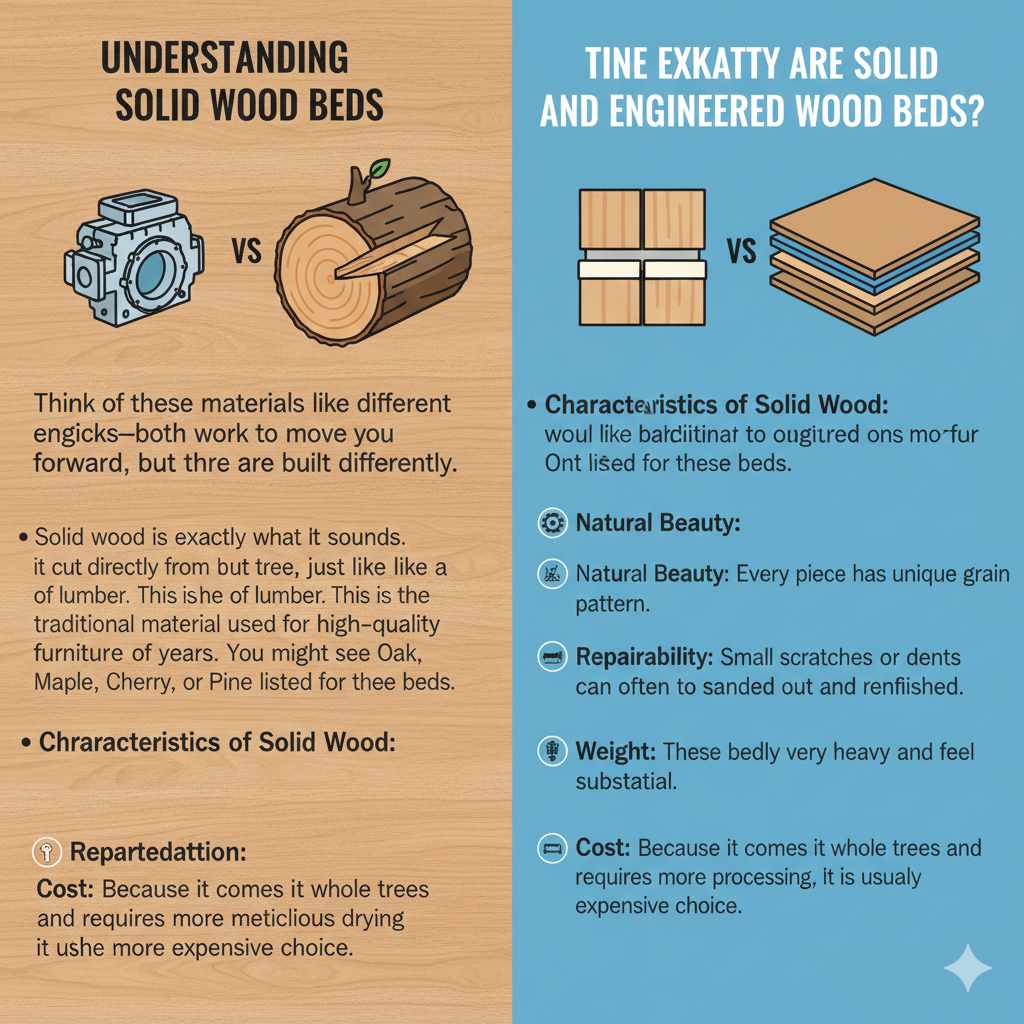
Before we compare, we must know what we are dealing with. Think of these materials like different engine blocks—both work to move you forward, but they are built differently.
Understanding Solid Wood Beds
Solid wood is exactly what it sounds like. It is cut directly from a tree, just like a plank of lumber. This is the traditional material used for high-quality furniture for hundreds of years. You might see names like Oak, Maple, Cherry, or Pine listed for these beds.
Characteristics of Solid Wood:
- Natural Beauty: Every piece has a unique grain pattern.
- Repairability: Small scratches or dents can often be sanded out and refinished.
- Weight: These beds are typically very heavy and feel substantial.
- Cost: Because it comes from whole trees and requires more meticulous drying and processing, it is usually the more expensive choice.
Understanding Engineered Wood Beds
Engineered wood is a modern solution designed for strength, consistency, and affordability. It takes smaller wood fibers, veneers, or strands and binds them together using strong resins and adhesives under high pressure and heat. Think of it like building a reliable, composite material. The most common types you’ll see in furniture are Plywood (layered wood sheets) and Medium-Density Fiberboard (MDF).
Common Types of Engineered Wood:
- Plywood: Thin layers of wood veneer stacked up with the grain running in alternating directions. This alternation makes it incredibly strong against warping.
- MDF (Medium-Density Fiberboard): Made from fine wood fibers mixed with resin. It has a very smooth surface, perfect for painting or veneering.
- Particleboard: Made of larger wood chips mixed with glue. It’s the most budget-friendly but generally the least durable option for furniture.
Often, engineered wood furniture will feature a high-quality wood veneer (a thin slice of real solid wood) glued to the top surface to give it the look of solid wood without the high price tag.
Engineered Wood Vs Solid Wood Bed: The Head-to-Head Comparison
Now for the main event. We need to look at the daily factors that matter for your bedroom setup. I’ve put together a comparison table focusing on the elements that affect your wallet and your sleep quality.
Durability and Longevity
When it comes to how long your bed frame will last, both materials have their strengths. A solid wood bed, if cared for, can easily last several decades or even come with you through many moves.
Engineered wood, especially high-quality furniture-grade plywood (like Baltic Birch), is surprisingly durable, particularly concerning resistance to moisture and warping. However, particleboard frames can suffer if they get wet or if you move them repeatedly, as the corners can chip or crumble.
Durability Factors:
- Moisture Resistance: Solid wood can swell or warp if exposed to high humidity or spills for long periods. High-quality engineered wood often resists this better because the layered construction resists expansion.
- Screw Retention: In solid wood, screws hold firmly over many years. In lower-grade engineered wood like particleboard, repeated tightening or untightening of screws (like when moving) can cause the material to break down around the hardware.
- Weight Capacity: A well-built platform bed, whether solid or engineered, should hold significant weight. Look for metal hardware connections, regardless of the wood type.
Aesthetics and Appearance
If you want that rich, traditional look, solid wood wins because every piece is truly unique. You get the knots, swirls, and depth that only nature can create.
Engineered wood excels in uniformity. If you need two identical nightstands or want a perfectly smooth, painted finish that has no visible grain, engineered wood (especially MDF) is easier and cheaper to manufacture consistently. Veneered engineered wood can look nearly identical to its solid wood counterpart until you look closely at the edges.
Cost and Budgeting
This is often the deciding factor for many buyers. Engineered wood almost always offers better value for money.
You can get a larger, sturdier-feeling engineered wood bed frame for the price of a basic, smaller solid wood frame. This allows you to spend more money on what really matters: a fantastic mattress!
Maintenance and Care
Maintenance is simpler than you might think for both types, but the repair process differs greatly.
- Solid Wood Care: Keep it dry. Wipe spills immediately. Periodically (every few years), you might wax or oil it, or lightly sand and re-stain if you notice dullness or minor scratches.
- Engineered Wood Care: Keep it dry and avoid harsh chemicals on the surface finish. If the veneer or laminate gets chipped, it is very difficult to repair seamlessly; you might need to use furniture scratch kits or simply cover the area.
Comparison Table: Solid Wood vs Engineered Wood Beds
Here is a quick visual breakdown to help you see the trade-offs side-by-side:
| Feature | Solid Wood Bed | Engineered Wood Bed |
|---|---|---|
| Material Source | Raw lumber from trees (Oak, Maple, etc.) | Fibers, veneers, or strands glued together (Plywood, MDF) |
| Approximate Cost | Higher Investment | Lower to Mid-Range Investment |
| Weight & Movement | Very Heavy; hard to move | Lighter; easier to assemble/disassemble |
| Resistance to Warping | Can warp if humidity changes severely | Often better resistance due to layered construction |
| Repairability | Excellent (can be sanded/refinished) | Poor (chips are hard to fix cleanly) |
| Look and Feel | Natural, unique grain, timeless | Uniform look, excellent for modern or painted finishes |
Making the Right Choice for Your Home
Choosing the right bed isn’t about declaring one material “better”—it’s about finding the best fit for your driving conditions, so to speak. Where are you in life right now?
When Should You Choose Solid Wood?
Solid wood is the choice if you prioritize heirloom quality and natural aesthetics. It’s a fantastic investment if you plan to keep this bed for 15 years or more in a stable climate.
Solid Wood is Great If:
- You love the look of real wood grain and want a timeless piece.
- Budget is less of a concern than long-term durability.
- You want the option to refinish the bed decades down the line.
- You prefer furniture that feels incredibly heavy and stable.
Remember, wood movement is natural! According to resources like the Environmental Protection Agency (EPA) on wood products, while modern off-gassing is controlled, solid wood naturally breathes with your home’s climate.
When Should You Choose Engineered Wood?
Engineered wood shines when you need great looks, good strength, and excellent value. It’s perfect for first apartments, guest rooms, or modern design aesthetics that favor clean lines over natural variation.
Engineered Wood is Great If:
- You are furnishing a room on a strict budget.
- You move frequently and need lighter furniture that involves disassembly.
- You prefer a perfectly smooth, painted finish (MDF is excellent for this).
- You are prioritizing a modern or minimalist design where the frame is secondary to the mattress support.
When buying engineered wood, quality matters hugely. Always avoid cheap particleboard frames if possible. Look specifically for high-density plywood frames when aiming for strength in this category.
Deep Dive: What to Look for in Bed Construction (The Hidden Parts)
The material on the surface only tells half the story. Whether solid or engineered, the way the bed is put together determines how it handles the nightly stress of tossing and turning. You wouldn’t buy a car based only on the paint job, right? You check the frame and suspension!
Focus on the Joinery
Draw your attention to how the pieces connect. This is crucial for preventing squeaks and ensuring stability.
- Bolts and Metal Brackets: The best frames use heavy-duty metal bolts connecting the side rails to the headboard and footboard. This system allows for secure tightening and disassembly. Look for frames that use large, substantial hardware, not tiny screws.
- Dowels and Cam Locks: Many flat-pack (RTA – Ready To Assemble) beds use dowels (small wooden pegs) and cam locks (metal discs that turn to lock). These are fine for engineered wood, but ensure the cam locks fit snugly into wood that isn’t crumbling.
- Mortise and Tenon: This is the gold standard for solid wood joining. A tenon (a shaped end of one piece) fits tightly into a mortise (a corresponding hole) in another piece. This creates a strong, interlocking joint that resists racking (side-to-side movement).
Slats: The Mattress Foundation Support
The slats are what your expensive mattress actually rests on. Poor slats mean even the sturdiest frame will eventually sag or develop a gap in the middle.
For both solid and engineered wood beds, prioritize platform support over simple wire mesh or minimal slats.
Slat Standards:
- Wood Type: Solid wood slats (like pine or poplar) are best. If engineered, look for thick plywood slats.
- Spacing: The gap between slats should be no more than 3 inches, especially for modern foam or hybrid mattresses. Many memory foam mattresses require 2–3 inches maximum spacing to prevent body impressions or void the warranty. Check your mattress warranty guidelines—it’s important!
- Center Support Legs: For any Queen size bed or larger (King, Cal King), you MUST have a rigid center support beam that runs from the head to the foot of the bed, resting on at least one, ideally two, legs that touch the floor. This prevents the middle of the bed from dipping.
Addressing Modern Concerns: Off-Gassing and VOCs
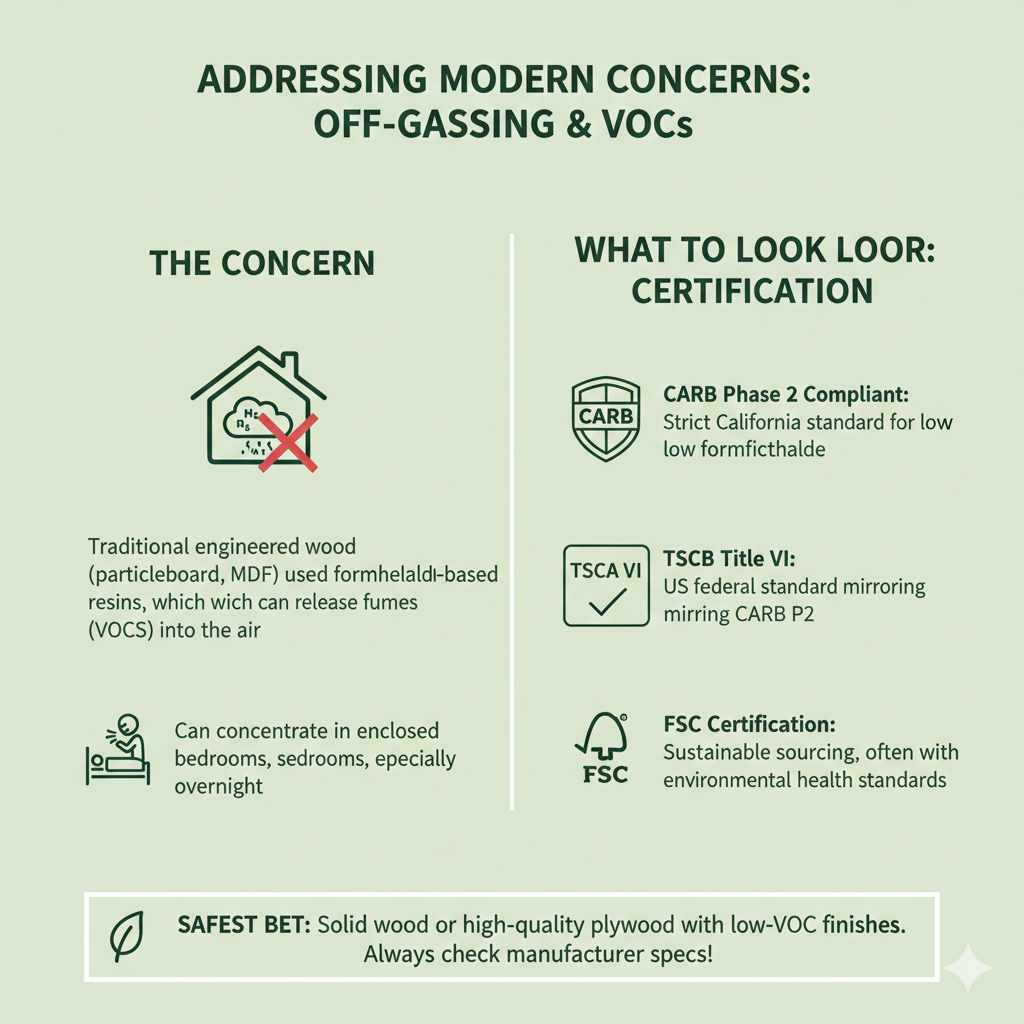
As you research “engineered wood bed vs solid wood bed,” you might encounter concerns about chemicals. This is a valid caution area, especially with particleboard and MDF, which traditionally used formaldehyde-based resins.
Formaldehyde is a known irritant, and an enclosed bedroom overnight can concentrate the fumes if the product is low quality. However, modern manufacturing standards have drastically improved, especially in North America and Europe.
What to Look For: Certification
To drive safely and confidently with your purchase, look for certifications that ensure low chemical emissions:
- CARB Phase 2 Compliant: This is a crucial standard set by the California Air Resources Board, which significantly limits formaldehyde emissions from composite wood products. Most reputable U.S. furniture makers meet this.
- TSCA Title VI: This is a federal standard in the US that mirrors CARB Phase 2, ensuring low-emitting composite wood products.
- FSC Certification: While primarily focused on sustainable sourcing of the wood fiber, many Forest Stewardship Council (FSC) certified products also adhere to strict environmental health standards.
If you are highly sensitive, solid wood or high-quality plywood finished with low-VOC (Volatile Organic Compound) natural oils or waxes is your safest bet. If you choose engineered wood, always check the manufacturer’s specifications for low-emission compliance.
The Beginner Driver’s Guide to Bed Frame Shopping
To keep things practical, here is a simple checklist. Think of this as your pre-flight inspection before you commit to buying.
| Step | Action for Solid Wood | Action for Engineered Wood |
|---|---|---|
| 1. Inspect Grain/Finish | Look at several pieces to ensure the grain matches your expectation for color and pattern consistency. | Ensure the veneer/laminate is smooth, without bubbles, tears, or obvious seams, especially on corners. |
| 2. Check Joint Security | Tap corners—do they feel tightly fitted? Can you see large, robust metal bolts? | If it’s flat-pack, look at where the cam locks insert. The material around the lock should feel dense, not crumbly. |
| 3. Examine Slats | Are the slats thick and evenly spaced (3 inches or less)? | Are the slats using plywood, or are they thin strips prone to snapping? Confirm center support legs exist. |
| 4. Evaluate Moving Needs | If you move often, ensure the design allows it to be disassembled easily without stripping the wood threads. | Confirm that all hardware (screws, cam locks) is included and that pilot holes are pre-drilled correctly. |
Frequently Asked Questions (FAQ) about Bed Materials
Q1: Will an engineered wood bed squeak over time?
A: Squeaks usually come from loosening connections, not the wood type itself. If a good quality engineered frame is assembled tightly with metal hardware, it should not squeak any more than a solid wood frame. Loose joints are the problem.
Q2: Can I refinish or paint an engineered wood bed?
A: You can paint MDF if the laminate is in poor shape, but it requires heavy sanding and primer. You generally cannot sand engineered wood deeply because once you sand through the top veneer (or the laminate), you expose the lesser-quality core material beneath.
Q3: Is solid wood always heavier than engineered wood?
A: Not necessarily. A solid pine bed might be lighter than a dense, high-quality furniture-grade plywood bed. However, most inexpensive particleboard engineered beds are much lighter than most solid hardwood beds (like oak or maple).
Q4: Does engineered wood break down faster than solid wood?
A: In ideal conditions, solid wood lasts longer. Engineered wood, particularly cheaper particleboard, is more susceptible to damage from moisture absorption (spills) and stress failures at screw points if it is constantly moved.
Q5: Is engineered wood furniture dangerous for my health due to glue?
A: Modern, reputable furniture sold in the US and EU uses low-emission composite woods that meet strict standards (like CARB Phase 2). If you buy from a trusted source supplying modern furniture, health risks regarding off-gassing are minimal.
Q6: Which material is better for a platform bed that doesn’t need a box spring?
A: Both can work well, provided the slat support is robust. A platform made from high-quality plywood engineered wood can be extremely stable and cost-effective for this purpose, often outperforming cheap, thinly slatted solid wood frames.
Putting It All Together: Your Confident Purchase
We’ve covered the nuts and bolts of engineered wood vs solid wood bed frames. Here’s the reassurance you need: you are making a smart decision either way, provided you shop smart.
If you are seeking timeless beauty, the ability to repair and refinish, and generational longevity, save up for that quality solid hardwood piece. Treat it well, and it will be a beautiful fixture in your home for life.
If you prioritize modern style, need to stick to a tighter budget, or plan to move in the next few years, a well-constructed engineered wood frame—especially one using sturdy plywood and metal hardware—is a reliable workhorse. It provides excellent mattress support without the high price tag of solid lumber. Remember to always prioritize strong joinery and