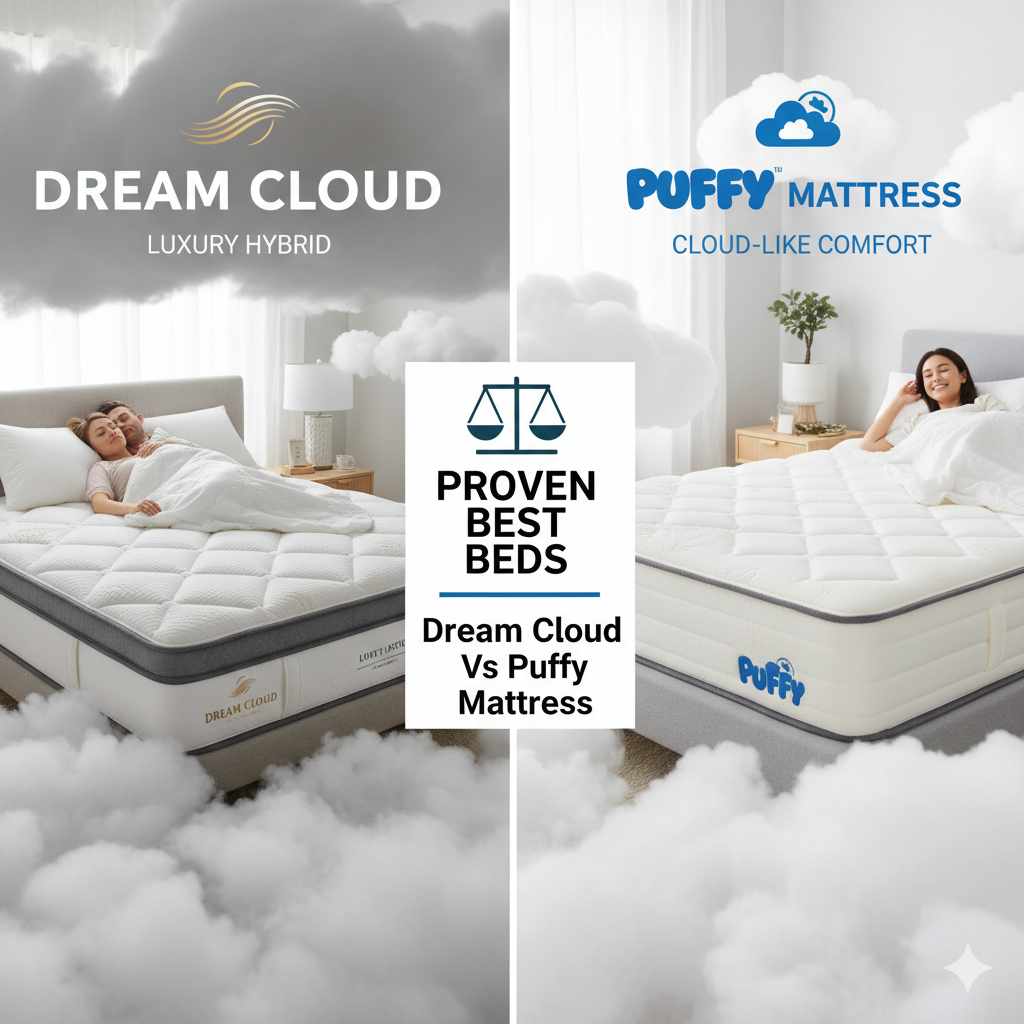
DreamCloud vs Puffy Mattress: For the best sleep, the DreamCloud often wins for firmer support and cooling, while the Puffy excels in pressure relief and a true “cloud-like” feel, especially for side sleepers or those prioritizing softness. Choose based on your preferred firmness and sleeping needs.
Choosing a new mattress can feel like navigating traffic on a busy highway—so many choices, and it’s easy to get overwhelmed! We are talking about two top contenders here: the DreamCloud and the Puffy. Both are excellent online brands, but they feel very different once you lie down. If you are tired of waking up stiff or too hot, you need a clear guide.
Don’t worry about confusing technical specs or mechanic jargon. Just like tuning up your car, we will break down these mattresses piece by piece so you can make a confident choice. We will look at what they are made of, how they feel, and which one is right for your budget and sleep style. Stick with me, and by the end of this guide, you’ll know exactly which “proven best bed” belongs in your bedroom!
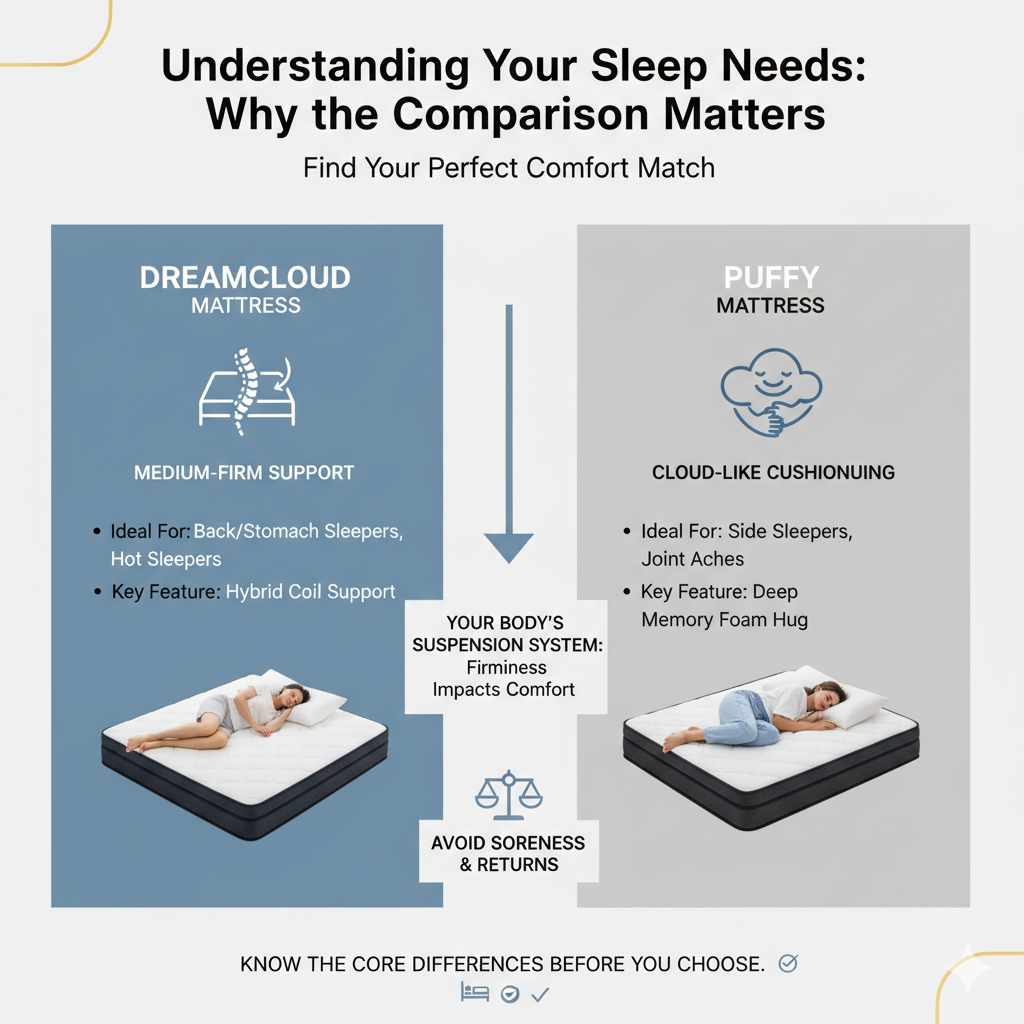
Understanding Your Sleep Needs: Why the Comparison Matters
Think of your bed like a vital suspension system for your body. If it’s too soft or too firm, you end up sore the next morning. When looking at the DreamCloud vs Puffy mattress debate, we are comparing two very different approaches to comfort.
The DreamCloud is usually aimed at people who like a medium-firm feel, often good for back and stomach sleepers, and those who sleep hot. The Puffy, on the other hand, focuses intensely on deep cushioning—it’s famous for that enveloping, cloud-like hug, which is fantastic for side sleepers or those with joint aches.
If you are used to traditional innerspring beds, both might feel different at first because they mostly use memory foam layers (though the DreamCloud Hybrid uses coils). Understanding these core differences upfront saves you the headache of returns later.
DreamCloud Mattress: The Supportive Cruiser
The DreamCloud is very popular because it successfully blends the support of coils with the contouring comfort of foam. It’s often described as a luxury hybrid mattress.
What’s Under the Hood? DreamCloud Construction
The DreamCloud is built in layers, much like the multi-stage filter system in your car’s engine. Each layer has a specific job to do. Most current models are hybrids, meaning they use springs (coils) and foam.
Here is a typical breakdown of the construction:
- Pillow Top: Often quilted with soft foam, this is the first thing you feel. It adds immediate surface softness.
- Comfort Layer: Usually made of dense memory foam that conforms to your body shape, relieving pressure points.
- Transition Layer: This layer helps you merge smoothly from the soft top to the supportive base without sinking too far.
- Support Core: These are individually wrapped steel coils. This is the powerhouse—they provide bounce, airflow, and most of the deep support.
- Base Layer: A durable foam foundation that keeps everything stable and stops sagging.
The Ride Quality: Firmness and Feel
Most users rate the DreamCloud as a comfortable 6.5 to 7.5 out of 10 on the firmness scale (where 10 is the firmest mattress you can buy). This medium-firm feel is versatile.
- Good for Back Sleepers: It keeps the spine aligned nicely without letting the hips sink too low.
- Good for Stomach Sleepers: The coil support prevents the hips from dipping, which is crucial for keeping your lower back happy.
- Cooling Properties: Because it uses coils, there is plenty of space between the layers for air to move. This helps dissipate body heat better than many pure foam beds.
Pros and Cons Quick Check: DreamCloud
It’s always smart to look at both sides of the coin before making a purchase decision.
| DreamCloud Pros | DreamCloud Cons |
|---|---|
| Excellent edge support due to coils. | Can feel too firm for very light sleepers. |
| Superior motion isolation compared to traditional innersprings. | The hybrid build can sometimes mean a higher price tag than all-foam options. |
| Great durability and cooling benefits. | Less “sinking” feeling that some foam fans love. |
Puffy Mattress: The Cloud Experience
If you have ever wanted to sleep on a literal cloud, the Puffy mattress is designed to deliver that sensation. Puffy focuses almost entirely on using specialized memory foam technology to create deep, contouring comfort.
The Engine Under the Cover: Puffy Construction
The Puffy is an all-foam mattress. This means it relies on different densities of foam to manage support and comfort, rather than metal springs. This structure gives it that famously slow, “sink-in” feeling.
Here is how the foam layers typically stack up:
- Plush Cover: Very soft and often infused with cooling elements to counteract the natural heat retention of foam.
- Comfort Foam: This is the layer responsible for that immediate pressure relief. It molds closely to your body.
- Support Foam: Denser foam that prevents you from sinking straight through to the floor.
- Base Layer: The sturdy foundation foam that keeps the mattress stable and durable.
The Ride Quality: Softness and Pressure Relief
Puffy generally lands in the medium-soft to medium range, often around a 5 to 6 on the firmness scale. This level of softness is what creates the famous “hug.”
- Side Sleepers Rejoice: This is where Puffy shines. The soft top layer cushions the hips and shoulders perfectly, keeping the spine straight and avoiding painful pressure points.
- Motion Isolation King: Because there are no coils, movement is absorbed almost instantly. If your partner tosses and turns all night, you likely won’t feel a thing—it’s like driving on perfectly paved roads with no traffic bumps.
- Heat Retention Warning: While Puffy has improved its cooling tech (like gel infusions), all-foam beds naturally trap more heat than hybrids. If you are a very hot sleeper, this is something to monitor.
Pros and Cons Quick Check: Puffy
Let’s compare the Puffy’s strengths against its potential weaknesses.
| Puffy Pros | Puffy Cons |
|---|---|
| Exceptional pressure relief for side sleepers and sore joints. | Less bounce; more of a “sinking” feeling when getting in and out. |
| Top-tier motion isolation—ideal for couples. | Can sometimes sleep hotter than hybrid options. |
| Often slightly more budget-friendly than the DreamCloud Hybrid. | Weaker edge support than the coil-based DreamCloud. |
Head-to-Head Showdown: DreamCloud Vs Puffy Mattress
Now that we know what each bed is built for, let’s put them side-by-side on the critical aspects of sleep performance.
Firmness and Feel Comparison Table
This table should help you quickly see which firmness level matches your preference.
| Feature | DreamCloud (Hybrid) | Puffy (All-Foam) |
|---|---|---|
| Primary Feel | Balanced Medium-Firm | Soft, Hugging Medium-Soft |
| Firmness Scale (1-10) | 6.5 – 7.5 | 5.0 – 6.0 |
| Best For (Weight/Position) | Back, Stomach, Hot Sleepers, Couples wanting bounce | Side Sleepers, Lighter Individuals, Couples needing motion isolation |
| Edge Support | Very Good | Average |
Cooling Performance
This is a major deciding factor for many people looking for a replacement for an old, sagging bed. Heat buildup often comes from poor airflow.
DreamCloud’s Advantage: Since the DreamCloud is a hybrid, the individually wrapped coils create natural channels throughout the mattress core. Air flows freely beneath you. This means heat escapes quickly, making it a superb choice if you often wake up sweating or if your bedroom runs warm.
Puffy’s Challenge: As an all-foam bed, Puffy relies heavily on advanced cooling infusions (like gel or phase-change materials) in its top foam layers. While these help significantly, the density of the foam inherently traps more warmth than a coil system. If you sleep very hot, you might notice Puffy warms up slightly more over the course of the night.
Motion Isolation
Motion isolation is how well the mattress absorbs movement when your partner shifts.
Puffy Wins Here: All-foam mattresses are the champions of motion isolation. The deep contouring foam effectively dampens any rocking or movement before it reaches the other side of the bed. This is vital if you share a bed and wake up easily.
DreamCloud’s Performance: It is still very good because of the dense foams used, but the coils can sometimes transmit minor vibrations, especially if you have a lightweight partner. It’s a strong runner-up, but Puffy typically takes the top spot for zero disturbance.
Edge Support
Edge support refers to how well the perimeter of the mattress holds up when you sit on it or sleep right near the edge.
DreamCloud’s Win: Thanks to the robust coil system, the DreamCloud feels solid right to the very edge. This is great for couples who need the full surface area of the mattress or for those who like sitting on the edge of the bed to put on shoes. Strong edges also mean less risk of rolling out.
Puffy’s Trade-off: All-foam construction generally means softer edges. When you sit down, you will compress the foam significantly, and it won’t feel as firm or supportive as the DreamCloud edge.
Choosing Based on Your Sleeping Style (Position Guide)
The best mattress isn’t the most expensive one; it’s the one that supports your body in your favorite sleeping position. Getting your spine properly aligned is key to avoiding morning stiffness. If you need more information on spinal alignment techniques, resources from organizations like the Centers for Disease Control and Prevention (CDC) often touch upon healthy sleep environments.
For the Side Sleeper
Side sleepers need cushioning for their shoulders and hips to prevent those areas from digging into a firm surface.
- Recommendation: Puffy. Its softer top layers conform deeply, cradling the curves of the body and relieving pressure at the widest points (shoulders and hips). This prevents that tingling, achy feeling you get on a bed that is too firm.
For the Back Sleeper
Back sleepers need a mattress that keeps the hips from sinking too far while supporting the natural curve of the lower back (lumbar region).
- Recommendation: DreamCloud. The medium-firm feel of the DreamCloud provides the necessary pushback to keep the spine straight and well-supported, especially with the sturdy coil base.
For the Stomach Sleeper
Stomach sleepers require the firmest surface to prevent the hips and pelvis from bowing downward, which strains the lower back.
- Recommendation: DreamCloud. While some very heavy stomach sleepers might want an even firmer option, the medium-firm DreamCloud offers much better foundational support than the softer Puffy, keeping the core of the body elevated.
For Hot Sleepers
If you often kick off the covers or feel too warm mid-sleep, cooling is your top priority.
- Recommendation: DreamCloud. The hybrid construction is inherently cooler due to massive airflow channels between the coils.
For Couples (Motion Disturbance)
If one person tends to move a lot, motion transfer is the enemy.
- Recommendation: Puffy. Its dense, all-foam design is exceptional at swallowing up partner movement so you don’t have to worry about being disturbed.
Set-Up and Break-In Period: What to Expect
Both the DreamCloud and Puffy arrive compressed in a box. Setting them up is easy—it’s much simpler than lifting an old, heavy traditional mattress! However, they both require a short “break-in” period.
Setting Up Your New Bed (The Installation)
This process is very straightforward, even if you are not mechanically inclined:
- Unbox Carefully: Open the outer box, usually near the bedroom. Be careful not to use sharp objects that could cut the inner plastic wrapping.
- Remove Plastic: Roll the mattress onto your bed frame or foundation. Once it’s positioned, carefully cut the plastic wrapping using safety scissors.
- The Unfurl: As soon as the plastic is cut, the mattress will immediately begin expanding. It may take a few minutes to fully puff up to its shape.
- Air Out: Both mattresses might have that “new mattress smell” (off-gassing). It is wise to leave the sheets off for 24 to 48 hours to allow this odor to dissipate completely.
The Break-In Period
Do not judge the mattress on the first night! Both brands ask you to give them time to adjust to your body and vice versa.
DreamCloud Break-In: Because it has coils, the DreamCloud might feel a bit rigid initially. Give it about 2 to 3 weeks. The foams need time to soften up slightly under your consistent weight.
Puffy Break-In: The Puffy often feels incredibly soft right away, but it needs time to fully decompress and settle into its intended support structure. Many users report that the Puffy feels “right” around the 30-day mark.
Pro Tip: Since both companies offer long, risk-free trials (often 100 nights or more), use this time wisely. If you are on the fence after 30 days, keep trying it out!
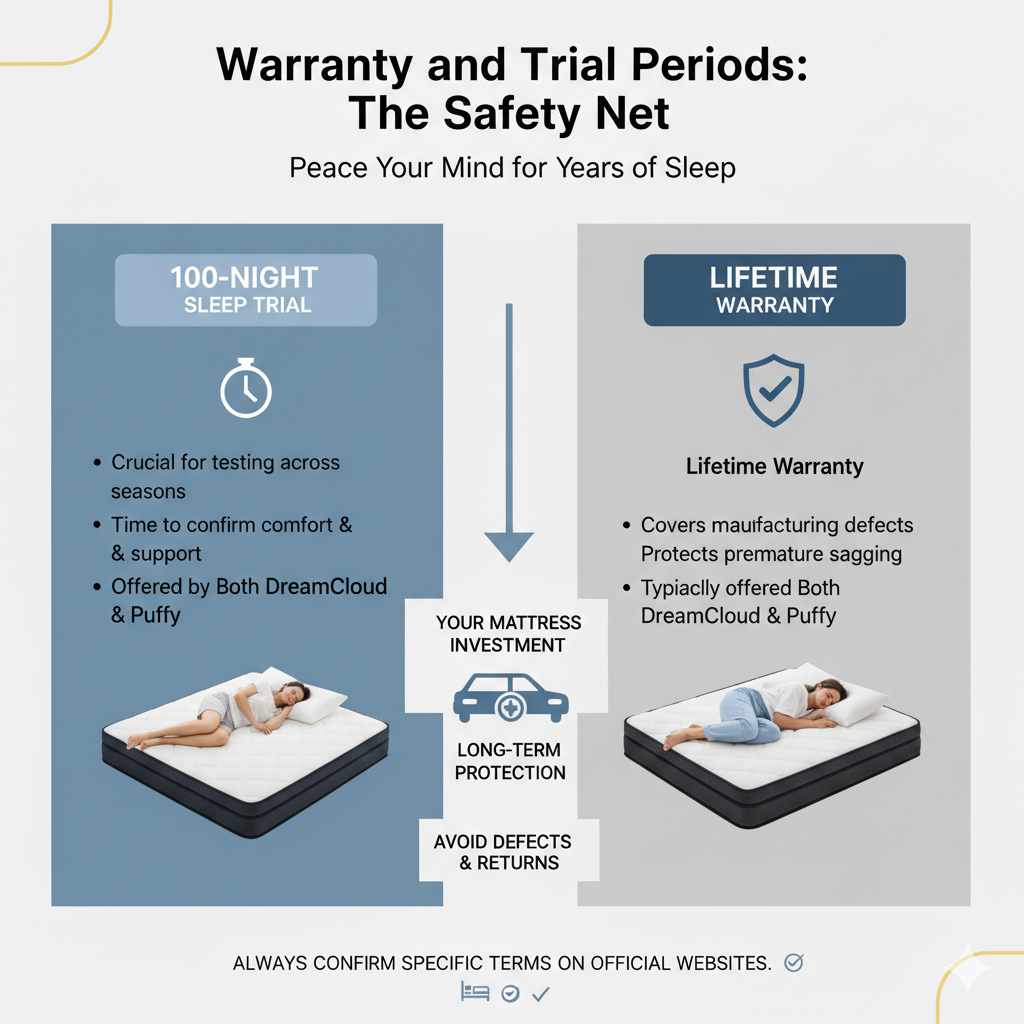
Warranty and Trial Periods: The Safety Net
When investing in a mattress, you are buying years of sleep. The warranties and trial periods act like your roadside assistance plan.
Both DreamCloud and Puffy offer industry-leading policies, which is a huge benefit of buying online.
- Mattress Trials: Both generally offer a 100-night sleep trial. This is crucial. It gives you plenty of time to test performance across different seasons (important for handling heat retention).
- Warranties: Both brands typically back their mattresses with a Lifetime Warranty against manufacturing defects, such as premature sagging or split foam. Be sure to confirm the specific warranty details on their official sites, as terms
Frequently Asked Questions (FAQ)
Q1: Which mattress is better for people with back pain?
If your back pain is caused by lack of support or poor alignment, the DreamCloud is often the better option because its medium-firm feel and coil system keep the spine properly supported. If your pain comes from pressure on joints (like hips and shoulders), the softer Puffy may feel more comfortable.
Q2: Do DreamCloud and Puffy mattresses need a box spring?
No. Both mattresses work best on a solid platform bed, adjustable base, or sturdy slatted frame. If using slats, they should be close together and strong enough to support the mattress evenly.
Q3: How long do DreamCloud and Puffy mattresses typically last?
With proper care, both can last around 7–10 years. DreamCloud may last slightly longer for some users because the coil support system helps prevent deep sagging over time, while Puffy relies entirely on foam layers.
Q4: Which mattress is better for heavier sleepers?
DreamCloud is usually the better choice for heavier individuals. Its hybrid construction with coils provides stronger support, better weight distribution, and more durability than an all-foam design.
Q5: Will either mattress have a strong smell when opened?
Both may have a mild “new mattress” smell (off-gassing) when first unboxed. This is normal for foam products and usually fades within 24–48 hours if you let the mattress air out in a well-ventilated room.
Conclusion
DreamCloud and Puffy are both high-quality online mattresses, but they serve different comfort needs. DreamCloud stands out for its firmer support, better cooling, stronger edges, and durability thanks to its hybrid coil design—making it ideal for back and stomach sleepers, hot sleepers, and heavier individuals. Puffy, on the other hand, shines with its soft, cloud-like feel, excellent pressure relief, and top-tier motion isolation, making it especially appealing for side sleepers and couples sensitive to movement.
In the end, the best choice comes down to your sleep style and comfort preference. If you want lifted support and a cooler, more stable surface, DreamCloud is likely the better fit. If you prefer deep cushioning and a cozy, body-hugging feel, Puffy may deliver the better night’s sleep.