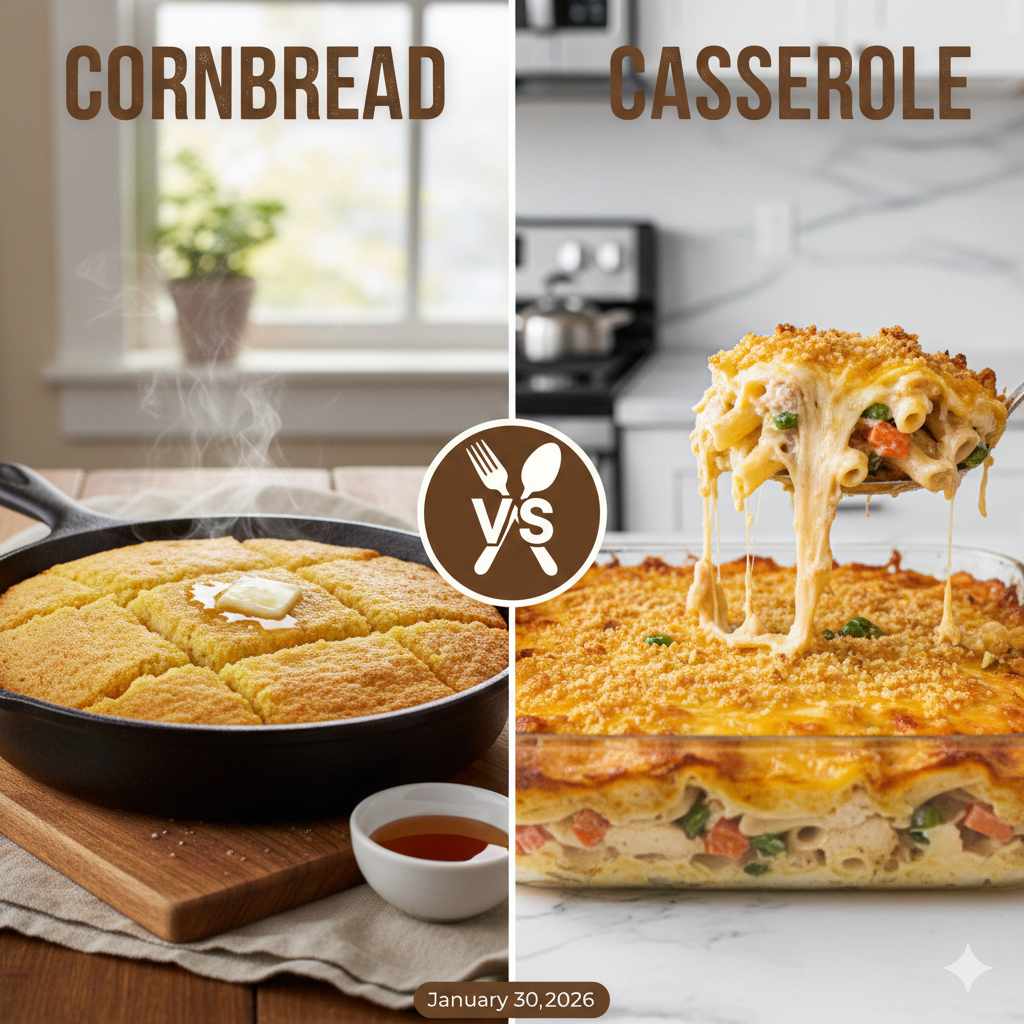
The key difference is structure and texture. Cornbread is a simple, baked quick bread, usually firm and sliceable. Corn Casserole (or Corn Pudding) is a moist, creamy, spoonable side dish, often containing creamed corn and eggs. We will break down the simple ingredients, typical uses, and easy recipes for both.
Are you standing in the kitchen, staring at a bag of cornmeal, wondering what delicious path to take? You want a great side dish for your big meal, but are cornbread and corn casserole the same thing? Many folks get these two wonderful dishes confused! They both use corn, but their final texture and flavor are miles apart. Don’t worry, this is a very common mix-up. We are going to clear this up right now, just like tuning up a perfectly running engine. By the end of this guide, you will know exactly which one to bake for any occasion. Let’s look under the hood of these two iconic American sides!
Cornbread Vs Corn Casserole: Understanding the Core Difference
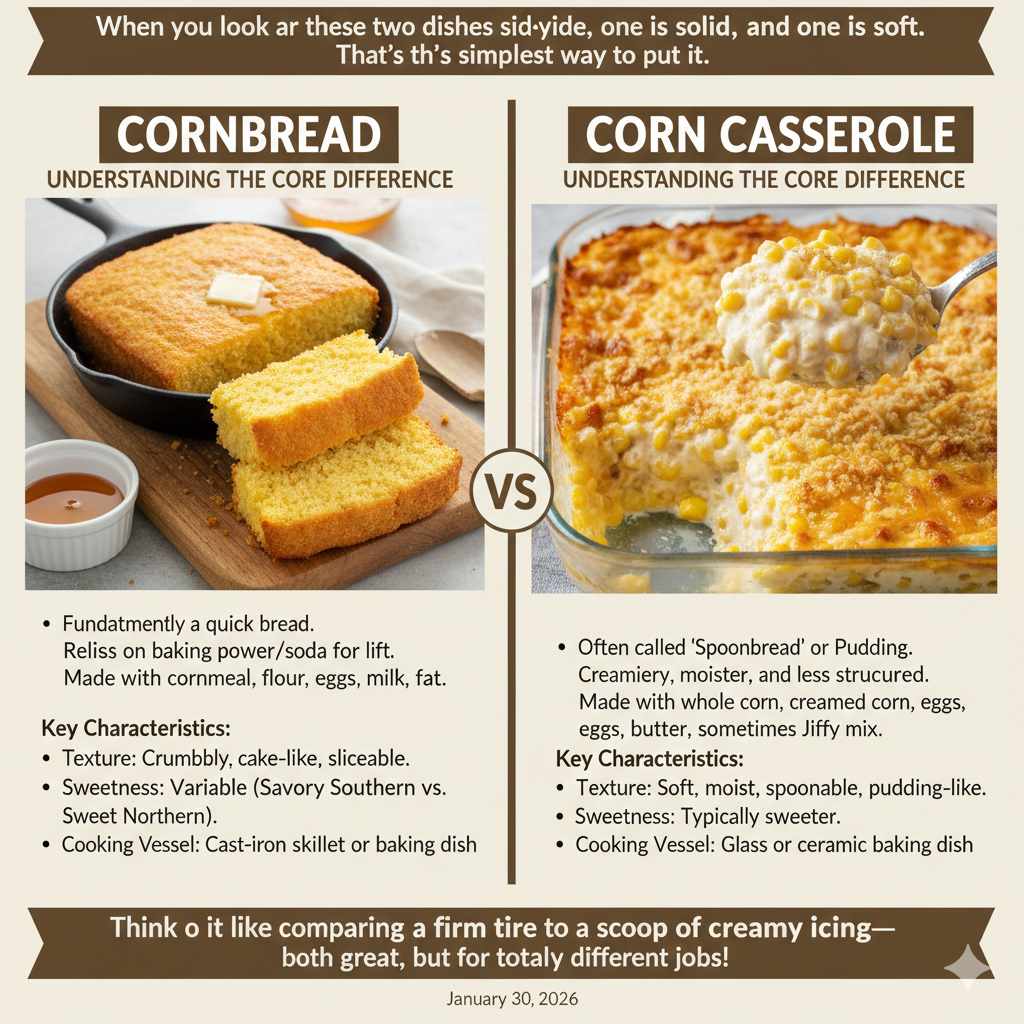
When you look at these two dishes side-by-side, one is solid, and one is soft. That’s the simplest way to put it. Think of it like comparing a firm tire to a scoop of creamy icing—both great, but for totally different jobs!
What Exactly is Cornbread?
Cornbread is fundamentally a quick bread. Like muffins or biscuits, it relies on baking powder or baking soda for lift. It’s made primarily with cornmeal, flour (sometimes), eggs, milk or buttermilk, and fat (butter or oil).
The main goal of cornbread is to be sturdy enough to hold its shape when cut. It’s designed to be dipped into soup, chili, or BBQ sauce, or perhaps eaten next to a plate of greens.
Key characteristics of standard cornbread:
- Texture: Crumbly, cake-like, or slightly dense, but always sliceable.
- Sweetness: Highly variable. Southern styles are often savory (no sugar), while Northern styles tend to be sweeter.
- Cooking Vessel: Usually baked in a cast-iron skillet or a square/rectangular baking dish.
What Exactly is Corn Casserole (Corn Pudding)?
Corn Casserole, often called Corn Pudding, Jiffy Corn Casserole, or Spoonbread (though Spoonbread is technically a subset), is much wetter. This dish is designed to be served with a spoon or a sturdy serving spatula because it won’t hold a clean slice.
It gets its moisture and creaminess from ingredients like canned creamed corn, sour cream, or yogurt, bound together by eggs. It bakes up custardy in the middle while developing a nice, slightly browned top crust.
Key characteristics of Corn Casserole:
- Texture: Moist, soft, creamy, pudding-like, and scoopable.
- Ingredients: Always includes a creamy element (like creamed corn or sour cream).
- Cooking Goal: A rich, comforting, spoonable side dish.
The Essential Showdown: Ingredient Breakdown
To truly see the difference between cornbread vs corn casserole, we need to look at what goes into the mixing bowls. Notice how the casserole needs more “wet” binders to stay soft.
Table 1: Core Ingredient Comparison
| Ingredient | Typical Cornbread | Typical Corn Casserole |
|---|---|---|
| Main Starch | Dry Cornmeal (often combined with flour) | Cornmeal AND Canned Creamed Corn |
| Liquid Content | Milk or Buttermilk (just enough to hydrate) | High amount: Creamed Corn, Milk, Sour Cream |
| Binding Agent | Minimal Eggs (for structure) | Multiple Eggs (to set the custard) |
| Sweetener | Optional (Sugar or Honey) | Commonly included (Sugar or Mix used) |
Why Corn Casserole Stays Moist
The secret weapon in the casserole is the use of creamed corn mixed with eggs. When baked, the eggs set up around the liquid and starches of the creamed corn, creating a soft, spoonable center. It’s less like baking and more like setting a very rich savory custard. This high moisture content is why you can never “slice” a perfect wedge of corn casserole; it will just slump onto the plate!
Why Cornbread Stays Firm
Cornbread relies on higher ratios of dry ingredients (cornmeal and flour) relative to liquid. The goal is to hydrate the cornmeal enough so it sets firmly during baking, creating those classic air pockets and a crumb structure you can easily pull apart.
Baking Basics: Simple Steps for Beginners
You don’t need a professional kitchen or years of experience to nail either of these recipes. Let’s walk through the basic steps so you can confidently choose your path. Remember, safety first! Always make sure your baking pan is cool before touching the sides after it comes out of the oven.
How to Make Perfect, Sliceable Cornbread
This is the traditional approach—simple, quick, and satisfying.
- Preheat and Prep: Preheat your oven to 400°F (200°C). If using a cast-iron skillet, place it in the oven while it preheats. This helps create that famous crispy crust.
- Mix Dry Ingredients: In a large bowl, whisk together 1 cup cornmeal, 1 cup all-purpose flour (optional, for a softer crumb), 2 teaspoons baking powder, 1 teaspoon salt, and 1 tablespoon sugar (if desired).
- Mix Wet Ingredients: In a separate bowl, lightly beat 2 large eggs. Add 1 cup of buttermilk (or regular milk) and 1/4 cup of melted butter or vegetable oil.
- Combine Gently: Pour the wet ingredients into the dry ingredients. Mix only until just combined. Overmixing develops gluten and makes cornbread tough—a lumpy batter is okay!
- Bake Hot: Carefully remove the hot skillet from the oven. Pour in an extra tablespoon of oil or melted butter—it should sizzle slightly. Immediately pour the batter into the hot pan.
- Bake: Bake for 20 to 25 minutes, or until a toothpick inserted in the center comes out clean. Let it cool in the pan for 5 minutes before slicing.
How to Make Creamy Corn Casserole
This recipe is often seen as a Thanksgiving staple because it’s so forgiving and feeds a crowd easily.
- Preheat and Prep: Preheat your oven to 350°F (175°C). Grease a 9×13-inch baking dish well. A lower temperature helps this custard-like dish set slowly without the edges burning before the middle is cooked.
- Mix Wet Base: In a large bowl, whisk together 4 large eggs, 1 cup of sour cream (or plain yogurt), 1/2 cup melted butter, salt, and pepper.
- Add Corn & Mix-Ins: Fold in one 15-ounce can of creamed corn AND one 15-ounce can of whole kernel corn (drained).
- Add Cornmeal/Binder: Stir in about 1 cup of cornmeal (this is what thickens it slightly) and sometimes a packet of dry Jiffy corn muffin mix, if using that shortcut method.
- Pour and Test: Pour the wet batter into the prepared dish. It will look very liquidy—this is normal!
- Bake Slow: Bake for 50 to 60 minutes. The center should be mostly set, with only a slight jiggle remaining. It continues to set as it cools slightly.
When to Choose Which Dish: Context Matters
Knowing the technical difference is one thing; knowing when to serve which one is what makes you a confident host! The choice often comes down to what else is on the menu and how you like to eat your side dishes.
When Cornbread is the Star Side
Choose cornbread when you need something sturdy to balance strong, wet main dishes. It acts like a sponge for flavor.
- Chili Night: A crumbly wedge is perfect for breaking off and dropping into a bowl of spicy chili.
- BBQ Spreads: Essential for pairing with pulled pork, ribs, or brisket, as it cuts through the smoky, rich fat.
- Southern Staples: When you serve collard greens or slow-cooked beans, cornbread is the traditional accompaniment.
- Soup Topping: If you are making a hearty vegetable stew, a slice works better than a soft pudding.
When Corn Casserole Steals the Show
Corn Casserole is your best friend when you want a creamy, unifying side dish that adds richness to the plate. Many cooks prefer it because it is nearly foolproof and always comes out moist.
- Holiday Feasts (Thanksgiving/Christmas): Its custardy texture pairs beautifully alongside turkey, stuffing, and mashed potatoes without drying out the plate.
- Potlucks: Casseroles travel and reheat exceptionally well, often improving overnight.
- When You Want Less Crumb Mess: A casserole is easier to manage on a crowded plate than crumbly cornbread scattered everywhere.
- For Picky Eaters: The slight sweetness and creamy texture often appeal more to younger diners or those who find traditional cornbread too gritty.
Exploring Variations and Substitutions (Tuning Your Recipe)
Just like tuning an engine, you can tweak these recipes to get exactly the performance you want.
Cornbread Tweaks for Better Performance
If your cornbread is coming out too dry, it usually means one of two things: too much cornmeal or not enough fat/moisture.
Here are simple adjustments:
- Switch to Buttermilk: Buttermilk reacts better with baking soda (if you use it) and adds moisture and tang that keeps the crumb tender.
- Add Creamed Corn anyway: For a moist, hybrid bake, stir in half a can of drained creamed corn. This is sometimes called “moist cornbread.”
- Use Oil Instead of Butter: Oil locks in moisture better than butter, resulting in a softer texture that stays fresh longer.
- Don’t Overbake: Pull it out as soon as the toothpick test passes. A minute too long can dry out the texture significantly.
Corn Casserole Upgrades
The casserole is already rich, but you can easily customize its flavor profile.
- Cheese It Up: Stir in one cup of shredded cheddar or Monterey Jack cheese during the last 10 minutes of baking.
- Add Texture: Fold in 1 cup of drained, whole kernel corn for bursts of texture against the creaminess.
- Spice it Right: A small dash of cayenne pepper or a finely diced jalapeño brings a nice warmth without heavy heat. For authoritative information on food safety when handling peppers or storing leftovers, consulting resources like the USDA Food Safety and Inspection Service is always a good step.
- The Topping: For an unbelievable crust, sprinkle the top with crushed cornflakes or crushed tortilla chips before baking.
A Deeper Dive: Is Spoonbread a Type of Casserole?
This is where things get interesting in the southern kitchen! Spoonbread is often confused with both dishes, but it has its own identity.
Spoonbread is most closely related to corn casserole because it is soft, custardy, and must be eaten with a spoon. However, it usually has a much higher proportion of liquid (often more milk or cream) compared to cornmeal than a standard corn casserole. It bakes up almost like a molten soufflé that collapses slightly when it cools, making it incredibly light.
Think of it this way:
Cornbread: The solid bread.
Corn Casserole: The thick, creamy pudding.
Spoonbread: The airy, almost liquid-like custard.
Table 2: Texture Spectrum Comparison
| Dish | Primary Texture | Slicable? |
|---|---|---|
| Cornbread | Firm and Crumbly (Cake-like) | Yes |
| Corn Casserole | Moist and Dense Custard | No (Scoopable) |
| Spoonbread | Light, Airy Soufflé-like Custard | Definitely No (Softest) |
Troubleshooting Common Baking Issues
Even simple recipes can sometimes throw us a curveball. If your baking efforts don’t look right, here are the common fixes—think of this as your roadside assistance for baking emergencies.
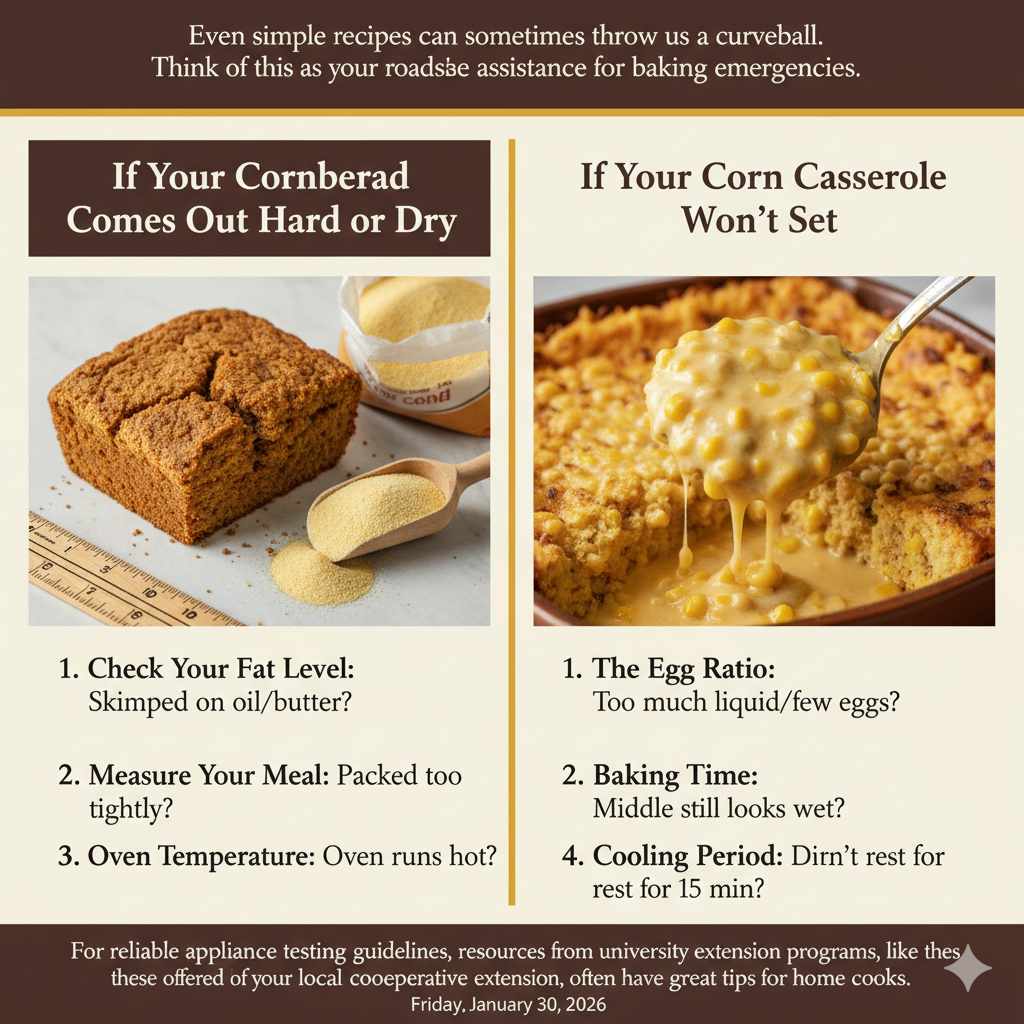
If Your Cornbread Comes Out Hard or Dry
This is the most common complaint about cornbread.
1. Check Your Fat Level: Did you skimp on the oil or butter? Fat is essential for moisture retention.
2. Measure Your Meal: If you packed the cornmeal tightly into the measuring cup, you added too much, resulting in a dry block. Always scoop lightly or spoon the meal into the cup and level it off.
3. Oven Temperature: If your oven runs hot, it cooks the outside too fast, drying the interior. Use an oven thermometer to check your setting; many home ovens run 25 degrees hotter than indicated. For reliable appliance testing guidelines, resources from university extension programs, like those offered by your local cooperative extension, often have great tips for home cooks.
If Your Corn Casserole Won’t Set
If you serve it and it runs like soup, don’t panic!
1. The Egg Ratio: You likely used too much liquid (milk, sour cream) or too few eggs to bind everything. Eggs are the glue here.
2. Baking Time: Casseroles take longer than expected. If the middle still looks wet, cover it loosely with foil to prevent the top from burning and put it back in for another 10–15 minutes.
3. Cooling Period: Casseroles need time to finish setting after leaving the heat. Trying to serve it immediately after it comes out of the oven guarantees a runny mess. Let it rest on the counter for 15 minutes before scooping.
Frequently Asked Questions (FAQ)
Q1: Can I substitute yellow cornmeal for white cornmeal in cornbread?
Yes, you can! Yellow cornmeal tends to give a slightly sweeter, richer color, while white cornmeal often results in a slightly lighter, milder flavor. The texture will remain similar.
Q2: Is Jiffy mix casserole the same as homemade corn casserole?
Not exactly. Jiffy corn casserole is a shortcut version of homemade corn casserole that uses boxed corn muffin mix as a binder and flavor base. Traditional homemade corn casserole relies on cornmeal, eggs, and dairy for structure. Both are delicious, but homemade versions offer more control over sweetness, texture, and ingredients.
Q3: Can I turn cornbread into corn casserole by adding more liquid?
You can make a hybrid, but it won’t be true corn casserole unless you add eggs and a creamy element like creamed corn or sour cream. Simply adding more milk to cornbread batter will likely result in soggy or underbaked bread rather than a custardy casserole.
Q4: Can corn casserole be made ahead of time?
Yes, corn casserole is an excellent make-ahead dish. You can bake it up to one day in advance, cover it tightly, and refrigerate. Reheat it in the oven at 325°F (165°C) until warmed through. Many people find the flavor improves after resting overnight.
Q5: Is corn casserole the same as corn pudding?
They are very closely related and often used interchangeably. In most modern kitchens, corn casserole and corn pudding are essentially the same dish, though corn pudding may be slightly looser and more custard-like depending on the recipe.
Final Verdict: Cornbread vs Corn Casserole — Which One Should You Make?
When it comes to cornbread vs corn casserole, the difference is all about texture, structure, and purpose. Cornbread is a firm, sliceable quick bread designed for dipping, crumbling, and soaking up bold flavors like chili, barbecue, and greens. Corn casserole, on the other hand, is rich, creamy, and spoonable — a comforting side dish that brings moisture and balance to hearty holiday meals.
Understanding how ingredients like cornmeal, eggs, creamed corn, and dairy work together gives you full control over the final result. If you want crisp edges and a sturdy crumb, cornbread is the clear winner. If you’re craving something soft, custardy, and nearly foolproof, corn casserole delivers every time.
There’s no “better” choice — only the right dish for the occasion. Weeknight dinners, soups, and BBQ spreads call for classic cornbread, while potlucks, Thanksgiving feasts, and make-ahead meals are perfect for corn casserole. Once you understand the role of moisture and binders, you can even tweak recipes to create your ideal texture every time!