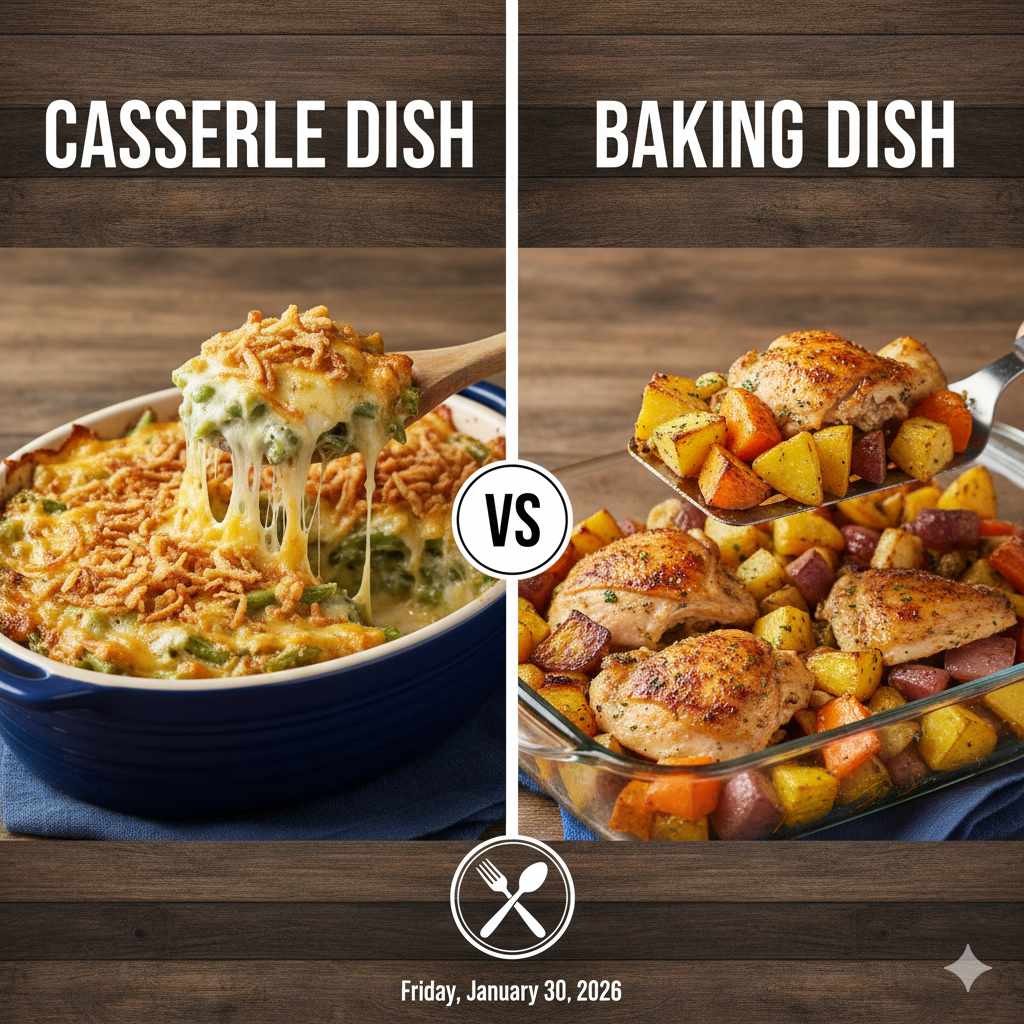
The essential secret is that they are often the same piece of bakeware, but context matters. A casserole dish usually implies a deeper vessel for layered, saucy, main-course meals, while a baking dish is a broader term for anything cooked in the oven, often shallower. Both work for many tasks, but understanding depth and material helps you choose the right one for your recipe’s success.
Welcome! Are you staring at two similar glass or ceramic containers in your kitchen cabinet, wondering which one is the “casserole dish” and which one is the “baking dish”? You’re not alone. This is one of those kitchen labeling mysteries that feels more confusing than changing your car’s oil filter! Many folks think these terms mean totally different things, leading to baking disappointments or mismatched oven use.
The Big Reveal: Casserole Dish vs Baking Dish Defined
Before we dive into features, let’s get the most important concept straight: In most modern kitchens, the terms “casserole dish” and “baking dish” can often be used interchangeably. This happens because both refer to oven-safe containers used for baking!
However, when cooks use the terms distinctly, they are usually referring to the shape and intended use. Think of it like wrenches: a 10mm is a wrench, but a torque wrench has a specific job. Here is the breakdown of the subtle but useful distinction.
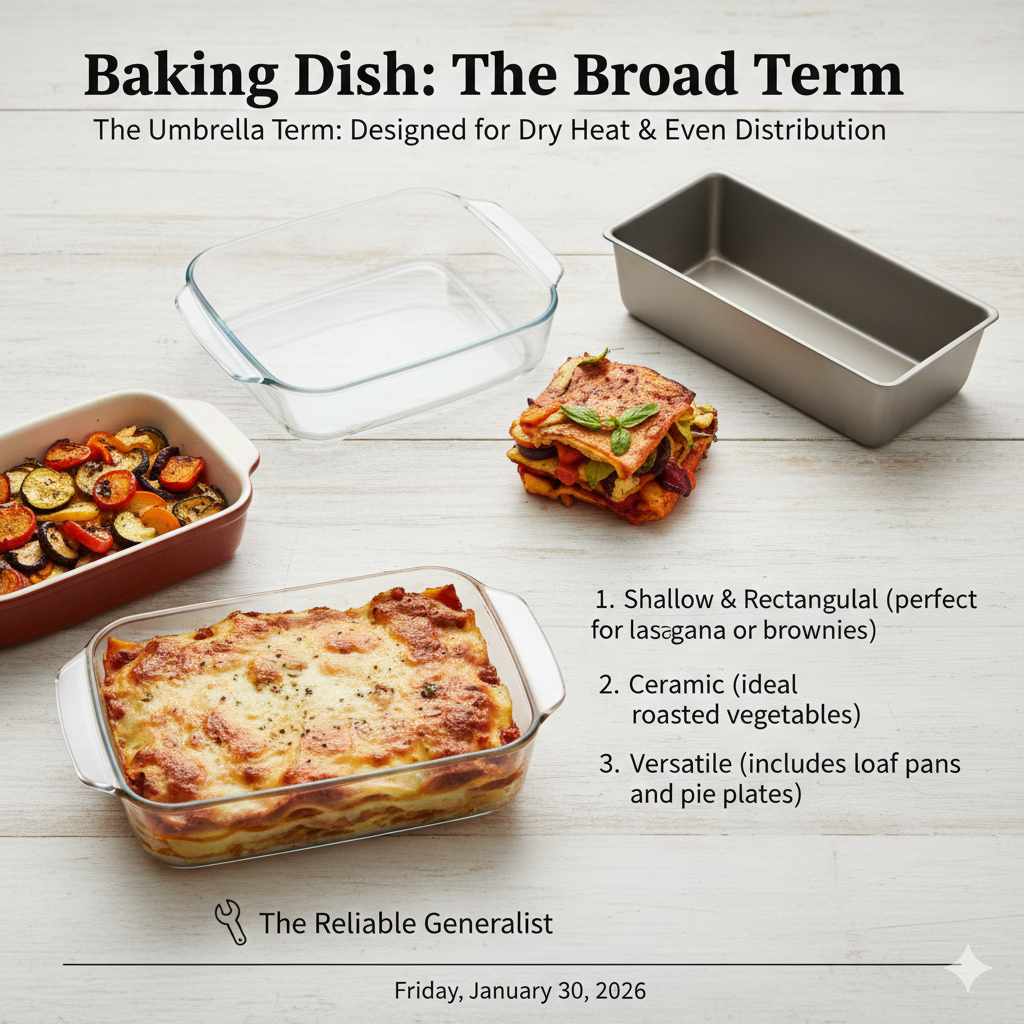
What Exactly is a Baking Dish? (The Broad Term)
A baking dish is the umbrella term. It refers to any sturdy container designed to withstand the heat of an oven for cooking, roasting, or baking. This category is incredibly broad, covering everything from small ramekins to long roasting trays.
When someone says “baking dish,” they might be talking about:
- Shallow rectangular glass pans for lasagna or brownies.
- Ceramic dishes used for roasted vegetables.
- Loaf pans or even pie plates, sometimes falling under this general title.
The key characteristic of a baking dish is its overall suitability for dry heat cooking where even heat distribution is required.
What Makes a Casserole Dish Specific? (The Deeper Cut)
A casserole dish is a specialized type of baking dish. If you ask a chef, they will often define a casserole dish by its depth and its intended use: holding a complete, often saucy, mixed meal—a true casserole.
Key features that define a casserole dish:
- Depth: They are generally deeper than standard baking dishes. This depth is crucial for holding liquids, sauces, pasta, or multiple distinct layers (like potatoes, meat, and cream sauce).
- Purpose: They are designed for one-pot oven meals that often go straight from the oven to the table for serving.
- Handles: They usually feature sturdy, easy-to-grip handles, as they are often heavy when full of hot food.
Material Matters: How Oven Safety Affects Your Choice
Whether you call it a casserole or a baking dish, the material it’s made from dictates how it handles heat. Just like you wouldn’t use your standard screwdriver for heavy-duty engine bolt removal, you shouldn’t use the wrong material for high-temperature baking.
Glass Bakeware: The Clear Favorite
Glass is arguably the most popular material for both casserole and baking dishes. It looks great on the table and provides excellent heat retention.
Pros of Glass:
- Allows you to monitor browning on the sides and bottom.
- Non-reactive (won’t affect the taste of acidic foods like tomato sauce).
- Relatively inexpensive and easy to find.
A Quick Word of Caution (The Temperature Jump): Glass heats up slower than metal but retains heat longer—meaning it stays hotter even after leaving the oven. The biggest rookie mistake is moving very hot glass directly onto a cold or wet surface, which can cause thermal shock and shatter the dish. Always use a protective trivet or dry towel. For safety tips on thermal shock, resources like those provided by major glassware manufacturers often detail safe temperature transitions.
Ceramic and Stoneware: The Rustic Workhorses
Ceramic and stoneware dishes are thicker and denser. They distribute heat extremely evenly, which is amazing for developing a nice crust on baked goods or ensuring a slow-cooked casserole doesn’t burn on the edges.
Use Case: These are fantastic for dishes that require long, slow cooking times, like a classic green bean casserole or baked mac and cheese.
Metal Pans: Speed and Browning
Metal (usually aluminum or stainless steel) heats up the fastest. While metal sheets are often called “baking sheets,” metal pans shaped like deep dishes do exist.
Key Difference: Metal cooks faster. If you use a metal pan where the recipe calls for glass, you might need to reduce the baking time by 5 to 10 minutes. This is because metal transfers heat much more directly to the food touching the sides.
Casserole Dish vs Baking Dish: Size and Shape
When you are shopping or packing your things for a potluck, the specific dimensions matter way more than the name on the box! A standard recipe relies on specific depths for proper cooking times.
The Ideal Casserole Dimensions
Because a casserole is meant to hold layered, saucy ingredients, depth is king. A proper casserole dish is usually:
- Depth: 2.5 to 3.5 inches deep.
- Shape: Often rectangular (like 9×13 inches) or sometimes oval.
- Capacity: Usually 3 quarts or larger.
This depth ensures that the center of your dish gets cooked through without the top burning before the middle is warm, which is essential for thick, creamy dishes.
The Versatile Baking Dish Dimensions
Baking dishes cover a much wider range, but when people refer to a general baking dish separate from a casserole, they usually mean a shallower option, perfect for items where you want maximum surface exposure to the dry oven heat.
Examples of Shallow Baking Dishes:
- Lasagna/Brownie Pans: Often 2 inches deep. Great for layering where you want distinct layers, not a soupy mix.
- Roasting Pans: Used for poultry or large roasts. They are often wider and sometimes longer, but usually not as deep as a holiday casserole dish.
Comparison Table: At a Glance
To make this super clear, here is a side-by-side comparison. Keep this handy when you’re grabbing something out of the cupboard!
| Feature | Casserole Dish (Specific Use) | Baking Dish (General Use) |
|---|---|---|
| Primary Depth | Deep (2.5 – 3.5+ inches) | Varies, often shallower (1.5 – 2.5 inches) |
| Typical Food Type | Saucy, layered, complete oven meals (e.g., Tuna Noodle Casserole) | Roasts, baked sides, flat desserts (e.g., Sheet cake, Roasted Brussels sprouts) |
| Heat Distribution Focus | Cooking through the center evenly | Even heat across the surface area |
| Handles | Usually pronounced and sturdy for easy transport | May have small lips or no pronounced handles |
| Interchangeability | Can function as a medium-depth baking dish | Can sometimes be used for thin or small casseroles |
Practical Application: When to Use Which (The Confidence Boost)
Knowing the terms is one thing; knowing which tool to use for the job is where you really shine in the kitchen. Think about what the final dish needs to achieve.
Use the Deep Casserole Dish When:
You need volume and insulation. These dishes are perfect for everything that needs time to meld together in the oven.
- Making a Baked Pasta Dish: Think baked ziti or mac and cheese. The depth prevents the sauce from boiling over and keeps the contents moist.
- Serving a Potluck Favorite: If you are transporting a dish, the taller sides reduce the chance of spills.
- Roasting Very Moist Vegetables: Saucy vegetable bakes or root vegetables that release a lot of liquid benefit from the extra height.
Use the Shallower Baking Dish When:
You need speed and surface area. These are great for things that benefit from direct exposure to the dry oven heat for crisping or even baking across a wide surface.
- Baking Brownies or Sheet Cakes: A shallow pan ensures the center doesn’t remain undercooked while the edges set perfectly.
- Roasting Sides or Proteins: Things like chicken pieces, fish fillets, or a single layer of crispy potatoes cook best when they have room and aren’t submerged in their own steam.
- Making a Thin Casserole or Gratin: If your recipe is more of a topping over a base (like scalloped potatoes that aren’t overly saucy), the shallower dish works faster.
A Note on Lid Usage and Moisture Control
A major advantage that many dedicated casserole dishes offer is a matching lid. This directly impacts moisture control, which is a key factor in deciding between the two types of dishes for baking.
Deep Dish & Lids: Trapping Steam
When you cover a deep casserole dish, you create a moist environment. The steam generated by the sauce and ingredients gets trapped, which is ideal for:
- Tenderizing tougher cuts of meat cooked low and slow.
- Ensuring a baked pasta dish stays creamy and doesn’t dry out over long cooking times.
Shallow Dish & Open Baking: Evaporation
If you use a shallow baking dish uncovered (as you would for brownies or roasted vegetables), you encourage evaporation. This process leads to browning, crisp edges, and sets batters firmly.
Pro Tip: You can still manage moisture in a deep dish! If the recipe requires a creamy, set top (like a shepherd’s pie), use a lid for the first 75% of the baking time, then remove it for the last 15-20 minutes to allow the top to brown beautifully.
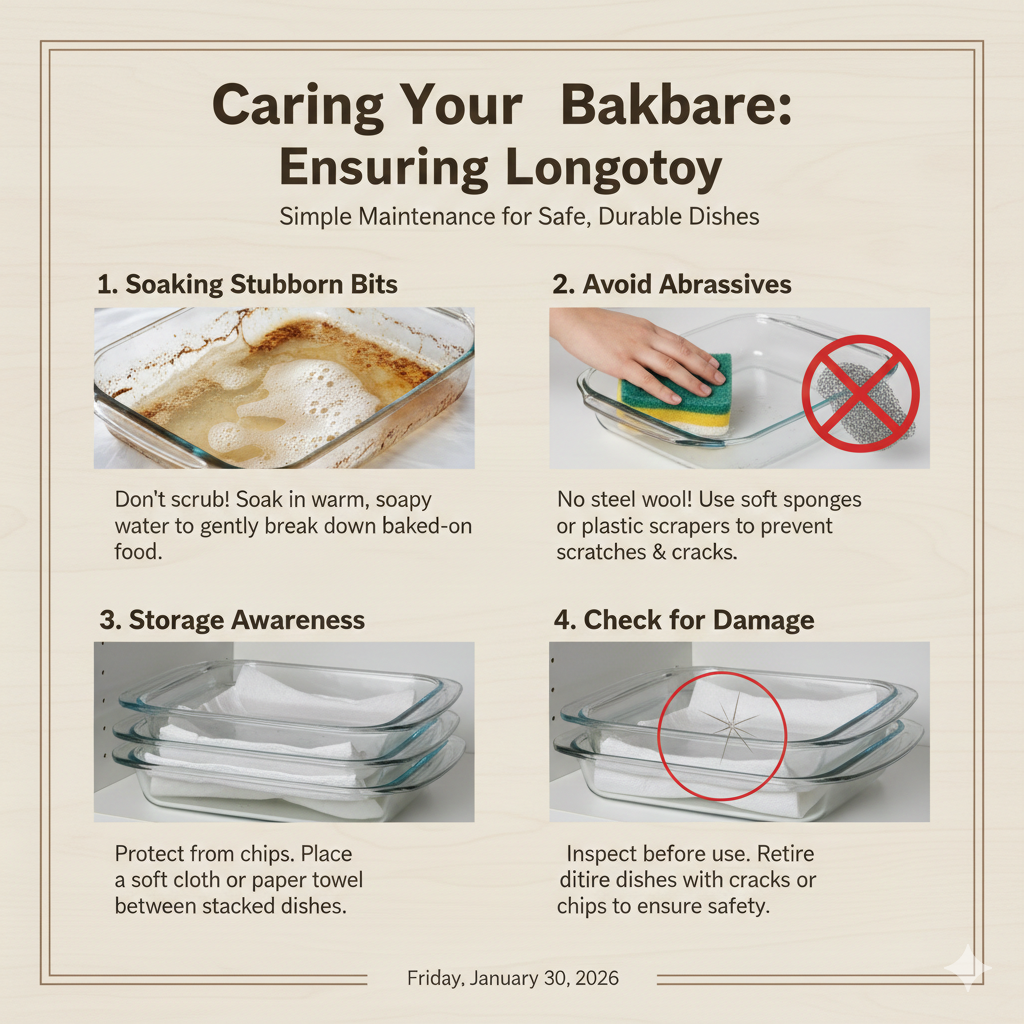
Caring for Your Bakeware: Ensuring Longevity
No matter what you call these durable tools, treating them well ensures they last longer than your first car! Proper care, especially for glass and ceramic, prevents dangerous failures down the road.
Cleaning and Maintenance Tips
Think of cleaning your bakeware like performing basic fluid checks on your vehicle—it’s simple, preventative maintenance.
- Soaking Stubborn Bits: If you have baked-on cheese or crusty sauce, do not attack it with steel wool! Soak the dish in warm, soapy water for several hours. Baked-on residue is chemically bonded; soaking breaks the bond gently.
- Avoid Abrasives: Harsh scouring pads can scratch glass and ceramic surfaces. Scratches create weak points where thermal stress can cause cracking later. Use the soft side of a sponge or a plastic scraper.
- Storage Awareness: When stacking your baking dishes, always place a soft barrier (like a paper towel or thin dishcloth) between them to prevent chips, especially on the rims where the most stress occurs during handling.
- Check for Damage: Before using any glass or ceramic dish, inspect the surface closely. Any star-shaped cracks or chips on the edge mean the structural integrity might be compromised. It’s best to retire the damaged piece to protect your safety and your meal.
SEO Focus: Answering Your Common Questions
Frequently Asked Questions (FAQ)
Q1: Can I use a casserole dish instead of a shallow baking dish for brownies?
A: You can, but the results will be different. Because the casserole dish is deeper, the center will take much longer to cook, and the edges might dry out before the middle is set. It’s better to use a shallower baking dish for even brownie perfection.
Q2: Are ceramic baking dishes safe for very high heat, like broiling?
A: Generally, no. Most ceramic and glass bakeware is designed for baking temperatures (up to 450°F or so). Broiling uses direct, intense heat from above and can easily crack or damage the glaze on your dish. Always check the manufacturer’s heat limits.
Q3: If a recipe just says “bake in a 9×13 dish,” is it a casserole or a baking dish?
A: In that context, it means the size (9 inches by 13 inches). Given the depth usually associated with that size (around 2.5 to 3 inches), it is most often used for a dish that leans toward the casserole side—something moist like lasagna or layered dips.
Q4: Which one cooks faster, a metal baking dish or a glass casserole dish?
A: The metal baking dish will almost always cook faster because metal transfers heat more efficiently than glass. If you substitute metal for glass, reduce your baking time by about 15% and check for doneness early.
Q5: Do the handles on a casserole dish mean it’s safer to carry than a baking dish?
A: Yes, dedicated casserole dishes are specifically designed with robust, often flared handles because the intention is that they come straight from the hot oven and travel to the dinner table. Always use thick, dry mitts regardless of the handle design.
Q6: Are covered glass dishes the same as Dutch ovens used for braising?
A: No. While both are covered vessels, Dutch ovens are made of heavy cast iron (sometimes enameled) designed to retain heat for stovetop searing and oven slow cooking. Glass casserole dishes are strictly for the oven and cannot handle the direct heat of a stovetop burner.
Conclusion: Mastering Your Oven Geometry
See? It’s less about complicated terminology and more about understanding geometry—specifically, depth and surface area. When you are deciding between your “casserole dish vs baking dish,” shift your focus from the label to the mission of the meal.
If your recipe involves lots of sauce, needs time to simmer, or requires a comforting, deep serving vessel, grab the deeper container—your casserole dish. If you are aiming for crisp edges, even browning across a wide surface, or a quicker bake time, the shallower baking dish is your champion.
By keeping these simple principles of depth and heat transfer in mind, you’re no longer guessing. You’re making an informed choice, just like a seasoned pro choosing the right socket wrench for a crucial repair. Keep practicing, keep cooking, and enjoy the delicious confidence that comes from knowing your tools!