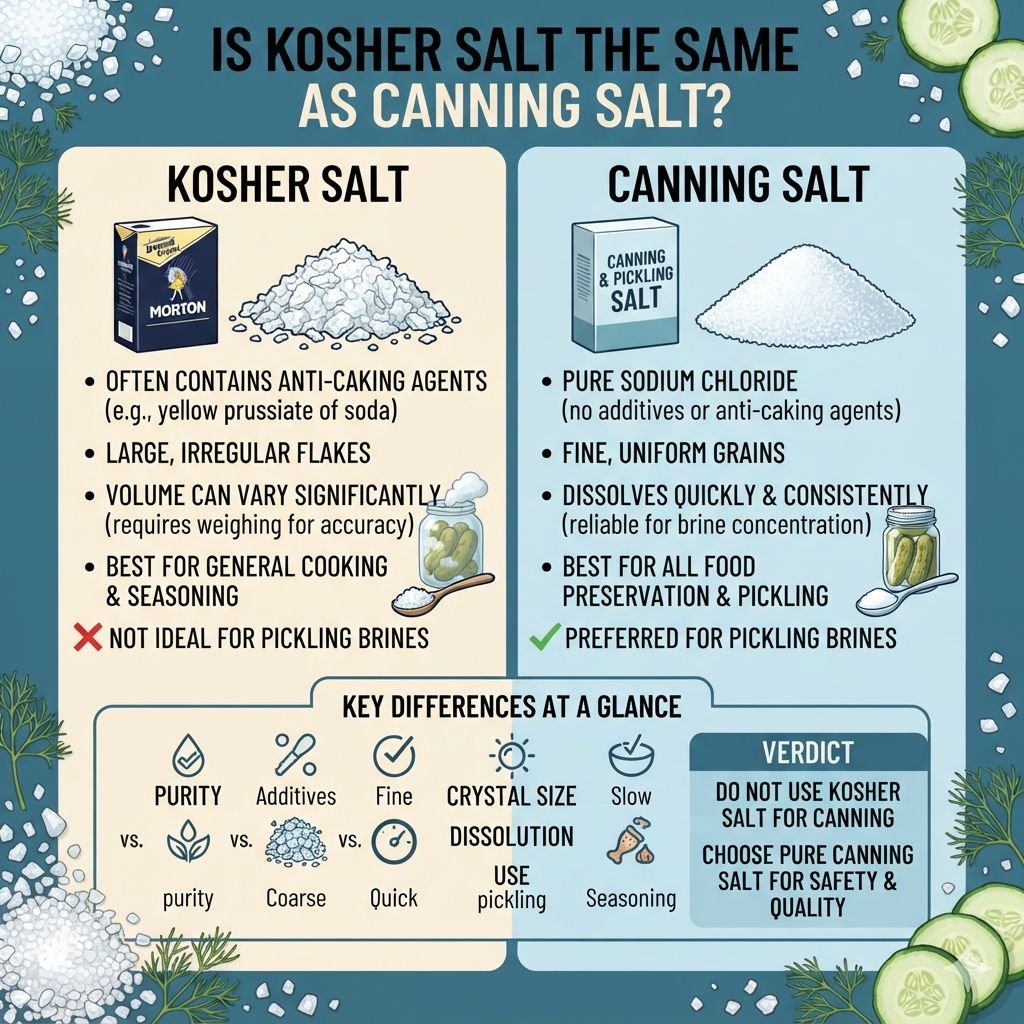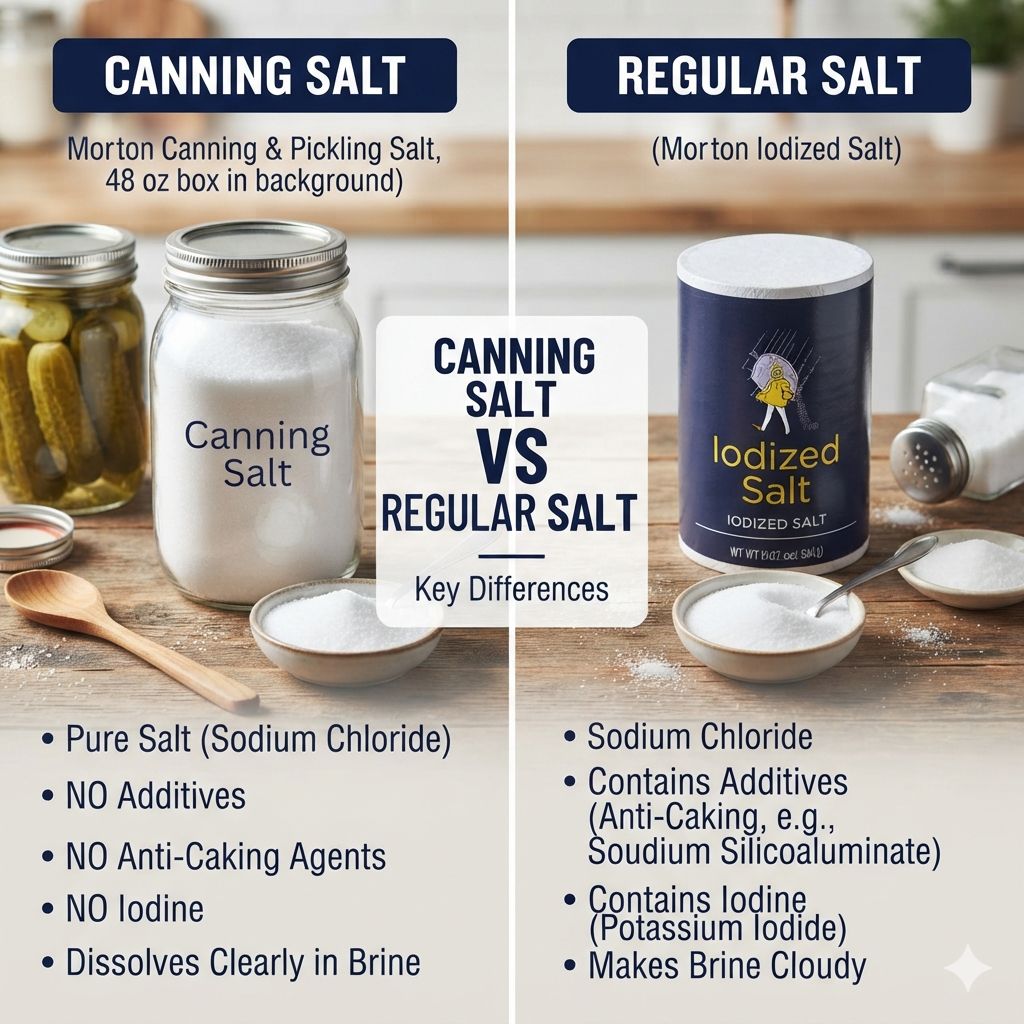
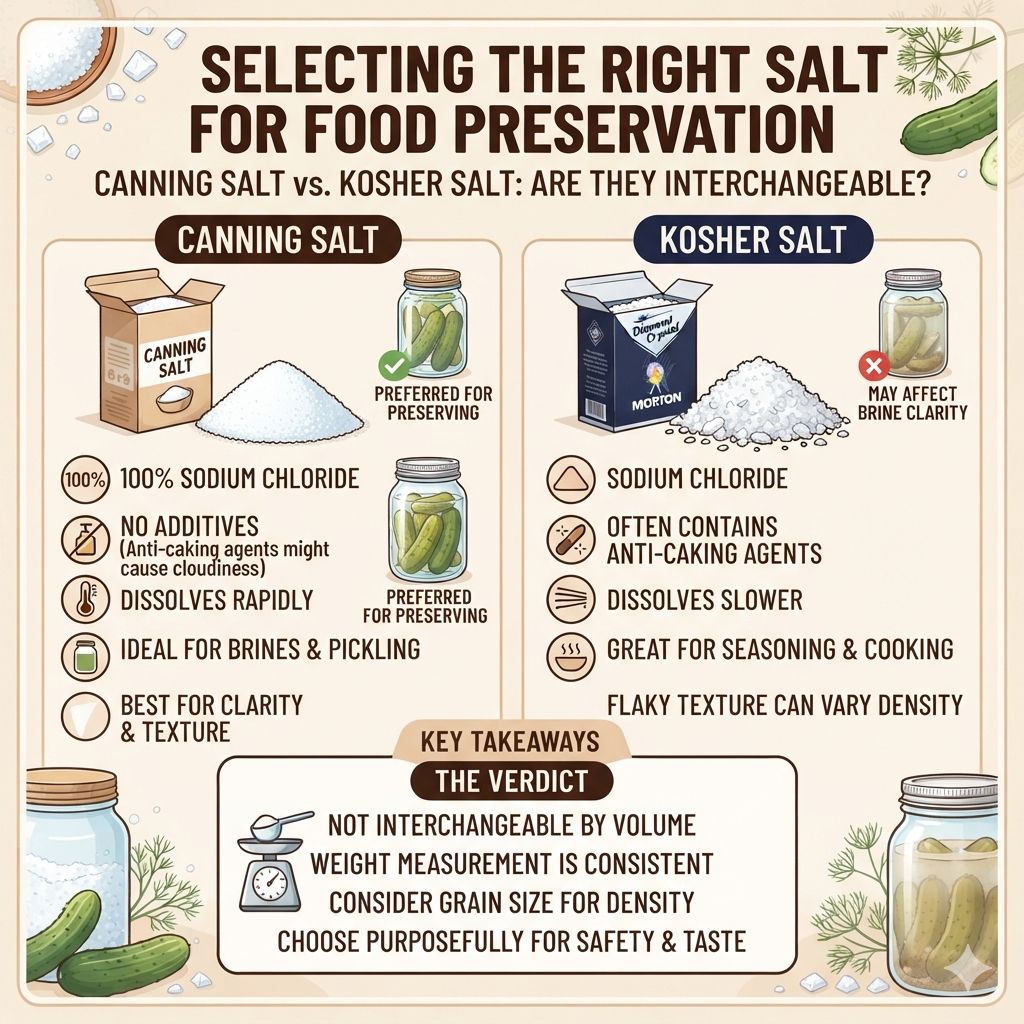
Simply put, canning salt is pure sodium chloride with no additives, specifically designed for preserving food to prevent cloudiness in brines. Kosher salt, while also pure salt, often has larger, irregular crystals and may contain anti-caking agents, making it less ideal for the precise needs of canning.
Key Takeaways
- Canning salt is pure, granulated sodium chloride, free from iodine and anti-caking agents, ensuring clear brines.
- Kosher salt typically has larger, irregular crystals and can contain anti-caking agents (like potassium ferrocyanide), which may cause cloudiness.
- For optimal results in preserving food, especially pickles and other pickled items, canning salt is the recommended choice.
- While both are salt, their physical form and purity affect the final outcome of your preserved goods.
- Always check the label of any salt for additives if you intend to use it for canning.
What is Canning Salt?
Canning salt is a specialized type of salt formulated exclusively for use in food preservation processes like pickling, fermenting, and canning. Its primary characteristic is its purity: it is 100% sodium chloride, with absolutely no additives such as iodine, anti-caking agents, or minerals. This purity is vital because iodine and anti-caking agents can cause your preserved foods to turn dark or cloudy, and can also impart an undesirable metallic or bitter taste.
The granulation of canning salt is also specifically engineered. It’s typically fine and uniform, which allows it to dissolve quickly and evenly in liquids, ensuring consistent salt distribution throughout your brine or pickle solution. This uniformity is key to achieving the correct salinity for both flavor and preservation without any guesswork.
The National Center for Home Food Preservation and the USDA recommend using only salt specifically labeled for canning for the best and safest results.
The absence of anti-caking agents is particularly important. These agents, often included in table salt and sometimes kosher salt, can lead to a hazy or cloudy brine. In canning, clarity is often a sign of a successful preservation, and cloudy brines can sometimes indicate spoilage or improper processing.
Therefore, using canning salt helps guarantee that your pickled vegetables maintain their appealing, clear liquid environment.
Key Characteristics of Canning Salt:
- Purity: 100% sodium chloride.
- No Additives: Free from iodine, anti-caking agents (like Yellow Prussiate of Soda/Potassium Ferrocyanide), and artificial colors.
- Fine Granulation: Uniformly small crystals for easy and complete dissolution.
- Clear Brines: Prevents cloudiness and discoloration in preserved foods.
- Consistent Salinity: Ensures even salt distribution for reliable preservation and taste.
- Recommended by Experts: Endorsed by food preservation authorities like the USDA and NCHFP.

What is Kosher Salt?
Kosher salt is a coarser, flakier type of salt often preferred by chefs for its texture and ease of handling in the kitchen. Its name comes from its traditional use in the koshering process of meat, where its large crystals help draw out blood. Kosher salt is generally pure sodium chloride, but this isn’t always guaranteed, and its crystalline structure is its most distinguishing feature.
The crystals of kosher salt are larger and more irregular than table salt or canning salt, which makes them easier to pinch and sprinkle. This also means they dissolve more slowly. For cooking, this can be an advantage, allowing for more control over seasoning.
However, when it comes to food preservation, the unpredictable dissolution rate and potential for additives can be problematic for achieving consistent results.
Potential Issues with Kosher Salt in Canning:
- Crystal Size: Larger crystals can lead to uneven salt distribution if not fully dissolved.
- Potential Additives: Some brands may contain anti-caking agents or iodine, which can cause cloudiness or discoloration. Always check the label.
- Variable Density: Due to its flaky structure, the density of kosher salt can vary between brands, making volume measurements less accurate than weight measurements.
It is essential to read the ingredient list on any box of kosher salt. While many are pure sodium chloride, some brands may include anti-caking agents. For example, Morton Kosher Salt lists Yellow Prussiate of Soda as an anti-caking agent, and Diamond Crystal Kosher Salt is generally pure.
If a brand contains additives, it should be avoided for canning purposes.
Canning Salt vs. Kosher Salt: A Detailed Comparison
The fundamental difference between canning salt and kosher salt lies in their intended purpose and composition, which directly affects their performance in food preservation. While both are salt and serve the purpose of adding flavor, canning salt is specifically engineered for the unique demands of creating safe, stable, and aesthetically pleasing preserved foods.
One of the most critical distinctions is the presence of additives. Canning salt is guaranteed to be 100% pure sodium chloride. This means no iodine, no anti-caking agents, and no other minerals that could interfere with the preservation process.
Kosher salt, on the other hand, might be pure, but some brands contain anti-caking agents. These agents, like potassium ferrocyanide (also known as Yellow Prussiate of Soda), are added to prevent clumping but can react with other ingredients in a brine, leading to cloudiness and potentially a less appealing final product.
| Feature | Canning Salt | Kosher Salt |
|---|---|---|
| Purity (Sodium Chloride) | 100% | Generally high, but may contain additives depending on brand. |
| Additives (Iodine, Anti-caking Agents) | None | Some brands contain anti-caking agents; check label. Iodine is rare. |
| Crystal Size & Shape | Fine, uniform granules | Coarse, irregular flakes |
| Dissolution Rate | Fast and complete | Slower and can be uneven |
| Effect on Brine Clarity | Ensures clear brines | Can cause cloudiness if additives are present. |
| Recommended Use | Food preservation (pickling, canning, fermenting) | General cooking, seasoning, and seasoning meat. |
The difference in crystal size also plays a role. Canning salt’s fine, uniform grains dissolve quickly and evenly, ensuring that the brine’s salinity is consistent throughout the entire batch of preserved food. This is critical for proper preservation, as insufficient salt can lead to spoilage, while too much can make the food unpalatable.
Kosher salt’s larger, irregular flakes dissolve more slowly and can sometimes clump, making it harder to achieve that precise, uniform salt concentration needed for reliable canning.
Can You Substitute Kosher Salt for Canning Salt?
The short answer is: it’s generally not recommended, especially if you want consistently clear and safe results. While kosher salt can be used in a pinch, provided it’s a brand confirmed to be pure sodium chloride without additives, it’s a gamble. The risk of cloudiness or even altered taste is significant enough to warrant sticking to salt specifically labeled for canning.
If you find yourself without canning salt and need to proceed with a recipe, first carefully inspect the kosher salt’s ingredient list. If it contains anti-caking agents or iodine, do not use it for canning. If it’s pure sodium chloride, you might be able to use it, but be aware that its coarser texture means you may need to adjust measurements.
A common guideline is that 1 teaspoon of table salt is roughly equivalent to 1 1/4 teaspoons of kosher salt by volume, but this can vary greatly due to crystal density.
Warning: Using table salt with iodine and anti-caking agents in canning is strongly discouraged. Iodine can darken vegetables and impart a bitter taste, while anti-caking agents can make your brine cloudy. Always check the label carefully.
For critical canning projects, such as preserving low-acid foods where precise salinity is paramount for inhibiting the growth of harmful bacteria like Clostridium botulinum, using the correct canning salt is non-negotiable. The investment in a box of canning salt is minimal compared to the potential loss of an entire batch of food or, worse, a health risk. Therefore, it’s always best practice to have canning salt on hand when you plan to preserve food.
Why Purity Matters for Canning
The concept of purity is central to successful food preservation. When you are canning, fermenting, or pickling, you are essentially creating an environment that inhibits the growth of spoilage microorganisms and harmful pathogens. Salt plays a crucial role in this process by drawing out moisture from food, creating an environment with low water activity, and altering the pH of the surrounding liquid.
If your salt contains impurities, it can interfere with these fundamental preservation mechanisms. Iodine, for instance, is a mineral that can react with pigments in vegetables. This reaction often results in a darkening of the food, making pickles appear less appealing.
Similarly, anti-caking agents, while benign in small dietary amounts, can contribute to a murky brine. This cloudiness isn’t just an aesthetic issue; it can sometimes be an indicator that something isn’t right with the preservation process, leading home preservers to worry about spoilage.
The precise and consistent salinity that canning salt provides is also vital. For example, in pickling, a specific salt concentration is needed to ensure that beneficial lactic acid bacteria can thrive while undesirable bacteria are suppressed. If the salt is unevenly distributed due to the crystal size of a substitute like kosher salt, the salinity might be too low in some areas, allowing spoilage organisms to grow, or too high in others, making the food taste unpleasantly salty.
The Role of Salt in Food Preservation:
- Moisture Extraction: Salt draws water out of food through osmosis, reducing its water activity.
- Microbial Inhibition: A high salt concentration creates an environment hostile to spoilage and pathogenic bacteria.
- Flavor Enhancement: Salt balances and enhances other flavors in the food.
- Texture Improvement: Salt can help maintain the crispness of vegetables, particularly in pickling.
- pH Control: In fermenting, salt helps create the conditions for beneficial lactic acid bacteria to produce acid, lowering the pH and preserving the food.
How to Choose the Right Salt for Your Preserves
When you’re stocking your pantry for a season of preserving, making the right salt choice is simple and important. Always look for salt that is explicitly labeled for canning. These products are designed to meet the strict requirements of home food preservation.
Common labels you’ll find include “Canning Salt,” “Pickling Salt,” or “Sea Salt” that is specified as being pure and free of additives.
If you’re unsure about a particular salt, the best course of action is to check the ingredient list. If it states “100% Pure Salt” or “100% Sodium Chloride” with no other ingredients mentioned, it is likely safe to use for canning. However, even then, the crystal size might differ from what canning salt offers, so it’s still not the ideal choice.
If the label mentions iodine, dextrose, anti-caking agents (such as Yellow Prussiate of Soda or silicon dioxide), or other minerals, it should be avoided for preserving food.
Important: Always read the ingredient list on your salt packaging. If you cannot confirm it is 100% pure sodium chloride without additives, it’s best to purchase a salt specifically designated for canning.
Consider the type of preservation you’re doing. For pickles and fermented foods where brine clarity is a key visual indicator of success, pure canning salt is essential. For other types of canning, like jams and jellies, while additives are less likely to cause visible issues, it’s still good practice to use pure salt to ensure the most reliable results and avoid any unexpected flavor alterations.
Steps to Selecting the Best Canning Salt:
- Check the Label: Look for “Canning Salt” or “Pickling Salt.”
- Read Ingredients: Ensure it’s 100% pure sodium chloride.
- Verify Absence of Additives: Confirm no iodine, anti-caking agents, or other minerals are listed.
- Consider Crystal Size: Fine, uniform grains are best for even dissolution.
- Consult Trusted Sources: Refer to recommendations from organizations like the USDA or NCHFP.
- When in Doubt, Don’t Use It: If you cannot verify purity, opt for a known canning salt brand.
Common Mistakes When Choosing Salt for Canning
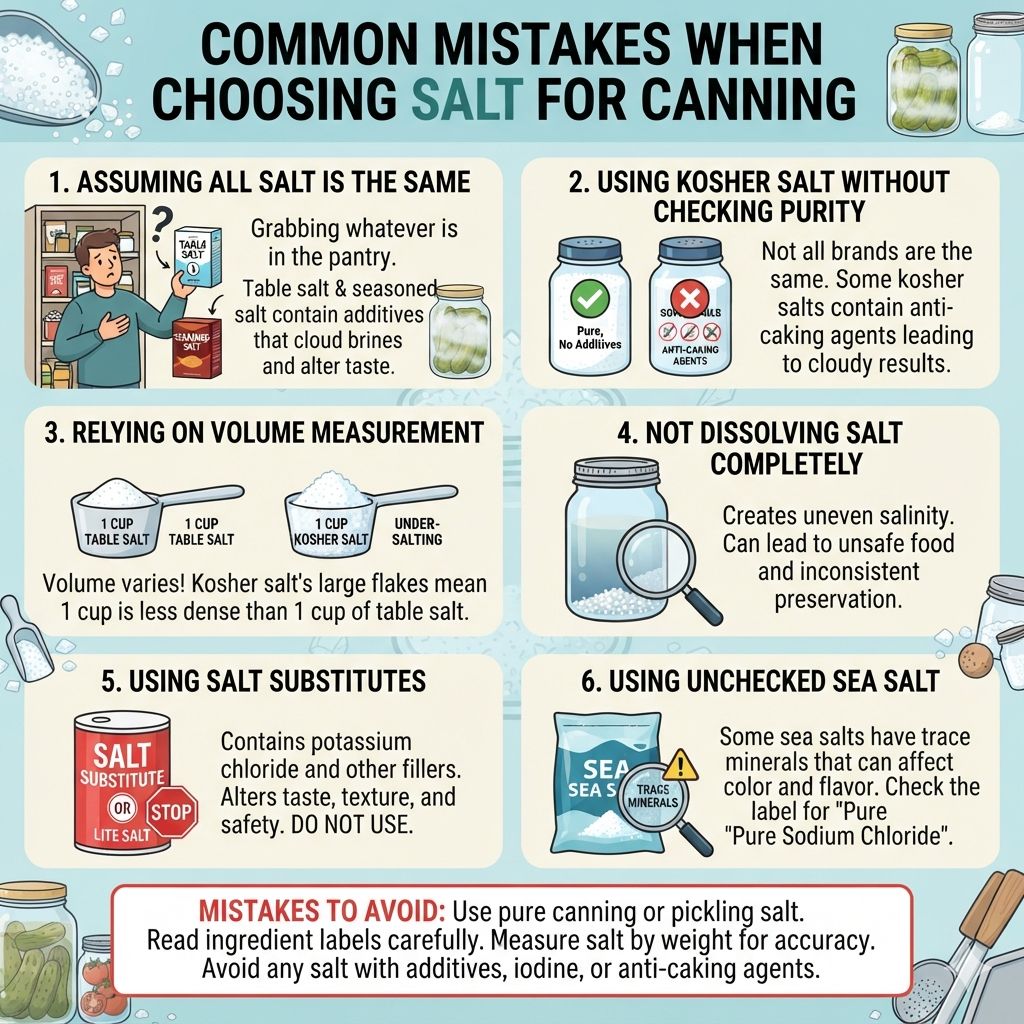
One of the most frequent errors home canners make is assuming all salt is the same. This leads to them grabbing whatever salt is readily available in their pantry, often table salt or even seasoned salt. Table salt, with its fine grains and added iodine and anti-caking agents, is a prime culprit for producing cloudy brines and altering the color and taste of preserved foods.
Another common mistake is using kosher salt without verifying its purity. While many chefs love kosher salt for its texture, if the brand you have contains anti-caking agents, you risk clouding your pickles. Furthermore, even with pure kosher salt, its large, irregular crystals can lead to uneven salt distribution if not carefully measured by weight and fully dissolved.
This unevenness can compromise the safety and quality of your preserves.
Warning: Never use salt substitutes or “lite” salt products for canning. These contain potassium chloride or other substances that can alter taste, texture, and the safety of your preserved foods.
Finally, some individuals might try to use sea salt without checking its composition. While many sea salts are pure sodium chloride, some contain trace minerals that could potentially affect the color or flavor of canned goods. Unless the sea salt is explicitly labeled as pure and free of additives, it’s safer to stick with designated canning salt.
The cost of these mistakes can range from unappealing cloudy jars to potentially unsafe food if the salt concentration isn’t correct for preservation.
Mistakes to Avoid:
- Using regular table salt with iodine and anti-caking agents.
- Assuming all kosher salt is pure; always check the ingredients for additives.
- Not dissolving salt completely, leading to uneven salinity.
- Using salt with added flavors or herbs.
- Relying on volume measurements for kosher salt, as density varies.
- Using salt substitutes or “lite” salt products.
Frequently Asked Questions
What is the main difference between canning salt and kosher salt?
The primary difference is purity and additives. Canning salt is 100% pure sodium chloride with no iodine or anti-caking agents, ensuring clear brines. Kosher salt, while often pure, may contain anti-caking agents or have larger, irregular crystals that can affect dissolution and brine clarity.
Can I use regular table salt for canning?
No, regular table salt is not recommended for canning. It typically contains iodine and anti-caking agents which can cause your preserved foods to darken, taste bitter, or make your brine cloudy.
What happens if I use kosher salt that has anti-caking agents for canning?
If you use kosher salt with anti-caking agents for canning, the agents can react with other ingredients to create a cloudy brine. This can make your preserved foods look unappealing and might be an indicator of improper preservation.
Are there any brands of kosher salt that are safe for canning?
Some brands of kosher salt, like Diamond Crystal, are generally pure sodium chloride and may be used cautiously if canning salt is unavailable. However, it’s crucial to always check the ingredient list, as other brands, such as Morton, do contain anti-caking agents and should be avoided.
Why is it so important for the brine to be clear when canning pickles?
A clear brine is often a visual indicator of successful pickling. While not the sole determinant of safety, a cloudy brine can sometimes signal spoilage or the presence of unwanted microbial activity. Using pure canning salt helps ensure your brine remains clear and appealing, giving you confidence in your preserved foods.
Final Thoughts
When it comes to preserving your harvest or enjoying homemade pickles year-round, the choice of salt matters significantly. Sticking with dedicated canning salt guarantees purity and consistency, leading to safe, clear, and delicious results every time. While kosher salt might seem like a convenient alternative, its potential for additives and varied crystal structure make it a riskier choice for food preservation.
Prioritizing pure canning salt is a small step that ensures the quality and safety of your cherished homemade preserves.