Yes, a full-size box spring will typically fit inside a Chevrolet Suburban (or similar large SUVs), provided you fold down the second and third rows of seating. While the length is tight, the width and height allow for easy loading when maximizing cargo space.
We’ve all been there: you buy a new mattress, and suddenly you face the puzzle of getting the box spring home. If you own a Chevy Suburban, you’re lucky because these vehicles are workhorses designed for hauling. However, fitting something long like a full-size box spring, which measures around 75 inches long, needs a little planning. Don’t worry about hiring a truck rental just yet! This guide will walk you through exactly what measurements matter, how to load it safely, and ensure you bring that new mattress set home without a scratch. Let’s simplify this hauling job together!
Understanding the Dimensions: Box Spring vs Suburban Cargo Bay
Before you even open your Suburban’s trunk, knowing the exact sizes involved is the key to success. This isn’t complicated math, but it does require looking up a few standard numbers.
Standard Box Spring Sizes
Box springs come in defined standards. For our purposes, we are focusing on the “Full” size, sometimes called a “Double.
Full Size Box Spring Dimensions
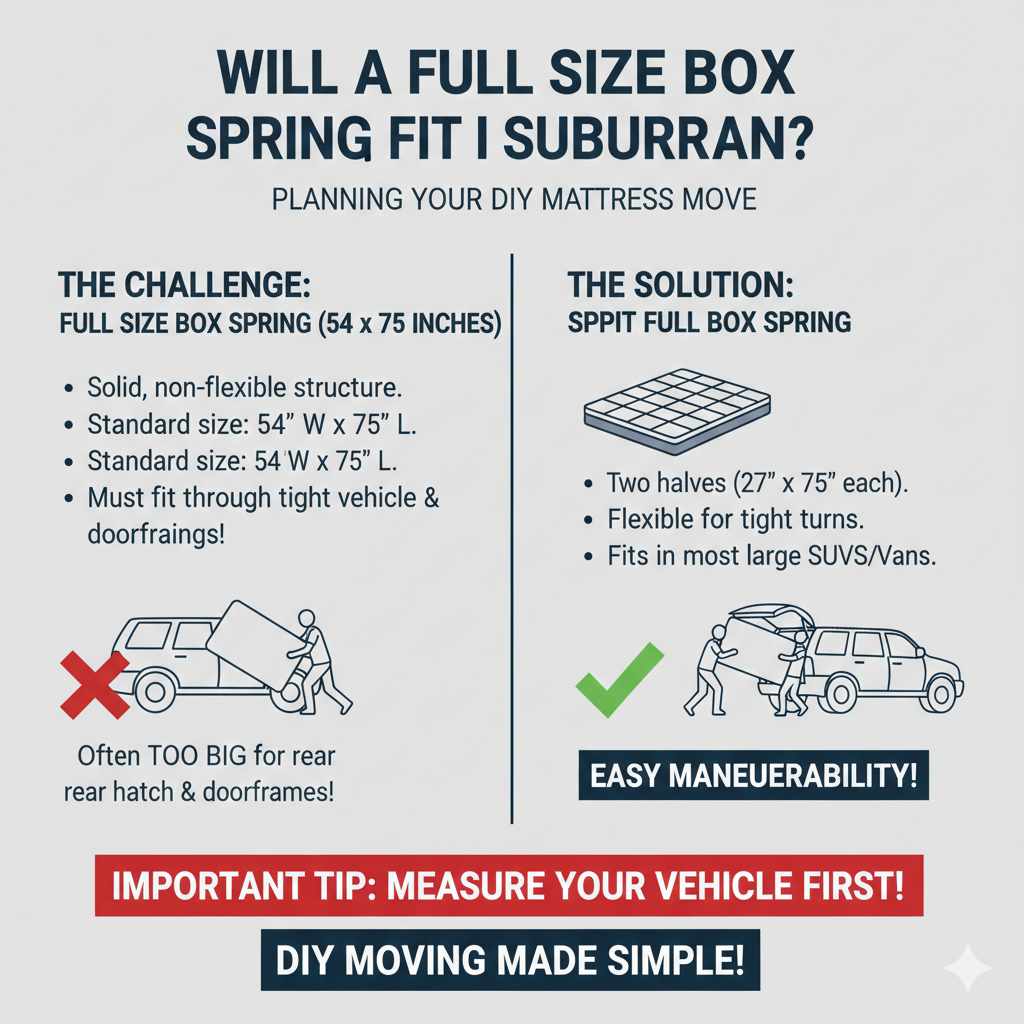
A standard full-size box spring typically measures:
- Width: 54 inches (about 4.5 feet)
- Length: 75 inches (about 6.25 feet)
- Height/Thickness: Usually 8 to 12 inches (for standard profile; low-profile versions are less).
It’s important to note that some manufacturers make “split-king” or “California King” foundations which are different, but the conventional full size is what we are concerned with here.
Chevy Suburban Cargo Capacity
The Suburban is known for its massive storage area, especially when the rear seats are stowed. Because the Suburban is a long-wheelbase SUV, its internal length is often the limiting factor, not its width.

Typical Suburban Interior Cargo Dimensions (Approximate)
These measurements can vary slightly depending on the model year (e.g., 2015+ vs. older generations), but they give you a safe baseline:
| Dimension | Measurement (Inches) | Relevance to Box Spring |
|---|---|---|
| Cargo Length (Behind 2nd Row, Seats down) | Approximately 80 to 84 inches | Crucial; determines if length fits. |
| Cargo Width (Between Wheel Wells) | Approximately 49 to 52 inches | Crucial; must be wider than 54” width of box spring. |
| Cargo Height (Floor to Ceiling) | Approximately 44 to 48 inches | Important for closing the liftgate. |
The Verdict on Length and Width
When comparing the 75-inch box spring length to the 80+ inch Suburban length behind the second row, you have clearance! This is great news.
However, the width is where the challenge lies. A standard Suburban cargo width between the wheel wells is often just shy of 54 inches. This means the 54-inch wide box spring might not slide easily over the wheel wells if you try to load it flat on the floor.
This leads us directly to the loading strategy, which focuses on standing the box spring up.
Step-by-Step Guide: How to Fit the Box Spring in Your Suburban
Fitting a full-size box spring is usually less about raw space and more about approach angle and orientation. You will almost certainly need to remove the third-row seats (if equipped) and definitely fold down the second row.
Step 1: Prepare Your Suburban (Safety First!)
Clearing out the vehicle is step zero. If you throw the box spring in without preparing, you risk scratching your interior or damaging the box spring itself.
- Remove Obstacles: Take out any loose items, cargo covers, tools, or anything else in the cargo area.
- Remove the Third Row (If Applicable): Modern Suburbans have seats that fold flat, which is ideal. However, if yours has removable third-row seats, take them out completely. Check your owner’s manual or look up a quick video on removing those seats—it usually requires just pulling a few release levers.
- Fold the Second Row: Ensure the second-row seats are fully folded flat. They usually move forward once the headrests collapse.
- Protect the Interior: Lay down an old moving blanket, a thick moving pad, or even an old sheet across the folded seats and cargo floor. This prevents the sometimes rough box spring fabric from snagging your upholstery (Source: Moving Tips & Tricks).
Step 2: The Loading Method – Vertical is Best
Because the 54-inch width of the box spring is often wider than the narrowest part of the cargo opening (the liftgate), trying to slide it in flat is difficult. The key to fitting long items in large SUVs is often loading them vertically, or “on edge.”
- Two People Recommended: Box springs, even if light, are awkward. Recruit a helper for safety and ease of maneuvering.
- Measure the Liftgate Opening: Before lifting the box spring, quickly measure the height and width of the actual opening when the rear door is fully raised. This confirms you have enough clearance.
- Load Vertically: Approach the open liftgate of the Suburban with the box spring standing upright on its long edge (the 75-inch side should be pointing down toward the ground).
- Angle the Entry: Tilt the top edge of the box spring slightly toward you while you feed the bottom edge in. You want the leading corner to clear the sill on the first attempt.
- Slide and Secure: Once the bottom half is inside, gently push the entire unit forward until the front edge rests against the back of the second-row seats or just short of them.
Step 3: Final Positioning and Safety Checks
Once loaded, you must secure the item so it doesn’t shift while driving. Unsecured cargo is a serious safety hazard.
- Check for Clearance: Ensure the box spring does not impede your rear-view mirror visibility. If it sticks up significantly past the seatbacks, you must secure it so it cannot fall forward.
- Use Tie-Downs: Utilize the cargo tie-down rings built into the floor of your Suburban. If you have ratchet straps or heavy-duty bungee cords, secure the box spring tightly to these rings. This prevents it from shifting forward during sudden stops.
- Close with Care: Close the liftgate slowly. If the box spring is sitting perfectly straight, the liftgate should close flush. If it seems to be binding or bowing the gate, you need to slightly adjust its angle until it latches securely.
Alternative Considerations: Split Box Springs and Low-Profile Frames
What if your box spring isn’t the standard one-piece full, or if you are using a platform frame instead? These details can change the answer from “tight fit” to “easy fit.”
Full-Size Split Box Springs
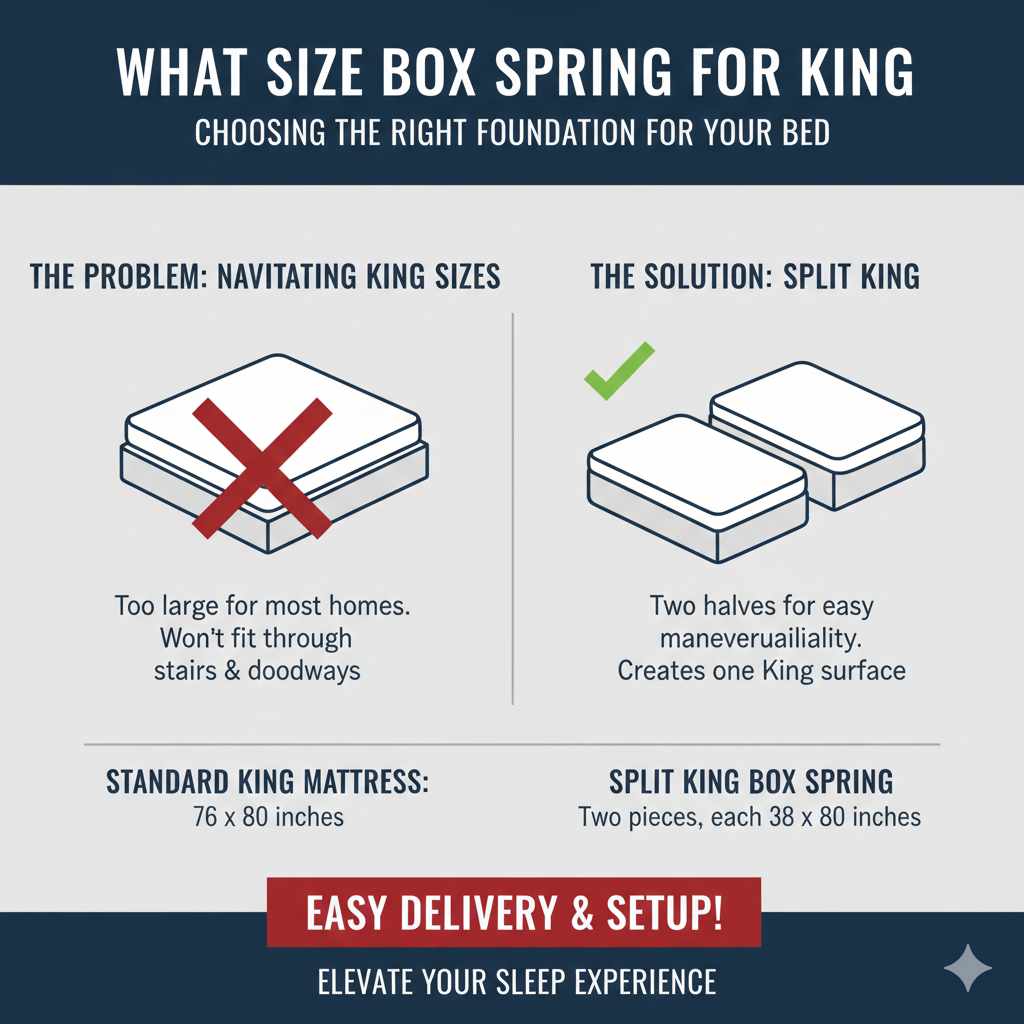
Many modern mattresses (especially full, queen, and king sizes) come with a “split box spring” for easier moving. A full-size split foundation actually consists of two pieces, each measuring approximately 27 inches wide by 75 inches long.
Advantages of a Split Box Spring in a Suburban:
- They Load Flat Easily: Two 27-inch wide pieces easily slide through the 52-inch wide opening between the wheel wells when loaded flat on the floor behind the second row. They are much less likely to require vertical loading.
- Better Weight Distribution: Easier to lift and maneuver individually.
If you are buying a new set, always check if the retailer offers a split option for easier transport, even in a large SUV like the Suburban.
Platform Beds vs. Traditional Box Springs
If you are using a platform bed frame instead of a traditional box spring (which is common now), the frame itself might be easier or harder to transport:
- Platform Frames: These are often disassembled into flat pieces (slats and side rails). If you can disassemble the frame, it will fit in almost any Suburban configuration with ease.
- Metal Bed Frames: Standard metal frames usually fold up. A folded “angle iron” twin or full frame is very manageable inside the Suburban, often fitting alongside the seats even if they are partially up.
Tips for Safe Hauling with Large Items
Transporting large, awkward items requires more attention than simply driving your daily commute. Safety while driving is paramount. Remember that according to the Federal Highway Administration, improper loading contributes to traffic hazards.
Checklist for Securing Tall Loads
If your box spring does stand slightly taller than the seats, follow these safety guidelines:
- Visual Check: Ensure the box spring is sitting flush against the back of the front seats or securely braced against the side walls. It must not pitch forward.
- Use All Anchor Points: Use every available latch or tie-down point in the cargo area. If you carry a heavy-duty cargo net, this is the time to use it over the entire load.
- Don’t Block Visibility: Make absolutely certain that the top of the box spring does not block your center rearview mirror. If it does, you must rely entirely on your side mirrors. (This reinforces why a flat load is often safer).
- Drive Slower: Sudden braking is the biggest threat to unsecured interior cargo. Drive courteously, braking earlier and smoother than usual until the item is unloaded.
Tool Check: What You Might Need
You don’t usually need specialized tools to load a box spring, but having these items on hand makes the job smoother:
- Moving Blankets or Thick Cardboard
- Heavy-Duty Bungee Cords or Ratchet Straps
- Gloves (to protect your hands from the rough fabric)
- A friend (for lifting and maneuvering)

Frequently Asked Questions (FAQ)
Q1: Will a Queen Box Spring fit in a Suburban?
A Queen box spring is 80 inches long and 60 inches wide. While the 80-inch length usually fits behind the second row (which often has 80+ inches of depth), the 60-inch width is almost always too wide for the 52-inch space between the wheel wells. Queen sizes almost always require a split foundation or roof transport.
Q2: Do I need to remove the third row of seats in a modern Suburban?
If your box spring is a standard full (75×54 inches), and you are loading it vertically, you likely do not have to remove the third row if those seats fold flat. However, removing them gives you significantly more room to angle the box spring in without scraping the plastic trim near the liftgate opening.
Q3: Can I lay the box spring diagonally across the back seats?
You can try this if you only have the third row folded, but it is generally not advised. A full box spring is 75 inches long. Laying it diagonally might gain you a few inches, but it will likely obscure your visibility and place pressure on the folded seatbacks, which could damage the mechanisms over time.
Q4: What is the main scraping hazard when loading bulky items?
The main hazard is usually the sharp plastic trim around the rear liftgate opening and the metal edges of the rear wheel wells. Always load bulky items slowly and use protection (like blankets) over these hard edges.
Q5: If the box spring is too long, where should I put the extra length?
If you have an older Suburban where the length just won’t converge, the extra length should ideally rest against the back of the second-row seatbacks. If it protrudes into the cabin when the seats are still up, that entire length becomes a dangerous projectile in a sudden stop. Never drive with unsecured items posing a threat to front-seat passengers.
Q6: Is it okay if the box spring hangs out the back slightly?
No. For street legality and safety, nothing should extend more than three feet past your rear bumper unless it is properly flagged with a red flag during daylight hours. Given the tight fit in the Suburban, you want the entire box spring to be secured inside the vehicle.
Conclusion: Confidence in Your Hauling Power
You now have all the knowledge needed to conquer that full-size box spring transport! The Chevy Suburban is built for jobs exactly like this. The key takeaway is remembering that while the width is tight, standing the 75-inch long box spring on its edge provides the necessary clearance over the wheel wells, allowing the overall 75-inch length to slide comfortably into the 80-inch cargo depth. Just take your time preparing the vehicle, use a helper, and secure your load well before hitting the road. Loading bulky items doesn’t have to be stressful; with a clear plan, you’re already halfway to success. Drive safe, and enjoy that new mattress!