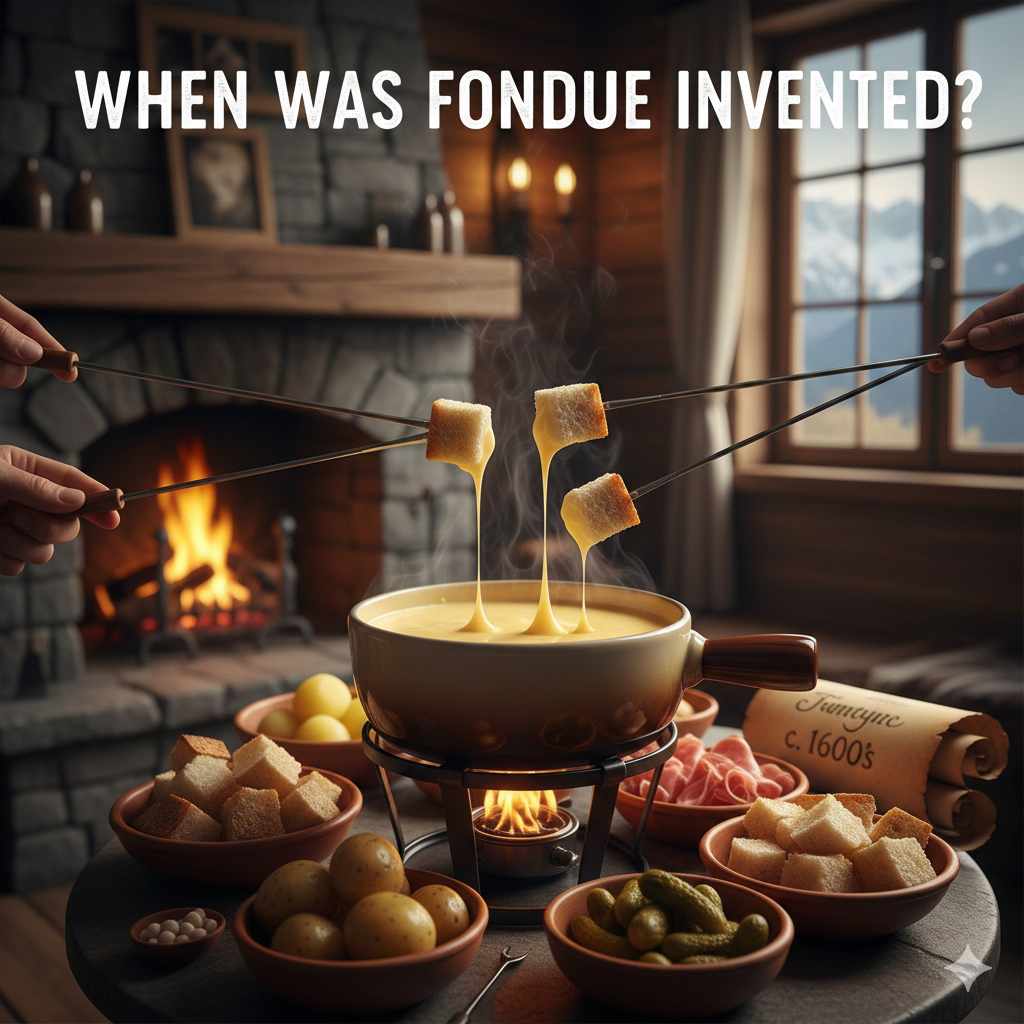
Fondue was not “invented” at one specific moment; rather, it evolved from medieval cheese preparation traditions in the Swiss Alps. The modern, popular versions—like melted cheese fondue—were officially standardized and popularized in Switzerland during the 1930s as a national dish.
Have you ever wondered about the cozy, communal meal where bread dips into bubbling cheese? Fondue seems like an ancient tradition, but when was fondue invented, really? People often get confused because the word “fondue” feels old-world, yet it became a massive hit much later. Don’t worry if you don’t know the exact timeline; tracking down its origin is trickier than fixing a flat tire. This guide will walk you through the surprising history of this warm, delicious dish, making the story easy to follow. Get ready to learn how bread and cheese became an international sensation!
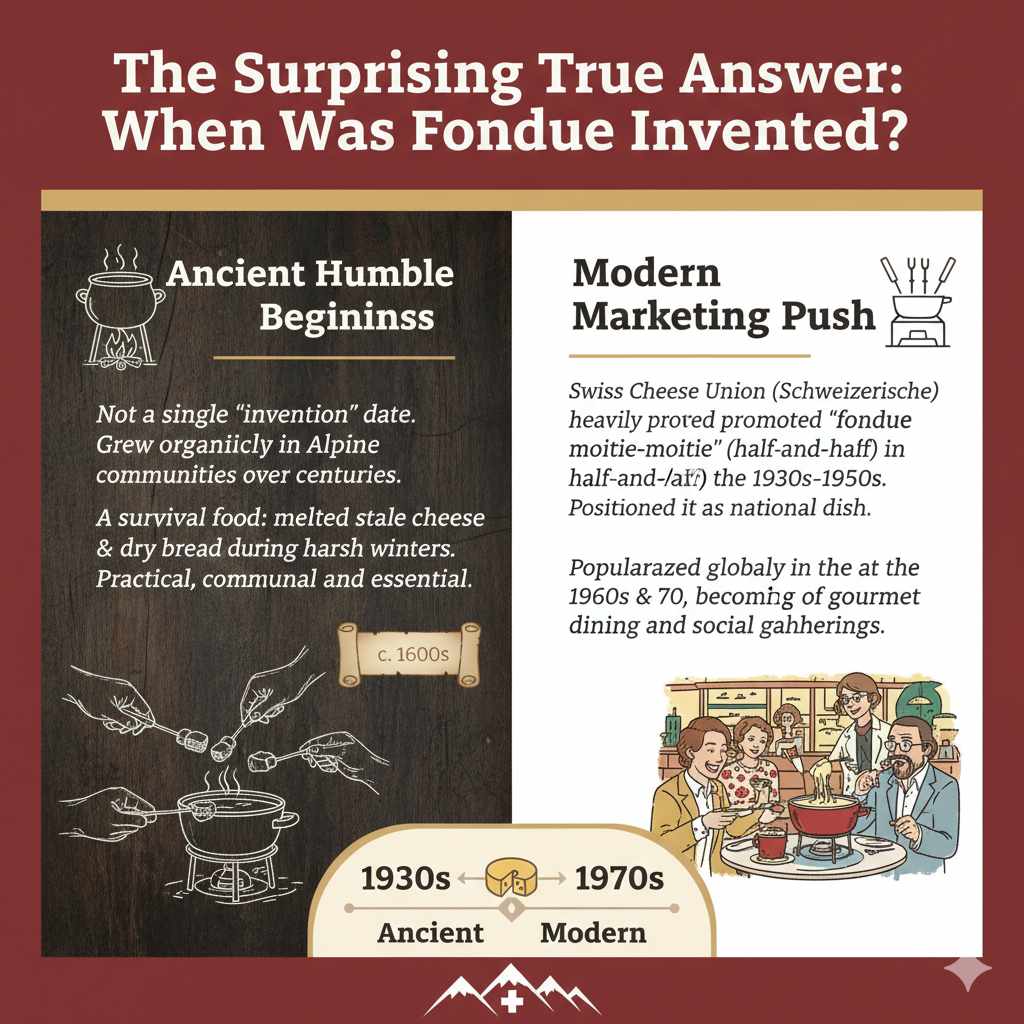
The Surprising True Answer: When Was Fondue Invented?
Trying to pinpoint the exact invention date for fondue is like trying to find the first wheel—it wasn’t a single patent event. Fondue, which simply means “melted” in French, grew naturally over centuries. It started as a smart way for Alpine communities to use up very hard, stale cheese and dry bread during long, cold winters when fresh food was scarce. It was survival food first, party food much later.
To really understand when fondue was invented, we need to look at two major chapters: the ancient humble beginnings and the modern marketing push that made it famous worldwide.
Chapter 1: The Medieval Roots of Melted Cheese
The practice of melting cheese and bread together didn’t begin in a fancy restaurant. It started high up in the mountains where dairy farming was the main industry. If you couldn’t buy fresh milk and cheese year-round, you had to make do with what you had.
Early Mentions and Necessity
While there isn’t a crisp, dated record that says, “On this day, Marc from Gruyères invented fondue,” historical texts hint at similar preparations dating back to the 1700s, and even earlier concepts existed.
The essential ingredients—cheese, usually hardened from storage, and wine (or sometimes just water) to help it melt—were necessities. Hard cheeses often became too dry to eat straight, but heating them made them supple and edible again.
Think of it this way: If your loaf of bread is as hard as a rock (which happened often before modern preservatives), dipping that bread into warm, soft cheese is the best way to revive it and make it enjoyable. This was practical ingenuity born from necessity, not culinary experimentation.
The Oldest Written Recipe (Often Debated)
Many food historians point to the earliest known written recipe resembling modern fondue appearing in a 1794 cookbook published in Zurich, Switzerland, called “The New Completely Swiss Cookbook” (Neu Schweizerisches Kochbuch). However, this early recipe often described a mixture more like melted cheese served over other foods, perhaps closer to a sophisticated cheese sauce rather than the communal pot we know today.
A more direct ancestor to the modern cheese fondue appeared in the 18th century, using the same principle: good local cheese (like Gruyère or Emmentaler) melted with wine or kirsch (a cherry brandy) over a fire. This established the core flavor profile.
| Era | Development | Significance |
|---|---|---|
| Medieval Period (Pre-1700s) | Necessity-driven melting of aged cheese. | Survival technique for utilizing sparse winter provisions in the Alps. |
| 18th Century | Recipes involving wine and cheese emerge. | Establishes the foundational flavors of cheese and alcohol mixture. |
| 19th Century | Regional variations appear across French and Swiss Alps. | Solidifies regional mountain cuisine traditions. |
Chapter 2: The Birth of Modern Fondue (1930s Standardization)
If the Alps provided the ingredients, it was a powerful organization that gave fondue its modern fame. The 1930s were the key turning point in answering “When was fondue invented” as a commercial product.
The Swiss Cheese Union (Schweizerische Käseunion)
During the Great Depression of the 1930s, the situation for Swiss cheesemakers was tough. There was a massive surplus of high-quality cheese, especially Gruyère. To keep the industry afloat and boost domestic consumption, the Swiss Cheese Union (SCU) decided to market one specific dish nationally.
They chose fondue. It utilized their excess product, wine (another Swiss staple), and was easy to prepare at home. This was a brilliant piece of marketing before the term “marketing” was even widely used in this context.
The SCU launched a massive push, promoting fondue as the official, quintessential Swiss national dish. They created the first official recipes, standardized the cheese-to-wine ratio, and began promoting specialized equipment.
Standardizing the Recipe
The official recipe standardized by the SCU usually required:
- Gruyère cheese (or a mix of Gruyère and Emmentaler).
- Dry white wine (for acidity to help emulsify the cheese).
- A dash of cornstarch (or flour) to prevent separation.
- Kirsch (cherry brandy) added at the end for flavor balance.
This standardization helped ensure that no matter where you ate fondue in Switzerland in the 1930s, it tasted consistent. This is arguably when the concept of modern fondue was truly “invented” as a unified national meal.
Chapter 3: Fondue Crosses the Ocean: The American Craze
Fondue remained largely a European delicacy until the late 1960s and early 1970s. When it finally hit the United States, it didn’t just become popular; it became a genuine cultural phenomenon.
The 1960s Cultural Shift
The post-war boom in America led to an increasing interest in European culture, travel, and sophisticated, yet easy, entertaining. Fondue fit perfectly into this trend. It offered something interactive, communal, and slightly exotic for a dinner party.
The key driver for this explosion was the promotion of an entirely new type of fondue: Fondue Bourguignonne, or oil fondue.
The Rise of Oil and Chocolate Fondue
While cheese (fondue au fromage) is the original, the newer variations gave fondue endless versatility:
- Fondue Bourguignonne (Oil Fondue): This involves heating neutral cooking oil to high temperatures and dipping small cuts of raw meat into it until cooked. It gained massive popularity in the US because it felt adventurous and luxurious.
- Chocolate Fondue (Dessert Fondue): Introduced later, this version involved dipping fruit, marshmallows, and cakes into melted chocolate. It became the quintessential romantic or post-dinner treat.
These variations broadened the appeal. You weren’t just eating melted cheese anymore; you were participating in a full, multi-course “fondue experience.” Companies like the Cook’s Illustrated website has great archival information on how these trends took hold across different decades.
The Role of Equipment
The timing also aligned perfectly with the availability of affordable, safe home fondue sets. Early fondue required careful maneuvering over an open flame or low stove heat, which could be dangerous. Modern sets provided reliable, low-temperature burners (usually using solid fuel like Sterno), making the process safe for any home cook.
Why Fondue Endured: The Social Aspect
When we look at when fondue was invented, the answer is less about a single date and more about its enduring social function. Whether it was Alpine villagers sharing one pot to stay warm or a 1970s American couple holding a fun dinner party, fondue is inherently communal.
It forces people around one central pot. You can’t rush it; you have to wait for your bread to dip, your meat to cook, or your fruit to coat. This forced slowdown is a big part of its appeal, just like a well-maintained engine requires patience for oil changes but rewards you with reliable driving.
The Importance of Cheese Quality
If you plan on trying authentic fondue, remember that the Swiss cheese industry is highly regulated. The quality of the cheese profoundly impacts the final, smooth texture. For genuine cheese fondue, you must use Swiss cheeses known for good melting properties. If you’re interested in learning more about food safety and sourcing, organizations like the U.S. Department of Agriculture (USDA) offer excellent resources on dairy handling.
The primary cheeses used today, which you should aim for, are:
- Gruyère (The classic, nutty base)
- Emmentaler (Adds stretchiness)
- Vacherin Fribourgeois (Sometimes used for extra creaminess)
A Quick Look at Non-Cheese Fondue Types
To fully grasp the history, it helps to see the other major types that developed long after the cheese versions:
| Fondue Type | Primary Medium | General Time Period of Popularity | What You Dip |
|---|---|---|---|
| Fondue Neuchâteloise (Original Cheese) | Cheese and Wine | 18th Century / Standardized 1930s | Stale bread cubes |
| Fondue Bourguignonne (Meat) | Hot Oil | 1960s – 1970s | Raw cubes of beef or steak |
| Chocolate Fondue (Dessert) | Melted Chocolate | 1970s Onward | Fruit, pound cake, marshmallows |
| Broth Fondue (Fondue Chinoise) | Hot Savory Broth | Mid-20th Century | Thinly sliced meats and vegetables |
Notice how the meat and broth versions are much more recent. They were adaptations designed to maximize the fun of the communal pot format established by cheese fondue.
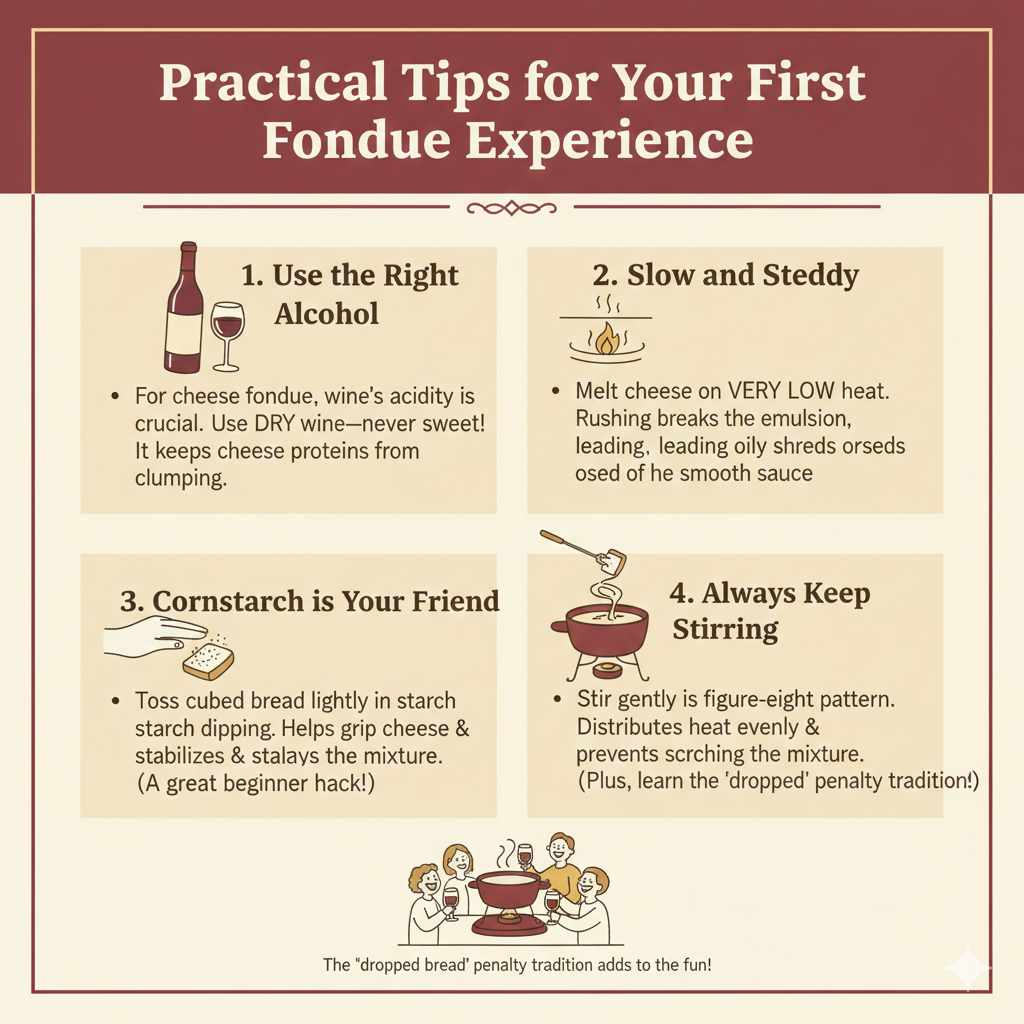
Practical Tips for Your First Fondue Experience
Understanding the history is fun, but making sure your fondue doesn’t separate (or burn!) is even better. Just like checking your tire pressure before a long drive, ensuring your fondue mixture is correct ensures a successful outcome. Here are a few quick tips:
- Use the Right Alcohol: For cheese fondue, the wine’s acidity is crucial. It keeps the cheese proteins from clumping up. Always use dry wine—never sweet!
- Slow and Steady Wins the Race: When melting cheese, keep the heat very low. If you rush it, the emulsion breaks, and you end up with oily cheese shreds instead of smooth sauce.
- Cornstarch is Your Friend: Toss your cubed bread lightly in starch before dipping. This subtle coating helps grip the cheese better and often aids in stabilizing the mixture. (Though traditionalists might argue, it’s a great beginner hack!)
- Always Keep Stirring: When serving, keep stirring gently in a figure-eight pattern. This helps distribute the heat evenly and prevents the bottom layer from scorching against the pot.
If you ever hear the rule that someone who drops their bread in the pot owes a penalty (usually buying a round of drinks or kissing the person next to them), that tradition developed during the intense 1970s craze in Europe, adding to the social fun!
Frequently Asked Questions (FAQ) About Fondue History
Q1: Is fondue originally French or Swiss?
A: While the word “fondue” is French, meaning “melted,” the dish as we recognize it—the hearty melted cheese dish—is fundamentally Swiss. It developed in the French-speaking regions of Switzerland but was popularized as a national symbol by the Swiss Cheese Union.
Q2: What does “fondue” actually mean?
A: Fondue is the past participle of the French verb fondre, which means “to melt.” So, fondue literally means “melted” or those things that are melted.
Q3: Was meat fondue (Bourguignonne) invented at the same time as cheese fondue?
A: No. Cheese fondue has medieval roots. Meat fondue cooked in hot oil (Bourguignonne) is a much more modern invention, gaining traction primarily in the mid-20th century, especially outside of Switzerland.
Q4: Did people in the Middle Ages really eat fondue?
A: They ate something very similar out of necessity, but it wasn’t called fondue. They thickened aged cheese with liquids over a fire to make it digestible. The formal, social ritual of dipping bread into a consistent pot came much later.
Q5: When did chocolate fondue become popular?
A: Chocolate fondue became a major trend in North America during the early 1970s, often credited to chefs promoting it as a fun, easy dessert for dinner parties.
Q6: Is it dangerous to cook fondue on a regular stove?
A: While you can start the cheese mixture on the stove, it must be transferred to a proper fondue pot (caquelon) with a low, steady heat source for serving. Leaving cheese on high heat causes it to separate, stick, and burn quickly. For maximum safety, always use a dedicated fondue burner or heat source once it’s ready to go.
Conclusion: Fondue’s Rich and Layered History
So, when was fondue invented? The simple answer is that it evolved naturally from the needs of Swiss mountain dwellers centuries ago. The official, marketing-driven version of cheese fondue was codified and pushed into the national spotlight in the 1930s by the Swiss Cheese Union, saving their dairy industry.
Its worldwide explosion as a fun, interactive meal happened much later, driven by the versatile (and less intimidating) oil and chocolate variations of the 1960s and 70s. From humble necessity to international dining trend, fondue remains a testament to how simple ingredients, when prepared correctly and shared warmly, can create lasting traditions. Now that you know the history, grab some good cheese, a bottle of wine, and enjoy your own piece of culinary history!