
Cheese fondue is a classic Swiss dish where blocks of cheese are slowly melted with wine and often a little starch until smooth and creamy. It’s served warm in a communal pot (a caquelon) over a small flame, meant for dipping bread, vegetables, and other treats. It’s a fun, cozy way to share a meal!
Ever stared at a restaurant menu, seen “Fondue,” and felt a little lost? You are definitely not alone! Fondue sounds fancy, maybe even a little intimidating, but it is actually one of the most straightforward and rewarding dishes you can make at home. Think of it like the ultimate warm, cheesy dip—a perfect centerpiece for a cozy night in. If you’ve always wanted to know the secrets behind that perfectly smooth, stretchy melt without it separating or clumping up, you’ve come to the right place. I’m here to break down exactly what cheese fondue is, what makes it work so well, and how you can easily whip up a batch with total confidence. Let’s demystify this delicious tradition!
What Exactly Is Cheese Fondue? The Simple Definition
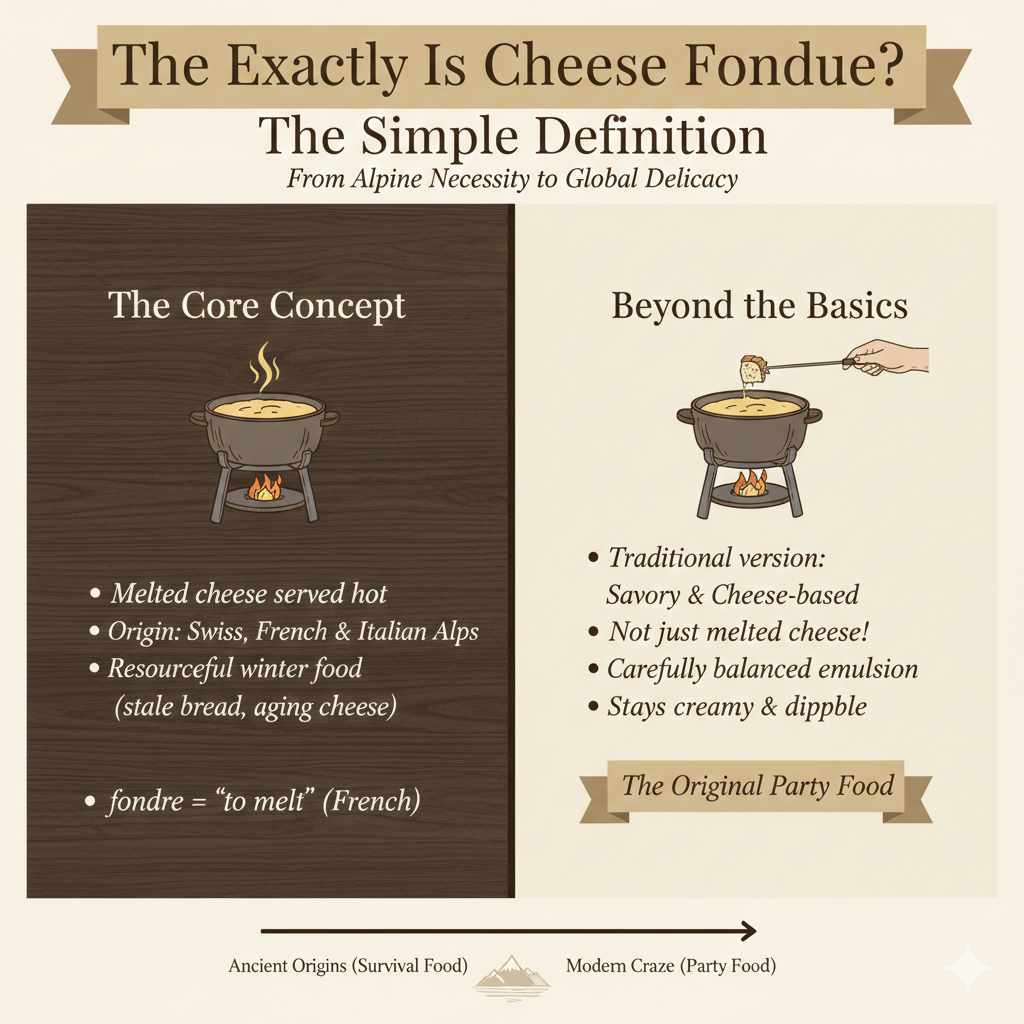
At its core, cheese fondue (pronounced fon-doo) is simply melted cheese served hot over a small flame or heat source. It originated in the Alpine regions of Switzerland, France, and Italy, primarily as a resourceful way to use up stale bread and aging cheese during the colder winter months.
The word “fondue” actually comes from the French word fondre, which means “to melt.” While many people think of chocolate fondue these days, the original and most traditional version is savory and cheese-based. It’s not just melted cheese thrown in a bowl; it’s a carefully balanced emulsion that stays creamy and dippable.
The Magic of Emulsion: Why It Stays Smooth
If you’ve ever tried to melt cheese on its own, you know what happens: it gets gloppy, oily, and separates into a stringy mess. Fondue masters this by creating an emulsion—a stable mix between two things that don’t usually mix: fat (from the cheese) and water (from the wine or liquid).
To keep the fats and proteins suspended evenly, a stabilizer is crucial. This is usually a small amount of starch, like cornstarch or flour, added to the liquid mixture first. This acts like a helpful bridge, ensuring the cheese melts evenly into a velvety sauce rather than seizing up into a solid lump.
The Essential Components of Authentic Cheese Fondue
To make a truly satisfying pot of fondue, you need three main ingredients, plus a few supporting players. Think of this like assembling the right tires, oil, and spark plugs for your engine—get the core components right, and the rest runs smoothly!
1. The Cheese (The Star of the Show)
Authentic Swiss fondue relies on specific, firm cheeses that melt beautifully and have a sharp, nutty flavor. You generally want cheeses that are aged but not overly dry. The Swiss government actually has standards for what can be legally called “Swiss Cheese Fondue,” often requiring certain regional varieties.
Top Traditional Choices:
- Gruyère: This is the backbone of most traditional recipes. It offers a nutty, earthy flavor and melts incredibly well, providing excellent body.
- Emmentaler (or Emmental): This is the cheese famous for having large holes (eyes). It melts smoothly and adds a milder, slightly sweeter note.
- Appenzeller: This is an optional, stronger flavored cheese you can use to replace some of the Gruyère for an extra pungent, complex taste.
A Note on Substitutions: If you can’t find traditional Swiss cheeses, look for other firm, aged cheeses with good melting qualities, like sharp white cheddar or Jarlsberg. However, the texture might be slightly different. For the best results, always aim for the Alpine cheeses!
2. The Liquid (The Key to Smoothness)
The liquid component does two vital jobs: it helps melt the cheese slowly and prevents burning, and it provides the necessary acidity to keep the cheese proteins from clumping up.
- Dry White Wine: This is non-negotiable for traditional fondue. Look for something dry and slightly crisp, like a Sauvignon Blanc, Pinot Blanc, or even a dry Riesling. The acidity is critical! Don’t use sweet wines.
- Kirsch (Cherry Brandy): Often added at the end, Kirsch provides a characteristic subtle fruity sharpness. It’s traditional, but if you prefer to skip the alcohol, a splash of lemon juice can mimic the necessary acidity replacement, though the flavor profile will change.
3. The Starch (The Essential Stabilizer)
This is the secret weapon that prevents separation. The starch coats the fat molecules, allowing them to stay suspended in the wine and cheese mixture.
- Cornstarch or Potato Starch: Usually, a tablespoon or two is mixed into the wine before adding the cheese. Some recipes use flour, but cornstarch tends to create a silkier finish.
Setting Up Your Fondue Station: Tools and Safety
Before you start melting, you need the right vehicle for the job. Using the wrong pot can lead to scorching or uneven heating, which ruins the delicate emulsification. This is where proper equipment matters, similar to how using the correct viscosity of oil protects your engine.
The Caquelon: Your Fondue Pot
The traditional pot is called a caquelon. It’s typically made of heavy, thick ceramic or cast iron. The thick material allows it to retain heat evenly without getting too hot in one spot.
Heat Source Matters:
- Rechaud (Sterno Burner): This is the classic setup. A small, adjustable burner sits under the pot, keeping the fondue warm throughout the meal.
- Electric Fondue Pot: For beginners, an electric pot is the safest and easiest choice. They maintain a very consistent, low temperature, minimizing the risk of burning or overheating.
- Double Boiler (For Making, Not Serving): Never try to melt cheese directly over high heat. Always use a double boiler (a bowl set over simmering water) to gently warm the mixture first before transferring it to the serving pot set over a low flame.
Safety Tip: Always place your fondue pot on a sturdy, heat-resistant surface. Since you’ll be dipping long forks, ensure the setup is stable and away from the edges of the table. (To learn more about general kitchen safety when handling heat, resources like the U.S. Food and Drug Administration offer great guidelines on safe handling practices.)
Dipping Implements
You’ll need long, thin forks, usually with colored tips so everyone knows which one is theirs—a vital part of the communal etiquette!
Step-by-Step Guide: How to Make Perfect Cheese Fondue
Don’t worry; this process is more about patience than technical skill. If you follow these steps, you will achieve that perfect, velvety melt every single time. Remember, the core principle is adding ingredients slowly over low, consistent heat.
Phase 1: Prep Work (Mise en Place)
Preparation is everything! Get everything measured and grated before you turn on any heat.
- Grate the Cheese: This is crucial. Never use pre-shredded cheese, as it contains anti-caking agents (like cellulose) that prevent smooth melting. Grate about 1.5 lbs of cheese (a mix of Gruyère and Emmentaler).
- Prepare the Starch Slurry: In a small bowl, mix 2 tablespoons of cornstarch with about 1/4 cup of the intended white wine until it forms a smooth, sludge-like paste.
- Prepare the Aromatics: Cut one clove of garlic in half. You are not chopping it; you are just rubbing it inside the empty pot.
Phase 2: Heating and Stabilizing
This phase creates the base for the emulsion.
- Rub the Pot: Take the halved garlic clove and rub the cut side all around the inside surface of your caquelon. Discard the garlic. This imparts a very subtle, aromatic hint without overwhelming the cheese flavor.
- Warm the Wine: Pour the rest of your dry white wine (about 1.5 cups) into the fondue pot set over medium-low heat. Bring it just barely to a simmer—you should see small bubbles forming around the edges, but it should never boil rapidly.
- Incorporate the Starch: Whisk your cornstarch/wine slurry vigorously into the simmering wine mixture. Continue whisking until the liquid thickens slightly. It should coat the back of a spoon lightly.
Phase 3: The Melt
This step requires patience. Add the cheese slowly!
- Add Cheese Gradually: Turn the heat down as low as it will go (or move the pot to a double boiler). Add the grated cheese a small handful at a time, stirring constantly in a figure-eight or slow circular motion.
- Stir Until Smooth: Wait until the first handful of cheese is completely melted and incorporated before adding the next handful. This slow addition prevents the cheese from cooling down too quickly and seizing up.
- Season and Finish: Once all the cheese is melted and the fondue is smooth, stir in a teaspoon of lemon juice (if you skipped Kirsch), a dash of pepper, and optionally, 1 to 2 tablespoons of Kirsch. Taste and adjust seasoning.
Phase 4: Serving and Maintaining Heat
Transfer the pot immediately to the rechaud or electric warmer set to the lowest possible heat setting. The goal is warm, not hot.
Crucial Tip for Dipping: If the fondue starts to get too thick while eating, add a splash of warm white wine (not cold!) and stir well over the low heat until it loosens up again.
What to Dip—The Perfect Fondue Companions
The items you dip into the fondue are just as important as the cheese itself! They need to have a good, sturdy texture that holds up to the dipping action without breaking off into the communal pot. This is often the most fun part of the preparation.
Table of Dipping Suggestions: Classic vs Creative
| Category | Best Choices (Sturdy) | Creative Ideas (Try These!) |
|---|---|---|
| Bread | Cubes of day-old French baguette or sourdough | Small, toasted croutons brushed with garlic oil |
| Vegetables | Blanched broccoli florets, boiled small potatoes | Thinly sliced, crisp apples (Granny Smith are great), steamed Brussels sprouts |
| Meats/Protein | Small cocktail sausages (warmed), cubed ham | Pre-cooked, chilled shrimp, cubes of roast beef |
| Other | Pickled onions or cornichons (for palate cleansing) | Small wedges of roasted sweet potato |
When selecting dippers, think about texture and flavor contrast. The slight acidity of something tart, like a cornichon or a tart apple slice, cuts through the richness of the cheese beautifully.
Troubleshooting Common Fondue Mishaps
Even when following the best instructions, sometimes things go slightly sideways. Don’t panic! Most fondue disasters can be fixed with a little know-how. Think of this as roadside assistance for your cheese.
1. The Fondue Broke (It Looks Oily or Grainy)
This happens when the fat separates from the protein—usually due to overheating or adding the cheese too fast.
The Fix: Remove the pot immediately from the heat. In a separate small pan, mix one teaspoon of cornstarch with one tablespoon of cold liquid (wine or even water). Bring this mixture just to a boil. Slowly whisk this hot, starchy liquid back into your broken fondue, stirring gently until it re-emulsifies.
2. The Fondue is Too Thick (Like Paste)
This often happens as it sits on the warmer or if you didn’t add enough wine initially.
The Fix: Add a splash of warm white wine or a splash of hot water (a tablespoon at a time) while stirring constantly over the lowest possible heat until the desired consistency returns.
3. The Fondue is Too Runny (Too Thin)
This typically means there wasn’t enough starch, or you added too much liquid.
The Fix: Mix one teaspoon of cornstarch with one teaspoon of dry white wine until fully smooth in a separate bowl. Gently stir this slurry into the warm fondue and let it simmer for one minute. It should thicken quickly. (Do not add raw flour directly to hot cheese.)
The Etiquette of Dipping: Keep It Fun and Clean
Part of the joy of fondue is the communal sharing, but there are a few simple, unwritten rules that keep the experience enjoyable for everyone. These traditions help ensure the pot stays clean and the dipping stays fun.
- The Golden Rule: No Double Dipping! Once your dipper touches your mouth, it does not go back into the pot.
- The Lost Fork Penalty: If you drop your bread or dipper into the pot and it stays submerged, tradition often dictates a “penalty.” This can vary by group, but common penalties include buying the next round of drinks, kissing the person next to you, or having to clean the pot!
- Keeping It Moving: Don’t leave your bread sitting in the pot, as it will soak up too much fondue and become too heavy, potentially breaking off and sinking.
- Wiping the Rim: Always wipe your fork clean on the side of the pot before bringing it to your mouth.
While these rules sound rigid, they are really just guidelines for sharing food safely and playfully. Remember, safety extends to the kitchen, too. When dealing with hot equipment, simple precautions are key. For best practices on food safety when keeping foods warm, always reference guidelines from reliable sources like the Centers for Disease Control and Prevention (CDC) regarding hot holding temperatures.
Beyond Swiss: Exploring Other Fondue Styles
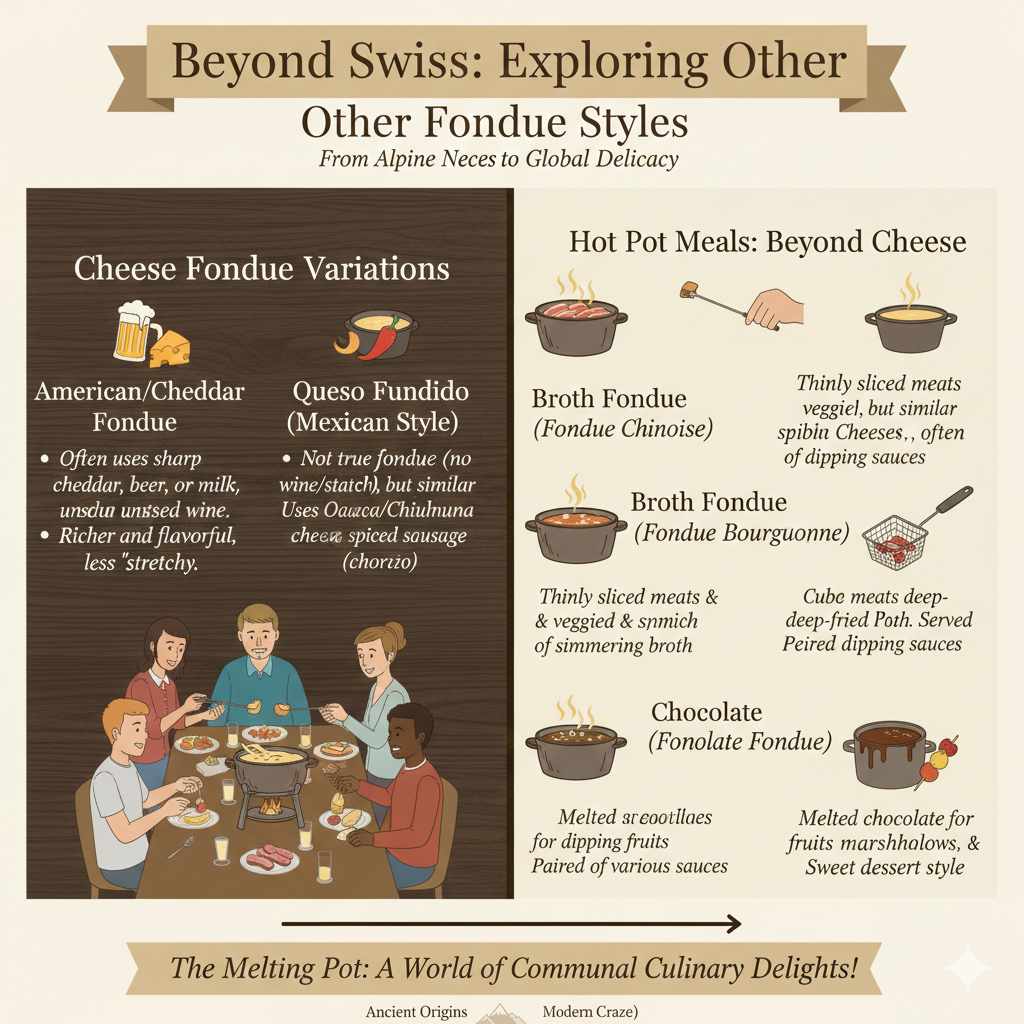
While the Swiss cheese version is the standard, the idea of “fondue” has expanded to cover any hot pot meal, often categorized by the liquid base used for melting or cooking.
Cheese Fondue Variations
Not every cheese fondue needs to be Swiss-style. You can adapt the technique using different cheeses and liquids:
- American/Cheddar Fondue: Often using sharp cheddar, beer, or milk instead of wine. This is richer and often less “stretchy” than Swiss fondue but incredibly flavorful.
- Queso Fundido (Mexican Style): While not true fondue (it doesn’t use wine/starch), it shares the communal dipping concept. It uses strong melting cheeses like Oaxaca or Chihuahua, often mixed with spiced sausage (chorizo).
Other Famous Fondue Types (For Future Reference)
Once you master the cheese version, you can branch out into these equally delicious, but technique-different, styles:
| Fondue Type | Base Liquid/Heat Source | What You Dip |
|---|---|---|
| Fondue Bourguignonne | Hot Oil | Raw cubes of beef, cooked quickly in the oil |
| Fondue Chinoise | Hot Broth (Simmering Stock) | Thinly sliced meats and vegetables cooked in the broth |
| Chocolate Fondue | Melted Chocolate and Cream | Fruit, marshmallows, pound cake squares |
Notice that Bourguignonne and Chinoise are cooking methods using hot liquids, not melting dips. They require completely different equipment and safety considerations than cheese fondue, as oil and boiling broth reach much higher temperatures.
Frequently Asked Questions (FAQ) About Cheese Fondue
Q1: Can I make cheese fondue without wine?
A: Yes, but you must replace the acidity! The wine is essential for stabilization. Substitute the wine with an acidic liquid like lemon juice mixed with water or even buttermilk, but you will lose the traditional flavor.
Q2: What happens if my fondue gets too hot?
A: Overheating is one of the most common fondue mistakes. When the fondue gets too hot, the cheese proteins tighten and squeeze out fat and moisture, causing the mixture to become grainy, oily, or separated. If this happens, immediately remove the pot from the heat, lower the temperature, and gently stir in a small slurry of cornstarch and cool wine or water to help re-emulsify the mixture.
Q3: Can I make cheese fondue ahead of time?
A: Cheese fondue is best enjoyed fresh, but you can prepare it slightly ahead if needed. Make the fondue, let it cool, and refrigerate it for up to one day. When reheating, do so very gently over low heat, stirring constantly and adding a splash of warm wine or water to restore the creamy texture. Avoid reheating quickly, as this increases the risk of separation.
Q4: What is the best way to keep fondue smooth while eating?
A: Keep the heat as low as possible—just enough to maintain warmth. Stir occasionally to prevent sticking or scorching on the bottom. If the fondue thickens as it sits, add a small splash of warm (not cold) wine and stir gently until it loosens back to a silky consistency.
Q5: How much cheese fondue should I plan per person?
A: A good rule of thumb is about 6–8 ounces (170–225 g) of cheese per person when fondue is the main dish. If it’s part of a larger meal with other courses, 4–5 ounces per person is usually plenty. Fondue is rich, and a little goes a long way!
Conclusion: Why Cheese Fondue Is Always Worth the Effort
Cheese fondue is more than just melted cheese—it’s a warm, shared experience rooted in tradition, simplicity, and togetherness. Once you understand the fundamentals—choosing the right cheeses, using gentle heat, adding acidity and starch, and dipping with care—the process becomes approachable and even relaxing. What once seemed intimidating quickly turns into one of the most rewarding dishes you can serve.
Whether you’re hosting friends, planning a cozy date night, or simply treating yourself to something comforting, cheese fondue invites everyone to slow down and enjoy food communally. With the tips, techniques, and troubleshooting advice in this guide, you’re fully equipped to create a smooth, flavorful fondue that stays creamy from the first dip to the last.
So light the flame, grab some crusty bread, and enjoy the simple joy of dipping, sharing, and savoring every bite. Cheese fondue isn’t just a meal—it’s a moment.