

Quick Summary: TV-MA stands for “Maturity-Adult.” It’s a content rating indicating that the programming is intended for adults and may contain content unsuitable for viewers under 17. This rating is crucial for parents and viewers to make informed choices about what to watch.
For another TV setup decision, What Size Tv Stand For A 65-Inch Tv? Size gives readers a related next step before choosing or installing furniture.
For another TV setup decision, TV Stand Vs Wall Mount: Showdown gives readers a related next step before choosing or installing furniture.
For another TV setup decision, Are Electric Fireplace TV Stands Safe? gives readers a related next step before choosing or installing furniture.
Ever find yourself scrolling through streaming services, wondering what all those age ratings mean? You see “TV-G,” “TV-14,” and then BAM! “TV-MA.” What exactly does that last one signify? It’s a common question, and knowing the difference can save you from an unexpected, or even unwelcome, viewing experience. Don’t worry, we’re going to break it down simply. Understanding these ratings helps you choose shows and movies that are just right for you and your household. Let’s demystify TV-MA so you can confidently navigate your entertainment options!
Unpacking TV-MA: What “Maturity-Adult” Really Means
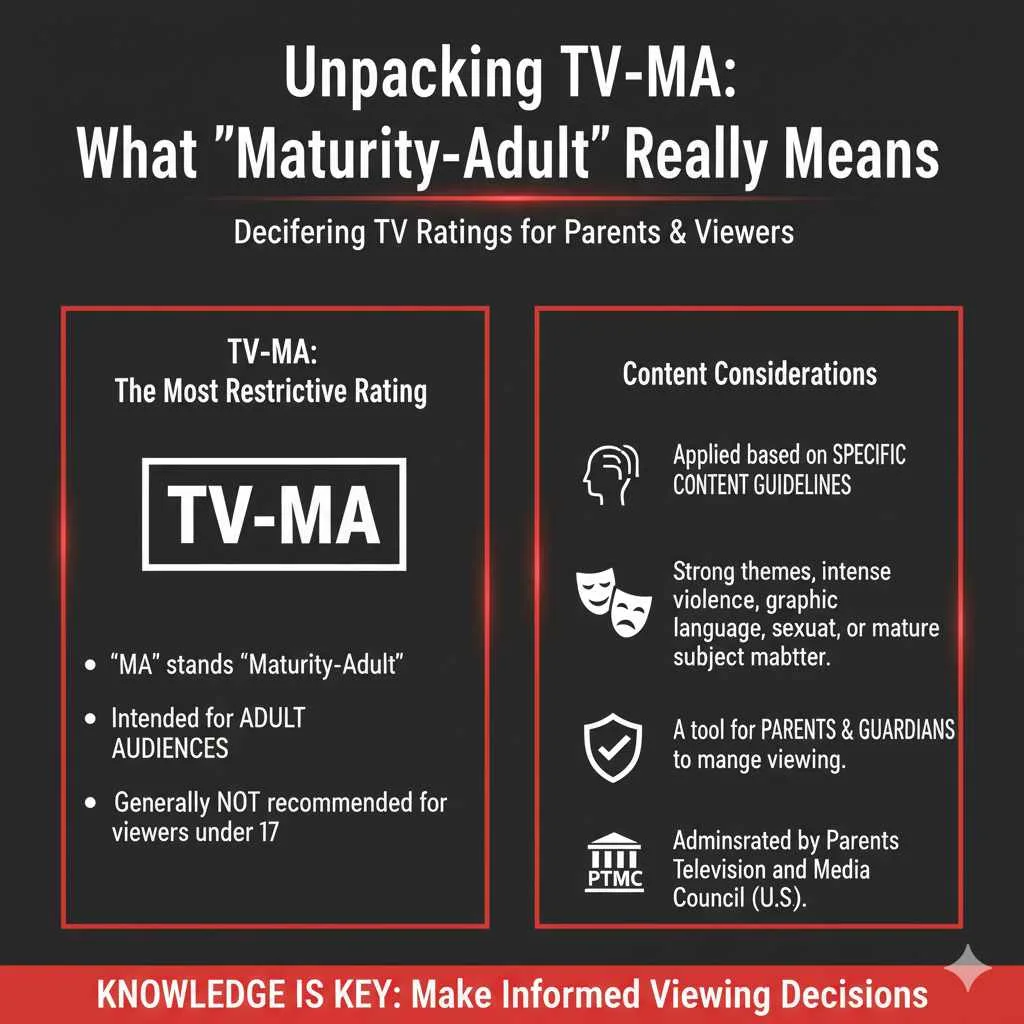
When you see “TV-MA” on your screen, it’s the television industry’s way of saying, “Hold on a second, this might not be for everyone.” The “MA” part specifically stands for “Maturity-Adult.” This is the most restrictive rating in the television content rating system. It signifies that the content within the program is intended for adult audiences, and it is generally not recommended for viewers younger than 17 years old.
This rating isn’t given out lightly. It’s applied by the manufacturer or programmer based on specific content guidelines. The goal is to provide viewers, especially parents or guardians, with a clear indication of the material’s nature. It’s a tool to help manage what younger audiences are exposed to, ensuring that programming aligns with age-appropriateness.
The concept of content rating systems is vital for media consumption. In the United States, the television rating system is administered by the Parents Television and Media Council, which provides guidance and information on television content. Understanding these ratings helps everyone make better decisions about what they and their families watch.
The TV Parental Guidelines: A Closer Look
The TV Parental Guidelines, established by the television industry, are a set of advisories designed to inform parents about the content of television programming. These ratings are presented visually at the beginning of programs and on TV schedules. While TV-MA is the most restrictive, the system includes other ratings that cater to different age groups. Understanding the full spectrum provides context for why TV-MA exists and what it represents within this system.
Here’s a look at the main ratings:
- TV-Y: Suitable for all children. This programming contains minimal, if any, violence, scary situations, or mature themes.
- TV-G: General Audience. Suitable for all ages.
- TV-PG: Parental Guidance Suggested. This program may contain material that some parents find unsuitable for younger children.
- TV-14: Parents Strongly Cautioned. This program contains some material that many parents might find unsuitable for children under 14 years of age.
- TV-MA: Maturity-Adult. This program is intended for mature audiences (17 and older) and may be unsuitable for children under 17.
The “MA” in TV-MA is the key indicator that the content pushes the boundaries, often dealing with adult themes, stronger language, or more intense scenes than other ratings. It’s a signal that parental discretion is not just suggested, but strongly advised, and outright avoidance might be best for younger viewers.
What Kind of Content Earns a TV-MA Rating?
The content that leads to a TV-MA rating is varied but consistently aimed at an adult audience. It’s not just about age; it’s about the maturity and complexity of the themes and the explicitness with which they are presented. Broadly, TV-MA programming can include the following types of material:
Mature Themes and Language
- Strong Language: This often involves frequent use of profanity, including swear words, racial slurs, or other offensive language that would be inappropriate for younger audiences.
- Sexual Content: This can range from suggestive dialogue and situations to nudity and explicit depictions of sexual acts. The level of explicitness is a primary driver for a TV-MA rating.
- Violence: While some violence is present in lower ratings, TV-MA can feature intense, graphic, or prolonged scenes of violence. This could include fighting, injuries, gore, or depictions of death with significant impact.
- Adult Situations: This encompasses complex themes like drug use, alcoholism, suicide, graphic medical procedures, existential dread, and mature relationship dynamics.
- Nudity: While nudity can appear in lower ratings in specific contexts, TV-MA often features more prevalent or explicit nudity, including full frontal nudity.
- Drug and Alcohol Abuse: Explicit depictions or detailed storylines involving the use and abuse of illegal drugs or excessive alcohol consumption.
It’s important to note that a TV-MA rating doesn’t automatically mean a program is filled with all of these elements. A show might receive a TV-MA for a single, particularly strong instance of sexual content or violence, while another might earn it for a pervasive use of strong language and mature themes throughout.
Why is TV-MA Important for Viewers?
The TV-MA rating serves as a critical filter, empowering viewers to make conscious decisions about their media consumption. For parents, it’s an indispensable tool for protecting their children from content that might be disturbing, confusing, or inappropriate for their developmental stage. Even for adults, being aware of the rating can enhance the viewing experience by setting expectations.
Here’s why it matters:
- Parental Control: With the rise of streaming services and on-demand content, accidental exposure to mature material is easier than ever. TV-MA allows parents to preemptively block or limit access to such programming. Many streaming platforms offer parental control settings that can be configured based on these ratings.
- Informed Choices: Knowing that a show is rated TV-MA helps adult viewers decide if it aligns with their preferences. If someone prefers lighthearted comedies or family-friendly dramas, they might steer clear of TV-MA content. Conversely, someone looking for gritty dramas or mature thrillers might actively seek it out.
- Setting Expectations: When you see a TV-MA rating, you can anticipate the type of content you’re likely to encounter. This can prevent disappointment or discomfort if you’re expecting something lighter or more family-oriented.
- Understanding Content Nuances: The rating system, while broad, provides a general understanding of the “heaviness” of the material. It’s a quick reference that signals the program’s intended audience and the intensity of its themes.
For instance, think about the difference between watching a cartoon rated TV-Y and a prestige drama rated TV-MA. The visual and thematic elements are dramatically different. The TV-MA rating is the signal that bridges that gap, informing you about the intensity and maturity of what’s to come. This informed decision-making is what makes content ratings valuable in today’s media-saturated environment.
TV-MA vs. Other Ratings: A Comparative Look
To truly grasp what TV-MA signifies, it’s helpful to compare it with other ratings in the system. This comparison highlights the distinct nature of TV-MA content and its position on the spectrum of age-appropriateness.
Let’s break down the differences:
| Rating | Age Recommendation | Typical Content Characteristics | Example Show Type (Illustrative) |
|---|---|---|---|
| TV-G | All Ages | Mild violence, minimal mature themes, educational content. | Classic family sitcoms, nature documentaries. |
| TV-PG | Parental Guidance Suggested | Some mild violence, thematic elements, suggestive dialogue, infrequent coarse language. | Many family dramas, animated movies with some peril. |
| TV-14 | Parents Strongly Cautioned (Under 14) | Moderate violence, strong thematic elements, moderate sexual content, frequent coarse language. | Teen dramas, some action movies, crime procedurals. |
| TV-MA | Maturity-Adult (17+) | Strong violence, explicit sexual content, severe profanity, drug use, graphic nudity. | Mature dramas, prestige cable series, R-rated films. |
As you can see, TV-MA sits at the pinnacle of the rating system for television content intended for broadcast or streaming. While TV-14 warns parents about content unsuitable for younger teens, TV-MA escalates these elements significantly. The decision to assign a TV-MA rating is based on the presence of content that is deemed inappropriate for anyone under the age of 17, with a particular emphasis on the intensity and explicitness of violence, language, and sexual situations.
For instance, a show rated TV-14 might hint at sexual relationships or show a fight scene where characters get a black eye. A show rated TV-MA, however, might depict explicit sexual encounters, feature prolonged and bloody fight sequences, or delve into mature psychological themes with raw and unfiltered language. The distinction is significant and guides viewers on what to expect.
How Are TV-MA Ratings Determined?
The process of assigning a TV-MA rating, like all TV Parental Guidelines, is based on a combination of industry standards and the specific content of the program. While there isn’t a single government body dictating every rating, the system is a self-regulatory framework used by broadcasters and cable networks within the United States. For streaming services, the principles are often similar, though they may adapt them to their specific content libraries.
Key aspects influencing the determination of a TV-MA rating include:
- Content Analysis: Program creators and network executives meticulously review the content for elements such as violence, language, sexual situations, nudity, and maturity of themes.
- Industry Guidelines: The ratings are assigned in accordance with established industry guidelines that define the criteria for each rating level. Organizations like the Federal Communications Commission (FCC) provide oversight and information on television programming standards, playing a role in the overall content regulation landscape.
- Viewer Sensitivity: The primary consideration is the potential impact of the content on viewers under the age of 17. This involves assessing whether the material is too intense, explicit, or psychologically disturbing for this demographic.
- Context and Frequency: Not only the presence of certain elements but also their context and frequency matter. A single instance of extreme violence might warrant a higher rating than multiple instances of milder violence. Similarly, pervasive strong language is a significant factor.
It’s important to understand that these ratings are advisory. They are not prescriptive in a legal sense for most content, but they are a significant part of how content is presented to the public. For example, content rated TV-MA might still be broadcast on television channels at times when adult audiences are expected to be watching, such as late at night.
Beyond the Rating: Understanding Nuance
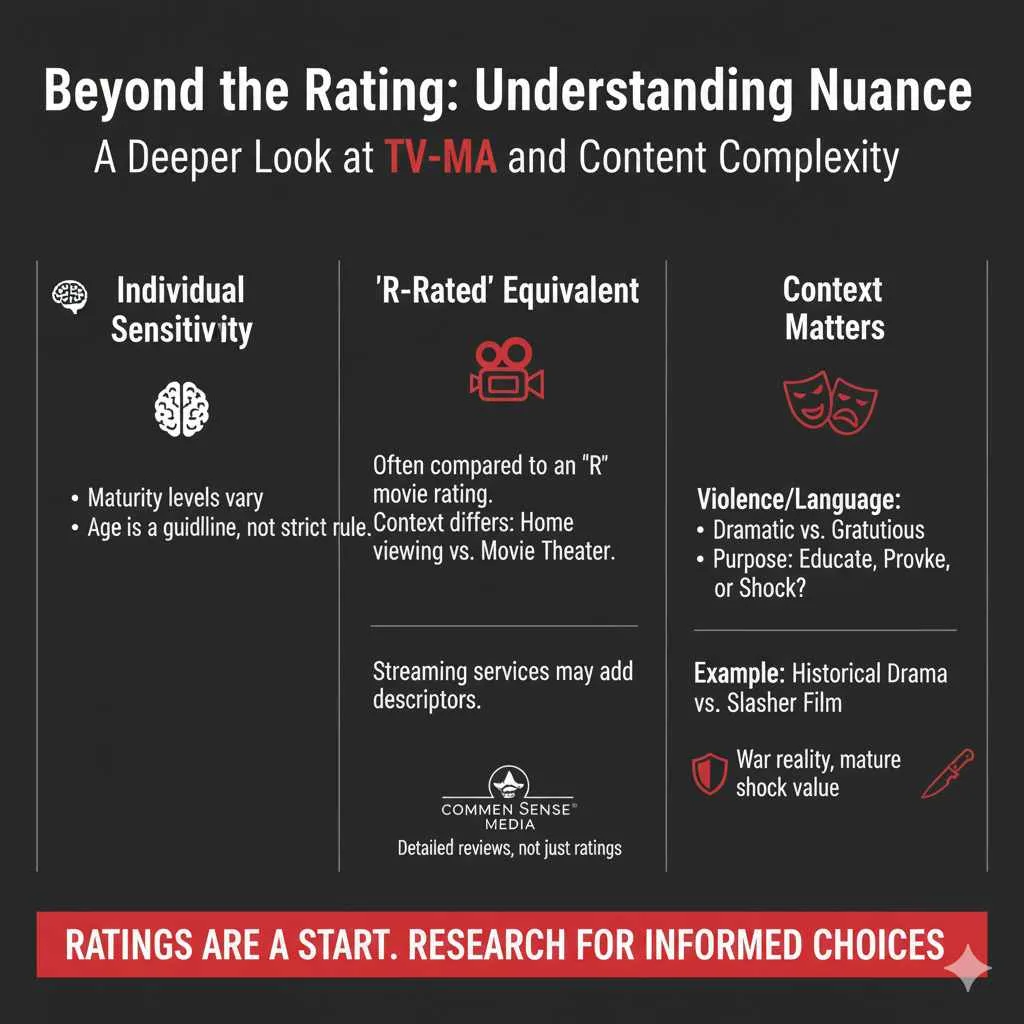
While the TV-MA rating is a helpful starting point, it’s not the only factor to consider when choosing what to watch. Content is complex, and a single rating can’t capture every nuance. Sometimes, a program might be rated TV-MA for a specific element, while other aspects are relatively mild.
Here are some things to keep in mind:
- Individual Sensitivity Varies: What one person finds disturbing, another may not. Age is a guideline, but maturity levels differ greatly among individuals.
- “R-Rated” Equivalent: TV-MA is often considered the television equivalent of an “R” rating for motion pictures. However, the context of television viewing (e.g., in a home environment) differs from a movie theater.
- Syndication and Streaming: Content rated TV-MA originally for broadcast might appear on streaming platforms alongside content that never aired on traditional TV. Streaming services often provide their own content descriptors in addition to or in place of traditional ratings (e.g., MPAA ratings for movies).
- Context of Violence/Language: A dramatic depiction of the consequences of violence or drug use, even if graphic, might be intended to educate or provoke thought, whereas gratuitous violence might be deemed different. Similarly, profanity used for dramatic effect versus casual “color” can be perceived differently.
For instance, a historical drama depicting the realities of war might receive a TV-MA rating due to graphic battle scenes and mature themes. However, the show’s overall narrative purpose is to inform and engage with history. In contrast, a slasher film might receive a TV-MA (or R rating) primarily for its graphic violence and gore. The purpose and impact of the mature content can differ significantly.
To get a more detailed understanding of a program’s content beyond just the primary rating, resources like Common Sense Media offer detailed reviews that break down specific elements like violence, language, and sexual content, providing additional context for parents and viewers.
FAQ: Your TV-MA Questions Answered
Here’s a quick rundown of some common questions you might have about the TV-MA rating.
Q1: Do all streaming services use the TV-MA rating?
A1: Most major streaming services, like Netflix, Hulu, and Amazon Prime Video, utilize the TV Parental Guidelines, including TV-MA. However, they may also supplement these with their own content descriptors or movie ratings (like the MPAA ratings) for additional clarity.
Q2: Can a TV-MA show have some milder scenes?
A2: Yes, absolutely. A show rated TV-MA doesn’t mean every minute of it is intense. It indicates that there are elements present that the rating system deems suitable only for mature audiences, even if other parts are less intense.
Q3: Are there any parental controls for TV-MA content?
A3: Yes. Most modern smart TVs, streaming devices (like Roku, Apple TV, Fire Stick), and streaming service platforms offer parental control features that allow you to block or set viewing restrictions based on content ratings, including TV-MA.
Q4: Is TV-MA the same as an R-rated movie?
A4: TV-MA is generally considered the television equivalent of an R-rated movie. Both indicate content intended for mature audiences (17+) due to strong language, violence, sexual content, or other adult themes.
Q5: Who decides what gets a TV-MA rating?
A5: The rating is determined by the content provider (the network or studio) based on industry-established guidelines and content analysis. It’s a self-regulatory system.
Conclusion: Navigating Your Viewing with Confidence
So, to recap, “TV-MA” stands for “Maturity-Adult.” It’s the highest and most restrictive rating within the TV Parental Guidelines, signaling content intended strictly for viewers aged 17 and older. This rating is a crucial indicator of programming that may contain strong violence, explicit sexual content, frequent severe profanity, or graphic nudity, among other mature themes.
Understanding what TV-MA means empowers you to make informed decisions about your entertainment choices. Whether you’re a parent safeguarding your children or an adult choosing content that aligns with your preferences, this rating is an essential guide. By paying attention to the TV-MA label, you’re better equipped to select programs that provide the desired viewing experience without unexpected or unwelcome surprises. Happy watching, and remember to choose content that’s right for you and your household!